GRADE & PURITYMoligand™?Moligand™ — Aladdin's line of ligands and bioactive small molecules. Use for receptor, pathway, and binding studies needing defined small-molecule tools.≥99%
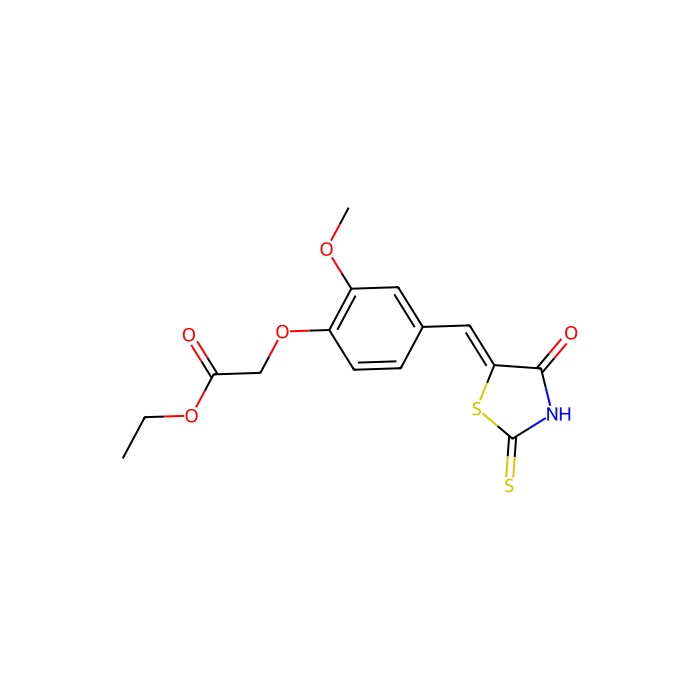
This compound belongs to the class of organic compounds known as phenoxyacetic acid derivatives. These are compounds containing an anisole where the methane group is linked to an acetic acid or a derivative.
External Descriptors
Not available
1. Djoumbou Feunang Y, Eisner R, Knox C, Chepelev L, Hastings J, Owen G, Fahy E, Steinbeck C, Subramanian S, Bolton E, Greiner R, and Wishart DS. ClassyFire: Automated Chemical Classification With A Comprehensive, Computable Taxonomy. Journal of Cheminformatics, 2016, 8:61.
Determine the necessary mass, volume, or concentration for preparing a solution.
Dilution Calculator
Determine the dilution needed to prepare a stock solution.
Reconstitution Calculator
리뷰
고객 리뷰
Application Protocols
No item-specific, tested application protocols are provided in the product data for IMR-1.
General workflow examples (non-item-specific; adapt to your assay)
Dose–response in adherent cells:
Prepare a 10–50 mM DMSO stock; perform 1:3 or 1:2 serial dilutions in DMSO.
Transfer to assay plates to achieve final DMSO ≤0.1–0.5% v/v; include vehicle and positive controls.
Incubate for 4–48 h as required by the biology; measure endpoint (e.g., reporter, viability, imaging) and fit curves (four-parameter logistic).
Biochemical assay setup:
Pre-dilute stock into assay buffer containing 0.01–0.05% nonionic detergent to minimize aggregation.
Include counter-screens (e.g., detergent sensitivity, redox interference controls) to flag assay artifacts.
Stability check:
Assess compound integrity in working solutions over the assay window by LC–MS or HPLC-UV.
These examples are general guidance only. Develop and validate lab-specific SOPs and consult the CoA/SDS for constraints specific to this item.
Biological Roles
The product is supplied as a research-use small molecule intended for chemical biology and discovery workflows. The product data do not specify a biological target, pathway, or mechanism of action for IMR-1.
Item-specific biological function: Not specified for this item; refer to CoA/Spec Sheet and primary literature if applicable.
Research context (general): Small-molecule ligands are routinely used to perturb cellular signaling, enzyme activity, or transcriptional programs to test hypotheses in vitro and in cell-based systems.
Experimental considerations: Validate on-target effects with dose–response curves, time courses, and orthogonal assays (e.g., genetic knockdown/knockout, complementary chemotypes) to deconvolute mechanism from off-target or colloidal effects.
Controls: Include vehicle controls (matching DMSO %), positive controls (benchmark modulators where available), and cytotoxicity counterscreens to establish a therapeutic index window for mechanistic studies.
No medical, diagnostic, or in vivo therapeutic uses are claimed or supported. For precise biological role claims related to IMR-1, consult peer-reviewed literature and verify that the referenced structure matches the specific lot (via CAS/CID/CoA) prior to extrapolating results.
Buffer Applications
This product is a small-molecule research ligand and is not itself a buffer component.
Not typically used to establish or maintain pH. If added to buffered systems, ensure the final solvent content (e.g., DMSO) and any excipients are compatible with the buffer strength and assay readout.
Practical tip: When preparing dosing solutions, use the assay buffer as the diluent after creating a concentrated stock in DMSO. Verify that the compound remains in solution across the experimental temperature and time frame.
For general buffer recipes and pH ranges (HEPES, PBS, MOPS, Tris), consult standard lab manuals; selection should be driven by the biology/assay rather than this compound.
Green Alternatives
Greener handling strategies for small-molecule ligands focus on solvent choice, waste minimization, and process design, recognizing that DMSO is common for stocks but not always mandatory.
Prefer aqueous media at point-of-use: Pre-dissolve in minimal DMSO, then dilute into buffered saline or culture media to reduce organic solvent burden.
Consider bio-based/safer cosolvents: Where compatible, small fractions of ethanol or glycerol can sometimes replace DMF/acetone; verify solubility and assay tolerance.
Minimize waste: Use high-concentration master stocks and small aliquots to avoid repeated thawing and discard.
Micro-scale screening: Employ miniaturized assay formats (384–1536 well) to reduce solvent and compound consumption.
Illustrative comparison (general)
DMSO: High solvency; low volatility; moderate EHS profile; widely accepted in bioassays.
Ethanol: Renewable feedstock options; good EHS profile; limited solubility for some scaffolds.
DMF/Acetonitrile: Powerful but less preferred from EHS perspective; reserve for analytics or specific needs.
Tradeoffs
Lower-toxicity solvents may reduce solubility, increasing risk of precipitation or adsorption. Confirm by small-scale pilots and orthogonal readouts to ensure data integrity before broad adoption.
Pharmaceutical Uses
No excipient role, pharmacopeial monograph, or formulation standard is provided for this item. The product is designated For research use only.
Intended use: Preclinical research, target/pathway interrogation, and screening in laboratory settings.
Not for human or veterinary use, not for diagnostic or therapeutic applications.
Process/formulation context (general for small-molecule probes)
If used in formulation feasibility studies (e.g., enabling solutions for in vitro delivery), document solvent systems, concentration limits, and compatibility with plastics/elastomers.
Evaluate chemical and physical stability (e.g., LC–MS purity over time; precipitation on dilution) in your chosen vehicles.
Regulatory note
This product is not manufactured under GMP for clinical use. For any translational work, separate sourcing and qualification under applicable quality systems would be required.
Physical Properties
Item-specific physicochemical data were not provided in the product listing. The following fields are intentionally left unspecified to avoid overstatement.
Appearance: Not specified for this item; refer to CoA/Spec Sheet.
Molecular Weight: Not specified for this item; refer to CoA/Spec Sheet.
Melting point (MP): Not specified for this item; refer to CoA/Spec Sheet.
Boiling point (BP): Not specified for this item; refer to CoA/Spec Sheet.
Density: Not specified for this item; refer to CoA/Spec Sheet.
Refractive index: Not specified for this item; refer to CoA/Spec Sheet.
LogP/logD: Not specified for this item; refer to CoA/Spec Sheet.
pKa(s): Not specified for this item; refer to CoA/Spec Sheet.
Aqueous/organic solubility: Not specified for this item; refer to CoA/Spec Sheet.
Practical guidance (general, literature-informed for small-molecule probes)
First-line solvent for bioactive small molecules is typically anhydrous DMSO for concentrated stocks (e.g., 10–50 mM) before dilution into assay buffers; validate solubility empirically.
If precipitation is observed upon aqueous dilution, increase surfactant (e.g., 0.01–0.1% polysorbate) or organic cosolvent (≤0.1–0.5% DMSO v/v final) as assay-compatible.
Light and moisture sensitivity vary; handle under low light and keep containers tightly closed as a conservative practice.
For definitive, item-specific physical constants, consult the current Certificate of Analysis (CoA) and Safety Data Sheet (SDS) for this lot.
Quality and Grades
Grade/Purity: Moligand™ (as listed). Item-specific numerical purity and stabilizers are not disclosed in the product data.
What Moligand™ typically indicates (general description)
The Moligand line comprises small-molecule research ligands suitable for target/pathway interrogation and screening workflows. Lots are typically qualified by analytical identity and purity assessment (e.g., LC–MS, NMR) to ensure reliable use in discovery assays. Exact test suites and acceptance criteria are lot-dependent.
Item-specific quality details
Numerical purity, residual solvent limits, metal/ion content, water content (KF), and UV cutoff: Not specified for this item; refer to CoA/Spec Sheet.
Appearance and form (solid/oil) and any stabilizer/additive: Not specified for this item; refer to CoA/Spec Sheet.
Practical guidance
Request the current CoA before initiating regulated or data-critical studies; confirm identity (e.g., exact mass), purity profile, and any counter-ions.
For screening campaigns, record lot number in ELNs and maintain frozen aliquots to ensure run-to-run consistency.
If low-UV applications (HPLC-UV) or photochemical studies are planned, confirm UV background and extinction properties from the CoA or by preliminary analytics.
Reaction and Applications
This product is positioned as a small-molecule research ligand for chemical biology, screening, and pathway interrogation rather than as a synthetic reagent.
Typical research applications (general for bioactive ligands)
Cell-based pathway modulation: Evaluate phenotypic outcomes after acute exposure; optimize dose–response and exposure time.
Biochemical/biophysical assays: Use in target engagement, thermal shift, or binding assays where compatible.
Ex vivo systems: Apply in primary cells or tissue explants with validated vehicle controls and exposure constraints.
Practical tips
Prepare concentrated DMSO stocks; filter through 0.2 μm PTFE if particulates persist (avoid adsorptive membranes).
Validate lack of aggregation-driven artifacts (e.g., include nonionic detergent, assess via DLS or orthogonal readouts).
Control for solvent effects and plate edge effects in microplate formats; randomize layouts when possible.
For time-course studies, establish compound stability in assay media by LC–MS to ensure on-target exposure.
Note: No item-specific target or mechanistic claims are provided in the product data. If mechanistic use is intended, corroborate with primary literature and confirm compound identity/purity from the CoA.
Reaction Conditions
Classical chemical reaction conditions are not directly applicable because this item is supplied for use as a small-molecule ligand in biological/biochemical assays rather than as a reagent.
General guidance for preparing assay solutions (non-item-specific)
Stock preparation: Dissolve in anhydrous DMSO to prepare a concentrated stock (e.g., 10–50 mM), vortex and, if needed, sonicate briefly to ensure homogeneity.
Working solutions: Dilute into assay buffer or culture medium to the desired concentration, keeping final DMSO typically ≤0.1–0.5% v/v depending on assay tolerance.
Temperature: Prepare and store stocks at ambient temperature during handling; avoid prolonged exposure to elevated temperatures. For biological assays, equilibrate working solutions to assay temperature before dosing.
Light/moisture: Protect from strong light and atmospheric moisture until stability is confirmed.
Expected performance metrics (item-specific values not provided)
Potency, efficacy, and kinetics are not specified for this product; determine empirically in your assay with appropriate controls.
Refer to your lab’s assay SOPs and the product CoA/SDS for any constraints specific to this item/lot.
Safety and Handling
Hazard classification
GHS Classification: Not specified for this item; refer to SDS.
Signal Word: Not specified for this item; refer to SDS.
Hazard (H) Statements: Not specified for this item; refer to SDS.
Pictograms: Not specified for this item; refer to SDS.
General laboratory precautions (non-item-specific best practices)
PPE: Wear lab coat, safety glasses, and appropriate chemically resistant gloves. Use a certified chemical fume hood when weighing, dissolving, or handling powders/solutions.
Avoid inhalation of dust/aerosols and contact with skin/eyes. Wash thoroughly after handling.
Storage incompatibilities: Keep separate from strong oxidizers and strong acids/bases unless compatibility is confirmed for this specific compound (consult SDS/CoA). Protect from moisture; keep container tightly closed.
Spill/first aid (overview): Contain small spills with inert absorbent; dispose according to institutional hazardous waste procedures. In case of skin/eye contact, rinse with water for at least 15 minutes and seek medical evaluation per institutional policy.
Stability & transport
Storage: Store at −20°C (per product data). Minimize freeze–thaw by aliquoting.
Shipment: Shipped in ice chest with ice pads (per product data). Inspect upon receipt; allow to equilibrate in a desiccated environment before opening to avoid moisture condensation.
Always defer to the authoritative SDS for this product and your institution’s EHS guidance for risk assessment and controls.
Solvent Selection
Given absent item-specific solubility data, begin with conservative, broadly compatible approaches for bioactive small molecules.
Primary stock solvent: Anhydrous DMSO is typically preferred due to broad solvating power and assay compatibility at low final percentages.
Alternative solvents (if needed): DMF (high solvency but less biocompatible), ethanol (biocompatible but lower solvency for some chemotypes), or aqueous buffers with co-solvent/surfactant after pre-dissolution.
Aqueous use: Prepare a concentrated DMSO stock (e.g., 10–50 mM) then dilute into buffer, keeping final DMSO at or below assay tolerance (commonly 0.1–0.5% v/v). Include a vehicle control.
Stability considerations: Avoid prolonged exposure to basic or strongly acidic media until stability is verified. Protect from light and moisture as a general precaution.
Comparison (general guidance)
DMSO: Highest solvency, excellent for stocks; low volatility; can interfere with some enzymes above ~1–2%.
Ethanol: Good biocompatibility; may extract plastics; limited solubility for some heteroaromatics.
DMF: Strong solvent; use only when necessary due to cytotoxicity and handling concerns; keep final v/v extremely low.
Aqueous + surfactant (e.g., 0.01–0.1% polysorbate): Helps maintain colloidal stability for hydrophobic compounds once pre-dissolved.
Confirm the final solvent system experimentally for your specific assay matrix and concentration range.
Storage and Reconstitution
Storage
Store at −20°C (per product data). Keep container tightly closed in a dry, desiccated environment. Protect from light as a conservative practice.
Shipped in an ice chest with ice pads (per product data). Upon receipt, promptly return to cold storage.
Reconstitution (general guidance; item-specific solubility not provided)
Recommended stock solvent: Anhydrous DMSO. Start with small volumes and incrementally add solvent while vortexing to achieve complete dissolution.
Typical stock concentrations: 10–50 mM are common for small-molecule probes; adjust based on observed solubility and intended assay range.
Aliquoting: Prepare single-use aliquots to avoid repeated freeze–thaw. Store aliquots at −20°C or below.
Freeze–thaw: Minimize cycles; thaw at room temperature, mix thoroughly, and promptly return unused material to cold storage.
Aqueous dilution: Add the DMSO stock into vigorously mixed buffer or media to the desired final concentration; maintain final DMSO within assay tolerance.
Item-specific notes
Appearance, exact solubility, and stability limits: Not specified for this item; refer to CoA/Spec Sheet.
If long-term storage is planned, consider inert-atmosphere headspace for sensitive chemotypes and verify stability by periodic analytical checks.
Structure and Identity
IMR-1 is supplied as a research-use small molecule in Aladdin’s Moligand line; detailed structural identifiers for this specific lot are limited in the product data.
SKU: I413960
Product Name: IMR-1
CAS: 310456-65-6 (catalog listing)
PubChem CID: 1246059 (catalog listing)
InChIKey: 297168 (as provided; truncated/nonstandard formatting may reflect catalog placeholder)
SMILES: Not specified for this item; refer to CoA/Spec Sheet.
Molecular Formula: Not specified for this item; refer to CoA/Spec Sheet.
Molecular Weight: Not specified for this item; refer to CoA/Spec Sheet.
Structural features
Item-specific functional groups, ring systems, and stereochemistry: Not specified for this item; refer to CoA/Spec Sheet.
2D structure description: Not available in the provided data. If structure disclosure is needed, request the current CoA/SDS or consult authoritative databases using the CAS or CID listed above.
Notes on identifiers
When CAS/CID are provided without a structural string (SMILES/InChI), cross-verification is recommended prior to computational work or targeted analytical method development.
For cheminformatics, obtain a definitive InChI/SMILES from the CoA or an authenticated database record before registering in ELNs or screening databases.
Synthetic Utility
This product is positioned as a bioactive small-molecule ligand rather than a synthetic building block.
Use as reagent/intermediate: Not typically applicable; the product data do not provide functional groups or reactivity that would guide preparative chemistry usage.
If derivatization or probe synthesis is planned (e.g., affinity tags, fluorophores), obtain the definitive structure (SMILES/InChI) and assess feasible points for modification, stability under coupling conditions, and retention of activity via SAR.
For synthetic method development using this scaffold, consult primary literature associated with the verified structure (via CoA/CAS/CID) and consider protecting-group strategies, scalability, and impurity profiles based on the compound’s functional group manifold.
Target Specificity
No target, pathway, or binding specificity data are provided in the product listing for IMR-1.
Antigen/epitope, species reactivity, clone/isotype: Not applicable; this product is not an antibody.
Small-molecule target designation (e.g., enzyme/receptor): Not specified for this item; refer to CoA/Spec Sheet and primary literature if applicable.
If target-selective use is intended, independently verify:
The structural identity of the lot (SMILES/InChI from CoA) matches literature-reported IMR-1 prior to extrapolating published selectivity profiles.
Selectivity using orthogonal assays (counter-screens, off-target panels) at relevant concentrations and time scales.
Need help choosing the grade?
Our grade selection guide covers purity, stabilizer status, and application suitability for all variants in our catalog.
We use cookies to ensure the website functions properly and, where permitted, to improve your experience. You can manage your preferences at any time in Settings. Learn more in our Cookie Policy.
Shall we send you a message when we have discounts available?
Remind me later
Thank you! Please check your email inbox to confirm.
Products are supplied to verified businesses, institutions, and qualified professionals for research and development use only. Not for use in humans, animals, diagnosis, or therapy.

 H2213340