등급 & 순도Moligand™?Moligand™ — Aladdin's line of ligands and bioactive small molecules. Use for receptor, pathway, and binding studies needing defined small-molecule tools.10 mM in DMSO
Moligand™, 10 mM in DMSO Moligand™ 최소한의 기준선 간섭이 필요한 민감한 크로마토그래피 및 분석 워크플로우용.
🌡
보관 및 배송
Protected from light,Argon charged,Store at -80°C Dry ice packs + Cold packs 출고. 정확한 사양은 로트별 COA를 확인하세요.
📋
품질 문서
SDS, COA, 데이터시트, 사양서를 다운로드할 수 있습니다. 로트별 COA는 로트 번호 조회를 통해 확인할 수 있습니다.
📚
문헌적 근거
크로마토그래피, 유기 합성 및 교차 커플링 반응 분야의 동료 심사 논문 0편에서 인용되었습니다.
개요
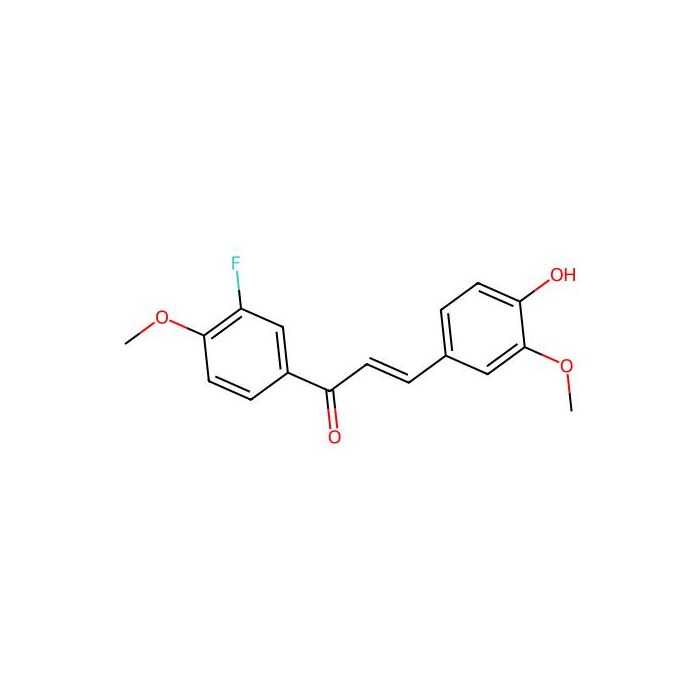
JC2-11 is an inhibitor ofinflammatory corpuscles. JC2-11 inhibits domain-containing protein NLRC 4 , absent in melanoma 2 ( AIM 2 ) and non-canonical ( NC ) inflammatory corpuscles. JC2-11 reduces the secretion of caspase-1 ( p20 ), the cleavage of gasdermin D ( GSDMD ), and the releases of IL-1β and lactate dehydrogenases ( LDH ) in inflammatory bodies. JC2-11 inhibits the activation of inflammatory bodies by destroying the production of reactive oxygen species and the activity of caspase-1.
Determine the necessary mass, volume, or concentration for preparing a solution.
Dilution Calculator
Determine the dilution needed to prepare a stock solution.
Reconstitution Calculator
리뷰
고객 리뷰
Application Protocols
No item-specific validated protocols are provided for JC2-11. The following are general, non-item-specific practices for small-molecule screening compounds.
Preparation of DMSO stock (general):
Equilibrate vial to room temperature in the dark. Open under inert atmosphere if possible.
Add anhydrous DMSO to prepare a 10–50 mM stock (based on the amount and molecular weight from the CoA).
Vortex briefly; if undissolved, sonicate gently or warm slightly while protecting from light. Avoid prolonged heating.
Sterile-filter only if required by your assay and compatible with the compound.
Aliquoting and storage:
Dispense into amber, low-bind microtubes or 96/384-well storage plates. Minimize headspace; backfill with argon if feasible.
Store at –80°C protected from light. Avoid repeated freeze–thaw cycles by preparing single-use aliquots.
Assay setup:
Prepare serial dilutions in DMSO, then dilute into assay buffer to reach final solvent content ≤1–2% v/v.
Include vehicle controls and reference standards. Record lot number, stock concentration, and dilution scheme.
Analytical check:
Confirm integrity by LC–MS before and after assay campaigns, especially for light-sensitive compounds.
Note: Adjust volumes and procedures to your platform (manual, automated, or acoustic dispensing).
Biological Roles
No target annotation or biological role is provided for JC2-11 in this listing. As such, compound-specific mechanism, pathway membership, or endogenous relevance cannot be stated.
General guidance for small-molecule screening (not item-specific):
If JC2-11 is part of a focused library, targets may include enzymes, receptors, or protein–protein interaction modulators. Verify any target claims against the CoA/Spec Sheet or supplementary library documentation.
For cell-based assays, establish compound-specific cytotoxicity windows (e.g., using resazurin, CellTiter-Glo, or impedance assays) before mechanistic profiling.
Stability in biological media should be assessed (protein binding, serum stability, and potential photolability given the light protection requirement).
Data stewardship:
Track lot numbers, stock concentration, and freeze–thaw cycles alongside biological readouts to ensure data reproducibility.
Research use only: No medical or clinical claims are made for JC2-11.
Buffer Applications
JC2-11 is a small-molecule library member and not a buffering agent. Therefore, classic buffer system design (e.g., phosphate, HEPES, Tris) does not apply directly.
Assay buffer considerations (general, not item-specific):
Vehicle tolerance: Maintain constant DMSO percentage across all wells (commonly ≤1–2% v/v) to minimize vehicle effects.
Surfactants: Trace levels of nonionic surfactants (e.g., 0.01% Tween-20) can reduce nonspecific binding; verify that they do not perturb your target system.
Protein additives: BSA or casein (0.1–0.5%) may reduce adsorption to plastics; confirm no interference with readouts.
Light sensitivity: Use amber plates or minimize exposure if optical readouts are used, given JC2-11’s light protection requirement.
If buffer-dependent ionization or stability is suspected, obtain pKa/solubility data from the CoA/Spec Sheet or perform small-scale solubility profiling across pH values relevant to your assay.
Green Alternatives
Without a disclosed structure, specific hazard and environmental metrics cannot be computed for JC2-11. However, greener handling choices can be made around solvent systems and workflow design.
Greener considerations (general, not item-specific):
Stock solvent: Replace DMF/NMP where possible with DMSO or greener dipolar aprotics (e.g., Cyrene or PolarClean) if assay compatibility permits.
Dilution media: Favor aqueous buffers at the lowest effective organic cosolvent percentage. Validate activity and stability.
Minimizing waste: Use low-volume assay formats (384/1536-well), acoustic dispensing, and sealed plates to reduce solvent losses and VOC emissions.
Energy savings: Store only working aliquots at ultra-low temperatures and keep bulk material consolidated to reduce freezer cycling.
Illustrative comparison (generic):
DMF vs DMSO: DMSO is generally less problematic from a worker exposure and regulatory standpoint; DMF is a reproductive toxin and typically less preferred.
NMP vs Cyrene (levoglucosenone-derived): Cyrene offers a bio-based alternative for certain dissolution tasks but may have different viscosity and solvation behavior; pilot tests are recommended.
Trade-offs:
Some greener solvents can alter solubility or assay performance. Always confirm compound stability and target activity in the chosen medium.
Note: No item-specific green metrics (EHS scores, biodegradability) are available for JC2-11 in this listing.
Pharmaceutical Uses
JC2-11 is supplied strictly for research use only. No pharmacopeial status, excipient role, or manufacturing application is provided or implied for this item.
General considerations for formulation research (not item-specific):
Preformulation screening: If used in early discovery enablement, assess solubility in biorelevant media, photostability (light-sensitive flag here), and compatibility with common excipient screens.
Salt/solid form: Without structural information, salt formation or polymorph strategies cannot be recommended. Consult the CoA/Spec Sheet if such data are available for your lot.
Stability-indicating methods: Develop LC–UV/MS methods to monitor degradation under stress (light, oxygen, heat) before any advanced formulation studies.
No therapeutic or clinical claims are made for JC2-11.
Physical Properties
Item-specific physicochemical parameters have not been provided for JC2-11 in this catalog entry.
Appearance: Not specified for this item; refer to CoA/Spec Sheet.
Molecular Weight: Not specified for this item; refer to CoA/Spec Sheet.
Molecular Formula: Not specified for this item; refer to CoA/Spec Sheet.
Melting point (mp): Not specified for this item; refer to CoA/Spec Sheet.
Boiling point (bp): Not specified for this item; refer to CoA/Spec Sheet.
Density: Not specified for this item; refer to CoA/Spec Sheet.
Refractive index: Not specified for this item; refer to CoA/Spec Sheet.
Solubility: Not specified for this item; refer to CoA/Spec Sheet. In practical screening, small molecules are commonly dissolved in anhydrous DMSO to prepare concentrated stocks (e.g., 10–50 mM), then diluted into assay buffers.
LogP/logD, pKa: Not specified for this item; refer to CoA/Spec Sheet.
General guidance (literature/common practice – not item-specific):
Screening library members are frequently handled as solids or DMSO stocks. If solubility proves limited, co-solvents (DMSO, DMF) or pH adjustment may be used within assay compatibility limits.
Hygroscopic or light-sensitive compounds may show property drift if exposed; JC2-11 is specified to be protected from light, suggesting photosensitivity risk. Always minimize headspace and light exposure.
Please consult the lot-specific CoA/Spec Sheet for authoritative physical property data when available.
Quality and Grades
Grade/Purity: Moligand™
What Moligand™ indicates (program-level context):
Moligand items are curated for discovery workflows (target engagement, binding, and phenotypic screening). Emphasis is typically on structural integrity and suitability for HTS/biochemical or biophysical assays rather than on chromatographic solvent specifications.
Each item is intended for research use only and is not formulated as a GMP material.
Item-specific details:
Purity level, residual solvents, and analytical controls (e.g., HPLC purity, NMR identity, water content, metal/peroxide limits) are Not specified for this item; refer to CoA/Spec Sheet.
Stabilizers: Not specified for this item; refer to CoA/Spec Sheet. No stabilizer information is disclosed.
Analytical expectations for Moligand-grade materials (general guidance, not item-specific):
Identity confirmation by LC–MS and/or 1H NMR is typical for discovery-grade libraries.
Purity targets often exceed 90–95% by HPLC/UPLC for screening reliability, but final acceptance criteria should be taken from the lot-specific CoA.
How to interpret this grade for your workflow:
Suitable for target screening, SAR iteration, orthogonal biophysical assays (e.g., DSF, SPR, MST), and cell-based pathway probing where research-grade materials are accepted.
For quantitative mechanistic studies or in vivo enabling chemistry, verify impurity profiles and stability via the CoA and/or requalification in your lab as needed.
Reaction and Applications
This product is positioned as a screening ligand/small molecule for discovery rather than as a synthetic reagent. No specific chemical reactivity or named-reaction use is provided for JC2-11.
Discovery applications (general, not item-specific):
Biochemical target screening: Enzyme or receptor binding/functional assays using concentrated DMSO stocks and serial dilutions to generate dose–response curves.
Cellular assays: Pathway or reporter assays to evaluate phenotypic consequences; ensure solvent and compound compatibility with the specific cell model.
Orthogonal analytics: LC–MS to monitor compound integrity in assay buffer; UV/Vis or fluorescence only if the chromophore/fluorophore is known to be compatible.
Practical tips:
Prepare fresh aliquots to minimize freeze–thaw stress. Maintain inert atmosphere when feasible as the item is supplied argon charged.
Because JC2-11 is light-sensitive, avoid prolonged exposure during assay setup and storage.
Include solvent controls and, where available, positive/negative reference ligands.
If you intend to use JC2-11 as a building block or reagent in synthesis, obtain the structural information and stability profile from the CoA/Spec Sheet before planning reaction conditions.
Reaction Conditions
This product is not positioned for use as a reaction solvent or catalyst; no reaction condition data are provided.
If chemical modification is pursued (general guidance, not item-specific):
Solvents: Choose inert, anhydrous media consistent with the compound’s stability (e.g., dry DCM, MeCN, toluene, or DMF/DMSO). Avoid prolonged light exposure and maintain inert atmosphere given the storage guidance for JC2-11.
Temperature: Begin with ambient conditions and scale to gentle heating or cooling as required; monitor for photodegradation.
Atmosphere: Argon or nitrogen recommended during moisture/oxygen-sensitive steps.
Workup: Quench under controlled conditions; minimize light and air during extractions and concentration.
Analytical: Use LC–MS and 1H NMR to track conversion and detect decomposition products.
Expected yields, catalysts, or time scales cannot be provided without knowledge of functional groups. Consult the CoA/Spec Sheet for any item-specific notes supplied with your lot.
Safety and Handling
Safety information specific to JC2-11 is not disclosed in this listing. Always review the SDS provided with your shipment for authoritative guidance.
GHS Classification: Not specified for this item; refer to SDS.
Signal Word / H-Statements / Pictograms: Not specified for this item; refer to SDS.
General laboratory precautions (good practice):
PPE: Lab coat, safety glasses, and appropriate chemically resistant gloves. Consider double-gloving for DMSO stocks to mitigate skin uptake of dissolved substances.
Engineering controls: Handle powders and aliquoting in a fume hood or ventilated enclosure to avoid inhalation of particulates or aerosols.
Light sensitivity: Product should be protected from light; use amber vials or foil wrapping and work under subdued light when practical.
Inert atmosphere: Item is supplied argon charged; maintain an inert blanket when feasible to limit oxidative or moisture-driven degradation. Cap promptly after use.
Incompatibilities: Without a structure, specific incompatibilities are unknown. As a conservative approach, avoid strong oxidizers/reductants, strong acids/bases, and reactive metals until compatibility is confirmed.
First aid (overview): In case of skin/eye contact, rinse with water for at least 15 minutes; remove contaminated clothing. If inhaled, move to fresh air. If ingested, rinse mouth and seek medical attention. Follow facility SOPs and the SDS.
Waste: Dispose according to institutional and regulatory requirements for small organic molecules and DMSO-containing solutions.
Solvent Selection
With no disclosed structure, solvent recommendations must follow standard small-molecule screening practices rather than compound-specific properties.
General solvent strategy (screening context):
Primary stock: Anhydrous DMSO is the most common medium for 10–50 mM stocks due to broad solubilizing power and assay compatibility at low final percentages (≤1–2% v/v).
Co-solvents (as needed): DMF or NMP for difficult solutes; dilute promptly into buffer/medium to limit cytotoxic solvent load. Confirm assay tolerance.
Aqueous buffers: Many small molecules show limited aqueous solubility; consider adding mild cosolvent (e.g., 0.1–1% DMSO) or using surfactants compatible with your assay (e.g., 0.01% Tween-20) where appropriate.
Polarity and miscibility (general notes):
DMSO: Polar aprotic, fully miscible with water and many organics; facilitates serial dilution and plating.
Ethanol/IPA: Useful for certain targets or spectroscopic readouts; monitor volatility and plate edge effects.
Selection tips:
Keep light exposure minimal for JC2-11. Prefer amber vials and covered microplates.
Filter or centrifuge stock/dilutions if precipitation occurs; avoid heating unless stability is confirmed.
Record final solvent percentage in all assay wells to ensure comparability across conditions.
Comparison (typical choices):
DMSO vs DMF: DMSO is generally more biocompatible; DMF may improve solubilization but is less assay-friendly.
DMSO vs Ethanol: Ethanol is more volatile and may affect cells at lower percentages; DMSO offers better stability in sealed plates.
Storage and Reconstitution
Item-specific instructions from Product Data:
Storage Conditions: Protected from light, Argon charged, Store at –80°C.
Shipped In: Dry ice packs + Cold packs.
Reconstitution (general guidance for small molecules; confirm with CoA):
Solvent: Anhydrous DMSO is recommended for initial stock solutions unless the CoA specifies otherwise.
Concentration: Prepare a convenient screening stock (e.g., 10–50 mM) based on the actual net mass and molecular weight listed on your lot’s CoA.
Technique: Allow vial to equilibrate to room temperature before opening to prevent moisture condensation. Work quickly under low light; optionally maintain an inert gas blanket during dissolution.
Filtration: Only if required for sterile applications and confirmed not to adsorb/degrade the compound.
Handling and stability:
Light sensitivity: Store in amber vials or wrap in foil; minimize exposure during weighing, dissolution, and dispensing.
Inert atmosphere: Re-cap promptly and, if possible, backfill headspace with argon or nitrogen after each use.
Freeze–thaw: Aliquot into single-use portions to avoid repeated cycles. Record number of freeze–thaw events.
Disposal: Follow institutional guidelines for disposal of small-molecule organics and DMSO-containing waste.
Any additional item-specific stability windows, stock-life, or solubility data are Not specified for this item; refer to CoA/Spec Sheet.
Structure and Identity
Concise overview: JC2-11 (CAS 937820-89-8) is offered as a Moligand-grade small molecule intended for screening and discovery workflows. Structural identifiers are not disclosed in this listing.
SKU: J1497852
Product Name: JC2-11
CAS: 937820-89-8
Category: Small molecule/compound library member (Moligand collection)
Molecular Formula: Not specified for this item; refer to CoA/Spec Sheet.
Molecular Weight: Not specified for this item; refer to CoA/Spec Sheet.
SMILES: Not specified for this item; refer to CoA/Spec Sheet.
InChIKey: Not specified for this item; refer to CoA/Spec Sheet.
Structural features (general note):
The supplier has not provided functional group annotations, ring systems, or stereochemical information for JC2-11. For structure-based design or docking, request the CoA/structure file from your account representative or consult the Spec Sheet if supplied with your shipment.
2D structure description:
Not available in the current listing. If you require a 2D depiction or SD file for cheminformatics, contact support with your PO/SKU so we can release any available structural metadata under your project’s confidentiality terms.
Identifiers cross-referencing:
PubChem CID: Not specified for this item; refer to CoA/Spec Sheet.
Research use note: For research use only. Not for human or veterinary use.
Synthetic Utility
JC2-11 is offered as a discrete screening compound rather than as a general-purpose synthetic reagent or building block. Without disclosed structure, specific transformations, functional group interconversions, or named-reaction roles cannot be described.
If derivatization is intended (general advice, not item-specific):
Request structural data and impurity profile (CoA/Spec Sheet). Confirm functional handles and protecting-group requirements by NMR/LC–MS.
Assess stability to air, moisture, and light before planning multistep sequences. JC2-11 requires protection from light and is shipped argon charged, suggesting care with oxidation/photolysis.
Plan purification based on polarity and stability: preparative HPLC or flash chromatography under low-light conditions may be appropriate.
For most users, JC2-11 will be applied as-received in biochemical/biophysical assays rather than used as a precursor in synthesis.
Target Specificity
No biological target, enzyme class, receptor family, or pathway specificity is provided for JC2-11 in this listing.
Target name/UniProt/Gene: Not specified for this item; refer to CoA/Spec Sheet.
Mode of action: Not specified for this item; refer to CoA/Spec Sheet.
Species selectivity: Not specified for this item; refer to CoA/Spec Sheet.
Recommendation:
If JC2-11 is part of a targeted sublibrary, consult the accompanying library documentation or request target annotation from your account representative. Validate specificity in-house using orthogonal assays (e.g., enzymatic activity vs. binding biophysics) to rule out assay interference or colloidal aggregation.
자주 묻는 질문
What is Moligand??
Moligand? is one of Aladdin Scientific's premium product lines, formulated for high-purity applications across multiple workflows. Compared to standard grades in the same workflow, Moligand? products typically offer tighter specifications, more rigorous QC, and stronger lot-to-lot consistency.
How should this product be stored?
Store at ?80 °C, protected from light, under argon. It is supplied under an argon blanket; reseal under inert gas after each use.
How is this product shipped?
This product ships frozen with dry ice and cold packs. Unpack on arrival and transfer it to the storage condition stated above; handle dry ice with insulated gloves in a ventilated area.
What are the CAS number, molecular formula and molecular weight?
The CAS Number is 937820-89-8, the molecular formula is C17H15FO4, and the molecular weight is 302.30 g/mol.
What documentation is provided?
Available product documentation, including Certificates of Analysis (COA), Safety Data Sheets (SDS), and specification sheets, is shown in the product document area. Document availability and access follow the current site policy.
등급 선택에 도움이 필요하신가요?
당사의 등급 선택 가이드는 카탈로그의 모든 변형 제품에 대해 순도, 안정제 상태 및 용도 적합성을 다룹니다.
Products are supplied to verified businesses, institutions, and qualified professionals for research and development use only. Not for use in humans, animals, diagnosis, or therapy.