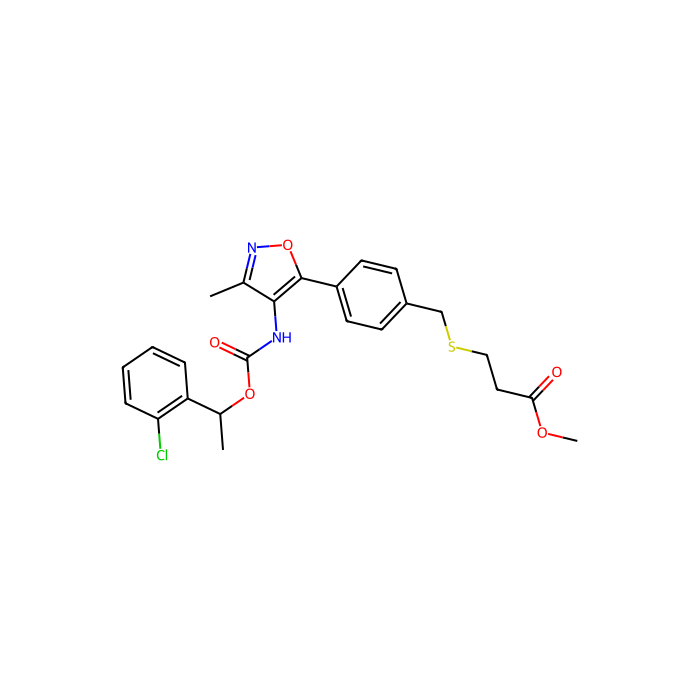
10mM in DMSO for sensitive chromatographic and analytical workflows requiring minimal baseline interference.
🌡
Storage & shipping
Store at -80°C Ships Dry ice packs + Cold packs Check lot-specific COA for exact specifications.
📋
Quality documents
SDS, COA, datasheet, and spec sheet available for download. Lot-specific COA accessible via lot number lookup.
📚
Literature proof
Cited in 0 peer-reviewed publications across chromatography, organic synthesis, and cross-coupling reactions.
개요
Information
Ki16198 Ki16198 is the methyl ester of Ki16425, which is a LPA antagonist and inhibits LPA1- and LPA3-induced inositol phosphate production with K i of 0.34 μM and 0.93 μM, respectively, shows weaker inhibition for LPA2, no activity at LPA4, LPA5, LPA6. In vitro
Ki16198 or Ki16425 substantially inhibits LPA1- and LPA3-mediated responses with a similar potency, with low potency to LPA2 and no activity to LPA4, LPA5 and LPA6. Ki16198 (10 μM) is also effective to inhibit migration and invasion responses to LPA in YAPC-PD cancer cell line with a potency similar to that of Ki16425. Ki16198 (10 μM) inhibits the LPA-induced expression of proMMP-9 protein and mRNA in YAPC-PD cells. Ki16198 (1 μM) inhibits the proliferation of lpa1Δ-1 and lpa1Δ+-1 cells by about 70%.
In vivo
Ki16198 (2 mg/kg) significantly decreases the total metastatic node weight in the peritoneal cavity and ascites formation by 50% in YAPC-PD xenograft mouse model. Ki16198 (60 mg/kg orally) significantly inhibits lactate-induced limb lesions in rats. Cell Data
Ki16198 is the methyl ester of Ki16425, which is a LPA antagonist and inhibits LPA1- and LPA3-induced inositol phosphate production with Ki of 0.34 μM and 0.93 μM, respectively, shows weaker inhibition for LPA2, no activity at LPA4, LPA5, LPA6.
Determine the necessary mass, volume, or concentration for preparing a solution.
Dilution Calculator
Determine the dilution needed to prepare a stock solution.
Reconstitution Calculator
리뷰
고객 리뷰
Application Protocols
No tested application protocols are provided in the Product Data for this item.
General research-use guidance (non-specific):
Stock preparation: Dissolve in anhydrous DMSO to a convenient concentration (e.g., 10 mM). Vortex and, if necessary, sonicate briefly. Filter through a 0.22 µm PTFE filter if particulate persists.
Assay setup: Dilute into assay buffer or culture medium to the desired final concentration while keeping DMSO within tolerated limits (commonly ≤0.1–0.5%). Include vehicle controls.
Stability: Prepare single-use aliquots to avoid repeated freeze–thaw. Confirm stability in the intended matrix by LC-MS or HPLC.
These are general best practices and not item-specific validated protocols.
Biological Roles
Product Data do not provide a biological target, pathway, or mechanism of action for Ki16198. Therefore, no item-specific biological role can be stated.
Target / pathway: Not specified for this item; consult literature using CAS 355025-13-7 or PubChem CID 9913405.
Use context (general): Library compounds are commonly employed in phenotypic screens, target deconvolution studies, and preliminary SAR, pending confirmation of identity, purity, and stability in assay media.
Assay interference caution: Without detailed structure, evaluate potential assay liabilities (aggregation, redox cycling, fluorescence) experimentally. Orthogonal assays and counter-screens are recommended.
Note: All uses are for research purposes only, as per Product Data. No clinical or diagnostic claims are made or implied.
Buffer Applications
This section is typically applicable to buffer reagents; Ki16198 is a small-molecule screening compound and not a buffering agent.
Buffer role: Not applicable.
Practical note: When diluting DMSO stocks into aqueous buffers, pre-warm buffer if needed, add compound slowly with mixing, and maintain final DMSO content within assay tolerance (often ≤0.1–1%). Consider including a non-ionic surfactant (e.g., 0.01–0.05% Tween-20) for hydrophobic analytes to prevent precipitation.
pH effects: If pKa values are unknown, test solubility across a small pH range (e.g., pH 5.5–7.4) to identify optimal assay conditions.
Green Alternatives
As Ki16198 is a screening compound used primarily as a test article rather than a process solvent or reagent, the concept of a green substitution is generally not applicable.
Minimize DMSO volumes in assay setups; standardize to the lowest tolerated % to reduce solvent waste.
Prefer microplate formats and miniaturized assays to decrease per-experiment material consumption.
Implement solvent recycling (where validated) for analytical chromatography.
Consolidate shipments and coordinate batch ordering to reduce cold-chain logistics impact.
If the compound is eventually used in scale-up studies (rare for screening items), green chemistry assessment should be based on the known structure, hazard profile, and solvent choices, following metrics such as PMI, E-factor, and solvent selection guides.
Pharmaceutical Uses
No pharmacopeial status or excipient role is provided for this item, and it is sold strictly for research use only.
Formulation role: Not specified for this item; refer to literature only if structure and intended research context are known.
Preclinical development: If used in discovery research, solubility enhancement strategies (cyclodextrins, lipid vehicles, nanoparticulate approaches) may be explored at bench scale, but these are general techniques and not specific to this item.
Regulatory note: Not for human or veterinary use. No claims regarding safety, efficacy, or clinical application are made or implied.
Physical Properties
Item-specific physicochemical parameters are not supplied in the Product Data. Do not assume these as product specifications; consult the CoA/Spec Sheet for authoritative values.
Appearance: Not specified for this item; refer to CoA/Spec Sheet.
Molecular Weight (item-specific): Not specified for this item; refer to CoA/Spec Sheet.
Melting point / Boiling point: Not specified for this item; refer to CoA/Spec Sheet.
Density / Refractive index: Not applicable to solids; if liquid, not specified for this item; refer to CoA/Spec Sheet.
Solubility: Not specified for this item; refer to CoA/Spec Sheet.
pKa / logP / logD: Not specified for this item; refer to CoA/Spec Sheet.
General guidance for small-molecule library members (literature/practice):
Many discovery compounds are supplied as solids with moderate lipophilicity. Common stock solutions are prepared in anhydrous DMSO (e.g., 10–50 mM) before dilution into aqueous media with surfactant or co-solvent.
Check for hygroscopicity or polymorphism in the CoA; these can affect massing accuracy and dissolution.
If performing biophysical assays, determine compound absorbance cutoff and fluorescence characteristics experimentally to avoid assay interference; these are not specified for this item.
Quality and Grades
Item-specific grade/purity is not provided in the Product Data. Do not infer assay purity, residual solvent, or elemental impurities; instead consult the CoA and batch-specific analytical reports.
Grade/Purity: Not specified for this item; refer to CoA/Spec Sheet.
Analytical characterization (typical for small molecules; general guidance):
HPLC/UPLC purity (UV/ELSD/MS), identity by HRMS and/or NMR, water content by Karl Fischer, and residual solvents by GC are commonly reported for screening compounds.
If chiral, enantiomeric excess and absolute configuration may be reported; verify before SAR use.
Implications for use:
For biochemical assays and cell-based screens, >95% HPLC purity is often preferred to reduce off-target signals; however, item-specific thresholds must be confirmed by the CoA.
Low-level stabilizers are uncommon for library solids; if present, they will be explicitly declared on the Spec Sheet.
Documentation: Request batch CoA to obtain exact purity, assay conditions, and spectral data supporting identity.
Reaction and Applications
This product is cataloged as a small-molecule screening compound rather than a synthetic reagent. As such, it is typically used as a test article in biochemical or cell-based assays, target validation, and SAR exploration rather than as a stoichiometric reactant or catalyst.
Typical laboratory use: Preparation of DMSO stocks for screening libraries, hit validation, and mechanistic studies (general guidance; target not specified for this item).
Analytical support: LC-MS and HPLC-UV assays to track stability in buffers, microsomal matrices, or cell culture media; confirm identity/purity before critical experiments.
Controls: Include vehicle (solvent) controls and, where relevant, orthogonal readouts (e.g., biochemical vs cellular) to mitigate assay interference from fluorescence/absorbance or redox activity.
Not typically applicable:
Named organic reactions, cross-couplings, or reagent-like transformations are not relevant here without a disclosed structure. For synthetic chemistry use, consult the structure (via CoA/Spec Sheet) to evaluate functional group compatibility and reactivity.
Reaction Conditions
This section generally covers conditions for chemical reactions involving the product as reagent or substrate. Ki16198 is supplied as a screening compound with no reaction use specified.
Reaction use: Not applicable; no item-specific transformations are provided.
Analytical conditions (general guidance for handling):
HPLC: Start with C18 reversed-phase, water/acetonitrile + 0.1% formic acid gradient; monitor at multiple wavelengths (e.g., 210–350 nm) in case of unknown chromophores.
LC-MS: ESI± scanning can help identify ionization mode; adjust modifiers accordingly.
Stability checks: Incubate in assay buffer at 25–37°C and track by LC over 24–48 h to detect hydrolysis/oxidation.
These are general laboratory practices and not specifications for the item.
Safety and Handling
Safety specifics (GHS/SDS) are not included in the Product Data. Always consult the official SDS for this SKU before use.
Signal word / H-statements / Pictograms / GHS classification: Not specified for this item; refer to SDS.
Primary hazards: Unknown; treat as a research-use small molecule of unknown toxicity. Avoid inhalation, ingestion, skin/eye contact. Use within a chemical fume hood.
Recommended PPE: Lab coat, safety glasses or splash goggles, and appropriate chemical-resistant gloves (e.g., nitrile). Consider double-gloving for DMSO solutions which can facilitate dermal transport.
Handling: Minimize dust/aerosol formation. For solutions, cap tightly and limit ambient exposure. Use amber vials if the compound is light-sensitive (verify on CoA/SDS).
Storage incompatibilities (general): Separate from strong oxidizers, strong acids/bases unless stability is known. Avoid prolonged exposure to heat, light, and moisture.
First aid overview: In case of skin/eye contact, rinse with water for at least 15 minutes; remove contaminated clothing. If inhaled, move to fresh air. If ingested, rinse mouth; seek medical advice. Provide SDS to responders.
Spills & disposal: Absorb small spills with inert material; collect as hazardous waste. Dispose in accordance with institutional and local regulations.
Note: This item is for research use only (Product Data). Defer to SDS for authoritative safety data.
Solvent Selection
Because item-specific solubility is not provided, solvent choice should be guided by standard practice for small-molecule screening compounds and preliminary solubility tests.
Primary stock solvent (practice): DMSO is typically used to prepare concentrated stocks (e.g., 10–50 mM) due to its broad solvating power and compatibility with many assay formats.
Alternative solvents: DMF, ethanol, methanol, acetonitrile can be evaluated if DMSO is unsuitable. Use anhydrous grades for long-term stocks; confirm stability.
Aqueous work: Dilute DMSO stocks into assay buffer to final DMSO ≤0.1–1% v/v as tolerated by the system. Employ co-solvents or surfactants (e.g., 0.01–0.05% Tween-20) if precipitation occurs.
Polarity considerations: Without known logP/pKa, a short micro-solubility screen (DMSO, MeOH, ACN, PBS + 1% DMSO) is recommended. Verify clarity after 30–60 minutes and after freeze–thaw.
Stability checks: Assess freeze–thaw stability and light sensitivity experimentally (HPLC re-check after 24–48 h at room temperature and in autosampler). Store working solutions cold and protected from light if instability is suspected.
Comparison (general):
DMSO: highest solvating power; may affect biological systems at >0.5–1%.
Ethanol/MeOH: volatile, easier to remove; limited solubility for highly lipophilic compounds.
ACN: good for LC-MS compatibility; potential assay toxicity at modest %.
Storage and Reconstitution
Storage conditions (item-specific): Store at −80°C (Product Data). Maintain under dry, inert conditions if possible, and protect from light until item-specific stability is known.
Shipping: Shipped on dry ice packs + cold packs (Product Data) to preserve integrity during transit.
Reconstitution (general guidance; not a specification):
For solid: Allow vial to equilibrate to room temperature in a desiccator before opening to avoid moisture condensation. Prepare a concentrated stock in anhydrous DMSO (e.g., 10–50 mM), based on solubility testing.
For solutions (if supplied): Keep frozen at −80°C. Thaw on ice, mix gently, and use immediately.
Aliquoting: Dispense single-use aliquots in compatible, low-bind microtubes or amber vials. Avoid repeated freeze–thaw cycles.
Short-term handling: Keep on ice or at 2–8°C during bench work; return promptly to −80°C after use.
Stability: Item-specific shelf-life and stability in solution are Not specified for this item; refer to CoA/Spec Sheet. If unknown, limit DMSO stocks to ≤3 months at −20 to −80°C and verify by HPLC prior to critical experiments.
Research use note: For research use only (Product Data).
Structure and Identity
Overview: Ki16198 (SKU: K408228) is listed as a small-molecule screening compound in the Aladdin small-molecule and compound library category. Item-specific structural identifiers are largely not provided in the current listing.
CAS: 355025-13-7 (Product Data)
PubChem CID: 9913405 (Product Data)
InChIKey: Not specified for this item; refer to CoA/Spec Sheet.
SMILES: Not specified for this item; refer to CoA/Spec Sheet.
Molecular Formula: Not specified for this item; refer to CoA/Spec Sheet.
Molecular Weight: Not specified for this item; refer to CoA/Spec Sheet.
Structural features (general guidance):
The precise functional groups, ring systems, and stereochemistry are not provided in the Product Data. Users seeking exact structural details should consult the Certificate of Analysis, Spec Sheet, or trusted databases using the provided CAS (355025-13-7) or PubChem CID (9913405).
2D structure description: Not specified in item listing. Generally, when working with library compounds, verify heteroatom content (e.g., N, O, halogens), aromaticity, and any stereogenic centers from an authenticated structure file (SDF/Molfile) prior to computational or SAR work.
Documentation tip:
Cross-validate the CAS and CID across PubChem/Reaxys/SciFinder prior to docking, QSAR, or spectral assignment to ensure correct tautomer and protonation state.
Synthetic Utility
Without a disclosed structure, this compound is not positioned as a building block or reagent; thus synthetic utility cannot be detailed.
Reactivity: Not specified for this item; refer to CoA/Spec Sheet once the functional groups are known.
Use in synthesis: Typically not used as a precursor or reagent in standard transformations. If structural information becomes available, a retrosynthetic analysis can identify potential disconnections and functional handle exploitation.
Recommendation: Treat as a final compound for bioassay rather than a synthetic intermediate unless the structure and protecting-group strategy are confirmed.
Target Specificity
No target specificity information is provided in the Product Data for Ki16198.
Target/Pathway: Not specified for this item; refer to literature using CAS 355025-13-7 or PubChem CID 9913405.
Selectivity profile, potency, off-targets: Not specified for this item; refer to CoA/Spec Sheet or peer-reviewed sources.
Note: Any biological use should be supported by primary literature and internal validation experiments.
We use cookies to ensure the website functions properly and, where permitted, to improve your experience. You can manage your preferences at any time in Settings. Learn more in our Cookie Policy.
Shall we send you a message when we have discounts available?
Remind me later
Thank you! Please check your email inbox to confirm.
Products are supplied to verified businesses, institutions, and qualified professionals for research and development use only. Not for use in humans, animals, diagnosis, or therapy.