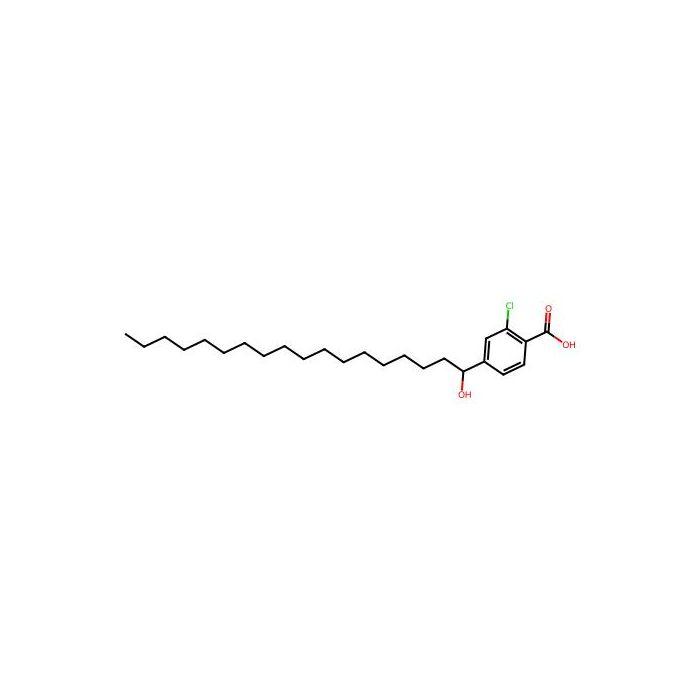
≥95% for sensitive chromatographic and analytical workflows requiring minimal baseline interference.
🌡
Storage & shipping
Store at -20°C Ships Ice chest + Ice pads Check lot-specific COA for exact specifications.
📋
Quality documents
SDS, COA, datasheet, and spec sheet available for download. Lot-specific COA accessible via lot number lookup.
📚
Literature proof
Cited in 0 peer-reviewed publications across chromatography, organic synthesis, and cross-coupling reactions.
개요
Lodelaben is a human neutrophil elastase inhibitor with an IC 50 and K i of 0.5 and 1.5 μM, respectively.
In Vitro
Lodelaben is a human neutrophil elastase inhibitor with an IC 50 and K i of 0.5 and 1.5 μM, respectively. Results indicate that the inhibition of human neutrophil elastase (HNE) by Lodelaben is non-competetive. Lodelaben is not inhibitory at 10 μM with the synthetic substrates or at 5 μM vith Azocoll. Pseudomonas aeruginosa elastase, a metallo-protease is not inhibited by Lodelaben. Cathepsin G activity, however, is inhibited by Lodelaben, with an IC 50 of approximately 2.5 μM, with Azocoll as substrate. MCE has not independently confirmed the accuracy of these methods. They are for reference only.
In Vivo
The mean pulmonary artery pressures of the saline/vehicle and saline/Lodelaben groups are similar, 16.4±1.1 and 17.4±0.9 mm Hg, respectively. Although, mean pulmonary artery pressure in the monocrotaline/vehicle group is 27.5±0.8 mm Hg, treatment of monocrotaline rats with Lodelaben results in significantly lower values (21.00±1.6 mm Hg, p<0.05). Saline/vehicle and saline/Lodelaben rats have only a small percentage of arteries muscularized at the alveolar wall level (1.9±1.4 and 0.4±0.4%, respectively). Treatment of monocrotaline-injected rats with Lodelaben results in a decreased percentage of alveolar wall arteries muscularized (10.0±3.6%). MCE has not independently confirmed the accuracy of these methods. They are for reference only.
Animal administration
Pathogen-free male Sprague-Dawley rats (250 to 300 g) are used. Half are assigned at random to be given a single subcutaneous injection of monocrotaline (60 mg/kg) and the other half receive an equal volume of 0.9% saline. Half of the rats in each group are further assigned at random to receive by gavage either Lodelaben ( 40 mg/kg/dose ) suspended in carboxymethylcellulose vehicle or an equal volume of vehicle only. The rats are gavaged twice daily starting 12 hours before and continuing for 8 days after the monocrotaline or saline injection to provide a \window\ around day 4. On day 13, after the monocrotaline or saline injection, the rats are anesthetized. Pressure measurements and cardiac output are recorded 48 hours later to allow sufficient time for recovery from the effects of anesthesia. The heart and lungs are then prepared for morphological assessments . aladdin has not independently confirmed the accuracy of these methods. They are for reference only.
This compound belongs to the class of organic compounds known as halobenzoic acids. These are benzoic acids carrying a halogen atom on the benzene ring.
External Descriptors
Not available
1. Djoumbou Feunang Y, Eisner R, Knox C, Chepelev L, Hastings J, Owen G, Fahy E, Steinbeck C, Subramanian S, Bolton E, Greiner R, and Wishart DS. ClassyFire: Automated Chemical Classification With A Comprehensive, Computable Taxonomy. Journal of Cheminformatics, 2016, 8:61.
Determine the necessary mass, volume, or concentration for preparing a solution.
Dilution Calculator
Determine the dilution needed to prepare a stock solution.
Reconstitution Calculator
리뷰
고객 리뷰
Application Protocols
No tested application protocols are provided in the product data for Lodelaben. The following general procedures apply to small-molecule library compounds (research-only):
Stock solution preparation (general):
Dissolve in anhydrous DMSO at 10–50 mM. Vortex and sonicate if needed. Filter (0.2 μm PTFE) if particulates persist.
Aliquot into low-bind tubes to avoid adsorption; store at −20°C protected from light.
Assay dosing:
Thaw once, keep on ice during use, and avoid repeated freeze–thaw. Dilute into pre-equilibrated buffer/media to ≤0.5–1% DMSO final.
Include vehicle controls and, where appropriate, detergent (e.g., 0.01% Triton X-100) to mitigate aggregation artifacts.
Analytical characterization:
Verify concentration by UV–Vis only if an extinction coefficient is known; otherwise use quantitative NMR or weight-by-differential methods.
These are general best practices; adapt to your assay system. No product-specific application data are supplied.
Biological Roles
No biological mechanism, target class, or pathway assignment is provided in the product data for Lodelaben (CAS 111149-90-7).
General considerations for small-molecule library members (non-clinical, research-only):
Potential roles may include acting as a ligand, modulator, or tool compound in enzymatic, receptor, or phenotypic assays; however, no target specificity is provided here.
Establish baseline properties experimentally: aqueous stability (various pH), microsomal stability, and plasma protein binding to assess suitability as a probe.
Evaluate potential PAINS/aggregator behavior using orthogonal assays and detergent controls.
All uses are for research use only. Do not infer therapeutic relevance from this catalog entry. Consult primary literature associated with CAS 111149-90-7 or CID 56557 for any reported biological activities; none are specified in the provided data.
Buffer Applications
This product is a small organic compound with no provided acid/base characteristics or buffer-forming capacity.
Not typically used as a buffering agent. No pKa or ionic functionality is provided in the product data.
Practical handling in buffered systems (general):
Prepare concentrated DMSO stocks and dilute into assay buffer to a low final DMSO percentage (≤0.5–1% v/v) to minimize cosolvent effects.
If the compound is ionizable (unknown here), buffer capacity and pH may affect solubility and activity; run pH–solubility scans and maintain consistent ionic strength.
Filter or centrifuge to remove undissolved material prior to biological assays.
For actual buffer recipes and pH ranges, refer to standard buffers (PBS, HEPES, MOPS, Tris). None are specifically tied to this compound.
Green Alternatives
Without a defined use-case or solvent system for this specific compound, green chemistry considerations focus on general handling and solvent choices.
Prefer greener solvents where feasible:
Replace dichloromethane/DMF with 2-MeTHF, CPME, EtOAc, or ethanol when solubility allows.
For extractions, consider EtOAc or MTBE over chlorinated solvents.
For recrystallization, ethanol or isopropanol may substitute for more hazardous options.
Energy and waste minimization:
Store at the recommended −20°C but avoid unnecessary freeze–thaw cycles; aliquot to reduce waste.
Use microscale assays and miniaturized analytics to limit consumption.
Comparison snapshot (general guidance; not item-specific):
2-MeTHF vs THF: similar polarity, lower peroxide tendency and bio-based origin; may alter solubility profile.
CPME vs DCM: broader liquid range and lower density; slower evaporation may affect processing times.
Supplier transparency: since stabilizers and impurity profiles are not specified for this item, request batch CoA and consider green metrics (e.g., PMI, solvent selection guides) in your workflow.
Note: The intrinsic environmental profile (biodegradability, aquatic toxicity) of Lodelaben is not provided; consult SDS and literature before scale-up.
Pharmaceutical Uses
No pharmacopeial status, excipient role, or formulation function is provided for Lodelaben in the product data.
Research-only note: For research use only; not for human or veterinary use.
If used in formulation research (general guidance):
Pre-formulation studies should assess solubility in biorelevant media, stability (oxidative, hydrolytic, photolytic), and polymorphism.
For in vitro dosing, DMSO stock dilution into aqueous media with surfactants (e.g., 0.01–0.1% Tween 80) can aid dispersion where compatible.
No information is provided regarding acceptable daily intake, regulatory monographs, or GMP manufacturing—this product should not be used in clinical applications.
Any references to therapeutic indications or dosing would be speculative and are intentionally omitted.
Physical Properties
Item-specific (from Product Data)
Appearance: Not specified for this item; refer to CoA/Spec Sheet.
Literature/Computed values
Not available in the provided data. Key properties such as melting point, boiling point, density, solubility, logP, pKa, and refractive index are Not specified for this item; refer to CoA/Spec Sheet or primary literature for CAS 111149-90-7.
General guidance for unknowns (good practice, not item-specific specs)
Solubility screening: test DMSO (10–50 mg/mL), DMF, ethanol, methanol, acetonitrile, and aqueous buffers with up to 5% DMSO cosolvent. Record equilibrium solubility and any polymorphic behavior.
Thermal behavior: use DSC/TGA to determine thermal transitions and onset of decomposition for setting drying and storage conditions.
Partitioning: shake-flask logD7.4 or chromatographic logP proxies help anticipate permeability and extraction behavior.
Spectroscopy: acquire UV–Vis (200–400 nm) and IR for rapid ID; note that UV cutoffs and extinction coefficients are not specified for this item and should be measured if required for analytical methods.
Quality and Grades
Item-specific (from Product Data)
Grade/Purity: Not specified for this item; refer to CoA/Spec Sheet.
What to expect and how to qualify
Identity: confirm by LC–MS (accurate mass), 1H/13C NMR, and, if applicable, chiral analysis. Match against reference spectra tied to CAS 111149-90-7.
Purity assessment: if grade is unspecified, determine by HPLC/UPLC with diode array (and MS if available). Report area% at multiple wavelengths to capture UV-inactive impurities.
Residual solvents/inorganics: assess by GC headspace and ICP-MS if process-sensitive work requires limits; specific thresholds are Not specified for this item.
Water content: Karl Fischer as needed; item-specific water specification is Not specified for this item.
Stabilizers/inhibitors: none listed. If instability is suspected, evaluate need for antioxidants or acid scavengers; no stabilizer is specified for this item.
Documentation: defer to the item’s CoA for batch-specific purity, residual solvent levels, and analytical methods. If low-UV applications (e.g., HPLC mobile-phase additive) are intended, verify UV transparency independently because a UV cutoff is Not specified for this item.
Reaction and Applications
This product is listed under a small-molecule/compound library category and is typically used as a research chemical/ligand candidate rather than as a general synthetic reagent.
Item-specific manufacturer applications: Not provided in the product data.
Typical research uses (general, not item-specific claims):
Hit-finding and SAR: preparation of DMSO stocks for biochemical or cell-based screening.
Analytical reference: standard for LC–MS method development or spiking studies if the compound is relevant to a pathway of interest.
Physicochemical profiling: measurement of solubility, permeability (PAMPA/Caco-2), and stability (chemical/metabolic) to inform suitability as a probe.
If used in synthesis: without structural information, no named reactions can be recommended. Should the structure include common functional handles (e.g., halides, carbonyls, amines), standard transformations (couplings, acylations, reductive aminations) may apply; confirm compatibility experimentally.
Because no reactivity or functional-group data are provided, do not rely on this material as a reagent or catalyst without consulting the CoA/SDS and primary literature for CAS 111149-90-7.
Reaction Conditions
No reaction condition data or functional-group information is provided for Lodelaben. The following are general, non-item-specific considerations should you explore chemical transformations after confirming structure:
Solvents: start with dry, oxygen-free solvents when moisture-/air-sensitive groups are suspected. Typical options include toluene, THF, 2-MeTHF, DCM, MeCN, DMF.
Atmosphere: employ inert gas (N2/Ar) for organometallic or air-sensitive steps.
Temperatures: screen from 0–100°C as dictated by reactivity; monitor by TLC/LC–MS.
Catalysts/bases/acids: select based on confirmed functional groups (e.g., Pd for cross-coupling, borohydrides for reductions). Avoid strong reagents until stability is known.
Yields/timelines: Not specified for this item; consult literature specific to CAS 111149-90-7 once structural details are confirmed.
These notes are general guidance and not product specifications.
Safety and Handling
Item-specific hazard info (from Product Data)
Signal Word: Not specified for this item; refer to SDS.
H-Statements: Not specified for this item; refer to SDS.
GHS Classification: Not specified for this item; refer to SDS.
Pictograms: Not specified for this item; refer to SDS.
General laboratory precautions (for small organic molecules; defer to SDS for authoritative guidance)
PPE: wear lab coat, safety glasses, and suitable chemically resistant gloves (e.g., nitrile). Handle in a fume hood to avoid inhalation of dusts/vapors/aerosols.
Avoid: ingestion, skin/eye contact, and inhalation. Prevent release to the environment until hazards are confirmed.
First aid (general): in case of skin/eye contact, rinse with water for ≥15 minutes; remove contaminated clothing. If inhaled, move to fresh air. If ingested, rinse mouth; seek medical advice. Always consult the SDS for compound-specific measures.
Incompatibilities: unknown for this item; segregate from strong oxidizers/acids/bases until verified.
Analytical confirmation: upon receipt, verify identity before use in critical experiments.
Waste: collect organic waste according to local regulations; avoid drain disposal.
Note: No information provided about volatility, flammability, or sensitization potential; treat as potentially hazardous until SDS review.
Solvent Selection
With no structural/solubility data provided, select solvents empirically for handling and stock preparation.
Primary screening solvents (general):
DMSO: preferred for screening stocks (10–50 mM) due to broad solvency; dilute into assay buffer to ≤0.5–1% v/v final DMSO.
DMF or NMP: strong polar aprotic alternatives for difficult solutes; consider cytotoxicity in biological assays.
Methanol, ethanol, isopropanol: useful for spectroscopic and preparative workflows; volatility aids removal.
Acetonitrile: good chromatographic compatibility; miscible with water.
Ethyl acetate, MTBE, toluene: for extractions and nonpolar solutes.
Aqueous handling: if water solubility is desired but unknown, use cosolvent systems (e.g., 5–10% DMSO or 10–20% acetonitrile in buffer) or cyclodextrin inclusion if compatible with your assay.
pH effects: unknown pKa; evaluate solubility across pH 2–10. Avoid strong base/acid until stability is known.
Analytical compatibility: choose LC–MS grade solvents for quantitative work; filter through 0.2 μm PTFE or PES.
Note: No dielectric constant, Hansen parameters, or specific miscibility data are available for this item; determine experimentally as needed.
Storage and Reconstitution
Item-specific (from Product Data)
Storage Conditions: Store at −20°C.
Shipped In: Ice chest + Ice pads.
General handling and reconstitution (not item-specific specs)
Upon receipt: allow the unopened container to equilibrate to room temperature in a desiccator before opening to prevent moisture condensation.
Solid materials: if supplied as a solid, prepare concentrated stock solutions (commonly 10–50 mM) in dry DMSO or another suitable solvent; exact solubility is Not specified for this item.
Solutions: if supplied in solution, keep tightly capped, minimize headspace, and store per label at −20°C. Protect from light if chromophoric groups are suspected; light sensitivity is Not specified for this item.
Aliquoting: to avoid freeze–thaw cycles, partition into single-use aliquots. Record preparation date and solvent.
Stability: long-term stability, hygroscopicity, and photostability are Not specified for this item; consult the CoA/SDS and perform periodic QC (e.g., HPLC) on stored stocks.
Thawing: thaw on ice; mix thoroughly to redissolve any precipitate. Discard aliquots showing degradation or precipitation that cannot be resolubilized safely.
For precise reconstitution instructions and shelf-life, refer to the batch CoA/Spec Sheet.
Structure and Identity
Item-specific (from Product Data)
SKU: L649654
Product Name: Lodelaben
CAS: 111149-90-7
PubChem CID: 56557
InChIKey: 348466 (as provided; note this is shorter than a standard InChIKey)
SMILES: Not specified for this item; refer to CoA/Spec Sheet.
Molecular formula: Not specified for this item; refer to CoA/Spec Sheet.
Molecular weight: Not specified for this item; refer to CoA/Spec Sheet.
Structural features (general note)
The detailed 2D/3D structure, functional groups, and stereochemistry are not provided in the product data. Consult the CoA/SDS or authoritative databases indexed by CAS 111149-90-7 or CID 56557 for the definitive structure.
Descriptive guidance (general)
For assay design and analytical ID, acquire: high-resolution mass (exact mass), 1H/13C NMR, and an identity match via LC–MS against an authenticated reference when available.
If chirality is relevant, verify enantiomeric/diastereomeric purity using chiral HPLC or NMR with chiral shift reagents.
Synthetic Utility
Structural and functional-group information for Lodelaben is not provided; therefore, specific synthetic transformations cannot be recommended.
General approaches if derivatization is desired (contingent on actual structure):
If halogenated: cross-couplings (Suzuki, Buchwald–Hartwig, Sonogashira) to build SAR.
If carbonyl-containing: reductions/oxidations, imine/enamine chemistry, or amide couplings for analog generation.
If amine/phenol present: acylation, sulfonylation, carbamate/urea formation; late-stage diversification via SuFEx if suitable handles exist.
Purification/analysis: use orthogonal chromatographic methods (normal-phase, reverse-phase, SFC) and confirm identity/purity by LC–MS and NMR.
Because this listing is positioned as a library compound, its primary use is as a screening entity rather than as a building block. Review the CoA and literature for CAS 111149-90-7 before planning synthetic campaigns.
Target Specificity
Not applicable. This product is a small molecule, not an antibody or biologic. No target, epitope, or selectivity profile is provided in the product data.
If used as a probe in research, determine target engagement using appropriate biophysical/biochemical assays (e.g., SPR, ITC, CETSA, enzymology), but no such data are supplied here.
We use cookies to ensure the website functions properly and, where permitted, to improve your experience. You can manage your preferences at any time in Settings. Learn more in our Cookie Policy.
Shall we send you a message when we have discounts available?
Remind me later
Thank you! Please check your email inbox to confirm.
Products are supplied to verified businesses, institutions, and qualified professionals for research and development use only. Not for use in humans, animals, diagnosis, or therapy.