≥99% for sensitive chromatographic and analytical workflows requiring minimal baseline interference.
🌡
Storage & shipping
Store at -20°C Ships Ice chest + Ice pads Check lot-specific COA for exact specifications.
📋
Quality documents
SDS, COA, datasheet, and spec sheet available for download. Lot-specific COA accessible via lot number lookup.
📚
Literature proof
Cited in 0 peer-reviewed publications across chromatography, organic synthesis, and cross-coupling reactions.
개요
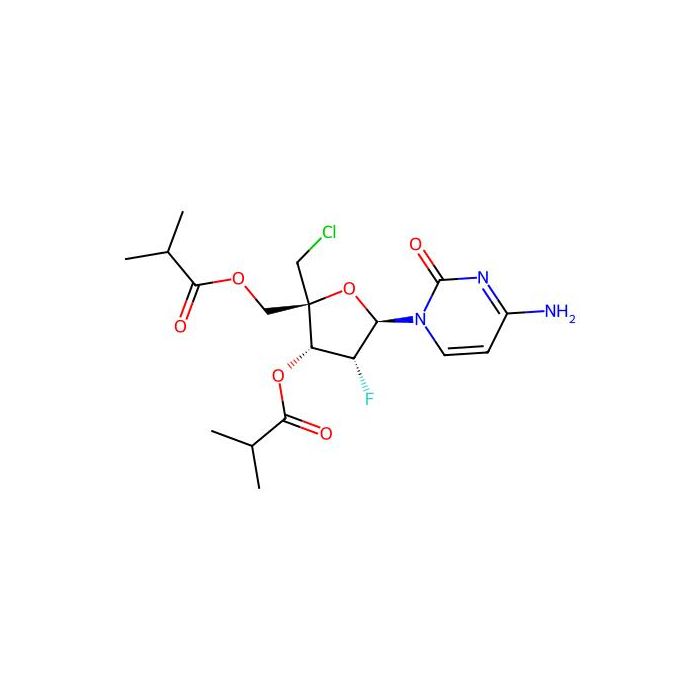
Lumicitabine (ALS-008176) is an inhibitor of the respiratory syncytial virus ( RSV ) polymerase.
In Vitro
Lumicitabine is an orally bioavailable prodrug of the novel RSV replication inhibitor ALS-008112, a cytidine nucleoside analogue. MCE has not independently confirmed the accuracy of these methods. They are for reference only.
In Vivo
Lumicitabine demonstrates excellent anti-RSV efficacy and safety in a phase 2 clinical RSV challenge study. It exhibits good oral bioavailability and a high level of 2c-TP in vivo . Lumicitabine has excellent stability profiles in formulations (>24 h storage stability in 0.5% methylcellulose aqueous formulation at rt) and simulats gastric and intestinal fluids (half-life >2 h). Its solubility is adequate to support oral administration in solutions with relatively low percentage of organic solvent and in aqueous suspensions. High levels of NMP and NTP are obtained following oral administration of Lumicitabine to monkeys. In an adult human challenge study, Lumicitabine has shown efficacy against RSV infection . MCE has not independently confirmed the accuracy of these methods. They are for reference only.
Animal administration
Rats: Lumicitabine are formulated as solutions in PEG400-based vehicles. Pharmacokinetic studies are conducted at 5 mg/kg and for oral PK studies the prodrugs are administered at 5 mg/kg parent nucleoside equivalent doses. Blood samples are typically collected at various time points up to 24 h post dose for rat . Monkeys: Lumicitabine are formulated as solutions in PEG400-based vehicles. Pharmacokinetic studies are conducted at 5 mg/kg and for oral PK studies the prodrugs are administered at 5 mg/kg parent nucleoside equivalent doses. Blood samples are typically collected at various time points up to 12 h post dose for Monkeys . aladdin has not independently confirmed the accuracy of these methods. They are for reference only.
This compound belongs to the class of organic compounds known as 2',5'-dideoxyribonucleosides. These are nucleosides characterized by a purine or pyrimidine base, which is N-linked to a 2',5'-dideoxyribose moiety.
External Descriptors
Not available
1. Djoumbou Feunang Y, Eisner R, Knox C, Chepelev L, Hastings J, Owen G, Fahy E, Steinbeck C, Subramanian S, Bolton E, Greiner R, and Wishart DS. ClassyFire: Automated Chemical Classification With A Comprehensive, Computable Taxonomy. Journal of Cheminformatics, 2016, 8:61.
Determine the necessary mass, volume, or concentration for preparing a solution.
Dilution Calculator
Determine the dilution needed to prepare a stock solution.
Reconstitution Calculator
리뷰
고객 리뷰
Application Protocols
Item-specific tested applications and dilutions: Not specified for this item; refer to CoA/Spec Sheet.
General laboratory protocol suggestions (for small-molecule test articles; not product-specific claims)
Stock solution preparation: Dissolve compound in anhydrous DMSO to 10–50 mM. Vortex and, if needed, sonicate briefly. Filter through 0.20 µm PTFE. Dispense into single-use aliquots (e.g., 10–50 µL) and store at −20°C.
Serial dilution for assays: Prepare intermediate DMSO stocks to minimize precipitation upon aqueous dilution. Aim for final DMSO ≤0.5–1% v/v in cell-based or enzyme assays.
Stability check: Before critical experiments, verify integrity by LC–MS after at least one freeze–thaw cycle. If hydrolysis products are detected, prepare fresh stocks.
Plate handling: Warm sealed plates to room temperature before opening to prevent condensation. Add compound last to minimize exposure time in aqueous media if stability is limited.
Documentation: Record lot number, stock concentration, diluent composition, and storage history with each experiment for traceability.
These are general best practices; optimize conditions for your specific experimental system.
Biological Roles
General background (literature; no medical/clinical claims)
Nucleoside analogues function as structural mimics of natural ribo- or deoxyribonucleosides. In cells, they may be taken up by nucleoside transporters and, where applicable, undergo stepwise phosphorylation by cellular kinases to mono-, di-, and triphosphate forms.
The triphosphate forms of certain analogues can interact with nucleotide-binding enzymes, including polymerases, kinases, and editing enzymes, potentially leading to altered incorporation or chain termination in nucleic acid synthesis (mechanism depends on structure).
Prodrug strategies are commonly employed to enhance membrane permeability and bypass the first phosphorylation step; promoieties are designed for selective unmasking by intracellular enzymes (e.g., esterases, phosphoramidases). The efficiency and selectivity of these processes are structure- and cell-type-dependent.
Off-target biochemical interactions can include inhibition of mitochondrial or cytosolic polymerases, and interactions with metabolizing enzymes; comprehensive profiling is recommended for research applications.
Item-specific
No biological activity claims, targets, or potencies are provided for this item. For any specific mechanistic or enzyme interaction data on Lumicitabine, consult peer-reviewed literature and the product’s CoA/SDS as available.
Buffer Applications
Not typically applicable.
Lumicitabine is a small-molecule research compound and is not a buffering agent. It does not serve as a pH buffer system.
Practical note: When preparing working solutions for biochemical or cellular assays, dissolve the compound first in DMSO to make a concentrated stock, then dilute into the assay buffer (e.g., PBS, HEPES, Tris) while maintaining low final DMSO content to avoid precipitation and assay interference.
Green Alternatives
Context
As a high-value, polar small molecule, the main environmental impact arises from solvent choice during handling, assay preparation, and any upscaling/synthesis, rather than from the compound itself.
Greener handling choices (general guidance)
Prefer water-based media for working solutions whenever solubility and stability permit; limit DMSO to the minimum compatible with your assay (≤0.5–1% v/v typical in bioassays).
When organic cosolvents are needed, consider lower-toxicity options first (e.g., ethanol, propylene carbonate) if chemically compatible; verify stability against alcoholysis for prodrug motifs.
In synthesis or sample prep, replace high-toxicity polar aprotics (DMF, NMP) with safer alternatives where feasible (e.g., Cyrene, propylene carbonate) and adopt solvent recycling.
Comparison (class-level, not product-specific)
DMSO: high solvency, low volatility, relatively favorable EHS profile; can facilitate aqueous dilution.
Ethanol/water: greener but limited solvency for highly polar, multifunctional compounds; may affect stability of labile esters.
Propylene carbonate: greener polar aprotic; high bp may complicate removal.
Operational practices
Minimize stock solution volumes; prepare concentrated aliquots to reduce waste.
Use microscale assays and 96/384-well formats to cut solvent usage.
Implement LC–MS methods with shorter run times and aqueous-rich mobile phases when chromatographic behavior allows.
Pharmaceutical Uses
No therapeutic or clinical claims are made for this product; it is supplied strictly for research use.
Research/formulation contexts (general guidance)
Reference standard: can be used as a reference material in analytical method development and validation (e.g., LC–MS quantitation in matrices) where permitted.
Preformulation studies: solubility screening (neat and with cosolvents), pH–solubility profiling, and stability testing (forced degradation: hydrolysis, oxidation, photolysis) to inform assay handling.
Solid-state characterization: if sufficient material is available, determine polymorph/amorphous content (PXRD, DSC, TGA) to understand storage behavior; nucleoside analogues often exhibit strong hydrogen-bonding networks affecting crystallinity.
Excipient compatibility (screening only): evaluate interactions with common excipients (lactose, microcrystalline cellulose, povidone) when designing in vitro studies; monitor for prodrug deprotection in presence of basic excipients.
Regulatory status
Pharmacopeial monograph: Not specified for this item; refer to literature/regulatory databases.
Documentation: For any regulated lab workflows, obtain full CoA, stability statements, and impurity profiles from the supplier.
Physical Properties
Item-specific (from Product Data)
Appearance: Not specified for this item; refer to CoA/Spec Sheet.
Molecular weight: Not specified for this item; refer to CoA/Spec Sheet.
Literature/general expectations for nucleoside analogues (not product specifications)
Physical state: often solid, crystalline powders due to extensive hydrogen bonding and high polarity.
Polarity/solubility: typically sparingly soluble in nonpolar solvents; soluble in highly polar aprotic solvents (DMSO, DMF) and variably soluble in water depending on ionization and substituents. Hygroscopicity can vary.
Acid–base character: nucleoside analogues usually have multiple hydrogen-bond donors/acceptors; pKa values (if present) are associated with heteroaromatic base nitrogens and any ionizable promoieties; exact pKa values are structure-dependent (literature; not specified here).
Partitioning: logP/logD generally low to moderate, reflecting polar functionality; exact values not provided here.
Thermal behavior: melting/decomposition temperatures can be elevated relative to typical organics, but are highly structure-dependent. Avoid overheating to prevent decomposition.
Note: Specific numerical values (bp, mp, density, refractive index, solubility, logP/logD, pKa) are not specified for this item; refer to CoA/Spec Sheet or primary literature for Lumicitabine.
Quality and Grades
Item-specific (from Product Data)
Grade/purity: Not specified for this item; refer to CoA/Spec Sheet.
How to interpret quality information (general guidance)
Purity reporting: For small-molecule research compounds such as nucleoside analogues, purity is commonly determined by HPLC/UPLC (UV or ELSD) with supporting NMR and MS data. If a specific purity threshold (e.g., ≥98% by HPLC) is required by your application (biochemical assays, medicinal chemistry SAR, reference standards), verify on the item’s CoA.
Analytical characterization: Typical documentation includes 1H/13C NMR, HRMS or ESI-MS, and chromatographic purity. Where applicable, chiral purity/enantiomeric ratio and residual solvent levels may be reported.
Stabilizers/additives: Not specified for this item; refer to CoA/Spec Sheet. If stabilizers are present (e.g., acid scavengers, antioxidants), consider their impact on bioassays or further synthesis.
Batch-to-batch consistency: For SAR or regulated method development, request consistent lot numbers or retain replicate material and obtain CoAs for each lot.
Reference standard use: When employing as a reference material (calibration, system suitability), confirm identity and potency via orthogonal methods and account for water content/volatile impurities where provided.
Note: In the absence of explicit grade information for this SKU, default to research-grade handling and verify suitability via CoA before use in critical assays.
Reaction and Applications
Item-specific (from Product Data)
Manufacturer-supplied application text: Not provided.
Research applications (general, for nucleoside analogue tool compounds; no medical/clinical claims)
Biochemical assays: evaluation as a small-molecule probe in nucleotide-processing enzyme assays (e.g., incorporation/chain-termination studies with RNA/DNA polymerases), competitive binding to nucleoside transporters, or phosphorylation profiling with kinases (literature, class-level usage).
Cell-based studies: assessment of intracellular metabolism (e.g., conversion to nucleotide triphosphates where applicable), cytotoxicity profiling, and mechanism-of-action investigations under defined, research-only conditions.
ADME and stability: in vitro microsomal stability, plasma stability, and esterase-mediated prodrug unmasking (if relevant). Evaluate permeability (Caco-2/MDCK) and transporter interactions.
Practical tips (general)
Stock preparation: use dry DMSO; filter sterilize if required; aliquot and store at −20°C to minimize hydrolysis.
Light/moisture sensitivity: many nucleoside prodrugs are moisture-sensitive; limit exposure, use desiccated vials, and avoid extended room-temperature handling.
Analytical methods: monitor integrity by LC–MS with short gradients; track potential hydrolysis products (e.g., parent nucleoside). Utilize ion-pairing or HILIC methods for polar analytes.
Note: Specific reactive use as a reagent/starting material is uncommon; this compound is typically employed as a test article in biochemical and cellular research.
Reaction Conditions
Item-specific reaction conditions are not provided for this SKU.
General guidance for derivatizing nucleoside analogues (literature; not product specifications)
Protection of hydroxyls: TBDMS protection using TBDMS-Cl, imidazole, DMF, 0–25°C; acetylation using Ac2O/pyridine at 0–25°C. Typical times: 1–12 h, monitor by LC–MS.
Carbonate formation: CDI (1.1–1.5 equiv) in anhydrous THF/DMF at 0–25°C; quench with alcohol or amine nucleophiles; 1–4 h.
Phosphoramidate installation: reaction with aryl or alkyl phosphorochloridates in presence of base (NEt3, NMI) and catalytic DMAP, −20 to 0°C to control chemoselectivity; 2–6 h.
Nucleobase modification: selective halogenation/amination often uses NBS/NCS or Pd-catalyzed coupling on pre-activated positions; conditions are substrate-dependent.
Deprotections: fluoride sources (TBAF) for silyl groups at 0–25°C; mild basic or acidic conditions for carbonate/ester removal as compatible.
Workup/purification
Due to high polarity, reversed-phase flash/prep HPLC or HILIC is frequently required; normal-phase silica may cause tailing or decomposition. Use aqueous buffers (volatile salts) compatible with MS.
Caveats
Moisture control is critical; many promoieties are hydrolytically labile. Conduct reactions under inert atmosphere and use thoroughly dried solvents and reagents.
Safety and Handling
Item-specific (from Product Data)
GHS classification, signal word, pictograms, H-statements: Not specified for this item; refer to SDS.
Storage conditions: Store at −20°C.
Shipping: Shipped in ice chest with ice pads.
Research use note: For research use only.
General guidance (not a substitute for SDS)
PPE: lab coat, appropriate chemically resistant gloves (e.g., nitrile), safety glasses or goggles. Handle powders/solids in a fume hood to minimize dust/aerosol exposure.
Incompatibilities: avoid strong oxidizers and strong acids/bases unless required by a controlled protocol. Many nucleoside analogues can undergo hydrolysis or transesterification if prodrug promoieties are present; maintain dry conditions and avoid prolonged exposure to moisture and elevated temperatures.
Handling tips: minimize repeated freeze–thaw of stock solutions; prepare single-use aliquots. Use anhydrous solvents (e.g., dry DMSO) for stock preparation to mitigate hydrolysis.
First aid (overview): if inhaled—move to fresh air; if on skin—wash with soap and water; if in eyes—rinse cautiously with water; if ingested—rinse mouth, seek medical attention. Always consult the SDS for authoritative, compound-specific guidance.
Waste: collect organic and aqueous waste streams according to institutional hazardous waste procedures. Do not discharge to drains.
Always defer to the product SDS and institutional EHS requirements for detailed hazard and exposure controls.
Solvent Selection
Item-specific (from Product Data)
No item-specific solubility data provided; refer to CoA/Spec Sheet.
Literature/general guidance for nucleoside analogues (not product specifications)
Primary stock solvent: DMSO (anhydrous) is commonly used due to high polarity and ability to dissolve polyfunctional molecules; typical lab stocks: 10–50 mM, filtered (0.2 µm) and aliquoted.
Alternative solvents: DMF, NMP for concentrated stocks; aqueous buffers (pH-adjusted) for working solutions, often after DMSO predissolution. Cosolvent systems (e.g., DMSO/water 1:9) can aid dilution.
Miscibility profile: DMSO is miscible with water and many organics; be mindful of compound precipitation upon high-fold aqueous dilution from DMSO—perform serial dilutions to keep final DMSO ≤0.5–1% v/v in biological assays.
Avoid: nonpolar solvents (hexanes, toluene) generally provide negligible solubility for nucleoside-like compounds. Alcohols (MeOH, EtOH) can be modestly effective but may promote transesterification of labile prodrug moieties over time.
pH considerations: If aqueous solubility is limited, slight basic adjustment (e.g., dilute NaHCO3) can improve dissolution for nucleobase analogues lacking sensitive promoieties; confirm compatibility first.
Quick comparison (class-level)
DMSO: highest solvating power for polar organics; ideal for concentrated stocks.
Water/buffer: assay-compatible; watch for precipitation.
DMF/NMP: useful for synthesis or intermediate preparation; higher boiling, more difficult to remove.
Storage and Reconstitution
Item-specific (from Product Data)
Storage conditions: Store at −20°C.
Shipping conditions: Shipped in ice chest with ice pads.
General guidance (not product specifications)
Long-term storage: Keep container tightly closed under desiccation and inert atmosphere if possible. Protect from light and moisture, especially if the structure includes hydrolytically labile prodrug groups.
Reconstitution: For most nucleoside-like small molecules, prepare a concentrated stock in anhydrous DMSO (e.g., 10–50 mM). Mix thoroughly and, if needed, warm gently to room temperature and sonicate briefly to aid dissolution. Avoid elevated temperatures that may promote decomposition.
Aliquoting: Dispense into single-use, low-bind microtubes to avoid repeated freeze–thaw cycles. Label with concentration, solvent, date, and lot.
Freeze–thaw: Minimize cycles. Thaw at room temperature, vortex to homogenize, and promptly return unused aliquots to −20°C. Discard aliquots showing precipitation or discoloration after thawing if integrity cannot be confirmed.
Aqueous working solutions: Prepare immediately before use. If assay-compatible, filter (0.20 µm) and keep on ice or at 2–8°C during the working day. Do not store diluted aqueous solutions unless stability is established analytically.
Always refer to the CoA and SDS for item-specific stability, solubility, and compatibility details.
Structure and Identity
Item-specific (from Product Data)
SKU: L648719
Product name: Lumicitabine
CAS: 1445385-02-3
PubChem CID: 89658382
InChIKey: 221012 (as provided)
SMILES: Not specified for this item; refer to CoA/Spec Sheet.
Molecular formula: Not specified for this item; refer to CoA/Spec Sheet.
Molecular weight: Not specified for this item; refer to CoA/Spec Sheet.
General chemistry/literature (for context; not item specifications)
Compound class: nucleoside analogue/prodrug-type small molecule (literature). Typically comprises a nucleobase linked to a modified ribose/deoxyribose scaffold, often with masked phosphate or other promoieties to enhance cell permeability.
Key structural motifs (typical for this class): heteroaromatic nucleobase (e.g., pyrimidine or purine family), polyhydroxylated sugar-like fragment with multiple stereocenters, and potential prodrug masking groups (e.g., ester, carbonate, or phosphoramidate; literature, compound-class description).
2D structural description (class-level): a bicyclic or monocyclic heteroaromatic base bearing exocyclic heteroatoms, attached through an anomeric carbon to an oxygen- or carbon-linked sugar framework bearing several hydroxyl or protected groups. Stereochemistry around C1′–C4′ typically defines β-configuration at the glycosidic linkage in many nucleosides (literature).
Synthetic Utility
General considerations (compound-class level; not specific to this SKU’s exact structure)
Nucleoside analogues possess multiple functional groups (heteroaromatic base nitrogens, secondary alcohols on the sugar scaffold, and potential masked phosphate/ester functionalities). These features enable:
Selective deprotection/functional group interconversions on the sugar moiety (e.g., acylation, silylation, carbonate formation) to tailor solubility and permeability.
Modifications on the nucleobase (e.g., halogenation, amination, or substitution at defined positions) for SAR exploration.
Prodrug assembly via esterification or phosphoramidate coupling using chlorophosphoramidates or mixed anhydrides under mild conditions.
Protecting-group strategy: orthogonal protection of 2′,3′,5′-OH groups (e.g., TBDMS, acetates, benzoyl) is central to regioselective derivatization; neighboring group participation can guide selective activation.
Coupling/activation: installation of carbonate/carbamate promoieties typically uses CDI, DSC, or chloroformates; phosphorylation employs phosphorochloridates or P(V) reagents with base.
Practical tips
Maintain anhydrous, neutral-to-slightly-basic conditions when handling labile prodrug motifs to limit premature hydrolysis.
Use HILIC or ion-pair LC methods to monitor reaction progress for highly polar intermediates; LC–MS is preferred for rapid feedback.
Note: The present product is generally used as a test article, not as a synthetic building block; the above guidance supports derivative or impurity synthesis where needed.
Target Specificity
Not applicable.
This product is a small-molecule research compound and not an antibody, protein, or nucleic acid probe with defined antigen/epitope binding parameters.
No target, potency, or selectivity data are provided in the Product Data for this SKU. Consult primary literature for any mechanistic insights relevant to your research use.
We use cookies to ensure the website functions properly and, where permitted, to improve your experience. You can manage your preferences at any time in Settings. Learn more in our Cookie Policy.
Shall we send you a message when we have discounts available?
Remind me later
Thank you! Please check your email inbox to confirm.
Products are supplied to verified businesses, institutions, and qualified professionals for research and development use only. Not for use in humans, animals, diagnosis, or therapy.