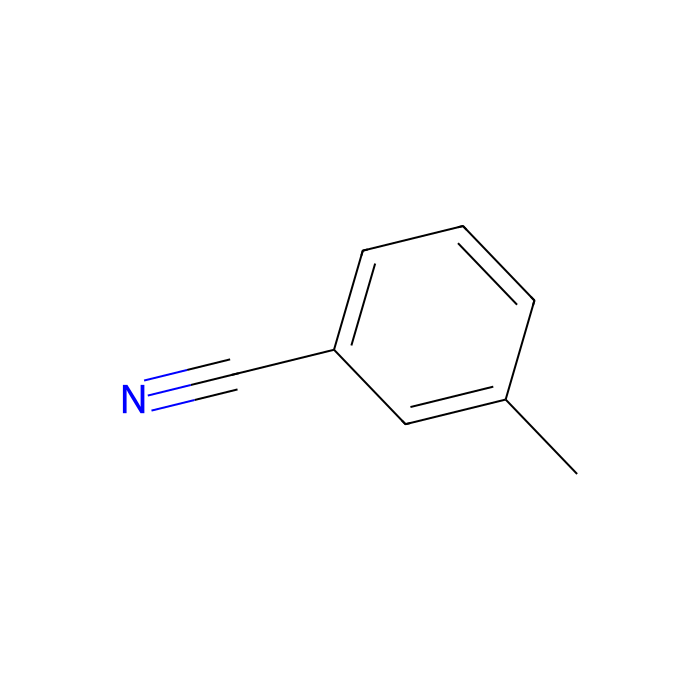
m-Tolunitrile - ≥99% , CAS No.620-22-4

CAS: 620-22-4 Cat. No.: T100294 분자식: C8H7N 분자량: 117.15 Beilstein Registry Number: 507391 EC 번호: 210-631-5 PubChem CID: 12104
주문 가능
GRADE & PURITY ≥99%
Synonyms
1-Methyl-3-cyanobenzene | TOLUNITRILE, M- | SCHEMBL12865 | W-105055 | 3-Tolunitrile | 3-Toluenkarbonitril | m-Toluenenitrile | m-Cyanotoluene | m-Tolunitrile | 3-METHYLBENZONITRILE | 3-methyl-benzonitrile | CCRIS 4736 | META TOLUNITRILE | NCGC00258407-01
Storage
Room temperature
Shipped In
FedEx DG Service
★
Size
USA
독일 (EU)*
Price
Qty
5ml
T100294-5ml
US 주문제작 · 2–4주 ·
—
US$11.90
25ml
T100294-25ml
US 주문제작 · 2–4주 ·
—
US$15.90
100ml
T100294-100ml
주문제작 · 8~12주
US$42.90
500ml
T100294-500ml
—
1 재고 있음
US$122.90
Enter a quantity for the sizes you want to add.
🧪
Why this grade

≥99% for sensitive chromatographic and analytical workflows requiring minimal baseline interference.

🌡

Storage & shipping

Room temperature Ships FedEx DG Service Check lot-specific COA for exact specifications.

📋

Quality documents

SDS, COA, datasheet, and spec sheet available for download. Lot-specific COA accessible via lot number lookup.

📚

Literature proof

Cited in 3 peer-reviewed publications across chromatography, organic synthesis, and cross-coupling reactions.

Specifications

동의어
1-Methyl-3-cyanobenzene | TOLUNITRILE, M- | SCHEMBL12865 | W-105055 | 3-Tolunitrile | 3-Toluenkarbonitril | m-Toluenenitrile | m-Cyanotoluene | m-Tolunitrile | 3-METHYLBENZONITRILE | 3-methyl-benzonitrile | CCRIS 4736 | META TOLUNITRILE | NCGC00258407-01
사양 및 순도
≥99%
보관 조건
Room temperature
배송
FedEx DG Service
순수함
≥99%
이름과 식별자
Pubchem Sid
Pubchem Sid Url
https://pubchem.ncbi.nlm.nih.gov/substance/488181546
정식 스마일
CC1=CC(=CC=C1)C#N
IUPAC Name
3-methylbenzonitrile
InChIKey
BOHCMQZJWOGWTA-UHFFFAOYSA-N
INCHI
1S/C8H7N/c1-7-3-2-4-8(5-7)6-9/h2-5H,1H3
이성체 SMILES
CC1=CC(=CC=C1)C#N
WGK 독일
3
RTECS
XV0525000
PubChem CID
12104
분자량
117.15
Beilstein
507391
Reaxy-Rn
507391

Documentation

📋 Safety Data Sheet (SDS)

Comprehensive hazard, handling, storage, and regulatory compliance document.

Download SDS →

✅ Certificate of Analysis (COA)

Lot-specific quality data. Enter your lot number to retrieve the exact COA.

Look up COA →

📊 Datasheet

Quick-reference summary of product specifications and applications.

View datasheet →

🔬 Specification Sheet

Full quality attributes and acceptance criteria for this grade.

View spec sheet →

Advanced Data

Taxonomic Classification

Taxonomy Tree

KingdomOrganic compounds
SuperclassBenzenoids
분류Benzene and substituted derivatives
SubclassBenzonitriles
Intermediate Tree Nodes Not available
Direct ParentBenzonitriles
Alternative Parents Toluenes  Nitriles  Organopnictogen compounds  Hydrocarbon derivatives  
Molecular FrameworkAromatic homomonocyclic compounds
Substituents Benzonitrile - Toluene - Nitrile - Carbonitrile - Organic nitrogen compound - Organopnictogen compound - Hydrocarbon derivative - Organonitrogen compound - Aromatic homomonocyclic compound
설명This compound belongs to the class of organic compounds known as benzonitriles. These are organic compounds containing a benzene bearing a nitrile substituent.
External Descriptors Not available
3D 구조
상호 작용 화학 구조 모델


관련 대상(비인간)
Plasmodium falciparum (966862 Activities)
Activity TypeRelationActivity valueUnitsAction TypeJournalPubMed IddoiAssay Aladdin ID
Mus musculus (284745 Activities)
Activity TypeRelationActivity valueUnitsAction TypeJournalPubMed IddoiAssay Aladdin ID
Rattus norvegicus (775804 Activities)
Activity TypeRelationActivity valueUnitsAction TypeJournalPubMed IddoiAssay Aladdin ID
Nfe2l2 Nuclear factor erythroid 2-related factor 2 (214 Activities)
Activity TypeRelationActivity valueUnitsAction TypeJournalPubMed IddoiAssay Aladdin ID
작용 메커니즘
인증서(CoA, COO, BSE/TSE 및 분석 차트)
C of A & Other Certificates(BSE/TSE, COO):
Analytical Chart:

Find and download the COA for your product by matching the lot number on the packaging.

11 results found

Lot NumberCertificate Type날짜항목
H2621337Certificate of AnalysisMay 07, 2026 T100294
H2621339Certificate of AnalysisMay 07, 2026 T100294
H2621340Certificate of AnalysisMay 07, 2026 T100294
E2114162Certificate of AnalysisFeb 07, 2025 T100294
E2114163Certificate of AnalysisFeb 07, 2025 T100294
E2114164Certificate of AnalysisFeb 07, 2025 T100294
E2114165Certificate of AnalysisFeb 07, 2025 T100294
B2226168Certificate of AnalysisDec 03, 2021 T100294
B2226173Certificate of AnalysisDec 03, 2021 T100294
B2226182Certificate of AnalysisDec 03, 2021 T100294
B2226185Certificate of AnalysisDec 03, 2021 T100294
화학 및 물리적 특성
굴절률1.5246-1.5266
발화점(°F)186.8 °F
발화점(°C)86℃
끓는점(°C)99-101℃/20 mmHg
녹는점(°C)-23°C
분자량117.150 g/mol
XLogP32.400
Hydrogen Bond Donor Count0
Hydrogen Bond Acceptor Count1
Rotatable Bond Count0
Exact Mass117.058 Da
Monoisotopic Mass117.058 Da
Topological Polar Surface Area23.800 Ų
Heavy Atom Count9
Formal Charge0
Complexity131.000
Isotope Atom Count0
Defined Atom Stereocenter Count0
Undefined Atom Stereocenter Count0
Defined Bond Stereocenter Count0
Undefined Bond Stereocenter Count0
The total count of all stereochemical bonds0
Covalently-Bonded Unit Count1
자주 묻는 질문과 기사
Citations of This Product
솔루션 계산기
리뷰

고객 리뷰

Application Protocols

No standardized bioassay or immunoassay application protocols apply to this small-molecule reagent. For synthetic uses, see Reaction Conditions and Application notes.

General lab protocol tips (non-binding, literature-based):

  • Drying prior to moisture-sensitive reactions: Stir over 3 Å molecular sieves (activated) for 12–24 h or distill under reduced pressure.
  • Reaction monitoring: Utilize GC or 1H NMR; track IR ν(C≡N) (~2230 cm−1) as a conversion handle.
  • Workup: For aluminum hydride reductions, quench sequentially with alcohol then aqueous tartrate; for Grignard additions, acidic aqueous workup to reveal ketone.

Refer to primary literature and internal SOPs for detailed procedures.

Biological Roles

Applicability note: m-Tolunitrile is a synthetic organic intermediate with no established endogenous biological role.

General biochemical context (literature):

  • Nitrile metabolism: Certain microorganisms express nitrilases and nitrile hydratases that convert aromatic nitriles to corresponding acids or amides under mild, aqueous conditions. This biocatalytic route is exploited in green chemistry for amide/acid production from benzonitrile derivatives.
  • Toxicology perspective: Aromatic nitriles often display limited biodegradability and moderate hydrophobicity (logP ~3), suggesting potential for environmental persistence; actual fate depends on substituents and local conditions. Always consult environmental, health, and safety guidance before discharge.

Utility in biocatalysis research:

  • Model substrate for screening nitrile-hydrolyzing enzymes (nitrilase, nitrile hydratase/amidase cascades), enabling studies on substrate scope, regioselectivity, and process optimization.

No claims are made regarding therapeutic or clinical function. For all uses, this material is for research use only.

Buffer Applications

Not typically applicable. m-Tolunitrile is a hydrophobic organic reagent and is not used to formulate aqueous buffer systems, pH standards, or electrophoresis buffers.

Practical note: When conducting aqueous biocatalytic hydrolysis of m-tolunitrile, buffers (e.g., phosphate, Tris) may be used to control pH for the enzyme, but m-tolunitrile itself is not a buffering component. Refer instead to Reaction & Applications and Reaction Conditions for relevant guidance.

Green Alternatives

Context: m-Tolunitrile is typically a substrate, not a process solvent. Greener strategy focuses on choosing milder reagents/solvents for its transformation and minimizing hazardous auxiliaries.

Greener solvent choices for analogous polarity roles (literature guidance):

  • Where a polar aprotic solvent is needed at scale, consider:
    • Propylene carbonate (PC): high BP, low vapor pressure; good for many base-mediated reactions.
    • Cyrene (dihydrolevoglucosenone): bio-based dipolar aprotic; good for some SNAr and cross-couplings.
    • 2-MeTHF or CPME: greener ethers for organometallic additions (with due attention to peroxide management).

Comparison (general):

  • DMF/DMAc/NMP: High performance but reproductive toxicity concerns; seek PC or sulfone alternatives where feasible.
  • Acetonitrile: Widely used but volatile; consider PC or MeCN–green blends to curb emissions.

Reagent considerations:

  • Hydrolysis: Replace strong mineral acids/bases with catalytic hydration (e.g., metal-catalyzed or enzymatic nitrilase routes) where compatible.
  • Reductions: Swap stoichiometric LiAlH4 for catalytic hydrogenation (Pd/C, Raney Ni) or transfer hydrogenation when selectivity allows; for aldehydes, employ DIBAL-H judiciously and recover Al residues responsibly.

Process intensification:

  • Apply flow chemistry for hazardous steps (benzylic bromination, hydrogenation) to reduce inventory of reactive intermediates and improve heat/mass transfer, supporting safer, greener operations.
Pharmaceutical Uses

No pharmacopeial grade or excipient designation is specified for this item; refer to CoA/Spec Sheet.

General role in pharmaceutical process chemistry (literature; no therapeutic claims):

  • Synthetic intermediate: The nitrile group is a versatile handle for converging to amides, acids, aldehydes, and amines, enabling rapid analog generation in medicinal chemistry campaigns.
  • Protecting/latent functionality: Nitriles can act as carboxyl surrogates (revealed by hydrolysis) or as precursors to amidines/imino ethers via Pinner chemistry.
  • Ring and side-chain diversification: The meta-methyl group allows benzylic functionalization paths (oxidation, halogenation) orthogonal to nitrile manipulations, aiding SAR exploration.

Formulation context:

  • Not typically used as an excipient or processing aid. If present in process streams, it is treated as an intermediate or impurity and controlled per ICH Q3A/B as applicable.

Regulatory considerations:

  • Any use in GMP settings requires specification of residual solvents/impurities, ID testing (IR/GC/NMR), and appropriate impurity limits per internal quality systems.
Physical Properties

Item-specific (from Product Data):

  • Appearance: Not specified for this item; refer to CoA/Spec Sheet.
  • Grade/Purity: Not specified for this item; refer to CoA/Spec Sheet.

Literature/typical values (for reference; not specifications for this item):

  • Physical state: Typically a colorless to pale liquid (literature)
  • Boiling point: ~217–221 °C at 1 atm (literature)
  • Melting point: typically below ambient; reported near −10 to −2 °C depending on isomeric purity (literature)
  • Density: ~0.99–1.01 g/mL at 20–25 °C (literature)
  • Refractive index (nD20): ~1.520–1.525 (literature)
  • LogP (octanol/water): ~3.0 (literature, indicative of moderate hydrophobicity)
  • pKa: Nitriles are very weak acids (pKa > 25 for alpha C–H; essentially non-ionizable in water) (literature)
  • Water solubility: Low (estimated <1 g/L at 20–25 °C); miscible with common organics (EtOAc, acetone, toluene, chlorinated solvents) (literature)
  • Dielectric constant: Aromatic nitriles are polar aprotic; benzonitrile is ~25 at 25 °C; m-tolunitrile expected in a similar range (literature)

Notes for practitioners (general):

  • The relatively high boiling point and polar aprotic character can be advantageous for elevated-temperature reactions where ethers would strip or where donor ability is needed without proticity.
  • Verify precise values on your batch CoA/SDS for engineering controls and method development.
Quality and Grades

Item-specific grade/purity: Not specified for this item; refer to CoA/Spec Sheet.

Guidance for interpreting grades (general):

  • Analytical/Reagent grade: Typically suitable for most synthetic applications; impurity profiles compatible with routine analysis.
  • High-purity or GC/HPLC grade: Tighter control of non-volatile residue and UV background, suitable for trace analytics or when used as an internal/external standard component.
  • Water and peroxide contents: Not typically critical for aromatic nitriles, but trace water can impact moisture-sensitive reactions (e.g., Grignard additions to nitriles). For moisture-critical steps, perform additional drying or verify Karl Fischer on receipt.

Stabilizers:

  • Aromatic nitriles generally do not require added stabilizers. If a stabilizer is declared on the CoA, verify its identity and potential interference with planned reactions.

Batch-specific verification:

  • For building-block use, consider verifying identity and purity by GC or 1H/13C NMR. Key markers: singlet for benzylic CH3 (~2.3 ppm), aromatic multiplets (~7.2–7.6 ppm), characteristic nitrile 13C near ~118 ppm; IR ν(C≡N) near 2230 cm−1 (literature).

Documentation:

  • Request CoA/SDS for your lot to confirm assay, residual solvents, and any trace metals (if relevant to catalysis).
Reaction and Applications

Scope as a building block (general chemistry):

  • Nitrile transformations:
    • Hydrolysis to amide or carboxylic acid (acidic or basic conditions); the meta-methyl group remains intact and can modulate solubility/reactivity.
    • Reduction to primary amine (LiAlH4, catalytic hydrogenation) or to aldehyde (DIBAL-H at low temperature) (literature).
    • Addition of organometallics (RMgX/RLi) to give imines that hydrolyze to ketones after workup (literature).
    • Pinner reaction (ROH/HCl) to imidates, enabling further acyl and heterocycle chemistry (literature).
  • Benzylic functionalization:
    • Radical or electrophilic bromination at benzylic position (NBS or Br2) to access 3-(cyanomethyl)toluene derivatives.
    • Oxidation of the methyl to aldehyde or acid (e.g., SeO2 or chromic oxidants; catalytic aerobic benzylic oxidation).
  • Aromatic ring chemistry:
    • Nitrile is a strong meta-directing group for electrophilic aromatic substitution; existing methyl group directs ortho/para. Net outcomes reflect combined directing effects.
    • Cross-coupling via C–CN bond activation (Ni, Pd) to effect cyano-decyanation couplings or convert to aryl boron/aryl metal derivatives (literature).

Applications in synthesis:

  • Intermediate for agrochemical, dye, and specialty material precursors where the nitrile is retained, hydrolyzed, or reduced in later stages.
  • Useful handle in divergent synthesis: a single substrate gives access to amides, acids, aldehydes, amines, and ketones with predictable selectivity under standard conditions.

Practical tips:

  • Drying: For moisture-sensitive steps (e.g., Grignard additions), dry over molecular sieves or distill under reduced pressure. Verify water by KF if critical.
  • Monitoring: IR ν(C≡N) ~2230 cm−1 (loss/shift tracks conversion); 1H NMR benzylic CH3 ~2.3 ppm is a convenient handle.
Reaction Conditions

General literature guidance (illustrative; optimize per substrate and scale):

  • Hydrolysis to amide:
    • Conditions: H2SO4/H2O (6–12 M), 80–120 °C, 4–24 h; or NaOH/H2O (2–6 M), reflux, 6–24 h. Monitor by IR (loss of νCN ~2230 cm−1, growth of amide C=O ~1650 cm−1).
    • To acid: Push conditions or two-step via amide; acidic workup to isolate the carboxylic acid.
  • Reduction to aldehyde (DIBAL-H):
    • Solvent: Toluene or hexanes; T = −78 to −20 °C; 1.1–1.5 equiv DIBAL-H; quench with MeOH then Rochelle’s salt; isolate aldehyde before over-reduction (literature).
  • Reduction to amine:
    • LiAlH4 (THF/Et2O), 0–25 °C → reflux; 2–4 equiv; careful quench. Or catalytic hydrogenation (Pd/C or Raney Ni, 10–50 bar H2, 25–80 °C) (literature).
  • Organometallic addition:
    • RMgX in THF, 0–25 °C (1.2–2.0 equiv) → imine Mg salt; aqueous workup → ketone (literature). Low temperature may improve selectivity.
  • Benzylic bromination:
    • NBS (1.1–1.5 equiv), AIBN, CCl4 or greener solvent (PhMe/MeCN), hv or 80–100 °C; hours-scale; monitor by GC.
  • C–CN activation/cross-coupling:
    • Ni(0)/Pd(0) catalysts with bulky ligands (e.g., BrettPhos-type), base (NaOtBu), 80–140 °C in polar aprotic solvent (dioxane/PhCN). Sensitivity to water/air varies with system (literature).

Typical yields (indicative, literature):

  • DIBAL-H to aldehyde: 60–85% with careful temperature control.
  • LAH to amine: 70–95% depending on workup.
  • Grignard to ketone: 60–90% after hydrolysis.

Always conduct small-scale trials and hazard assessments before scale-up.

Safety and Handling

Item-specific hazard information: Not specified for this item; refer to CoA/Spec Sheet and SDS for authoritative details (GHS classification, H-statements, pictograms, and signal word).

General safety guidance for aromatic nitriles (literature/typical; not item-specific):

  • Hazards: May cause irritation to skin, eyes, and respiratory tract. Some nitriles exhibit acute toxicity; avoid inhalation and skin contact. Combustible at elevated temperature despite high BP.
  • PPE: Use chemical-resistant gloves (e.g., nitrile), safety goggles/face shield, lab coat. Employ splash protection for scale-up.
  • Engineering controls: Work in a certified chemical fume hood. Provide local exhaust when heating or during transfers.
  • First aid (overview): Move exposed persons to fresh air after inhalation; rinse skin/eyes with water for ≥15 minutes upon contact; seek medical attention if symptoms persist. Ingestion: do not induce vomiting; obtain medical attention.
  • Incompatibilities: Strong oxidizers; strong bases and acids under forcing conditions can hydrolyze/oxidize. Avoid reactive metals that may be sensitive to organic nitriles under reducing conditions.
  • Fire response: Use dry chemical, CO2, or alcohol-resistant foam. Cool containers with water spray.
  • Spill response: Absorb with inert material, collect in appropriate waste. Prevent entry to drains.
  • Waste: Treat as organic halogen-free flammable/combustible organic waste unless local regulations specify otherwise.

Always consult the SDS for your specific lot prior to use.

Solvent Selection

Applicability note: m-Tolunitrile is primarily used as a reagent/building block, not as a routine chromatography or process solvent. However, its polar aprotic and high-boiling character makes it relevant as a specialty reaction medium in some cases.

General solvent characteristics (literature):

  • Polarity: Polar aprotic; stronger dipole than toluene, weaker donor than nitriles like acetonitrile but higher boiling.
  • Miscibility: Miscible with many organic solvents (ethers, aromatics, esters, ketones, chlorinated solvents); low solubility in water.
  • Dielectric: Expected in the 20–25 range (cf. benzonitrile ~25 at 25 °C), supporting ionic reactions better than nonpolar aromatics.

When to consider m-tolunitrile (or aromatic nitriles) as a medium:

  • Elevated temperature polar aprotic conditions where ethers (e.g., THF) distill or where toluene lacks sufficient polarity.
  • Stabilizing anionic species while avoiding hydrogen bonding of protic solvents.

Alternatives comparison (literature guidance):

  • Benzonitrile: Slightly lower BP, similar polarity; more common as solvent.
  • Acetonitrile: Much lower BP (82 °C), higher dipole; better for low-temp polar aprotic needs.
  • Dimethylformamide (DMF)/Dimethyl sulfoxide (DMSO): Higher polarity/donor strength but with different safety/process profiles and higher boiling points.

For purification/analytical work, typical organic solvents (hexanes, EtOAc, DCM, MeOH) are selected around the target compound’s polarity; m-tolunitrile itself is rarely used as eluent.

Storage and Reconstitution

Item-specific storage and shipping (from Product Data):

  • Storage Conditions: Room temperature
  • Shipped In: FedEx DG Service

General handling guidance (not specification):

  • Store tightly closed in a dry, well-ventilated area away from strong oxidizers. Protect from direct sunlight and ignition sources.
  • If long-term storage is anticipated, consider keeping under inert gas blanket to minimize oxidative discoloration, although aromatic nitriles are generally stable.
  • Reconstitution: Not applicable (neat liquid reagent). If solidification occurs at low temperature, gently warm to ambient and homogenize before use.
  • Packaging: Use compatible seals (PTFE-lined caps) to reduce permeation and preserve purity.

Before critical applications (e.g., moisture-sensitive reactions), verify water content by Karl Fischer or redry as needed.

Structure and Identity

Brief overview: m-Tolunitrile (3-methylbenzonitrile) is an aromatic nitrile featuring a meta-methyl substituent relative to the cyano group on a benzene ring. It serves widely as an intermediate for transformations of the nitrile and benzylic positions.

Item-specific (from Product Data):

  • SKU: T100294
  • Product Name: m-Tolunitrile
  • CAS: 620-22-4
  • PubChem CID: 12104
  • Storage Conditions: Room temperature
  • Shipped In: FedEx DG Service
  • Research Use Note: For research use only

Literature/computed identifiers (for reference; not item specifications):

  • Synonyms: 3-methylbenzonitrile; meta-tolunitrile
  • Molecular formula: C8H7N (literature)
  • Molecular weight: 117.15 g/mol (literature)
  • SMILES: CC1=CC(=CC=C1)C#N or Cc1cccc(c1)C#N (literature)
  • InChIKey: Typically reported as HRZJQCQNPZCXRK-UHFFFAOYSA-N (literature)

Structure description (general chemistry):

  • Functional groups: One aromatic ring (benzene) bearing a nitrile (–C≡N) and a methyl group at the 1,3-positions.
  • Electronic features: The nitrile is strongly electron-withdrawing and meta-directing in electrophilic aromatic substitution; the benzylic methyl is activated toward radical and ionic benzylic functionalization.
  • 2D arrangement (in words): A benzene ring with a –C≡N substituent at carbon 1 and a –CH3 substituent at carbon 3 (meta). The nitrile carbon is sp-hybridized, triple-bonded to nitrogen, projecting linearly from the ring.
Synthetic Utility

Key reactive handles (general chemistry):

  • Nitrile (–C≡N):
    • Hydrolysis to amide/acid (acidic, basic, or biocatalytic conditions).
    • Reduction: to primary amine (LiAlH4, BH3·THF, catalytic H2) or to aldehyde (DIBAL-H at −78 to −20 °C) (literature).
    • Nucleophilic addition: RMgX/RLi → imine/imine salt → hydrolytic workup to ketone (literature).
    • Pinner/Imidate formation (ROH/HCl), gateway to amidines, esters, heterocycles.
    • Cross-coupling via C–CN activation (Ni/Pd catalysis) to forge C–C/C–B bonds (literature).
  • Benzylic methyl:
    • Benzylic oxidation to aldehyde/acid (Mn-, Co-, or Cu-catalyzed aerobic protocols; classic Cr/Se reagents).
    • Halogenation (e.g., NBS/AIBN, hv) to benzyl halides for SN2 or transition-metal couplings.

Strategic considerations:

  • Directing effects: The nitrile is strongly meta-directing and deactivating; the methyl is weakly activating ortho/para-directing. Regioselectivity in EAS reflects the balance of these effects and conditions.
  • Orthogonal reactivity: Sequence planning can exploit chemoselectivity (e.g., benzylic bromination prior to nitrile reduction; DIBAL-H at low temperature avoids ring reduction).
  • Purification: The nitrile IR band (~2230 cm−1) and the benzylic singlet (~2.3 ppm, 1H NMR) simplify reaction monitoring.

Use cases:

  • Divergent synthesis platforms for libraries in agrochemicals/materials.
  • Late-stage functionalization leveraging decyanation or cyanation back-and-forth to access isomeric scaffolds.
Target Specificity

Not applicable. This product is a small-molecule organic reagent and does not possess biological target specificity attributes (e.g., antigen, clone, isotype). No item-specific immunological data are provided.

자주 묻는 질문

What is the purity of this product?
This product is supplied at ≥99% purity (chemical assay). Lot-specific values are stated on the Certificate of Analysis.
How should this product be stored?
Store at room temperature.
How is this product shipped?
This product is classified as dangerous goods and ships via FedEx DG Service. Ground and other economy services are not available, and delivery to some destinations or address types may be restricted.
What are the CAS number, molecular formula and molecular weight?
The CAS Number is 620-22-4, the molecular formula is C8H7N, and the molecular weight is 117.15 g/mol. InChIKey BOHCMQZJWOGWTA-UHFFFAOYSA-N.
What documentation is provided?
Available product documentation, including Certificates of Analysis (COA), Safety Data Sheets (SDS), and specification sheets, is shown in the product document area. Document availability and access follow the current site policy.

Shall we send you a message when we have discounts available?

Remind me later

Thank you! Please check your email inbox to confirm.

Oops! Notifications are disabled.