등급 & 순도Moligand™?Moligand™ — Aladdin's line of ligands and bioactive small molecules. Use for receptor, pathway, and binding studies needing defined small-molecule tools.≥98%
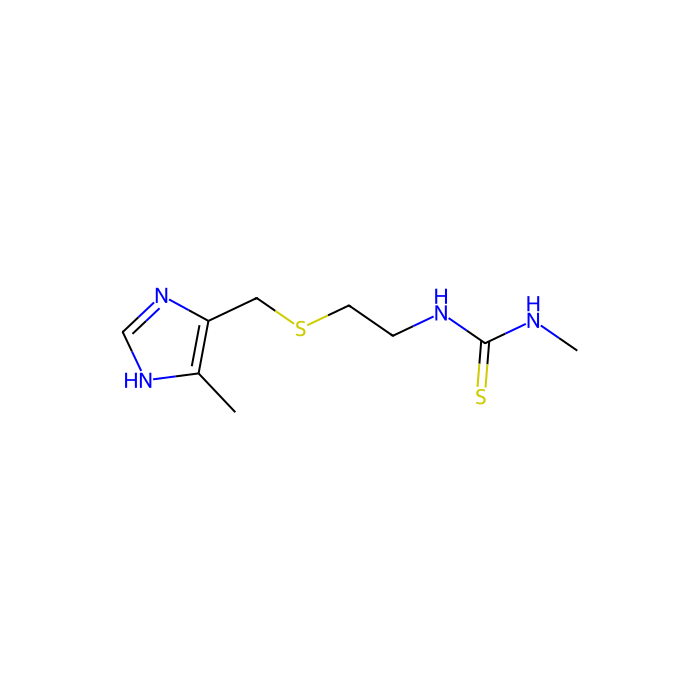
Metiamide (SK&F 92058) is a histamine H2-receptor antagonist.
사양
사양 및 순도
Moligand™, ≥98%
생화학 및 생리적 메커니즘
Description: IC50 Value: 0.92uM(Ki with glycolaldehyde as the varied substrate for E3) Metiamide is a histamine H2-receptor antagonist developed from another H2 antagonist, burimamide. It was an intermediate compound in the development of the successful anti-ulcer drug cimetidine. in vitro: Metiamide is a competitive with aldehyde substrates and noncompetitive with the Human E3 Aldehyde Dehydrogenase coenzyme, binding to both the free E3 isozyme and the enzyme·coenzyme binary complex withK i values of 0.92 μM glycolaldehyde as the varied substrate[1]. Data was got as percentage change in GTPase activity induced by metiamide compared with the GTPase activity stimulated by HA (100 μM)[2]. in vivo: Metiamide is a histamine H2-receptor antagonist. It reduces basal and nocturnal gastric acid secretion and a reduction in gastric volume, acidity, and amount of gastric acid released in response to stimuli including food, caffeine, insulin, betazole, or pentagastrin. Metiamide inhibits many of the isoenzymes of the hepatic CYP450 enzyme system. Other actions of Metiamide include an increase in gastric bacterial flora such as nitrate-reducing organisms. Clinical trail:
This compound belongs to the class of organic compounds known as imidazoles. These are compounds containing an imidazole ring, which is an aromatic five-member ring with two nitrogen atoms at positions 1 and 3, and three carbon atoms.
External Descriptors
imidazoles
1. Djoumbou Feunang Y, Eisner R, Knox C, Chepelev L, Hastings J, Owen G, Fahy E, Steinbeck C, Subramanian S, Bolton E, Greiner R, and Wishart DS. ClassyFire: Automated Chemical Classification With A Comprehensive, Computable Taxonomy. Journal of Cheminformatics, 2016, 8:61.
Products are supplied to verified businesses, institutions, and qualified professionals for research and development use only. Not for use in humans, animals, diagnosis, or therapy.

 F2426103