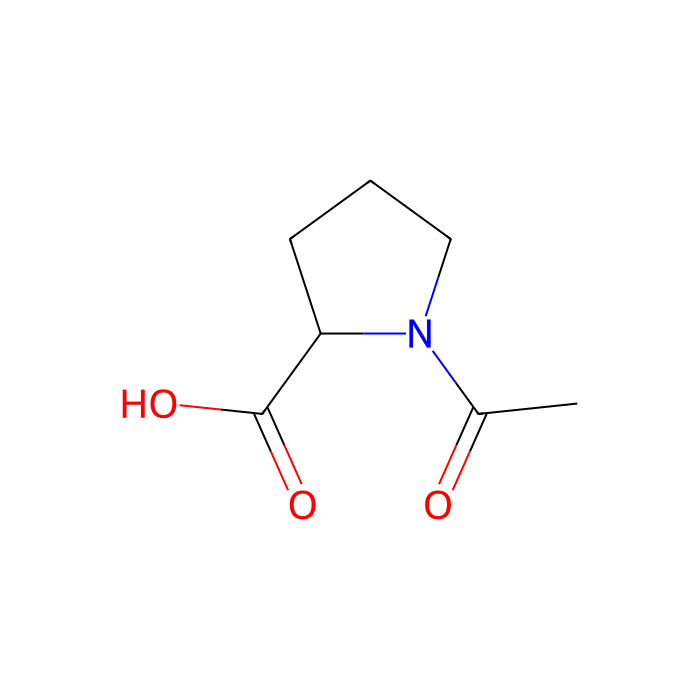
N-Acetyl-D-Proline - ≥98% , CAS No.59785-68-1

CAS: 59785-68-1 Cat. No.: A117204 분자식: C7H11NO3 분자량: 157.17 EC 번호: 826-011-8
주문 가능
GRADE & PURITY ≥98%
Synonyms
AC-D-PRO-OH | AM82194 | AKOS015841039 | DTXSID00352112 | Q27120548 | A832468 | EN300-211777 | Acetyl-D-proline | (2R)-1-acetylpyrrolidine-2-carboxylic acid | Z1078490036 | (R,S)-1-Acetyl-pyrrolidine-2-carboxylic acid | D-Proline, 1-acetyl- | (R)-1-Acetylp
Storage
Room temperature
Shipped In
Normal
★
Size
USA
독일 (EU)*
Price
Qty
1g
A117204-1g
2 재고 있음
—
US$9.90
5g
A117204-5g
8 재고 있음
—
US$10.90
10g
A117204-10g
1 재고 있음
—

US$15.90

US$23.90
저장 US$8.00 (33.47%)
25g
A117204-25g
7 재고 있음
—

US$19.90

US$29.90
저장 US$10.00 (33.44%)
100g
A117204-100g
4 재고 있음
—

US$74.90

US$112.90
저장 US$38.00 (33.66%)
Enter a quantity for the sizes you want to add.
🧪
Why this grade

≥98% for sensitive chromatographic and analytical workflows requiring minimal baseline interference.

🌡

Storage & shipping

Room temperature Ships Normal Check lot-specific COA for exact specifications.

📋

Quality documents

SDS, COA, datasheet, and spec sheet available for download. Lot-specific COA accessible via lot number lookup.

📚

Literature proof

Cited in 0 peer-reviewed publications across chromatography, organic synthesis, and cross-coupling reactions.

Specifications

동의어
AC-D-PRO-OH | AM82194 | AKOS015841039 | DTXSID00352112 | Q27120548 | A832468 | EN300-211777 | Acetyl-D-proline | (2R)-1-acetylpyrrolidine-2-carboxylic acid | Z1078490036 | (R,S)-1-Acetyl-pyrrolidine-2-carboxylic acid | D-Proline, 1-acetyl- | (R)-1-Acetylp
사양 및 순도
≥98%
보관 조건
Room temperature
배송
Normal
순수함
≥98%
이름과 식별자
Pubchem Sid
Pubchem Sid Url
https://pubchem.ncbi.nlm.nih.gov/substance/488191228
정식 스마일
CC(=O)N1CCCC1C(=O)O
IUPAC Name
(2R)-1-acetylpyrrolidine-2-carboxylic acid
InChIKey
GNMSLDIYJOSUSW-ZCFIWIBFSA-N
INCHI
1S/C7H11NO3/c1-5(9)8-4-2-3-6(8)7(10)11/h6H,2-4H2,1H3,(H,10,11)/t6-/m1/s1
이성체 SMILES
CC(=O)N1CCC[C@@H]1C(=O)O
분자량
157.17
Reaxy-Rn
83201
Reaxys-RN_link_address
https://www.reaxys.com/reaxys/secured/hopinto.do?context=S&query=IDE.XRN=83201&ln=

Documentation

📋 Safety Data Sheet (SDS)

Comprehensive hazard, handling, storage, and regulatory compliance document.

Download SDS →

✅ Certificate of Analysis (COA)

Lot-specific quality data. Enter your lot number to retrieve the exact COA.

Look up COA →

📊 Datasheet

Quick-reference summary of product specifications and applications.

View datasheet →

🔬 Specification Sheet

Full quality attributes and acceptance criteria for this grade.

View spec sheet →

Advanced Data

Taxonomic Classification

Taxonomy Tree

KingdomOrganic compounds
SuperclassOrganic acids and derivatives
분류Carboxylic acids and derivatives
SubclassAmino acids, peptides, and analogues
Intermediate Tree Nodes Amino acids and derivatives - Alpha amino acids and derivatives - N-acyl-alpha amino acids and derivatives
Direct ParentN-acyl-alpha amino acids
Alternative Parents Proline and derivatives  Pyrrolidine carboxylic acids  N-acylpyrrolidines  Tertiary carboxylic acid amides  Acetamides  Monocarboxylic acids and derivatives  Carboxylic acids  Azacyclic compounds  Organopnictogen compounds  Organonitrogen compounds  Organic oxides  Hydrocarbon derivatives  Carbonyl compounds  
Molecular FrameworkAliphatic heteromonocyclic compounds
Substituents N-acyl-alpha-amino acid - Proline or derivatives - N-acylpyrrolidine - Pyrrolidine carboxylic acid - Pyrrolidine carboxylic acid or derivatives - Pyrrolidine - Tertiary carboxylic acid amide - Acetamide - Carboxamide group - Organoheterocyclic compound - Monocarboxylic acid or derivatives - Carboxylic acid - Azacycle - Carbonyl group - Organic oxide - Organopnictogen compound - Organooxygen compound - Organonitrogen compound - Organic oxygen compound - Organic nitrogen compound - Hydrocarbon derivative - Aliphatic heteromonocyclic compound
설명This compound belongs to the class of organic compounds known as n-acyl-alpha amino acids. These are compounds containing an alpha amino acid which bears an acyl group at its terminal nitrogen atom.
External Descriptors pyrrolidinemonocarboxylic acid - N-acylpyrrolidine - D-proline derivative
3D 구조
상호 작용 화학 구조 모델


관련 대상(인간)
TDP1 Tchem Tyrosyl-DNA phosphodiesterase 1 (345557 Activities)
Activity TypeRelationActivity valueUnitsAction TypeJournalPubMed IddoiAssay Aladdin ID
관련 대상(비인간)
ampC Beta-lactamase AmpC (62480 Activities)
Activity TypeRelationActivity valueUnitsAction TypeJournalPubMed IddoiAssay Aladdin ID
Plasmodium falciparum (966862 Activities)
Activity TypeRelationActivity valueUnitsAction TypeJournalPubMed IddoiAssay Aladdin ID
Nfe2l2 Nuclear factor erythroid 2-related factor 2 (214 Activities)
Activity TypeRelationActivity valueUnitsAction TypeJournalPubMed IddoiAssay Aladdin ID
작용 메커니즘
인증서(CoA, COO, BSE/TSE 및 분석 차트)
C of A & Other Certificates(BSE/TSE, COO):
Analytical Chart:

Find and download the COA for your product by matching the lot number on the packaging.

7 results found

Lot NumberCertificate Type날짜항목
B2228021Certificate of AnalysisDec 12, 2025 A117204
F1218014Certificate of AnalysisMay 31, 2024 A117204
E2421508Certificate of AnalysisMar 20, 2024 A117204
E2312123Certificate of AnalysisFeb 17, 2022 A117204
G2203025Certificate of AnalysisFeb 17, 2022 A117204
G2203026Certificate of AnalysisFeb 17, 2022 A117204
G2203028Certificate of AnalysisFeb 17, 2022 A117204
화학 및 물리적 특성
분자량157.170 g/mol
XLogP3-0.700
Hydrogen Bond Donor Count1
Hydrogen Bond Acceptor Count3
Rotatable Bond Count1
Exact Mass157.074 Da
Monoisotopic Mass157.074 Da
Topological Polar Surface Area57.600 Ų
Heavy Atom Count11
Formal Charge0
Complexity190.000
Isotope Atom Count0
Defined Atom Stereocenter Count1
Undefined Atom Stereocenter Count0
Defined Bond Stereocenter Count0
Undefined Bond Stereocenter Count0
The total count of all stereochemical bonds0
Covalently-Bonded Unit Count1
솔루션 계산기
리뷰

고객 리뷰

Application Protocols

No item-specific tested application protocols are provided in the Product Data. The following are general, non-binding examples to guide laboratory use.

  • Stock solution preparation (analytical assays):

    • Dissolve in water or DMSO to prepare a 10–100 mM stock (as solubility allows). Filter (0.22 µm) if particulate is present. Store aliquots to minimize freeze–thaw.
  • Coupling to an amine (general EDC protocol):

    • Dissolve N-Acetyl-D-Proline (1.0 eq) and the amine partner (1.0–1.2 eq) in DMF (or MeCN).
    • Add EDC·HCl (1.1 eq) and a catalytic amount of Oxyma or HOAt-analog; include base (DIPEA, 2.0 eq).
    • Stir at 0–25 °C, monitor by LC. Quench, dilute with water, extract or precipitate product, and purify by chromatography or crystallization.
  • Esterification (Steglich):

    • In DCM, cool to 0 °C; add alcohol (1.5 eq), DCC (1.1 eq), and catalytic DMAP. Warm to rt and stir until completion. Filter DCU and purify.

Adjust concentrations, equivalents, and temperatures based on your substrate and scale. Perform small-scale trials to optimize conditions and confirm stereochemical integrity. For research use only.

Biological Roles

This product is intended for research use only. The following notes describe general biochemical context for N-acetylated amino acids and proline derivatives; they are not medical or clinical claims.

  • Biochemical context (literature/general):

    • N-Acetylation of amino groups is a common modification that decreases basicity and nucleophilicity. For proline, N-acetylation yields a neutral amide and a free carboxyl group, altering charge state and solubility across pH.
    • Proline residues influence protein folding due to conformational constraints of the pyrrolidine ring; acetylated proline derivatives are often used as models to study peptide bond isomerization (cis/trans) and ring puckering.
    • D-enantiomers of amino acids are rare in metazoan proteins but occur in bacterial cell walls and certain peptides; D-proline derivatives are used to probe stereochemical recognition in enzymes and transporters.
  • Experimental uses:

    • Standards in chiral chromatography method development (separation of D/L amino acid derivatives).
    • Model substrates in studies of amide bond kinetics, proline cis/trans isomerization, and conformational analysis by NMR/IR.
  • Metabolic handling:

    • Compared to the parent amine, N-acetyl derivatives typically show altered enzymatic susceptibility (e.g., are not substrates for transamination at the free amine). Specific metabolic pathways for N-Acetyl-D-Proline vary by organism and are context-dependent.

No specific biological activity or target interactions are claimed for this catalog item.

Buffer Applications

N-Acetyl-D-Proline is not a conventional buffering agent. It lacks a free amine and presents a single titratable carboxyl group, offering limited buffering capacity except in a narrow acidic range.

  • Practical notes (general):
    • Can be dissolved in aqueous media; pH adjustment (e.g., with NaOH) will form the carboxylate salt, improving solubility.
    • If used as an additive (e.g., chiral selector studies), prepare solutions in standard buffers (phosphate, acetate, citrate) rather than relying on this compound for buffering.

For robust buffering needs, choose established systems (phosphate pH 6–8, acetate pH 3.6–5.6, citrate pH 3–6.2). No item-specific buffer recipes are provided.

Green Alternatives

Opportunities to improve sustainability when working with N-Acetyl-D-Proline relate mainly to solvent and coupling-reagent choices rather than the substrate itself.

  • Greener solvent choices (literature/general):

    • Prefer water or water–ethanol mixtures for dissolution, crystallization, and some esterifications (biocatalytic routes).
    • Replace DMF/NMP where possible with safer polar aprotics such as propylene carbonate or Cyrene (dihydrolevoglucosenone) after solubility assessment.
  • Greener coupling strategies:

    • Use water-tolerant carbodiimides (EDC) with catalytic NHS/HOAt alternatives (where permitted) to minimize hazardous waste compared to DCC/DCU protocols.
    • Explore enzyme-catalyzed amidations/esterifications in aqueous media or deep eutectic solvents.
  • Comparison snapshot (general):

    • DMF vs ethanol/water: DMF offers broader solubility but is a reproductive toxin and harder to remove; ethanol/water are benign but may require pH control and can limit substrate scope.
    • DCC vs EDC: DCC generates insoluble urea waste (DCU) and can be sensitizing; EDC forms water-soluble urea byproducts, easing work-up.

Tradeoffs: Greener systems may reduce reaction rates or scope; pilot small-scale screens to balance EHS benefits with performance.

Note: No item-specific solvent or reagent restrictions are specified; adapt choices to your process and consult institutional green-chemistry guidelines.

Pharmaceutical Uses

For research use only; not for human or veterinary use. The following discusses general formulation/manufacturing contexts without therapeutic claims.

  • Possible roles (literature/general):

    • Intermediate/building block in the synthesis of peptidomimetics or prodrug moieties where a D-proline unit with a blocked amine is required.
    • Chiral auxiliary/handle incorporated into small molecules to influence conformation or solubility.
  • Excipient status:

    • N-Acetyl-D-Proline is not a common pharmacopeial excipient. No compendial monograph is implied by this listing.
  • Developability considerations:

    • Solubility can be tuned via salt formation of the carboxylate (e.g., sodium salt) or by esterification for prodrug strategies in research settings.
    • Analytical control: chiral purity (ee), residual solvents, and polymorph/solid form (if applicable) should be evaluated during process development.

Item-specific regulatory grade or GMP suitability is not specified; consult the CoA/Spec Sheet and your QA unit for appropriate use categorization.

Physical Properties

Item-specific specifications are not listed in the Product Data. The following points are general/literature guidance about N-acetylated proline derivatives and should not be construed as product specifications for this SKU.

  • Aggregated state/appearance: Not specified for this item; refer to CoA/Spec Sheet.
  • Melting point, boiling point, density, refractive index: Not specified for this item; refer to CoA/Spec Sheet.
  • Acid–base properties (literature):
    • Carboxylic acid pKa expected in the typical range for N-acylated amino acids; the amide nitrogen is non-basic under normal conditions.
    • Predominantly exists as a neutral acid (or zwitterionic form in water depending on pH); no free amine due to acetylation.
  • Solubility (literature/general):
    • Generally soluble in water and polar protic solvents (e.g., methanol, ethanol) and in some polar aprotics (e.g., DMF, DMSO); limited solubility in nonpolar solvents.
    • Solubility increases with deprotonation (basic aqueous media) due to carboxylate formation.
  • Partitioning (literature):
    • Low to moderate hydrophilicity is typical for N-acetyl amino acids; logP/logD values are expected to be small; exact values Not specified for this item.

Always verify exact physical property values for your lot on the CoA/Spec Sheet before designing quantitative processes.

Quality and Grades
  • Item-specific grade/purity: Not specified for this item; refer to CoA/Spec Sheet.

  • How to interpret common grades (general guidance):

    • Research/biochemical grade: suitable for general laboratory synthesis and biochemical work; typical controls on inorganic/organic impurities but may not meet chromatographic or GMP criteria.
    • Peptide-synthesis grade: emphasizes low water content, low residual solvents/metals, and tight controls on enantiomeric excess; often includes HPLC assay and chiral purity reporting.
    • HPLC grade (for solvents) is not applicable here; however, low-UV-absorbing profiles are valued for analytical uses of amino acid derivatives.
  • Enantiopurity considerations:

    • As a D-stereochemical reagent, enantiomeric excess (ee) is critical when used in asymmetric synthesis or chiral resolution work. If ee is not listed, request chiral HPLC data on the CoA.
  • Stabilizers/Additives:

    • Not typically required for N-acetyl amino acids; none are specified for this item.
  • Recommended quality checks (application-dependent):

    • NMR (1H/13C) to confirm N-acetylation and ring integrity
    • IR to verify amide/carboxyl carbonyls
    • HPLC/UPLC purity and chiral HPLC for enantiopurity
    • Water content by Karl Fischer if used in moisture-sensitive couplings

Consult the lot-specific CoA/Spec Sheet for definitive assay, impurities, water, optical rotation, and enantiopurity data.

Reaction and Applications

N-Acetyl-D-Proline is a useful chiral building block and protecting-group derivative of proline. Its blocked amine (amide) and free carboxyl group provide orthogonal reactivity for diverse transformations.

  • Representative applications (literature/general):

    • Peptide/fragment coupling: as a D-proline terminus (C-terminal carboxyl activation with EDC/HOBt, HATU, or DIC/DMAP) to couple with nucleophiles (amines, alcohols).
    • Esterification: formation of methyl/benzyl esters for protection or to tune lipophilicity; Fischer (acid-catalyzed) or Steglich (DCC/DMAP) routes.
    • Amide bond formation at the carboxyl: mixed anhydrides, acid chlorides (via oxalyl chloride or thionyl chloride) followed by amine coupling to introduce N-acetyl-D-Pro as a chiral auxiliary element in larger amide frameworks.
    • Resolution/asymmetric induction studies: incorporation of D-proline motif to probe stereochemical outcomes or as part of chiral auxiliaries/ligands.
    • Cyclization/derivatization at the ring: oxidation at C-5, N–O acyl migrations (under strong activating conditions), or conversion of the carboxylate to activated esters (NHS, pNP) for bioconjugation.
  • Practical notes:

    • The amide nitrogen is non-nucleophilic; reactions occur primarily at the carboxyl function or at activated α-positions.
    • Maintain control of stereochemistry: avoid racemizing conditions (strong base, high temperature during acid chloride formation). Employ mild coupling systems and additives to suppress epimerization.
    • Water content can inhibit carbodiimide couplings; dry solvents/reagents and monitor by TLC/HPLC.

All examples above are literature-type uses; optimize conditions per substrate set.

Reaction Conditions

Typical conditions for transforming the carboxyl group of N-Acetyl-D-Proline are summarized below as general literature guidance (not item specifications):

  • Amide bond formation (to amines):

    • Solvents: DMF, DCM, NMP, or MeCN; reactions often tolerate small amounts of base (DIPEA, NMM).
    • Activators: EDC (0.9–1.2 eq) with catalytic Oxyma/HOAt analogs; HATU or TBTU (1.0–1.2 eq) for hindered partners; DIC/DMAP for Steglich amidation.
    • Temperature/time: 0–25 °C for 1–16 h; monitor for completion by TLC/HPLC. Maintain low temperatures during acid chloride formation to suppress racemization.
  • Esterification:

    • Fischer: ROH (neat or as solvent) with catalytic strong acid (H2SO4, p-TsOH), 40–70 °C; remove water (Dean–Stark or molecular sieves) to drive conversion.
    • Steglich: DCC (1.1 eq)/DMAP (0.1 eq) in DCM or THF at 0–25 °C; filter DCU and purify.
  • Acid chloride route:

    • Reagents: (COCl)2 or SOCl2 (1.2–2.0 eq) with catalytic DMF, 0–25 °C; brief exposure followed by coupling to nucleophile and base (e.g., pyridine, triethylamine). Use minimal time to limit epimerization.
  • Activated esters for bioconjugation:

    • NHS or pNP ester formation using DCC or EDC chemistry; isolate and use promptly to avoid hydrolysis.

Expected yields: Highly substrate-dependent; modest to high isolated yields are common when epimerization is controlled. Always confirm stereochemical integrity (e.g., chiral HPLC, optical rotation).

Safety and Handling
  • GHS classification and hazard statements: Not specified for this item; consult the SDS for authoritative classification and first-aid measures.
  • Anticipated hazards (general for small amino acid derivatives): low volatility solid; dust may cause mechanical irritation to eyes/respiratory tract. Avoid inhalation of dust and contact with eyes/skin.
  • Personal protective equipment (PPE):
    • Laboratory coat, safety glasses or goggles, and suitable chemical-resistant gloves (e.g., nitrile)
    • Use a dust mask/respirator if airborne particulate may be generated (per risk assessment)
  • Handling practices:
    • Handle in a clean, dry environment. Avoid generating dust. Use local exhaust ventilation when weighing or transferring powders.
    • Prevent contamination with strong oxidizers and strong bases/acids unless intended for reaction.
  • Incompatibilities (general): strong oxidizing agents; strong bases/acids may induce salt formation or hydrolysis in extreme conditions.
  • First-aid overview (general):
    • Inhalation: move to fresh air; seek medical attention if symptoms persist.
    • Skin contact: wash with soap and water; remove contaminated clothing.
    • Eye contact: rinse cautiously with water for several minutes; remove contact lenses if present and easy to do; seek medical attention if irritation persists.
    • Ingestion: rinse mouth; seek medical advice if unwell.
  • Fire safety: Organic solid; use water spray, dry chemical, CO2, or foam. Combustion may produce CO/CO2 and nitrogen oxides.

Always refer to the product SDS for definitive safety, toxicological, and disposal guidance. For research use only.

Solvent Selection

Because N-Acetyl-D-Proline is a polar, zwitterion-forming carboxylic acid bearing an amide, solvent choice strongly affects dissolution and reactivity.

  • Polarity/miscibility (literature/general):

    • Readily soluble in polar protic solvents (water, methanol, ethanol). Soluble in DMF/DMSO. Poorly soluble in nonpolar solvents (hexanes, toluene) unless converted to a salt or ester.
    • Deprotonation (e.g., with NaHCO3/Na2CO3) increases aqueous solubility via carboxylate formation.
  • Typical selection by use case:

    • Analytical sample prep: water, 50:50 water–acetonitrile with 0.1% acid/base modifier as needed; DMSO stock solutions for bioassays.
    • Coupling/derivatization: DMF, NMP, or DCM/alcohol mixtures with appropriate coupling reagents; methanol/ethanol for esterifications.
    • Crystallization/purification: water–alcohol mixtures or aqueous buffers adjusted near the isoelectric pH to minimize solubility.
  • Comparison (general):

    • Water: green, excellent for salts; may require pH control to dissolve neutral acid.
    • Methanol/ethanol: good solvency; enable Fischer esterification; flammable.
    • DMF/DMSO: strong solvency for coupling chemistry; consider toxicity and downstream removal challenges.

Note: Solubility values and exact miscibility limits are not specified for this item. Verify experimentally at your working temperature and pH.

Storage and Reconstitution
  • Storage conditions (from Product Data):

    • Store at room temperature. Ship under normal conditions.
  • General stability guidance (literature/general):

    • Keep tightly closed in a dry container, protected from excessive humidity and direct light. Avoid prolonged exposure to strong acids/bases unless intended for reaction.
  • Reconstitution/preparation notes (general):

    • Aqueous solutions: Prepare with deionized water; adjust pH if needed to aid dissolution (formation of the carboxylate salt increases solubility). Filter through 0.22 µm for analytical or bioassay uses.
    • Organic solutions: Use fresh, dry solvents (e.g., methanol, ethanol, DMF, DMSO). For moisture-sensitive downstream reactions (e.g., carbodiimide couplings), ensure solvents and glassware are dry.
    • Recommended storage of solutions: Refrigeration (2–8 °C) for short-term aqueous stocks; freeze aliquots (−20 °C) for longer-term storage to limit hydrolysis—verify stability by HPLC before critical experiments.
  • Shelf-life: Not specified for this item; refer to CoA/Spec Sheet.

Always consult the lot-specific CoA and SDS for definitive handling, stability, and storage information. For research use only.

Structure and Identity

Brief description: N-Acetyl-D-Proline is the N-acylated derivative of the D-enantiomer of proline, featuring a five‑membered pyrrolidine ring bearing an exocyclic carboxylic acid and an N-acetyl amide.

  • Item-specific identifiers (from Product Data)

    • CAS: 59785-68-1
    • CID: 719436
    • InChIKey: 106645 (as provided)
    • SMILES: Not specified for this item; refer to CoA/Spec Sheet.
    • Molecular formula: Not specified for this item; refer to CoA/Spec Sheet.
    • Molecular weight: Not specified for this item; refer to CoA/Spec Sheet.
  • Structural features (general/literature description)

    • Ring system: saturated five-membered pyrrolidine ring (proline core)
    • Functional groups: secondary amide (N-acetyl), carboxylic acid (α to the ring nitrogen)
    • Stereochemistry: single stereogenic center at the α-carbon; D-configuration (mirror image of the natural L form)
    • 2D description: a pyrrolidine ring with the ring nitrogen bearing an acetyl group (–COCH3) and the α-carbon bearing –CO2H; the amide carbonyl and carboxylate carbonyl are non-conjugated
  • Synonym context (literature)

    • N-Acetyl-D-proline; Ac-D-Pro; D-Proline, N-acetyl-

Note: Exact identifiers such as SMILES and elemental formula for this item are not specified in the Product Data; consult the CoA/Spec Sheet for definitive values.

Synthetic Utility

N-Acetyl-D-Proline provides a pre-protected proline nitrogen (as an amide) with a reactive carboxylic acid, enabling selective transformations without concerns over amine participation.

  • Functional group reactivity (literature/general):

    • Carboxylic acid: activation to acid chlorides, mixed anhydrides, or active esters (NHS, pNP) for coupling to amines/alcohols.
    • Amide (N-acetyl): stable under many conditions; resists nucleophilic attack; can be retained as a protecting group or strategic polarity modifier.
    • α-Stereocenter: avoid base/heat-induced epimerization during activation; use mild, fast coupling systems.
  • Named reaction contexts:

    • Steglich esterification (DCC/DMAP) to access esters without harsh acid.
    • EDC/HOBt- or HATU-mediated amidation for peptide linkage formation with preserved stereochemistry.
    • Mukaiyama-type or mixed anhydride activations for coupling to hindered nucleophiles.
  • Retrosynthetic value:

    • Serves as a chiral carboxyl-component fragment where the nitrogen must remain non-nucleophilic.
    • D-configuration offers access to diastereomeric series complementary to L-proline-based synthons, aiding SAR and chiral recognition studies.
  • Workup/purification tips:

    • Use aqueous acid/base toggling to move between neutral and carboxylate forms for phase manipulation.
    • For peptide-like products, reversed-phase chromatography or crystallization from water–alcohol systems is often effective.

All points are general literature guidance; tailor to your substrates and scale.

Target Specificity

Not applicable. This product is a small-molecule amino acid derivative, not a biological targeting reagent or antibody. No antigen, epitope, clone, isotype, or species reactivity information applies.

Shall we send you a message when we have discounts available?

Remind me later

Thank you! Please check your email inbox to confirm.

Oops! Notifications are disabled.