GRADE & PURITYMoligand™?Moligand™ — Aladdin's line of ligands and bioactive small molecules. Use for receptor, pathway, and binding studies needing defined small-molecule tools.10 mM in DMSO
Determine the necessary mass, volume, or concentration for preparing a solution.
Dilution Calculator
Determine the dilution needed to prepare a stock solution.
Reconstitution Calculator
리뷰
고객 리뷰
Application Protocols
The following are general, literature-based protocols for small-molecule PI3K inhibitors and are not item-specific specifications. Optimize conditions empirically for PI3K-IN-30.
Preparation of stock solutions
Dissolve in anhydrous DMSO to 10–50 mM. Vortex and, if needed, sonicate briefly. Filter through 0.22 μm PTFE for clarity. Aliquot (e.g., 10–50 μL) to minimize freeze–thaw.
Biochemical PI3K inhibition assay (outline)
Buffer: 25–50 mM HEPES pH 7.4, 5–10 mM MgCl2, 0.01% Tween-20, 0.1% BSA.
Components: recombinant PI3K isoform, PIP2 substrate (in vesicles/micelles), ATP near Km.
Inhibitor: serially dilute in DMSO; maintain constant final DMSO (e.g., 0.1%).
Incubate 20–40 min at 25–30°C. Quantify PIP3 via ELISA-like kit or radiometric readout. Fit IC50 using a 4PL model.
Cell signaling assay (p-AKT readout)
Plate cells (e.g., serum-starved 2–16 h). Treat with inhibitor for 0.5–2 h at 0.03–3 μM range (generic). Stimulate with ligand (e.g., insulin/EGF) as appropriate.
Lyse and immunoblot for p-AKT (Ser473/Thr308), p-S6, total AKT/S6. Normalize and determine EC50/IC50.
Viability/phenotypic assay
Treat cells for 48–72 h across a 10-point dilution series. Measure ATP content (CellTiter-Glo) or similar. Include DMSO vehicle and positive-control inhibitor.
Notes:
Confirm solubility after dilution (no precipitation). Use matched DMSO controls. Verify on-target effects with orthogonal probes or genetics.
Biological Roles
General background (literature, not item-specific):
Class I phosphoinositide 3-kinases (PI3Ks) phosphorylate phosphatidylinositol-4,5-bisphosphate (PIP2) to generate PIP3 at the plasma membrane. PIP3 recruits PH-domain proteins, notably PDK1 and AKT, activating downstream nodes (AKT, mTORC1/2), which regulate growth, metabolism, survival, and cytoskeletal dynamics.
Isoforms and context: p110α (PIK3CA) often integrates RTK signaling; p110β contributes to GPCR and PTEN-deficient contexts; p110γ and p110δ are enriched in leukocytes with roles in immune signaling. Inhibitor selectivity across α/β/γ/δ dictates distinct phenotypes and off-target liabilities.
Feedback and adaptation: PI3K inhibition can trigger compensatory RTK upregulation or MAPK activation; co-targeting strategies are commonly explored in systems biology studies.
Biomarkers/readouts: p-AKT (Ser473/Thr308), p-PRAS40, p-S6, p-4EBP1, and PIP3 levels by lipid ELISA or mass spectrometry; FOXO nuclear translocation by imaging.
Use of PI3K-IN-30:
As a tool compound, PI3K-IN-30 can support hypothesis testing about PI3K dependence in cellular/biochemical systems. Specific potency, isoform selectivity, and cell permeability for this item are not provided here and must be determined empirically or from the CoA/Spec Sheet.
Caveat: Avoid extrapolating biological effects without verifying on-target action (use chemical probes with orthogonal scaffolds, rescue with PIK3CA mutants, or lipid add-back where appropriate).
Buffer Applications
This product is a small-molecule inhibitor, not a buffering agent. However, buffer choice can strongly influence bioassay performance.
General recommendations (literature, general):
Biochemical PI3K assays: Use HEPES-buffered saline (e.g., 20–50 mM HEPES, pH 7.4–7.5) with Mg2+ as required for kinase activity; include BSA or Tween-20 at low levels (0.01–0.05%) to reduce nonspecific binding. Maintain consistent DMSO across wells (e.g., 0.1% v/v).
Cellular assays: Employ standard culture media (e.g., DMEM, RPMI) supplemented as appropriate; for acute treatments use serum-containing or serum-reduced conditions consistently, as serum lipids can modulate PI3K signaling.
Solubility and precipitation control: Pre-dilute the DMSO stock into buffer or media stepwise to the final concentration; filter through a 0.22 μm syringe filter if needed and assay-compatible.
Not applicable: Buffer capacity/pKa data for PI3K-IN-30 are not relevant; the compound does not serve as a buffer. Item-specific solubility and pKa are not provided; consult the CoA/Spec Sheet if available.
Green Alternatives
For small-molecule inhibitor handling, “green alternatives” primarily concern solvent and process choices rather than the compound itself.
Preferred stock solvent: DMSO is standard but not a green solvent. Where feasible for preparative work, consider:
Ethanol or 2-propanol for intermediate solubilization steps if compatible with the assay (literature, general), recognizing higher volatility and potential bioeffects.
Aqueous enabling systems such as HP-β-cyclodextrin or low levels of nonionic surfactants to reduce DMSO content in the final assay; validate for assay interference.
Chromatography: If purifying or analyzing analogs, use water/acetonitrile gradients and minimize halogenated solvents. Consider supercritical CO2 for preparative separations where suitable.
Waste minimization: Prepare concentrated master stocks (e.g., 10–50 mM in DMSO) and dispense microliter aliquots to reduce repeat solvent use and waste from freeze–thaw losses.
PEG400/aqueous vehicles: enable lower DMSO but can complicate LC–MS and enzyme kinetics.
Note: Any substitution must be validated for compatibility with your biological readout; green choices should not compromise data integrity.
Pharmaceutical Uses
Research-use context only (item-specific: For research use only). No clinical use is claimed or supported.
General preformulation considerations for small-molecule inhibitors (literature, general):
Early developability screens may characterize solubility, stability (pH/light/oxidation), and permeability (PAMPA/Caco-2) to inform medicinal chemistry. Any such work with PI3K-IN-30 should be strictly non-clinical.
Excipients for in vitro or non-clinical method development may include aqueous cosolvents (DMSO, ethanol), cyclodextrins (HP-β-CD), or PEG-based vehicles. Validate for biological compatibility and analytical interference.
Reference material role: A compound like PI3K-IN-30 may serve as an internal control or comparator in discovery assays or as a spike for LC–MS method development.
Regulatory/compendial status:
No pharmacopeial monograph or excipient listing is provided for this item. Any GMP-related or clinical manufacturing context is outside the scope of this product.
Physical Properties
Item-specific physicochemical data are not provided in this listing.
Molecular weight (exact): Not specified for this item; refer to CoA/Spec Sheet.
Molecular formula: Not specified for this item; refer to CoA/Spec Sheet.
Appearance: Not specified for this item; refer to CoA/Spec Sheet.
Melting point, boiling point, density, refractive index: Not specified for this item; refer to CoA/Spec Sheet.
UV/Vis characteristics: Not specified for this item; refer to CoA/Spec Sheet.
Aqueous/organic solubility: Not specified for this item; refer to CoA/Spec Sheet.
General literature guidance (non–item-specific):
Small-molecule kinase inhibitors are commonly moderately lipophilic (cLogP ~2–4) with heteroatoms enabling hinge binding and basic/neutral profiles; they are frequently soluble in DMSO for stock preparation at 10–50 mM (literature, general). Actual solubility and stability for PI3K-IN-30 must be verified experimentally.
Hygroscopicity and polymorphism can influence handling; assess by TGA/DSC and PXRD if formulation or solid-state studies are planned.
Recommendations:
Determine solubility in intended assay medium (DMSO, and post-dilution in buffer/media) by a quick nephelometry or UV–Vis clarity check.
Verify purity and identity by LC–MS/HPLC and, where needed, 1H NMR prior to quantitative biology or reference-standard use.
Quality and Grades
Grade/Purity: Moligand™ (item-specific; provided). Numeric purity and stabilizers are not specified for this item; refer to CoA/Spec Sheet.
About Moligand™ (general description of grade):
Intended for discovery screening, chemical biology, and mechanistic studies. Such grades typically prioritize well-documented identity (e.g., LC–MS, HPLC area %, and occasionally NMR) to support reproducible bioassays. Exact test items and acceptance criteria vary by catalog entry; consult the item’s CoA/Spec Sheet for the definitive specification.
UV cutoff, residual solvents, water content, metals, and related impurities: Not specified for this item; refer to CoA/Spec Sheet.
Practical guidance:
For quantitative SAR or reference-standard use, verify batch-specific purity by analytical HPLC and confirm mass identity by LC–MS. If assay sensitivity is high, consider orthogonal purity checks (qNMR, 2D NMR) and document salt form where relevant.
If you require additional QC (stereochemical purity, salt/content determination, counter-ion analysis), request supporting documentation before critical experiments.
Compliance:
Research use only (item-specific; provided). Not for human or veterinary use, clinical diagnostics, or therapeutic applications.
Reaction and Applications
This product is a small-molecule PI3K pathway inhibitor intended as a biochemical/cellular tool. It is not typically used as a synthetic reagent or catalyst.
Research application contexts (general, non–item-specific):
Biochemical enzyme assays: Evaluate inhibition of class I PI3K isoforms (p110α/β/γ/δ) using lipid kinase assays and PIP3 readouts.
Cell signaling studies: Probe PI3K–AKT–mTOR pathway dependence; monitor downstream markers such as p-AKT (Ser473/Thr308), p-S6, and FOXO nuclear localization.
Pathway mapping and target validation: Combine with genetic perturbations (CRISPRi/siRNA or overexpression) for orthogonal validation of PI3K dependence.
Combination studies: Pair with mTOR, MEK, or RTK inhibitors to dissect pathway crosstalk and feedback (ensure DMSO-matched controls).
Not applicable for this product:
Named organic reactions (e.g., Grignard, cross-coupling) or stoichiometric transformations are not relevant to this inhibitor; see Biological Roles, Target Specificity, and Application Protocols for practical uses.
Reaction Conditions
Not applicable. PI3K-IN-30 is not supplied as a reagent for chemical synthesis; thus, standard “reaction conditions” are not relevant.
Assay conditions (general, literature-based guidance for PI3K inhibitors):
Biochemical enzyme assays: Typical ATP concentrations near Km, lipid substrate micelles or vesicles, Mg2+ cofactor, 25–30°C incubation; readouts via radiometric assay, ELISA-like PIP3 detection, or coupled fluorescence methods.
Cellular assays: 0.01–10 μM working concentrations are used for many PI3K inhibitors; optimize empirically with matched DMSO controls. Time courses from 15 min (acute signaling) to 24–72 h (phenotypic outcomes). These are generic ranges and not specifications for this item.
Note: Potency, selectivity, and effective concentrations for PI3K-IN-30 are not specified; determine empirically or consult the CoA/Spec Sheet.
Safety and Handling
Authoritative safety information must be taken from the product SDS.
GHS classification, pictograms, H-statements: Not specified for this item; refer to SDS.
Signal word: Not specified for this item; refer to SDS.
General laboratory precautions (for small-molecule research inhibitors):
Use in a chemical fume hood; avoid inhalation of dust/aerosols. Prevent skin/eye contact. Wear appropriate PPE: lab coat, safety glasses, and suitable chemical-resistant gloves.
Avoid DMSO-mediated skin absorption; handle DMSO solutions with care and clean spills promptly.
Incompatibilities: Strong oxidizers and strong acids/bases may degrade organic inhibitors; segregate accordingly. Avoid prolonged exposure to moisture, heat, and light which can accelerate hydrolysis/oxidation.
First aid (general): In case of skin contact, wash with soap/water. Eye exposure: rinse with water for several minutes and seek medical attention. If inhaled, move to fresh air. If ingested, seek medical attention. Always follow institutional protocols.
Waste disposal: Collect solutions/solids as organic chemical waste; do not discharge to drains. Follow local regulations and institutional EHS guidance.
Special risks (general): Some heteroaromatic inhibitors may be photosensitive or air/moisture sensitive; minimize repeated freeze–thaw of stock solutions and store as recommended below. Always defer to the SDS for definitive hazards.
Solvent Selection
Item-specific solubility data are not provided; select solvents empirically to match your assay and analytical methods.
General guidance for small-molecule PI3K inhibitors (literature, general):
Primary stock solvent: DMSO is commonly used due to broad solvating power and assay compatibility up to 0.1–0.5% v/v in most biochemical and cellular systems. DMF or ethanol can sometimes substitute but may have higher cytotoxicity.
Aqueous compatibility: Post-dilution into buffers (e.g., HEPES, PBS) or culture media often requires ≤0.1–0.2% DMSO final to minimize biological artifacts. Employ serial pre-dilution in DMSO followed by stepwise addition to buffer/media under vortexing to avoid precipitation.
Analytical solvents: For LC–MS or HPLC, typical eluents are water/acetonitrile or water/methanol with 0.1% formic acid or ammonium buffers. Confirm retention/ionization empirically.
Small comparison (general):
DMSO: maximal solubilization; good for cryostable aliquots; potential to permeate gloves.
Ethanol: useful for some scaffolds; higher volatility; may perturb membranes.
PEG400/HP-β-CD (vehicles): improve apparent aqueous solubility for in vivo method development (not for clinical use); may interfere with some assays.
Note: Determine actual solubility and stability of PI3K-IN-30 under your exact conditions; do not assume behavior based on analogs.
General best practices for small-molecule inhibitor handling:
Upon receipt: Allow vial to equilibrate to room temperature in a desiccated environment before opening to prevent condensation. If provided as a solid, promptly subdivide into small, dry aliquots under inert atmosphere if possible. If provided as a DMSO solution, keep sealed tightly and minimize headspace.
Reconstitution: Dissolve in anhydrous DMSO to prepare a concentrated stock (e.g., 10–50 mM). Mix thoroughly; if needed, gently warm (≤37°C) and sonicate briefly. Do not overheat. Item-specific solubility is not specified; confirm visually and analytically.
Aliquoting: Dispense single-use aliquots (e.g., 10–50 μL) in solvent-compatible tubes. Store at -80°C in the dark. Avoid frost-free freezers.
Stability: Protect from light, moisture, and repeated freeze–thaw. Thaw on ice, use immediately, and refreeze unused aliquots once at most. Long-term stability and solution shelf-life are not specified for this item; consult the CoA/Spec Sheet or perform stability-indicating LC–MS/HPLC.
Working solutions: Prepare fresh on the day of use by serial dilution into assay buffer or media, keeping final DMSO low (typically ≤0.1–0.2% v/v unless otherwise validated).
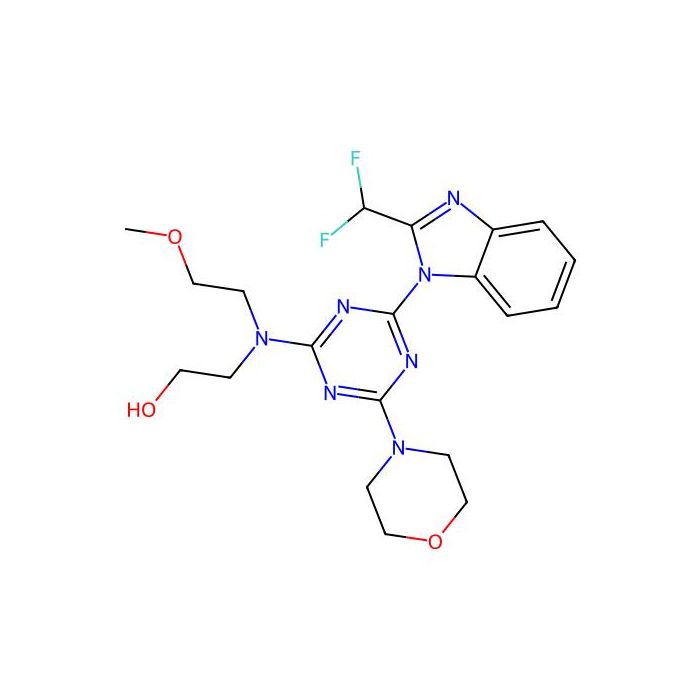
Structure and Identity
Brief description: PI3K-IN-30 is listed as a small-molecule PI3K pathway inhibitor intended for research screening and mechanistic studies.
CAS: 2281803-22-1 (item-specific; provided)
Chemical name: Not specified for this item; refer to CoA/Spec Sheet.
Molecular formula: Not specified for this item; refer to CoA/Spec Sheet.
Molecular weight: Not specified for this item; refer to CoA/Spec Sheet.
SMILES: Not specified for this item; refer to CoA/Spec Sheet.
InChI/InChIKey: Not specified for this item; refer to CoA/Spec Sheet.
Structural class (general note): PI3K inhibitors are often heteroaromatic, H-bond-accepting scaffolds that engage the ATP-binding site of class I PI3Ks via hinge-binding motifs (literature, general). The specific ring systems and stereochemistry for PI3K-IN-30 are not provided here.
Form/appearance: Not specified for this item; refer to CoA/Spec Sheet.
Interpretive notes (general): Without structure identifiers, users should consult the CoA/Spec Sheet for exact identity confirmation (LC–MS/NMR) prior to SAR, docking, or quantitative modeling.
Synthetic Utility
This item is a finished small-molecule inhibitor used as a biological tool and is not typically employed as a synthetic intermediate or reagent.
Not applicable: It does not serve a standard role in named organic reactions or as a catalyst/ligand.
If derivatization is desired (general guidance):
Medicinal chemistry teams sometimes derivatize tool compounds to create probes (e.g., photoaffinity, biotinylated, or clickable analogs). Such work requires knowledge of the exact structure, reactive handles, and SAR—details that are not provided here for PI3K-IN-30. Consult the CoA/Spec Sheet or original literature before designing analogs.
Target Specificity
Item-specific target profile is not provided.
Primary target: Listed as a PI3K pathway inhibitor by name, but isoform selectivity (p110α, p110β, p110γ, p110δ) and off-target kinase panel data are not specified for this item; refer to CoA/Spec Sheet or supplier datasheet if available.
General background (literature, not item-specific):
Class I PI3Ks share a conserved ATP-binding site; many inhibitors exhibit differing selectivity patterns dictated by hinge-binding interactions, affinity for the affinity pocket, and contacts within the selectivity pocket.
Off-targets can include mTOR, DNA-PK, or other lipid/serine-threonine kinases; broad kinome profiling (e.g., DiscoverX/KINOMEscan, NanoBRET) is recommended to confirm specificity.
Recommendations:
Verify on-target engagement via biochemical IC50/Ki, CETSA/thermal shift in cells, or phospho-biomarker modulation (e.g., p-AKT reduction). Use orthogonal chemotypes and genetic rescue for confidence in mechanism.
Need help choosing the grade?
Our grade selection guide covers purity, stabilizer status, and application suitability for all variants in our catalog.
We use cookies to ensure the website functions properly and, where permitted, to improve your experience. You can manage your preferences at any time in Settings. Learn more in our Cookie Policy.
Shall we send you a message when we have discounts available?
Remind me later
Thank you! Please check your email inbox to confirm.
Products are supplied to verified businesses, institutions, and qualified professionals for research and development use only. Not for use in humans, animals, diagnosis, or therapy.