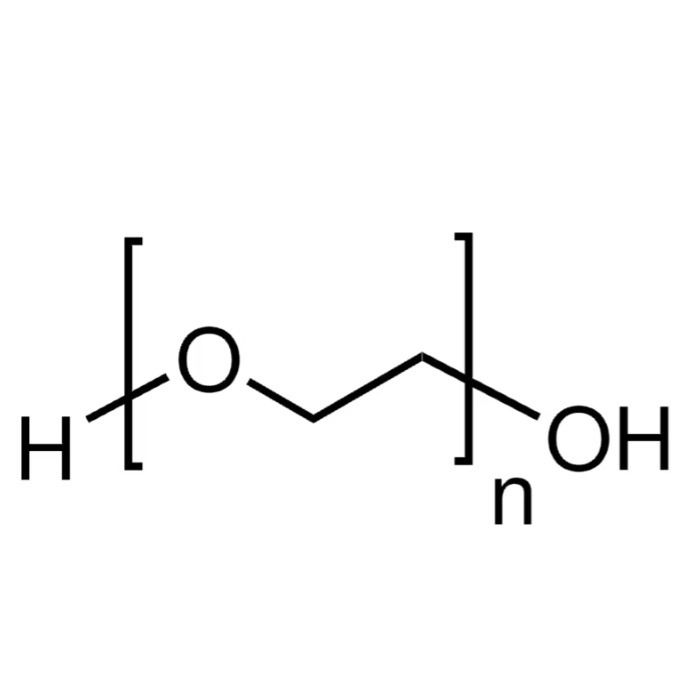
Polyethylene glycol solution(PEG) - 40 % (w/w) in H2O, average mol wt 8,000 , CAS No.25322-68-3

CAS: 25322-68-3 Cat. No.: P432417 분자식: HO(CH2CH2O)nH EC 번호: 500-038-2
주문 가능
등급 & 순도 40 % (w/w) in H2O, average mol wt 8,000
Synonyms
PEG solution
Storage
Store at 2-8°C
Shipped In
Wet ice
★
크기
USA
독일 (EU)*
가격
수량
25ml
P432417-25ml
주문제작 · 8~12주

US$124.90

US$145.90
저장 US$21.00 (14.39%)
50ml
P432417-50ml
주문제작 · 8~12주

US$198.90

US$232.90
저장 US$34.00 (14.60%)
Enter a quantity for the sizes you want to add.
🧪
이 등급을 선택하는 이유

40 % (w/w) in H2O, average mol wt 8,000 최소한의 기준선 간섭이 필요한 민감한 크로마토그래피 및 분석 워크플로우용.

🌡

보관 및 배송

Store at 2-8°C Wet ice 출고. 정확한 사양은 로트별 COA를 확인하세요.

📋

품질 문서

SDS, COA, 데이터시트, 사양서를 다운로드할 수 있습니다. 로트별 COA는 로트 번호 조회를 통해 확인할 수 있습니다.

📚

문헌적 근거

크로마토그래피, 유기 합성 및 교차 커플링 반응 분야의 동료 심사 논문 3267편에서 인용되었습니다.

개요

Application

PEG is used as a fusogen to obtain hybridomas for monoclonal antibody production. Induces cell hybridization. For making aqueous two-phase partitions for cell fractionation

사양

동의어
PEG solution
사양 및 순도
40 % (w/w) in H2O, average mol wt 8,000
보관 조건
Store at 2-8°C
배송
Wet ice
이 제품은 콜드 체인 배송이 필요합니다.지상 및 기타 경제 서비스는 사용할 수 없습니다.
이름과 식별자
정식 스마일
C(CO)O
WGK 독일
1
Reaxy-Rn
505945
Reaxys-RN_link_address
https://www.reaxys.com/reaxys/secured/hopinto.do?context=S&query=IDE.XRN=505945&ln=

문서

📋 안전 데이터 시트(SDS)

위험성, 취급, 보관 및 규제 준수를 포괄하는 종합 문서.

<<<<<<< HEAD SDS 다운로드 → ======= SDS 다운로드 → >>>>>>> release248-p3

✅ 분석 성적서(COA)

로트별 품질 데이터. 로트 번호를 입력하여 정확한 COA를 확인하세요.

COA 조회 →

📊 데이터시트

제품 사양 및 응용 분야에 대한 빠른 참조 요약.

데이터시트 보기 →

🔬 사양서

이 등급의 전체 품질 특성 및 합격 기준.

사양서 보기 →

고급 데이터

인증서(CoA, COO, BSE/TSE 및 분석 차트)
C of A & Other Certificates(BSE/TSE, COO):
Analytical Chart:
화학 및 물리적 특성
굴절률1.460
발화점(°F)519.8 °F
발화점(°C)271.00 °C
끓는점(°C)> 200 °C
녹는점(°C)61-64℃
자주 묻는 질문과 기사
Enzyme Protectants and Common Methods to Prolong Enzymatic Activity
Buffer exchange of a sample using a dialysis bag
Why Can Biotinylated Peptides Test Negative in Biotin Assays?
How to Choose Plasma Cell-Free DNA Extraction Reagents
Differences Between Transformation and Transfection
PEGylation in Drug Modification and Delivery: Applications to Proteins, Peptides, Small Molecules and Liposomes
Polyethylene Glycol (PEG): Properties, Applications Across Multiple Fields, and Product Selection Guide
PEG–Dialysis Tubing Method for Protein Concentration
Application Guide to Super Fluor 680 / 750 Near-Infrared Dyes for In Vivo Small-Animal Fluorescence Imaging
7 Types of DNA Ligases: Functions and Features
General Principles of Antibody Labeling with NHS-Activated Esters, F/P Calculation, and Troubleshooting Guide
Polyethylene Glycol (PEG) and Its Derivatives: End-Group Design and Applications in PROTACs, ADCs, and Medical Device
Sources, Biological Functions, Isolation/Characterization, and Emerging Applications of Exosomes
Photo-Crosslinking and Patterning of PEG-Based Hydrogels (2D/3D): Principles, Method Comparisons, and Product Selection Guidelines
SOFC Solid Oxide Fuel Cells: From “What It Is and How It Generates Power” to a Key Materials Map, Application Scenarios, and Selection Navigation (Electrolytes / Electrodes / Interconnects / Sealing)
A Complete Guide to Choosing Resins for SPPS (Solid-Phase Peptide Synthesis): Fmoc/Boc Routes, C-Terminal Acid/Amide, and a Key-Parameter Navigator
Materials Can “Switch”: How Smart Polymers Respond to Temperature, pH, and Light (with Experimental Selection Tips & Product Navigation)
Understanding Hydrophilic Polymers in Aqueous Systems: Hydration Mechanisms, Structural Knobs, and Task-Oriented Selection Guide (Including Tables 1–3)
Biomedical Polymer Insights: Role-Based Task Map, Six Key Material Levers, and a Risk-Driven Evidence Chain (including the Product Navigation Guide and Product Tables 1–3)
Pharmaceutical Formulation and Delivery in Research Settings: Core Definitions, Controllable Frameworks and Practical Guidelines
Plant Omics Panorama: Workflow Frameworks and Multi-Omics Integration from Genomics to Transcriptomics, Proteomics, and Metabolomics
Hemicellulases: A Review of Substrate Specificity, Catalytic Systems, and Research and Industrial Applications
Key Judgments in Medical Hydrogel R&D: From Polymer Source and Crosslinking Strategy to Sterilization Planning, Scale-Up Feasibility, and Quality Control
Injectable Thermosensitive Gels: Gelation Behavior, Rheological Properties, and Drug Release Characteristics
Protein Structure Analysis: An Experimental Path from Defining the Question to Functional Validation
How Degradable Poly(ethylene glycol) Hydrogels Build Tunable Cellular Microenvironments: Adhesion, Degradation, Release, and Experimental Interpretation in 2D/3D Culture
Designing Hydrogel Scaffolds as Programmable Cell Microenvironments: From Click-Chemistry Functionalization to 3D Cell Culture Experimental Design
Adding a Temperature-Triggered Switch to NCO: How Blocked Isocyanates Affect the Storage, Curing, and Film Performance of 1K Baking Coatings
How Do Isocyanates and Polyols Affect the Performance of Polyurethane Coating Films: Structure, Raw Material Selection, and Performance Design Essentials
Comprehensive Performance Analysis of Polyurethane Coating Films: Soft/Hard Segment Structure, Microphase Separation, Crosslinking and Curing, and Selection of Representative Chemicals
Failure Mechanisms, Application Limitations, and Systematic Improvement Directions for Polyester Coatings
Peptide Intermediates Difficult to Dissolve and Separate? Route Design and Workup Strategies for Tag-Assisted Liquid-Phase Peptide Synthesis (TAG-LPPS)
Causes, Diagnosis, and Control Strategies for Elevated Off-State Current in Semiconducting Single-Walled Carbon Nanotube Transistors
Polyurethane Coating Resins: Not a Single Resin, but a Designable High-Performance System
Application of Shellac, a Natural Film-Forming Resin, in Coatings: Alcohol-Soluble Fast-Drying Film Formation, Sealing and Repair, and Performance Boundaries
The Role of Polyether-Modified Polysiloxanes in Controlling Coating Leveling and Smooth Tactile Feel: Molecular Structure, Surface Migration, and Interfacial Control Mechanisms
Resin Polarity in Coating Formulations: From Molecular Structure to Dissolution, Compatibility, Interfacial Interactions, and Formulation Design
Solvents, Co-solvents, and Solubilization Systems in Home and Personal Care Formulations: Classification, Functions, and Selection Guide
Why Do Alcohols Differ in Function: Why Is Glycerol Mainly Moisturizing, Propylene Glycol Mainly Solubilizing, and Isopropyl Alcohol Fast-Drying? — Understanding Personal Care Formulation Functions from Structural Differences
Signal Transduction Mechanism of Graphene Biosensors: From Molecular Recognition to Electrical/Optical Signal Readout and Materials Selection
What Is Synthetic Biology? The Industrialization Pathway from Upstream Reagent Toolchains to Biomanufacturing Applications
From Structure to Selection: Mechanisms and Application Assessment of Low-Foam Oil and Wax Removal with Fatty Acid Methyl Ester Ethoxylates (FMEE)
Mechanism of Action and Selection Logic of Defoamers for Daily Chemical Products: Foam Stability, Foam-Breaking Mechanisms, and Representative Raw Material Analysis
Mechanisms and Troubleshooting of Foam Reduction in Personal and Household Care Formulations: Film Rupture, Weak Interfacial Films, Insufficient Surfactant Supply, and Phase-State Disturbance
Application of Conductive Carbon Black in Coatings: Selection Criteria, Dispersion Control, and Conductive Network Construction
Key Variable in the Long-Term Stability of Waterborne Pigment Concentrates: How Dispersant Molecular Weight Distribution (MWD) Affects Pigment Dispersion, Surface Adsorption-Layer Formation, and Storage Stability
Influencing Factors and Control Strategies for Blistering in Neutral Wall Putty: An Experimental Analysis Based on HPMC Dosage, Viscosity, and Ground Calcium Carbonate Fineness
How to Select Binding/Gel Materials for Neutral Wall Putty? A Comparison of Pregelatinized Starch, PVA, and Redispersible Polymer Powder Based on Four Application Trials
Structure, Degradation Behavior, and Applications of Poly(trimethylene carbonate) (PTMC) in Flexible Absorbable Materials
Antioxidant Mechanisms of Ferulic Acid in Skincare, Vitamin C/E Synergy, and Stable Delivery Applications
Exosome-Related Ingredients in Skincare Products: Sources and Preparation, Quality Control, Evidence of Efficacy, and Safety Assessment
Differences Between Cast CPU and Thermoplastic TPU in Structure, Processing, Performance, and Applications
What Is Direct Compression? Process Characteristics, Suitability Criteria, and Excipient Selection
Solid Supports in Packed Gas Chromatography Columns: Definition, Mechanisms of Action, Classification, and Selection
Citations of This Product
솔루션 계산기
리뷰

고객 리뷰

Shall we send you a message when we have discounts available?

Remind me later

Thank you! Please check your email inbox to confirm.

Oops! Notifications are disabled.