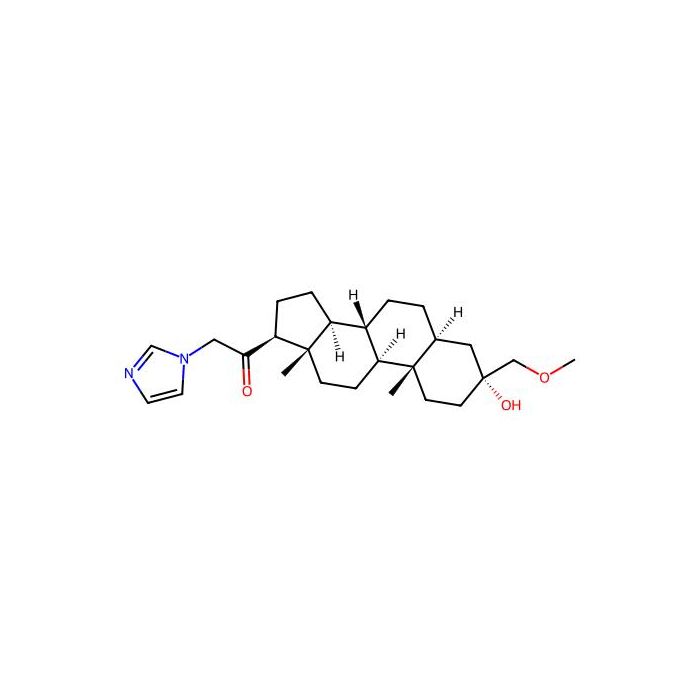
GRADE & PURITYMoligand™?Moligand™ — Aladdin's line of ligands and bioactive small molecules. Use for receptor, pathway, and binding studies needing defined small-molecule tools.10 mM in DMSO
Determine the necessary mass, volume, or concentration for preparing a solution.
Dilution Calculator
Determine the dilution needed to prepare a stock solution.
Reconstitution Calculator
리뷰
고객 리뷰
Application Protocols
No item-specific validated protocols are provided. The following are general, non-binding procedures for handling small-molecule screening ligands.
Stock solution preparation (general)
Warm the container briefly on ice to avoid condensation; open only after equilibrating to a dry, cold environment. Dissolve to 10–50 mM in anhydrous DMSO. Vortex/sonicate briefly; filter through 0.2 µm PTFE if particulates persist.
Aliquot into low-bind, amber tubes; store at -80°C. Avoid repeated freeze–thaw cycles.
Assay dilution (example)
Prepare intermediate 100× stocks in DMSO. Add to assay buffer to achieve final DMSO 0.1–1% v/v. Mix immediately and gently to avoid localized precipitation.
Include vehicle controls and, if available, a positive control relevant to the assay platform.
Stability/solubility check
Inspect visually for turbidity/precipitation; optional: measure by nephelometry. Verify concentration by LC–UV or LC–MS where quantitative accuracy is needed.
Plate handling
Use low-bind plates and tips; avoid prolonged residence at room temperature. Seal plates to limit evaporation; centrifuge briefly to collect droplets and remove bubbles prior to readout.
These steps are general best practices and not item-specific requirements.
Biological Roles
From Product Data
No biological target, pathway, or mechanism information is provided for Posovolone.
General guidance for research compounds
Without a specified target, classify this compound as an exploratory small molecule. Prior to use, consult primary literature or databases for CAS 256955-84-7 (CID 9802683) to determine any reported protein targets, binding modes, or phenotypic effects.
Consider broad profiling approaches if novelty is intended: biochemical panels, broad receptor/enzyme screens, transcriptomic or proteomic signatures, and cell-based phenotypic assays.
Off-target risk management: Employ counter-screens and orthogonal assay modalities to distinguish true activity from interference (aggregation, fluorescence quenching, redox activity, membrane disruption).
ADME/PK and metabolism (general, not item-specific)
If moving beyond in vitro assays, characterize basic stability and permeability: chemical stability in assay buffer, microsomal stability, and permeability (PAMPA/CMCAs). No such data are supplied for this item.
Avoid extrapolating any clinical relevance; this product is for research use only and is not intended for diagnostic, therapeutic, or in vivo use without appropriate approvals and characterization.
Buffer Applications
This product is a small-molecule ligand and not a buffering agent.
Applicability
Not typically used to maintain pH or ionic strength. No buffer capacity specifications are provided.
Practical notes for assay buffers (general)
Prepare biologically compatible buffers (e.g., HEPES 10–25 mM, pH 7.2–7.4; PBS pH 7.4) and introduce the compound from a concentrated DMSO stock to keep final DMSO ≤0.1–1%.
To mitigate precipitation, add compound last with mixing; consider 0.01–0.05% non-ionic surfactant if assay-tolerant.
Adsorption control: Use low-bind plastics and include 0.1% BSA if compatible with the assay to reduce surface losses of hydrophobic compounds.
Refer to the CoA/SDS and primary literature for any item-specific solubility or stability recommendations in aqueous buffers.
Green Alternatives
While “green alternatives” commonly address solvent/reagent substitution, this product is a research ligand intended for screening. Selection of greener handling strategies focuses on solvent vehicles and micro-scale operations.
Greener handling considerations (general)
Minimize DMSO usage by preparing concentrated stocks and dispensing at low final volumes (acoustic or pin tools) to reduce total organic load.
Where assay-tolerant, consider aqueous delivery with minimal co-solvent, using cyclodextrin complexation or low-level surfactants to improve apparent solubility.
Avoid halogenated solvents for routine dissolution; reserve for analytical sample prep only if necessary.
Vehicle comparison (general; choose per assay compatibility)
Vehicle | Pros | Cons
--- | --- | ---
DMSO | Broad solvency; stable stocks at -80°C | Biological effects >0.5–1%; hygroscopic
Ethanol | Volatile (easy removal); common lab solvent | Lower solvency; cytotoxicity at modest %
PEG-400 | Solubilizes hydrophobes at low volumes | Viscous; may affect readouts
Aqueous + cyclodextrin | Enables water delivery | Extra components; potential assay interference
Waste minimization
Use microtiter formats (384–1536-well) and automation to reduce solvent volumes and waste.
Consolidate analytical runs (LC–MS) to minimize mobile phase consumption and utilize aqueous-rich gradients when possible.
Pharmaceutical Uses
From Product Data
No pharmacopeial status, excipient role, or GMP suitability is provided. Research Use Only.
General, non-clinical context
Compounds supplied as screening ligands are often employed as reference materials for analytical method development (e.g., LC–MS retention index, fragmentation studies) and for non-clinical discovery research such as SAR and target validation.
If used as an analytical reference, establish traceability by verifying identity (HRMS/NMR) and purity (chromatography) in-house; document storage conditions (-80°C) and lot numbers for data integrity.
Important limitations
Not intended for diagnostic or therapeutic applications.
No claims are made regarding safety, efficacy, or suitability for human or veterinary use.
For any regulated applications (e.g., GLP bioanalytical reference), qualify the material according to your QA procedures and the relevant regulatory guidance. No such qualification is specified for this item.
Physical Properties
From Product Data (item-specific specs)
Appearance: Not specified for this item; refer to CoA/Spec Sheet.
Molecular weight: Not specified for this item; refer to CoA/Spec Sheet.
Literature/computed values (for planning; verify against CoA/SDS)
Boiling point, melting point, density, refractive index, logP/logD, pKa, UV–vis absorption, and aqueous/organic solubility are not specified in the current listing. For precise handling and method development, consult the CoA/SDS or trusted databases for CAS 256955-84-7 (CID 9802683).
Practical implications for handling when physico-chemical data are not specified
Solubility screening: Begin with anhydrous DMSO to 10–50 mM, then dilute into assay buffer to ≤0.1–1% DMSO final. If precipitation is observed, explore co-solvents (ethanol ≤2–5% v/v) or carriers (0.01–0.05% Tween-80) where assay-compatible.
Light/air sensitivity: Unknown; default to amber protection and minimal air exposure until item-specific data are confirmed.
Hygroscopicity: Unknown; store tightly sealed and desiccated to maintain integrity.
Polymorphism: If solid, be aware that polymorphs can influence dissolution; characterize by PXRD/DSC if critical to your workflow.
Always defer to the item’s SDS and CoA for authoritative physico-chemical parameters.
Quality and Grades
From Product Data
Grade/Purity: Moligand™ (no numerical purity or stabilizers specified; refer to CoA/Spec Sheet for item-specific assays).
About Moligand™ grade (general description; not item-specific specs)
Intended use: Small-molecule ligands suitable for discovery screening, target engagement studies, and SAR exploration in research settings.
Typical quality controls for screening compounds (in general): Identity confirmation by LC–MS and/or NMR; purity assessment by HPLC/LC–UV. Exact methods and acceptance criteria vary by lot and supplier—verify on the CoA.
Documentation: Request the current CoA for this CAS/lot to obtain verified identity data (SMILES/InChIKey), chromatographic purity, and any residual solvent or water content numbers, if available.
Practical guidance
Analytical verification: Upon receipt, many groups run an orthogonal identity check (LC–MS, exact mass, and a quick 1H NMR) before inclusion in screening libraries.
Plate handling: For HTS, prepare DMSO stocks in low-bind tubes/plates; confirm absence of particulates by visual inspection or nephelometry.
Trace impurities: When biological readouts are sensitive, consider additional in-house purification or re-plating to ensure assay fidelity.
Note: In the absence of an explicit purity percentage in the product data, treat any numerical thresholds as “Not specified for this item; refer to CoA/Spec Sheet.”
Reaction and Applications
This product is offered as a screening/deck compound rather than as a general-purpose synthetic reagent.
Applicability
Not typically used as a stoichiometric reagent, catalyst, or solvent in synthetic transformations. No named-reaction roles are indicated in the product data.
Research applications (general for small-molecule ligands)
Target screening: Inclusion in biochemical or biophysical assays (e.g., enzyme inhibition, receptor binding, thermal shift) to probe potential interactions.
Cellular assays: Phenotypic screens, pathway modulation studies, or target engagement by CETSA/TPP—provided solubility and cytotoxicity windows are established.
Analytical reference: Can serve as a retention-time or fragmentation standard once identity is verified.
Practical notes
Plate management: Use low-bind plastics and pre-wet tips to minimize adsorption losses, especially for lipophilic compounds.
Stability: Unknown; minimize freeze–thaw by aliquoting, protect from light until stability data are confirmed, and avoid prolonged room-temperature exposure.
Controls: Include vehicle controls (DMSO-only) and, where applicable, orthogonal assay formats to de-risk artifacts (fluorescence quenching, redox cycling, aggregation).
Reaction Conditions
Not typically applicable. The product is supplied as a research ligand rather than a reagent or catalyst, and the product data do not specify any roles in chemical reactions.
If chemical modification is pursued (general guidance)
Solvents: Choose based on confirmed structure and solubility (commonly DMF, DMSO, MeCN, or toluene for small-molecule derivatization), validated by a small solubility screen.
Temperature: Start at ambient; escalate cautiously after confirming stability by LC–MS/UPLC.
Atmosphere: Use inert conditions (N2/Ar) if oxidation sensitivity is suspected; exclude moisture for moisture-labile motifs.
Workup: For lipophilic compounds, consider solid-phase extraction or minimal-aqueous workups to reduce losses.
These notes are general literature practice and not item-specific specifications.
Safety and Handling
From Product Data
GHS classification: Not specified for this item; refer to SDS.
Signal word / pictograms / H-statements: Not specified for this item; refer to SDS.
Storage conditions: Store at -80°C.
Shipping: Dry ice packs + Cold packs.
Research use: For research use only.
General laboratory precautions (not item-specific; follow SDS)
PPE: Laboratory coat, safety glasses, and appropriate chemically resistant gloves (e.g., nitrile). Handle powders/solutions in a fume hood to avoid inhalation or aerosol exposure.
Avoid contact with skin, eyes, and clothing. Prevent ingestion and inhalation. Wash thoroughly after handling.
Incompatibilities are unknown; as a default, segregate from strong oxidizers/reducers and bases/acids until specific data are available.
If prepared in DMSO/organic solvents, remember that many organics enhance dermal absorption—avoid skin contact.
First-aid overview (consult SDS for specifics)
Inhalation: Move to fresh air; seek medical attention if symptoms persist.
Skin/eye contact: Rinse with water for at least 15 minutes; remove contaminated clothing; obtain medical advice as needed.
Ingestion: Rinse mouth with water; do not induce vomiting; seek medical attention.
Spill/cleanup
Small spills: Absorb with inert material, collect in sealable container for disposal. Prevent dust generation and solvent vapors.
Waste: Dispose of according to institutional chemical waste procedures and local regulations.
SDS is the authoritative source for hazards, exposure limits, and emergency measures.
Solvent Selection
From Product Data
No solubility or solvent preferences are specified for this item; refer to CoA/Spec Sheet.
General solvent strategy for library compounds (literature/practice)
Stock preparation: Start with anhydrous DMSO (analytical grade, ≤50 ppm water if possible) to 10–50 mM. Vortex and sonicate briefly if needed; avoid heating unless stability is confirmed.
Working solutions: Dilute into assay buffer to a final DMSO of 0.1–1% v/v, balancing solubility and assay tolerance. For cell-based assays, ≤0.1–0.5% is commonly preferred.
Alternative vehicles: Ethanol or PEG-400 (≤2–10% v/v) can aid solubilization where compatible. Surfactants (e.g., 0.01–0.05% Tween-80 or Pluronic F-68) may reduce precipitation and adsorption.
Aqueous buffers: If water solubility is uncertain, titrate pH only if ionizable groups are confirmed from structure. Without structure data, prefer neutral pH 7.2–7.4 to maintain broad compatibility.
Comparison (general)
DMSO: Highest solvating power for diverse chemotypes; may affect biological assays at >1%.
Ethanol: Lower solvating power; better volatility for rapid drying; cytotoxic at higher percentages.
PEG-400: Excellent carrier for hydrophobes; high viscosity; may interfere with some readouts if used excessively.
Perform a small-scale solubility and stability check (visual, nephelometry, or LC) before committing to large screens.
Storage and Reconstitution
From Product Data
Storage: Store at -80°C.
Shipping: Dry ice packs + Cold packs.
General storage guidance (not item-specific)
Keep container tightly closed under dry, inert atmosphere if feasible. Use desiccant and protect from light (amber glass or foil) until stability data are available.
Minimize freeze–thaw cycles by preparing single-use aliquots. Record opening dates and aliquot identifiers for traceability.
Reconstitution recommendations (general)
For solids: Allow to equilibrate to low humidity at -20 to 0°C before opening to prevent condensation. Dissolve in anhydrous DMSO to prepare 10–50 mM stocks; confirm complete dissolution before dilution into aqueous buffers.
For solutions: Inspect for precipitates or phase separation after transit; if present, gently warm to ambient (protected from light) and vortex to re-dissolve. If unresolved, assess by LC–MS and contact technical support.
Stability monitoring
Periodically re-check stock integrity by LC–MS or LC–UV for long-term studies. Discard stocks showing significant degradation or precipitation that cannot be remedied without heating.
Always refer to the item’s CoA and SDS for authoritative, lot-specific instructions.
Structure and Identity
Brief overview: This listing is for a small-molecule library compound intended for discovery/screening workflows.
From Product Data
Product name: Posovolone
SKU: P1496926
CAS: 256955-84-7
PubChem CID: 9802683
Grade: Moligand™
InChIKey: Not specified for this item; refer to CoA/Spec Sheet.
SMILES: Not specified for this item; refer to CoA/Spec Sheet.
Molecular formula: Not specified for this item; refer to CoA/Spec Sheet.
Molecular weight: Not specified for this item; refer to CoA/Spec Sheet.
Structural features (general guidance)
Specific functional groups, ring systems, and stereochemistry are not provided in the current product data. For structure-based work (docking, QSAR, pharmacophore design), retrieve the definitive structure for CAS 256955-84-7 (CID 9802683) from an authenticated database or the item’s CoA/SDS.
2D structure (descriptive)
Not provided here. Request the latest CoA/Spec Sheet for the verified 2D depiction and canonical identifiers prior to computational or analytical work.
Synthetic Utility
This product is not positioned as a building block or reagent in the supplied data.
Applicability
No functional-group data, reactivity profile, or protecting-group compatibility are provided. Therefore, it is not recommended to plan synthetic sequences around this compound without first consulting structural information (CAS 256955-84-7; CID 9802683) and confirming feasibility.
General guidance (if derivatization is contemplated)
Obtain the definitive structure (SMILES/InChI) and assess sites for diversification (e.g., halogens, heteroatoms, activated positions) and stability constraints (acid/base/oxidative sensitivity).
Run small-scale test reactions and monitor by LC–MS to confirm stability under proposed conditions before committing to scale or library expansion.
In most workflows, Posovolone should be treated as a research ligand/standard rather than a synthetic synthon.
Target Specificity
From Product Data
Target, epitope, and binding specificity are not provided for Posovolone.
Guidance
If target information is required, consult peer-reviewed literature or trusted databases for CAS 256955-84-7 (CID 9802683). Consider conducting unbiased target deconvolution approaches (e.g., CETSA, DARTS, chemoproteomics) appropriate to your platform.
No target, isotype, species reactivity, or clone information applies, as this product is a small molecule and not an antibody/biologic.
자주 묻는 질문
What is Moligand??
Moligand? is one of Aladdin Scientific's premium product lines, formulated for high-purity applications across multiple workflows. Compared to standard grades in the same workflow, Moligand? products typically offer tighter specifications, more rigorous QC, and stronger lot-to-lot consistency.
How should this product be stored?
Store at ?80 °C. Ultra-low temperature storage is required to maintain the specified shelf life.
How is this product shipped?
This product ships frozen with dry ice and cold packs. Unpack on arrival and transfer it to the storage condition stated above; handle dry ice with insulated gloves in a ventilated area.
What are the CAS number, molecular formula and molecular weight?
The CAS Number is 256955-84-7, the molecular formula is C26H40N2O3, and the molecular weight is 428.600 g/mol.
What documentation is provided?
Available product documentation, including Certificates of Analysis (COA), Safety Data Sheets (SDS), and specification sheets, is shown in the product document area. Document availability and access follow the current site policy.
Need help choosing the grade?
Our grade selection guide covers purity, stabilizer status, and application suitability for all variants in our catalog.
Products are supplied to verified businesses, institutions, and qualified professionals for research and development use only. Not for use in humans, animals, diagnosis, or therapy.