등급 & 순도Moligand™?Moligand™ — Aladdin's line of ligands and bioactive small molecules. Use for receptor, pathway, and binding studies needing defined small-molecule tools.10 mM in DMSO
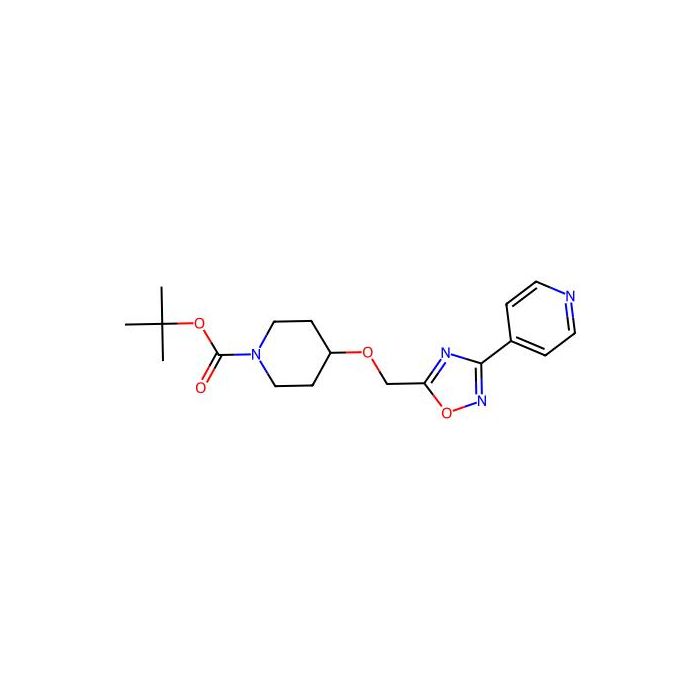
PSN632408, a selective, orally active GPR119 agonist, shows similar potency to OEA at both recombinant mouse and human GPR119 receptors ( EC 50 =5.6 and 7.9 uM, respectively). PSN632408 can stimulate β-cell replication and improve islet graft function. PSN632408 has the potential for the research of obesity and related metabolic disorders .
사양
사양 및 순도
Moligand™, 10 mM in DMSO
보관 조건
Store at -80°C
배송
Dry ice packs + Cold packs
이 제품은 콜드 체인 배송이 필요합니다.지상 및 기타 경제 서비스는 사용할 수 없습니다.
등급
Moligand™
작업 유형
AGONIST
이름과 식별자
이성체 SMILES
CC(C)(C)OC(=O)N1CCC(CC1)OCC2=NC(=NO2)C3=CC=NC=C3
분자량
360.41
고급 데이터
인증서(CoA, COO, BSE/TSE 및 분석 차트)
C of A & Other Certificates(BSE/TSE, COO):
Analytical Chart:
솔루션 계산기
Molarity Calculator
Determine the necessary mass, volume, or concentration for preparing a solution.
Dilution Calculator
Determine the dilution needed to prepare a stock solution.
Reconstitution Calculator
리뷰
고객 리뷰
Application Protocols
No vendor-tested application protocols are provided in the Product Data for PSN632408. The following is general, non-specific guidance for handling small-molecule screening compounds.
Preparing a DMSO stock (general)
Allow vial to warm to room temperature in a desiccator before opening. Weigh the desired amount quickly. Dissolve in anhydrous DMSO to make a convenient stock (e.g., 10 mM). Mix by vortexing; sonicate briefly if needed. Record exact concentration.
Plate handling
Dispense using calibrated liquid handlers; pre-wet tips with DMSO to improve accuracy. Seal plates with solvent-resistant films and minimize exposure to ambient humidity and light according to your SOPs.
Assay dosing
Deliver compound to assay wells to achieve target final concentrations while keeping vehicle at validated levels (often ≤0.5% v/v DMSO). Mix thoroughly and incubate per assay requirements. Include vehicle controls and appropriate positive/negative controls.
Precipitation/interference checks
Inspect for precipitate formation after dilution; if present, reduce dosing concentration or adjust cosolvent within assay constraints. Consider orthogonal readouts to identify fluorescence or redox interference.
Item-specific protocols
Not specified for this item; refer to CoA/Spec Sheet or internal assay SOPs.
Biological Roles
Item-specific biological role and targets
Target class, mode of action, and specificity for PSN632408 are not provided in the Product Data. No biological role is assigned. Refer to project documentation or literature searches keyed to CAS 857652-30-3 / CID 11462546 if a reported target exists.
General considerations for small-molecule ligands (research context)
Screening compounds may interact with diverse protein classes (e.g., enzymes, GPCRs, ion channels) or non-protein targets (membranes, nucleic acids). Until a validated mechanism is established, treat activity as provisional and assay-dependent.
Verify observed activities with orthogonal methods to exclude artifacts (assay interference, redox cycling, aggregation, fluorescence quenching/emission overlap).
Establish baseline cytotoxicity profiles and vehicle controls in cellular systems before interpreting pathway readouts.
Data integrity
Document lot numbers, storage history, and exact solvent composition during biological testing to support reproducibility.
Research use only
As noted in the Product Data, PSN632408 is for research use only. It is not intended for diagnostic, clinical, or in vivo therapeutic use.
Buffer Applications
PSN632408 is not a buffering reagent, and no buffer system specifications are provided for this item.
Practical notes for assay buffers (general guidance)
When dosing from DMSO stocks into aqueous buffers, ensure the final DMSO concentration remains within assay-validated limits (commonly 0.1–0.5% v/v, method-dependent) to avoid vehicle effects.
Pre-wet pipette tips with DMSO before dispensing to improve accuracy at low microliter volumes. Mix thoroughly after spiking to prevent local supersaturation and precipitation.
If the compound is later found to be ionizable (pKa known), select buffer pH at least 1 unit from pKa to control ionization state for solubility/permeability studies.
Item-specific buffer recommendations
None provided for this item; refer to your assay SOPs and any target-specific guidelines.
Precipitation checks
After dilution into buffer, inspect for turbidity or precipitate formation; if observed, increase cosolvent fraction within acceptable limits or reduce dosing concentration.
Green Alternatives
This item is a discrete screening compound rather than a process solvent or common reagent; therefore, “green alternative” discussions center on handling media and vehicles rather than substitution of the compound itself.
Not applicable to compound identity
Replacing the active screening entity PSN632408 is not generally meaningful within a single-compound evaluation. Maintain compound identity for reproducible screening results.
Greener handling choices (general guidance)
Vehicle selection: Prefer aqueous buffers with minimal DMSO where assay performance allows; target the lowest effective DMSO percentage to reduce solvent burden.
Workup/cleanup: Use water-miscible solvents (e.g., ethanol, isopropanol) for bench cleanup over chlorinated solvents when feasible. Collect DMSO/organic waste in designated containers for proper disposal.
Miniaturization: Adopt low-volume assay formats (e.g., 384/1536-well) to reduce solvent consumption and waste.
Comparison (general)
For necessary organic co-solvents, consider ethanol or 2-propanol over acetonitrile or DMF when compatible with assay biology and compound solubility; confirm compound stability empirically.
Data needs
Specific environmental, health, and safety (EHS) profiles for PSN632408: Not specified for this item; refer to SDS and CoA/Spec Sheet before implementing process-scale activities.
Pharmaceutical Uses
No pharmacopeial status, excipient role, or manufacturing use is provided for PSN632408 in the Product Data.
Research/discovery context
This compound is supplied as a research-use small molecule (Moligand). It may be used in early discovery activities such as screening, hit triage, and mechanistic studies in non-clinical settings.
Not for clinical use
Not an approved API or excipient. No compendial monograph is indicated. Do not use for human or veterinary applications.
Formulation experiments (general guidance)
If solubility-limited in biological media, explore enabling approaches appropriate for research only: cosolvent systems, pH adjustment (if pKa known), or cyclodextrin complexes. Confirm physical and chemical stability over the intended exposure period.
Documentation
Any claims of suitability for pharmaceutical development require full structural disclosure and comprehensive CMC data. For PSN632408, such data are not specified; refer to CoA/Spec Sheet for any available analytical characterization.
Physical Properties
Item-specific physicochemical constants are not provided in the Product Data.
Item-specific values
Appearance: Not specified for this item; refer to CoA/Spec Sheet.
Melting point (MP): Not specified for this item; refer to CoA/Spec Sheet.
Boiling point (BP): Not specified for this item; refer to CoA/Spec Sheet.
Density: Not specified for this item; refer to CoA/Spec Sheet.
Solubility: Not specified for this item; refer to CoA/Spec Sheet.
logP/logD, pKa, refractive index: Not specified for this item; refer to CoA/Spec Sheet.
Practical considerations (general guidance)
For small-molecule screening compounds with unknown solubility, prepare a trial stock at 10 mM in anhydrous DMSO and inspect for clarity. If insoluble, titrate down (e.g., 5 mM → 2 mM → 1 mM) or warm gently (≤40 °C) and vortex/sonicate briefly.
For aqueous assays, test serial dilutions to ensure final DMSO remains within assay tolerances (commonly 0.1–1% v/v, method-dependent).
If the compound is crystalline/solid, allow to equilibrate to room temperature in a desiccator prior to weighing to minimize moisture uptake and mass drift.
Data sources
Definitive physical properties, including SMILES/InChI, should be obtained from the CoA/Spec Sheet or curated databases via CAS 857652-30-3 / CID 11462546. Do not substitute estimates for method development without verification.
Quality and Grades
Item-specific details (Product Data)
Grade: Moligand
Storage: −80 °C; shipped on dry ice + cold packs.
About Moligand (general description)
Moligand denotes a discovery-chemistry ligand collection intended for research screening, target exploration, and probe development. Compounds in such collections are typically supported by identity confirmation (e.g., orthogonal analytical characterization) and are packaged for plate-based work. Specific analytical metrics for PSN632408 are not provided here.
What this means for your workflow
Identity/purity specifications: Not specified for this item; refer to CoA/Spec Sheet for exact characterization (e.g., analytical method, acceptance criteria, and any stabilizers if present).
Batch traceability: Use the SKU P1498600 and internal code PSN632408 when referencing the lot on data sheets and ELNs.
Handling: The −80 °C storage recommendation is consistent with preserving library integrity by slowing degradation pathways (hydrolysis/oxidation) that may be structure-dependent.
Documentation
For regulated or GLP-adjacent studies, request the current CoA and, if needed, a methods summary. Ensure that analytical identifiers (CAS, CID) in your records match the supplied lot to avoid cross-referencing errors.
Notes on stabilizers
Presence or absence of stabilizers for PSN632408: Not specified for this item; refer to CoA/Spec Sheet.
Reaction and Applications
Item-specific reactivity data
Functional groups, stability to acids/bases, and redox behavior: Not specified for this item; refer to CoA/Spec Sheet.
Intended use context (from Product Category and Grade)
PSN632408 is part of a small-molecule/compound library (Moligand), suitable for screening campaigns, assay development, and target exploration. Typical applications include:
Primary high-throughput screening (HTS) and hit confirmation.
Concentration–response profiling and basic structure–activity relationship (SAR) exploration when analogs are available.
Tool-compound evaluation in biochemical or cell-based assays following appropriate controls.
Practical guidance (general)
Prepare and qualify a fresh DMSO stock; record exact concentration by weight-in-volume and confirm by UV or LC if a chromophore/assay is available.
Assess compound interference risks (fluorescence, redox cycling, aggregation) using orthogonal counterscreens where applicable. Employ detergent and dynamic light scattering as needed to identify aggregators.
Track freeze–thaw history and plate exposure time to minimize variability across screening runs.
Synthetic chemistry use
Because structural details are not provided, PSN632408 is not described here as a synthetic reagent or building block. If derivatization or conjugation is intended, obtain the full structural information and evaluate reactive handles before planning transformations.
Reaction Conditions
Reaction conditions are not applicable as PSN632408 is supplied for screening/biological assay use rather than as a synthetic reagent, and no structural or functional-group information is provided in the Product Data.
Item-specific parameters
Solvent, temperature ranges, catalysts, and reaction compatibility: Not specified for this item; refer to CoA/Spec Sheet if planning any chemical modification.
General note
If you intend to derivatize PSN632408 for SAR, first obtain the full structure and experimentally determine stability under prospective conditions (acid/base, reductive/oxidative, thermal) using small-scale scouts before committing to library synthesis.
Safety and Handling
Safety classification details are not included in the Product Data for this item; consult the SDS for authoritative guidance.
Item-specific hazard entries
Signal Word: Not specified for this item; refer to CoA/Spec Sheet and SDS.
H-Statements: Not specified for this item; refer to SDS.
GHS Classification and Pictograms: Not specified for this item; refer to SDS.
General laboratory precautions (for small-molecule research compounds)
Handle in a fume hood with appropriate PPE: lab coat, safety glasses, and nitrile gloves. Upgrade to chemically resistant gloves if extended contact is anticipated.
Avoid inhalation of dust/aerosols and skin/eye contact. Prevent ingestion.
Storage incompatibilities are structure-dependent; absent specific data, segregate from strong oxidizers and acids/bases, and keep dry.
Storage and stability (Product Data)
Store at −80 °C. Maintain desiccation and protect from repeated freeze–thaw cycles by aliquoting. Shipment on dry ice + cold packs minimizes thaw events.
First-aid overview (general)
Skin/eye contact: Rinse with water for at least 15 minutes; remove contaminated clothing. Seek medical attention if irritation persists.
Inhalation: Move to fresh air; seek medical attention if symptoms occur.
Ingestion: Rinse mouth; do not induce vomiting; seek medical attention.
Always defer to the SDS and institutional risk assessments for handling controls specific to this material and intended procedures.
Solvent Selection
With structure and solubility data not specified for PSN632408, solvent selection should follow a staged, evidence-based approach.
Primary stock preparation (general best practice)
Start with anhydrous DMSO as the universal solvent for small-molecule libraries. Prepare a test stock (e.g., 10 mM) and visually inspect for clarity/precipitation.
Solubility screening ladder (general guidance)
Polar aprotic: DMSO, DMF, NMP for difficult cases; confirm assay tolerance and safety constraints before use.
Protic/aqueous co-solvents: Water with cosolvent (DMSO, ethanol) and surfactant only if assay-compatible; adjust pH if an ionizable group is later confirmed.
Nonpolar: Ethyl acetate, acetonitrile, methanol, isopropanol for chromatographic handling and recovery; choose based on downstream use.
Polarity and dielectric considerations
Polarity class, dielectric constant, and Hansen parameters: Not specified for this item; refer to CoA/Spec Sheet or determine experimentally by solubility testing.
Practical tips
Warm gently (≤40 °C) and sonicate briefly to aid dissolution; filter through 0.2 µm PTFE if particulate persists and filtration is compatible with your use.
Keep final DMSO in bioassays within validated limits (commonly ≤0.5% v/v, method-dependent) to avoid vehicle effects.
When to choose alternatives
If low aqueous tolerance is required, consider co-solvent systems (e.g., DMSO:buffer 1:9) or cyclodextrin inclusion if permitted by the assay. Verify compound stability in chosen solvent system empirically.
Storage and Reconstitution
Item-specific storage and shipping (Product Data)
Storage Conditions: Store at −80 °C.
Shipped In: Dry ice packs + Cold packs.
Reconstitution (general guidance for small molecules)
Open vials only after equilibration to room temperature in a dry environment to prevent moisture condensation. Reconstitute in anhydrous DMSO unless otherwise directed by your protocol. If aqueous solutions are required, prepare by diluting the DMSO stock into buffer with thorough mixing; confirm no precipitation.
Aliquoting and freeze–thaw management
Prepare single-use aliquots of concentrated DMSO stock in solvent-resistant tubes or plates. Avoid repeated freeze–thaw cycles; keep records of plate/vial thaw count and exposure times.
Light and moisture protection
Absent specific data on photolability or hygroscopicity, store protected from light and under desiccation as best practice for screening compounds.
Stability information
Shelf-life, solution stability, and impurity limits: Not specified for this item; refer to CoA/Spec Sheet. Verify solution stability empirically for your application (e.g., by LC at t0 and post-incubation).
Research use note
For research use only; not for human or veterinary use.
Structure and Identity
This product is supplied as a member of Aladdin’s Moligand small-molecule collection under the code PSN632408.
Item-specific identifiers (Product Data)
SKU: P1498600
Product Name: PSN632408
CAS: 857652-30-3
PubChem CID: 11462546
Grade: Moligand
InChIKey: Not specified for this item; refer to CoA/Spec Sheet.
SMILES: Not specified for this item; refer to CoA/Spec Sheet.
Molecular Formula: Not specified for this item; refer to CoA/Spec Sheet.
Molecular Weight: Not specified for this item; refer to CoA/Spec Sheet.
Structural description
The detailed 2D structure, functional groups, and stereochemistry are not disclosed in the Product Data. Please consult the Certificate of Analysis (CoA), Specification Sheet, or authoritative databases using CAS 857652-30-3 or CID 11462546 for the definitive structural representation and identifiers.
Notes for informatics workflows (general guidance)
For database registration and ELN use, link records by CAS and CID until the canonical SMILES/InChIKey are confirmed.
When building screening plates, record the internal code PSN632408 together with CAS to avoid aliasing across libraries.
Synthetic Utility
PSN632408 is provided as a finished small-molecule screening entity, not as a generic reagent or building block. Structural details and functional groups are not disclosed in the Product Data, so specific reactivity or transformation pathways cannot be outlined here.
Item-specific reactivity/handles
Functional groups, protecting-group strategies, and derivatization routes: Not specified for this item; refer to CoA/Spec Sheet.
General guidance if derivatization is contemplated
Obtain the complete structure (SMILES/InChI) and assess potential synthetic handles (e.g., aryl halides for cross-coupling, amines/acids for amide coupling, heteroatoms for SNAr). Evaluate stability under acidic/basic conditions and oxidation/reduction prior to route design.
For SAR expansion, consider parallel synthesis with robust transformations (amide formation, Suzuki–Miyaura, Buchwald–Hartwig, reductive amination) contingent on available functional groups.
Confirm identity and purity of derivatives with orthogonal methods (LC–MS, NMR, HRMS) and maintain linkage between derivative codes and the parent PSN632408 in your registry.
Use as a reagent
No claims are made regarding utility as a catalyst, ligand for metal catalysis, or specialty reagent. Such uses require structure-specific validation not provided here.
Target Specificity
Target specificity or biochemical target information for PSN632408 is not provided in the Product Data.
Item-specific details
Target, pathway, selectivity profile, and off-targets: Not specified for this item; refer to project data, literature, or screening results.
Guidance
When a putative target is identified, confirm with orthogonal assays (biochemical vs. cell-based), counterscreens against homologs, and where possible, mechanistic studies (e.g., kinetics, binding assays, or thermal shift). Maintain clear linkage to lot and storage history to support reproducibility.
자주 묻는 질문
What is Moligand??
Moligand? is one of Aladdin Scientific's premium product lines, formulated for high-purity applications across multiple workflows. Compared to standard grades in the same workflow, Moligand? products typically offer tighter specifications, more rigorous QC, and stronger lot-to-lot consistency.
How should this product be stored?
Store at ?80 °C. Ultra-low temperature storage is required to maintain the specified shelf life.
How is this product shipped?
This product ships frozen with dry ice and cold packs. Unpack on arrival and transfer it to the storage condition stated above; handle dry ice with insulated gloves in a ventilated area.
What are the CAS number, molecular formula and molecular weight?
The CAS Number is 857652-30-3, the molecular formula is C18H24N4O4, and the molecular weight is 360.41 g/mol.
What documentation is provided?
Available product documentation, including Certificates of Analysis (COA), Safety Data Sheets (SDS), and specification sheets, is shown in the product document area. Document availability and access follow the current site policy.
등급 선택에 도움이 필요하신가요?
당사의 등급 선택 가이드는 카탈로그의 모든 변형 제품에 대해 순도, 안정제 상태 및 용도 적합성을 다룹니다.
Products are supplied to verified businesses, institutions, and qualified professionals for research and development use only. Not for use in humans, animals, diagnosis, or therapy.