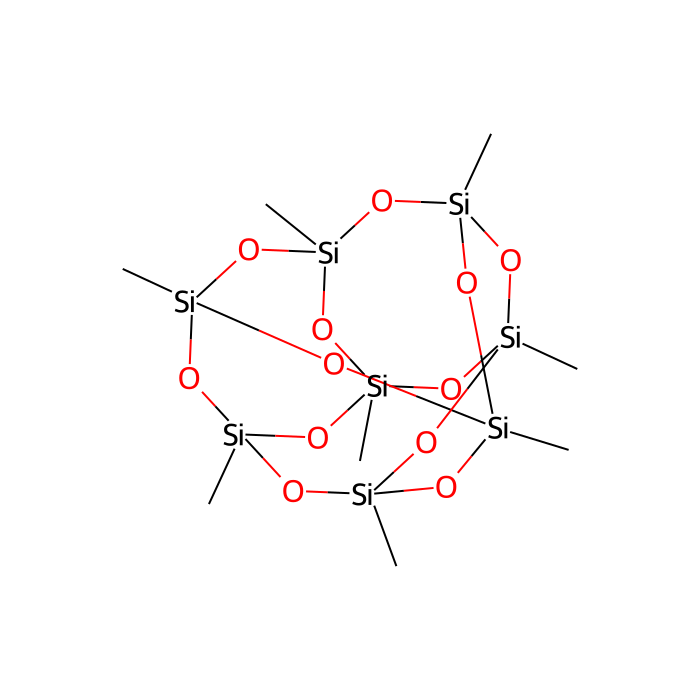
Determine the necessary mass, volume, or concentration for preparing a solution.
Taxonomy Tree
| Kingdom | Organic compounds |
|---|---|
| Superclass | Organometallic compounds |
| 분류 | Organometalloid compounds |
| Subclass | Organosilicon compounds |
| Intermediate Tree Nodes | Not available |
| Direct Parent | Organoheterosilanes |
| Alternative Parents | Organic metalloid salts Organic oxygen compounds Hydrocarbon derivatives |
| Molecular Framework | Aliphatic heteropolycyclic compounds |
| Substituents | Organoheterosilane - Organic metalloid salt - Organic oxygen compound - Hydrocarbon derivative - Organic salt - Aliphatic heteropolycyclic compound |
| 설명 | This compound belongs to the class of organic compounds known as organoheterosilanes. These are organosilicon compounds where the tetravalent silicon atom is linked to one or more heteroatoms. |
| External Descriptors | Not available |
Find and download the COA for your product by matching the lot number on the packaging.
| Lot Number | Certificate Type | 날짜 | 항목 |
|---|---|---|---|
| Certificate of Analysis | May 25, 2026 | P167996 | |
| Certificate of Analysis | May 25, 2026 | P167996 | |
| Certificate of Analysis | May 25, 2026 | P167996 | |
| Certificate of Analysis | Dec 28, 2024 | P167996 | |
| Certificate of Analysis | Dec 02, 2024 | P167996 | |
| Certificate of Analysis | Jun 18, 2024 | P167996 | |
| Certificate of Analysis | Jun 18, 2024 | P167996 | |
| Certificate of Analysis | Sep 09, 2023 | P167996 |
| 분자량 | 536.950 g/mol |
|---|---|
| XLogP3 | |
| Hydrogen Bond Donor Count | 0 |
| Hydrogen Bond Acceptor Count | 12 |
| Rotatable Bond Count | 0 |
| Exact Mass | 535.942 Da |
| Monoisotopic Mass | 535.942 Da |
| Topological Polar Surface Area | 111.000 Ų |
| Heavy Atom Count | 28 |
| Formal Charge | 0 |
| Complexity | 456.000 |
| Isotope Atom Count | 0 |
| Defined Atom Stereocenter Count | 0 |
| Undefined Atom Stereocenter Count | 0 |
| Defined Bond Stereocenter Count | 0 |
| Undefined Bond Stereocenter Count | 0 |
| The total count of all stereochemical bonds | 0 |
| Covalently-Bonded Unit Count | 1 |
No bioassay protocols (WB, IHC, IF, FC) apply to this materials-science product. For materials processing, consider the following general, literature-based workflows (not product specifications):
Adjust solvent, temperature, and loading according to the host matrix and desired properties. For batch-specific instructions or specifications, refer to the CoA/Spec Sheet.
This product is a methyl-capped polyhedral silsesquioxane for materials science and has no inherent biological function or known physiological role. It is not designed for biochemical assays or as a biomolecule.
For life science applications, select appropriately functionalized POSS grades and consult their specific data sheets. No biological roles or activities are specified for this item.
Not typically applicable. This material is a hydrophobic, methyl-capped POSS cage intended for materials science, not for preparing aqueous buffers.
From a green chemistry standpoint, octamethyl POSS can enable material efficiency by delivering property gains at relatively low loadings compared with traditional mineral fillers. However, solvent choice and end-of-life considerations dominate the footprint.
Environmental perspective (general):
Greener processing options (literature/general):
Comparison snapshot (processing focus):
Trade-offs:
No pharmacopeial status or excipient role is specified for this item; refer to CoA/Spec Sheet. This product is sold for research use only and is not intended for human or veterinary use.
General materials-related notes (literature/general):
For any formulation work, verify composition, purity, and residual volatiles on a batch-specific CoA and conduct application-specific qualification.
Item-specific specifications are not provided. The following values are typical literature data for octamethyl-substituted T8 POSS; verify against the CoA/Spec Sheet before use in regulated workflows.
Because the cage is methyl-capped, it is chemically robust and functionally inert, serving primarily as a performance additive or nanobuilding block in materials systems rather than as a reactive monomer.
Applications (materials science, literature/general):
Nonreactive chemistry notes:
Processing tips:
The methyl-capped POSS cage is not typically a reactant but a formulation additive. The following are general, literature-based processing conditions for incorporating it into materials; they are not product specifications.
Expected outcomes (literature):
Authoritative safety classification for this specific item is not provided in the Product Data; consult the SDS.
This octamethyl-substituted POSS is hydrophobic and organophilic. Solvent choice is typically driven by processing (solution casting, spin-coating, or polymer blending) rather than reaction chemistry (the methyl-capped cage is largely inert).
Always refer to the batch-specific CoA/Spec Sheet for any storage qualifiers (e.g., desiccation requirements, shelf life) not specified in the Product Data.
This item corresponds to an octamethyl-substituted polyhedral silsesquioxane (POSS) cage, widely used as a hybrid inorganic–organic nanobuilding block in materials science.
As a methyl-capped T8 silsesquioxane, this compound is primarily a structural nanofiller rather than a synthetic intermediate. Its utility in synthesis is limited by the absence of reactive functional groups.
Not applicable. This product is a materials additive (methyl-capped POSS) and is not a biological macromolecule or affinity reagent. No antigen/epitope, species reactivity, clone, or isotype applies. No item-specific data are provided.