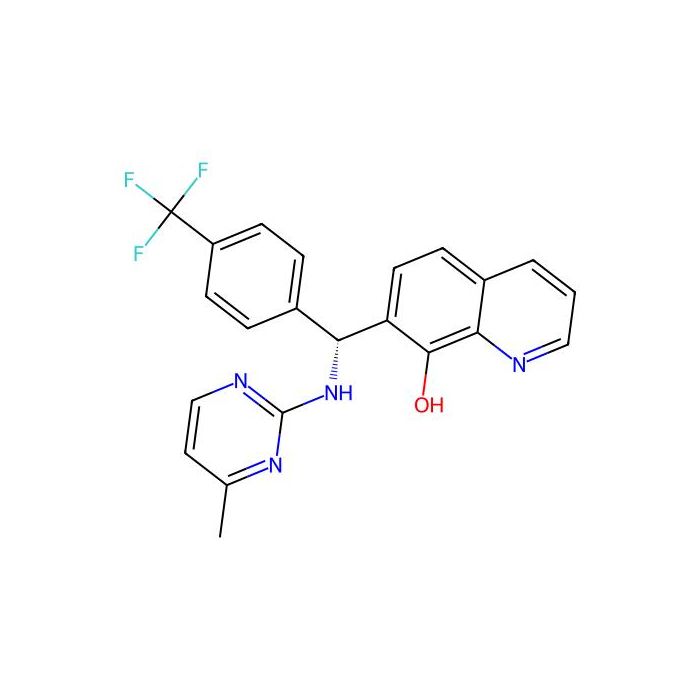
Q134R, a neuroprotective hydroxyquinoline derivative that suppresses nuclear factor of activated T cell (NFAT) signaling. Q134R can across blood-brain barrier. Q134R has the potential for Alzheimer's disease (AD) and aging-related disorders research.
In Vitro
Q134R (1-10 μM) suppresses NFAT signaling, without inhibiting calcineurin activity. Q134R partially inhibits NFAT activity in primary rat astrocytes, but does not prevent calcineurin-mediated dephosphorylation of a non-NFAT target, either in vivo, or in vitro. MCE has not independently confirmed the accuracy of these methods. They are for reference only.
In Vivo
Q134R (4 mg/kg; orally gavage; twice per day; for 7 days) treatment improves cognitive function in rodent models of AD‐like pathology . MCE has not independently confirmed the accuracy of these methods. They are for reference only. Animal Model: APP/PS1 mice (12-month-old) injected with oligomeric Aβ (oAβ) peptides Dosage: 4 mg/kg Administration: Orally gavage; twice per day; for 7 days Result: Led to improved Y maze performance.
Form:Solid
사양
사양 및 순도
≥99%
생화학 및 생리적 메커니즘
Q134R, a neuroprotective hydroxyquinoline derivative that suppresses nuclear factor of activated T cell (NFAT) signaling. Q134R can across blood-brain barrier. Q134R has the potential for Alzheimer's disease (AD) and aging-related disorders research.
Products are supplied to verified businesses, institutions, and qualified professionals for research and development use only. Not for use in humans, animals, diagnosis, or therapy.