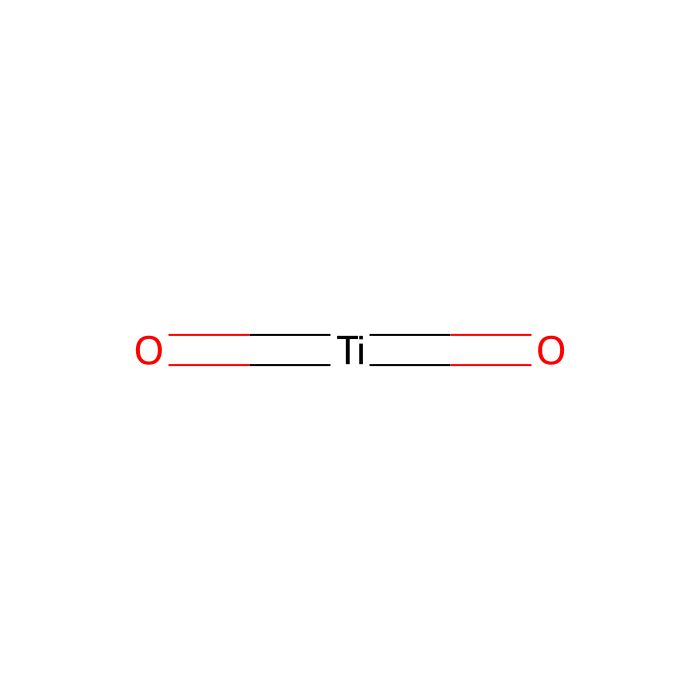
티타늄 산화물, 루틸 - PrimorTrace™, ≥99.99% 금속 기준 , CAS No.13463-67-7

CAS: 13463-67-7 Cat. No.: T105416 분자식: TiO2 분자량: 79.87 EC 번호: 236-675-5
주문 가능
등급 & 순도 PrimorTrace™ ? PrimorTrace™ — Aladdin's trace-metal-analysis line with ultra-low metal background. Use for ICP/AAS trace-metal work where contamination must be minimal. ≥99.99% metals basis
Synonyms
Aerosil P 25|A-Fil|Anatase (TiO2)|Bayertitan A|Bayertitan AN 3|Calcotone White T|Tronox|Tioxide RSM|Tioxide R-SM|Aerosil T 805|Cosmetic White C47-5175|Rutiox CR|Kronos RN 40P|Kronos titanium dioxide|Amperit 780.0|Titanium oxide|Unitane or-150|Aerosil P 27|Bayertitan|Rutile|Titanium(IV) oxide, rutile|Cosmetic Hydrophobic TiO2 9428|Horse head a-410|Atlas white titanium dioxide|Unitane OR|Aerosil P 25S6|Hombitan R 101D|Hombitan R 610K|Tioxide R-CR|Titanium(IV) oxide, anatase|Unitane or-342|Zopaque LDC|Tioxide A-DM|Tioxide AD-M|CG-T|C-Weiss 7|Hombitan|Runa rh20|Titanox 2010|Unitane or-540|JR 600A|Titanium peroxide (TiO2)|Blend White 9202|Kronos CL 220|Tipaque R 820|Bistrater L-NSC 200C|RO 2|Unitane OR 450|Kronos RN 56|Runa ARH 20|Titanium peroxide|Uniwhite KO|Unitane 0-110|Bayertitan T|Tipaque|Unitane or-640|Titanox RANC|Unitane|Titanox|Unitane o-220|Unitane or-340|TITANIUM DIOXIDE|Flamenco|Kronos|Ti-Pure|Austiox R-CR 3|Tioxide R.XL|Bayertitan R-U-F|Rutile (TiO2)|Tiofine|Ti-Pure R 901|Unitane OR 650|Uniwhite OR 650|Tiona t.d.|Rayox|Titafrance|Titanic anhydride|Baytitan|1700 White|Cab-O-Ti|Tiona td|Titanium oxide (TiO2)|dioxotitanium|Aerolyst 7710|AMT 600|Ti-Pure R 900|Titanium(IV) oxide|63B1 White|A-Fil Cream|Anatase|Horse head a-420|Tioxide|Titanium White|Unitane or-350|Horse head r-710|KH 360|Levanox White RKB|Kronos 2073|Titandioxid|Uniwhite AO|Cosmetic White C47-9623|Titandioxid (sweden)|Unitane 0-220|Unitane o-110
Storage
Room temperature
Shipped In
보통
★
크기
USA
독일 (EU)*
가격
수량
5g
T105416-5g
3 재고 있음
—

US$9.90

US$12.90
저장 US$3.00 (23.26%)
25g
T105416-25g
재고 있음 ≥10
—

US$25.90

US$39.90
저장 US$14.00 (35.09%)
100g
T105416-100g
재고 있음 ≥10
—

US$85.90

US$109.90
저장 US$24.00 (21.84%)
500g
T105416-500g
재고 있음 ≥10
1 재고 있음

US$339.90

US$399.90
저장 US$60.00 (15.00%)
Enter a quantity for the sizes you want to add.

개요

산화티타늄(IV)은 자외선을 조사하면 지질 과산화를 일으키는 효과적인 살균제입니다. 또한 독성이 낮아 페인트, 코팅 재료 및 화장품에 일반적으로 사용됩니다.

사양

동의어
Aerosil P 25 | A-Fil | Anatase (TiO2) | Bayertitan A | Bayertitan AN 3 | Calcotone White T | Tronox | Tioxide RSM | Tioxide R-SM | Aerosil T 805 | Cosmetic White C47-5175 | Rutiox CR | Kronos RN 40P | Kronos titanium dioxide | Amperit 780.0 | Titanium oxide | Unitane or-150 | Aerosil P 27 | Bayertitan | Rutile | Titanium(IV) oxide, rutile Show more
사양 및 순도
PrimorTrace™, ≥99.99% 금속 기준
보관 조건
Room temperature
배송
보통
등급
PrimorTrace™
순수함
≥99.99% metals basis
이름과 식별자
SMILES
O=[Ti]=O
IUPAC Name
dioxotitanium
InChIKey
GWEVSGVZZGPLCZ-UHFFFAOYSA-N
InChI
1S/2O.Ti
이성체 SMILES
O=[Ti]=O
분자량
79.87

고급 데이터

Taxonomic Classification

Taxonomy Tree

KingdomInorganic compounds
SuperclassMixed metal/non-metal compounds
분류Transition metal organides
SubclassTransition metal oxides
Intermediate Tree Nodes Not available
Direct ParentTransition metal oxides
Alternative Parents Inorganic salts  Inorganic oxides  
Molecular FrameworkNot available
Substituents Transition metal oxide - Inorganic oxide - Inorganic salt
설명This compound belongs to the class of inorganic compounds known as transition metal oxides. These are inorganic compounds containing an oxygen atom of an oxidation state of -2, in which the heaviest atom bonded to the oxygen is a transition metal.
External Descriptors titanium molecular entity
3D 구조
상호 작용 화학 구조 모델


인증서(CoA, COO, BSE/TSE 및 분석 차트)
C of A & Other Certificates(BSE/TSE, COO):
Analytical Chart:

Find and download the COA for your product by matching the lot number on the packaging.

46 results found

Lot NumberCertificate Type날짜항목
I2607871I2607871Certificate of AnalysisSep 02, 2026 T105416
I2607870I2607870Certificate of AnalysisSep 02, 2026 T105416
I2607869I2607869Certificate of AnalysisSep 02, 2026 T105416
I2607868I2607868Certificate of AnalysisSep 02, 2026 T105416
H2605514H2605514Certificate of AnalysisJul 31, 2026 T105416
H2605513H2605513Certificate of AnalysisJul 31, 2026 T105416
D2628365D2628365Certificate of AnalysisApr 18, 2026 T105416
G2601148G2601148Certificate of AnalysisApr 18, 2026 T105416
G2601147G2601147Certificate of AnalysisApr 18, 2026 T105416
D2628366D2628366Certificate of AnalysisApr 18, 2026 T105416
D2628364D2628364Certificate of AnalysisApr 18, 2026 T105416
D2628362D2628362Certificate of AnalysisApr 18, 2026 T105416
A2422164A2422164Certificate of AnalysisOct 29, 2025 T105416
B2226375B2226375Certificate of AnalysisSep 09, 2025 T105416
B2226367B2226367Certificate of AnalysisSep 09, 2025 T105416
I2523671I2523671Certificate of AnalysisJun 25, 2025 T105416
I2523667I2523667Certificate of AnalysisJun 25, 2025 T105416
I2523663I2523663Certificate of AnalysisJun 25, 2025 T105416
I2523661I2523661Certificate of AnalysisJun 25, 2025 T105416
D2530238D2530238Certificate of AnalysisMar 21, 2025 T105416
D2530239D2530239Certificate of AnalysisMar 21, 2025 T105416
D2530240D2530240Certificate of AnalysisMar 21, 2025 T105416
D2530241D2530241Certificate of AnalysisMar 21, 2025 T105416
A2305795A2305795Certificate of AnalysisOct 21, 2024 T105416
A2305747A2305747Certificate of AnalysisOct 21, 2024 T105416
A2305691A2305691Certificate of AnalysisOct 21, 2024 T105416
J2431461J2431461Certificate of AnalysisOct 16, 2024 T105416
J2431460J2431460Certificate of AnalysisOct 16, 2024 T105416
J2431462J2431462Certificate of AnalysisOct 16, 2024 T105416
A2305703A2305703Certificate of AnalysisOct 11, 2024 T105416
J2415842J2415842Certificate of AnalysisSep 29, 2024 T105416
J2415843J2415843Certificate of AnalysisSep 29, 2024 T105416
B2226372B2226372Certificate of AnalysisDec 21, 2023 T105416
B2226359B2226359Certificate of AnalysisDec 21, 2023 T105416
I2123315I2123315Certificate of AnalysisJul 10, 2023 T105416
I2123313I2123313Certificate of AnalysisJul 10, 2023 T105416
C2123160C2123160Certificate of AnalysisJan 12, 2023 T105416
L2212019L2212019Certificate of AnalysisNov 08, 2022 T105416
L2212020L2212020Certificate of AnalysisNov 08, 2022 T105416
H2407062H2407062Certificate of AnalysisNov 08, 2022 T105416
G2411035G2411035Certificate of AnalysisNov 08, 2022 T105416
G2404006G2404006Certificate of AnalysisNov 08, 2022 T105416
F2307315F2307315Certificate of AnalysisNov 08, 2022 T105416
A2305793A2305793Certificate of AnalysisNov 08, 2022 T105416
A2305762A2305762Certificate of AnalysisNov 08, 2022 T105416
A2305704A2305704Certificate of AnalysisNov 08, 2022 T105416
화학 및 물리적 특성
끓는점(°C)2900 °C/1013 hPa
녹는점(°C)1855 °C
분자량79.87
XLogP3
Hydrogen Bond Donor Count0
Hydrogen Bond Acceptor Count2
Rotatable Bond Count0
Exact Mass79.9378 Da
Monoisotopic Mass79.9378 Da
Topological Polar Surface Area34.100 Ų
Heavy Atom Count3
Formal Charge0
Complexity18.300
Isotope Atom Count0
Defined Atom Stereocenter Count0
Undefined Atom Stereocenter Count0
Defined Bond Stereocenter Count0
Undefined Bond Stereocenter Count0
The total count of all stereochemical bonds0
Covalently-Bonded Unit Count1
자주 묻는 질문과 기사
Construction and application of single-walled carbon nanotube networks
Silicon carbide provides technical solutions for the photovoltaic field
Semiconductor Materials: A Summary of Questions
Structure, Synthesis, and Applications of Barium Titanate – A Closer Look at the Core Dielectric Material in MLCCs
Applications of Nanoclay in Materials and Formulations: Dispersion Mechanisms, Performance Enhancement, and Product Selection
High-Refractive-Index vs Low-Refractive-Index Coating Materials: From AR/Waveguide Principles to a Formulation & Material-Selection Map (Including Product Category Tables A/B/C)
Panorama Guide to Lithium-Ion Battery Electrode Materials: Working Principles, Materials Map, and Selection Navigation (incl. Tables 1–4)
The Complete Guide to UV Absorbers: Definition & Scope, Key Engineering Metrics, Validation Methods, and Selection Navigation (Tables 1–3)
Optical & Optoelectronic Materials Selection Guide:Positioning materials, key metrics, and validation paths along “Generation → Guiding → Control → Readout” (with product navigation and Tables 1–4)
Ceramic Materials Guide: Basic Definitions, Classification Framework, and Research-Task-Oriented Selection (with Product Navigation and Tables 1–4)
Why Metal Nanocatalysts Can “Save Energy Yet Lose Performance Easily”: Durability Logic from Active Sites to Support/Interface Engineering (Including Selection Guide and Product Tables A–D)
Applications of Self-Assembled Monolayers (SAMs), Microcontact Printing, and Soft Lithography in Surface Functionalization and Micro/Nanopatterning
Polyetherimide (PEI): Structural Features, Main Properties, and Typical Application Directions
TCA-KTTS, a Titanate Coupling Agent Suitable for Use in Cosmetics: Basic Information, Application Characteristics, and Differences from 130 and 105
Metal Halide Perovskite Solar Cells: Sources of High Efficiency, Stability Bottlenecks, and Experimental Decision Logic
From Barium Titanate Dielectrics to Multilayer Ceramic Capacitors: Dielectric Properties and Experimental Evaluation of Barium Titanate-Based Ceramics
Application and Selection Guide for Alkyd Resin Coatings: Advantages, Limitations, Formulation Control, and Modification Directions
Four Core Applications of Epoxy Resins: Bonding, Protection, Load-Bearing, and Insulation Protection
Why Fluorocarbon Resins Are Weatherable: Structural Stability, Low Surface Energy, and Coating Film Appearance Retention
Fluorocarbon Resin Coating Formulation Design: Resin Selection, Supporting Systems, and Key Application Control Points
Structure–Property Relationship of Silicone Resins: Mechanisms of Heat Resistance, Weatherability, Hydrophobicity, and Coating Performance Analysis
Silicone Resin Coating Formulation Design: From Application Conditions to Matching Resins, Pigments and Fillers, Curing, and Substrates
Applications and Selection of Acrylic Resins in Coatings: Analysis of Architectural, Industrial, and Supporting Materials
Vinyl Acetate-Acrylic Emulsion (Vinyl Acrylic Emulsion): A Cost-Performance Balance Solution for Architectural Coatings
PVAc, VAE, and Vinyl Acetate-Based Emulsions: Film-Forming Logic and Performance Boundaries in Architectural Coatings
How Should Montmorillonite Be Rationally Modified? Organic Modification, Inorganic Modification, and Application-Oriented Selection and Validation
Epoxy Phenolic Coatings: Why Are They Commonly Used for Chemical Resistance, Solvent Resistance, Heat Resistance, and Internal Metal Surface Protection?
Selection and Formulation Design Guidelines for Phenolic Resins in Coatings: Applicable Scenarios, Application Limitations, and Performance Verification
Application Positioning, Scenario Selection, and Key Use Considerations for Chlorinated Rubber Resin in Coatings
Formulation Design of Chlorinated Rubber Coatings: Component Synergy and Performance Control
What Is Silica Sol: Mechanism of Action, Application Scenarios, and Selection Criteria for Nanosilica Dispersions
Applications and Selection of Polyester Resins in Industrial Coatings: Powder, Coil, Baking, Packaging, and Metal Coating Scenarios
How to Select Vinyl-Related Resins: Building Formulation Judgment Based on Substrate, Performance Targets, and Failure Risks
Applicability Boundaries, Failure Risks, and Alternative System Selection for Chlorinated Rubber Resin in Coatings
Waterborne Resin Application Guide: Formulation Synergy, Troubleshooting, and Technology Development Trends
Mechanisms and Control of Coating Yellowing: From Chromophoric Structure Formation to Source Diagnosis and Formulation Optimization
Resin Polarity in Coating Formulations: From Molecular Structure to Dissolution, Compatibility, Interfacial Interactions, and Formulation Design
Why Do Daily Chemical Products Become Opaque? Formation Mechanisms of Milky Turbidity, Pearlescence, and Coverage, and How to Select the Right Ingredients
Color-Development Mechanisms, Formulation Forms, and Selection/Application Logic of Colorants in Personal Care Products
Analysis of the Production Process of Hydroxypropyl Methylcellulose (HPMC) for Putty: Understanding Differences in Substitution Structure and Gelation Temperature from High-Ratio and Low-Ratio Formulations
Key Variable in the Long-Term Stability of Waterborne Pigment Concentrates: How Dispersant Molecular Weight Distribution (MWD) Affects Pigment Dispersion, Surface Adsorption-Layer Formation, and Storage Stability
Types, Mechanisms of Action, Key Quality Indicators, and Selection and Application of Common Cellulose Ethers in Wall Putty
Influencing Factors and Control Strategies for Blistering in Neutral Wall Putty: An Experimental Analysis Based on HPMC Dosage, Viscosity, and Ground Calcium Carbonate Fineness
How to Select Binding/Gel Materials for Neutral Wall Putty? A Comparison of Pregelatinized Starch, PVA, and Redispersible Polymer Powder Based on Four Application Trials
Causes and Mechanism Analysis of Delamination During Sanding of Water-Resistant Putty
What Are the Differences Between Polyvinyl Alcohol 1788, 2488, and 2699? Understanding Workability, Bonding Strength, and Relative Water Resistance from the Perspective of Degree of Polymerization and Degree of Hydrolysis
Differences and Application Selection of Cassava- and Corn-Based Pregelatinized Starch in Neutral Putty Formulations
The Role, Selection, Cracking Risk Analysis, and Dosage Control of Bentonite in Neutral Putty
Mechanism of Kojic Acid in Reducing Hyperpigmentation: From Tyrosinase Inhibition to Melanin Production Regulation
The Dual-Targeted Skin-Brightening Mechanism of 4-MSK: Inhibiting Melanin Production and Reducing Epidermal Pigment Retention
Molecular Structure, Photochemical Behavior, and Role of Octocrylene in Sunscreen Formulations
UVA Absorption Mechanism of Avobenzone: Keto–Enol Tautomerism, Photochemical Instability, and Formulation Photostabilization Strategies
Anti-Photoaging Potential of Artemia Extract: UV-Induced Damage Cascades, HSP70-Related Stress Protection, and GP4G Metabolic Insights
Mechanism of Action of Tranexamic Acid in Pigmentation Care: From the Plasmin System to Regulation of Inflammation-Driven Pro-Melanogenic Signaling
Citations of This Product
솔루션 계산기
리뷰

고객 리뷰

등급 선택에 도움이 필요하신가요?

당사의 등급 선택 가이드는 카탈로그의 모든 변형 제품에 대해 순도, 안정제 상태 및 용도 적합성을 다룹니다.

PrimorTrace™ 등급 가이드 보기 →

Shall we send you a message when we have discounts available?

Remind me later

Thank you! Please check your email inbox to confirm.

Oops! Notifications are disabled.