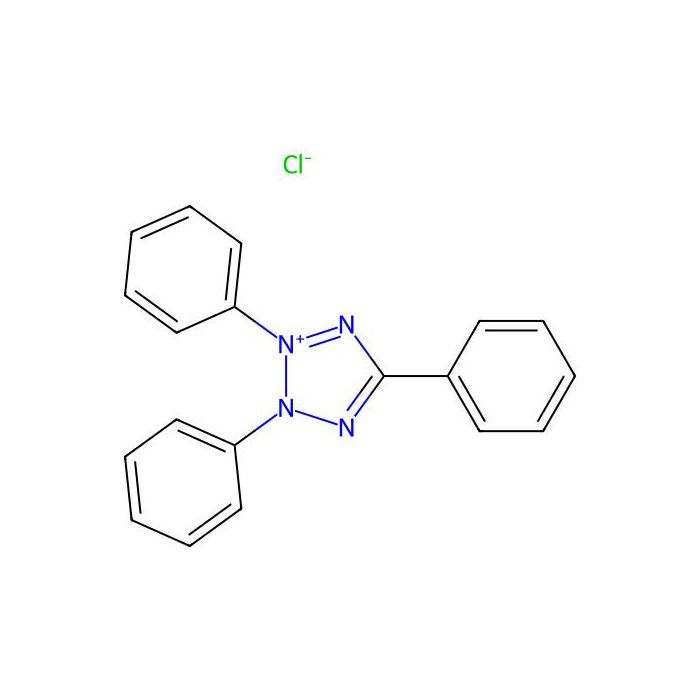
TTC Staining Solution (1%) - BioReagent, Biological Stain, for microscopy, 1% , CAS No.298-96-4

CAS: 298-96-4 Cat. No.: T774567 분자식: C19H15ClN4 분자량: 334.80 Beilstein Registry Number: 3923356 EC 번호: 206-071-6 PubChem CID: 9283
주문 가능
GRADE & PURITY BioReagent ? BioReagent grade — tested suitable for life-science and molecular-biology use. Use for cell culture, assays, and biochemical work needing biological compatibility. Biological Stain ? Biological stain grade — dyes characterized for staining cells and tissues. Use in histology and microscopy where staining consistency matters. for Microscopy ? Microscopy grade — reagents/stains suited to sample prep and imaging. Use in microscopy where clarity and low background are needed. 1%
Storage
Store at 2-8°C,Protected from light
Shipped In
Wet ice
★
Size
USA
독일 (EU)*
Price
Qty
100ml
T774567-100ml
US 주문제작 · 2–4주 ·
—
US$35.90
Enter a quantity for the sizes you want to add.
🧪
Why this grade

BioReagent, Biological Stain, for microscopy, 1% Biological Stain,BioReagent,현미경용 for sensitive chromatographic and analytical workflows requiring minimal baseline interference.

🌡

Storage & shipping

Store at 2-8°C,Protected from light Ships Wet ice Check lot-specific COA for exact specifications.

📋

Quality documents

SDS, COA, datasheet, and spec sheet available for download. Lot-specific COA accessible via lot number lookup.

📚

Literature proof

Cited in 85 peer-reviewed publications across chromatography, organic synthesis, and cross-coupling reactions.

개요

2,3,5-Triphenyltetrazolium chloride (TTC) has a molecular weight of 334.80, a molecular formula of C₁₉H₁₅ClN₄, and a CAS number of 298-96-4. TTC is a lipid-soluble, light-sensitive compound initially used to assess seed viability and later employed to stain and detect ischemic infarcts in mammalian tissues. TTC acts as a proton acceptor for the pyridine nucleotide-linked enzyme system in the respiratory chain. It reacts with respiratory enzymes in normal tissue, producing a red color. In ischemic tissue, where respiratory enzyme activity is reduced, the reaction does not occur, leaving the tissue unstained (pale). This staining is a gross staining method used to evaluate dehydrogenase activity within tissues.

TTC Staining Solution (1%) can detect myocardial infarction and cerebral necrosis 3–6 hours earlier than electron microscopy and 24 hours earlier than light microscopy. It is commonly used for staining fresh heart and brain tissue from autopsies, as well as early infarcted tissue in experimental animal models. It can also be used to assess seed and pollen viability. Features of this product include: ① TTC staining can be performed directly on fresh tissue without fixation, embedding, or other processing steps; ② TTC staining is rapid, typically taking 20–30 minutes; ③ TTC staining solution can be reused; 10 mL is sufficient for staining approximately 20 tissue sections.

Instructions for Use

1. Staining of Brain Tissue

1.1 Collect the fresh brain tissue sample (typically from anesthetized animals, either directly or after perfusion with physiological saline). After removal, quickly freeze at -20°C for 20–30 minutes to facilitate sectioning.

1.2 Slice the brain tissue. For animal samples, the recommended thickness is 2–3 mm; for human samples, 3–5 mm. Typically, 4–5 consecutive slices can be obtained. The first cut is made at the midpoint between the frontal pole and the optic chiasm; the second at the level of the optic chiasm; the third at the infundibular stalk; and the fourth between the infundibular stalk and the caudal pole of the posterior lobe (Reference: Zhang Juntian, Ed., Modern Pharmacological Experimental Methods).

1.3 Immerse the tissue slices in TTC Staining Solution (1%) and stain in the dark for 30–35 minutes.

1.4 Fix the stained slices in 4% paraformaldehyde or 10% neutral formalin for 4–24 hours.

1.5 Blot excess liquid from the tissue surface. Use an image analysis system (e.g., IPP) to measure the infarct area and calculate the cerebral infarct volume.

2. Staining of Seeds

2.1 Take seeds with varying viability. Cut them transversely or make a precise longitudinal cut through the center of the embryo. Use one half of each seed for staining.

2.2 Place the seed halves in TTC Staining Solution (1%) and incubate at 37°C in the dark for 20 minutes.

2.3 Pour off the staining solution, rinse the seeds 2–3 times with tap water, and immediately observe the coloration of the embryo.

Precautions

  1. TTC Staining Solution (1%) is slightly irritating to humans. Please handle with care and take appropriate protective measures.

  2. When removing the brain, take care to preserve its structural integrity.

  3. If staining results are suboptimal, appropriately extend the staining time.

  4. The fresher the sample, the better. To prevent the weakening or loss of enzyme activity in normal myocardial or brain tissue, perform staining as soon as possible.

  5. For your safety and health, please wear a lab coat and disposable gloves during operation.

Staining Results

Tissue Type
Color
Normal myocardium or brain tissue
Red
Myocardial or cerebral infarct necrotic area
Pale (unstained)
Ischemic brain tissue
Intermediate between red and pale

Specifications

사양 및 순도
BioReagent, Biological Stain, for microscopy, 1%
안정성 및 스토리지
Store at 2-8℃ long term (6 months). Store in the dark.
보관 조건
Store at 2-8°C,Protected from light
배송
Wet ice
이 제품은 콜드 체인 배송이 필요합니다.지상 및 기타 경제 서비스는 사용할 수 없습니다.
등급
Biological Stain, BioReagent, 현미경용
Product Line
생물 제품
이름과 식별자
정식 스마일
C1=CC=C(C=C1)C2=NN([N+](=N2)C3=CC=CC=C3)C4=CC=CC=C4.[Cl-]
IUPAC Name
2,3,5-triphenyltetrazol-2-ium;chloride
InChIKey
PKDBCJSWQUOKDO-UHFFFAOYSA-M
INCHI
1S/C19H15N4.ClH/c1-4-10-16(11-5-1)19-20-22(17-12-6-2-7-13-17)23(21-19)18-14-8-3-9-15-18;/h1-15H;1H/q+1;/p-1
이성체 SMILES
C1=CC=C(C=C1)C2=NN([N+](=N2)C3=CC=CC=C3)C4=CC=CC=C4.[Cl-]
WGK 독일
3
RTECS
XF8100000
PubChem CID
9283
분자량
334.80
Beilstein
3923356

Documentation

📋 Safety Data Sheet (SDS)

Comprehensive hazard, handling, storage, and regulatory compliance document.

Download SDS →

✅ Certificate of Analysis (COA)

Lot-specific quality data. Enter your lot number to retrieve the exact COA.

Look up COA →

📊 Datasheet

Quick-reference summary of product specifications and applications.

View datasheet →

🔬 Specification Sheet

Full quality attributes and acceptance criteria for this grade.

View spec sheet →

Advanced Data

Taxonomic Classification

Taxonomy Tree

KingdomOrganic compounds
SuperclassOrganoheterocyclic compounds
분류Azoles
SubclassTetrazoles
Intermediate Tree Nodes Not available
Direct ParentPhenyltetrazoles and derivatives
Alternative Parents Benzene and substituted derivatives  Heteroaromatic compounds  Azacyclic compounds  Organopnictogen compounds  Organonitrogen compounds  Organic chloride salts  Hydrocarbon derivatives  
Molecular FrameworkAromatic heteromonocyclic compounds
Substituents Phenyltetrazole - Benzenoid - Monocyclic benzene moiety - Heteroaromatic compound - Azacycle - Organic nitrogen compound - Organopnictogen compound - Hydrocarbon derivative - Organic chloride salt - Organic salt - Organonitrogen compound - Aromatic heteromonocyclic compound
설명This compound belongs to the class of organic compounds known as phenyltetrazoles and derivatives. These are compounds containing a phenyltetrazole skeleton, which consists of a tetrazole bound to a phenyl group.
External Descriptors organic chloride salt
3D 구조
상호 작용 화학 구조 모델


인증서(CoA, COO, BSE/TSE 및 분석 차트)
C of A & Other Certificates(BSE/TSE, COO):
Analytical Chart:

Find and download the COA for your product by matching the lot number on the packaging.

1 results found

Lot NumberCertificate Type날짜항목
ZJ26F0939580Certificate of AnalysisSep 30, 2026 T774567
화학 및 물리적 특성
감도Light-sensitive
녹는점(°C)250°C
자주 묻는 질문과 기사
Citations of This Product
솔루션 계산기
리뷰

고객 리뷰

자주 묻는 질문

What does Biological Stain mean?
Biological Stain indicates that the product has been processed and tested for biological and biochemical applications. Specifications may include endotoxin limits, microbial controls, sterility, low DNase/RNase/protease activity, and verified biological activity where relevant.
What does BioReagent mean?
BioReagent indicates that the product has been processed and tested for biological and biochemical applications. Specifications may include endotoxin limits, microbial controls, sterility, low DNase/RNase/protease activity, and verified biological activity where relevant.
How should this product be stored?
Store at 2–8 °C, protected from light. The material is light-sensitive — keep it in its original opaque or amber container.
How is this product shipped?
This product ships chilled on wet ice. Unpack on arrival and transfer it to the storage condition stated above.
What are the CAS number, molecular formula and molecular weight?
The CAS Number is 298-96-4, the molecular formula is C19H15ClN4, and the molecular weight is 334.80 g/mol. InChIKey PKDBCJSWQUOKDO-UHFFFAOYSA-M.
What documentation is provided?
Available product documentation, including Certificates of Analysis (COA), Safety Data Sheets (SDS), and specification sheets, is shown in the product document area. Document availability and access follow the current site policy.

Shall we send you a message when we have discounts available?

Remind me later

Thank you! Please check your email inbox to confirm.

Oops! Notifications are disabled.