ARL8A Antibody - Primary antibody, specific to ARL8A, Rabbit IgG

Cat. No.: Ab089629
AVAILABLE TO ORDER
GRADE & PURITY Carrier Free ? Carrier-free — supplied without added carrier protein/stabilizer. Use when carriers (e.g. BSA) would interfere with conjugation or sensitive assays. ExactAb™ ? ExactAb™ — Aladdin's antibody line emphasizing precision and validated quality. Use for reliable, specificity-validated antibody applications. Validated ? Validated grade — performance confirmed in defined applications before release. Use when you want documented assurance the reagent works as stated. 0.5 mg/mL
Application
IHC, WB
Host species
Rabbit
Reactive species
Human, Mouse, Rat
Isotype
Rabbit IgG
Conjugation
Unconjugated
★
Size
Germany (EU)
USA*
Price
Qty
10μl
Ab089629-10μl
—
1 In stock
€86.69
50μl
Ab089629-50μl
—
1 In stock
€225.53
100μl
Ab089629-100μl
Made to order · 8–12 wks
€364.36
1ml
Ab089629-1ml
Made to order · 8–12 wks
€2,950.23
Enter a quantity for the sizes you want to add.
🧪
Why this grade

ExactAb™, Validated, Carrier Free, 0.5 mg/mL Carrier Free,ExactAb™,Validated for sensitive chromatographic and analytical workflows requiring minimal baseline interference.

🌡

Storage & shipping

Store at -20°C,Avoid repeated freezing and thawing Ships Ice chest + Ice pads Check lot-specific COA for exact specifications.

📋

Quality documents

SDS, COA, datasheet, and spec sheet available for download. Lot-specific COA accessible via lot number lookup.

📚

Literature proof

Cited in 0 peer-reviewed publications across chromatography, organic synthesis, and cross-coupling reactions.

Overview

Rabbit anti Human ARL8A Antibody, Polyclonal, could be used for WB, IHC and so on.
Application:
WB: 1/500-1/1000
IHC: 1/50-1/100
Relevance
ADP ribosylation factor like 8A belongs to the small GTPase superfamily. and may play a role in lysosomes motility. Alternatively, it may play a role in chromosome segregation.

Specifications

Product Name
ARL8A Antibody - Primary antibody, specific to ARL8A, Rabbit IgG
Synonyms
ADP ribosylation factor like 8Aantibody | ADP ribosylation factor like protein 10B antibody | ADP ribosylation factor like protein 8A antibody | ARL 10B antibody | ARL 8A antibody | ARL10B antibody | ARL8Aantibody | FLJ45195 antibody | GIE 2 antibody | GI
Specifications & Purity
ExactAb™, Validated, Carrier Free, 0.5 mg/mL
Host species
Rabbit
Specificity
ARL8A
Immunogen
Fusion protein of human ARL8A (AA 1-186)
Positive Control
WB: Mouse brain, Rat brain, SK-N-SH lysates. IHC: Human gastric cancer tissue.
Conjugation
Unconjugated
Grade
Carrier Free, ExactAb™, Validated
Isotype
Rabbit IgG
SDS-PAGE
150 kDa
Purification Method
Antigen affinity purified
Concentration
0.5 mg/mL
Product Line
Biological Products
Storage and Shipping
Form
Liquid
Storage
Store at -20°C,Avoid repeated freezing and thawing
Shipped In
Ice chest + Ice pads
Stability And Storage
Store at 4°C short term (1-2 weeks). Store at -20°C long term (24 months). Upon receipt, it is recommended to aliquot. Avoid freeze/thaw cycle.
Images

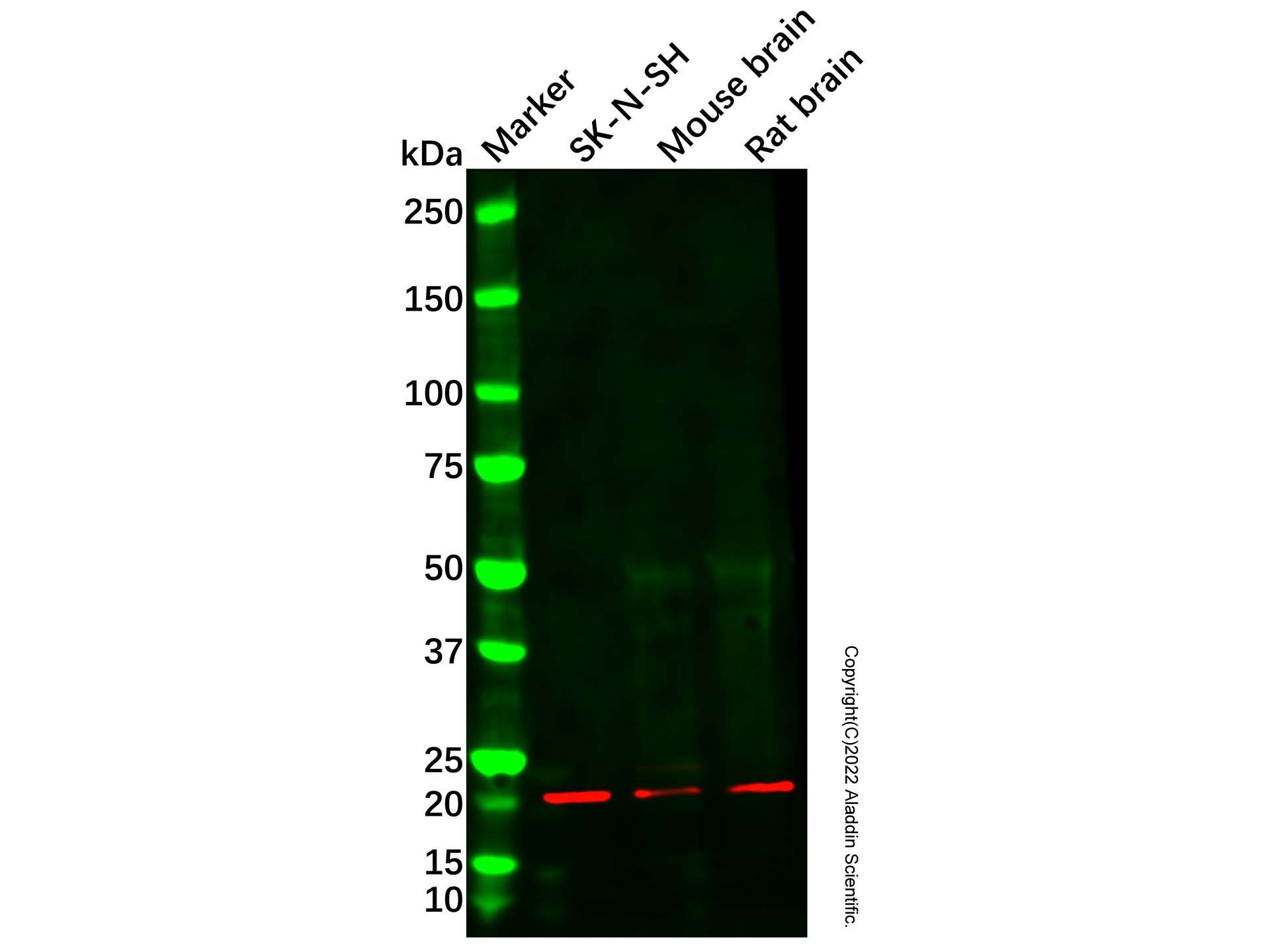
ARL8A Antibody (Ab089629) - Western Blot
All lanes: ARL8A Antibody (Ab089629) at 1/1000 dilution
Samples: Lysates at 20 µg per lane
Secondary: Goat Anti-Rabbit IgG H&L (HRP) (Ab170144) at 1/10000 dilution
Predicted band size: 21 kDa
Observed band size: 21 kDa
Exposure time: 200.0 s

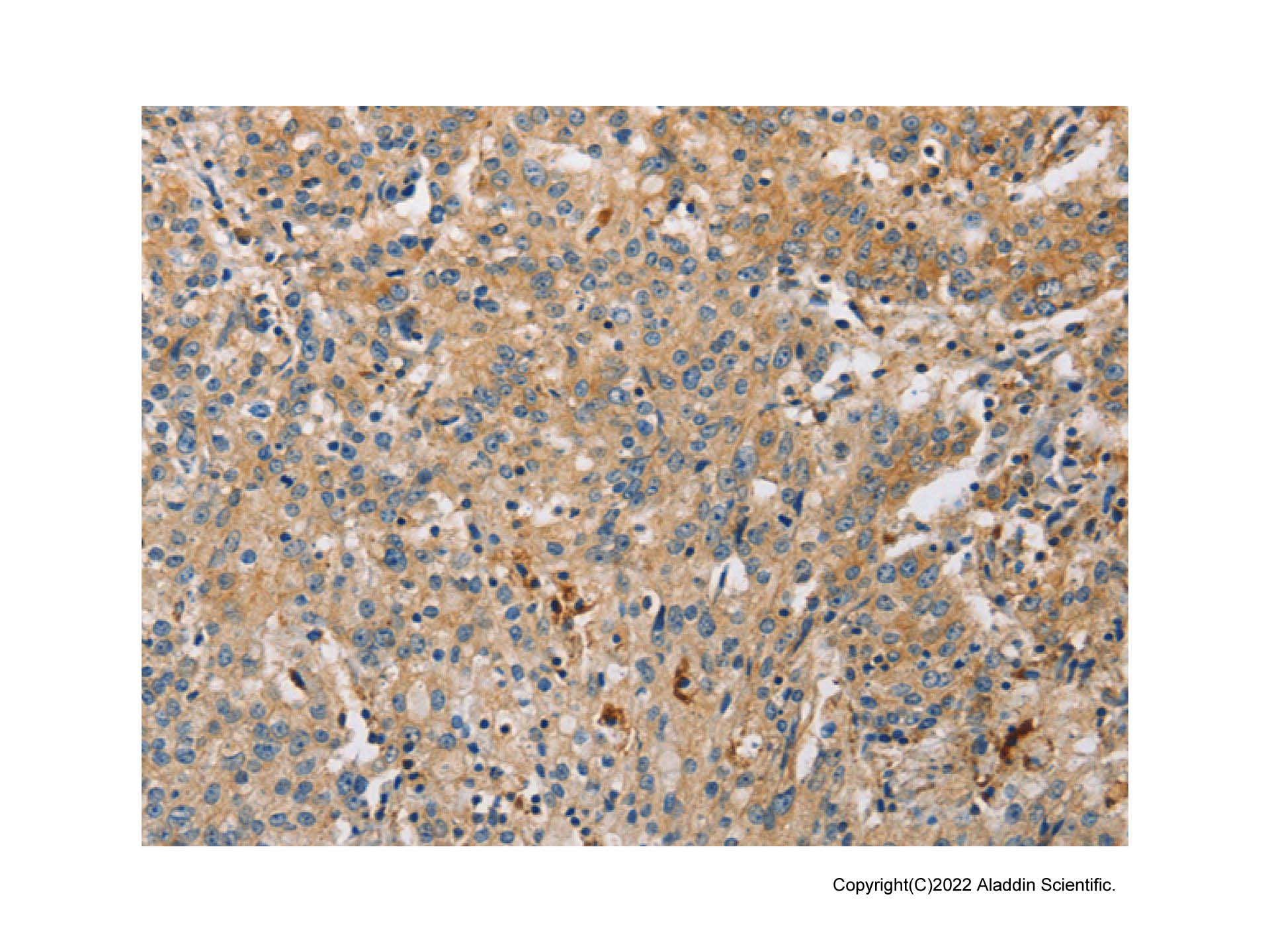
ARL8A Antibody (Ab089629) - IHC
Immunohistochemistry analysis of paraffin-embedded Human gastric cancer tissue using ARL8A Antibody (Ab089629). High-pressure and temperature Sodium Citrate pH 6.0 was used for antigen retrieval.

Application
Application
Dilution info
WB

1/500-1/1000

IHC

1/50-1/100

Documentation

📋 Safety Data Sheet (SDS)

Comprehensive hazard, handling, storage, and regulatory compliance document.

Download SDS →

✅ Certificate of Analysis (COA)

Lot-specific quality data. Enter your lot number to retrieve the exact COA.

Look up COA →

📊 Datasheet

Quick-reference summary of product specifications and applications.

View datasheet →

🔬 Specification Sheet

Full quality attributes and acceptance criteria for this grade.

View spec sheet →

Advanced Data

Associated Targets(Human)
ARL8A Tbio ADP-ribosylation factor-like protein 8A (0 Activities)
Activity TypeActivity Value -log(M)Mechanism of ActionActivity ReferencePublications (PubMed IDs)
Certificates(CoA,COO,BSE/TSE and Analysis Chart)
C of A & Other Certificates(BSE/TSE, COO):
Analytical Chart:

Find and download the COA for your product by matching the lot number on the packaging.

2 results found

Lot NumberCertificate TypeDateItem
ZJ24F1012034Certificate of AnalysisAug 09, 2026 Ab089629
ZJ24F1012035Certificate of AnalysisAug 09, 2026 Ab089629
Solution Calculators
Reviews

Customer Reviews

Application Protocols

Tested/validated applications, recommended dilutions, antigen retrieval methods, and positive control samples are not specified for this item; refer to the CoA/Spec Sheet.

General starting points (for method development only; not item-specific):

  • Western blot (WB): Start at 1:1,000 in PBST or TBST with 3–5% BSA; adjust based on signal/background.
  • Immunofluorescence (IF): Start at 1–5 µg/mL with appropriate fixation/permeabilization; include secondary-only controls.
  • Immunohistochemistry (IHC-P): Antigen retrieval and blocking must be optimized; begin with citrate buffer pH 6.0 or Tris-EDTA pH 9.0.
  • Immunoprecipitation (IP): 1–5 µg antibody per mg lysate protein as a starting point; optimize bead type and incubation.

These are generic guidelines; rely on the item’s CoA for authoritative conditions.

Biological Roles

Target: ARL8A (ADP-ribosylation factor-like protein 8A), a small GTPase of the Arf-like family.

General literature summary (biochemistry/cell biology; not item-specific):

  • Localization: Predominantly associated with lysosomal membranes via lipid modifications and effector interactions.
  • Function: Regulates anterograde lysosomal transport along microtubules by recruiting kinesin motors, commonly via the adapter protein SKIP/PLEKHM2. Influences lysosome positioning, axonal transport in neurons, and organelle dynamics.
  • Switch mechanism: Cycles between GDP-bound (inactive) and GTP-bound (active) states; GTP-loaded ARL8A engages effectors that modulate trafficking and fusion events.
  • Interactors: Reported effectors include SKIP/Pleckstrin homology domain-containing proteins and components of the HOPS complex involved in late endosome/lysosome tethering (literature). ARL8A/ARL8B paralogs exhibit overlapping yet context-dependent roles.
  • Pathway context: Contributes to endolysosomal pathway regulation, autophagosome–lysosome fusion dynamics, and cellular response to nutrient status (as part of broader lysosomal signaling networks). Specific pathway dependencies vary by cell type.

Research implications:

  • An ARL8A antibody enables detection of endogenous protein levels, subcellular localization studies, and perturbation analyses (e.g., siRNA/CRISPR validation by immunoassay). Use appropriate controls to distinguish ARL8A from the closely related ARL8B.

Note: Biological roles summarized here are from general literature. This section does not constitute validation for any particular application of SKU Ab089629.

Buffer Applications

Antibody performance is highly dependent on buffer composition. The product is Carrier Free (per Product Data), enabling end-users to define the buffer environment.

General buffer guidance (prepare with nuclease/germ-free technique):

  • Stock/handling buffers: PBS (10–50 mM phosphate, 150 mM NaCl, pH 7.2–7.6) or TBS (20–50 mM Tris, 150 mM NaCl, pH 7.4–8.0). Filter (0.22 µm) and degas when feasible.
  • Additives (optional, user-defined):
    • Stabilizers: 0.1–1% BSA or 1–5% trehalose for storage aliquots; 10–50% glycerol for subzero stability (avoid if conjugation or MS is planned).
    • Detergent: 0.01–0.05% Tween-20 for wash/diluent buffers to reduce nonspecific binding.
    • Preservative: 0.02–0.05% sodium azide for refrigerated storage of working solutions not used in live cells.
  • Blocking buffers: 3–5% BSA or casein in PBS/TBS; choose based on assay and downstream detection.
  • Elution buffers (IP): Gentle low-pH glycine (100 mM, pH 2.5–3.0) with immediate neutralization; or chaotropic buffers for strong interactions as compatible with protein integrity.

pH ranges (general):

  • Most IgG-class antibodies are stable near neutral pH; avoid <5 and >9 unless specifically required and exposure time is limited.

Item-specific formulation, if any (stock concentration, pH, excipients) is not provided in the Product Data—consult the CoA/Spec Sheet.

Green Alternatives

Greenness considerations for antibodies pertain more to formulation and workflow than to replacing the reagent itself.

  • Carrier Free format: Reduces additive load (e.g., BSA, glycerol, azide), simplifying downstream purification and minimizing environmental release of persistent additives. Tradeoff: may decrease long-term stability without user-added stabilizers; mitigate by aliquoting and proper storage.
  • Aqueous-only workflows: Favor water-based buffers over organic solvent steps. Use low-toxicity detergents at minimal effective concentrations.
  • Waste minimization: Optimize assay volumes and titrations to reduce consumables and buffer waste. Implement microplate formats and reuse of buffer reservoirs when contamination risk is controlled.
  • Preservation choices: If microbial control is needed in stored working solutions not used for live cells, prefer low-percentage sodium azide or alternative biocides with clear disposal pathways; ensure compliance with local regulations.

Comparison (general):

  • Conventional format with BSA/glycerol: Higher stability, simpler storage at -20°C without freezing. Environmental burden from stabilizers; may interfere with conjugation/mass spectrometry.
  • Carrier Free (this item): Cleaner matrix for conjugation and analytical work. Requires stricter handling (aliquoting, temperature control) to maintain stability.

Select the approach that balances experimental needs with sustainability goals and proper waste management.

Pharmaceutical Uses

This product is supplied strictly for research use only (per Product Data) and is not intended for diagnostic or therapeutic applications.

Permissible, non-clinical uses (general):

  • Analytical reagent in bioprocess development (e.g., process monitoring assays, target expression tracking) and preclinical research workflows.
  • Reference material for immunoassay development/qualification in discovery settings (ELISA, Western blot, IHC/IF), subject to internal QA and biosafety policies.
  • Potential capture/detection component in lab-scale ligand-binding assays or immunoaffinity enrichment methods.

Regulatory note:

  • No pharmacopeial monograph or cGMP grade is indicated for this item. For any application beyond basic research, obtain written confirmation of specifications and quality attributes from the CoA and QA documentation.

Do not use in humans or for clinical diagnostics. No clinical claims are made or implied.

Physical Properties

As a proteinaceous antibody reagent, classical small-molecule physical constants are generally not applicable.

Item-specific values:

  • Appearance: Not specified for this item; refer to CoA/Spec Sheet.
  • Concentration, formulation buffer, pH: Not specified for this item; refer to CoA/Spec Sheet.
  • Molecular weight (kDa), isoelectric point (pI): Not specified for this item; refer to CoA/Spec Sheet.

General/literature expectations for antibodies (for context only):

  • Immunoglobulin G (IgG) class antibodies typically have an apparent MW ~150 kDa (monomer) by native methods; ~50 kDa (heavy) and ~25 kDa (light) by reducing SDS-PAGE (literature). Exact isotype and MW for this item are not specified.
  • Solubility: Antibodies are soluble in aqueous physiological buffers (e.g., PBS, TBS) and are unstable in neat organic solvents. Stabilizers (e.g., proteins, sugars, polyols) are sometimes used; this item is labeled Carrier Free in Product Data (see Quality & Grades).
  • Stability: Proteins are sensitive to elevated temperature, extremes of pH, repeated freeze–thaw, and microbial contamination. Avoid vigorous agitation/foaming to prevent denaturation.

Refractive index, density, logP, pKa, boiling/melting points: Not applicable to macromolecular protein reagents; not specified for this item.

Always consult the specific Certificate of Analysis for the exact lot-specific physical details when planning experiments.

Quality & Grades

Item-specific quality designations from Product Data:

  • Grade/Purity: Carrier Free; ExactAb™; Validated.

What these designations typically imply (general guidance; see CoA for item-specific details):

  • Carrier Free: The antibody is supplied without common carriers/stabilizers (e.g., BSA, gelatin, glycerol). Benefits include precise conjugation chemistry, accurate protein quantification, and minimized assay background from carrier proteins. Practical note: consider adding your own stabilizers to aliquots intended for storage, if compatible with downstream use.
  • ExactAb™: Denotes a sequence-defined, recombinant or otherwise precisely specified antibody platform aimed at lot-to-lot consistency and reproducibility. This generally reduces variability seen with hybridoma drift or polyclonal preparations. Exact format (isotype/subclass, host cell line) is not specified for this item; refer to CoA/Spec Sheet.
  • Validated: Indicates the product has undergone application-specific testing. Exact validated applications, tested species reactivity, and performance metrics are not specified for this item; refer to the CoA/Spec Sheet for details.

Quality controls (general practices for high-end antibodies):

  • Purity assessment by SDS-PAGE and SEC-HPLC; endotoxin testing for cell-based compatibility; binding verification by ELISA/surface plasmon resonance; functional validation in immunoassays. The exact QC panel for this item is not specified.

Recommendation: For regulated work or assay transfer, retain the lot-specific CoA, validation datasets, and any performance benchmarks provided by Aladdin Scientific.

Reaction & Applications

Classical organic reactions (e.g., coupling, reductions, Grignard) are not applicable to an antibody reagent.

Relevant uses for an ARL8A antibody are immunochemical assays (e.g., Western blotting, immunofluorescence, immunohistochemistry, immunoprecipitation, ELISA), flow cytometry, and potentially proximity assays. However, item-specific validated applications are not provided in the Product Data for this SKU. Refer to the CoA/Spec Sheet for tested applications and performance.

General practical tips (assay-agnostic):

  • Blocking: Use protein-based blockers (e.g., BSA, casein) to minimize background; confirm compatibility with a carrier-free primary antibody.
  • Titration: Determine optimal working dilution by checkerboard titration. Excess antibody can increase background.
  • Sample preparation: For ARL8A, subcellular localization studies often require intact lysosomes and appropriate fixation/permeabilization conditions; optimize based on cell type and assay.
  • Controls: Include positive and negative biological controls, isotype control (if applicable; isotype not specified here), and secondary-only controls for immunoassays.

Do not infer application suitability without reviewing the item’s validation data.

Reaction Conditions

Classical chemical reaction conditions (solvent, temperature, catalysts, yields) are not applicable to an antibody reagent.

Assay-oriented conditions (general, non-item-specific):

  • Incubation temperature: Commonly 4°C overnight or ambient temperature for 1–2 h, depending on assay (WB, IHC, IF, IP). Optimize empirically.
  • Diluent: PBS or TBS with 0.1–5% blocking protein and 0.01–0.05% Tween-20 as appropriate.
  • Washes: Multiple short washes with buffer containing a mild detergent reduce background.

Item-specific, validated application parameters are not provided in the Product Data for this SKU; consult the CoA/Spec Sheet before establishing protocols.

Safety & Handling

Safety information provided in Product Data:

  • GHS classification, signal word, pictograms, H-statements: Not specified for this item; refer to SDS.

General laboratory safety guidance for antibody reagents (non-hazard, aqueous protein solutions):

  • PPE: Wear a lab coat, nitrile gloves, and safety glasses. Handle solutions using aseptic technique to prevent contamination.
  • Handling: Avoid repeated freeze–thaw cycles; keep on ice during use. Mix gently (invert/slow pipetting); avoid vortexing/foaming to reduce denaturation.
  • Incompatibilities: Avoid strong oxidizers, extreme pH (<5 or >9 unless specifically formulated), organic solvent exposure, and elevated temperatures.
  • Biological safety: Although for research use only and not derived for clinical use, treat all biological materials as potentially bioactive. If sodium azide is present in your working buffers (user-added), note its incompatibility with lead/copper plumbing and potential acute toxicity.
  • First aid (general): In case of skin/eye contact, rinse with water. If inhaled as aerosol, move to fresh air. If ingested, rinse mouth with water. Seek medical attention as required. Defer to SDS for authoritative instructions.
  • Spills: Absorb aqueous spills with inert material, then clean with water and detergent. Decontaminate surfaces with suitable disinfectants.

Waste: Dispose of protein solutions and contaminated consumables according to institutional biosafety and chemical waste policies.

Always consult and follow the Safety Data Sheet (SDS) for the specific lot.

Solvent Selection

This product is an antibody reagent and is not used with organic solvent systems in the way small-molecule reagents are. Classical “solvent selection” does not apply.

Practical guidance (buffer-centric):

  • Use neutral, isotonic aqueous buffers (e.g., PBS, TBS) for dilution and handling. Maintain physiological ionic strength (≈150 mM NaCl) to minimize nonspecific adsorption and aggregation.
  • Avoid high percentages of organic solvents (ACN, MeOH, DMSO) that can denature proteins. If co-solvents are unavoidable (e.g., during conjugation), keep concentrations minimal and verify stability.
  • Surfactants (e.g., 0.01–0.05% Tween-20) can reduce nonspecific binding in assay buffers; evaluate compatibility with your application.

For detailed buffer recipes and recommendations, see the “Buffer Applications” and “Storage & Reconstitution” sections and consult the CoA/Spec Sheet for any item-specific formulation notes.

Storage & Reconstitution

Item-specific handling from Product Data:

  • Storage Conditions: Store at -20°C. Avoid repeated freezing and thawing.
  • Shipping: Ice chest + ice pads (cold chain maintained).

Additional practical guidance (general, not item-specific; verify against label/CoA):

  • Receipt: Inspect for container integrity and any visible precipitate. If liquid, briefly spin to collect contents; keep on ice during handling.
  • Aliquoting: Immediately divide into single-use aliquots in low-protein-binding tubes to prevent freeze–thaw damage. Label aliquots with lot, concentration, and date.
  • Thawing: Thaw on ice. Mix gently by inversion—do not vortex. Keep cold during setup.
  • Reconstitution: If supplied lyophilized (not specified), reconstitute with sterile, neutral pH buffer (e.g., PBS) to the desired concentration. Allow to hydrate for 10–15 min on ice with gentle mixing. Avoid introducing bubbles.
  • Working buffers: Use filtered (0.22 µm) PBS/TBS. For storage of working solutions not used in live cells, optional 0.02–0.05% sodium azide can inhibit microbial growth. For longer-term subzero storage, user-added cryoprotectant (e.g., 10–50% glycerol) may reduce freeze damage—ensure compatibility with downstream applications.
  • Short-term storage: Keep at 2–8°C for hours to a few days as needed; avoid microbial contamination.
  • Long-term storage: -20°C per Product Data; some users prefer -80°C for extended stability, but confirm with CoA/Spec Sheet.

Note: Exact formulation, concentration, and whether the product is liquid or lyophilized are not specified for this item; consult the CoA/Spec Sheet for definitive instructions.

Structure & Identity

This product is an antibody reagent directed against human ARL8A (ADP-ribosylation factor-like protein 8A). As an immunochemical reagent, it is a macromolecular protein rather than a small molecule.

  • SKU: Ab089629
  • Product name: ARL8A Antibody
  • Category: Antibody (research reagent)
  • Grade/Purity: Carrier Free; ExactAb™; Validated (per Product Data)
  • Molecular formula: Not specified for this item; refer to CoA/Spec Sheet.
  • Molecular weight: Not specified for this item; refer to CoA/Spec Sheet.
  • SMILES / InChI / InChIKey: Not applicable to proteins; not specified for this item.
  • Clone, host species, isotype, light chain: Not specified for this item; refer to CoA/Spec Sheet.

2D/structural description (general, literature):

  • Typical immunoglobulin architecture comprises two heavy and two light chains with variable domains (VH/VL) forming the paratope that recognizes an epitope on ARL8A. Constant domains form the Fc region (isotype not specified for this item). Epitope type (linear vs. conformational) and sequence are not provided in the Product Data.

Identity confirmation (general practices):

  • Antibody identity is typically verified by sequence definition (for recombinant formats), SDS-PAGE under reducing/non-reducing conditions, and application-specific validation (WB/IHC/IF/etc.). Item-specific identity assays are not specified for this product; consult CoA.
Synthetic Utility

Not applicable. As an ARL8A-targeting antibody, this product is not used as a synthetic building block or reagent in chemical transformations. For practical laboratory guidance, see the sections on Reaction & Applications (immunochemical context), Buffer Applications, and Storage & Reconstitution.

Target Specificity

Item-specific attributes such as antigen epitope, species reactivity, clone ID, host/isotype, and cross-reactivity are not specified for this item; refer to the CoA/Spec Sheet.

Product name indicates target: ARL8A (ADP-ribosylation factor-like protein 8A). No further target-binding details are provided in the Product Data.

Need help choosing the grade?

Our grade selection guide covers purity, stabilizer status, and application suitability for all variants in our catalog.

View Carrier Free grade guide → View Validated grade guide → View ExactAb™ grade guide →

Related Products

Goat Anti-Rabbit IgG H&L Antibody - Secondary antibody, for ELISA,LF,GICA various applications, from Rabbit, generated in Goat
Goat Anti-Rabbit IgG H&L (AF594) - Secondary antibody, IgG
Goat Anti-Rabbit IgG H&L (Biotin) - Secondary antibody, IgG
Goat Anti-Rabbit IgG H&L (AF488) - Secondary antibody, IgG
Goat Anti-Rabbit IgG H&L (AF405) - Secondary antibody, IgG
Donkey Anti-Rabbit IgG H&L (AF647) - Secondary antibody, specific to , IgG
Donkey Anti-Rabbit IgG H&L (Biotin) - Secondary antibody, IgG
Goat Anti-Rabbit IgG H&L (HRP) - Secondary antibody
Goat Anti-Rabbit IgG H&L Antibody - Secondary antibody, Goat IgG
Goat Anti-Rabbit IgG H&L (Biotin) - Secondary antibody
Goat Anti-Rabbit IgG H&L (Cy5) - Secondary antibody
Goat Anti-Rabbit IgG H&L (FITC) - Secondary antibody
Goat Anti-Rabbit IgG H&L (TRITC) - Secondary antibody
Goat Anti-Rabbit IgG H&L (Biotin) - Secondary antibody, Goat IgG
Goat Anti-Rabbit IgG H&L (HRP) - Secondary antibody, Goat IgG
Goat Anti-Rabbit IgG H&L (Cy5) - Secondary antibody, Goat IgG
Goat Anti-Rabbit IgG H&L (TRITC) - Secondary antibody, Goat IgG
Goat Anti-Rabbit IgG H&L (FITC) - Secondary antibody, Goat IgG
Goat Anti-Rabbit IgG H&L (PE) - Secondary antibody, Goat IgG
Goat Anti-Rabbit IgG H&L (APC) - Secondary antibody, Goat IgG
Goat Anti-Rabbit IgG H&L (AF647) - Secondary antibody, Goat IgG
Goat Anti-Rabbit IgG H&L (AF405) - Secondary antibody, Goat IgG
Goat Anti-Rabbit IgG H&L (AF555) - Secondary antibody, Goat IgG
Goat Anti-Rabbit IgG H&L (AF546) - Secondary antibody, specific to Rabbit IgG
Goat Anti-Rabbit IgG H&L (AF700) - Secondary antibody, specific to Rabbit IgG
Goat Anti-Rabbit IgG H&L (AF488) - Secondary antibody
Goat Anti-Rabbit IgG H&L (AF647) (Ready to use) - Secondary antibody, specific to Rabbit IgG

Shall we send you a message when we have discounts available?

Remind me later

Thank you! Please check your email inbox to confirm.

Oops! Notifications are disabled.