Determine the necessary mass, volume, or concentration for preparing a solution.
Biological stain Biological Stain for sensitive chromatographic and analytical workflows requiring minimal baseline interference.
Desiccated,Room temperature Ships Normal Check lot-specific COA for exact specifications.
SDS, COA, datasheet, and spec sheet available for download. Lot-specific COA accessible via lot number lookup.
Cited in 53 peer-reviewed publications across chromatography, organic synthesis, and cross-coupling reactions.
Product Introduction
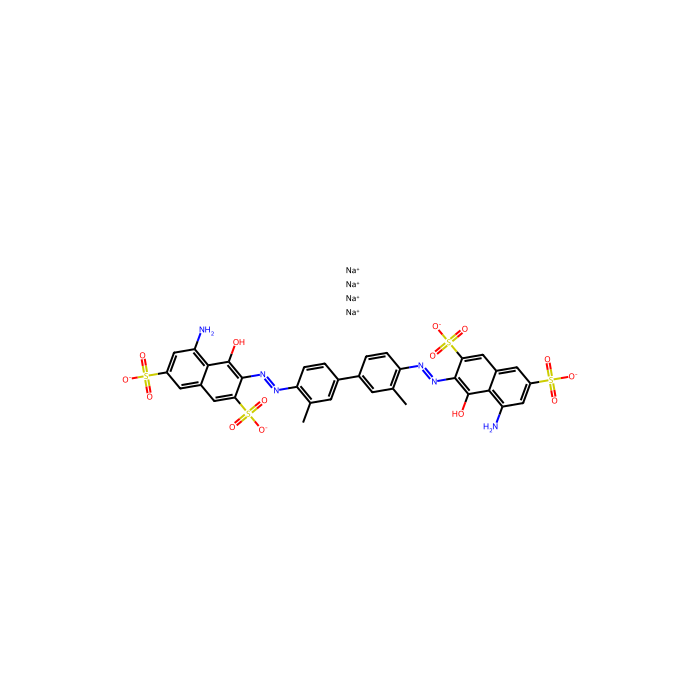
Trypan Blue is an azo based, hydrophilic, tetrasulfonated blue acid dye widely utilized for assessing cell viability. As an easy method to determining the viability of cells, Trypan Blue will stain dead cells with permeable membranes blue, while the dye is excluded by most living cells and their intact membranes thereby allowing visual determination of living versus dead cells. Although Trypan Blue is predominately used for assessing cell viability of cultured cells, other applications for this dye have been reported. In rat abdominal organ slices Trypan Blue has been utilized to determine cell viability as well as islet cell cluster cell viability from caprine pancreatic samples.
A viability dye for quantifying live versus dead cells
The trypan blue dye is an azo dye, derived from toluidine. It is soluble in water and has a molecular weight of 961 g/mol.
Application
Trypan blue has been used:
in cell viability assay
to determine the number of living and necrotic cells by staining with 0.2% trypan blue solution.
to stain plant tissue in order to to visualize cell death
Comprehensive hazard, handling, storage, and regulatory compliance document.
Download SDS →Lot-specific quality data. Enter your lot number to retrieve the exact COA.
Look up COA →Full quality attributes and acceptance criteria for this grade.
View spec sheet →Taxonomy Tree
| Kingdom | Organic compounds |
|---|---|
| Superclass | Benzenoids |
| Class | Benzene and substituted derivatives |
| Subclass | Biphenyls and derivatives |
| Intermediate Tree Nodes | Benzidines |
| Direct Parent | 3,3'-disubstituted benzidines |
| Alternative Parents | 2-naphthalene sulfonic acids and derivatives 2-naphthalene sulfonates 1-sulfo,2-unsubstituted aromatic compounds Toluenes Phenoxides Sulfonyls Organosulfonic acids Azo compounds Propargyl-type 1,3-dipolar organic compounds Primary amines Organooxygen compounds Organic sodium salts Organic oxides Hydrocarbon derivatives Organic cations |
| Molecular Framework | Aromatic homopolycyclic compounds |
| Substituents | 3,3'-disubstituted benzidine - 2-naphthalene sulfonate - Naphthalene sulfonic acid or derivatives - 2-naphthalene sulfonic acid or derivatives - Naphthalene sulfonate - Naphthalene - Arylsulfonic acid or derivatives - 1-sulfo,2-unsubstituted aromatic compound - Phenoxide - Toluene - Organic sulfonic acid or derivatives - Organosulfonic acid or derivatives - Organosulfonic acid - Sulfonyl - Azo compound - Organic alkali metal salt - Organic 1,3-dipolar compound - Propargyl-type 1,3-dipolar organic compound - Organic salt - Organic sodium salt - Amine - Primary amine - Hydrocarbon derivative - Organosulfur compound - Organooxygen compound - Organonitrogen compound - Organic oxide - Organic oxygen compound - Organic nitrogen compound - Organic cation - Aromatic homopolycyclic compound |
| Description | This compound belongs to the class of organic compounds known as 3,3'-disubstituted benzidines. These are organic compounds containing a benzidine skeleton, which is substituted only at the 3- and 3'-positions. |
| External Descriptors | Not available |
Find and download the COA for your product by matching the lot number on the packaging.
| Lot Number | Certificate Type | Date | Item |
|---|---|---|---|
| Certificate of Analysis | Jun 08, 2026 | T108745 | |
| Certificate of Analysis | Jun 02, 2026 | T108745 | |
| Certificate of Analysis | Jun 02, 2026 | T108745 | |
| Certificate of Analysis | Jun 02, 2026 | T108745 | |
| Certificate of Analysis | Sep 09, 2025 | T108745 | |
| Certificate of Analysis | Sep 09, 2025 | T108745 | |
| Certificate of Analysis | Dec 20, 2023 | T108745 | |
| Certificate of Analysis | Jan 05, 2023 | T108745 | |
| Certificate of Analysis | Jan 05, 2023 | T108745 | |
| Certificate of Analysis | Jan 05, 2023 | T108745 | |
| Certificate of Analysis | Jan 05, 2023 | T108745 | |
| Certificate of Analysis | Jan 05, 2023 | T108745 | |
| Certificate of Analysis | Jan 05, 2023 | T108745 | |
| Certificate of Analysis | Jan 05, 2023 | T108745 |
| Solubility | Soluble in water (10 mg/ml at 25 °C), ethanol (0.6 mg/ml), and EGME (20 mg/ml). |
|---|---|
| Melt Point(°C) | >300°C |
| Molecular Weight | 960.800 g/mol |
| XLogP3 | |
| Hydrogen Bond Donor Count | 4 |
| Hydrogen Bond Acceptor Count | 20 |
| Rotatable Bond Count | 5 |
| Exact Mass | 959.982 Da |
| Monoisotopic Mass | 959.982 Da |
| Topological Polar Surface Area | 404.000 Ų |
| Heavy Atom Count | 62 |
| Formal Charge | 0 |
| Complexity | 1790.000 |
| Isotope Atom Count | 0 |
| Defined Atom Stereocenter Count | 0 |
| Undefined Atom Stereocenter Count | 0 |
| Defined Bond Stereocenter Count | 0 |
| Undefined Bond Stereocenter Count | 0 |
| The total count of all stereochemical bonds | 0 |
| Covalently-Bonded Unit Count | 5 |
Our grade selection guide covers purity, stabilizer status, and application suitability for all variants in our catalog.
View Biological Stain grade guide →