
3,3-Spiro-α-Proline Building Blocks: Structural Features, Complementary Synthetic Routes, and Multigram-Scale Preparation
3,3-Spiro-α-Proline Building Blocks: Structural Features, Complementary Synthetic Routes, and Multigram-Scale Preparation
Introduction
The side chain of proline connects back to the amino nitrogen to form a five-membered pyrrolidine ring, giving proline conformational characteristics distinct from those of most α-amino acids. Attaching a second carbocycle or heterocycle at the C3 position of proline produces a 3,3-spiro-α-proline. This structure combines a cyclic amino acid, a spiro quaternary carbon center, and a variable second ring, providing new structural options for modulating local conformation, spatial occupancy, substituent projection directions, and molecular polarity.
The research value of these compounds is not derived solely from their spirocyclic shape. Variations in ring size, heteroatom content, and fluorinated substitution may affect the conformation of the pyrrolidine ring, the three-dimensional molecular shape, physicochemical properties, and subsequent functionalization strategies. However, whether such changes improve target activity, selectivity, or metabolic stability must still be verified through controlled experiments with specific molecules.
For a long time, the practical application of 3,3-spiro-α-prolines was limited by their synthetic accessibility. Their preparation requires the simultaneous construction of a spiro quaternary carbon center, a pyrrolidine ring, an α-carboxyl group, and an appropriate form of nitrogen protection. Different ring sizes also exhibit different reactivities and functional-group stabilities. Recent studies have established two synthetic routes with complementary substrate scopes, starting respectively from cyclic ketones and methyl cycloalkanecarboxylates, enabling multiple classes of 3,3-spiro-α-prolines to be obtained on gram or multigram scales.[1,2]
This article addresses three questions: What structural changes does C3 spirocyclization introduce into proline? Why are the two synthetic routes suited to different ring systems? How does multigram-scale preparation support subsequent studies of conformation, biological activity, and structure–property relationships?
Keywords: 3,3-spiro-α-proline; unnatural amino acid; conformational restriction; spiro quaternary carbon; molecular building block; multigram-scale synthesis
1 Structural Features of Proline and C3 Spirocyclization
1.1 The Conformational Restriction of Proline Arises from Its Pyrrolidine Ring
In ordinary α-amino acids, the amino group and side chain are structurally independent. In proline, however, the side chain connects back to the amino nitrogen to form a five-membered pyrrolidine ring. This ring restricts the range of motion around the N—Cα bond and the adjacent backbone dihedral angles, allowing proline to access fewer local conformations than most open-chain amino acids.
When incorporated into a peptide chain, proline forms a tertiary amide whose amide nitrogen lacks an N—H bond and therefore cannot serve as a conventional amide hydrogen-bond donor. These characteristics affect local peptide-chain turns, secondary-structure formation, and the spatial arrangement of neighboring residues.
The pyrrolidine ring of proline is not a completely rigid, planar structure; rather, it interconverts among different ring-puckering conformations. Substituents on the ring can alter the relative stability of these conformations and thereby influence backbone orientation.[3]
1.2 Proline Peptide Bonds Exhibit Distinctive cis–trans Isomerization Behavior
Most non-proline peptide bonds predominantly adopt the trans conformation. In Xaa—Pro peptide bonds, the energy difference between the cis and trans conformations is relatively small, and the proportion of the cis conformation is generally higher than in ordinary peptide bonds.
Interconversion between the cis and trans forms requires rotation around the amide bond and therefore involves a relatively high energy barrier. The exact population ratio and interconversion rate are jointly affected by neighboring amino acids, solvent, ring substitution, and the overall molecular conformation. Experimental studies have also shown that ring-structure modifications may affect the cis–trans equilibrium and the rate of amide-bond rotation differently: some modifications substantially increase the rotational barrier without necessarily causing a significant change in the equilibrium ratio between the cis and trans conformations.[3,4]
“Conformational restriction” does not mean that a molecule is fixed in a single conformation. Rather, it means that the types and relative populations of accessible conformations, as well as the rates of interconversion among them, are altered.
1.3 Structural Elements Altered by C3 Spirocyclization
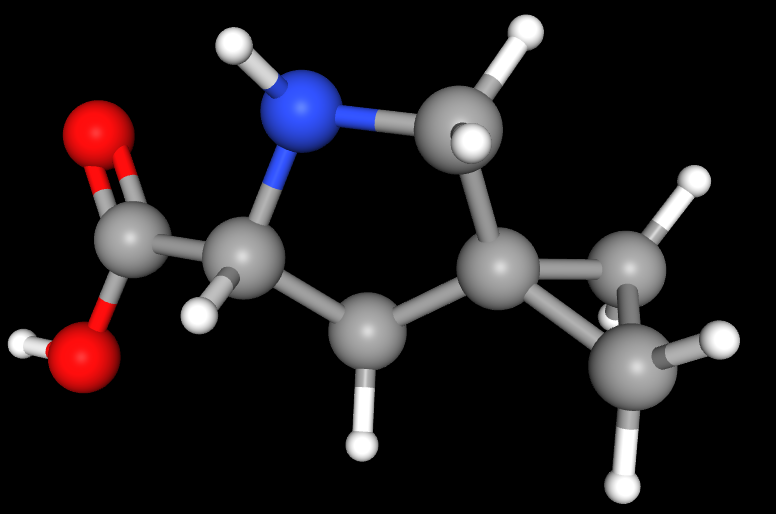
In ordinary proline, the C3 position is a methylene group. After formation of a 3,3-spirocyclic structure, C3 belongs simultaneously to the pyrrolidine ring and the second ring, becoming a spiro quaternary carbon center that no longer bears a hydrogen atom.
The figure below uses the representative cyclopropane-containing compound 5-azaspiro[2.4]heptane-6-carboxylic acid (CAS 152723-55-2) to illustrate the basic structural features of this class. On the one hand, the molecule retains the proline-like nitrogen-containing five-membered ring and the α-carboxyl group. On the other hand, introduction of a second ring at C3 gives the molecule a more clearly defined three-dimensional shape. The other 3,3-spiro-α-prolines discussed in this article share the same connectivity pattern, differing only in the size and composition of the second ring.
This change is mainly reflected in the following aspects:
① Altered spatial occupancy. The second ring occupies a region of space beyond the side-chain envelope of ordinary proline and may alter the way in which the molecule contacts a target surface.
② Additional substituent projection directions. When the second ring contains a heteroatom or a modifiable functional group, side chains or other structural fragments can be attached in directions different from those available in ordinary proline.
③ Systematic variation of ring size. Cyclopropane, cyclobutane, cyclopentane, and cyclohexane differ in ring strain, bond angles, and conformational freedom and can therefore be used to compare the effects of ring-size variation on molecular properties.
④ Property modulation through heteroatoms and fluorinated substitution. Azetidine, tetrahydropyran, and 4,4-difluorocyclohexane introduce, respectively, an additional nitrogen atom, an ether oxygen, or a fluorinated fragment, potentially affecting polarity, basicity, dipole moment, and lipophilicity.
Structural studies of other spirocyclic oligomers have shown that spiro connections can alter the relative orientation of adjacent structural units and expand the accessible conformational space. However, such findings cannot substitute for direct measurements of 3,3-spiro-α-prolines, which still require evaluation by nuclear magnetic resonance spectroscopy, crystallographic analysis, and computational methods.[5]
1.4 Spirocyclization Does Not Directly Imply Improved Activity or Stability
Conformational restriction can sometimes reduce the conformational changes that occur before and after ligand binding, but its effect depends on whether the restricted conformation resembles the binding conformation required by the target. If the spirocyclic structure directs key functional groups away from favorable orientations, biological activity may instead decrease.
Similarly, after formation of a spiro quaternary carbon center at C3, that position no longer contains a C—H bond that can undergo direct oxidative metabolism. The altered local steric environment may also affect how metabolic enzymes recognize neighboring structural features. However, this change does not necessarily improve the overall metabolic stability of the molecule, because other sites may still undergo metabolism, while lipophilicity, conformation, and the mode of binding to metabolic enzymes also contribute to the metabolic outcome.
The size and heteroatom composition of the second ring also simultaneously affect molecular volume, three-dimensional shape, polarity, lipophilicity, and crystal packing. Their effects on aqueous solubility and membrane permeability must therefore be measured separately. For example, replacing a carbocycle with an oxygen-containing heterocycle usually increases the number of hydrogen-bond acceptors and molecular polarity and may reduce lipophilicity. Such changes may improve aqueous solubility but may also reduce passive membrane permeability because of increased exposed polarity. C3 spiro substitution may additionally alter the conformation of the pyrrolidine ring and the spatial environment surrounding the amino-acid reactive site, thereby affecting amide-coupling efficiency. Specific reaction conditions must therefore be validated for each substrate structure.
2 Synthetic Challenges in Using 3,3-Spiro-α-Prolines as Molecular Building Blocks
2.1 Simultaneous Construction of the Spiro Quaternary Carbon and the α-Amino Acid Framework
The target molecule must simultaneously contain:
① a C3 spiro quaternary carbon center;
② an intact pyrrolidine ring;
③ an α-carboxyl group;
④ an endocyclic nitrogen capable of participating in subsequent coupling reactions;
⑤ a protecting-group arrangement capable of withstanding multistep synthesis.
Direct modification of the C3 position of an already formed proline would require the sequential formation of two carbon–carbon bonds at a sterically congested ring carbon, together with control of regioselectivity, functional-group compatibility, and protecting-group behavior. Recent studies have adopted a different design: beginning with a cyclic starting material that already contains the second ring and then constructing the pyrrolidine portion around the same ring carbon.[1,2]
2.2 Different Ring Sizes Require Different Ring-Closure Strategies
The same reaction sequence is not necessarily suitable for every ring size. Small-ring substrates may have greater ring strain or lower stability, whereas exocyclic alkenes formed from larger rings may exhibit different electronic properties.
Developing a single unified route covering all ring sizes is therefore unrealistic. A more practical approach is to assign different substrates to different ring-forming strategies according to the reactivity of the key intermediates.
2.3 Target Products Require Appropriate Protecting-Group Forms
N-tert-Butoxycarbonyl-protected amino acids are convenient for storage and routine amide coupling. For diazaspirocyclic structures containing two nitrogen atoms, orthogonal protecting groups such as tert-butoxycarbonyl (Boc) and benzyloxycarbonyl (Cbz) are also required so that the two nitrogen atoms can be exposed and functionalized independently.
2.4 Scale-Up Must Balance Yield, Purification, and Operational Safety
The practicality of a synthetic route depends not only on the yield of each individual step but also on the following factors:
① whether the starting materials are readily available;
② whether low-yielding steps occur early or late in the route;
③ whether intermediates can be taken directly into the next step without column chromatography;
④ whether reactions involving highly reactive reagents, low temperatures, or exothermic processes can be scaled up reliably;
⑤ whether functional groups can withstand conditions such as hydrogenation, Lewis acids, and acidic hydrolysis.
Both routes to 3,3-spiro-α-prolines employ common organic reactions, but they involve operations using strong bases, borane complexes, lithium triethylborohydride, trimethylsilyl cyanide, and catalytic hydrogenation. Corresponding risk-control measures are therefore still required during scale-up.
3 Common Design Features of the Two Synthetic Routes
Neither route constructs the C3 spirocycle directly from a fully formed proline. Instead, a tetrasubstituted carbon center is first established on a cyclic starting material, after which an intramolecular reaction is used to construct a pyrrolidone or pyrrolidine ring.
The common sequence can be summarized as follows:
Starting material containing the second ring → formation of a tetrasubstituted center and a nitrogen-containing side chain → intramolecular ring closure → adjustment of the carboxyl group and nitrogen-protecting form → 3,3-spiro-α-proline
Both routes begin with a cyclic ketone or a methyl cycloalkanecarboxylate that already contains the target ring structure. By selecting different starting materials, 3,3-spiro-α-prolines with different ring sizes, heteroatom compositions, and fluorinated substituents can be obtained.[1,2]
The principal difference between the two routes lies in the stage at which the carbon atom of the final carboxyl group is introduced into the molecule:
① Route A introduces the carbon framework required for the amino-acid carboxyl group at an early stage;
② Route B first constructs a spirocyclic lactam and then introduces the carboxyl carbon at a late stage in the form of a nitrile.
This difference determines the substrate scope suited to each route.
4 Route A: Construction of Smaller Spirocycles from Cyclic Ketones
4.1 Conversion of Cyclic Ketones into Exocyclic α,β-Unsaturated Esters
Route A starts from cyclic ketones. Using cyclobutanone as an example, cyclobutanone undergoes a Horner–Wadsworth–Emmons (HWE) reaction with triethyl phosphonoacetate to give an exocyclic α,β-unsaturated ester.
This step introduces a two-carbon enoate fragment at the original carbonyl carbon while retaining the cyclobutane ring. The electron-withdrawing effect of the ester carbonyl activates the double bond, allowing it to serve as an acceptor in the subsequent Michael addition.[2]
4.2 Michael Addition–Lactamization to Form a Spirocyclic Pyrrolidone
Under basic conditions, diethyl acetamidomalonate undergoes Michael addition to the exocyclic α,β-unsaturated ester. The resulting intermediate then undergoes intramolecular lactamization, closing a five-membered nitrogen-containing ring and producing a spirocyclic pyrrolidone.
This cascade reaction accomplishes three key transformations:
① formation of a new carbon–carbon bond connecting the aminomalonate and cyclic fragments;
② construction of the five-membered pyrrolidone ring;
③ establishment of the final 3,3-spirocyclic framework.
For the cyclobutane series, this step produces a mixture of a diester-type spirocyclic pyrrolidone and a partially dealkoxycarbonylated monoester in an approximate ratio of 60:40. This mixture can be taken directly into the next step without complete separation of the two components.[2]
4.3 Dealkoxycarbonylation, Nitrogen Protection, and Lactam Reduction
The product of the Michael addition–lactamization sequence contains one excess ester group. A Krapcho dealkoxycarbonylation is used to remove this ester selectively while retaining the other ester that will ultimately form the carboxylic acid.
A Boc protecting group is then introduced onto the lactam nitrogen, after which the lactam carbonyl is selectively reduced using borane–dimethyl sulfide complex (BH₃·SMe₂). This reagent reduces tertiary amides more readily than ester groups, allowing the spirocyclic pyrrolidone to be converted into the corresponding spirocyclic pyrrolidine while retaining the ester. Finally, ester hydrolysis affords the N-Boc-protected 3,3-spiro-α-proline.[2]
4.4 Key Yields and Scale-Up Results for the Cyclobutane Series
The principal limitation of the cyclobutane series occurs in the Michael addition–lactamization step, which proceeds in approximately 33% yield. Optimization of the reaction conditions did not substantially improve this yield, resulting in an overall yield of approximately 10.4% over six steps.
Despite the moderate yield of the key ring-forming step, each operation could still be performed on a relatively large scale. Approximately 33 g of the cyclobutane-spiro-α-proline product was obtained in a single complete synthesis.[2]
4.5 Substrate Scope of Route A
Route A was also applied to the cyclopropane and azetidine series.
Cyclopropanone itself is unstable. The study therefore used (1-ethoxycyclopropoxy)trimethylsilane as a cyclopropanone equivalent, generating cyclopropanone in situ in the reaction system. Reaction of this substrate with a Wittig reagent produced an exocyclic enoate, but the product was highly volatile and was readily lost during concentration and isolation. As a result, the yield of the first step did not exceed 26%.[2]
The azetidine series afforded a diazaspirocyclic amino acid bearing both Boc and Cbz protecting groups. Because the two nitrogen atoms carry different protecting groups, they can be deprotected and functionalized independently in subsequent reactions.
Cyclopentanone, cyclohexanone, 4,4-difluorocyclohexanone, and tetrahydro-4H-pyran-4-one also formed the corresponding exocyclic enoates, but these intermediates did not produce the target spirocyclic pyrrolidones in the key Michael addition–lactamization step. The authors proposed that the larger-ring fragments may exert a stronger electron-donating effect, thereby reducing the electrophilicity of the exocyclic conjugated double bond and preventing efficient addition of the aminomalonate. Route A is therefore primarily applicable to the cyclopropane, cyclobutane, and azetidine series.[2]
5 Route B: Construction of Larger and Functionalized Spirocycles from Methyl Cycloalkanecarboxylates
5.1 Ester α-Alkylation to Form a Tetrasubstituted Carbon Center
Route B uses methyl cycloalkanecarboxylates or methyl heterocycle carboxylates as starting materials. Using methyl cyclopentanecarboxylate as an example, a strong base generates a carbanion at the α-position of the ester, which then reacts with bromoacetonitrile to attach both a cyanomethyl group and an ester group to the same ring carbon.
This step establishes the future spiro center while simultaneously introducing the two-carbon nitrogen-containing precursor required for construction of the pyrrolidone ring. The representative cyclopentane substrate afforded the cyanomethylated product in 61% yield in this step.[2]
5.2 Nitrile Reduction–Lactamization to Form a Spirocyclic 2-Pyrrolidone
The cyanomethylated product undergoes catalytic hydrogenation over Raney nickel, converting the nitrile group into a primary amine. Ammonia is added to the reaction system to reduce side reactions that would otherwise generate secondary or tertiary amines.
The newly formed amino group subsequently undergoes intramolecular aminolysis of the methyl ester, closing to form a five-membered spirocyclic 2-pyrrolidone. The tandem reduction–lactamization step proceeded in 87% yield for the cyclopentane series.[2]
This step simultaneously accomplishes nitrile reduction and construction of the nitrogen-containing five-membered ring, without requiring isolation of the free amino ester intermediate.
5.3 Partial Reduction of the Lactam and Introduction of a Nitrile Group
After N-Boc protection, the spirocyclic 2-pyrrolidone is partially reduced with lithium triethylborohydride (LiEt₃BH) to give a spirocyclic lactamol, also referred to as a cyclic hemiaminal.
The crude product can be taken directly into the cyanation step without purification. In the presence of boron trifluoride diethyl etherate (BF₃·Et₂O), the lactamol forms an N-acyliminium ion, which is then attacked by a cyanide nucleophile supplied by trimethylsilyl cyanide (TMSCN), affording a 2-cyanopyrrolidine derivative. For the representative cyclopentane substrate, this step proceeded in 68% yield.[2]
The functional-group transformations at this stage can be represented as follows:
Spirocyclic lactamol → N-acyliminium ion → 2-cyanopyrrolidine
The nitrile group is not retained in the final product but instead serves as a precursor to the carboxyl group. Subsequent acidic hydrolysis converts the nitrile into a carboxyl group:
2-Cyanopyrrolidine → 2-carboxypyrrolidine-type α-amino acid
Acidic hydrolysis simultaneously removes the original Boc protecting group. The product is therefore usually first obtained as an amino acid salt and then reprotected with Boc to provide the target product in a form suitable for subsequent coupling reactions.
5.4 Preparation Results for the Cyclopentane and Cyclohexane Series
Each step in the cyclopentane series could be scaled to multigram quantities, and approximately 20 g of the target product was obtained in a single complete synthesis.
The cyclohexane series followed a similar reaction sequence, with slightly higher yields in some steps. The overall yield over seven steps was 15%, and approximately 36 g of the cyclohexane-spiro-α-proline was obtained in a single synthesis.[2]
5.5 Reaction Characteristics of Fluorinated and Oxygen-Containing Heterocyclic Substrates
The 4,4-difluorocyclohexane and tetrahydropyran series reacted normally during ester α-alkylation, nitrile reduction–lactamization, Boc protection, and partial lactam reduction.
For both substrate classes, conversion was incomplete during cyanation of the lactamol. After increasing the quantities of TMSCN and BF₃·Et₂O, the isolated product contained the nitrile product and residual lactamol in an approximate ratio of 70:30. The residual lactamol did not interfere with the subsequent reaction, so the mixture could be used directly in the next step.[2]
Under conventional heated hydrochloric-acid hydrolysis conditions, the gem-difluoro fragment of the 4,4-difluorocyclohexane derivative also underwent hydrolytic cleavage, and the corresponding ketone by-products were detected by LC–MS. Using acetic acid as the reaction medium, reducing the amount of hydrochloric acid, and lowering the reaction temperature allowed the difluoro structure to be retained more effectively, giving the amino acid salt in an isolated yield of approximately 60%.[2]
These results show that the second ring affects not only the spatial shape of the framework but also the tolerance of the intermediates toward Lewis acids, strong acids, and reducing conditions.
5.6 Cyclopropane Substrates Are Unsuitable for Route B
The study also attempted to apply Route B to methyl cyclopropanecarboxylate. Ester α-alkylation proceeded normally, but the cyclopropane framework of the cyanomethylated product was disrupted during Raney nickel-catalyzed hydrogenation, producing a complex mixture.
The cyclopropane series was therefore prepared using Route A and was not compatible with the nitrile reduction–lactamization conditions of Route B.[2]
6 Applicable Ring Systems and Selection Criteria for the Two Routes
The two routes are suited to different ring systems, and their relationship is primarily one of complementary substrate scope rather than a simple comparison of which route has fewer steps or a higher yield.
Comparison Item | Route A: Cyclic Ketone Route | Route B: Methyl Cycloalkanecarboxylate Route |
Starting material | Cyclic ketone or cyclic ketone equivalent | Methyl cycloalkanecarboxylate or methyl heterocycle carboxylate |
Key spirocycle-forming step | Michael addition–intramolecular lactamization | Nitrile reduction–intramolecular lactamization of an amino ester |
Introduction of the carboxyl carbon | Introduced into the framework at an early stage through the aminomalonate | Introduced at a late stage in the form of a nitrile |
Principal nitrogen-containing intermediate | Spirocyclic pyrrolidone diester or monoester | N-Boc-protected spirocyclic lactamol |
Applicable ring systems | Cyclopropane, cyclobutane, azetidine | Cyclopentane, cyclohexane, 4,4-difluorocyclohexane, tetrahydropyran |
Principal limitations | Insufficient Michael-acceptor reactivity of exocyclic enoates derived from larger rings | Stability of the cyclopropane fragment under Raney nickel-catalyzed hydrogenation conditions, and functional-group compatibility during cyanation and acidic hydrolysis |
Source of the final carboxyl group | The ester group retained from the aminomalonate and converted into the carboxyl group by hydrolysis | The nitrile carbon introduced by TMSCN and converted into the carboxyl group by acidic hydrolysis |
When a cyclic ketone can form an exocyclic α,β-unsaturated ester with suitable electrophilicity, Route A enables early assembly of the amino-acid carbon framework. For cyclopentane, cyclohexane, and the corresponding functionalized six-membered rings, Route B avoids the poorly reactive exocyclic Michael acceptor by first forming a spirocyclic lactam and then installing the carboxyl group through late-stage cyanation and hydrolysis.[1,2]
7 Multigram-Scale Preparation Results and Their Research Value
7.1 Core Frameworks and Product Forms
Together, the two synthetic routes provided seven core classes of 3,3-spiro-α-proline frameworks: cyclopropane, cyclobutane, azetidine, cyclopentane, cyclohexane, 4,4-difluorocyclohexane, and tetrahydropyran spirocyclic structures. Overall yields for the different substrates ranged from 2.2% to 15.1%, and representative products were obtained in single-batch quantities of 12–36 g.[1,2]
These products encompass different ring sizes, heteroatom compositions, and electronic properties, providing a structural basis for comparing how the second ring affects molecular shape and physicochemical properties.
The study primarily obtained N-tert-butoxycarbonyl-protected amino acids. The Boc group could also be removed by acid treatment to afford the corresponding unprotected amino acid salts. The azetidine-spirocyclic derivative contains both the proline-ring nitrogen and the azetidine-ring nitrogen. Orthogonal protection with Boc and benzyloxycarbonyl (Cbz) groups allows the two nitrogen atoms to be exposed and modified independently.[2]
Some spirocyclic pyrrolidone intermediates formed in Route A can also be converted into 3-spiro-pyroglutamic acid derivatives through ester hydrolysis. Thus, the same synthetic precursor can be used either to prepare the reduced spiroproline or to retain the lactam carbonyl and obtain a spirocyclic pyroglutamic acid structure.[1,2]
7.2 Scale-Up Results and Extension of the Route
Multigram-scale preparation demonstrates that the two routes can provide not only the small quantities required for analytical characterization and preliminary activity testing but also sufficient material for subsequent derivatization and systematic series studies.
Representative scale-up results include:
① approximately 33 g of the cyclobutane-spiro-α-proline;
② approximately 20 g of the cyclopentane-spiro-α-proline;
③ approximately 36 g of the cyclohexane-spiro-α-proline.[2]
Route B was also used to prepare N-Boc-3,3-dimethylproline. This compound is not spirocyclic, but its C3 position is likewise a quaternary carbon center, giving it a connectivity pattern related to that of 3,3-spiro-α-prolines. Starting from methyl isobutyrate, the study obtained 95 g of product over seven steps in an overall yield of 22.8%.[2]
This result indicates that the reaction sequence comprising ester α-alkylation, lactamization, lactamol cyanation, and nitrile hydrolysis can also be applied to the preparation of certain 3,3-dialkylprolines. Existing research has demonstrated scale-up only for the 3,3-dimethyl derivative, and other 3,3-dialkyl structures still require individual evaluation.
7.3 Support for Structure–Property Studies
Once multiple 3,3-spiro-α-prolines are available on gram or multigram scales, grouped comparisons can be conducted around the same lead structure, for example:
① ordinary proline versus a 3,3-spiro-α-proline;
② cyclobutane, cyclopentane, and cyclohexane spirocycles;
③ cyclohexane versus 4,4-difluorocyclohexane;
④ a carbocycle versus a tetrahydropyran heterocycle;
⑤ a 3,3-spirocyclic structure versus a 3,3-dimethyl structure.
These comparisons can help distinguish the individual effects of ring size, heteroatoms, fluorinated substitution, and changes in spatial volume. Experimental designs should keep the remaining portions of the molecule as consistent as possible to reduce interpretive difficulties caused by the simultaneous variation of multiple parameters.
The effect of a spirocyclic structure on conformation cannot be determined solely from a two-dimensional structural formula. Nuclear magnetic resonance spectroscopy, single-crystal X-ray diffraction, and computational chemistry can be used to analyze pyrrolidine-ring puckering, peptide-bond cis–trans populations, and the spatial orientations of substituents. Target activity, solubility, lipophilicity, membrane permeability, and metabolic stability must be measured separately in specific compounds.[3–5]
The C3 spiro quaternary carbon center lies close to the α-amino-acid center, and different ring sizes may also affect the rate of amide coupling. When these building blocks are used in the synthesis of peptides or other amide-containing structures, the coupling conditions must be validated for each specific substrate.
Existing studies have primarily demonstrated the synthetic feasibility, preparation scale, and protecting-group forms of seven classes of 3,3-spiro-α-prolines. They have not systematically compared the conformation, biological activity, solubility, permeability, or metabolic stability of these structures. Whether spirocyclization provides beneficial properties must therefore be assessed individually using matched molecular pairs and the corresponding experimental measurements.
8 Classification and Typical Applications of Chemicals Related to Research on 3,3-Spiro-α-Proline Building Blocks
Table 1. Core Building Blocks and Structural Reference Compounds
Category | CAS No. | Aladdin Cat. No. | Name | Specification or Purity | Product Features and Applications |
Structural reference—lactam-type amino acid | 98-79-3 | L-Pyroglutamic acid | UltraBio™, ultrapure grade | A lactam-type amino acid structural reference used to compare carbonyl retention and reduction in spiro-pyroglutamic acids and spiroprolines | |
Structural reference—natural proline | 147-85-3 | L-Proline | UltraBio™, ≥99.5% | A natural conformationally restricted amino acid reference used to compare the conformation, activity, and physicochemical properties of ordinary proline and C3-spiro derivatives | |
Structural reference—protected proline | 15761-39-4 | Boc-L-proline | ≥99% | A tert-butoxycarbonyl-protected proline reference used in amide coupling, peptide synthesis, and studies involving the replacement of proline with spirocyclic amino acids | |
Structural reference—solid-phase peptide synthesis reagent | 71989-31-6 | Fmoc-L-proline | ≥98% | A proline reference for solid-phase peptide synthesis, supporting sequence-substitution comparisons between ordinary proline and spirocyclic amino acids | |
Core building block—cyclopropane-spiro proline | 152723-55-2 | 5-Azaspiro[2.4]heptane-6-carboxylic acid | ≥97% | The parent framework of a cyclopropane-type 3,3-spiro-α-proline, used in studies of small-ring spirocycle conformation, spatial occupancy, amidation, and derivatization | |
Structural reference—C3-quaternary proline | 61406-78-8 | 3,3-Dimethylpyrrolidine-2-carboxylic acid hydrochloride | ≥95% | A C3-quaternary proline structural reference used to compare the effects of spirocyclic and dimethyl substitution on conformation, coupling reactions, and physicochemical properties |
Table 2. Starting Materials and Key Reaction Reagents for the Cyclic Ketone Route
Category | CAS No. | Aladdin Cat. No. | Name | Specification or Purity | Product Features and Applications |
Cyclic ketone route—cyclobutane starting material | 1191-95-3 | Cyclobutanone | ≥99% | A starting material for cyclobutane-type 3,3-spiro-α-prolines; the spirocyclic framework is constructed through olefination, Michael addition–lactamization, and reduction | |
Cyclic ketone route—cyclopropanone equivalent | 27374-25-0 | 1-Ethoxy-1-(trimethylsiloxy)cyclopropane | ≥98% | A cyclopropanone equivalent used to form the exocyclic enoate precursor required for cyclopropane-type spiroprolines | |
Cyclic ketone route—nitrogen-containing four-membered-ring starting material | 105258-93-3 | Benzyl 3-oxoazetidine-1-carboxylate | ≥97% | A nitrogen-containing four-membered-ring starting material used to construct diazaspirocyclic α-prolines bearing two nitrogen atoms that can be modified independently | |
Cyclic ketone route—phosphonate olefination reagent | 867-13-0 | Triethyl phosphonoacetate | ≥98% | Used for the olefination of cyclobutanone to introduce a two-carbon exocyclic alkenyl fragment activated by an ester group | |
Cyclic ketone route—phosphorus ylide olefination reagent | 1099-45-2 | Ethyl (triphenylphosphoranylidene)acetate | ≥98% | Used for the olefination of cyclopropanone equivalents and protected azetidinones to construct exocyclic enoates | |
Cyclic ketone route—nitrogen-containing carbon-framework donor | 1068-90-2 | Diethyl acetamidomalonate | ≥98% | Serves as a nitrogen-containing carbon-framework donor that participates in Michael addition and intramolecular lactamization to establish the spirocyclic pyrrolidone framework | |
Cyclic ketone route—strong base for olefination | 7646-69-7 | S110860 | Sodium hydride | 60% dispersion in mineral oil | Generates the carbanion of triethyl phosphonoacetate for cyclobutanone olefination and construction of the exocyclic enoate |
Cyclic ketone route—base source for the ring-forming reaction | 7440-23-5 | S108757 | Sodium metal (regulated explosive precursor) | ≥99.7% | Generates a sodium alkoxide base in anhydrous alcohol to activate diethyl acetamidomalonate and promote Michael addition–lactamization |
Cyclic ketone route—dealkoxycarbonylation reagent | 7647-14-5 | Sodium chloride | Anhydrous grade, reagent grade, high-purity grade, ≥99% | Used together with water and dimethyl sulfoxide for selective dealkoxycarbonylation of diester intermediates while retaining the target ester group | |
Cyclic ketone route—dealkoxycarbonylation medium | 67-68-5 | Dimethyl sulfoxide (DMSO) | Anhydrous grade, ≥99.9% | Serves as a high-boiling polar medium for salt-promoted dealkoxycarbonylation, converting spirocyclic pyrrolidone diesters into monoesters | |
Cyclic ketone route—reagent for complete lactam reduction | 13292-87-0 | Borane–dimethyl sulfide complex | 2.0 M solution in THF | Serves as a borane source for complete reduction of the carbonyl group of an N-Boc-protected spirocyclic pyrrolidone to a methylene group, constructing the spirocyclic pyrrolidine framework while retaining the ester group |
Table 3. Starting Materials and Key Reaction Reagents for the Carboxylate Ester Route
Category | CAS No. | Aladdin Cat. No. | Name | Specification or Purity | Product Features and Applications |
Carboxylate ester route—C3-dimethyl starting material | 547-63-7 | Methyl isobutyrate | ≥99% | A starting material for the scale-up route to 3,3-dimethylproline, used to validate the synthetic sequence for C3-quaternary prolines | |
Carboxylate ester route—cyclopentane starting material | 4630-80-2 | Methyl cyclopentanecarboxylate | ≥98% (GC) | A starting material for cyclopentane-type 3,3-spiro-α-prolines; the spirocyclic framework is constructed through α-cyanomethylation and lactamization | |
Carboxylate ester route—cyclohexane starting material | 4630-82-4 | Methyl cyclohexanecarboxylate | ≥98% (GC) | A starting material for cyclohexane-type 3,3-spiro-α-prolines, used for the multigram-scale preparation of six-membered carbocyclic spiro building blocks | |
Carboxylate ester route—fluorinated starting material | 121629-14-9 | Methyl 4,4-difluorocyclohexane-1-carboxylate | ≥97% | Used to construct 4,4-difluorocyclohexane-type spiro-α-prolines and support studies of how fluorinated fragments affect polarity, dipole moment, and metabolic properties | |
Carboxylate ester route—oxygen-containing heterocyclic starting material | 110238-91-0 | Methyl tetrahydro-2H-pyran-4-carboxylate | ≥98% | Used to construct tetrahydropyran-type spiro-α-prolines, introducing an ether oxygen and a polarity-modulating site into the second ring | |
Carboxylate ester route—starting material for strong-base preparation | 108-18-9 | Diisopropylamine | Chemically pure (CP), ≥98% | Reacts in situ with n-butyllithium to generate lithium diisopropylamide for α-deprotonation of methyl cycloalkanecarboxylates | |
Carboxylate ester route—reagent for strong-base preparation | 109-72-8 | n-Butyllithium | 2.7 M in hexane (25% solution) | Reacts in situ with diisopropylamine to generate lithium diisopropylamide, providing low-temperature strongly basic conditions for ester α-cyanomethylation | |
Carboxylate ester route—cyanomethylation reagent | 590-17-0 | Bromoacetonitrile | ≥97% | An ester α-alkylation reagent that introduces a cyanomethyl side chain as the two-carbon nitrogen-containing precursor for nitrile reduction–lactamization | |
Carboxylate ester route—catalyst for nitrile hydrogenation | 7440-02-0 | R111433 | Raney nickel catalyst | ≤50 μm, dispersed in water | Catalyzes hydrogenation of the nitrile group to a primary amine, followed by intramolecular lactamization to form a spirocyclic 2-pyrrolidone |
Carboxylate ester route—medium for nitrile reduction | 7664-41-7 | A140758 | Ammonia solution | 7 M in methanol | Used in the methanolic ammonia system for catalytic nitrile hydrogenation to suppress further reaction of the primary amine and the formation of secondary- and tertiary-amine by-products |
Carboxylate ester route—reagent for partial lactam reduction | 22560-16-3 | L124097 | Lithium triethylborohydride | 1 M in THF | Partially reduces a tert-butoxycarbonyl-protected spirocyclic lactam to a lactamol, providing the intermediate required for subsequent nitrile introduction |
Carboxylate ester route—lactamol activation reagent | 109-63-7 | Boron trifluoride diethyl etherate | Suitable for synthesis | Activates the lactamol to form an acyliminium intermediate and promotes nucleophilic addition of cyanide | |
Carboxylate ester route—cyanide-introduction reagent | 7677-24-9 | Trimethylsilyl cyanide (TMSCN) | ≥96% | Converts the lactamol into a 2-cyanopyrrolidine, whose nitrile group is subsequently transformed into the α-carboxyl group through acidic hydrolysis |
Table 4. Reagents for Nitrogen Protection, Hydrolysis, and Acid–Base Treatment
Category | CAS No. | Aladdin Cat. No. | Name | Specification or Purity | Product Features and Applications |
Nitrogen protection—tert-butoxycarbonyl protection reagent | 24424-99-5 | Di-tert-butyl dicarbonate | ≥99% | Used for tert-butoxycarbonyl protection of lactam and amino-acid nitrogen atoms, facilitating intermediate isolation, storage, and subsequent amide coupling | |
Nitrogen protection—acyl-transfer catalyst | 1122-58-3 | 4-Dimethylaminopyridine | ≥99% | Catalyzes tert-butoxycarbonyl protection and promotes transfer of the protecting group to the lactam or amino-acid nitrogen | |
Nitrogen protection—acid-scavenging base | 121-44-8 | Triethylamine | AR, ≥99% | Used for acid scavenging and basicity adjustment during tert-butoxycarbonyl protection, supporting the preparation of protected spirocyclic lactam intermediates | |
Ester hydrolysis—basic hydrolysis reagent | 1310-58-3 | Potassium hydroxide | Anhydrous grade, ≥99.95% metals basis | Hydrolyzes spiroproline esters and spiro-pyroglutamate esters to form the corresponding carboxylic acids | |
Nitrile hydrolysis and deprotection—strong acid reagent | 7647-01-0 | H485680 | Fuming hydrochloric acid, 37% (regulated precursor chemical) | Guaranteed-reagent grade, suitable for analysis, max. 0.001 ppm Hg | Used for acidic hydrolysis of 2-cyanopyrrolidines, removal of tert-butoxycarbonyl groups, and formation of amino acid salts |
Neutralization and selective hydrolysis—organic acid | 64-19-7 | Glacial acetic acid | Guaranteed-reagent grade, ≥99.5% | Used for neutralization after the Michael addition–lactamization reaction and as the acidic medium for nitrile hydrolysis of difluorinated substrates | |
Basic treatment—workup following protection and reduction | 584-08-7 | Potassium carbonate | Anhydrous grade, reagent grade, high-purity grade, ≥99% | Used for basic quenching after borane reduction and to provide basic conditions during reintroduction of tert-butoxycarbonyl protection onto amino acid salts |
Note: The products listed above are representative Aladdin products relevant to scientific research. Their specific uses should be determined with reference to the product specifications, batch-specific certificates of analysis, and the intended reaction or evaluation system. Additional information on product specifications, grades, and certificates of analysis can be retrieved from the Aladdin website using the product name, CAS number, or catalog number.
References
[1] Derkach, N. O.; Levchenko, K. V.; Iermolenko, I. A.; Ostapchuk, E. N.; Lega, D. A.; Makhankova, V. G.; Rozhenko, A. B.; Volochnyuk, D. M.; Ryabukhin, S. V. Multigram Synthesis of 3,3-Spiro-α-prolines. The Journal of Organic Chemistry, 2024, 89(24), 18159–18178. DOI: 10.1021/acs.joc.4c02019.
[2] Iermolenko, I. A. The Development of Practical Approaches to Synthesis of Spirocyclic α-Prolines. Ph.D. Dissertation, Institute of Organic Chemistry, National Academy of Sciences of Ukraine, Kyiv, Ukraine, 2025.
[3] Kubyshkin, V.; Budisa, N. cis–trans-Amide Isomerism of the 3,4-Dehydroproline Residue, the “Unpuckered” Proline. Beilstein Journal of Organic Chemistry, 2016, 12, 589–593. DOI: 10.3762/bjoc.12.57.
[4] Pettitt, A. J.; Shukla, V. K.; Figueiredo, A. M.; Newton, L. S.; McCarthy, S.; Tabor, A. B.; Heller, G. T.; Lorenz, C. D.; Hansen, D. F. An Integrative Characterization of Proline cis and trans Conformers in a Disordered Peptide. Biophysical Journal, 2024, 123(21), 3798–3811. DOI: 10.1016/j.bpj.2024.09.028.
[5] Roe, W. E.; Warnock, T. M. C.; Knipe, P. C. A Spirocyclic Backbone Accesses New Conformational Space in an Extended, Dipole-Stabilized Foldamer. Communications Chemistry, 2023, 6, Article 71. DOI: 10.1038/s42004-023-00868-8.
For more related articles, see below:
Innovations in the design of stereospecific drug molecular structures: Spirocyclic Scaffolds
Oxetane: Property-Window Optimization and a Building-Block Selection Guide (Tables 1–4)
Cyclic isomers--Azabicyclic molecular building blocks to aid drug design