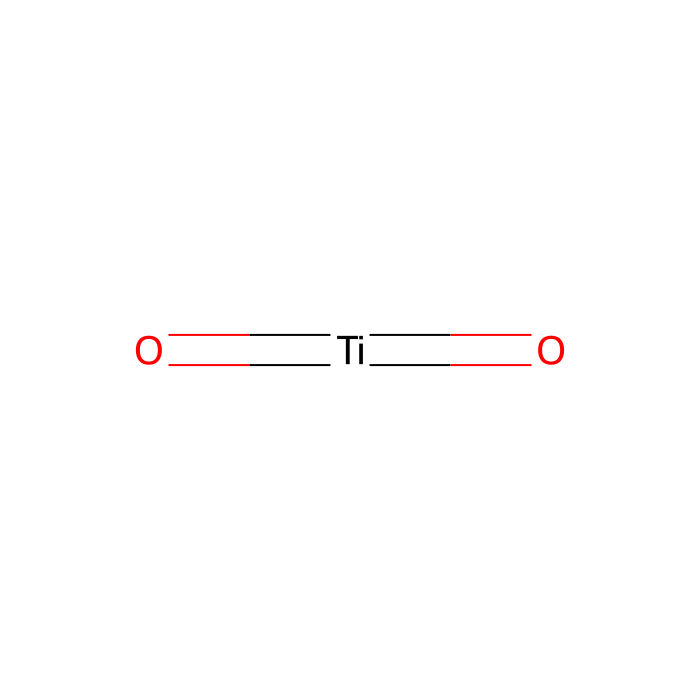
Titanium dioxide - Ph.Eur., average particle size:0.1-0.3μm , CAS No.13463-67-7

CAS: 13463-67-7 Cat. No.: T301758 Fórmula: TiO2 Peso molecular: 79.87 Número EC: 236-675-5
Disponible para pedir
CALIDAD & PUREZA Ph.Eur. ? European Pharmacopoeia grade — conforms to Ph.Eur. monographs across EU member states. Use for pharmaceutical work needing European compendial compliance. average particle size:0.1-0.3μm
Synonyms
Aerosil P 25|A-Fil|Anatase (TiO2)|Bayertitan A|Bayertitan AN 3|Calcotone White T|Tronox|Tioxide RSM|Tioxide R-SM|Aerosil T 805|Cosmetic White C47-5175|Rutiox CR|Kronos RN 40P|Kronos titanium dioxide|Amperit 780.0|Titanium oxide|Unitane or-150|Aerosil P 27|Bayertitan|Rutile|Titanium(IV) oxide, rutile|Cosmetic Hydrophobic TiO2 9428|Horse head a-410|Atlas white titanium dioxide|Unitane OR|Aerosil P 25S6|Hombitan R 101D|Hombitan R 610K|Tioxide R-CR|Titanium(IV) oxide, anatase|Unitane or-342|Zopaque LDC|Tioxide A-DM|Tioxide AD-M|CG-T|C-Weiss 7|Hombitan|Runa rh20|Titanox 2010|Unitane or-540|JR 600A|Titanium peroxide (TiO2)|Blend White 9202|Kronos CL 220|Tipaque R 820|Bistrater L-NSC 200C|RO 2|Unitane OR 450|Kronos RN 56|Runa ARH 20|Titanium peroxide|Uniwhite KO|Unitane 0-110|Bayertitan T|Tipaque|Unitane or-640|Titanox RANC|Unitane|Titanox|Unitane o-220|Unitane or-340|TITANIUM DIOXIDE|Flamenco|Kronos|Ti-Pure|Austiox R-CR 3|Tioxide R.XL|Bayertitan R-U-F|Rutile (TiO2)|Tiofine|Ti-Pure R 901|Unitane OR 650|Uniwhite OR 650|Tiona t.d.|Rayox|Titafrance|Titanic anhydride|Baytitan|1700 White|Cab-O-Ti|Tiona td|Titanium oxide (TiO2)|dioxotitanium|Aerolyst 7710|AMT 600|Ti-Pure R 900|Titanium(IV) oxide|63B1 White|A-Fil Cream|Anatase|Horse head a-420|Tioxide|Titanium White|Unitane or-350|Horse head r-710|KH 360|Levanox White RKB|Kronos 2073|Titandioxid|Uniwhite AO|Cosmetic White C47-9623|Titandioxid (sweden)|Unitane 0-220|Unitane o-110
Storage
Room temperature
Shipped In
Normal
★
Talla
Alemania (EU)
USA*
Precio
Cantidad
500g
T301758-500g
—
4 Disponible

47,64€

55,45€
Guardar 7,81 € (14.08%)
Enter a quantity for the sizes you want to add.

Descripción general

Titanium dioxide (TiO2, titania) is one of the most important materials having various important applications, such as water and air purification, self-cleaning materials and photovoltaic cells. 
TiO2 is an n-type semiconductor having a wide band gap (3.2eV for anatase and 3.0eV for rutile). TiO2 is an n-type semiconductor having a wide band gap (3.2eV for anatase and 3.0eV for rutile).

Especificaciones

Sinónimos
Aerosil P 25 | A-Fil | Anatase (TiO2) | Bayertitan A | Bayertitan AN 3 | Calcotone White T | Tronox | Tioxide RSM | Tioxide R-SM | Aerosil T 805 | Cosmetic White C47-5175 | Rutiox CR | Kronos RN 40P | Kronos titanium dioxide | Amperit 780.0 | Titanium oxide | Unitane or-150 | Aerosil P 27 | Bayertitan | Rutile | Titanium(IV) oxide, rutile Show more
Especificaciones y pureza
Ph.Eur., average particle size:0.1-0.3μm
Condiciones de almacenamiento de almacenamiento
Room temperature
Enviado en
Normal
Grado
Ph.Eur.
Nombres e identificadores
Pubchem Sid
SMILES
O=[Ti]=O
IUPAC Name
dioxotitanium
InChIKey
GWEVSGVZZGPLCZ-UHFFFAOYSA-N
InChI
1S/2O.Ti
Isómeros SMILES
O=[Ti]=O
Peso molecular
79.87

Datos avanzados

Taxonomic Classification

Taxonomy Tree

KingdomInorganic compounds
SuperclassMixed metal/non-metal compounds
ClaseTransition metal organides
SubclassTransition metal oxides
Intermediate Tree Nodes Not available
Direct ParentTransition metal oxides
Alternative Parents Inorganic salts  Inorganic oxides  
Molecular FrameworkNot available
Substituents Transition metal oxide - Inorganic oxide - Inorganic salt
DescripciónThis compound belongs to the class of inorganic compounds known as transition metal oxides. These are inorganic compounds containing an oxygen atom of an oxidation state of -2, in which the heaviest atom bonded to the oxygen is a transition metal.
External Descriptors titanium molecular entity
Estructura 3D
Modelo de Estructura Química Interactiva


Certificados (CoA, COO, BSE/TSE y tabla de análisis)
C of A & Other Certificates(BSE/TSE, COO):
Analytical Chart:

Find and download the COA for your product by matching the lot number on the packaging.

13 results found

Lot NumberCertificate TypeFechaArticulo
H2529390H2529390Certificate of AnalysisMar 22, 2025 T301758
H2529391H2529391Certificate of AnalysisMar 22, 2025 T301758
L2426026L2426026Certificate of AnalysisNov 25, 2024 T301758
L2426027L2426027Certificate of AnalysisNov 25, 2024 T301758
G2304979G2304979Certificate of AnalysisJul 14, 2023 T301758
G2304980G2304980Certificate of AnalysisJul 14, 2023 T301758
E2309684E2309684Certificate of AnalysisFeb 24, 2023 T301758
E2309697E2309697Certificate of AnalysisFeb 24, 2023 T301758
L2214541L2214541Certificate of AnalysisOct 21, 2022 T301758
L2214584L2214584Certificate of AnalysisOct 21, 2022 T301758
H2217771H2217771Certificate of AnalysisJul 27, 2022 T301758
H2217792H2217792Certificate of AnalysisJul 27, 2022 T301758
C2218031C2218031Certificate of AnalysisMar 22, 2022 T301758
Propiedades químicas y físicas
Punto de ebullición (°C)2900 °C/1013 hPa
Punto de fusión (°C)1855 °C
Peso molecular79.87
XLogP3
Hydrogen Bond Donor Count0
Hydrogen Bond Acceptor Count2
Rotatable Bond Count0
Exact Mass79.9378 Da
Monoisotopic Mass79.9378 Da
Topological Polar Surface Area34.100 Ų
Heavy Atom Count3
Formal Charge0
Complexity18.300
Isotope Atom Count0
Defined Atom Stereocenter Count0
Undefined Atom Stereocenter Count0
Defined Bond Stereocenter Count0
Undefined Bond Stereocenter Count0
The total count of all stereochemical bonds0
Covalently-Bonded Unit Count1
Seguridad y peligros (GHS)
Pictogramas
Señal
Danger
Indicaciones de peligro

H351:Suspected of causing cancer

H372:Causes damage to organs through prolonged or repeated exposure

H413:May cause long lasting harmful effects to aquatic life

Precauciones

P201:Obtain special instructions before use.

P202:Do not handle until all safety precautions have been read and understood.

P260:Do not breathe dust/fume/gas/mist/vapors/spray.

P264:Wash hands [and …] thoroughly after handling.

P270:Do not eat, drink or smoke when using this product.

P273:Avoid release to the environment.

P280:Wear protective gloves/protective clothing/eye protection/face protection.

P308+P313:IF exposed or concerned: Get medical advice/attention.

P405:Store locked up.

P501:Dispose of contents/container to an approved waste disposal plant.

Preguntas frecuentes y artículos
Silicon carbide provides technical solutions for the photovoltaic field
Structure, Synthesis, and Applications of Barium Titanate – A Closer Look at the Core Dielectric Material in MLCCs
Applications of Nanoclay in Materials and Formulations: Dispersion Mechanisms, Performance Enhancement, and Product Selection
High-Refractive-Index vs Low-Refractive-Index Coating Materials: From AR/Waveguide Principles to a Formulation & Material-Selection Map (Including Product Category Tables A/B/C)
Panorama Guide to Lithium-Ion Battery Electrode Materials: Working Principles, Materials Map, and Selection Navigation (incl. Tables 1–4)
The Complete Guide to UV Absorbers: Definition & Scope, Key Engineering Metrics, Validation Methods, and Selection Navigation (Tables 1–3)
Optical & Optoelectronic Materials Selection Guide:Positioning materials, key metrics, and validation paths along “Generation → Guiding → Control → Readout” (with product navigation and Tables 1–4)
Ceramic Materials Guide: Basic Definitions, Classification Framework, and Research-Task-Oriented Selection (with Product Navigation and Tables 1–4)
Why Metal Nanocatalysts Can “Save Energy Yet Lose Performance Easily”: Durability Logic from Active Sites to Support/Interface Engineering (Including Selection Guide and Product Tables A–D)
Applications of Self-Assembled Monolayers (SAMs), Microcontact Printing, and Soft Lithography in Surface Functionalization and Micro/Nanopatterning
Polyetherimide (PEI): Structural Features, Main Properties, and Typical Application Directions
TCA-KTTS, a Titanate Coupling Agent Suitable for Use in Cosmetics: Basic Information, Application Characteristics, and Differences from 130 and 105
Metal Halide Perovskite Solar Cells: Sources of High Efficiency, Stability Bottlenecks, and Experimental Decision Logic
From Barium Titanate Dielectrics to Multilayer Ceramic Capacitors: Dielectric Properties and Experimental Evaluation of Barium Titanate-Based Ceramics
Application and Selection Guide for Alkyd Resin Coatings: Advantages, Limitations, Formulation Control, and Modification Directions
Four Core Applications of Epoxy Resins: Bonding, Protection, Load-Bearing, and Insulation Protection
Why Fluorocarbon Resins Are Weatherable: Structural Stability, Low Surface Energy, and Coating Film Appearance Retention
Fluorocarbon Resin Coating Formulation Design: Resin Selection, Supporting Systems, and Key Application Control Points
Structure–Property Relationship of Silicone Resins: Mechanisms of Heat Resistance, Weatherability, Hydrophobicity, and Coating Performance Analysis
Silicone Resin Coating Formulation Design: From Application Conditions to Matching Resins, Pigments and Fillers, Curing, and Substrates
Applications and Selection of Acrylic Resins in Coatings: Analysis of Architectural, Industrial, and Supporting Materials
Vinyl Acetate-Acrylic Emulsion (Vinyl Acrylic Emulsion): A Cost-Performance Balance Solution for Architectural Coatings
PVAc, VAE, and Vinyl Acetate-Based Emulsions: Film-Forming Logic and Performance Boundaries in Architectural Coatings
How Should Montmorillonite Be Rationally Modified? Organic Modification, Inorganic Modification, and Application-Oriented Selection and Validation
Epoxy Phenolic Coatings: Why Are They Commonly Used for Chemical Resistance, Solvent Resistance, Heat Resistance, and Internal Metal Surface Protection?
Selection and Formulation Design Guidelines for Phenolic Resins in Coatings: Applicable Scenarios, Application Limitations, and Performance Verification
Application Positioning, Scenario Selection, and Key Use Considerations for Chlorinated Rubber Resin in Coatings
Formulation Design of Chlorinated Rubber Coatings: Component Synergy and Performance Control
What Is Silica Sol: Mechanism of Action, Application Scenarios, and Selection Criteria for Nanosilica Dispersions
Applications and Selection of Polyester Resins in Industrial Coatings: Powder, Coil, Baking, Packaging, and Metal Coating Scenarios
How to Select Vinyl-Related Resins: Building Formulation Judgment Based on Substrate, Performance Targets, and Failure Risks
Applicability Boundaries, Failure Risks, and Alternative System Selection for Chlorinated Rubber Resin in Coatings
Waterborne Resin Application Guide: Formulation Synergy, Troubleshooting, and Technology Development Trends
Mechanisms and Control of Coating Yellowing: From Chromophoric Structure Formation to Source Diagnosis and Formulation Optimization
Resin Polarity in Coating Formulations: From Molecular Structure to Dissolution, Compatibility, Interfacial Interactions, and Formulation Design
Why Do Daily Chemical Products Become Opaque? Formation Mechanisms of Milky Turbidity, Pearlescence, and Coverage, and How to Select the Right Ingredients
Color-Development Mechanisms, Formulation Forms, and Selection/Application Logic of Colorants in Personal Care Products
Analysis of the Production Process of Hydroxypropyl Methylcellulose (HPMC) for Putty: Understanding Differences in Substitution Structure and Gelation Temperature from High-Ratio and Low-Ratio Formulations
Key Variable in the Long-Term Stability of Waterborne Pigment Concentrates: How Dispersant Molecular Weight Distribution (MWD) Affects Pigment Dispersion, Surface Adsorption-Layer Formation, and Storage Stability
Types, Mechanisms of Action, Key Quality Indicators, and Selection and Application of Common Cellulose Ethers in Wall Putty
Influencing Factors and Control Strategies for Blistering in Neutral Wall Putty: An Experimental Analysis Based on HPMC Dosage, Viscosity, and Ground Calcium Carbonate Fineness
How to Select Binding/Gel Materials for Neutral Wall Putty? A Comparison of Pregelatinized Starch, PVA, and Redispersible Polymer Powder Based on Four Application Trials
Causes and Mechanism Analysis of Delamination During Sanding of Water-Resistant Putty
What Are the Differences Between Polyvinyl Alcohol 1788, 2488, and 2699? Understanding Workability, Bonding Strength, and Relative Water Resistance from the Perspective of Degree of Polymerization and Degree of Hydrolysis
Differences and Application Selection of Cassava- and Corn-Based Pregelatinized Starch in Neutral Putty Formulations
The Role, Selection, Cracking Risk Analysis, and Dosage Control of Bentonite in Neutral Putty
Mechanism of Kojic Acid in Reducing Hyperpigmentation: From Tyrosinase Inhibition to Melanin Production Regulation
The Dual-Targeted Skin-Brightening Mechanism of 4-MSK: Inhibiting Melanin Production and Reducing Epidermal Pigment Retention
Molecular Structure, Photochemical Behavior, and Role of Octocrylene in Sunscreen Formulations
UVA Absorption Mechanism of Avobenzone: Keto–Enol Tautomerism, Photochemical Instability, and Formulation Photostabilization Strategies
Anti-Photoaging Potential of Artemia Extract: UV-Induced Damage Cascades, HSP70-Related Stress Protection, and GP4G Metabolic Insights
Mechanism of Action of Tranexamic Acid in Pigmentation Care: From the Plasmin System to Regulation of Inflammation-Driven Pro-Melanogenic Signaling
Citations of This Product
Calculadoras de soluciones
Reseñas

Reseñas de cliente

¿Necesita ayuda para elegir la calidad?

Nuestra guía de selección de calidades cubre la pureza, el estado del estabilizador y la idoneidad de la aplicación para todas las variantes de nuestro catálogo.

Ver la guía de calidades Ph.Eur. →

Artículos relacionados

Titanium oxide - ≥99.8% metals basis, 30nm,anatase,hydrophilic , CAS No.13463-67-7
Titanium oxide - ≥99.8% metals basis, 100nm,rutile,lipophilic(Before coating) , CAS No.13463-67-7
Titanium oxide, rutile - PrimorTrace™, ≥99.99% metals basis , CAS No.13463-67-7
Titanium dioxide, anatase - ≥99.8% metals basis, <60nm particle size,hydrophilic , CAS No.13463-67-7
Titanium oxide, anatase - ≥99.8% metals basis, nanopowder, 5-10 nm ,hydrophilic , CAS No.13463-67-7
Titanium oxide, rutile - ≥99.8% metals basis, 40 nm particle size,hydrophilic , CAS No.13463-67-7
Titanium oxide - ≥98% metals basis, nanopowder,≤100nm,rutile,hydrophilic , CAS No.13463-67-7
Titanium oxide - AR, ≥99% , CAS No.13463-67-7
Titanium(IV) oxide - ≥99.8% metals basis, <40nm particle size,hydrophilic , CAS No.13463-67-7
Titanium oxide - ≥99.5% metals basis, 150nm,anatase,hydrophilic , CAS No.13463-67-7
Titanium oxide, rutile - ≥99.5% metals basis, powder,<60nm particle size , CAS No.13463-67-7
Titanium oxide, anatase - ≥99.8% metals basis , CAS No.13463-67-7
Titanium oxide, rutile - ≥99.8% metals basis, <100 nm particle size, hydrophilic , CAS No.13463-67-7
Titanium(IV) oxide - PrimorTrace™, ≥99.99% metals basis , CAS No.13463-67-7
Titanium oxide - ≥99.8% metals basis, 100-300nm,hydrophilic , CAS No.13463-67-7
Titanium oxide, anatase - ≥99.8% metals basis, 10nm-25 nm particle size,hydrophilic , CAS No.13463-67-7
Titanium oxide, anatase - ≥99.8% metals basis, 100nm ,hydrophilic , CAS No.13463-67-7
Titanium oxide, rutile - ≥99.8% metals basis, nanopowder,
Titanium oxide - ≥99% metals basis, ≤100nm , CAS No.13463-67-7
Titanium oxide - ≥99.8% metals basis, 5 -10nm particle size,hydrophilic/lipophilic , CAS No.13463-67-7
Titanium oxide - ≥99.8% metals basis, 60nm,anatase,lipophilic(stearic acid treatment) , CAS No.13463-67-7
Titanium oxide, rutile - ≥99.8% metals basis, nanopowder, 25 nm particle size, hydrophilic , CAS No.13463-67-7
Titanium(IV) oxide - ≥99% , CAS No.13463-67-7
Titanium oxide - ≥99% metals basis, 100-300nm,hydrophilic,rutile , CAS No.13463-67-7
Titanium(IV) oxide - pellets,diam. × thickness 12.5 mm × 5.5 mm , CAS No.13463-67-7
Titanium(IV) oxide - ≥97%, nanopowder,contains 1% Mn as dopant,<100nm particle size (bET) , CAS No.13463-67-7
Titanium(IV) oxide - PharmPure™, USP, BP, puriss., Ph.Eur., ≥99% , CAS No.13463-67-7
Titanium(IV) oxide, mixture of rutile and anatase - ≥99.5% metals basis, nanopowder,<100nm particle size (bET) , CAS No.13463-67-7
Titanium(IV) oxide - Nanowires, diameter x length~10nm x 10 μ m , CAS No.13463-67-7
Titanium(IV) oxide - nanowires,diam. × L ~100 nm × 10 μm , CAS No.13463-67-7
Titanium(IV) oxide - ≥99.5% metals basis, nanopowder,21nm , CAS No.13463-67-7
Titanium dioxide - nanotubes,25 nm average diameter,powder , CAS No.13463-67-7
Titanium(IV) oxide, mixture of rutile and anatase - ≥99.5% metals basis, Particle size ≤ 150nm,40 wt. % in H2O , CAS No.13463-67-7
Titanium(IV) oxide - PharmPure™,USP,ChP,JP,BP,Ph.Eur. , CAS No.13463-67-7
Titanium dioxide, anatase - PrimorTrace™,≥99.99% metals basis,≤ 50nm, anatase, hydrophilic , CAS No.13463-67-7

¿Quieres que te enviemos un mensaje cuando tengamos descuentos disponibles?

Recordármelo más tarde

¡Gracias! Por favor, revisa tu bandeja de entrada de correo electrónico para confirmar.

¡Vaya! Las notificaciones están desactivadas.