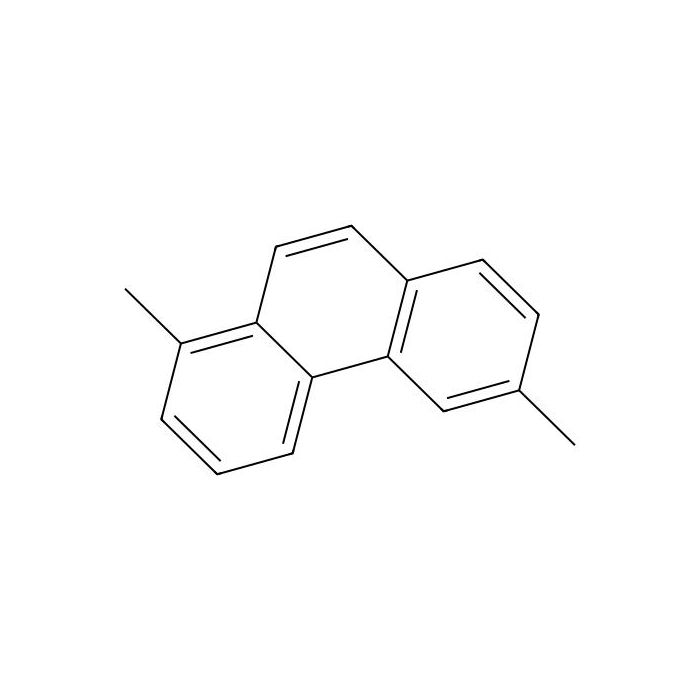
1,6-Dimethylphenanthrene , CAS No.20291-74-1

CAS: 20291-74-1 Cat. No.: D1038288 Formule: C16H14 Poids moléculaire: 206.280
DISPONIBLE À COMMANDE
Storage
Room temperature
★
Size
Allemagne (EU)
USA*
Price
Qty
1mg
D1038288-1mg
Sur commande · 8–12 semaines
608,20€
5mg
D1038288-5mg
Sur commande · 8–12 semaines
698,44€
10mg
D1038288-10mg
Sur commande · 8–12 semaines
763,52€
25mg
D1038288-25mg
Sur commande · 8–12 semaines
995,21€
50mg
D1038288-50mg
Sur commande · 8–12 semaines
1 478,54€
100mg
D1038288-100mg
Sur commande · 8–12 semaines
2 123,27€
1g
D1038288-1g
Sur commande · 8–12 semaines
4 959,91€
Enter a quantity for the sizes you want to add.
🧪
Why this grade

for sensitive chromatographic and analytical workflows requiring minimal baseline interference.

🌡

Storage & shipping

Room temperature Ships Check lot-specific COA for exact specifications.

📋

Quality documents

SDS, COA, datasheet, and spec sheet available for download. Lot-specific COA accessible via lot number lookup.

📚

Literature proof

Cited in 0 peer-reviewed publications across chromatography, organic synthesis, and cross-coupling reactions.

Specifications

Conditions de stockage de stockage
Room temperature
Noms et identifiants
Sourires canoniques
CC1=CC2=C(C=C1)C=CC3=C(C=CC=C32)C
IUPAC Name
1,6-dimethylphenanthrene
InChIKey
YQMHHSZADKJARE-UHFFFAOYSA-N
INCHI
1S/C16H14/c1-11-6-7-13-8-9-14-12(2)4-3-5-15(14)16(13)10-11/h3-10H,1-2H3
Poids moléculaire
206.280

Documentation

📋 Safety Data Sheet (SDS)

Comprehensive hazard, handling, storage, and regulatory compliance document.

Download SDS →

✅ Certificate of Analysis (COA)

Lot-specific quality data. Enter your lot number to retrieve the exact COA.

Look up COA →

📊 Datasheet

Quick-reference summary of product specifications and applications.

View datasheet →

🔬 Specification Sheet

Full quality attributes and acceptance criteria for this grade.

View spec sheet →

Advanced Data

Taxonomic Classification

Taxonomy Tree

KingdomOrganic compounds
SuperclassBenzenoids
ClassePhenanthrenes and derivatives
SubclassNot available
Intermediate Tree Nodes Not available
Direct ParentPhenanthrenes and derivatives
Alternative Parents Naphthalenes  Aromatic hydrocarbons  Polycyclic hydrocarbons  Unsaturated hydrocarbons  
Molecular FrameworkAromatic homopolycyclic compounds
Substituents Phenanthrene - Naphthalene - Aromatic hydrocarbon - Polycyclic hydrocarbon - Unsaturated hydrocarbon - Hydrocarbon - Aromatic homopolycyclic compound
DescriptionThis compound belongs to the class of organic compounds known as phenanthrenes and derivatives. These are polycyclic compounds containing a phenanthrene moiety, which is a tricyclic aromatic compound with three non-linearly fused benzene.
External Descriptors Not available
Structure 3D
Modèle de structure chimique interactif


Certificats (CoA, COO, BSE/TSE et tableau d'analyse)
C of A & Other Certificates(BSE/TSE, COO):
Analytical Chart:
Propriétés chimiques et physiques
Poids moléculaire206.280 g/mol
XLogP35.700
Hydrogen Bond Donor Count0
Hydrogen Bond Acceptor Count0
Rotatable Bond Count0
Exact Mass206.11 Da
Monoisotopic Mass206.11 Da
Topological Polar Surface Area0.000 Ų
Heavy Atom Count16
Formal Charge0
Complexity244.000
Isotope Atom Count0
Defined Atom Stereocenter Count0
Undefined Atom Stereocenter Count0
Defined Bond Stereocenter Count0
Undefined Bond Stereocenter Count0
The total count of all stereochemical bonds0
Covalently-Bonded Unit Count1
Calculateurs de solution
Avis

Avis des clients

Application Protocols

No standardized biological or diagnostic application protocols are provided for this item.

General laboratory suggestions (materials focus):

  • Thin-film preparation: Dissolve in toluene/xylene or chlorobenzene, filter (0.2 μm PTFE), spin-coat under inert atmosphere; perform post-deposition anneal as needed.
  • Purification: For photophysical studies, consider recrystallization (hot toluene/xylene) or sublimation under high vacuum. Validate purity by NMR, HRMS, and HPLC.
  • Analytical characterization: Record UV–vis, fluorescence, and CV in matched solvents; ensure oxygen removal (sparging) for reproducibility.

For application-specific SOPs, develop and validate internally according to your instrumentation and safety requirements.

Biological Roles

This compound is a synthetic polycyclic aromatic hydrocarbon used in materials and synthetic chemistry. It does not serve as a natural metabolite or biomacromolecular component.

General context (literature):

  • PAHs are hydrophobic, planar aromatics that can interact with lipid phases and proteins via π–π and hydrophobic interactions, but 1,6-dimethylphenanthrene has no established physiological role.
  • In environmental chemistry, substituted phenanthrenes are studied as model PAHs for adsorption, transport, and photochemical transformation; these topics may inform handling and waste management but are not biological functions.

Note: No medical or clinical claims are made. Use is restricted to research and laboratory investigations.

Buffer Applications

Not typically applicable. 1,6-Dimethylphenanthrene is a nonpolar hydrocarbon and is not used to prepare aqueous buffers or pH control systems.

Practical note: If spectroscopic studies are conducted, select an appropriate organic solvent (see Solvent Selection) and, when interfacing with aqueous systems (e.g., micelles, cyclodextrins), employ biphasic or surfactant-assisted methods with care.

Green Alternatives

As a solid PAH, 1,6-dimethylphenanthrene itself does not have a direct “green alternative.” However, greener choices can be made for solvents and reagents used with it.

Greener solvent considerations (general, literature):

  • Replace chlorinated aromatics (e.g., DCM, chloroform, o-DCB) when feasible with:
    • Toluene/xylene (less hazardous, still aromatic) for processing and some couplings.
    • 2-MeTHF or cyclopentyl methyl ether (CPME) for benzylic functionalization and organometallic steps; offer better safety/renewability compared with THF/MTBE.
    • Propylene carbonate or anisole for high-boiling needs in certain transformations.

Comparison (general traits):

  • o-DCB: high solvency; toxic, chlorinated; difficult EHS profile.
  • Anisole: aromatic, higher bp, lower toxicity; may need heat for dissolution.
  • 2-MeTHF: renewable, good for lithiation/coupling; water-immiscible aids workup.

Reagent choices:

  • Prefer NBS over Br2 for benzylic bromination (more controlled, less corrosive handling), and DDQ over stoichiometric metal oxidants where suitable.
  • Use catalytic oxidations (e.g., TEMPO/bleach or Mn-catalyzed with peroxide) for side-chain oxidations when compatible with PAHs.

Process guidance:

  • Optimize concentration/temperature to avoid chlorinated solvents; implement solvent recovery and closed systems to minimize emissions.
Pharmaceutical Uses

Not applicable as a drug or excipient. There is no pharmacopeial status provided for this item.

  • Formulation role: None specified.
  • GMP/ICH considerations: If PAHs are studied as process impurities or model aromatic contaminants, analytical characterization (HPLC/GC–MS/fluorescence) may be relevant; this is general information and not specific to this product.

Research use only; not for human or veterinary use.

Physical Properties

Item-specific numerical specifications (melting point, boiling point, density, refractive index, UV cut-off, metal content) are not provided in the Product Data.

  • Melting point: Not specified for this item; refer to CoA/Spec Sheet.
  • Boiling point: Not specified for this item; refer to CoA/Spec Sheet.
  • Density: Not specified for this item; refer to CoA/Spec Sheet.
  • Refractive index: Not applicable to a solid; not specified for this item; refer to CoA/Spec Sheet.
  • Water content/peroxide/trace metals: Not specified for this item; refer to CoA/Spec Sheet.
  • Solubility: Not specified for this item; refer to CoA/Spec Sheet.

General/literature characteristics for dimethylated PAHs (for context only):

  • Phase: Typically crystalline solid with high thermal stability and low vapor pressure.
  • Polarity: Nonpolar, hydrophobic; expected to be insoluble in water and soluble in aromatic and chlorinated organic solvents (e.g., toluene, chlorobenzene, dichlorobenzene, THF at elevated temperature).
  • LogP: High (qualitatively), increasing with methylation relative to phenanthrene.
  • Photophysics: PAHs exhibit strong π–π* absorption in the UV with structured fluorescence; exact spectra depend on substitution pattern (obtain from CoA or characterize in-lab).

Note: When using in optoelectronic or photophysical experiments, determine exact optical constants (abs/emi maxima, quantum yield) for your batch/conditions, as these are sensitive to solvent, purity, and microstructure.

Quality and Grades
  • Grade/purity: Not specified for this item; refer to CoA/Spec Sheet.
  • Appearance: Not specified for this item; refer to CoA/Spec Sheet.
  • Stabilizers/additives: Not specified for this item; refer to CoA/Spec Sheet.

Guidance on grades (general information):

  • Research grade PAHs: Typically assessed by GC/LC purity and residual solvent/ash content; suitable for materials R&D, spectroscopy, and synthesis.
  • Electronic/OPV grade: Tight control of trace metal and sub-ppm ionic/PAH isomer impurities to minimize trap states; batch-dependent characterization (e.g., UPS, cyclic voltammetry) may be needed.
  • Chromatographic expectations: For aromatic hydrocarbons, HPLC grade is sometimes used to denote low UV background and minimal fluorescing impurities important in photophysics.

What to verify for this item upon receipt:

  • Review the CoA for assay, isomeric purity (absence of other dimethylphenanthrene regioisomers), and residual solvents.
  • If using in optoelectronic devices, consider additional in-house purification (zone refining, temperature-gradient sublimation) and validate via fluorescence/PLQY and CV.

If your application requires specific impurity limits (e.g., metals, halogens, water), please contact us to discuss available lots or custom purification.

Reaction and Applications

Manufacturer application category: Materials Science. 1,6-Dimethylphenanthrene serves as a versatile PAH motif for optoelectronic materials and as an intermediate for regioselective functionalization.

Representative application families (literature/general):

  • Organic electronics: Phenanthrene derivatives are used in blue emitters, hole-transport layers, and as rigid aromatics in OLED/OFET/OPV architectures. Methyl groups tune packing, HOMO/LUMO, and film morphology.
  • Nanocarbon synthesis: Precursor to extended nanographenes/graphene nanoribbons via oxidative cyclodehydrogenation (Scholl reaction) using FeCl3/AlCl3 or DDQ/TfOH.
  • Regioselective functionalization:
    • Benzylic chemistry at the 1- and 6-methyls: radical bromination (NBS/AIBN, hv) → benzyl bromides; oxidation (SeO2, MnO2, CrO3) → aldehydes/acids; metalation (s-BuLi/TMEDA) → subsequent electrophile trapping.
    • Aromatic substitution after directed halogenation or lithiation to install bromo/iodo handles for Suzuki–Miyaura, Stille, Negishi, or Buchwald–Hartwig cross-couplings.
  • Supramolecular chemistry: The rigid, π-rich surface engages in π–π stacking for host–guest assemblies and porous frameworks.

Practical tips:

  • Ensure high purity to avoid exciplex/aggregate-induced artifacts in photophysics.
  • Dry, oxygen-minimized conditions improve yields in metallations and prevent oxidative side reactions during high-temperature processing.
Reaction Conditions

The following are general literature conditions for transformations of dimethylated phenanthrenes; optimize for your substrate and scale.

  • Benzylic bromination: NBS (1.1–2.2 eq), AIBN (5–10 mol%), CCl4 or toluene, reflux or hv (300–365 nm). Typical times: 2–12 h. Monitor by TLC/GC. Quench with sodium thiosulfate.
  • Benzylic oxidation:
    • SeO2 (1.1–1.5 eq), dioxane or toluene, 80–110 C, 4–24 h → aldehyde predominantly.
    • MnO2 (excess), DCM or toluene, RT–reflux, 6–24 h → aldehyde/ketone from alcohol precursors.
    • TEMPO (5–10 mol%), NaOCl (bleach), pH ~9, 0–25 C, 1–4 h (if benzylic alcohol is available).
  • Directed lithiation (benzylic): s-BuLi (1.1–2.0 eq) with TMEDA in THF, −78 to −30 C, then electrophile (e.g., CO2, DMF, MeI). Strictly anhydrous, inert atmosphere.
  • Aryl halogenation: Br2 or NBS in acetic acid or CHCl3, 0–25 C; regioselectivity depends on substitution—confirm by NMR.
  • Cross-coupling: For aryl bromides/iodides derived from this core:
    • Suzuki–Miyaura: Pd(PPh3)4 (1–3 mol%), K2CO3, toluene/EtOH/H2O or dioxane/H2O, 60–100 C, 4–18 h.
    • Buchwald–Hartwig: Pd2(dba)3 (1–2 mol%), BINAP or XPhos, NaOtBu, toluene, 90–110 C, 8–24 h.

Notes:

  • Solubility may dictate use of high-boiling aromatics (xylene, o-DCB). Gentle heating improves rates but monitor for oxidative side reactions.
  • Exclude light/oxygen for radical steps when undesired; include hv when photoinitiation is required.
  • Yields are substrate- and condition-dependent; verify by small-scale screens.
Safety and Handling

Hazard information in Product Data is not specified for this item; refer to the SDS for authoritative safety classifications and first-aid measures.

  • Signal word: Not specified for this item; refer to SDS.
  • H-statements/GHS classification/pictograms: Not specified for this item; refer to SDS.

General laboratory precautions for polycyclic aromatic hydrocarbons (PAHs):

  • PPE: Wear lab coat, nitrile gloves, and safety glasses. Avoid skin contact and inhalation of dust/particles.
  • Engineering controls: Handle powders in a fume hood; minimize dust generation. Use local exhaust during weighing and transfers.
  • Incompatibilities: Strong oxidizers may react vigorously with aromatic hydrocarbons. Avoid open flames and high-energy UV sources during handling to prevent photochemical byproducts.
  • Environmental precautions: PAHs can be persistent; prevent release to drains. Collect waste in properly labeled containers for disposal per institutional and local regulations.
  • First aid (overview):
    • Inhalation: Move to fresh air; seek medical attention if symptoms persist.
    • Skin contact: Wash with soap and water; remove contaminated clothing.
    • Eye contact: Rinse with water for several minutes; seek medical advice if irritation persists.
    • Ingestion: Rinse mouth; do not induce vomiting; seek medical attention.

Always consult the SDS provided for your specific lot before use. Research use only.

Solvent Selection

This product is a solid PAH building block, not a solvent. Solvent selection pertains to its dissolution and processing.

General/literature guidance for dissolving phenanthrene derivatives:

  • Good solvents (typical): Toluene, xylenes, chlorobenzene, o-dichlorobenzene (o-DCB), THF (often requires mild heating), chloroform, dichloromethane.
  • Poor solvents: Alcohols and water due to hydrophobic, nonpolar character.
  • Processing tips:
    • Warm aromatic solvents (e.g., 60–120 C in toluene/xylene or 120–180 C in o-DCB) often increase solubility sufficiently for thin-film deposition or reactions.
    • For analytical prep (HPLC/GPC), chlorinated solvents may be preferred; verify detector linearity due to strong UV absorption.
    • For greener choices, see the Green Alternatives tab for solvent replacements.

Small comparison (general):

  • Toluene: lower boiling, easier removal, moderate solubility.
  • o-DCB: high boiling, enables higher concentration/temperature for sluggish transformations.
  • THF: polar aprotic; may assist in metallations but can have limited solubility at RT.

Always confirm dissolution behavior empirically for your lot and application.

Storage and Reconstitution
  • Storage conditions (provided): Room temperature.
  • Shipped in: Not specified for this item; refer to CoA/Spec Sheet.

Best practices (general for PAHs):

  • Container: Store in a tightly closed amber glass vial to minimize photodegradation; purge headspace with inert gas (N2/Ar) for long-term storage.
  • Environment: Keep in a dry place; avoid prolonged exposure to light, heat, and strong oxidizers.
  • Shelf life: Stable under recommended conditions; verify purity periodically if used in high-sensitivity optical/electronic applications.

Reconstitution/dissolution:

  • Choose an appropriate organic solvent (toluene, chlorobenzene, THF, o-DCB). Warm gently (40–80 C) with stirring/sonication to aid dissolution; filter through PTFE syringe filter before device fabrication or spectroscopy.
  • Prepare solutions fresh when possible; for stock solutions, store in amber vials under inert gas at RT or 4 C depending on solvent volatility. Avoid repeated heating–cooling cycles that can promote oxidation.

Research Use Note: For research use only.

Structure and Identity

Overview: 1,6-Dimethylphenanthrene is a dimethylated polycyclic aromatic hydrocarbon (PAH) based on the phenanthrene scaffold, bearing methyl substituents at the 1- and 6-positions on the fused tricyclic system.

  • SKU: D1038288
  • Product name: 1,6-Dimethylphenanthrene
  • CAS: 20291-74-1 (literature)
  • PubChem CID: 88468 (provided)
  • InChIKey: Not specified for this item; refer to CoA/Spec Sheet.
  • SMILES: Not specified for this item; refer to CoA/Spec Sheet.
  • Molecular formula: C16H14 (literature, expected for phenanthrene + 2 × CH2)
  • Molecular weight: ~206.28 g/mol (literature)

Structural features (descriptive, literature):

  • Core ring system: Three linearly fused benzene rings (phenanthrene framework) forming a rigid, planar, aromatic system.
  • Substitution pattern: Methyl groups at the peri- (1) and remote (6) positions on the outer rings. This substitution slightly perturbs planarity and increases steric hindrance at the 1-position.
  • Functional groups: Two benzylic methyl groups (sp3 C–H adjacent to aromatic ring) attached to an otherwise fully aromatic hydrocarbon.
  • Stereochemistry: None (achiral, no stereocenters).

2D structure in words: Two outer benzene rings fused to a central ring (phenanthrene). One methyl is located at the 1-position (peri to the central ring fusion), and the second at the 6-position on the opposite outer ring, giving a symmetrical dimethyl pattern across the long molecular axis.

Synthetic Utility

1,6-Dimethylphenanthrene is a regioselectively substituted PAH offering two benzylic handles and an extended π-system for downstream functionalization.

Key reactivities (literature/general):

  • Benzylic activation:
    • Radical bromination (NBS/AIBN, hv or reflux CCl4/benzene/toluene) → benzyl bromides for nucleophilic substitution, phase-transfer alkylation, or as coupling precursors (via lithiation → transmetalation).
    • Oxidation (SeO2, MnO2, CrO3; or catalytic TEMPO/O2 systems when compatible) → aldehydes/acids enabling condensation chemistry.
  • Directed metalation: Deprotonation of benzylic positions with strong bases (s-BuLi, t-BuOK/18-crown-6) affords carbanions for electrophile capture (CO2, DMF, alkyl halides).
  • Aryl functionalization:
    • Electrophilic substitution (nitration, halogenation) at activated ring sites; regioselectivity influenced by methyl donors.
    • Halogenation (Br2/Fe, NBS under ionic conditions) providing aryl bromides/iodides for Suzuki, Stille, Negishi, Kumada, or Buchwald–Hartwig couplings.
  • Scholl cyclizations: Oxidative intramolecular C–C formation to extend conjugation, enabling nanographene precursors.

Strategic value:

  • Dual methyl groups allow orthogonal functionalization (e.g., mono- vs di-substituted derivatives), facilitating asymmetric attachment points in donor–acceptor architectures and polymers.
Target Specificity

Not applicable. This product is a small-molecule hydrocarbon and not a biological reagent (e.g., antibody, enzyme, or ligand with defined biomolecular targets). No target specificity data are provided for this item.

Foire aux questions

How should this product be stored?
Store at room temperature.
What are the CAS number, molecular formula and molecular weight?
The CAS Number is 20291-74-1, the molecular formula is C16H14, and the molecular weight is 206.280 g/mol. InChIKey YQMHHSZADKJARE-UHFFFAOYSA-N.
What documentation is provided?
Available product documentation, including Certificates of Analysis (COA), Safety Data Sheets (SDS), and specification sheets, is shown in the product document area. Document availability and access follow the current site policy.

Souhaitez-vous que nous vous envoyions un message lorsque des réductions seront disponibles?

Me rappeler plus tard

Merci ! Veuillez vérifier votre boîte de réception e-mail pour confirmer.

Oups ! Les notifications sont désactivées.