2-Chloro-D-phénylalanine - ≥98% , CAS No.80126-50-7

CAS: 80126-50-7 Cat. No.: C117065 Formule: C9H10ClNO2 Poids moléculaire: 199.6 Numéro CE: 171-786-1
DISPONIBLE À COMMANDE
QUALITÉ & PURETÉ ≥98%
Synonyms
2-Chloro-D-phe-OH·HCl H-D-Phe(2-Cl)-OH
Storage
Protected from light,Room temperature,Argon charged,Desiccated
Shipped In
Normal
★
Taille
Allemagne (EU)
USA*
Prix
Qté
250mg
C117065-250mg
Sur commande · 8–12 semaines
8,59€
1g
C117065-1g
Sur commande · 8–12 semaines
9,46€
5g
C117065-5g
Sur commande · 8–12 semaines
21,61€
25g
C117065-25g
Sur commande · 8–12 semaines
86,69€
Enter a quantity for the sizes you want to add.
🧪
Pourquoi cette qualité

≥98% pour les flux de travail chromatographiques et analytiques sensibles nécessitant une interférence de ligne de base minimale.

🌡

Stockage & expédition

Protected from light,Room temperature,Argon charged,Desiccated Expédition Normal. Consultez le COA spécifique au lot pour les spécifications exactes.

📋

Documents qualité

SDS, COA, fiche technique et fiche de spécifications disponibles au téléchargement. COA spécifique au lot accessible via la recherche par numéro de lot.

📚

Preuve documentaire

Cité dans 0 publications à comité de lecture couvrant la chromatographie, la synthèse organique et les réactions de couplage croisé.

Spécifications

Synonymes
2-Chloro-D-phe-OH·HCl H-D-Phe(2-Cl)-OH
Spécifications et pureté
≥98%
Conditions de stockage de stockage
Protected from light,Room temperature,Argon charged,Desiccated
Expédié en
Normal
Pureté
≥98%
Noms et identifiants
Pubchem Sid
Pubchem Sid Url
https://pubchem.ncbi.nlm.nih.gov/substance/488195910
Sourires canoniques
C1=CC=C(C(=C1)CC(C(=O)O)N)Cl
IUPAC Name
(2R)-2-amino-3-(2-chlorophenyl)propanoic acid
InChIKey
CVZZNRXMDCOHBG-MRVPVSSYSA-N
INCHI
1S/C9H10ClNO2/c10-7-4-2-1-3-6(7)5-8(11)9(12)13/h1-4,8H,5,11H2,(H,12,13)/t8-/m1/s1
Isomères SMILES
C1=CC=C(C(=C1)C[C@H](C(=O)O)N)Cl
Poids moléculaire
199.6
Reaxy-Rn
2723444
Reaxys-RN_link_address
https://www.reaxys.com/reaxys/secured/hopinto.do?context=S&query=IDE.XRN=2723444&ln=

Documentation

📋 Fiche de données de sécurité (FDS)

Document complet couvrant les dangers, la manipulation, le stockage et la conformité réglementaire.

<<<<<<< HEAD Télécharger la SDS → ======= Télécharger la SDS → >>>>>>> release248-p3

✅ Certificat d'analyse (COA)

Données qualité spécifiques au lot. Saisissez votre numéro de lot pour récupérer le COA exact.

Rechercher le COA →

📊 Fiche technique

Résumé de référence rapide des spécifications et applications du produit.

Voir la fiche technique →

🔬 Fiche de spécifications

Attributs de qualité complets et critères d'acceptation pour cette qualité.

Voir la fiche de spécifications →

Données avancées

Taxonomic Classification

Taxonomy Tree

KingdomOrganic compounds
SuperclassOrganic acids and derivatives
ClasseCarboxylic acids and derivatives
SubclassAmino acids, peptides, and analogues
Intermediate Tree Nodes Amino acids and derivatives - Alpha amino acids and derivatives
Direct ParentPhenylalanine and derivatives
Alternative Parents Phenylpropanoic acids  Amphetamines and derivatives  D-alpha-amino acids  Aralkylamines  Chlorobenzenes  Aryl chlorides  Quaternary ammonium salts  Carboxylic acid salts  Monocarboxylic acids and derivatives  Carboxylic acids  Hydrocarbon derivatives  Monoalkylamines  Organic oxides  Carbonyl compounds  Organic salts  Organic zwitterions  Organochlorides  
Molecular FrameworkAromatic homomonocyclic compounds
Substituents Phenylalanine or derivatives - 3-phenylpropanoic-acid - Alpha-amino acid - Amphetamine or derivatives - D-alpha-amino acid - Aralkylamine - Chlorobenzene - Halobenzene - Aryl chloride - Aryl halide - Monocyclic benzene moiety - Benzenoid - Quaternary ammonium salt - Carboxylic acid salt - Carboxylic acid - Monocarboxylic acid or derivatives - Organic nitrogen compound - Organohalogen compound - Primary aliphatic amine - Organochloride - Organonitrogen compound - Organooxygen compound - Organic zwitterion - Carbonyl group - Organic salt - Hydrocarbon derivative - Organic oxide - Organic oxygen compound - Amine - Aromatic homomonocyclic compound
DescriptionThis compound belongs to the class of organic compounds known as phenylalanine and derivatives. These are compounds containing phenylalanine or a derivative thereof resulting from reaction of phenylalanine at the amino group or the carboxy group, or from the replacement of any hydrogen of glycine by a heteroatom.
External Descriptors Not available
Structure 3D
Modèle de structure chimique interactif


Certificats (CoA, COO, BSE/TSE et tableau d'analyse)
C of A & Other Certificates(BSE/TSE, COO):
Analytical Chart:

Find and download the COA for your product by matching the lot number on the packaging.

7 results found

Lot NumberCertificate TypeDateArticle
I2614415I2614415Certificate of AnalysisMay 26, 2026 C117065
I2614417I2614417Certificate of AnalysisMay 26, 2026 C117065
I2620846I2620846Certificate of AnalysisMay 26, 2026 C117065
I2620847I2620847Certificate of AnalysisMay 26, 2026 C117065
H1704090H1704090Certificate of AnalysisMar 04, 2025 C117065
C23211101C23211101Certificate of AnalysisApr 11, 2023 C117065
C23211102C23211102Certificate of AnalysisApr 04, 2023 C117065
Propriétés chimiques et physiques
SensibilitéLight sensitive
Poids moléculaire199.630 g/mol
XLogP3-0.800
Hydrogen Bond Donor Count2
Hydrogen Bond Acceptor Count3
Rotatable Bond Count3
Exact Mass199.04 Da
Monoisotopic Mass199.04 Da
Topological Polar Surface Area63.300 Ų
Heavy Atom Count13
Formal Charge0
Complexity186.000
Isotope Atom Count0
Defined Atom Stereocenter Count1
Undefined Atom Stereocenter Count0
Defined Bond Stereocenter Count0
Undefined Bond Stereocenter Count0
The total count of all stereochemical bonds0
Covalently-Bonded Unit Count1
Calculateurs de solution
Avis

Avis des clients

Application Protocols

No item-specific tested application protocols are provided. For general laboratory use as a building block:

  • Peptide synthesis (general):
    • Use protected derivatives (e.g., Fmoc-D-2-Cl-Phe-OH) for SPPS on standard resins. Couple with HBTU/HATU or DIC/Oxyma in DMF. Verify coupling completion by Kaiser or chloranil test. Deprotect and cleave per resin and protecting-group strategy.
  • Solution-phase coupling:
    • Convert the carboxyl to an activated ester (e.g., NHS/Oxyma derivative) and couple to amines at 0–25°C with mild base. Monitor by HPLC/MS.
  • Side-chain cross-coupling (protected):
    • Protect amine/carboxyl, then perform Pd-catalyzed Suzuki with desired boronic acid in dioxane/H2O or EtOH/H2O. Remove catalyst residues with scavenger resins, then deprotect.

For specific, validated conditions in your lab environment, run small-scale optimization and consult the primary literature. All uses are for research only.

Biological Roles

Research compound only. The following describes biochemical relevance of the motif (literature/general), not medical use.

  • Noncanonical amino acid analogue: 2-chloro substitution on the phenyl ring alters electronic distribution and hydrophobic surface, which can modulate protein folding, binding energetics, and halogen-bonding interactions when incorporated into peptides/proteins.
  • D-configuration effects: D-amino acids often reduce susceptibility to proteolytic cleavage and can bias local secondary structure; strategic D-Phe placement is used to probe receptor recognition and to stabilize specific conformations in peptidomimetics (research context).
  • Halogen-arene interactions: The ortho-chloro can participate in σ-hole interactions with Lewis bases (e.g., carbonyl oxygen), subtly influencing binding orientation in model systems.
  • Transport/uptake (general): Free D-amino acids are typically not substrates for canonical L-amino acid transporters; uptake and metabolism differ across organisms. In enzymology studies, D-2-Cl-Phe can serve as a probe substrate/ligand to explore stereoselectivity.

Notes:

  • No endogenous metabolic role is ascribed to 2-chloro-D-phenylalanine. Any biological experiments should be designed for mechanism or structure–function exploration only.
  • Avoid extrapolating in vitro findings to in vivo contexts; this product is provided strictly for research use.
Buffer Applications

This compound is not a conventional buffering agent. While α-amino acids exhibit acid–base behavior (carboxyl and ammonium groups), 2-chloro-D-phenylalanine is not typically used to prepare defined laboratory buffers.

Practical guidance (when handling in aqueous media):

  • To dissolve or adjust pH, use standard buffers (e.g., phosphate, acetate, Tris) and add the amino acid as a solute.
  • Preparing stock solutions: Dissolve in water containing 0.1–1% AcOH (to protonate the amine) or a small amount of NaOH (to form the carboxylate) to aid solubility; then dilute into the working buffer. Filter-sterilize if needed for biological assays.

If a buffered system using this compound is required for a specific assay, determine pH-dependent solubility and speciation experimentally and avoid relying on its intrinsic buffering capacity.

Green Alternatives

Strategies to improve sustainability when working with 2-chloro-D-phenylalanine focus on solvent choice, coupling chemistry, and side-chain functionalization pathways (general guidance).

  • Solvent substitution (literature):
    • Replace DMF/NMP (reprotoxic, problematic EHS) with green polar aprotics where feasible (e.g., NEP, PolarClean, Cyrene) for solution-phase couplings; verify solubility and resin compatibility first.
    • Favor EtOAc, 2-MeTHF, or MeOH over chlorinated solvents for workups and extractions when compatible with the product’s polarity and stability.
  • Coupling reagents:
    • Use DIC/OxymaPure or EDC/Oxyma as lower-hazard alternatives to HATU/HBTU/HOAt (energy-rich triazoles); manage nitrosamine risks per current guidance.
    • Employ enzymatic ligation or microwave-assisted, solvent-minimized couplings where applicable.
  • Side-chain diversification:
    • Instead of stoichiometric halogenation routes, exploit the existing aryl chloride for catalytic cross-couplings (Suzuki/Chan–Lam) under aqueous or ethanol/water conditions with ppm-level Pd/Ni catalysts.
  • Waste minimization:
    • Use solid-supported scavengers for Pd/boron removal after coupling.
    • Optimize atom economy by telescoping protection–coupling–deprotection steps.

Illustrative comparison (general):

  • Traditional: DMF + HATU/Hünig’s base; chlorinated workup
  • Greener: Cyrene or EtOAc/MeOH systems + EDC/Oxyma or DIC/Oxyma; aqueous ethanol Suzuki with ligand-enabled Pd

Trade-offs: Greener solvents may reduce solubility of zwitterionic substrates; process re-optimization (temperature, base, concentration) is often required.

Pharmaceutical Uses

No clinical or therapeutic claims are made. The following refers to formulation/manufacturing contexts (literature/general) for amino-acid building blocks.

  • Role in API synthesis: 2-chloro-D-phenylalanine is a chiral synthon for peptide and peptidomimetic APIs, enabling stereodefined incorporation and side-chain diversification via the aryl chloride. It may be transformed into protected derivatives (e.g., Fmoc-/Boc-protected) for manufacturing routes.
  • Excipients: Free, halogenated D-amino acids are not common pharmaceutical excipients. If used in process development (e.g., as a chiral resolving agent or intermediate), they are typically removed in downstream purification.
  • Pharmacopeial status: No monograph is commonly assigned for this specific analogue; compendial guidance for generic amino acids (e.g., limits on related substances, residual solvents, heavy metals) can inform quality target profiles.
  • Manufacturability considerations:
    • Control of enantiomeric excess and prevention of racemization during coupling/deprotection are critical quality attributes.
    • Residual palladium (when using cross-couplings) and halogenated byproducts must be monitored per ICH Q3D/Q3A.
    • Salt selection (e.g., HCl salt) may improve processability and crystallization but changes solubility/hygroscopicity.

All uses are restricted to research and development or as synthetic intermediates, not for human or veterinary administration.

Physical Properties

Item-specific physicochemical specifications (bp, mp, density, optical rotation, water content, metal limits, UV cutoff, etc.) are not provided for this product.

  • Appearance: Not specified for this item; refer to CoA/Spec Sheet.
  • Grade/Purity: Not specified for this item; refer to CoA/Spec Sheet.

Literature/general values and expectations for guidance (not product specifications):

  • Acid–base behavior: Typical α-amino acids have pKa1 (carboxyl) ~2.0–2.5 and pKa2 (ammonium) ~9.0–9.6; substitution on the aromatic ring may slightly shift these values. Zwitterionic at neutral pH (literature).
  • Solubility (qualitative, literature): Free amino acids often show moderate water solubility; increasing aryl hydrophobicity (here, ortho-Cl) tends to decrease aqueous solubility versus phenylalanine. Enhanced solubility in dilute acid/base and polar protic solvents; limited solubility in nonpolar organics. Formation of salts (e.g., HCl) can improve aqueous solubility.
  • LogP/logD (qualitative, literature): Ortho-chloro substitution raises hydrophobicity relative to phenylalanine, increasing logD at neutral pH.
  • Optical rotation: Depends on solvent, concentration, and temperature; consult batch CoA for item-specific [α]D.

Note: Any numeric property required for method development (e.g., solubility in a given solvent, pKa, optical rotation) should be verified on the batch CoA/SDS. Do not treat literature values above as specifications.

Quality and Grades
  • Grade/Purity: Not specified for this item; refer to CoA/Spec Sheet.
  • Stabilizers/Inhibitors: None stated. Not specified for this item; refer to CoA/Spec Sheet.

Interpretation and guidance (general):

  • For chiral amino acid building blocks, quality indicators commonly include:
    • Chemical purity (e.g., HPLC area % or NMR assay), and chiral purity (enantiomeric excess or optical rotation aligned with D-configuration).
    • Residual solvents and inorganic residues (sulfated ash/metals) where relevant to downstream synthesis or analytical methods.
    • Water content (Karl Fischer) due to effects on coupling reactions and solid handling. If needed, dry in vacuo over P2O5 or a desiccant prior to moisture-sensitive couplings.
  • Chromatography-grade vs. peptide-grade (general meaning):
    • Peptide-grade emphasizes low levels of racemization markers and tightly controlled enantiopurity, with low UV-active and ionic impurities suitable for SPPS/LPPS.
    • Analytical grades (e.g., HPLC grade) are defined for solvents, not typically for solids like amino acids; for solids, look for “≥98%” type purities and ee specifications.

Recommendation: Consult the batch CoA for exact assay, ee, and residual solvent data, and verify suitability for your intended coupling protocol (SPPS/LPPS or solution-phase).

Reaction and Applications

This compound is a versatile chiral building block for peptide chemistry and halogen-enabled diversification.

Key application areas (literature/general):

  • Peptide/peptidomimetic synthesis: Incorporation of the D-configuration at Phe positions to modulate proteolytic stability and backbone conformation. The ortho-chloro substituent tunes hydrophobic packing and can act as a halogen-bond donor in designed interfaces.
  • Late-stage diversification via aryl chloride: The ring-bound Cl enables cross-coupling (e.g., Suzuki–Miyaura, Buchwald–Hartwig, Ullmann-type) on the side chain, allowing rapid access to 2-arylated, 2-aminated, or 2-alkoxylated derivatives of the phenylalanine side chain after suitable protection of the amino/carboxyl functions.
  • Chiral auxiliaries/resolution studies: D-2-Cl-Phe derivatives can be used to probe stereochemical outcomes or as resolving agents for certain amines or alcohols when converted to amide/ester derivatives.
  • Conformational probes/SAR: Systematic substitution at the 2-position of Phe is used in structure–activity studies to modulate aromatic–aromatic interactions, cation–π interactions, and receptor-binding hot spots (research use only).

Practical tips:

  • Protect the α-amino group (e.g., Fmoc/Boc) and carboxyl (as ester) prior to cross-coupling to avoid catalyst deactivation and racemization.
  • For SPPS, use the protected derivative (e.g., Fmoc-D-2-Cl-Phe-OH) and standard coupling reagents (HBTU/HATU/DIC-Oxyma). Minimize base exposure and heating to suppress epimerization.
  • Employ rigorous drying of solvents and use inert atmosphere when forming activated esters or acid chlorides of the amino acid.
Reaction Conditions

General literature conditions for typical operations with 2-chloro-D-phenylalanine or its protected derivatives (not product specifications):

  • Amide bond formation (solution-phase):
    • Reagents: DIC (1.1–1.5 eq) + Oxyma (1.1–1.5 eq) or EDC·HCl + Oxyma; base: DIPEA (2–3 eq).
    • Solvent: DMF, NMP, or mixed DMF/MeCN; 0–25°C, 1–4 h typical. Minimize temperature/time to limit epimerization. Monitor by HPLC.
  • SPPS coupling (Fmoc chemistry):
    • Activator: HBTU/HATU (3–5 eq) or DIC/Oxyma (3–5 eq) in DMF; base: DIPEA (5–10 eq).
    • Conditions: RT, 10–60 min per coupling; double coupling if hindered. Fmoc deprotection: 20% piperidine/DMF, 2 × 5–10 min.
  • Esterification (protection of CO2H):
    • MeOH + catalytic HCl(g) or SOCl2 (1.2 eq) at 0–25°C; quench carefully, neutralize to avoid racemization.
  • Suzuki–Miyaura on aryl chloride (protected amino acid):
    • Catalyst: Pd2(dba)3 (0.5–2 mol%) + SPhos/XPhos (1–4 mol%).
    • Base: K3PO4 or Cs2CO3 (2–3 eq). Solvent: dioxane/H2O or EtOH/H2O. 60–100°C, 2–16 h. Protect amine (Fmoc/Boc) and acid (ester) to enhance compatibility.
  • Buchwald–Hartwig amination (protected):
    • Catalyst: Pd(OAc)2 (1–3 mol%) + BrettPhos/RuPhos; base: NaOtBu/K3PO4; 80–110°C.

Expected outcomes: High conversions achievable with optimized ligands; side reactions include dehalogenation and racemization if base/heat are excessive. Conduct small-scale screens to map ligand/base/solvent space for your substrate-protecting group set.

Safety and Handling

Authoritative safety information is provided in the product SDS. The following is general guidance for a halogenated, chiral amino acid.

  • GHS classification, signal word, pictograms, H-statements: Not specified for this item; refer to SDS.
  • Likely hazards (general): May cause eye, skin, and respiratory irritation as a low-volatility organic solid. Avoid dust generation and inhalation.
  • Recommended PPE: Lab coat, safety glasses or splash goggles, and appropriate gloves (e.g., nitrile). Use in a fume hood if dusts/aerosols may form.
  • Handling notes:
    • Keep container tightly closed. Avoid moisture uptake (zwitterions can be hygroscopic) and prolonged air exposure to minimize surface oxidation or adventitious hydrolysis of activated derivatives.
    • Avoid strong oxidizers and strong bases/acids during storage unless intentionally preparing salts; aryl chloride is generally robust but can engage in cross-coupling under catalytic conditions.
  • First aid (general):
    • Inhalation: Move to fresh air; seek medical attention if symptoms persist.
    • Skin: Wash with soap and water; remove contaminated clothing.
    • Eyes: Rinse cautiously with water for several minutes; remove contact lenses if present and easy.
    • Ingestion: Rinse mouth; seek medical advice.
  • Spill response: Avoid dust formation. Sweep up and place in suitable container. Ventilate area. Dispose according to local regulations.
  • Fire safety: Organic solid; use dry chemical, CO2, or foam. Combustion may produce HCl, NOx, CO/CO2.

Always defer to the SDS for definitive hazard classification and response procedures.

Solvent Selection

As a zwitterionic α-amino acid with a hydrophobic aryl side chain, 2-chloro-D-phenylalanine exhibits mixed polarity behavior.

  • Polarity class (general): Polar protic/ionic character near neutral pH; increases solubility in water upon protonation/deprotonation.
  • Preferred solvents (usage-dependent, literature):
    • Aqueous systems: Dissolves better in dilute mineral acids (e.g., 0.1–1 M HCl) or bases (e.g., NaOH) than in pure water, due to salt formation.
    • Alcohols: MeOH/EtOH can aid dissolution, especially with a small amount of acid/base; IPA is less effective.
    • Amide solvents for coupling: DMF, NMP, DMSO often used in SPPS/LPPS to solubilize protected derivatives (e.g., Fmoc-/Boc- forms). The free amino acid may show limited solubility in neat aprotic solvents.
  • Miscibility/compatibility: Compatible with water/DMF cosolvent systems; avoid strong bases at elevated temperature to limit racemization at Cα.

Comparison (literature, qualitative):

  • Water (neutral): limited solubility
  • Water + 0.5 M HCl/NaOH: improved solubility
  • MeOH/EtOH (+1–2% AcOH): improved
  • DMF/NMP: good for protected derivatives and for coupling media

Tip: For analytical sample prep, dissolve in minimal 0.1% TFA/H2O or 0.1% NH4OH/H2O, then dilute with aqueous/organic mobile phase. For SPPS, use protected forms in DMF or NMP rather than the free amino acid.

Storage and Reconstitution

Item-specific storage conditions (from Product Data):

  • Storage: Protected from light; room temperature; argon charged; desiccated.
  • Shipped in: Normal.

Best practices (general):

  • Store tightly sealed under inert gas with a desiccant to minimize moisture uptake and oxidative degradation of any activated impurities. Protect from light to avoid potential photochemical side reactions of aromatic halides.
  • For long-term storage or in humid environments, consider 2–8°C in a desiccator; allow to warm sealed to ambient before opening to avoid condensation.

Reconstitution (general guidance):

  • For aqueous stocks: Dissolve in water containing 0.1–1% AcOH (to protonate amine) or adjust with minimal NaOH to pH ~8–9 to form the carboxylate; filter (0.22 µm) if needed. Typical working concentrations range from 1–100 mM depending on assay.
  • For organic media: Use polar protic solvents (MeOH/EtOH) or DMF/DMSO as cosolvents if required; confirm compatibility with downstream chemistry.
  • Avoid prolonged exposure of solutions to elevated temperatures or strong base to limit racemization.

If the product forms cakes or shows clumping due to humidity, dry in vacuo over P2O5 or silica at ambient temperature before precise weighing. Always refer to the CoA/SDS for any batch-specific instructions.

Structure and Identity

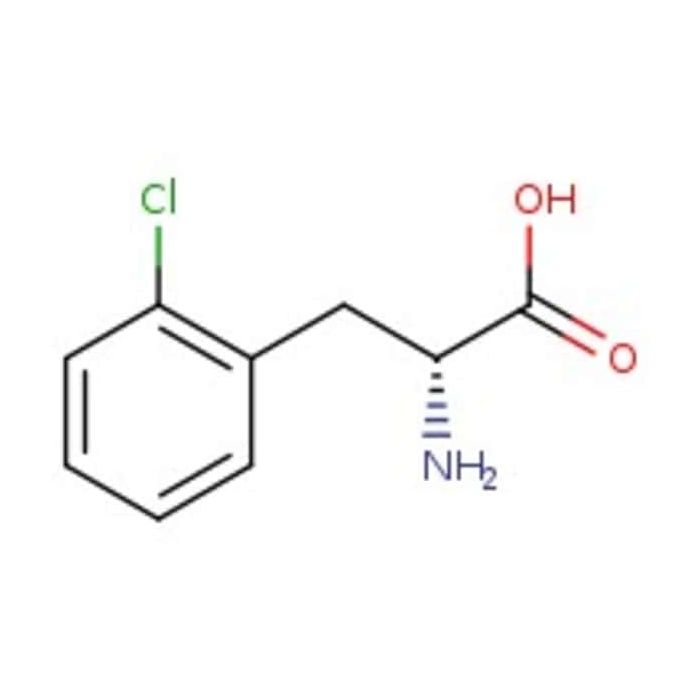
A halogenated, chiral α-amino acid building block: the D-enantiomer of phenylalanine bearing an ortho-chloro substituent on the aromatic ring.

  • Product name: 2-Chloro-D-phenylalanine
  • CAS: 80126-50-7 (item-specific)
  • CID (PubChem): 6951092 (item-specific)
  • InChIKey: 55190 (item-specific; note this is not the standard 27-character format. Refer to CoA/Spec Sheet for definitive identifier.)
  • SMILES: Not specified for this item; refer to CoA/Spec Sheet.
    • Example (literature, stereochemically defined for D): NC@HC(=O)O
  • Molecular formula: Not specified for this item; refer to CoA/Spec Sheet.
    • Typical for 2-chloro-phenylalanine (literature): C9H10ClNO2
  • Molecular weight: Not specified for this item; refer to CoA/Spec Sheet.
    • Calculated from C9H10ClNO2 (literature): ~199.64 g/mol

Structural features (general description):

  • Core motif: α-amino acid backbone with a single stereogenic center at Cα (D-configuration, typically R for phenylalanine derivatives by CIP rules).
  • Side chain: Benzyl group bearing a 2-chloro (ortho-chloro) substituent on the phenyl ring, increasing polarizability and enabling potential halogen-bonding interactions.
  • Functional groups: Primary amine (–NH2/–NH3+ depending on pH), carboxylic acid (–CO2H/–COO−), and an aryl chloride.
  • 2D depiction in words: Carboxylate–alpha carbon–amine backbone; the alpha carbon is chiral and bonded to a –CH2– group that connects to a monosubstituted phenyl ring with chlorine at the ortho position relative to the benzylic linkage.
Synthetic Utility

Functional group set and reactivity (literature/general):

  • α-Amino acid handle: Enables amide bond formation via activation of the carboxyl group (acid chlorides, mixed anhydrides, activated esters) or carbodiimide-based coupling (DIC/EDC + Oxyma/HOBt surrogate). The primary amine can be protected (Fmoc, Boc, Cbz) to guide selectivity.
  • Aryl chloride (ortho): Serves as a vector for diversification by Pd/Ni/Cu-catalyzed cross-couplings (Suzuki, Buchwald–Hartwig, Chan–Lam, Ullmann) after appropriate protection of the α-center and carboxyl.
  • Chirality: The D-configuration is valuable for inducing conformational bias; care is needed to suppress epimerization during activation (avoid strong base, prolonged high temperature).

Synthetic transformations:

  • Protection sequences: Fmoc-protection in aqueous Na2CO3/THF–water or Boc-protection with Boc2O/NaHCO3. Esterification of the acid (Me/Et) for orthogonal manipulations.
  • Couplings in SPPS/LPPS: HBTU/HATU or DIC/Oxyma in DMF/NMP; Oxyma recommended to reduce racemization vs. HOBt.
  • Cross-couplings on side chain: Suzuki with aryl/heteroaryl boronic acids; Buchwald–Hartwig with anilines; conditions tailored to tolerate protected amino acid moieties (use robust protecting groups and bases like K3PO4 or Cs2CO3 under Pd/ligand).

Retrosynthetically, the molecule disconnects to D-phenylalanine (or its protected form) plus an ortho-chlorination step or, more practically, to a purchased D-2-Cl-Phe building block to avoid late-stage halogenation and racemization risks.

Target Specificity

Not applicable. This product is a small-molecule amino acid building block, not an antibody or affinity reagent. No target, clone, species reactivity, or isotype information applies.

Souhaitez-vous que nous vous envoyions un message lorsque des réductions seront disponibles?

Me rappeler plus tard

Merci ! Veuillez vérifier votre boîte de réception e-mail pour confirmer.

Oups ! Les notifications sont désactivées.