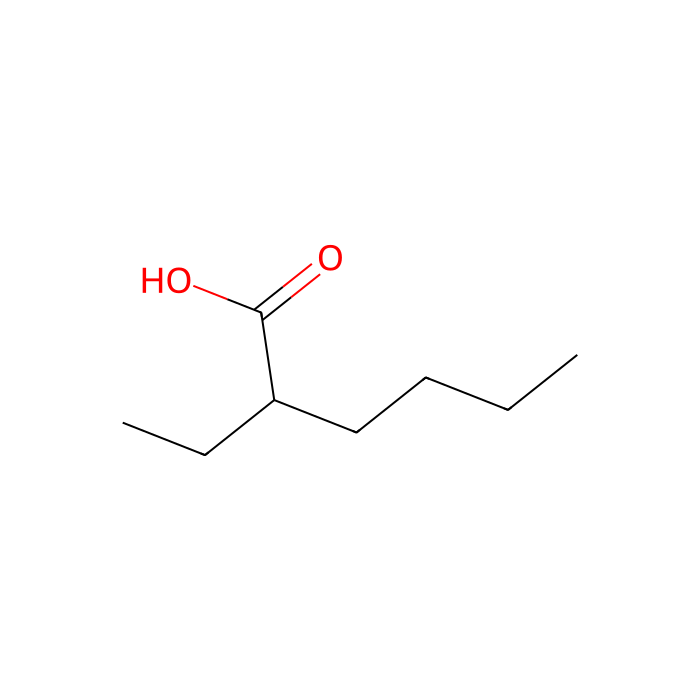
2-Ethylhexanoic acid - ≥99%(GC) , CAS No.149-57-5

CAS: 149-57-5 Cat. No.: E103543 Formule: C8H16O2 Poids moléculaire: 144.21 Beilstein Registry Number: 1750468 Numéro CE: 205-743-6
DISPONIBLE À COMMANDE
QUALITÉ & PURETÉ ≥99%(GC)
Synonyms
2 ETHYL HEXANOIC ACID|2-Ethyl-1-hexanoic acid|Hexanoic acid, 2-ethyl-, (-)-|alpha-ethyl caproic acid|Ethyl hexanoic acid|Ethylhexanoic acid|Kyselina heptan-3-karboxylova [Czech]|2-Butylbutanoic acid|2-ETHYLHEXANOIC ACID [HSDB]|2-Ethylhexansaeure|3-Heptanecarboxylic acid|Ethylhexoic acid|Hexanoic acid,2-ethyl-, tridecyl ester|2-Ethylhexoic acid|2-ethyl-hexoic acid|Kyselina 2-ethylkapronova|Kyselina heptan-3-karboxylova|Hexanoic acid, 2-ethyl-|.alpha.-Ethylhexanoic acid|alpha-Ethylcaproic acid|2-Ethylcaproic acid|Kyselina 2-ethylkapronova [Czech]|2-ethyl hexanoic acid|.alpha.-Ethylcaproic acid|2-ETHYL HEXOIC ACID,AR|Ethyl hexanoic acid, 2-|alpha-Ethylhexanoic acid|2-ethylhexanoicacid|2-Ethyl-Hexonic acid|2-Ethylcapronic acid|2-ETHYLHEXANOIC ACID|2-ethyl-hexanoic acid
Storage
Room temperature
Shipped In
Normal
★
Taille
Allemagne (EU)
USA*
Prix
Qté
100ml
E103543-100ml
—
3 En stock
11,19€
500ml
E103543-500ml
—
En stock ≥10
19,87€
Enter a quantity for the sizes you want to add.

Vue d’ensemble

2-Ethylhexanoic acid (EHXA, 2-EHA) is an industrially important aliphatic carboxylic acid.

2-Ethylhexanoic acid (EHXA, 2-EHA) is an industrially important aliphatic carboxylic acid. It is widely employed as a stabilizer and a wood preservative.
It has various industrial applications, such as:
coolant in automotives
synthetic lubricant
wetting agent
co-solvent
drying of paints

defoaming agent in pesticides

Spécifications

Synonymes
2 ETHYL HEXANOIC ACID | 2-Ethyl-1-hexanoic acid | Hexanoic acid, 2-ethyl-, (-)- | alpha-ethyl caproic acid | Ethyl hexanoic acid | Ethylhexanoic acid | Kyselina heptan-3-karboxylova [Czech] | 2-Butylbutanoic acid | 2-ETHYLHEXANOIC ACID [HSDB] | 2-Ethylhexansaeure | 3-Heptanecarboxylic acid | Ethylhexoic acid | Hexanoic acid,2-ethyl-, trid Afficher plus
Spécifications et pureté
≥99%(GC)
Conditions de stockage de stockage
Room temperature
Expédié en
Normal
Pureté
≥99%(GC)
Noms et identifiants
Pubchem Sid
Pubchem Sid Url
https://pubchem.ncbi.nlm.nih.gov/substance/504751717
SMILES
CCCCC(CC)C(=O)O
IUPAC Name
2-ethylhexanoic acid
InChIKey
OBETXYAYXDNJHR-UHFFFAOYSA-N
InChI
1S/C8H16O2/c1-3-5-6-7(4-2)8(9)10/h7H,3-6H2,1-2H3,(H,9,10)
Isomères SMILES
CCCCC(CC)C(=O)O
WGK Allemagne
1
RTECS
MO7700000
CAS alternatif
25103-52-0
Poids moléculaire
144.21
Beilstein
1750468
Reaxys
1721433
Reaxys-RN_link_address
https://www.reaxys.com/reaxys/secured/hopinto.do?context=S&query=IDE.XRN=1721433&ln=

Données avancées

Taxonomic Classification

Taxonomy Tree

KingdomOrganic compounds
SuperclassLipids and lipid-like molecules
ClasseFatty Acyls
SubclassFatty acids and conjugates
Intermediate Tree Nodes Not available
Direct ParentMedium-chain fatty acids
Alternative Parents Branched fatty acids  Monocarboxylic acids and derivatives  Carboxylic acids  Organic oxides  Hydrocarbon derivatives  Carbonyl compounds  
Molecular FrameworkAliphatic acyclic compounds
Substituents Medium-chain fatty acid - Branched fatty acid - Monocarboxylic acid or derivatives - Carboxylic acid - Carboxylic acid derivative - Organic oxygen compound - Organic oxide - Hydrocarbon derivative - Organooxygen compound - Carbonyl group - Aliphatic acyclic compound
DescriptionThis compound belongs to the class of organic compounds known as medium-chain fatty acids. These are fatty acids with an aliphatic tail that contains between 4 and 12 carbon atoms.
External Descriptors Branched fatty acids
Structure 3D
Modèle de structure chimique interactif


Cibles associées (humaines)
CA2 Tclin Carbonic anhydrase II (17698 Activities)
Activity TypeRelationActivity valueUnitsAction TypeJournalPubMed IddoiAssay Aladdin ID
AR Tclin Androgen Receptor (11781 Activities)
Activity TypeRelationActivity valueUnitsAction TypeJournalPubMed IddoiAssay Aladdin ID
PTH1R Tclin Parathyroid hormone receptor (47172 Activities)
Activity TypeRelationActivity valueUnitsAction TypeJournalPubMed IddoiAssay Aladdin ID
CA1 Tclin Carbonic anhydrase I (13240 Activities)
Activity TypeRelationActivity valueUnitsAction TypeJournalPubMed IddoiAssay Aladdin ID
Cibles associées (non humaines)
Mapk1 MAP kinase ERK2 (650 Activities)
Activity TypeRelationActivity valueUnitsAction TypeJournalPubMed IddoiAssay Aladdin ID
Slc22a20 Solute carrier family 22 member 20 (86 Activities)
Activity TypeRelationActivity valueUnitsAction TypeJournalPubMed IddoiAssay Aladdin ID
Mécanismes d'action
Certificats (CoA, COO, BSE/TSE et tableau d'analyse)
C of A & Other Certificates(BSE/TSE, COO):
Analytical Chart:

Find and download the COA for your product by matching the lot number on the packaging.

28 results found

Lot NumberCertificate TypeDateArticle
K2605736K2605736Certificate of AnalysisOct 28, 2026 E103543
K2605733K2605733Certificate of AnalysisOct 28, 2026 E103543
K2605716K2605716Certificate of AnalysisOct 28, 2026 E103543
E2620218E2620218Certificate of AnalysisMay 08, 2026 E103543
E2620280E2620280Certificate of AnalysisMay 08, 2026 E103543
E2620281E2620281Certificate of AnalysisMay 08, 2026 E103543
B2625081B2625081Certificate of AnalysisFeb 27, 2026 E103543
G1824303G1824303Certificate of AnalysisFeb 05, 2026 E103543
C2215301C2215301Certificate of AnalysisDec 10, 2025 E103543
L2524139L2524139Certificate of AnalysisOct 14, 2024 E103543
J2424371J2424371Certificate of AnalysisOct 14, 2024 E103543
J2424370J2424370Certificate of AnalysisOct 14, 2024 E103543
J2424369J2424369Certificate of AnalysisOct 14, 2024 E103543
J2424285J2424285Certificate of AnalysisOct 14, 2024 E103543
I2511149I2511149Certificate of AnalysisOct 14, 2024 E103543
L2010095L2010095Certificate of AnalysisOct 12, 2024 E103543
I1917127I1917127Certificate of AnalysisJul 07, 2023 E103543
G2311857G2311857Certificate of AnalysisJul 04, 2023 E103543
I2404162I2404162Certificate of AnalysisJul 04, 2023 E103543
G2311850G2311850Certificate of AnalysisJul 04, 2023 E103543
G23111103G23111103Certificate of AnalysisJul 04, 2023 E103543
G23111094G23111094Certificate of AnalysisJul 04, 2023 E103543
G2308216G2308216Certificate of AnalysisJun 13, 2022 E103543
F2221081F2221081Certificate of AnalysisJun 13, 2022 E103543
F2221075F2221075Certificate of AnalysisJun 13, 2022 E103543
F2221028F2221028Certificate of AnalysisJun 13, 2022 E103543
E2330130E2330130Certificate of AnalysisJun 13, 2022 E103543
D2301028D2301028Certificate of AnalysisJun 13, 2022 E103543
Propriétés chimiques et physiques
SolubilitéMiscible with water.
SensibilitéMoisture sensitive.
Indice de réfraction1.424-1.426
Point d'éclair (°F)237.2 °F
Point d'éclair (°C)114℃
Point d'ébullition (°C)228°C
Point de fusion (°C)-59°C
Poids moléculaire144.21
XLogP32.600
Hydrogen Bond Donor Count1
Hydrogen Bond Acceptor Count2
Rotatable Bond Count5
Exact Mass144.115 Da
Monoisotopic Mass144.115 Da
Topological Polar Surface Area37.300 Ų
Heavy Atom Count10
Formal Charge0
Complexity99.400
Isotope Atom Count0
Defined Atom Stereocenter Count0
Undefined Atom Stereocenter Count1
Defined Bond Stereocenter Count0
Undefined Bond Stereocenter Count0
The total count of all stereochemical bonds0
Covalently-Bonded Unit Count1
Sécurité et dangers (GHS)
Pictogramme(s)
Signal
Warning
Mentions de danger

H316:Causes mild skin irritation

H361:Suspected of damaging fertility or the unborn child

H361d:Suspected of damaging the unborn child

H303+H313:May be harmful if swallowed or in contact with skin

Conseils de prudence

P201:Obtain special instructions before use.

P202:Do not handle until all safety precautions have been read and understood.

P280:Wear protective gloves/protective clothing/eye protection/face protection.

P312:Call a POISON CENTER or doctor/... if you feel unwell.

P332+P313:IF SKIN irritation occurs: Get medical advice/attention.

P405:Store locked up.

P501:Dispose of contents/container to an approved waste disposal plant.

WGK Allemagne
1
RTECS
MO7700000
Reaxys
1721433
Reaxys-RN_link_address
https://www.reaxys.com/reaxys/secured/hopinto.do?context=S&query=IDE.XRN=1721433&ln=
FAQ et articles
Citations of This Product
Calculateurs de solution
Avis

Avis des clients

Application Protocols

No antibody/assay protocols apply to this small‑molecule reagent. For synthetic applications, see the Reaction Conditions and Synthetic Utility sections for representative procedures and practical guidance tailored to 2‑ethylhexanoic acid chemistry.

Biological Roles

General biochemical context (literature; not item-specific)

  • Structural class: Branched medium‑chain monocarboxylic acid; not a common natural fatty acid. The α‑branching (ethyl at C2) hinders standard β‑oxidation pathways compared with straight‑chain analogs.
  • Metabolism: Can undergo ω‑oxidation and modified β‑oxidation; forms CoA thioesters in cells, but branching can slow catabolism and alter enzyme specificity relative to unbranched C8 acids.
  • Interactions: As a weak acid (pKa ~4.8–4.9), exists mostly in the anionic form at physiological pH; its lipophilic anion/counterion pairs can partition into membranes.
  • Biological use in research: Frequently employed to prepare 2‑ethylhexanoate salts of metals (e.g., Zn, Co, Mn), which serve as soluble sources of metals in organic media for catalytic studies and materials synthesis; the 2‑ethylhexanoate ligand modulates solubility and surface interactions of metal complexes and nanomaterials.

Caveats

  • Not a buffer or nutrient; not typically used as a bioactive small molecule in cellular assays except as a component of metal salts or esters for materials research.
  • Always assess cytotoxicity and solvent effects in vitro; avoid clinical or in vivo use unless compounds are appropriately evaluated under regulatory frameworks.
Buffer Applications

Applicability

  • 2‑Ethylhexanoic acid is not typically employed as an aqueous buffer due to its low water solubility and relatively hydrophobic character.

General/literature note

  • With pKa ~4.8–4.9 (literature), conjugate base/acid pairs could, in principle, buffer near pH 4.5–5.5, but practical buffering capacity is limited by solubility and phase behavior.

Recommendations

  • For pH control in this range, use established buffer systems (e.g., acetate, citrate) with superior aqueous solubility and well‑characterized ionic strength behavior.
  • Consider 2‑ethylhexanoate salts only in nonaqueous or biphasic systems where lipophilic counterions and organic media are required (e.g., specialized electrochemistry or catalysis), not for routine biochemical buffering.
Green Alternatives

Context: 2‑Ethylhexanoic acid (2‑EHA) is valued for producing lipophilic metal carboxylates and sterically hindered esters/amides. From a green chemistry perspective, considerations include origin (petro‑ vs bio‑based), toxicity classifications, volatility, and biodegradability.

Possible alternatives (literature/general)

  • Straight‑chain fatty acids (e.g., octanoic acid, hexanoic acid): Often more readily biodegradable and may have different regulatory profiles; however, their metal salts can be less soluble in nonpolar media than 2‑EHA salts.
  • Bio‑based acids (e.g., lactic, succinic, itaconic): Renewable feedstocks; useful when water‑compatible salts are acceptable, though they lack the hydrophobe needed for nonpolar solubility.
  • 2‑Methyloctanoic or neodecanoic acids: Alternative branched acids; may offer similar solubility with differing hazard profiles—evaluate case‑by‑case via SDS.

Comparison highlights (qualitative)

  • Lipophilicity/solubility of metal salts: 2‑EHA > hexanoate ≈ octanoate (often), aiding use in hydrocarbon media.
  • Volatility: All are low‑volatility; 2‑EHA’s higher BP reduces VOC emissions versus short‑chain acids.
  • Regulatory/toxicity: Check local classifications; some jurisdictions flag 2‑EHA for reproductive toxicity—consider alternatives if this is a project constraint.

Greener practice with 2‑EHA

  • Use solvent‑minimized or solvent‑free esterifications where feasible.
  • Recycle hydrocarbon media during metal‑soap synthesis.
  • Employ catalytic coupling methods and energy‑efficient heating (microwave or flow) to reduce time/energy.
  • Evaluate life‑cycle and waste neutralization strategies (salt recovery) early in process design.
Pharmaceutical Uses

Item-specific status

  • No pharmacopeial grade or excipient designation is specified for this item; refer to CoA/Spec Sheet.

General context (literature; not medical claims)

  • Role in manufacturing: Carboxylic acid precursor to lipophilic esters and amides that may be explored as formulation components (e.g., lubricant additives, hydrophobe modifiers) or process aids in materials associated with device coatings.
  • Metal salts: 2‑Ethylhexanoate salts of certain metals are soluble in nonpolar media and sometimes used as catalysts or process intermediates in polymer and coating manufacture; these are not active pharmaceutical ingredients.
  • Regulatory considerations: Where used in any regulated application, rigorous impurity profiling (residual solvents, aldehydes, residual metals) and toxicological assessment are required; many projects select alternative acids with established pharmacopeial monographs for streamlined regulatory pathways.

Summary

  • 2‑Ethylhexanoic acid is primarily a research/manufacturing reagent. It is not typically used as an excipient or buffer in finished dosage forms without extensive justification and qualification. No clinical/therapeutic claims are made; for research use only.
Physical Properties

Item-specific specifications

  • Grade/Purity: Not specified for this item; refer to CoA/Spec Sheet.
  • Appearance: Not specified for this item; refer to CoA/Spec Sheet.

General/literature physical data (for reference; not item-specific)

  • State: Typically a clear, oily liquid at ambient conditions.
  • Boiling point: ~228–232 °C at 1 atm (literature).
  • Melting point: approximately −7 to −12 °C (literature).
  • Density: ~0.90–0.91 g/mL at 20–25 °C (literature).
  • Refractive index: nD20 ~1.430 (literature).
  • pKa (aqueous, 25 °C): ~4.8–4.9 (carboxylic acid; literature).
  • LogP (octanol/water): ~2.7–3.0 (literature), reflecting significant hydrophobicity.
  • Water solubility: Low (on the order of a few g/L at room temperature; literature); forms water‑soluble salts with bases.
  • Solubility in organic solvents: Miscible with many nonpolar and moderately polar organics (e.g., hydrocarbons, ethers, esters; literature).

Notes

  • Values above are typical literature ranges for 2‑ethylhexanoic acid and are provided as general guidance only. They are not specifications for this catalog item. For exact acceptance criteria, see the product’s CoA/Specification Sheet.
Quality and Grades

Item-specific status

  • Grade/Purity: Not specified for this item; refer to CoA/Spec Sheet.
  • Stabilizers/antioxidants: Not specified for this item; refer to CoA/Spec Sheet.

General guidance on grades for 2‑ethylhexanoic acid (for reference)

  • Technical grade: Often adequate for bulk synthesis (e.g., metal 2‑ethylhexanoates, esterifications) where trace UV absorbance/metals are less critical.
  • Reagent/ACS grade: Tighter control of acidity, color, residue on ignition; useful for research syntheses where reproducibility matters.
  • High‑purity/low‑UV grade: Beneficial for analytical applications (e.g., LC sample prep derivatization) where background absorbance at low wavelengths must be minimal.
  • Low‑metal grade: Important when preparing metal‑sensitive catalysts or nanomaterials where adventitious metals can poison reactions.

What to check on the CoA/Spec Sheet

  • Assay method (acid value/GC), water content (Karl Fischer), color (APHA), acidity/neutralization equivalent, and residual solvents.
  • UV absorbance profile (if relevant), and trace metal analysis if you intend to prepare sensitive metal complexes.

Implications of stabilizers

  • 2‑Ethylhexanoic acid is typically supplied neat; if any inhibitor or stabilizer is used, review compatibility with downstream catalysis or coupling chemistry. Always defer to the item’s CoA for definitive details.
Reaction and Applications

Key application domains (literature/general)

  • Metal 2‑ethylhexanoates (“metal soaps”): Neutralization with metal oxides/hydroxides/alkoxides affords lipophilic salts (e.g., Co, Mn, Zn, Cu 2‑ethylhexanoates) widely used as paint driers, oxidation catalysts, and sol‑gel or ALD precursors. The branched ligand increases solubility in nonpolar media.
  • Esterifications: Formation of 2‑ethylhexyl and other esters used in lubricants, plasticizers, and specialty fluids. Fischer esterification under acid catalysis, or Steglich esterification (DCC/DMAP) at ambient temperature.
  • Acyl chloride and anhydrides: Conversion with thionyl chloride or oxalyl chloride gives 2‑ethylhexanoyl chloride for acylations (Friedel–Crafts acylation of activated aromatics, or amide formation). Mixed anhydrides prepared via pivaloyl chloride or isobutyl chloroformate enable mild couplings.
  • Amide synthesis: Couplings with amines using EDC/HOBt, HATU, or CDI to afford sterically hindered amides with enhanced lipophilicity.
  • Nanomaterials: Acts as a capping/ligating acid in hot‑injection syntheses; in situ 2‑ethylhexanoates stabilize metal nanoparticles/oxides and control growth in high‑boiling hydrocarbons.
  • MOF/precursor chemistry: Serves as a modulatory carboxylate or as a solubilizing counterion for metal centers in nonpolar media.

Practical tips

  • Water management: Drive esterifications by azeotropic removal (Dean–Stark) or molecular sieves; for coupling‑based methods, ensure anhydrous conditions.
  • Neutralization/soap formation: Heat (80–150 °C) with metal oxides/hydroxides in hydrocarbons; remove water continuously to push equilibrium.
  • Acyl chloride prep: Reflux with SOCl2 (catalytic DMF) under inert gas; distill under reduced pressure and use promptly to avoid hydrolysis.
  • Workup: Neutralize residual acid carefully; extract into organic phase after basification when isolating neutral products; remove metal residues by filtration through celite or chelating scavengers if metal salts were used.
Reaction Conditions

General literature guidance (not item-specific; optimize per system)

  1. Fischer esterification
  • Typical setup: Alcohol (1.2–5.0 equiv), catalytic H2SO4 or p‑TsOH (1–10 mol%), solvent toluene or cyclohexane.
  • Temperature/time: Reflux with Dean–Stark to remove water; 2–24 h depending on alcohol sterics.
  • Notes: Use excess alcohol or azeotropic water removal to drive conversion; neutralize catalyst during workup.
  1. Steglich/Carbodiimide esterification
  • Reagents: DCC or EDC (1.1–1.3 equiv), catalytic DMAP (5–10 mol%), solvent DCM or DMF.
  • Temperature/time: 0 °C to rt, 2–16 h.
  • Notes: Filter dicyclohexylurea byproduct; minimize racemization concerns only if chiral nucleophiles are present (acid is racemic unless resolved).
  1. Amide formation
  • Reagents: HATU or EDC/HOBt (1.1–1.3 equiv), base (DIPEA 2–3 equiv), solvent DMF/MeCN.
  • Temperature/time: 0–25 °C, 2–18 h.
  • Notes: For hindered amines, pre‑activate acid as acid chloride (SOCl2, catalytic DMF) and couple with base (e.g., pyridine, triethylamine) at 0–25 °C.
  1. Acid chloride generation
  • Reagents: SOCl2 (2–4 equiv), catalytic DMF, inert atmosphere.
  • Temperature/time: Reflux 1–3 h; distill under reduced pressure.
  • Notes: Exclude moisture; quench residues cautiously.
  1. Metal 2‑ethylhexanoates
  • Reagents: Metal oxide/hydroxide/carbonate (0.5–1.0 equiv metal), hydrocarbon solvent (xylene/heptane).
  • Conditions: 80–150 °C with azeotropic water removal until acid value meets target.
  • Notes: Product typically a clear solution or viscous liquid; polish filter hot.

Yields

  • Literature reports commonly show good to excellent yields (60–95%) depending on sterics, catalyst, and water control; verify for your specific substrate set.
Safety and Handling

Item-specific hazard information

  • Signal word, H‑statements, GHS classification, pictograms: Not specified for this item; refer to SDS.
  • Storage conditions (from Product Data): Room temperature.
  • Shipped in: Normal.

General safety profile (literature/SDS references; not item-specific)

  • Likely GHS classification: Skin/eye irritant; may cause respiratory irritation. Some jurisdictions list 2‑ethylhexanoic acid with reproductive toxicity concerns (consult local regulations and SDS).
  • Incompatibilities: Strong oxidizers; strong bases (neutralization is exothermic, releases heat); reactive metals and their oxides/hydroxides will form metal carboxylates; avoid mixing with acid chlorides/anhydrides unless intended.
  • Peroxide formation: Not an ether—peroxide formation is not a typical concern.
  • Corrosivity: Organic acids can cause irritation; handle as a corrosive/irritant depending on concentration and local classification.

PPE and handling

  • Wear chemical‑resistant gloves (e.g., nitrile), lab coat, and splash goggles; use in a fume hood to avoid inhalation of vapors/mists.
  • Avoid skin/eye contact; wash thoroughly after handling.

First aid (overview; defer to SDS)

  • Inhalation: Move to fresh air; seek medical attention if symptoms persist.
  • Skin: Remove contaminated clothing; rinse skin with water/soap.
  • Eyes: Rinse cautiously with water for several minutes; remove contact lenses if present and easy; seek medical attention.
  • Ingestion: Rinse mouth; do not induce vomiting; seek medical attention.

Spill/Fire response

  • Absorb small spills with inert material (vermiculite), neutralize carefully if appropriate; for fires, use CO2, dry chemical, or foam; cool containers with water spray. Consult the SDS for authoritative guidance.
Solvent Selection

This product is a carboxylic acid reagent rather than a general‑purpose solvent.

  • Applicability: Not typically used as the bulk reaction solvent due to its acidity and relatively high boiling point. Instead, it is used as a substrate, ligand precursor (to make metal 2‑ethylhexanoates), or acylating component.
  • If used as a co‑solvent or medium: Choose nonreactive, water‑immiscible organic solvents (e.g., toluene, xylene, heptane, cyclohexane) that can dissolve both the acid and any metal oxides/hydroxides during metal‑soap formation.
  • Polarity/miscibility (literature, general): Moderately hydrophobic; low water solubility; mixes well with hydrocarbons, ethers, esters, chlorinated solvents.

When to choose alternatives

  • For Fischer esterifications or amidations, neutral, azeotrope‑forming solvents like toluene, cyclohexane, or isooctane are typically preferred to facilitate Dean–Stark water removal and minimize self‑reaction.
  • For coupling‑reagent‑based amidations, polar aprotic solvents (DCM, DMF, MeCN) are more common to solubilize carbodiimides/uroniums.

Summary: Treat 2‑ethylhexanoic acid as a reagent; select the primary solvent based on the transformation (see Reaction Conditions) and product isolation strategy.

Storage and Reconstitution

Item-specific storage and shipping

  • Storage conditions: Room temperature (per Product Data).
  • Shipped in: Normal (per Product Data).

General guidance (literature; not item-specific)

  • Container: Store in tightly closed, chemically compatible containers (e.g., amber glass) to limit moisture uptake and oxidation of sensitive co‑components.
  • Atmosphere: Inert gas blanket is typically not required, but beneficial for long‑term storage if frequent opening is expected.
  • Stability: Carboxylic acids are generally stable under ambient conditions; avoid prolonged exposure to heat and strong light.
  • Contamination control: Prevent contact with bases or metals unless forming salts intentionally; trace metals can catalyze discoloration in some systems.

Reconstitution/handling

  • Supplied neat; no reconstitution required. If viscosity increases at low temperature or partial solidification occurs, warm gently to ambient and homogenize before use.
  • Drying: If low water content is critical for your application, treat with molecular sieves or azeotropically dry in a suitable solvent, then distill if necessary.

Shelf life

  • Not specified for this item; refer to CoA/Spec Sheet. Periodically verify acid value, color (APHA), and water content for sensitive applications.
Structure and Identity

Brief overview: 2‑Ethylhexanoic acid is a branched, C8 aliphatic carboxylic acid commonly used to prepare lipophilic metal carboxylates (“2‑ethylhexanoates”) and specialty esters.

  • Item-specific identifiers (from Product Data)
    • Product name: 2‑Ethylhexanoic acid (SKU: E103543)
    • CAS: 149‑57‑5
    • PubChem CID: 8697
    • InChIKey: 253313 (as provided)
    • SMILES: Not specified for this item; refer to CoA/Spec Sheet.
  • Literature/computed identifiers and composition (general, not item-specific)
    • Molecular formula (literature): C8H16O2
    • Molecular weight (literature): 144.21 g/mol
    • Preferred IUPAC name (literature): 2‑ethylhexanoic acid (also: 2‑ethylcaproic acid)
  • Structural features (general description)
    • Functional group: Monocarboxylic acid (–CO2H) at C1 of a hexyl chain.
    • Substitution: An ethyl substituent at C2 (α‑carbon), creating a branched, chiral center.
    • Stereochemistry: Commercial material is typically racemic (R/S at C2) unless otherwise specified.
    • 2D description: A terminal carboxyl group attached to a six‑carbon chain wherein the carbon adjacent to the carboxyl bears an ethyl side chain; overall a hydrophobic, branched fatty‑acid analog.
  • Category path: 全部 / 可售 / 化学和生化试剂
  • Research use note: For research use only.
Synthetic Utility

Functional reactivity (literature/general)

  • Carboxylic acid chemistry: Readily forms esters (acid‑catalyzed or coupling‑mediated), amides (EDC/HATU/CDI routes), anhydrides, and the acid chloride (SOCl2/oxalyl chloride).
  • Branching effects: The α‑ethyl substituent increases steric hindrance around the carboxyl, which can slow acylation of hindered nucleophiles but improves lipophilicity and often product solubility in nonpolar media.
  • Metal‑ligand precursor: Produces 2‑ethylhexanoate ligands that render metal complexes soluble in hydrocarbons; useful for homogeneous/heterogenized catalysis, paint driers, and nanocrystal growth.

Named/representative transformations

  • Fischer esterification (H2SO4 or p‑TsOH; toluene/cyclohexane, Dean–Stark) to form 2‑ethylhexyl or other esters.
  • Steglich esterification (DCC or EDC, DMAP) at 0–25 °C in DCM/DMF.
  • Amide couplings with amines using HATU/DIPEA (DMF/MeCN) or CDI (neat/THF), furnishing sterically hindered amides.
  • Acyl chloride formation followed by Friedel–Crafts acylation (AlCl3) of activated aromatics to install a bulky acyl group.
  • Metal 2‑ethylhexanoate synthesis by neutralizing with metal oxides/hydroxides in hydrocarbons under azeotropic water removal.

Retrosynthetic value

  • As a bulky acyl fragment, 2‑ethylhexanoyl groups can modulate physical properties (melting point, solubility, volatility) in target molecules. The acid serves as a convenient, commercially available synthon for introducing a branched C8 chain.
Target Specificity

Not applicable. This product is a small‑molecule carboxylic acid, not an antibody, oligonucleotide, or targeted biological reagent. No antigen/epitope specificity, clone, isotype, or species reactivity applies.

Foire aux questions

What is the purity of this product, and how is it determined?
This product is supplied at ≥99% purity, determined by gas chromatography (GC). Lot-specific values are stated on the Certificate of Analysis.
How should this product be stored?
Store at room temperature.
How is this product shipped?
This product ships under standard ambient conditions. No temperature-controlled packaging is required.
What are the CAS number, molecular formula and molecular weight?
The CAS Number is 149-57-5, the molecular formula is C8H16O2, and the molecular weight is 144.21 g/mol. InChIKey OBETXYAYXDNJHR-UHFFFAOYSA-N.
What documentation is provided?
Available product documentation, including Certificates of Analysis (COA), Safety Data Sheets (SDS), and specification sheets, is shown in the product document area. Document availability and access follow the current site policy.

Produits apparentés

Lithium 2-ethylhexanoate - ≥98% , CAS No.15590-62-2
Zinc 2-ethylhexanoate - ca 80% in mineral spirits (17-19% Zn) , CAS No.136-53-8
Iron(III) 2-ethylhexanoate solution - 50 wt. % in mineral spirits , CAS No.7321-53-1
Magnesium 2-ethylhexanoate, 30-40% solution in toluene - 30-40% solution in toluene , CAS No.15602-15-0
Calcium 2-ethylhexanoate, superconductor grade - 40% in 2-ethylhexanoic acid(3-8% Ca) , CAS No.136-51-6
Zirconyl 2-ethylhexanoate in mineral spirits (~6% Zr) - in mineral spirits(~6% Zr) , CAS No.22464-99-9
Butyl 2-Ethylhexanoate - ≥98%(GC) , CAS No.68443-63-0
Manganese(II) 2-ethylhexanoate - 40% solution in mineral spirits (6% Mn) , CAS No.13434-24-7
Barium 2-ethylhexanoate, ~30% in xylene (7-10% Ba) - ~30% in xylene(7-10% Ba) , CAS No.2457-01-4
Nickel(II) 2-ethylhexanoate, 78% in 2-ethylhexanoic acid (10-15% Ni) - 78% in 2-ethylhexanoic acid , CAS No.4454-16-4
Bis(2-ethylhexanoato)hydroxyaluminum - ≥98% , CAS No.30745-55-2
Bismuth 2-ethylhexanoate - ≥92%, soluble in 2-diethylhexanoic acid , CAS No.67874-71-9
Pentaerythritol Tetra(2-Ethylhexanoate) - ≥98% , CAS No.7299-99-2
Molybdenum(IV) 2-ethylhexanoate - 15%Mo , CAS No.34041-09-3
Potassium 2-Ethylhexanoate - ≥95%(T) , CAS No.3164-85-0
Zinc 2-ethylhexanoate - ~18% Zn,~1% Diethylene glycol monomethyl ether , CAS No.136-53-8
Cobalt(II) 2-ethylhexanoate solution - 65 wt. % in mineral spirits , CAS No.136-52-7
Glyceryl tri(2-ethylhexanoate) , CAS No.7360-38-5
Strontium 2-ethylhexanoate - ~40% in 2-ethylhexanoic acid,8-12% Sr , CAS No.2457-02-5
Silver 2-ethylhexanoate - ≥99% , CAS No.26077-31-6
Vinyl 2-Ethylhexanoate (stabilized with MEHQ) - ≥98%(GC) , CAS No.94-04-2
2-Ethylhexanoic acid - CP, ≥98% , CAS No.149-57-5
1,4-Cyclohexanedimethanol Bis(2-ethylhexanoate) (cis- and trans- mixture) - ≥98% , CAS No.53148-32-6
2-Ethylhexanoic acid - Standard for GC, ≥99.5%(GC) , CAS No.149-57-5
Chromium(III) 2-ethylhexanoate - in Mixed tetratoluene (8-10% Cr) , CAS No.3444-17-5
Silicon(IV) 2-ethylhexanoate - Nominally 75% in ethanol , CAS No.67939-81-5
Zirconium(IV) 2-ethylhexanoate in mineral spirits - ~6% Zr basis
Poly(ethylene glycol) bis(2-ethylhexanoate) - average Mₙ ~650 , CAS No.9004-93-7
2-Ethylhexanoic acid - for synthesis , CAS No.149-57-5
Ethyl 2-ethylhexanoate - ≥95% , CAS No.2983-37-1
Calcium 2-ethylhexanoate - ≥98% , CAS No.136-51-6

Souhaitez-vous que nous vous envoyions un message lorsque des réductions seront disponibles?

Me rappeler plus tard

Merci ! Veuillez vérifier votre boîte de réception e-mail pour confirmer.

Oups ! Les notifications sont désactivées.