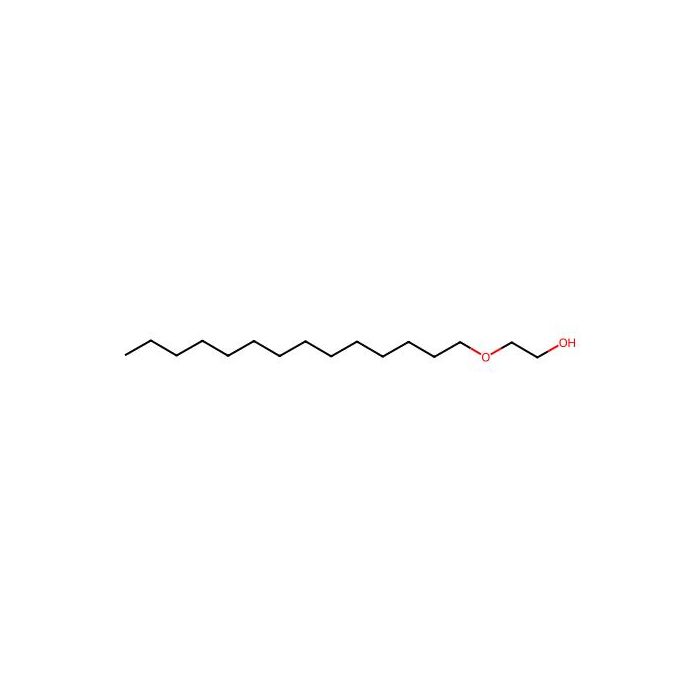
This compound belongs to the class of organic compounds known as dialkyl ethers. These are organic compounds containing the dialkyl ether functional group, with the formula ROR', where R and R' are alkyl groups.
External Descriptors
Not available
1. Djoumbou Feunang Y, Eisner R, Knox C, Chepelev L, Hastings J, Owen G, Fahy E, Steinbeck C, Subramanian S, Bolton E, Greiner R, and Wishart DS. ClassyFire: Automated Chemical Classification With A Comprehensive, Computable Taxonomy. Journal of Cheminformatics, 2016, 8:61.
Certificats (CoA, COO, BSE/TSE et tableau d'analyse)
C of A & Other Certificates(BSE/TSE, COO):
Analytical Chart:
Propriétés chimiques et physiques
Poids moléculaire
258.44
XLogP3
6.200
Hydrogen Bond Donor Count
1
Hydrogen Bond Acceptor Count
2
Rotatable Bond Count
15
Exact Mass
258.256 Da
Monoisotopic Mass
258.256 Da
Topological Polar Surface Area
29.500 Ų
Heavy Atom Count
18
Formal Charge
0
Complexity
137.000
Isotope Atom Count
0
Defined Atom Stereocenter Count
0
Undefined Atom Stereocenter Count
0
Defined Bond Stereocenter Count
0
Undefined Bond Stereocenter Count
0
The total count of all stereochemical bonds
0
Covalently-Bonded Unit Count
1
Calculateurs de solution
Molarity Calculator
Determine the necessary mass, volume, or concentration for preparing a solution.
Dilution Calculator
Determine the dilution needed to prepare a stock solution.
Reconstitution Calculator
Avis
Avis des clients
Application Protocols
No manufacturer-tested bioassay or analytical application protocols are provided for this item. General laboratory usage examples (non-binding, for reference):
Preparing a surfactant stock:
Dissolve 1.0 g in 10 mL ethanol or isopropanol (10% w/v). Warm to 35–40 °C if needed to fully solubilize. For aqueous use, add the organic stock slowly to a vigorously stirred buffer to form a dispersion/emulsion.
Forming a W/O emulsion (screening):
Oil phase: light mineral oil or isopropyl myristate (95–98 wt%). Add 2-(tetradecyloxy)ethanol at 2–5 wt% as a low-HLB co-surfactant with a primary emulsifier (e.g., Span 80). Homogenize at 10–15 krpm for 1–3 min; evaluate stability at 25–40 °C.
Tosylation setup (building block activation):
Charge dry DCM, cool to 0 °C, add pyridine and the alcohol, then TsCl in portions. Stir to completion by TLC/GC. Quench with cold 1 M HCl, separate, wash, dry, and concentrate.
These examples are illustrative only; optimize conditions for your system and consult primary literature.
Biological Roles
This compound is a synthetic amphiphile; it does not have a known intrinsic biological role. However, its physicochemical attributes are useful in biochemical systems.
General biochemical relevance (literature):
Amphiphile with a C14 hydrophobe can partition into lipid bilayers, micelles, and lipoprotein-like assemblies, enabling studies of membrane interactions, permeability, and protein reconstitution in hydrophobic environments.
As a nonionic species with a terminal alcohol, it can act as a co-surfactant to modulate micelle size and critical micelle concentration (CMC) when blended with other surfactants (e.g., Tweens/Spans or bile salts) without introducing ionic strength.
Hydrophobic tail length (C14) approximates common myristyl chains in acylated proteins; derivatives may serve as mimetics in probing myristoylation-dependent membrane anchoring (using chemically modified forms created from this scaffold).
Cautions:
Not intended for use in living systems; effects on cells and organisms have not been established for this specific compound. For research use only (per Product Data).
Protein compatibility and denaturation risk should be empirically screened; nonionic amphiphiles can stabilize or destabilize proteins depending on composition and temperature.
Practical biochemical handling:
Prepare concentrated stocks in ethanol, isopropanol, DMSO, or DCM, then dilute into buffer with vigorous mixing or sonication to form dispersions or mixed micelles.
Temperature control near or above the pour/melting point improves reproducibility in assembly and dosing.
Buffer Applications
Not typically used as a buffer component. As a hydrophobic, nonionic amphiphile, it has negligible buffering capacity.
Practical note (general):
If incorporated into aqueous buffers, it functions only as a surfactant/co-surfactant or hydrophobic phase component. Introduce via a miscible cosolvent (e.g., ethanol, isopropanol) or pre-formulated emulsions, then homogenize or sonicate.
For systems requiring defined pH control, select established buffer systems (e.g., phosphate, HEPES, Tris) and optimize surfactant addition separately to avoid precipitation or phase separation.
Green Alternatives
Context: 2-(tetradecyloxy)ethanol is a high-boiling, low-volatility, nonionic amphiphile. Its environmental profile hinges on the long aliphatic chain and minimal ethoxylation (EO=1).
Greener design choices (general, literature):
Bio-based sourcing: select material derived from plant fatty alcohols (myristyl alcohol) and bio-ethylene oxide to improve renewable carbon content.
Higher-EO analogs (e.g., C14EO3–C14EO8) can improve biodegradability and water compatibility, though with tradeoffs in hydrophobe delivery and HLB.
Sugar-based surfactants (alkyl polyglucosides, APGs) offer excellent biodegradability and low aquatic toxicity while providing comparable interfacial performance in many formulations.
Comparison highlights (general):
2-(tetradecyloxy)ethanol (C14EO1): very low VOC, strong hydrophobe, low HLB; excels in W/O systems and oil-phase solubilization; poor water solubility; potentially slower biodegradation vs APGs.
Alkyl polyglucosides (e.g., C12–C14 APG): bio-based, readily biodegradable, good foaming/wetting; higher HLB; may not suit strictly hydrophobic phases.
PEG monoalkyl ethers with higher EO: tunable HLB, better aqueous handling; higher viscosity and potential EO-derived impurities to manage.
Process improvements:
Use solvent-free melt functionalizations (e.g., neat tosylation under controlled conditions) or benign solvents (2-MeTHF, Cyrene, CPME) where feasible.
Employ catalytic, selective oxidations (O2/mediated TEMPO) in place of stoichiometric chromium reagents when preparing acids/aldehydes.
Selection should balance performance targets (HLB, CMC, viscosity) with renewable content, biodegradability, and worker exposure (low VOC).
Pharmaceutical Uses
No pharmacopeial or item-specific excipient designation is provided. The following is general formulation context only; no therapeutic claims are made.
General roles for related materials (literature/formulation practice):
Nonionic amphiphiles and fatty alcohol ethoxylate analogs are explored as solubilizers, wetting agents, and emulsifiers in topical, transdermal, and oral dosage forms where low HLB components are required (e.g., W/O emulsions).
Hydrophobic permeation enhancers or co-solubilizers for lipophilic actives in semi-solid ointments and creams.
Considerations before use:
Regulatory status: This specific compound is not indicated as USP/NF/Ph. Eur. grade; confirm regulatory acceptability, residual solvent limits, peroxide value, and impurity profile if considering formulation R&D.
Stability: Monitor for oxidative degradation (formation of aldehydes/acids) under heat/air/light; use antioxidants if compatible and permitted.
Compatibility: Evaluate interactions with preservatives, APIs, and packaging (especially polyolefins) due to its hydrophobic character.
Analytical controls (general):
Assay by GC-FID or HPLC-ELSD; impurities by GC-MS; hydroxyl value and acid value for functionality and degradation monitoring; water by KF.
This product is designated For research use only per Product Data; not for human or veterinary use.
Physical Properties
Item-specific specifications: Not specified for this item; refer to CoA/Spec Sheet for authoritative values (appearance, purity, water, peroxide, metals, UV cutoff, etc.).
Literature/typical data for the neat compound (for reference only; verify for this specific lot):
Molecular formula: C16H34O2 (literature)
Molecular weight: ~258.44 g/mol (literature)
Physical state at ambient: waxy, low-melting solid or high-boiling viscous liquid depending on purity and temperature (literature/experience for C14 glycol ethers)
Boiling behavior: very high boiling; distillation generally requires high vacuum (literature, analogous long-chain glycol ethers)
Melting point: expected near/above ambient; exact value depends on crystal habit and purity (literature trends for C14 ethers)
Density (20–25 °C): typically ~0.85–0.90 g/mL for comparable C14 ether alcohols (literature trend; check CoA)
Solubility:
Water: very low to sparingly soluble (amphiphile with C14 tail; literature)
Organic: miscible/soluble in alcohols, ethers, chlorinated solvents, and hydrocarbons (literature)
Partitioning: high logP expected (>4) due to C14 chain; exact value not verified (literature expectation)
Refractive index: typically ~1.44–1.46 for similar long-chain ethers (literature trend)
Practical notes (general):
Viscosity increases markedly at lower temperatures; gentle warming (≤40 °C) can aid handling.
Hygroscopicity is low to moderate; however, the terminal –OH can hydrogen-bond, influencing apparent viscosity and microphase behavior.
Always consult the item’s CoA/Specification Sheet for definitive, lot-specific physical data.
Quality and Grades
Item-specific grade/purity: Not specified for this item; refer to CoA/Spec Sheet for exact assay, impurity profile, and any stabilizers.
Interpreting common grades for this class (general guidance):
Technical grade: suitable for synthetic use where small amounts of homologs (C12/C16), residual alcohol (tetradecanol), or ethoxylates are tolerable.
Reagent/AR grade: tighter control on GC purity and color (APHA), lower acid value, and lower water content; appropriate for most organic synthesis.
HPLC grade (if offered): low UV absorbance and particulate; generally not relevant unless used as a mobile phase modifier or matrix component.
Stabilizers/antioxidants:
Not commonly stabilized; if any antioxidant (e.g., BHT) is present, it will be declared on the CoA. Presence of stabilizer can influence downstream polymerizations or oxidations.
What to verify on receipt (best practice for this chemistry):
GC-FID purity and homolog distribution (C12/C16), acid value (mg KOH/g), hydroxyl value (mg KOH/g) to confirm functionality, water by Karl Fischer, and color/APHA.
Odor and appearance (clear, near-colorless to pale) and pour point consistent with documentation.
Always defer to the lot-specific CoA/Spec Sheet for binding specifications and acceptance criteria.
Reaction and Applications
Research and formulation uses (general; no specific manufacturer claims were provided):
Nonionic amphiphile for assembling model membranes, vesicles, and microemulsions where a defined hydrophobe length is required.
Hydrophobe component in emulsifiers, dispersants, and coatings; low HLB profile favors water-in-oil systems.
Synthetic transformations enabled by the terminal –OH (general literature):
Activation to a leaving group: convert to mesylate/tosylate (MsCl or TsCl, base) to give 2-(tetradecyloxy)ethyl sulfonates, versatile alkylating agents for installing the –O–CH2–CH2– moiety.
Halogenation: PBr3, SOCl2, or Appel conditions (CBr4/PPh3) afford 2-(tetradecyloxy)ethyl halides for nucleophilic substitutions (SN2 onto heteroatom nucleophiles).
Oxidation: primary alcohol oxidation to aldehyde (Swern, TPAP/NMO) or acid (Jones, TEMPO/bleach variants) to access 2-(tetradecyloxy)acetic acid derivatives.
Carbon–carbon bond formation via O-alkylation after protection/derivatization, or through subsequent functionalization of the oxidized products.
Ether linkage considerations:
The aliphatic ether is robust to bases and many nucleophiles; cleavage typically requires harsh acidic conditions and is generally avoided.
Minimal coordinating ability compared with polyethers; suitable where low donor number is advantageous.
Practical notes:
Viscosity can impede mixing at ambient; gentle heating (30–40 °C) and overhead stirring improve mass transfer.
Use anhydrous conditions for moisture-sensitive downstream reactions (e.g., sulfonylations), and verify hydroxyl value if quantitative functionalization is required.
Reaction Conditions
General literature guidance for common transformations of 2-(tetradecyloxy)ethanol; adjust to your substrate and scale. These are not item-specific specifications.
Tosylation (activation):
Typical: TsCl (1.1–1.5 equiv), pyridine or Et3N (2–3 equiv), 0 °C → rt, 2–16 h. Solvent: DCM or toluene. Monitor by TLC/GC. Workup with aqueous quench; purify by silica gel. Yields often 80–95% for primary alcohols.
Appel bromination (to alkyl bromide):
CBr4 (1.2–1.5 equiv), PPh3 (1.2–1.5 equiv), DCM, 0 °C → rt, 1–4 h. Provides 2-(tetradecyloxy)ethyl bromide. Alternatively PBr3 (0.33–0.5 equiv) in ether/THF at 0 °C → rt.
TEMPO-mediated oxidation (to aldehyde/acid):
For aldehyde: TEMPO (1–5 mol%), NaOCl (1.5–2.0 equiv), NaHCO3 buffer, 0–5 °C, 0.5–2 h; extract into organic phase promptly to minimize over-oxidation.
For acid: catalytic TEMPO with bleach plus NaClO2 (Pinnick) or excess NaOCl; maintain pH 9–10.
High-boiling products benefit from Kugelrohr or short-path distillation under high vacuum (<1 mbar).
GC-FID with on-column injection or HPLC-ELSD can quantify homologs and conversion where UV chromophores are absent.
Safety and Handling
Item-specific GHS classification and hazard statements: Not specified for this item; refer to SDS for authoritative safety information.
General safety profile for long-chain glycol ether alcohols (literature/industry practice):
Typically low volatility and low acute inhalation hazard; primary exposure routes are skin and eyes.
May cause skin and eye irritation. Prolonged/repeated exposure can lead to defatting or dermatitis.
Combustible organic liquid/solid; can burn if preheated. Keep away from ignition sources.
Recommended PPE and engineering controls:
Nitrile gloves, lab coat, splash goggles. Use in a well-ventilated area or fume hood when heating or spraying/aerosolizing.
For bulk transfers, use secondary containment and grounded equipment to mitigate static.
Handling and storage incompatibilities (general):
Avoid strong oxidizers (e.g., peroxides, chromates) and strong acids/bases that can promote degradation or ether cleavage.
Long-chain ethers are not strong peroxide formers compared to dialkyl ethers, but good practice includes minimizing air/UV exposure during long-term storage and checking aged material if used as a solvent.
First aid (summary; defer to SDS):
Skin: Wash with soap and water; remove contaminated clothing.
Eyes: Rinse cautiously with water for several minutes; remove contact lenses if present and easy.
Ingestion: Rinse mouth; seek medical advice. Do not induce vomiting unless directed.
Inhalation: Move to fresh air; support breathing as needed.
Fire-fighting measures (general): alcohol-resistant foam, dry chemical, or CO2; cool containers with water spray.
Solvent Selection
This product is primarily a hydrophobic amphiphile/surfactant-like building block rather than a routine reaction solvent. Nevertheless, understanding its solvation behavior assists in formulation and process design.
Polarity/miscibility (general, literature):
Low to moderate polarity due to terminal –OH; predominately hydrophobic behavior from the C14 chain.
Very limited water solubility; can form micelles or emulsions above certain concentrations/with co-surfactants.
Readily soluble in common organic solvents: alcohols (MeOH–iPrOH), ethers (MTBE, THF), esters (EtOAc), hydrocarbons (hexanes, toluene), and chlorinated solvents (DCM).
Typical use scenarios:
As a co-surfactant or hydrophobe in nonionic surfactant systems, emulsions, and microemulsions.
As a viscosity modifier or compatibilizer for hydrophobic actives.
Selection versus alternatives (general comparison):
Compared to shorter-chain glycol ethers (e.g., 2-ethoxyethanol), this C14 analog is far less volatile and far less water-miscible, favoring hydrophobic phases and low-VOC formulations.
Compared to polyethylene glycol monoalkyl ethers (Brij/Laureth series with EO>1), the single EO unit here yields lower HLB and stronger oil-phase affinity, useful for W/O systems.
Practical tips:
If using as a solvent medium for high-temperature reactions, anticipate very high boiling behavior and consider vacuum operation.
For analytical sample prep, pre-dilute with a volatile solvent (e.g., DCM, MeOH) to facilitate GC/LC injection.
Storage and Reconstitution
Item-specific storage: Room temperature (per Product Data). Store tightly closed in a dry, well-ventilated place away from heat and direct sunlight.
Shipping: Not specified for this item; refer to CoA/Spec Sheet.
Stability considerations (general):
Low volatility and good thermal stability for long-chain ether alcohols. Nevertheless, prolonged exposure to air/heat/light can promote slow oxidative formation of carbonyl/acidic byproducts—monitor acid value during long-term storage.
If using for moisture-sensitive synthesis, consider storing under inert gas (N2/Ar) and dispensing with dry techniques.
Reconstitution/handling:
If solidified or highly viscous at ambient, gently warm to 30–40 °C in a water bath to liquefy before dispensing; avoid overheating.
For preparing solutions, choose a compatible organic solvent (e.g., ethanol, isopropanol, DCM, toluene) and mix with mild heating to ensure homogeneity.
Container/packaging:
Store in amber glass or compatible HDPE with minimal headspace to limit oxidation. Use clean, dry tools to prevent contamination.
Always consult the product’s SDS and CoA for authoritative storage and handling instructions. For research use only (per Product Data).
Structure and Identity
A long-chain, monofunctional glycol ether bearing a C14 alkyl tail and a terminal primary alcohol on a two-carbon spacer.
Item-specific (from Product Data):
CAS: 2136-70-1
PubChem CID: 16491
InChIKey: 296854 (as provided in catalog entry; note this is not the standard 27-character InChIKey format; consult CoA/SDS for confirmation)
Molecular formula: Not specified for this item; refer to CoA/Spec Sheet.
Molecular weight: Not specified for this item; refer to CoA/Spec Sheet.
SMILES: Not specified for this item; refer to CoA/Spec Sheet.
Literature/computed identity (for reference only; verify against the supplied CoA):
Preferred IUPAC name (literature): 2-(tetradecyloxy)ethan-1-ol
A two-carbon ethylene spacer terminates in a primary –OH. The spacer oxygen forms an ether linkage to a linear tetradecyl chain (CH3–(CH2)13–O–CH2–CH2–OH). No rings, no stereocenters, and fully saturated hydrocarbon backbone.
The amphiphilic motif (polar terminal –OH and nonpolar C14 tail) imparts surfactant-like behavior and strong hydrophobic interactions while retaining limited reactivity at the primary alcohol.
Primary alcohol (reactive, chemoselectively transformable) at the hydrophilic terminus.
Inert aliphatic ether and C14 chain act as a lipophilic carrier or protecting “spacer” preserving hydrophobicity through multistep sequences.
Representative transformations (literature):
Sulfonate activation: TsCl or MsCl (base) → 2-(tetradecyloxy)ethyl sulfonate → SN2 alkylation of heteroatom nucleophiles (RO−, RS−, N−) to install the –OCH2CH2–O–C14 motif on diverse substrates.
Halide formation: PBr3/SOCl2/Appel → corresponding bromide/chloride for phase-transfer alkylations and azide substitutions (→ amines after reduction).
Oxidation: TEMPO/bleach or Swern → aldehyde/acid; subsequent amide coupling or Wittig/aldol elaboration.
Carbonate/urethane formation: reaction with chloroformates or isocyanates to generate lipophilic protecting or delivery groups.
Strategic applications:
Constructing amphiphilic ligands, surfactant-like ionic liquids, or phase anchors (e.g., tethering catalysts/chromophores to hydrophobic media).
Generating hydrophobically modified polymers via end-group transformation and grafting-through reactions.
Practical tips:
Confirm hydroxyl value prior to stoichiometric derivatizations.
Employ anhydrous, oxygen-limited conditions for sensitive steps; the substrate is thermally robust but viscous—ensure efficient mixing and heat transfer.
Purify by vacuum distillation (high vacuum) or column chromatography on silica with nonpolar eluents; gentle warming can assist loading.
Target Specificity
Not applicable. This product is a small-molecule reagent/surfactant-like building block, not a biological affinity reagent or antibody. No antigen/epitope specificity, clone, or isotype information applies.
Foire aux questions
What is the purity of this product?
This product is supplied at ≥95% purity (chemical assay). Lot-specific values are stated on the Certificate of Analysis.
How should this product be stored?
Store at room temperature.
What are the CAS number, molecular formula and molecular weight?
The CAS Number is 2136-70-1, the molecular formula is C16H34O2, and the molecular weight is 258.44 g/mol. InChIKey QHERURXKGFABNZ-UHFFFAOYSA-N.
What documentation is provided?
Available product documentation, including Certificates of Analysis (COA), Safety Data Sheets (SDS), and specification sheets, is shown in the product document area. Document availability and access follow the current site policy.
Nous utilisons des cookies pour garantir le bon fonctionnement du site et, lorsque cela est autorisé, pour améliorer votre expérience. Vous pouvez gérer vos préférences à tout moment dans les Paramètres. Pour en savoir plus, consultez notre Politique relative aux cookies.
Souhaitez-vous que nous vous envoyions un message lorsque des réductions seront disponibles?
Me rappeler plus tard
Merci ! Veuillez vérifier votre boîte de réception e-mail pour confirmer.
Products are supplied to verified businesses, institutions, and qualified professionals for research and development use only. Not for use in humans, animals, diagnosis, or therapy.