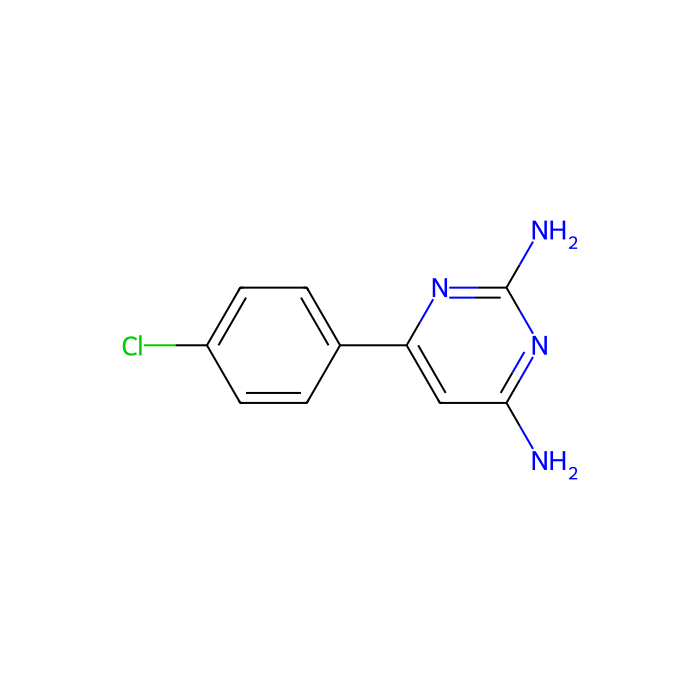
This compound belongs to the class of organic compounds known as phenylpyrimidines. These are polycyclic aromatic compounds containing a benzene ring linked to a pyrimidine ring through a CC or CN bond. Pyrimidine is a 6-membered ring consisting of four carbon atoms and two nitrogen centers at the 1- and 3- ring positions.
External Descriptors
Not available
1. Djoumbou Feunang Y, Eisner R, Knox C, Chepelev L, Hastings J, Owen G, Fahy E, Steinbeck C, Subramanian S, Bolton E, Greiner R, and Wishart DS. ClassyFire: Automated Chemical Classification With A Comprehensive, Computable Taxonomy. Journal of Cheminformatics, 2016, 8:61.
Certificats (CoA, COO, BSE/TSE et tableau d'analyse)
C of A & Other Certificates(BSE/TSE, COO):
Analytical Chart:
Propriétés chimiques et physiques
Poids moléculaire
220.660 g/mol
XLogP3
1.800
Hydrogen Bond Donor Count
2
Hydrogen Bond Acceptor Count
4
Rotatable Bond Count
1
Exact Mass
220.052 Da
Monoisotopic Mass
220.052 Da
Topological Polar Surface Area
77.800 Ų
Heavy Atom Count
15
Formal Charge
0
Complexity
206.000
Isotope Atom Count
0
Defined Atom Stereocenter Count
0
Undefined Atom Stereocenter Count
0
Defined Bond Stereocenter Count
0
Undefined Bond Stereocenter Count
0
The total count of all stereochemical bonds
0
Covalently-Bonded Unit Count
1
Calculateurs de solution
Molarity Calculator
Determine the necessary mass, volume, or concentration for preparing a solution.
Dilution Calculator
Determine the dilution needed to prepare a stock solution.
Reconstitution Calculator
Avis
Avis des clients
Application Protocols
No tested application protocols (e.g., bioassay panels, analytical methods, or immunoassays) are provided for this item.
General suggestions (research use)
Analytical QC: record 1H/13C NMR, HRMS/LC-MS, and HPLC purity upon receipt.
Screening stocks: prepare 10–50 mM DMSO stocks; verify solubility visually and by UV/LC.
Reaction setup: for N-functionalization, dry solvents and control stoichiometry to bias mono- vs di-substitution; use base-scavenged workups for acylations.
Consult peer-reviewed literature for protocol details tailored to your transformation or assay.
Biological Roles
Item-specific (Product Data)
Research Use Note: For research use only
Literature/general context (no medical/clinical claims)
Diaminopyrimidines are established heteroaromatic motifs that can engage in hydrogen-bonding patterns reminiscent of nucleobase interactions. The 2,4-diamino arrangement can act as a bidentate H-bond donor/acceptor array.
The 6-aryl substitution modulates basicity, planarity, and lipophilicity, parameters commonly tuned in structure–activity relationship (SAR) studies for enzyme-binding chemotypes (e.g., ATP-site hinge binders in kinases).
Protonation state impacts aqueous solubility and target engagement in biochemical assays; salts may be preferred for stock solutions to minimize variability.
The para-chloro substituent on the phenyl ring is a classical electron-withdrawing/lipophilicity-increasing handle, often used to adjust metabolic stability in exploratory studies.
Experimental considerations
For biochemical assays, prepare DMSO stocks and dilute into assay buffers with gentle mixing to avoid precipitation; monitor final DMSO content (<1–2% v/v typically).
Avoid adsorption losses by using low-binding plastics or adding minimal surfactant (e.g., 0.01% Tween-20) if permitted by the assay.
Note: No target specificity or biological activity data are provided for this catalog item. Any biological evaluation should be performed under appropriate research protocols only.
Buffer Applications
This compound is not a buffering agent and does not constitute a classical buffer system. It is a neutral/weakly basic heteroaromatic building block.
Practical notes (general)
If used in biochemical assays, dissolve in DMSO and dilute into your chosen buffer (e.g., HEPES, PBS) while maintaining low final organic content to avoid precipitation.
Salt forms (e.g., hydrochloride) can improve aqueous compatibility if needed, but may alter reactivity and assay behavior.
No item-specific buffer recipes, pKa values, or buffering ranges are provided for this product.
Green Alternatives
While this product is a solid building block (not a solvent), greener choices can be made for the media and reagents used with it.
Greener solvent choices (literature/general)
Replace DMF/NMP where possible with safer solvents: 2-MeTHF, EtOAc, propylene carbonate, Cyrene, or aqueous ethanol for certain steps (e.g., acylations, crystallizations).
For Pd-catalyzed N-arylation, bio-derived solvents (2-MeTHF), water/ethanol mixtures, or t-amyl alcohol can be effective depending on substrate.
Reagent selection
Use greener activating agents (e.g., CDI for urea formation vs phosgene equivalents; DSC or EDCI for amide formation instead of acid chlorides) when compatible with the diamine’s basicity.
Explore micellar catalysis (aqueous surfactant media) to reduce organic solvent volumes in couplings.
2-MeTHF/EtOAc: renewable or lower-toxicity profiles; may require higher temperature or longer reaction times due to lower polarity.
Aqueous ethanol: low toxicity/biodegradable; limited solubility for hydrophobic intermediates.
Note: No item-specific environmental metrics are provided. Validate alternative conditions on small scale to ensure selectivity and yield are maintained.
Pharmaceutical Uses
No excipient or pharmacopeial status is provided for this item. This product is offered for research use only.
Literature/general context
The 2,4-diaminopyrimidine scaffold is widely used as an intermediate in medicinal chemistry programs. This specific aryl-diaminopyrimidine can function as a precursor for libraries via N-acylation, N-arylation, and heterocycle fusion.
Typical roles include: synthetic intermediate, SAR exploration building block, and analytical reference standard development (non-clinical).
Development considerations
If used in pre-formulation research, evaluate polymorphism and salt screening to improve solubility/stability of derivatives.
Ensure compound identity/purity are confirmed by orthogonal methods (NMR, HRMS, HPLC) before any regulated study.
No therapeutic claims are made or implied.
Physical Properties
Item-specific (Product Data)
Appearance: Not specified for this item; refer to CoA/Spec Sheet.
Molecular Formula: Not specified for this item; refer to CoA/Spec Sheet.
Molecular Weight: Not specified for this item; refer to CoA/Spec Sheet.
Literature/computed (informational; not item specifications)
Empirical formula often reported for this structure: C10H9ClN4 (literature)
Calculated formula mass: ~220.66 g/mol (computed)
Physical state: typically a crystalline solid for related 2,4-diaminopyrimidines bearing aryl substituents (literature generalization)
Solubility profile (typical):
Good to moderate solubility in polar aprotic solvents such as DMSO and DMF; enhanced in hot NMP (literature/experience for aryl-diaminopyrimidines)
Limited solubility in alcohols; poor in nonpolar hydrocarbons; very low in water except under acidic conditions where protonation can aid dissolution (literature)
Acid–base behavior: exocyclic amino groups are weakly to moderately basic; conjugation with the pyrimidine ring lowers basicity relative to aliphatic amines (general chemistry)
UV absorbance: conjugated heteroaromatic system exhibits π→π* absorption in the near-UV; exact maxima depend on solvent and protonation state (literature general)
Not specified for this item; refer to CoA/Spec Sheet for:
Melting point, boiling point/decomposition, density, pKa/logP, refractive index, water/peroxide/metal limits, and UV cutoff.
Quality and Grades
Item-specific (Product Data)
Grade/Purity: Not specified for this item; refer to CoA/Spec Sheet.
Interpreting grade/purity (general guidance)
When specified, “research grade” heteroaromatic building blocks are typically suitable for synthesis, screening, and method development. If HPLC assay or NMR purity is reported on a CoA, verify that it meets your program’s thresholds.
If trace metals/halides or residual solvents are critical (e.g., for catalyst-sensitive reactions or analytical reference materials), request or review detailed specifications (KF water, metals by ICP, residual solvents by GC). Not specified for this item; refer to CoA/Spec Sheet.
Stabilizers/additives
No stabilizer is indicated in the Product Data. If your application is moisture- or acid-sensitive (e.g., selective N-acylations), confirm absence of stabilizers or desiccants in the lot documentation.
Lot-to-lot consistency
Confirm identity and purity via CoA (e.g., HPLC chromatogram, NMR, MS). For medicinal chemistry, run a quick in-house check (1H NMR, LCMS) upon receipt to verify that amine content and salt/neutral form match your expectations.
Reaction and Applications
As a 2,4-diaminopyrimidine bearing a para-chlorophenyl at C6, this molecule is a versatile intermediate in heterocycle and medicinal chemistry.
Representative applications (literature/general)
Acylation/sulfonylation: Each exocyclic –NH2 can be selectively or doubly functionalized to access ureas, amides, and sulfonamides. Electronic bias often enables partial selectivity between N2 and N4.
N-arylation (Buchwald–Hartwig): Palladium-catalyzed coupling of one or both amino groups with aryl (pseudo)halides to build N-aryl diaminopyrimidines.
Alkylation: Reductive amination or alkyl halide substitution under mild conditions; protection may be required to control mono- vs di-alkylation.
Salt formation: Protonation affords stable salts (e.g., hydrochloride) for handling, crystallization, or purification.
Scaffold elaboration: The 2,4-diaminopyrimidine core is a common hinge-binding motif in kinase-directed libraries; this aryl substitution can tune electronics and lipophilicity for SAR exploration (research context only).
Practical tips
Differential protection: Boc/CBz or sulfonyl protecting groups allow stepwise diversification of the two amines.
Solubility management: Use DMF/DMSO or heat to ensure homogeneous reaction media; seed with a co-solvent (MeCN, dioxane) for crystallization of products.
Workup/purification: Aminated products bind silica; add 0.1–1% Et3N to eluents, or use reverse-phase chromatography for polar derivatives.
Upstream synthesis (context)
Typically accessed by SNAr of 4,6-dichloropyrimidine derivatives followed by amination, or by constructing the pyrimidine from β-dicarbonyl precursors and guanidine, then arylating at C6 (literature strategies).
Reaction Conditions
General, literature-informed conditions for common transformations on 2,4-diaminopyrimidines; optimize for your substrate and scale. No item-specific specs are provided.
N-acylation
Reagents: acyl chlorides or anhydrides; bases: Et3N, DIPEA, or pyridine.
Solvents: DCM, THF, or DMF when solubility is limiting.
Temperature/time: 0–25 °C for monoacylation; 1–4 h typical. Diacylation may require 40–60 °C.
N-sulfonylation
Reagents: aryl/alkyl sulfonyl chlorides; base: NaHCO3, Et3N, or lutidine.
Solvents: DCM, MeCN, or DMF. 0–25 °C; 1–3 h common.
Solvent: toluene, dioxane, or tBuOH; 80–110 °C; 4–16 h. Isolated yields often 50–85% (literature ranges).
Reductive amination/alkylation
Reagents: aldehyde/ketone with NaBH3CN or NaBH(OAc)3; or alkyl halides with mild base.
Solvent: MeOH, DCE, or DMF; 25–50 °C; 2–12 h.
Salt formation/crystallization
Add dry HCl in dioxane/ether to a solution in DCM/EtOAc; precipitated hydrochloride salts often show improved handling and purity.
Note: Monitor reactions by LC-MS due to strong UV at ~250–300 nm (general for conjugated heteroaromatics). Adjust conditions for differential reactivity of N2 vs N4.
Safety and Handling
Item-specific (Product Data)
GHS Classification: Not specified for this item; refer to SDS.
Signal Word: Not specified for this item; refer to SDS.
H-Statements: Not specified for this item; refer to SDS.
Pictograms: Not specified for this item; refer to SDS.
General safety considerations (literature/general; consult the SDS for definitive guidance)
Likely hazards: Aromatic diamines and chlorinated aromatics can cause skin/eye irritation and may be harmful if swallowed or inhaled; avoid dust formation and inhalation.
PPE: Use appropriate gloves (e.g., nitrile), lab coat, and eye protection; handle powders in a fume hood to minimize dust exposure.
Incompatibilities: Strong oxidizers; reactive acylating/sulfonylating agents if unintended reaction is a concern. Avoid strong bases/acids during storage to prevent degradation.
First aid overview: If on skin/eyes, rinse with water for several minutes; remove contaminated clothing. If inhaled, move to fresh air. If ingested, rinse mouth; seek medical attention. Always follow institutional protocols.
Fire safety: Organic solid; may burn to produce CO/CO2, NOx, HCl. Use dry chemical, CO2, or foam. Avoid water jets on bulk powders.
SDS priority: For lab-scale use only. Obtain and review the product-specific Safety Data Sheet (SDS) for authoritative hazard classification, exposure limits, and spill/cleanup procedures.
Solvent Selection
This compound is a neutral heteroaromatic diamine solid; solvent choice is usually driven by solubility for reaction or screening and by downstream workup.
Polarity and miscibility (literature/general)
Prefers polar aprotic media: DMSO, DMF, DMAc, NMP typically provide the highest solubility.
Moderately soluble in alcohols (MeOH, EtOH) when warmed; often sparingly soluble in ethyl acetate and acetonitrile; poor in alkanes and ethers.
Aqueous solubility can be improved by forming mineral-acid salts (e.g., HCl), though protonation can alter reactivity.
Practical recommendations
For biological screening stock solutions: DMSO at 10–50 mM is commonly achievable; filter sterilize if needed.
For acylation/sulfonylation: dichloromethane or THF with a base (e.g., DIPEA) if solubility allows; otherwise DMF/NMP.
For N-arylation (Buchwald–Hartwig): toluene, dioxane, or tBuOH with a strong base if the free base is soluble; DMF/dioxane mixtures are often effective.
Comparison (general)
DMSO vs DMF: DMSO offers better solvency and lower volatility but can complicate workup; DMF is easier to remove yet may require higher temperatures.
Alcohols: greener and easy to remove, but may reduce nucleophilicity of the amines via hydrogen bonding.
Note: No item-specific solvent specs are provided; optimize empirically for your transformation.
Storage and Reconstitution
Item-specific (Product Data)
Storage Conditions: Room temperature
Shipped In: Normal
General best practices (solid heteroaromatic diamines)
Storage: Keep tightly closed in a dry, inert atmosphere if possible. Protect from prolonged exposure to light and moisture. For long-term storage, consider desiccation.
Stability: Free bases are typically stable at ambient conditions; avoid strong acids/bases during storage to prevent degradation or unwanted salt formation.
Reconstitution
For reaction use: dissolve in dry polar aprotic solvent (DMF, DMSO, or NMP). Warm gently and sonicate if needed.
For biological screening: prepare DMSO stock solutions (e.g., 10–50 mM), then dilute into assay buffers with mixing to minimize precipitation. Filter through 0.22 µm if particulate is observed.
Salt formation: If aqueous work is required, prepare a defined salt (e.g., HCl salt) to enhance solubility and reproducibility; document the stoichiometry.
Freeze–thaw
Not typically necessary for solids. If storing DMSO solutions, aliquot and keep at −20 °C; minimize freeze–thaw cycles to avoid concentration drift.
Refer to the product CoA/Spec Sheet for any lot-specific storage notes or additional handling instructions.
Structure and Identity
Brief: 6-(4-Chlorophenyl)pyrimidine-2,4-diamine is a heteroaromatic diamine bearing a para-chlorophenyl substituent on a 2,4-diaminopyrimidine core.
Literature/computed (informational; not item specifications)
Typical molecular formula: C10H9ClN4 (literature structural formula for this name)
Approximate molecular weight: ~220.66 g/mol (computed from C10H9ClN4)
Core structural features: pyrimidine ring (1,3-diazine) with exocyclic amino groups at C2 and C4; a para-chlorophenyl substituent at C6.
2D structural description: a six-membered diazine ring with ring nitrogens at positions 1 and 3; exocyclic –NH2 groups attached to C2 and C4; the C6 carbon bonded to a phenyl ring bearing a chlorine atom at the para position relative to the pyrimidyl linkage.
SMILES: Not specified for this item; refer to CoA/Spec Sheet.
Notes
The diamino substitution pattern confers two nucleophilic exocyclic nitrogens with distinct basicity/reactivity due to ring electronics.
Always confirm identity against the Certificate of Analysis (CoA) for your specific lot before use in regulated or quantitative workflows.
Synthetic Utility
Functional groups and reactivity (general)
Two exocyclic primary amines on an electron-deficient pyrimidine ring provide differentiated nucleophilicity; N2 vs N4 selectivity can be tuned by protecting groups, bases, and solvents.
An aryl chloride substituent on the phenyl ring is inert under many conditions but can participate in further substitution under harsh conditions (e.g., metalation or Pd-catalyzed coupling on the phenyl if desired in multistep sequences).
Typical transformations
Stepwise N-acylation or N-sulfonylation to generate mono-/di-functionalized analogs.
Carbamoylation/urea synthesis using CDI or triphosgene surrogates.
Reductive amination or alkylation to install sidechains; control mono/di-alkylation via protection or stoichiometry.
Palladium-catalyzed N-arylation (Buchwald–Hartwig) to introduce aryl/heteroaryl substituents on one or both nitrogens; ligands such as XPhos/BrettPhos often effective (literature).
Formation of salts (HCl, TsOH) for purification/crystallization.
Retrosynthetic value
Serves as a convergent point: constant heteroaromatic core with variable N-substituents enables rapid library generation. The para-chloro on the aryl ring modulates electronics without complicating most N-functionalizations.
Purification strategy
Basic compounds may tail on silica; add 0.1–1% Et3N to eluents or use reverse-phase chromatography. Salt-switching (free base ↔ salt) can aid isolation and crystallinity.
Target Specificity
No target, antigen, enzyme, or receptor specificity data are provided for this catalog item.
Context (general)
Although 2,4-diaminopyrimidines often appear in biochemical libraries, any target engagement for this specific compound must be experimentally determined under your research conditions.
Refer to the literature or generate in-house profiling data if target specificity is required.
We use cookies to ensure the website functions properly and, where permitted, to improve your experience. You can manage your preferences at any time in Settings. Learn more in our Cookie Policy.
Shall we send you a message when we have discounts available?
Remind me later
Thank you! Please check your email inbox to confirm.
Products are supplied to verified businesses, institutions, and qualified professionals for research and development use only. Not for use in humans, animals, diagnosis, or therapy.