Adipaldehyde - ≥95%, 1M in water , CAS No.1072-21-5

CAS: 1072-21-5 Cat. No.: A302164 Formule: C6H10O2 Poids moléculaire: 114.15
DISPONIBLE À COMMANDE
QUALITÉ & PURETÉ ≥95% 1M in water
Synonyms
hexane-1,6-dial|1,6-hexanedial|Hexanedial|Adipic dialdehyde|adipindialdehyde|Adipaldehyde|2,4,6-TrichlorophenolSodiumSalt
Storage
Store at -20°C
Shipped In
Ice chest + Ice pads
★
Taille
Allemagne (EU)
USA*
Prix
Qté
100mg
A302164-100mg
—
5 En stock

206,44€

268,91€
Enregistrer 62,48 € (23.23%)
500mg
A302164-500mg
—
4 En stock

673,28€

894,55€
Enregistrer 221,27 € (24.74%)
1g
A302164-1g
—
3 En stock

896,29€

1 162,68€
Enregistrer 266,40 € (22.91%)
5g
A302164-5g
—
1 En stock

2 298,55€

2 980,60€
Enregistrer 682,04 € (22.88%)
Enter a quantity for the sizes you want to add.

Spécifications

Synonymes
hexane-1,6-dial | 1,6-hexanedial | Hexanedial | Adipic dialdehyde | adipindialdehyde | Adipaldehyde | 2,4,6-TrichlorophenolSodiumSalt
Spécifications et pureté
≥95%, 1M in water
Conditions de stockage de stockage
Store at -20°C
Expédié en
Ice chest + Ice pads
Ce produit nécessite l'expédition en chaîne froide. Les services terrestres et autres services économiques ne sont pas disponibles.
Pureté
≥95%
Noms et identifiants
Pubchem Sid
SMILES
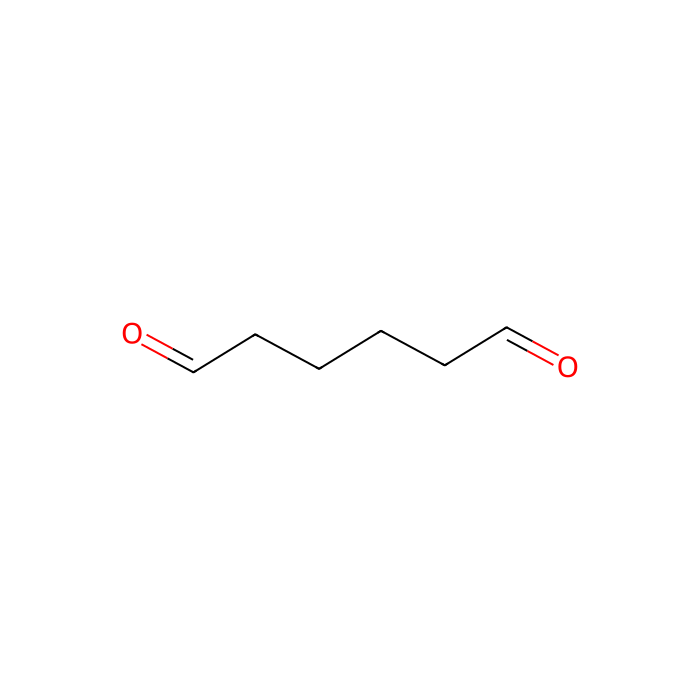
C(CCC=O)CC=O
IUPAC Name
hexanedial
InChIKey
UMHJEEQLYBKSAN-UHFFFAOYSA-N
InChI
1S/C6H10O2/c7-5-3-1-2-4-6-8/h5-6H,1-4H2
Isomères SMILES
C(CCC=O)CC=O
Poids moléculaire
114.15
Reaxys
1633603
Reaxys-RN_link_address
https://www.reaxys.com/reaxys/secured/hopinto.do?context=S&query=IDE.XRN=1633603&ln=

Données avancées

Taxonomic Classification

Taxonomy Tree

KingdomOrganic compounds
SuperclassOrganic oxygen compounds
ClasseOrganooxygen compounds
SubclassCarbonyl compounds
Intermediate Tree Nodes Aldehydes
Direct ParentMedium-chain aldehydes
Alternative Parents Alpha-hydrogen aldehydes  Organic oxides  Hydrocarbon derivatives  
Molecular FrameworkAliphatic acyclic compounds
Substituents Medium-chain aldehyde - Alpha-hydrogen aldehyde - Organic oxide - Hydrocarbon derivative - Aliphatic acyclic compound
DescriptionThis compound belongs to the class of organic compounds known as medium-chain aldehydes. These are an aldehyde with a chain length containing between 6 and 12 carbon atoms.
External Descriptors Fatty aldehydes
Structure 3D
Modèle de structure chimique interactif


Certificats (CoA, COO, BSE/TSE et tableau d'analyse)
C of A & Other Certificates(BSE/TSE, COO):
Analytical Chart:

Find and download the COA for your product by matching the lot number on the packaging.

9 results found

Lot NumberCertificate TypeDateArticle
C2321216C2321216Certificate of AnalysisJan 26, 2026 A302164
C2321178C2321178Certificate of AnalysisJan 26, 2026 A302164
C2321150C2321150Certificate of AnalysisJan 19, 2026 A302164
C2321172C2321172Certificate of AnalysisJan 19, 2026 A302164
C2321173C2321173Certificate of AnalysisJan 19, 2026 A302164
C2321186C2321186Certificate of AnalysisJan 19, 2026 A302164
C2321187C2321187Certificate of AnalysisJan 19, 2026 A302164
C2321188C2321188Certificate of AnalysisJan 19, 2026 A302164
F2520130F2520130Certificate of AnalysisFeb 09, 2023 A302164
Propriétés chimiques et physiques
Point de fusion (°C)-8°C
Poids moléculaire114.14
XLogP3-0.200
Hydrogen Bond Donor Count0
Hydrogen Bond Acceptor Count2
Rotatable Bond Count5
Exact Mass114.068 Da
Monoisotopic Mass114.068 Da
Topological Polar Surface Area34.100 Ų
Heavy Atom Count8
Formal Charge0
Complexity58.900
Isotope Atom Count0
Defined Atom Stereocenter Count0
Undefined Atom Stereocenter Count0
Defined Bond Stereocenter Count0
Undefined Bond Stereocenter Count0
The total count of all stereochemical bonds0
Covalently-Bonded Unit Count1
Sécurité et dangers (GHS)
Pictogramme(s)
Signal
Warning
Mentions de danger

H302:Harmful if swallowed

H312:Harmful in contact with skin

H332:Harmful if inhaled

Conseils de prudence

P261:Avoid breathing dust/fume/gas/mist/vapors/spray.

P264:Wash hands [and …] thoroughly after handling.

P270:Do not eat, drink or smoke when using this product.

P271:Use only outdoors or in a well-ventilated area.

P280:Wear protective gloves/protective clothing/eye protection/face protection.

P330:Rinse mouth.

P363:Wash contaminated clothing before reuse.

P301+P312:IF SWALLOWED: call a POISON CENTER/doctor/... IF you feel unwell.

P302+P352:IF ON SKIN: wash with plenty of water.

P304+P340:IF INHALED: Remove person to fresh air and keep comfortable for breathing.

P501:Dispose of contents/container to an approved waste disposal plant.

Reaxys
1633603
Reaxys-RN_link_address
https://www.reaxys.com/reaxys/secured/hopinto.do?context=S&query=IDE.XRN=1633603&ln=
Calculateurs de solution
Avis

Avis des clients

Application Protocols

No vendor-tested biological application protocols are specified for this item.

General laboratory protocols (literature-style, for chemistry use):

  • Imine formation test reaction:
    • Dissolve adipaldehyde (0.5–1.0 mmol) in anhydrous DCM (5–10 mL) under N2.
    • Add aniline (2.2 mmol) and a catalytic amount of p‑TsOH or a drop of AcOH; stir at rt 1–3 h.
    • Monitor by TLC/IR (loss of aldehyde C=O band). Isolate imine by evaporation and quick silica plug.
  • Reductive amination (batch):
    • Combine adipaldehyde and amine (2.2 equiv) in MeOH; add AcOH (0.2 equiv), then NaBH3CN (2.5 equiv) portionwise at 0–25°C.
    • Stir 2–12 h, quench with saturated NaHCO3, extract with EtOAc, dry, and purify.
  • Oxidation to adipic acid (screening):
    • In t‑BuOH/H2O (1:1), add NaH2PO4 buffer and NaClO2 (2.5–3 equiv) at 0–25°C; stir until aldehyde is consumed.
    • Quench residual oxidant with sulfite, acidify, and isolate the diacid.

These are illustrative starting points; adjust stoichiometry and conditions to your substrate and scale. Always perform appropriate safety assessments before scale-up.

Biological Roles

This product is intended for research use only. No clinical or therapeutic claims are made.

Biochemical context (literature/general):

  • Aliphatic dialdehydes can react with biomolecules through Schiff base formation with lysine side chains or N-termini, leading to crosslinking. While glutaraldehyde is the classical example, adipaldehyde (with a longer C6 spacer) is expected to show analogous reactivity but with altered crosslinking geometry and kinetics.
  • In aqueous systems, aldehydes equilibrate with hydrated forms (gem-diols), which can influence reactivity toward amines and nucleophiles.
  • In enzyme or protein chemistry, dialdehydes are used in vitro to prepare immobilized biocatalysts via covalent attachment to amine-functionalized supports (e.g., forming imine linkages followed by reductive stabilization). Adipaldehyde may serve as a spacer to modulate steric accessibility.

Guidance:

  • Any biological use must be strictly non-clinical and conducted under appropriate biosafety and chemical safety protocols.
  • Reaction outcomes depend strongly on pH, buffer composition, and presence of competing nucleophiles; optimization is essential for reproducibility.

For specific bioconjugation strategies with this dialdehyde, validate conditions empirically and confirm conjugation via orthogonal assays (SDS-PAGE shift, UV/Vis, MS, or activity retention).

Buffer Applications

Adipaldehyde is not a buffering reagent and is not used to prepare pH buffer systems.

  • If used in aqueous media (e.g., bioconjugation screening), choose buffers that lack primary amines (avoid Tris, glycine) to prevent unwanted Schiff base formation. Suitable choices include phosphate, HEPES, or acetate buffers depending on pH, recognizing that aldehydes can hydrate in water.
  • Maintain mildly acidic to neutral conditions to modulate imine formation rates; add reducing agents (e.g., NaBH3CN or picoline borane) only if reductive amination is intended.

For actual buffer preparation guidance, refer to dedicated buffering agents rather than this reagent.

Green Alternatives

As a difunctional aldehyde reagent, greener practice focuses on route design, solvent choice, and oxidation/reduction protocols rather than replacement of the reagent itself.

Greener considerations (literature/general):

  • Solvent selection: Favor bio-based or greener solvents where compatible with the chemistry.

| Application | Conventional | Greener alternative | Trade-offs | |---|---|---|---| | Olefination | DCM, toluene | 2-MeTHF, CPME, anisole | May affect Wittig ylide stability and rates | | Reductive amination | MeOH/EtOH with NaBH3CN | EtOH/i-PrOH with H2, Pd/C or BH3CN-free methods (e.g., formic acid/transfer hydrogenation) | Catalyst handling; over-reduction risk | | Oxidation to adipic acid | HNO3 (legacy) | TEMPO/bleach, Oxone, O2 with nitroxyl catalysts | Selectivity control; aqueous waste | | Extraction/workup | DCM | EtOAc, MTBE | Partitioning and volatility differences |

  • Metrics: Apply PMI, E-factor, and energy minimization; run at ambient temperature where feasible.
  • Protection minimization: Use chemoselective transformations to avoid unnecessary acetal protection/deprotection.
  • Flow chemistry: Continuous processing can improve safety (lower aldehyde inventory) and reduce waste.

Conclusion: Replace hazardous solvents/oxidants with safer alternatives when compatible, and design convergent routes to minimize steps.

Pharmaceutical Uses

No therapeutic or clinical use is claimed. This product is for research use only.

Formulation/manufacturing context (literature/general):

  • Adipaldehyde is not a common pharmacopeial excipient. However, in R&D and materials/process development it may be used as a crosslinking precursor to modify amine-containing polymers (e.g., gelatin, chitosan) to tune mechanical properties of prototype materials.
  • As a synthetic intermediate, it can be converted to adipic acid, 1,6-hexanediol, diamines, or C6-linker fragments that are widely relevant in medicinal chemistry lead optimization and linker design (e.g., in PROTAC-like constructs or polymer–drug conjugates) at the research stage.
  • Regulatory note: For any use in GMP or clinical manufacturing settings, a fully qualified supply (CoA with impurity profile, residual solvents, elemental impurities, stability data) and risk assessment would be required. This listing does not include such qualification.

Practical advice:

  • Avoid amine-containing processing aids unless imine formation is intended.
  • Validate residual aldehyde content in materials via derivatization (e.g., DNPH) and HPLC/UV if material performance or safety testing requires it.
Physical Properties

Item-specific specifications

  • Appearance: Not specified for this item; refer to CoA/Spec Sheet.
  • Molecular formula (Product Data): Not specified for this item; refer to CoA/Spec Sheet.
  • Molecular weight (Product Data): Not specified for this item; refer to CoA/Spec Sheet.

Literature/computed values and general guidance (non-spec)

  • Empirical formula (literature): C6H10O2 (hexane-1,6-dial).
  • Formula weight (literature): 114.14 g/mol.
  • Physical state: Typically a low-melting, low-volatility aliphatic dialdehyde; may appear as a liquid or low-melting solid depending on purity and temperature (literature/general).
  • Solubility: Expected to be miscible with many organic solvents (e.g., alcohols, ethers, chlorinated solvents); limited solubility in water with potential to form geminal diol hydrates (literature/general).
  • Partitioning: Aliphatic dialdehydes are moderately lipophilic but react with nucleophiles; practical behavior in biphasic systems is dominated by reactivity rather than equilibrium partitioning (literature/general).
  • Spectral characteristics: Strong C=O stretch in IR around 1720–1740 cm⁻¹ (aldehyde), and characteristic aldehyde C–H stretch near ~2720–2820 cm⁻¹; 1H NMR shows terminal formyl protons typically ~9.4–10.2 ppm (literature/general).

Note: Numeric values for bp, mp, density, refractive index, UV cutoff, water/peroxide/metal content are not specified for this item; consult the CoA/SDS or measure under your conditions if critical.

Quality and Grades

Item-specific quality information

  • Grade/Purity: Not specified for this item; refer to CoA/Spec Sheet.
  • Stabilizers/Inhibitors: Not specified for this item; refer to CoA/Spec Sheet.

Interpreting grades (general guidance)

  • Research grade: Suitable for most R&D synthetic applications. When reactions are sensitive to trace acids/water (e.g., Wittig, enamine formation), verify residual moisture and acidity.
  • Low-UV/HPLC grade (general definition): Tight control of UV-absorbing impurities and particulates—important if using as a reference standard or monitoring by low-wavelength UV. If your application is chromatographic, request UV specs.
  • Metal content: For catalytic applications (e.g., coupling with sensitive catalysts), ICP metal limits may be important. If critical, request CoA with elemental screening.

Practical quality considerations for dialdehydes

  • Freshness: Aldehydes can oxidize to corresponding acids and can polymerize/oligomerize. Assess purity by 1H NMR (formyl signal integrity), GC/GC-MS, and acid number titration as needed.
  • Water content: Moisture promotes hydrate and acetal formation. Karl Fischer measurement is recommended when water-sensitive chemistry is planned.
  • Inhibitors: Some aldehydes are supplied without stabilizers; if present, stabilizer identity and level should be verified on the CoA.

For regulatory or process use, obtain a full CoA, lot-specific assay, and impurity profile.

Reaction and Applications

Adipaldehyde (hexane-1,6-dial) is a versatile difunctional building block for constructing C6-spaced linkers and for iterative carbonyl chemistry.

Key application areas (literature/general):

  • Double reductive amination: Reaction with primary amines or diamines to afford mono- or bis-imines followed by reduction to secondary/tertiary diamines or macrocyclic linkers.
  • Global reduction: NaBH4, LiAlH4, or catalytic hydrogenation converts both aldehydes to 1,6-hexanediol; selective partial reduction is challenging due to symmetry.
  • Oxidation chemistry: Oxidation to adipic acid (via nitric acid, TEMPO/bleach, or NaClO2 systems) or to mixed aldehyde/acid intermediates under controlled conditions.
  • Olefination: Twofold Wittig/HWE reactions give terminal dienes; Still–Gennari or Horner reagents enable geometry control. Julia–Kocienski olefination is also applicable.
  • Acetalization/protection: Formation of cyclic or acyclic acetals allows temporary masking and orthogonal chemistry on the backbone.
  • Cyclizations/templating: With diamines/diols, can generate macrocycles via bis-imine or bis-acetal formation followed by reduction or further elaboration.
  • Polymer and materials chemistry: Functions as a crosslinker precursor; imine linkages with amine-containing polymers yield dynamic covalent networks (reversible imine chemistry).

Practical tips:

  • Use dry, oxygen-limited conditions to minimize acid formation and self-condensation.
  • Monitor reactions by 1H NMR (formyl region ~9.5–10 ppm) or IR (C=O ~1720–1740 cm⁻¹).
  • For stepwise selectivity, employ protecting groups (e.g., form cyclic acetal at one end) or temporary imine formation to differentiate the two aldehydes.
Reaction Conditions

General conditions below are literature-style guidance (non-item-specific); optimize for your system.

  • Reductive amination: Combine adipaldehyde with amine (1.0–2.5 equiv per carbonyl) in MeOH/EtOH or MeCN, add mild acid (e.g., AcOH) to catalyze imine formation, then reduce in situ with NaBH3CN or by hydrogenation (H2, Pd/C). Control pH ~5–6 to limit overreaction. Monitor disappearance of aldehyde signals (1H NMR, IR).
  • Global reduction to diol: Use NaBH4 in protic solvent at 0–25°C or LAH in THF at 0–25°C under inert atmosphere. Quench cautiously; isolate 1,6-hexanediol by extraction/distillation.
  • Oxidation to diacid: Chlorite oxidation (NaClO2) in buffered aqueous t-BuOH at ambient temperature; or TEMPO/NaOCl at pH ~9–10 in biphasic media. Control oxidant equivalents to avoid over-oxidation byproducts.
  • Double Wittig/HWE: Generate ylide or phosphonate carbanion in dry THF or toluene under inert gas (–78 to 25°C depending on reagent). Add adipaldehyde solution slowly to control exotherm and minimize aldol side reactions; work up under neutral conditions.
  • Acetalization: DCM or toluene, catalytic p‑TsOH or CSA, molecular sieves; reflux with Dean–Stark (in toluene) for water removal.

Monitoring and workup:

  • TLC with DNPH spray for aldehyde visualization; IR (C=O ~1720–1740 cm⁻¹); 1H NMR (formyl ~9.5–10 ppm).
  • Avoid strong bases and prolonged high temperatures, which promote self-condensation and polymerization.
Safety and Handling

GHS and hazard data (Product Data)

  • Signal word: Not specified for this item; refer to SDS.
  • H-statements: Not specified for this item; refer to SDS.
  • GHS classification/pictograms: Not specified for this item; refer to SDS.

General safety guidance for aliphatic dialdehydes (literature/general)

  • Hazards: Aldehydes are typically skin/eye irritants and may cause respiratory irritation. Dialdehydes can crosslink biomolecules (via imine formation) and should be handled to minimize exposure.
  • PPE: Wear chemical-resistant gloves (e.g., nitrile), lab coat, and splash-resistant eye protection. Use in a fume hood to avoid inhalation of vapors/aerosols.
  • Incompatibilities: Strong bases (can cause aldol/self-condensation), strong oxidizers (over-oxidation), reducing agents (uncontrolled reduction), and nucleophiles (amines, hydrazines) that can form adducts/Schiff bases.
  • Peroxide formation: Not generally a peroxide-forming solvent; however, it can oxidize to acids. Monitor for acid formation over time.
  • First aid (overview; defer to SDS):
    • Inhalation: Move to fresh air; seek medical advice if symptoms persist.
    • Skin/eye contact: Immediate decontamination with water for at least 15 minutes; remove contaminated clothing; seek medical attention as needed.
    • Ingestion: Rinse mouth; do not induce vomiting; seek medical advice.
  • Spill response: Contain with inert absorbent, avoid bases/strong nucleophiles; dispose of as hazardous chemical waste.

Always consult the product’s SDS for authoritative hazard, exposure limits, and emergency procedures.

Solvent Selection

This product is a bifunctional aldehyde reagent rather than a solvent. However, solvent choice is critical to its handling and reactivity.

  • Polarity class (reagent behavior): Moderately polar, protic-reactive carbonyl compound; avoid strong nucleophilic or basic media if oligomerization is a concern.
  • Recommended solvent classes (literature/general):
    • Non-protic, moderately polar: Dichloromethane, toluene, ethyl acetate for extractions and routine reactions.
    • Etheral/amine-free media for imine chemistry: Anhydrous THF, DCM, MeCN (avoid primary amines unless intended reaction).
    • Alcohols: Use cautiously; can form acetals/hemiacetals under acidic conditions.
  • Water: Limited solubility; hydration to gem-diols can occur. Aqueous systems are suitable only when hydrate formation is acceptable (e.g., analytical workup) or for controlled oxidations.
  • Comparison (general):

| Scenario | Preferred solvent | |---|---| | Reductive amination | MeOH, EtOH, or MeCN with controlled acid; or DCM with silane-based reductants | | Wittig/olefination | Anhydrous THF or toluene under inert atmosphere | | Oxidation to diacid | Aqueous-organic biphasic (e.g., t-BuOH/H2O) with NaClO2 or buffered oxidants | | Acetalization/protection | Toluene or DCM with catalytic acid and drying agent |

Choose solvents based on the intended transformation and sensitivity to water/nucleophiles.

Storage and Reconstitution

Item-specific storage and shipping

  • Storage Conditions (Product Data): Store at −20°C.
  • Shipped In (Product Data): Ice chest + ice pads.

General storage guidance for dialdehydes (literature/general)

  • Atmosphere: Store under inert gas (e.g., nitrogen/argon) to limit oxidation to carboxylic acids.
  • Moisture/light: Keep tightly sealed in a dry, amber vial to minimize hydration and photochemical degradation.
  • Aliquoting: If frequent use is anticipated, aliquot upon receipt to avoid repeated freeze–thaw cycles and headspace oxygen exchange.
  • Stabilizers: None specified for this item; refer to CoA/Spec Sheet. If present, note that acidic stabilizers can influence sensitive reactions.
  • Thawing/handling: Allow vial to warm to room temperature in a desiccator before opening to prevent moisture condensation. Withdraw using dry syringes/pipettes.
  • Short-term storage: For operational convenience, refrigerated storage (2–8°C) under inert gas may be acceptable for short periods; return to −20°C for long-term stability.
  • Solution stability: Prepare anhydrous stock solutions in dry, aprotic solvents (e.g., DCM, THF) immediately before use. Store solutions at low temperature and use promptly; avoid alcohols if acetalization is a concern.

Dispose of expired or oxidized material according to institutional hazardous waste protocols. Always consult the SDS for detailed stability and incompatibility information.

Structure and Identity

Overview

  • Item: Adipaldehyde (commonly known in literature as hexane-1,6-dial)
  • SKU: A302164
  • CAS: 1072-21-5
  • PubChem CID (Product Data): 70620
  • InChIKey (Product Data): 363567
  • SMILES (literature): O=CHCCCCCHO
  • Research Use: For research use only

Structural features (literature/general chemistry)

  • Molecular formula (literature): C6H10O2
  • Molecular weight (literature): 114.14 g/mol
  • Functional groups: Two terminal aldehydes (–CHO) at C1 and C6; linear aliphatic chain of four methylene units between them.
  • 2D description (text): An unbranched six‑carbon chain bearing an aldehyde at each terminus: O=CH–(CH2)4–CHO. No rings, no stereocenters.
  • Reactivity handles: Dialdehyde enables bis-imine formation with diamines, double Wittig/olefination, bis-acetal formation, global reduction to diol, and oxidation to diacid.

Notes on identifiers

  • The InChIKey in Product Data is provided as-is. For any registration or regulatory submissions, consult the CoA/SDS and confirm structure identifiers with your informatics team or authoritative databases.
  • If you require an exact structural file (SDF/Molfile), contact Aladdin Scientific Technical Support.
Synthetic Utility

Functional group set: Two terminal aldehydes separated by a four-carbon spacer. This symmetry offers robust difunctional entry points for convergent synthesis.

Transformations (literature/general):

  • Reductive amination → secondary/tertiary diamines; macrocyclizations with diamines possible.
  • Reduction → 1,6-hexanediol (NaBH4, LAH, or catalytic H2/Pd). Chemo- and chemoselectivity strategies involve temporary protection of one aldehyde as an acetal/oxazolidine.
  • Oxidation → adipic acid (NaClO2, TEMPO/NaOCl, or catalytic O2 systems); stop at aldehyde/acid for ω-formyl carboxylic acids.
  • Olefination → terminal dienes via twofold Wittig/HWE; access to telechelic alkenes for further functionalization (hydroboration–oxidation, epoxidation).
  • Acyl anion equivalents → Corey–Seebach umpolung via dithioacetal formation enables homologations and coupling strategies.
  • Formation of bis-hemiacetals/acetals → temporary protection or template for subsequent selective elaboration.

Strategic use:

  • Linker installation: The C6 span is valuable for spacing pharmacophores or surface modifiers; dialdehyde allows late-stage dual install through orthogonal imine chemistry then reduction.
  • Divergent synthesis: Mask one end, functionalize the other, then unmask to iterate. This enables preparation of ω-functionalized C6 building blocks.
  • Analytical handle: Aldehyde tag allows rapid derivatization (oxime, hydrazone) for tracking and purification.

Notes: Control base strength to avoid aldol/self-condensation; employ inert atmosphere and dry solvents to maintain aldehyde integrity.

Target Specificity

Not applicable. This product is a small-molecule chemical reagent, not a biological targeting agent, antibody, or ligand with defined target specificity.

  • No antigen/epitope, clone, or isotype information applies.
  • For applications involving bioconjugation, any “specificity” arises from chosen reaction partners (e.g., primary amines) rather than inherent biological target recognition.

Foire aux questions

What is the purity of this product?
This product is supplied at ≥95% purity (chemical assay). Lot-specific values are stated on the Certificate of Analysis.
How should this product be stored?
Store at ?20 °C. Freezer storage is required to maintain the specified shelf life.
How is this product shipped?
This product ships in an insulated container with ice pads. Unpack on arrival and transfer it to the storage condition stated above.
What are the CAS number, molecular formula and molecular weight?
The CAS Number is 1072-21-5, the molecular formula is C6H10O2, and the molecular weight is 114.15 g/mol. InChIKey UMHJEEQLYBKSAN-UHFFFAOYSA-N.
What documentation is provided?
Available product documentation, including Certificates of Analysis (COA), Safety Data Sheets (SDS), and specification sheets, is shown in the product document area. Document availability and access follow the current site policy.

Souhaitez-vous que nous vous envoyions un message lorsque des réductions seront disponibles?

Me rappeler plus tard

Merci ! Veuillez vérifier votre boîte de réception e-mail pour confirmer.

Oups ! Les notifications sont désactivées.