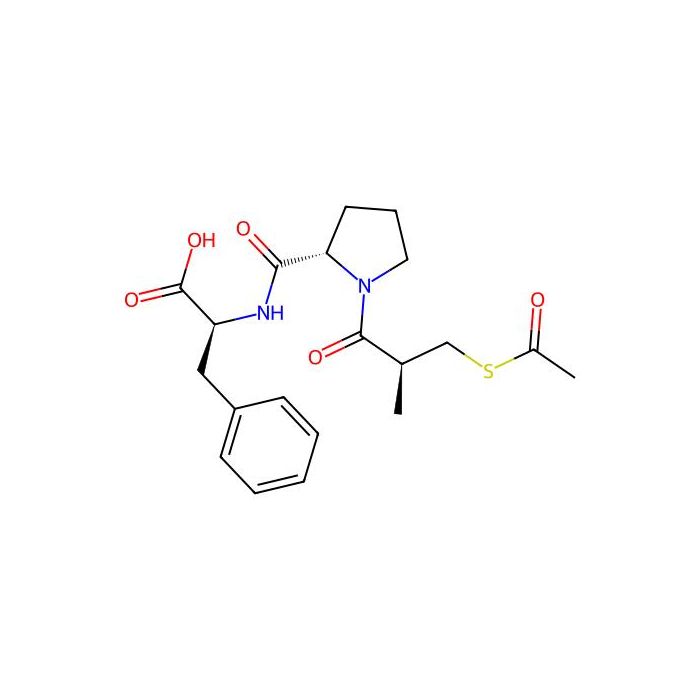
This compound belongs to the class of organic compounds known as dipeptides. These are organic compounds containing a sequence of exactly two alpha-amino acids joined by a peptide bond.
External Descriptors
Not available
1. Djoumbou Feunang Y, Eisner R, Knox C, Chepelev L, Hastings J, Owen G, Fahy E, Steinbeck C, Subramanian S, Bolton E, Greiner R, and Wishart DS. ClassyFire: Automated Chemical Classification With A Comprehensive, Computable Taxonomy. Journal of Cheminformatics, 2016, 8:61.
Certificats (CoA, COO, BSE/TSE et tableau d'analyse)
C of A & Other Certificates(BSE/TSE, COO):
Analytical Chart:
Propriétés chimiques et physiques
Poids moléculaire
406.500 g/mol
XLogP3
2.100
Hydrogen Bond Donor Count
2
Hydrogen Bond Acceptor Count
6
Rotatable Bond Count
9
Exact Mass
406.156 Da
Monoisotopic Mass
406.156 Da
Topological Polar Surface Area
129.000 Ų
Heavy Atom Count
28
Formal Charge
0
Complexity
591.000
Isotope Atom Count
0
Defined Atom Stereocenter Count
3
Undefined Atom Stereocenter Count
0
Defined Bond Stereocenter Count
0
Undefined Bond Stereocenter Count
0
The total count of all stereochemical bonds
0
Covalently-Bonded Unit Count
1
Calculateurs de solution
Molarity Calculator
Determine the necessary mass, volume, or concentration for preparing a solution.
Dilution Calculator
Determine the dilution needed to prepare a stock solution.
Reconstitution Calculator
Avis
Avis des clients
Application Protocols
Item-specific tested applications and protocols: Not specified for this item; refer to CoA/Spec Sheet.
General example workflows (for planning; adjust to your system):
Preparation of reference standard solution: Accurately weigh ~10 mg into a volumetric flask, dissolve in DMSO or methanol, and dilute to 10 mL to yield a 1 mg/mL primary stock. Prepare working standards in mobile phase or diluent near initial LC conditions. Record exact solvent composition for traceability.
Enzyme assay stock preparation: Dissolve to 10–50 mM in DMSO; aliquot and store at −20°C. Immediately prior to assay, dilute to the desired concentration keeping final DMSO ≤1% v/v. Verify absence of precipitation by visual check and, if necessary, by quick analytical HPLC.
Forced-degradation screening: Subject aliquots to 0.1 M HCl, 0.1 M NaOH, 3% H2O2, heat (60–80°C), and light per internal SOPs. Neutralize as required and analyze by stability-indicating LC–MS to build a degradant library.
Always validate any protocol in your laboratory setting and consult the SDS for safety guidance.
Biological Roles
General/literature context (no clinical/therapeutic claims):
Alacepril is commonly categorized as a peptidomimetic prodrug within the angiotensin-converting enzyme (ACE; peptidyl-dipeptidase A) inhibitor class. Such compounds interact with the ACE active site, which contains a catalytic zinc ion and processes peptide substrates via dipeptidyl carboxypeptidase activity.
Prodrug rationale: Masking of a free thiol functional group (common in sulfhydryl ACE inhibitors) can improve physicochemical and organoleptic properties. In biochemical systems, prodrug forms can undergo hydrolytic transformation to reveal the thiol-containing active species, enabling coordination with the ACE Zn(II) center in model assays.
Research utility: Alacepril serves as a tool compound for studying ACE binding interactions, zinc-dependent protease inhibition mechanisms, and structure–property relationships across ACE inhibitor subclasses (sulfhydryl-based vs. phosphinic vs. dicarboxylate types).
Metabolic/enzymatic pathways (in vitro perspective): Hydrolysis and possibly redox transformations of sulfur-containing moieties can be explored using liver microsomes, S9 fractions, or purified esterases/peptidases to delineate conversion kinetics and metabolite identities.
Notes:
Exact biochemical parameters (Ki, IC50, kinetic constants) are context- and method-dependent and are not specified for this item; consult primary literature for system-specific values.
Use appropriate controls (e.g., captopril, enalaprilat) to benchmark assay performance and to differentiate prodrug activation steps from target engagement.
Buffer Applications
This compound is not a buffering agent and is not typically used to prepare buffer systems. However, it is frequently handled in buffered solutions for biochemical assays.
Practical guidance (general):
Stock preparation: Dissolve in DMSO or another suitable organic solvent to make a concentrated stock; dilute into assay buffer immediately before use to minimize precipitation.
Common assay buffers: Phosphate-buffered saline (PBS), HEPES, or Tris buffers are frequently used for ACE-related in vitro studies. Select buffer pH to match assay requirements and the ionization state compatible with solubility and target binding.
Ionic strength and cofactors: Maintain physiological ionic strength (e.g., 100–150 mM NaCl) and include Zn(II) only if required by the enzyme preparation (ACE is Zn-dependent). Avoid chelators (e.g., EDTA) when studying ACE activity unless specifically part of a control experiment.
Item-specific buffer specifications: Not specified for this item; refer to CoA/Spec Sheet or your protocol.
Green Alternatives
Because Alacepril is used mainly as a reference compound or assay analyte, “green” considerations focus on solvent choice and waste minimization rather than replacement of the compound itself.
Greener solvent choices (general guidance):
Prefer water or aqueous buffers where chemically compatible (e.g., after preparing a small DMSO concentrate and diluting into buffer immediately before use).
Among organic solvents, ethanol and isopropanol are generally greener than acetonitrile or DMF. Methanol has favorable biodegradability but higher toxicity than ethanol; use with appropriate controls.
For chromatography, explore water-rich gradients and ethanol-modified mobile phases when method requirements allow; acetonitrile use can be reduced by optimizing stationary phase and temperature.
Comparison (illustrative):
DMSO vs ethanol: DMSO offers broad solvency and sample stability; ethanol is greener but may offer lower solubility. A hybrid approach uses minimal DMSO stock followed by ethanol/water dilution.
Acetonitrile vs ethanol/water: Acetonitrile provides sharp peaks and strong elution strength; ethanol/water can be viable on modern columns at elevated temperature (e.g., 40–50°C) with longer run times.
Operational practices:
Scale down assays and calibration ranges to reduce solvent consumption.
Use multi-use stock solutions aliquoted to avoid repeated thaw/freeze and waste.
Segregate halogen-free organic waste for energy recovery programs where locally permitted.
Note: No specific “alternative compound” applies; the choice of greener workflows should be guided by analytical performance and stability of Alacepril under those conditions.
Pharmaceutical Uses
Scope of this section is limited to formulation/manufacturing research and analytical control; no clinical/therapeutic claims are made.
Research/formulation roles:
Reference standard: Suitable for developing and validating stability-indicating methods in quality control laboratories and for use as a system suitability standard in chromatographic assays.
Degradation pathway elucidation: Forced-degradation studies in development labs to characterize hydrolysis and oxidation products of sulfur-containing prodrug scaffolds.
Preformulation screening: Assessment of solubility, pH-dependent ionization, and salt formation to inform potential formulation strategies (e.g., solid-state selection, excipient compatibility).
Impurity profiling: Use as a comparator when profiling related substances in synthetic routes or during storage.
Regulatory/compendial context:
Pharmacopeial monograph status is not specified for this item. Users should consult relevant pharmacopeias and regulatory guidance applicable to their jurisdiction for acceptance criteria and analytical tests.
Item-specific grade/purity, residual solvents, and polymorph information: Not specified for this item; refer to CoA/Spec Sheet.
Physical Properties
Item-specific specifications:
Appearance: Not specified for this item; refer to CoA/Spec Sheet.
Molecular Weight: Not specified for this item; refer to CoA/Spec Sheet.
Molecular Formula: Not specified for this item; refer to CoA/Spec Sheet.
Melting point (MP): Not specified for this item; refer to CoA/Spec Sheet.
Boiling point (BP): Not applicable for a nonvolatile, peptide-like small molecule; specific value not specified for this item; refer to CoA/Spec Sheet.
Density: Not specified for this item; refer to CoA/Spec Sheet.
Refractive index: Not applicable (solid); not specified for this item; refer to CoA/Spec Sheet.
Solubility: Not specified for this item; refer to CoA/Spec Sheet.
LogP, pKa: Not specified for this item; refer to CoA/Spec Sheet.
Compound class suggests moderate-to-high polarity due to carboxylic acid and amide groups; many researchers dissolve such ACE-inhibitor standards in DMSO to prepare stock solutions, with subsequent dilution into aqueous buffers.
Ionizable carboxyl group(s) may enhance aqueous solubility at basic pH; salts (e.g., sodium) may display improved water solubility relative to the free acid.
Hygroscopicity can vary; minimize exposure to ambient moisture until exact behavior is confirmed.
Practical tips:
Perform a small-scale solubility screen (water, PBS, 0.1 M NaOH, MeOH, acetonitrile, DMSO) before committing precious material. Filter or centrifuge to remove undissolved solids.
If preparing analytical standards, use dry, HPLC-grade solvents and record exact solvent composition to ensure retention-time reproducibility.
Quality and Grades
Item-specific grade/purity: Not specified for this item; refer to CoA/Spec Sheet.
Interpretation and guidance:
In the absence of an explicit grade, users should rely on the Certificate of Analysis (CoA) for batch-specific assay/purity, residual solvent profile, related substances/impurities, and water content.
For analytical applications (e.g., reference standard, method development), look for specifications such as: chromatographic purity by HPLC/UPLC, identification by MS/NMR, and tight limits on related compounds. UV transparency may be relevant for diode-array detection but is typically secondary for peptide-like, non-chromophoric APIs.
For biochemical assays (e.g., ACE inhibition studies), ensure low levels of acidic/basic impurities and salts that could affect pH or ionic strength in enzyme assays. If necessary, perform a quick pre-use check by HPLC to verify a single major peak and acceptable impurity levels.
Stabilizers: None specified for this item. If your workflow is sensitive to oxidation/hydrolysis, consider preparing fresh solutions and minimizing freeze–thaw events; add-on stabilizers only if compatible with your assay.
Trace metals/UV cutoff/peroxide content: Not specified for this item; refer to CoA/Spec Sheet.
Documentation:
Aladdin provides batch-level CoA on request; reference to pharmacopeial monographs (if applicable in your jurisdiction) may guide additional tests such as identity (IR/NMR), assay, and related substances.
Reaction and Applications
This product is primarily used as a research chemical/analytical reference rather than as a synthetic reagent. Typical laboratory applications include:
Analytical and bioanalytical uses (research use only):
Reference standard for method development and validation (HPLC/UPLC-UV, LC–MS/MS), including calibration curves, system suitability, and stability-indicating methods.
Matrix spiking for recovery/linearity assessments in biological fluids or formulation extracts.
Forced-degradation studies (acid/base hydrolysis, oxidative, thermal, photolytic) to define impurity/degradant profiles and to support stability-indicating methods.
Biochemical/enzymology research:
In vitro evaluation in ACE-related enzymatic assays and structure–activity relationship (SAR) comparisons within sulfhydryl-containing ACE inhibitor classes (no clinical use implied).
Hydrolysis/prodrug-conversion studies to characterize transformation to active thiol-containing species under physiological-like conditions.
Practical tips:
Prepare fresh solutions and protect from strong oxidants if studying sulfur-containing functionality. Evaluate stability in chosen diluent at intended temperature/time.
For LC–MS quantitation, include isotopically labeled internal standards where possible; otherwise, employ matrix-matched calibration to mitigate ion suppression.
Document exact salt/form (if any) and hydrate state from the CoA; these affect gravimetric assay calculations and concentration reporting.
Reaction Conditions
This product is typically used as a reference analyte rather than as a reagent. Accordingly, “reaction conditions” are most relevant to degradation, hydrolysis, or analytical sample preparation rather than synthetic transformations.
General/literature guidance for studies involving Alacepril (verify experimentally):
Hydrolysis/prodrug-conversion: Evaluate in buffered aqueous media across pH 2–9 at 25–37°C. Monitor by HPLC or LC–MS to determine rate constants and identify thiol-containing products. Avoid strong oxidants to preserve sulfur in the intended oxidation state.
Oxidative stress testing: H2O2 or air/heat exposure can be used in forced-degradation screens to map susceptibility of sulfur functionalities; quench oxidants promptly and analyze immediately to minimize secondary reactions.
Photostability: Assess under ICH Q1B-like conditions using a photostability chamber; track primary degradants and potential disulfide formation if a thiol is liberated.
Sample preparation: For LC–MS, typical diluent is 50:50 water–acetonitrile or water–methanol with 0.1% formic acid or volatile buffers (e.g., 5–10 mM ammonium formate). Keep DMSO below 1–2% in final injectables to maintain chromatographic performance.
Expected yields/times: Not applicable; this is not a preparative reaction substrate in routine workflows.
Note: No item-specific kinetic or stability constants are provided; consult CoA and primary literature for detailed parameters.
Safety and Handling
Item-specific hazard data from Product Data:
Signal Word: Not specified for this item; refer to SDS.
H-Statements: Not specified for this item; refer to SDS.
GHS Classification: Not specified for this item; refer to SDS.
Pictograms: Not specified for this item; refer to SDS.
General laboratory safety guidance (not a substitute for the SDS):
Personal protective equipment: lab coat, safety glasses, and appropriate chemical-resistant gloves (e.g., nitrile). Handle powders in a fume hood to minimize inhalation of dust/aerosols.
Avoid contact with skin, eyes, and clothing. Prevent ingestion and inhalation. Wash thoroughly after handling.
Incompatibilities: Strong oxidizers may react with organosulfur-containing compounds; avoid mixing unless compatibility is documented. For solutions, avoid prolonged contact with reactive metals.
First aid overview: In case of skin/eye contact, rinse with water for at least 15 minutes and seek medical attention as needed. If inhaled, move to fresh air. If swallowed, rinse mouth; do not induce vomiting; seek medical attention. Always follow institutional protocols.
Spill/accidental release: Avoid dust formation; sweep up solid carefully or use damp disposable wipes, place in appropriate waste container. For solutions, absorb on inert material (vermiculite), dispose per regulations.
Fire safety: Use CO2, dry chemical, or foam extinguishers compatible with organic solids. Combustion may produce irritating/toxic fumes; firefighters should wear SCBA.
Always consult the product’s SDS for authoritative, item-specific hazard information and recommended control measures.
Solvent Selection
Applicability: Alacepril is a polar, peptide-like small molecule. Solvent selection mainly concerns preparation of analytical standards, biological assay stocks, and compatibility with purification methods.
General selection guidance (literature/practice):
Primary solvents for stock solutions: DMSO (common for 10–50 mg/mL stocks), methanol, or acetonitrile. Verify solubility empirically; begin with 1–5 mg/mL.
Aqueous buffers: Solubility typically increases with pH above the pKa of the carboxyl group(s). Prepare concentrated stocks in DMSO, then dilute into buffer immediately prior to use to minimize precipitation.
Miscibility profile: DMSO, methanol, ethanol, acetonitrile, and water (as salts/buffers) are commonly compatible; avoid nonpolar solvents unless supported by data.
Sample prep for LC: Choose the diluent close to initial mobile phase composition to avoid peak distortion; filter through 0.2 μm PTFE/nylon filters.
When to choose alternatives:
For cell-free enzymology: Low DMSO fractions (<1–2% v/v) are generally well tolerated; consider methanol as an alternative if DMSO affects the assay.
For mass spectrometry: Acetonitrile/water with 0.1% formic acid or ammonium formate often gives better ionization than methanol in positive mode; evaluate negative mode for carboxylate-rich species.
Notes:
Exact solubility, pKa, and partitioning are not specified for this item; refer to CoA/Spec Sheet and perform a small solubility screen before scale-up.
Upon receipt: Allow the sealed container to equilibrate to room temperature before opening to minimize condensation. Reseal promptly after use. If provided as a powder/solid, protect from ambient moisture.
Long-term storage: Keep tightly closed in a desiccated environment at −20°C, protected from light. Minimize freeze–thaw cycles.
Solution stability: Item-specific solution stability is not specified; prepare fresh working solutions as needed. For longer storage, aliquot concentrated stocks (e.g., in DMSO or methanol) into inert vials, flush headspace with inert gas if feasible, and freeze at −20°C or below.
Reconstitution: Solvent choice is assay-dependent. Begin with DMSO or methanol to create a concentrated stock, then dilute into aqueous buffer immediately before use. Filter sterile solutions through 0.2 μm filters if sterility is required for your application.
Compatibility cautions: Avoid strong oxidants and prolonged exposure to basic/acidic conditions unless intentionally performing degradation studies.
Label claims and specifications (purity, water content, residual solvents): Not specified for this item; refer to CoA/Spec Sheet.
Research Use Note: For research use only.
Structure and Identity
Short description: Alacepril is a small-molecule peptidomimetic ACE-inhibitor prodrug commonly used as a research standard and reference compound in enzymology and ADME studies.
Item-specific identifiers (from Product Data):
SKU: A1072315
Product Name: Alacepril
CAS: 74258-86-9
InChIKey: 82778 (as provided)
Molecular Formula: Not specified for this item; refer to CoA/Spec Sheet.
Molecular Weight: Not specified for this item; refer to CoA/Spec Sheet.
SMILES: Not specified for this item; refer to CoA/Spec Sheet.
Structural features (general/literature description; for reference only):
Alacepril belongs to the sulfhydryl-containing ACE inhibitor class and is typically described as a prodrug that is enzymatically/chemically converted in vivo to its active thiol form. It is a peptidomimetic structure with peptide/amide linkages and a terminal carboxylate functionality common to ACE inhibitors. A sulfur-containing moiety (e.g., thioester/thiol-related functionality) is characteristic of this class.
2D structure (literature; descriptive): a dipeptidic backbone bearing a pendant sulfur-containing group and a terminal carboxylic acid; amide bonds confer rigidity, while the acid/amide groups render the scaffold polar and capable of hydrogen bonding.
Notes:
Exact stereochemistry, ring presence/absence, and definitive connectivity should be confirmed from the Certificate of Analysis (CoA), structure drawing, or primary references. Use the provided CAS to retrieve authoritative structure records when needed.
Synthetic Utility
As a finished small-molecule reference compound, Alacepril is not typically employed as a building block. Nevertheless, it has utility in synthetic and analytical chemistry contexts:
Synthetic route benchmarking: Serves as a target molecule for validating peptide-coupling and thio-functionalization strategies in process-development studies for ACE-inhibitor analogs.
Deprotection/hydrolysis studies: Model substrate for studying selective cleavage of thioester/amide protecting groups under mild aqueous or enzymatic conditions.
Chiral method development: Useful for evaluating chiral stationary phases and derivatization strategies if stereocenters are present (typical in peptidomimetic ACE inhibitors), aiding in enantiomeric/diastemeric ratio determinations.
Spectroscopic assignment: Provides a testbed for assigning amide-related NMR signals, sulfur-containing functional group resonances, and carboxylate IR bands relevant to peptidomimetic scaffolds.
Caveats:
Because item-specific functional group details and stereochemistry are not provided here, confirm structure from CoA/primary literature before designing transformations or analog syntheses.
Where stability is a concern, conduct reactions under inert atmosphere and at controlled temperatures; monitor by LC–MS to capture transient intermediates and potential sulfur redox species.
Target Specificity
No antibody or biologic targeting information is applicable to this small-molecule product.
Item-specific data available: None provided.
Note: In biochemical research contexts, Alacepril is discussed with respect to the enzyme angiotensin-converting enzyme (ACE) as a mechanistic target class; however, target-binding constants or selectivity panels are not specified for this item and should be sourced from primary literature. This section is reserved for antibody/biologic specificity when applicable.
Foire aux questions
What is the purity of this product?
This product is supplied at ≥98% purity (chemical assay). Lot-specific values are stated on the Certificate of Analysis.
How should this product be stored?
Store at ?20 °C. Freezer storage is required to maintain the specified shelf life.
How is this product shipped?
This product ships in an insulated container with ice pads. Unpack on arrival and transfer it to the storage condition stated above.
What are the CAS number, molecular formula and molecular weight?
The CAS Number is 74258-86-9, the molecular formula is C20H26N2O5S, and the molecular weight is 406.5 g/mol. InChIKey FHHHOYXPRDYHEZ-COXVUDFISA-N.
What documentation is provided?
Available product documentation, including Certificates of Analysis (COA), Safety Data Sheets (SDS), and specification sheets, is shown in the product document area. Document availability and access follow the current site policy.
We use cookies to ensure the website functions properly and, where permitted, to improve your experience. You can manage your preferences at any time in Settings. Learn more in our Cookie Policy.
Shall we send you a message when we have discounts available?
Remind me later
Thank you! Please check your email inbox to confirm.
Products are supplied to verified businesses, institutions, and qualified professionals for research and development use only. Not for use in humans, animals, diagnosis, or therapy.