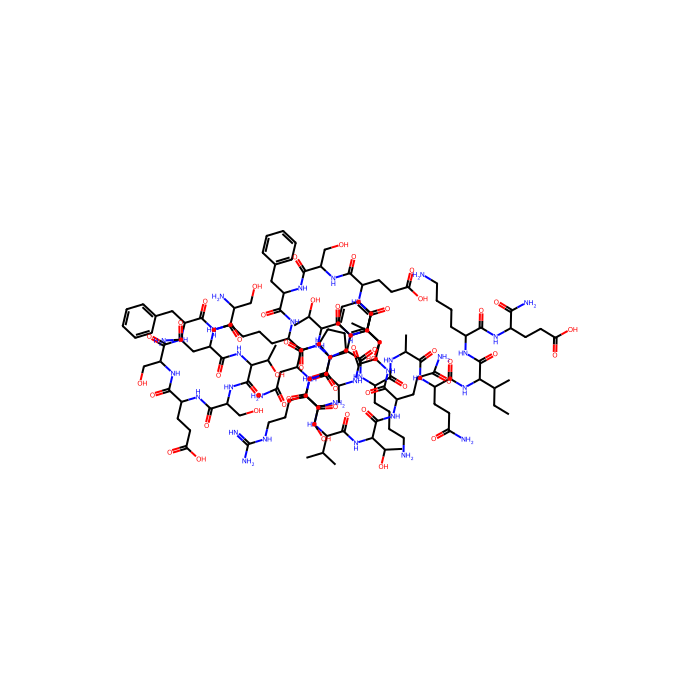
AUNP-12 - 10mM in Water , CAS No.1353563-85-5

CAS: 1353563-85-5 Cat. No.: A421343 Formule: C142H226N40O48 C2HF3O2 Poids moléculaire: 3375.57 PubChem CID: 154701623
DISPONIBLE À COMMANDE
GRADE & PURITY 10mM in Water
Synonyms
AUNP-12|1353563-85-5|CHEMBL4635204|EX-A7438
Storage
Store at -80°C
Shipped In
Dry ice packs + Cold packs
★
Size
Allemagne (EU)
USA*
Price
Qty
1ml
A421343-1ml
Sur commande · 8–12 semaines

178,67€

209,91€
Enregistrer 31,24 € (14.88%)
Enter a quantity for the sizes you want to add.
🧪

Why this grade

10mM in Water for sensitive chromatographic and analytical workflows requiring minimal baseline interference.

🌡

Storage & shipping

Store at -80°C Ships Dry ice packs + Cold packs Check lot-specific COA for exact specifications.

📋

Quality documents

SDS, COA, datasheet, and spec sheet available for download. Lot-specific COA accessible via lot number lookup.

📚

Literature proof

Cited in 0 peer-reviewed publications across chromatography, organic synthesis, and cross-coupling reactions.

Specifications

Synonymes
AUNP-12 | 1353563-85-5 | CHEMBL4635204 | EX-A7438
Spécifications et pureté
10mM in Water
Mécanismes biochimiques et physiologiques
AUNP-12 is an immune checkpoint modulator and also a PD-1 pathway inhibitor.
Conditions de stockage de stockage
Store at -80°C
Expédié en
Dry ice packs + Cold packs
Ce produit nécessite l'expédition en chaîne froide. Les services terrestres et autres services économiques ne sont pas disponibles.
Type d'action
ANTAGONIST
Noms et identifiants
Sourires canoniquesCCC(C)C(C(=O)NC(CCCCN)C(=O)NC(CCC(=O)O)C(=O)N)NC(=O)C(CCC(=O)N)NC(=O)C(C)NC(=O)C(CCCCN)NC(=O)C1CCCN1C(=O)C(C)NC(=O)C(CC(C)C)NC(=O)C(CCC(=O)N)NC(=O)C(C(C)O)NC(=O)C(C(C)C)NC(=O)C(CCCNC(=N)N)NC(=O)C(CC2=CC=CC=C2)NC(=O)C(CCCCNC(=O)C(CC3=CC=CC=C3)NC(=O)C(CO)NC(=O)C(CCC(=O)O)NC(=O)C(CO)NC(=O)C(C(C)O)NC(=O)C(CC(=O)N)NC(=O)C(CO)N)NC(=O)C(CC4=CC=CC=C4)NC(=O)C(CO)NC(=O)C(CCC(=O)O)NC(=O)C(CO)NC(=O)C(C(C)O)NC(=O)C(CC(=O)N)NC(=O)C(CO)N
IUPAC Name(4S)-5-amino-4-[[(2S)-6-amino-2-[[(2S,3S)-2-[[(2S)-5-amino-2-[[(2S)-2-[[(2S)-6-amino-2-[[(2S)-1-[(2S)-2-[[(2S)-2-[[(2S)-5-amino-2-[[(2S,3R)-2-[[(2S)-2-[[(2S)-2-[[(2S)-2-[[(2S)-2,6-bis[[(2S)-2-[[(2S)-2-[[(2S)-2-[[(2S)-2-[[(2S,3R)-2-[[(2S)-4-amino-2-[[(2S)-2-amino-3-hydroxypropanoyl]amino]-4-oxobutanoyl]amino]-3-hydroxybutanoyl]amino]-3-hydroxypropanoyl]amino]-4-carboxybutanoyl]amino]-3-hydroxypropanoyl]amino]-3-phenylpropanoyl]amino]hexanoyl]amino]-3-phenylpropanoyl]amino]-5-carbamimidamidopentanoyl]amino]-3-methylbutanoyl]amino]-3-hydroxybutanoyl]amino]-5-oxopentanoyl]amino]-4-methylpentanoyl]amino]propanoyl]pyrrolidine-2-carbonyl]amino]hexanoyl]amino]propanoyl]amino]-5-oxopentanoyl]amino]-3-methylpentanoyl]amino]hexanoyl]amino]-5-oxopentanoic acid
InChIKeyZBJUUYIGBAQYBN-QKLNNLIKSA-N
INCHI1S/C142H226N40O48/c1-12-70(6)109(137(226)165-84(37-23-26-52-144)119(208)158-81(113(151)202)43-48-105(196)197)178-125(214)87(42-47-102(148)193)159-114(203)71(7)156-118(207)82(36-22-25-51-143)164-135(224)100-40-29-55-182(100)141(230)72(8)157-126(215)90(56-68(2)3)169-121(210)86(41-46-101(147)192)166-138(227)112(75(11)191)181-136(225)108(69(4)5)177-124(213)85(39-28-54-155-142(152)153)161-127(216)92(58-77-32-18-14-19-33-77)171-120(209)83(160-128(217)93(59-78-34-20-15-21-35-78)172-134(223)97(65-186)174-123(212)89(45-50-107(200)201)163-132(221)99(67-188)176-140(229)111(74(10)190)180-130(219)95(61-104(150)195)168-116(205)80(146)63-184)38-24-27-53-154-117(206)91(57-76-30-16-13-17-31-76)170-133(222)96(64-185)173-122(211)88(44-49-106(198)199)162-131(220)98(66-187)175-139(228)110(73(9)189)179-129(218)94(60-103(149)194)167-115(204)79(145)62-183/h13-21,30-35,68-75,79-100,108-112,183-191H,12,22-29,36-67,143-146H2,1-11H3,(H2,147,192)(H2,148,193)(H2,149,194)(H2,150,195)(H2,151,202)(H,154,206)(H,156,207)(H,157,215)(H,158,208)(H,159,203)(H,160,217)(H,161,216)(H,162,220)(H,163,221)(H,164,224)(H,165,226)(H,166,227)(H,167,204)(H,168,205)(H,169,210)(H,170,222)(H,171,209)(H,172,223)(H,173,211)(H,174,212)(H,175,228)(H,176,229)(H,177,213)(H,178,214)(H,179,218)(H,180,219)(H,181,225)(H,196,197)(H,198,199)(H,200,201)(H4,152,153,155)/t70-,71-,72-,73+,74+,75+,79-,80-,81-,82-,83-,84-,85-,86-,87-,88-,89-,90-,91-,92-,93-,94-,95-,96-,97-,98-,99-,100-,108-,109-,110-,111-,112-/m0/s1
Isomères SMILES CC[C@H](C)[C@@H](C(=O)N[C@@H](CCCCN)C(=O)N[C@@H](CCC(=O)O)C(=O)N)NC(=O)[C@H](CCC(=O)N)NC(=O)[C@H](C)NC(=O)[C@H](CCCCN)NC(=O)[C@@H]1CCCN1C(=O)[C@H](C)NC(=O)[C@H](CC(C)C)NC(=O)[C@H](CCC(=O)N)NC(=O)[C@H]([C@@H](C)O)NC(=O)[C@H](C(C)C)NC(=O)[C@H](CCCNC(=N)N)NC(=O)[C@H](CC2=CC=CC=C2)NC(=O)[C@H](CCCCNC(=O)[C@H](CC3=CC=CC=C3)NC(=O)[C@H](CO)NC(=O)[C@H](CCC(=O)O)NC(=O)[C@H](CO)NC(=O)[C@H]([C@@H](C)O)NC(=O)[C@H](CC(=O)N)NC(=O)[C@H](CO)N)NC(=O)[C@H](CC4=CC=CC=C4)NC(=O)[C@H](CO)NC(=O)[C@H](CCC(=O)O)NC(=O)[C@H](CO)NC(=O)[C@H]([C@@H](C)O)NC(=O)[C@H](CC(=O)N)NC(=O)[C@H](CO)N
PubChem CID 154701623
Poids moléculaire 3375.57

Documentation

📋 Safety Data Sheet (SDS)

Comprehensive hazard, handling, storage, and regulatory compliance document.

Download SDS →

✅ Certificate of Analysis (COA)

Lot-specific quality data. Enter your lot number to retrieve the exact COA.

Look up COA →

📊 Datasheet

Quick-reference summary of product specifications and applications.

View datasheet →

🔬 Specification Sheet

Full quality attributes and acceptance criteria for this grade.

View spec sheet →

Advanced Data

Cibles associées (humaines)
HEK293 (82097 Activities)
Activity TypeRelationActivity valueUnitsAction TypeJournalPubMed IddoiAssay Aladdin ID
MDA-MB-231 (73002 Activities)
Activity TypeRelationActivity valueUnitsAction TypeJournalPubMed IddoiAssay Aladdin ID
Cibles associées (non humaines)
4T1 (1737 Activities)
Activity TypeRelationActivity valueUnitsAction TypeJournalPubMed IddoiAssay Aladdin ID
Mécanismes d'action
Certificats (CoA, COO, BSE/TSE et tableau d'analyse)
C of A & Other Certificates(BSE/TSE, COO):
Analytical Chart:
Calculateurs de solution
Avis

Avis des clients

Application Protocols

Tested applications, recommended dilutions, and positive controls: Not specified for this item; refer to CoA/Spec Sheet.

General workflow examples (non-item-specific):

  • ELISA competition assay:
    • Coat plate with target protein; block; incubate with fixed tracer and serial dilutions of peptide; wash; detect tracer; fit IC50 and convert to Ki if appropriate models apply.
  • SPR kinetics:
    • Immobilize one partner; inject peptide at multiple concentrations (e.g., 0.5–10× KD if known); record sensorgrams; fit 1:1 or suitable binding model; verify mass transport and regeneration conditions.
  • Cell-based reporter assay:
    • Seed cells expressing pathway reporter; treat with peptide across a dilution series; include vehicle and positive controls; measure reporter output; analyze dose–response.

These are illustrative only and must be adapted to the validated target, sequence, and assay system.

Biological Roles

Item-specific biological target/sequence information: Not specified for this item; refer to CoA/Spec Sheet.

General/literature context for AUNP-12 and related peptide tools (no medical/clinical claims):

  • The name “AUNP-12” appears in the literature in connection with peptide modulators of immune checkpoint pathways, particularly interactions involving PD-1 and its ligands (PD-L1/PD-L2). Such peptides are studied as tools to dissect T cell inhibitory signaling in vitro.
  • In cellular models, these probes can be used to study:
    • Modulation of TCR signaling thresholds and downstream phosphorylation cascades (e.g., SHP2 recruitment to PD-1, ZAP-70 dynamics) when appropriate receptor/ligand systems are reconstituted.
    • Effects on cytokine secretion profiles and activation markers (CD69, CD25) upon antigen or polyclonal stimulation, informing mechanistic hypotheses about checkpoint control.
  • At the biochemical level, peptide tools permit interrogation of protein–protein interaction (PPI) surfaces, mapping key contact residues and enabling SAR when analog series are available.
  • Note: Without the specific sequence or target confirmation for this catalog item, experimental design should include positive controls (e.g., known PD-1/PD-L1 binders if that is the intended axis) and orthogonal readouts (binding plus function) for robust interpretation.
Buffer Applications

Item-specific buffer recommendations: Not specified for this item; refer to CoA/Spec Sheet.

General guidance for preparing peptide solutions for biochemical/cell assays:

  • Stock preparation:
    • Start with sterile water or PBS. If insoluble, dissolve in minimal DMSO or DMF, then dilute into buffer while mixing to avoid localized supersaturation.
    • For basic peptides, mildly acidic buffers (e.g., 10–20 mM HCl or 0.1% TFA) can assist dissolution; for acidic peptides, use mildly basic buffers (e.g., 10–50 mM NH4HCO3, pH ~8). Verify compatibility with your assay.
  • Working buffers:
    • PBS, HEPES, or RPMI/DMEM (for cell work) supplemented with ≤0.1% carrier protein (e.g., BSA) can reduce adsorption to plastics; confirm that carriers do not confound readouts.
    • Maintain ionic strength typical for the assay (e.g., SPR running buffers with 150 mM NaCl and 0.005–0.05% surfactant to suppress nonspecific binding).
  • Stability in buffer:
    • Peptides may undergo hydrolysis or oxidation (e.g., Met, Cys). Prepare fresh working solutions, minimize air exposure, and consider adding antioxidants (e.g., 0.5–1 mM TCEP) if compatible.
  • Filtration: 0.22 μm sterile filtration can clarify solutions; confirm peptide recovery and avoid adsorptive membranes.

Document the final pH, buffer composition, and any cosolvent percentage for reproducibility.

Green Alternatives

While AUNP-12 is a peptide reagent rather than a process solvent, greener handling choices can reduce environmental burden:

  • Prefer aqueous buffers as the primary medium. Reserve organic cosolvents (DMSO/DMF/ACN) for initial dissolution only, and keep final assay concentrations minimal (typically ≤1–2%).
  • If HPLC purification/analysis is undertaken, consider water–ethanol gradients for compatible peptides as a greener alternative to water–acetonitrile; note potential impacts on resolution and backpressure.
  • For pH adjustments, use CO2/bicarbonate systems or biocompatible buffers (HEPES, phosphate) over volatile amines where feasible.
  • Minimize single-use plastics by employing glass vials for stock solutions when adsorption is not problematic; validate recovery.
  • Implement microscale assay formats (96–384 well) to reduce reagent consumption and waste.

Trade-offs (general):

  • Ethanol and aqueous systems may reduce chromatographic efficiency versus ACN; temperature and column selection can mitigate.
  • Lower DMSO content improves cell health but may limit solubility of hydrophobic sequences; staged dilution and surfactant traces can help.

Summary: Choose water-first strategies and modular, low-volume workflows to meet green chemistry goals without compromising analytical or bioassay performance.

Pharmaceutical Uses

No therapeutic or clinical use is claimed. This product is provided strictly for research use only (Product Data).

Formulation/manufacturing context (general, not item-specific):

  • Peptide research reagents like AUNP-12 may be used as analytical standards, assay controls, or process development surrogates during discovery-phase studies.
  • They can aid in developing stability-indicating methods (HPLC/LC–MS) that monitor deamidation, oxidation, and hydrolysis under stress conditions—informing formulation strategies for related research compounds.
  • Excipients and dosage-form considerations are not applicable to this catalog item absent specified pharmaceutical grade or compendial status. There is no indication of USP/EP monograph coverage or GMP manufacture for this item.

If translational studies are contemplated, users must source material manufactured under appropriate quality systems; this listing does not provide such assurances. Always verify grade, residual solvents, counterions, and impurity profile via the CoA for your regulatory context.

Physical Properties

Item-specific specifications:

  • Appearance: Not specified for this item; refer to CoA/Spec Sheet.
  • Molecular weight: Not specified for this item; refer to CoA/Spec Sheet.
  • Molecular formula: Not specified for this item; refer to CoA/Spec Sheet.
  • Melting point / Boiling point: Not applicable/Not reported for peptides; refer to CoA/Spec Sheet if provided.
  • Solubility: Not specified for this item; refer to CoA/Spec Sheet.
  • LogP, pKa, refractive index: Not specified for this item; refer to CoA/Spec Sheet.

General/literature guidance for peptide materials (non-spec):

  • Physical form is typically lyophilized solid or film to enhance stability and handling.
  • Solubility is highly sequence-dependent. Practical approach:
    • Start with small-volume DMSO or aqueous buffer to check solubility; basic peptides often dissolve in mildly acidic buffers (e.g., 0.1% TFA or 10–20 mM HCl), acidic peptides in mildly basic buffers (e.g., 10–50 mM NH4HCO3 or NaHCO3), and hydrophobic peptides in DMSO/DMF then dilute into aqueous media.
    • Final working solutions for bioassays are commonly aqueous (e.g., PBS) with ≤1–2% DMSO.
  • Aggregation can occur near the isoelectric point; gentle warming (room temperature), vortexing, and brief sonication can help. Avoid vigorous heating that risks degradation.
  • Stability: peptides are generally stable as dry solids at low temperature; solutions are less stable and benefit from aliquoting and storage at −20 to −80°C (general practice; see Storage tab for item-specific conditions).
Quality and Grades
  • Grade/Purity: Not specified for this item; refer to CoA/Spec Sheet.

Context for peptide reagent quality (general, not item-specific):

  • Peptide products are commonly released with analytical HPLC purity (e.g., ≥95% area) and LC–MS identity confirmation. Some offerings include amino acid analysis or MALDI-TOF.
  • If present, annotations such as TFA salt vs acetate salt, terminal capping (Ac-/–NH2), or counterion content can influence solubility and bioassay behavior.
  • Low-level impurities (truncations, deletions, protected fragments) may impact sensitive assays; for mechanistic binding studies (e.g., SPR, ITC), higher-purity lots or additional polishing may be warranted.
  • Endotoxin/bioburden control is relevant for cell work. Unless specified, assume standard chemical-grade peptide handling, not sterile or apyrogenic. Request CoA if endotoxin limits or sterile filtration status are critical to your application.
  • For quantitation, determine peptide content gravimetrically and, when needed, by UV at 280 nm if aromatic residues are present (requires sequence/ε280), or by amino acid analysis. Counterion/water content can affect accurate concentration; CoA often lists net peptide content if measured.
Reaction and Applications

Manufacturer applications: Not provided in Product Data.

Relevant research applications (general/literature for peptide tools like AUNP-12; no medical claims):

  • Frequently employed as a biochemical probe in studies of immune checkpoint signaling (e.g., PD-1 pathway) to interrogate receptor–ligand interactions and downstream signaling, including reporter assays, phospho-flow, and cytokine readouts.
  • Suitable for binding assays such as ELISA competition, fluorescence polarization, SPR, or ITC to quantify affinity to targets of interest when sequence/target are defined.
  • Utilized in cell-based functional assays for T cell activation markers under co-stimulatory/coinhibitory conditions, provided appropriate controls and validated target expression are in place.
  • May serve as a reference standard in analytical method development (HPLC/LC–MS) for assay qualification.

Practical tips (general):

  • Prepare concentrated stocks (e.g., 1–10 mM) in DMSO or appropriate buffer, then perform serial dilutions into assay media to minimize precipitation.
  • Filter sterilize (0.22 μm) if sterility is required and the peptide is stable; avoid filters that bind peptides (test recovery).
  • Include vehicle controls and nonbinding peptide controls to deconvolute nonspecific effects.
  • For thermolabile sequences, minimize freeze–thaw; aliquot and protect from light if chromophores are present.
Reaction Conditions

Not a classical reactant for small-molecule synthesis; standard “reaction condition” tables do not apply.

General experimental conditions for peptide-based assays (non-item-specific):

  • Binding assays (ELISA/SPR/FP):
    • Temperature: 20–25°C for equilibration and kinetics; maintain constant temperature to reduce drift.
    • Buffers: HEPES or PBS with 0.005–0.05% surfactant; 150 mM NaCl; include reducing agent (e.g., 0.5–1 mM TCEP) only if disulfide scrambling is a risk.
    • Concentration ranges: prepare serial dilutions spanning at least 10× below to 10× above the expected KD (if unknown, pilot a broad 0.1 nM–100 μM range).
  • Cell-based functional assays:
    • Work under sterile conditions; keep DMSO ≤0.1–0.5% where possible.
    • Exposure times typically 4–48 h depending on endpoint (early signaling vs activation markers/cytokines).
  • Analytical HPLC/LC–MS:
    • Columns: C18, 2.1 mm i.d., sub-2–5 μm; gradients 5–60% organic over 10–30 min.
    • Mobile phases: water/ACN with 0.05–0.1% TFA or FA; for MS detection, formic acid preferred over TFA.

These are literature/practice norms. Optimize empirically for the specific sequence and assay. Item-specific validated conditions are not provided.

Safety and Handling

Item-specific hazard details:

  • GHS Classification: Not specified for this item; refer to SDS.
  • Signal Word / H-Statements / Pictograms: Not specified for this item; refer to SDS.

General safety guidance for peptide research reagents (non-spec):

  • Handle in a chemical or biosafety cabinet to minimize aerosol exposure. Avoid inhalation of powders and contact with skin/eyes.
  • Recommended PPE: lab coat, safety glasses, nitrile gloves. Use dust mask/respirator if powder handling may generate particulates (per institutional policy/SDS).
  • First aid (general):
    • Inhalation: move to fresh air; seek medical attention if symptoms persist.
    • Skin/eye contact: rinse with water for 15 minutes; remove contaminated clothing; seek medical attention as needed.
    • Ingestion: rinse mouth; do not induce vomiting; seek medical attention.
  • Incompatibilities: strong oxidizers and strong acids/bases can degrade peptides; avoid prolonged exposure to moisture and elevated temperature.
  • Spills: avoid dust formation; collect solids with damp disposable wipes; decontaminate surfaces with appropriate aqueous detergent.
  • Waste: dispose according to local regulations for organic laboratory waste/biochemical materials.
  • Always consult the Safety Data Sheet (SDS) for authoritative hazard, exposure limits, and response measures.

Transport/packaging per Product Data: shipped on dry ice packs + cold packs to maintain integrity.

Solvent Selection

Item-specific solubility: Not specified for this item; refer to CoA/Spec Sheet.

General solvent guidance for peptides (literature/practice):

  • Polarity class: peptides are polar, polyfunctional molecules; solubility is sequence-dependent.
  • Typical dissolution workflow:
    1. Assess sequence features (if known). Without sequence, begin with a two-step approach.
    2. Try a small volume of water or buffer (e.g., PBS). If insoluble, proceed to step 3.
    3. Use minimal DMSO or DMF to dissolve, then dilute slowly into aqueous buffer with gentle mixing to target working concentration.
  • pH strategy:
    • Basic/Arg/Lys-rich peptides: dissolve in slightly acidic media (e.g., 0.1% TFA or 10–20 mM HCl) then adjust to assay buffer.
    • Acidic/Asp/Glu-rich peptides: dissolve in slightly basic media (e.g., 10–50 mM NH4HCO3, pH ~8).
  • Additives that can help: 0.1–0.5% TFA (for HPLC-grade work), small % DMSO, nonionic surfactants (e.g., 0.01% Tween-20) for hydrophobic sequences; verify compatibility with downstream assays.
  • Avoid high ionic strength during initial dissolution, which can promote aggregation.

Quick comparison (general):

  • Water/PBS: best for bioassay compatibility; may be insufficient for hydrophobic sequences.
  • DMSO: excellent cosolvent; keep final % low to avoid cell effects.
  • DMF: strong solvent for hydrophobic peptides; less desirable biologically; use for stock only.
Storage and Reconstitution

Item-specific storage and shipping (Product Data):

  • Storage Conditions: Store at −80°C.
  • Shipped In: Dry ice packs + Cold packs.

Item-specific reconstitution details: Not specified for this item; refer to CoA/Spec Sheet.

General reconstitution and handling guidance for peptides (non-spec):

  • Before opening, allow vial to equilibrate to room temperature in a desiccator to prevent condensation.
  • Initial dissolution: use sterile water or buffer. If insoluble, dissolve in minimal DMSO or DMF, or adjust pH as appropriate (slightly acidic for basic peptides; slightly basic for acidic peptides). Mix gently; brief sonication may help.
  • Concentration determination: if sequence contains aromatic residues, A280 can estimate concentration (requires ε and MW). Alternatively, use gravimetric preparation or amino acid analysis.
  • Aliquoting: prepare single-use aliquots to avoid repeated freeze–thaw cycles.
  • Solution storage: for short term (hours–days), 4°C may be acceptable; for longer term, store at −20 to −80°C. Protect from light if chromophores are present. Avoid multiple freeze–thaw cycles.
  • Compatibility: verify that any cosolvents (e.g., DMSO) and additives (e.g., surfactants, reducing agents) are compatible with downstream assays.

Always consult the product’s CoA/SDS for lot-specific stability, concentration, and safety details.

Structure and Identity
  • Product name: AUNP-12 (SKU: A421343)
  • CAS: 1353563-85-5 (Product Data)
  • PubChem CID: 154701623 (Product Data)
  • InChIKey: 452459 (Product Data; provided string appears truncated vs. typical 27-character InChIKey formats)
  • SMILES: Not specified for this item; refer to CoA/Spec Sheet.
  • Molecular formula: Not specified for this item; refer to CoA/Spec Sheet.
  • Molecular weight: Not specified for this item; refer to CoA/Spec Sheet.

Structural notes (general/literature context):

  • The designation “AUNP-12” is widely used in the literature for a peptide-based research tool. Peptide structures are polyamide backbones composed of amino acid residues with side-chain functional diversity (acidic, basic, aromatic, aliphatic). Exact sequence/structure for this catalog item is not provided here.
  • Peptides can incorporate terminal modifications (e.g., acetylation/amidation) and/or noncanonical residues to enhance stability and binding; presence/absence of such features for this item is not specified.

2D structural description (general for peptides):

  • Linear (or cyclic, if so designed) sequence of α-amino acids joined by amide (peptide) bonds.
  • Functional groups commonly present: multiple amide linkages, side-chain carboxylates, amines, hydroxyls, aromatics, and possible guanidinium/imidazole moieties depending on sequence.

Identity verification guidance (practical):

  • For peptide reagents, identity is typically confirmed by LC–MS (exact mass, charge states) and analytical HPLC purity; sequence can be confirmed by MS/MS. Request the CoA for definitive specifications for this lot.
Synthetic Utility

As a peptide research reagent, AUNP-12 is not typically employed as a synthetic building block in classical organic reactions. However, several chemistry-relevant utilities apply (general guidance):

  • Reference material in method development: optimization of reversed-phase HPLC gradients, selection of ion-pairing systems, and tuning of MS source conditions for peptides (ESI/MALDI), including charge-state distributions and in-source fragmentation control.
  • Platform for SAR: if analogs are available, residue substitutions and terminal modifications enable mapping of binding hot spots on target PPIs.
  • Conjugation chemistry (when sequence permits):
    • Thiol–maleimide coupling (Cys-containing sequences) for fluorophore/biotin labeling.
    • Amide coupling at N-terminus or Lys side chains using NHS esters or carbodiimides for probe construction.
    • Click strategies (e.g., CuAAC) if azido/alkynyl handles are present.
  • Immobilization onto biosensor surfaces (e.g., amine coupling to CM5 chips in SPR) for kinetic analyses, provided orientation and activity are validated.

Note: Exact functional handles present in this catalog item are not specified. Confirm sequence and available reactive sites before undertaking derivatization or immobilization.

Target Specificity
  • Target, epitope, species reactivity, clone/isotype: Not specified for this item; refer to CoA/Spec Sheet.

Note: Without item-specific target validation, users should incorporate appropriate positive controls, orthogonal binding assays, and, where applicable, genetic perturbations (e.g., target knockout) to confirm on-target activity in their system.

Shall we send you a message when we have discounts available?

Remind me later

Thank you! Please check your email inbox to confirm.

Oops! Notifications are disabled.