GRADE & PURITYMoligand™?Moligand™ — Aladdin's line of ligands and bioactive small molecules. Use for receptor, pathway, and binding studies needing defined small-molecule tools.10 mM in DMSO
Certificats (CoA, COO, BSE/TSE et tableau d'analyse)
C of A & Other Certificates(BSE/TSE, COO):
Analytical Chart:
Calculateurs de solution
Molarity Calculator
Determine the necessary mass, volume, or concentration for preparing a solution.
Dilution Calculator
Determine the dilution needed to prepare a stock solution.
Reconstitution Calculator
Avis
Avis des clients
Application Protocols
No tested or recommended application protocols are provided in the Product Data for this item. There are no supplier-validated dilutions, assay setups, or positive control recommendations listed for B1498782.
General practice for small-molecule screening (literature/general; not item-specific):
Prepare concentrated DMSO stocks (e.g., 10–50 mM), filter if appropriate, and aliquot into single-use vials. Verify concentration by weight/volume or quantitative NMR/UV if chromophores are present.
For biochemical BoNT LC assays, pre-incubate inhibitor with enzyme if slow-binding is suspected; maintain constant DMSO across wells; include positive/negative controls.
For cell-based assays, confirm vehicle tolerance and monitor potential cytotoxicity at the top test concentration using orthogonal viability assays.
These are general guidelines only. For definitive, item-specific protocols, consult the CoA/Spec Sheet or contact technical support with your lot number.
Biological Roles
Focus: Research on botulinum neurotoxin (BoNT) biology and enzymology. No therapeutic or clinical claims are made; for research use only.
BoNTs are zinc-dependent endopeptidases produced by Clostridium botulinum. The light chain (LC) cleaves SNARE proteins (e.g., SNAP-25, VAMP/synaptobrevin, syntaxin) and thereby blocks synaptic vesicle fusion, leading to flaccid paralysis. Serotypes (A–G, X) have unique substrate specificities and cleavage sites.
Small-molecule BoNT inhibitors typically target the LC catalytic site (coordinating the Zn2+ ion via hydroxamate, thiol, or carboxylate motifs) or bind exosites that position the SNARE substrate. Peptidomimetics and macrocycles are also used to exploit extended binding surfaces.
Assay modalities: FRET peptide substrates, HPLC/LC–MS peptide mapping, and neuronal cell models to monitor SNARE integrity. Potency is reported as IC50 or Ki under defined conditions; time-dependent inhibition and slow off-rates are common.
Selectivity is an important consideration due to potential cross-reactivity with host metalloproteases (MMPs/ADAMs). Counterscreens help distinguish true LC inhibition from nonspecific metal chelation.
Mechanistic probes: Inhibitors are used to dissect LC catalysis, map exosites, and benchmark delivery strategies for intracellular access in cell-based studies.
Item-specific biological role: None provided in Product Data; consult CoA/Spec Sheet or supplier notes for any characterization associated with this catalog entry.
Buffer Applications
This product is a small-molecule inhibitor for biochemical/cellular assays rather than a buffering agent. Therefore, classical buffer system design (defined pKa and buffering range) does not apply to the compound itself.
General assay buffer considerations (literature/general; not item-specific):
Common buffers for BoNT LC assays include HEPES, Tris, or phosphate at pH 7.2–7.6, with NaCl to maintain ionic strength and Zn2+ as required for enzyme integrity. Avoid strong chelators (EDTA) unless evaluating metal dependency.
Include reducing agents (e.g., 1–2 mM DTT) judiciously; some inhibitors with redox-sensitive motifs can be affected by reductants.
Maintain consistent final DMSO across wells, typically ≤0.5–1% v/v, to limit solvent effects.
For this specific item, no buffer recipes or compatibility data are provided; optimize empirically with proper controls.
Green Alternatives
Context: As a bioactive small-molecule inhibitor used at micromolar concentrations in screening assays, traditional “green alternative” discussions (e.g., replacing bulk organic solvents) are less applicable. Nevertheless, greener practices can be considered in stock preparation and assay workflows.
Greener practice options (general; not item-specific):
Reduce DMSO consumption by preparing higher-concentration master stocks and aliquoting into single-use vials to minimize wastage from repeated freeze–thaw.
Prefer aqueous buffers as the bulk assay medium; limit final DMSO to the lowest level compatible with solubility and activity (often ≤0.1–0.5% v/v when feasible).
Use low-plastic workflows (reusable glass for intermediate steps where compatible) and low-binding plastics to reduce the need for excess surfactants.
Consolidate shipping with other ultra-cold items to decrease cold-chain footprint; maintain accurate inventory to avoid emergency overnight shipments.
Illustrative comparison (general)
Conventional approach: 10 mM DMSO stocks, 1% DMSO final in assays; single large vial repeatedly thawed.
Greener approach: 50 mM DMSO stocks, 0.2–0.5% DMSO final; multiple single-use aliquots; minimized solvent waste and improved data reproducibility.
Trade-offs:
Higher-concentration stocks may risk precipitation upon dilution; pre-test solubility ladders. Lower DMSO may impact inhibitor apparent potency if solvation changes; validate with controls.
No item-specific solvent hazard reductions are specified for this product.
Pharmaceutical Uses
Not applicable to this catalog entry in a clinical or therapeutic context. This product is designated For research use only and is not intended for human or veterinary use, diagnostic procedures, or therapeutic applications.
General formulation context (literature/general; not item-specific):
In early discovery, small-molecule inhibitors are sometimes formulated in DMSO for in vitro assays and, when appropriate, in biocompatible vehicles for exploratory studies in model systems. However, no formulation, excipient status, or pharmacopeial monograph is provided for this item.
No GMP, clinical-grade, or excipient-grade specifications are supplied. Do not use in manufacturing of drug products without further qualification and appropriate regulatory compliance.
For any downstream translational research, researchers must establish independent analytical characterization, stability, and impurity profiles; none are specified here.
Physical Properties
Only limited physical-chemical information is supplied in the Product Data.
Item-specific values:
Appearance: Not specified for this item; refer to CoA/Spec Sheet.
Molecular weight: Not specified for this item; refer to CoA/Spec Sheet.
Melting point: Not specified for this item; refer to CoA/Spec Sheet.
Boiling point: Not specified for this item; refer to CoA/Spec Sheet.
Density: Not specified for this item; refer to CoA/Spec Sheet.
Refractive index: Not specified for this item; refer to CoA/Spec Sheet.
Solubility (water/organics): Not specified for this item; refer to CoA/Spec Sheet.
LogP/logD, pKa: Not specified for this item; refer to CoA/Spec Sheet.
General guidance for bioactive small molecules (literature/general; not item-specific):
Many BoNT light-chain (LC) inhibitors are moderately lipophilic and are commonly prepared as concentrated DMSO stocks (e.g., 10–50 mM) for biochemical assays, then diluted into aqueous assay buffers (final DMSO ≤0.5–1% v/v).
Assay buffer compatibility is typically governed by the inhibitor’s ionization state and hydrophobicity; the presence of nonionic surfactants (e.g., 0.01–0.05% Tween-20) can reduce compound sticking to plastics.
If the chemotype includes metal-binding motifs (e.g., hydroxamate, thiol), pH and buffer selection can strongly affect apparent potency by modulating zinc coordination and ligand ionization.
Always consult the batch CoA/SDS for authoritative, item-specific physical data before method development.
Quality and Grades
Grade/Purity: Moligand™ (as indicated in Product Data).
Context and implications (general; not item-specific):
Moligand™ designations commonly refer to screening-grade small molecules curated for chemical biology and target-based discovery. Such materials are typically suitable for in vitro biochemical assays, cell-based phenotypic screening, and mechanism-of-action studies under research conditions.
Analytical verification for screening compounds often includes identity confirmation (e.g., LC–MS) and a defined purity threshold appropriate for discovery work. However, exact acceptance criteria, stabilizers, residual solvent limits, water/peroxide content, UV cutoff, and metal limits are not specified here and must be confirmed on the batch CoA/Spec Sheet.
Chromatography-sensitive applications (e.g., quantitative LC–MS bioanalytical method development) may benefit from additional in-house qualification: check for counter-ions, polymorph/solvate state, and lot-to-lot consistency.
Appearance/format may vary (solid vs. frozen DMSO stock) across screening libraries; verify the supplied form before planning dilutions and plate maps.
What is specific to this item:
Grade = Moligand™ (research screening use).
Storage condition provided by supplier: Store at -80°C.
Shipping: Dry ice packs + Cold packs.
For definitive specifications (purity %, analytical methods, residual solvents, stabilizers), consult the item’s CoA/Spec Sheet.
Reaction and Applications
This product is positioned as a bioactive small-molecule inhibitor for research use, not as a synthetic reagent or solvent. Accordingly, classical synthetic reaction applications (e.g., Grignard, cross-coupling) are not typically applicable.
Relevant research applications (literature/general; not item-specific):
Biochemical inhibition assays for botulinum neurotoxin light-chain (LC) zinc-endopeptidase activity using peptide substrates (e.g., SNAP-25, VAMP, or FRET-labeled surrogates). Readouts include fluorescence increase/decrease, HPLC peptide mapping, or LC–MS cleavage analysis.
Mechanistic profiling: competitive vs. noncompetitive inhibition, active-site Zn2+ chelation vs. exosite binding. Controls often include known LC inhibitors and zinc chelators at non-denaturing levels.
Selectivity panels against related metalloproteases (e.g., MMPs, ADAMs) to assess off-target profiles.
Cell-based intoxication models (e.g., neurons or neuronal cell lines) for phenotypic effects on SNARE cleavage, with appropriate BSL and toxin-handling controls.
Practical tips:
Validate inhibitor integrity by LC–MS before key studies, especially after multiple freeze–thaw cycles.
Maintain consistent final DMSO concentration across wells in plate-based assays to avoid solvent-driven artifacts.
Include detergent and carrier protein (e.g., 0.01% Tween-20, 0.1% BSA) where assay adsorption is observed. Always verify these additives do not affect BoNT enzymology.
Note: No item-specific activity data, IC50/ Ki, or assay conditions are provided in the Product Data.
Reaction Conditions
Not applicable in the classical synthetic sense because this item is not supplied as a reagent for chemical reactions. No catalytic, stoichiometric, or solvent conditions are specified in the Product Data.
Assay-condition guidance (literature/general; not item-specific):
BoNT LC biochemical assays often run at 25–37°C in HEPES or Tris buffers near neutral pH with defined Zn2+ levels. Reaction times range from minutes to hours depending on enzyme and substrate concentrations.
Inhibitor testing typically explores multi-log concentration ranges to generate complete inhibition curves. Pre-incubation (e.g., 10–30 min) with enzyme may be used, particularly for slow-binding inhibitors.
Expected readouts include FRET ratio changes, HPLC peak integration for intact/cleaved peptides, or LC–MS. Positive controls can include known BoNT LC inhibitors; negative controls are solvent-only.
These are general literature practices and are not item-specific recommendations. Optimize conditions empirically.
Safety and Handling
GHS/SDS information for this catalog entry has not been provided in the Product Data and should be obtained from the official SDS.
Item-specific safety data:
Signal word: Not specified for this item; refer to SDS.
Hazard statements (H-Statements): Not specified for this item; refer to SDS.
GHS classification and pictograms: Not specified for this item; refer to SDS.
General laboratory safety guidance for bioactive small molecules (literature/general):
Handle in a chemical fume hood with appropriate PPE: lab coat, safety glasses, and disposable nitrile gloves. Use double-gloving and change gloves frequently when working with DMSO solutions to minimize dermal uptake.
Avoid inhalation of dust/aerosols and skin contact. Prevent accidental ingestion. Decontaminate work surfaces after use.
Storage incompatibilities: Keep away from oxidizing agents and strong acids/bases unless evaluated for compatibility. Avoid moisture and repeated freeze–thaw cycles for DMSO or aqueous stocks.
First aid overview: In case of skin contact, wash with soap and water. For eye exposure, rinse cautiously with water for several minutes and seek medical attention. If inhaled, move to fresh air and monitor. If swallowed, rinse mouth and seek medical advice. Always follow the SDS.
Waste: Dispose according to institutional hazardous chemical waste procedures. Solutions containing DMSO/organic solvents should be segregated per local regulations.
Authoritative safety instructions and emergency procedures must come from the SDS for the specific lot supplied.
Solvent Selection
Applicability: As a bioactive screening compound (no synthetic role indicated), solvent selection primarily concerns stock solution preparation and compatibility with biochemical or cell-based assays.
General guidance (literature/general; not item-specific):
Primary solvent: DMSO is the standard for small-molecule screening stocks due to broad solubilizing power and assay compatibility at low final percentages (typically ≤0.5–1% v/v in assays).
Secondary solvents/co-solvents: Ethanol or acetonitrile can be used in some assay formats but are generally less favored for live-cell work. For challenging chemotypes, co-solvent systems (DMSO + PEG400 or minimal cyclodextrin) may improve solubility.
Aqueous buffers: Direct dissolution into water-based buffers is often limited by hydrophobicity. If feasible, use buffered saline at assay pH with gentle warming/sonication; include nonionic surfactant (e.g., 0.01–0.05% Tween-20) to minimize adsorption.
Material compatibility: Use low-binding polypropylene tubes and assay plates to reduce nonspecific binding. Pre-rinse tips/plates with dilute DMSO when working at low micromolar concentrations.
Light/air sensitivity: In the absence of item-specific guidance, protect solutions from light and air; prepare fresh dilutions shortly before use.
When to choose alternatives:
For purely aqueous enzymology and highly DMSO-sensitive systems, consider formulating micro-stocks with minimal DMSO and incremental buffer titration, or employ solubilizing excipients (HP-β-CD) validated not to interfere with BoNT assays.
Storage and Reconstitution
Supplier-provided conditions:
Storage: Store at -80°C.
Shipped in: Dry ice packs + Cold packs.
Item-specific reconstitution details (solvent, concentration, pH) are not provided in the Product Data; refer to CoA/Spec Sheet.
General best practices for bioactive small molecules (literature/general; not item-specific):
If supplied as a solid: Allow the container to equilibrate to room temperature in a desiccator before opening to avoid moisture condensation. Dissolve in anhydrous DMSO to prepare a concentrated master stock (e.g., 10–50 mM). Vortex/sonicate gently. If needed, sterile-filter through a low-binding 0.2 µm PTFE filter compatible with organic solvents.
If supplied as a frozen DMSO solution: Thaw on ice, mix thoroughly, and immediately dispense into single-use aliquots to minimize freeze–thaw cycles. Avoid prolonged exposure at room temperature.
Aliquoting: Prepare small, single-use portions in low-binding tubes or assay plates; store aliquots at -80°C in sealed, moisture-protected secondary containment.
Stability: Protect from light and air where feasible. Track cumulative freeze–thaw events; discard aliquots showing precipitation, discoloration, or activity drift.
Aqueous working solutions: Prepare fresh immediately before use. Maintain consistent vehicle percentage across samples/controls.
For authoritative lot-specific guidance (solubility limits, stability windows, and exact reconstitution solvents), consult the CoA/Spec Sheet.
Structure and Identity
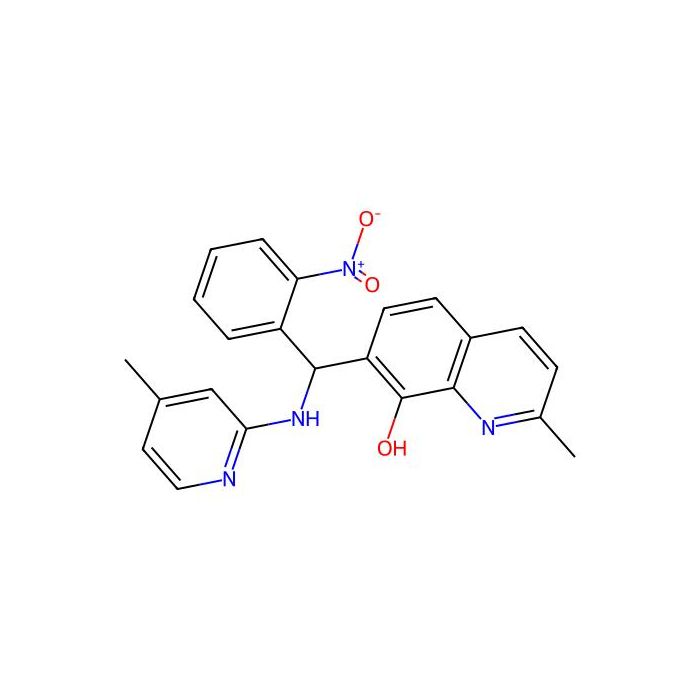
Brief item overview: BoNT-IN-1 is a cataloged small-molecule inhibitor entry designated for botulinum neurotoxin (BoNT)-related research in screening collections.
SKU: B1498782
Product name: BoNT-IN-1
CAS: 694443-03-3
PubChem CID: 2944140
Molecular formula: Not specified for this item; refer to CoA/Spec Sheet.
Molecular weight: Not specified for this item; refer to CoA/Spec Sheet.
InChIKey: Not specified for this item; refer to CoA/Spec Sheet.
SMILES: Not specified for this item; refer to CoA/Spec Sheet.
Structural description: Not disclosed in the supplied Product Data. No ring systems, functional groups, or stereochemical elements can be described without the structural string or depiction.
Notes on identity (literature/general):
The product name suggests a small-molecule inhibitor intended for studies of botulinum neurotoxin protease activity. However, no definitive structural information or exact chemotype is provided in this listing. Always verify identity and exact structure using the batch-specific CoA/SDS before experimental use.
If the compound corresponds to PubChem CID 2944140, consult primary literature/PubChem for full structure and synonyms; treat those as external references rather than Aladdin specifications.
Synthetic Utility
This product is offered as a bioactive small-molecule inhibitor and is not positioned as a synthetic building block or reagent.
Consequently, typical synthetic utility discussions (functional group interconversions, protecting group strategies, named-reaction participation) are not applicable without a disclosed structure.
General note (literature/general):
If structural information is obtained from external databases (e.g., via the provided CAS/CID), synthetic chemists may derive retrosynthetic routes or analog design for SAR studies. Such activities would be outside the scope of the supplied Product Data and should not be inferred as capabilities or specifications of this catalog item.
For this listing, no reactive handles, purity for synthesis, or compatibility with standard transformations are specified.
Target Specificity
Item-specific target details are not provided in the Product Data for B1498782.
Declared target: Not specified for this item; the name “BoNT-IN-1” suggests intended use in botulinum neurotoxin studies, but no explicit serotype (A/B/E, etc.), subdomain (LC/HC), or binding mode is stated by the supplier.
Species reactivity, isotype/clone, epitope: Not applicable to small molecules; no antibody-related parameters apply.
General background (literature/general; not item-specific):
BoNT inhibitors in the literature predominantly target the Zn2+-dependent light chain endopeptidase and can be serotype-selective due to exosite differences and substrate recognition variability.
Selectivity profiling against host metalloproteases (MMPs, ADAMs) and unrelated proteases is a common requirement to confirm true target specificity.
Consult the batch CoA, SDS, or supplier technical notes for any validated target data associated with this specific item/lot.
Foire aux questions
What is Moligand??
Moligand? is one of Aladdin Scientific's premium product lines, formulated for high-purity applications across multiple workflows. Compared to standard grades in the same workflow, Moligand? products typically offer tighter specifications, more rigorous QC, and stronger lot-to-lot consistency.
How should this product be stored?
Store at ?80 °C. Ultra-low temperature storage is required to maintain the specified shelf life.
How is this product shipped?
This product ships frozen with dry ice and cold packs. Unpack on arrival and transfer it to the storage condition stated above; handle dry ice with insulated gloves in a ventilated area.
What are the CAS number, molecular formula and molecular weight?
The CAS Number is 694443-03-3, the molecular formula is C23H20N4O3, and the molecular weight is 400.400 g/mol.
What documentation is provided?
Available product documentation, including Certificates of Analysis (COA), Safety Data Sheets (SDS), and specification sheets, is shown in the product document area. Document availability and access follow the current site policy.
Need help choosing the grade?
Our grade selection guide covers purity, stabilizer status, and application suitability for all variants in our catalog.
Nous utilisons des cookies pour garantir le bon fonctionnement du site et, lorsque cela est autorisé, pour améliorer votre expérience. Vous pouvez gérer vos préférences à tout moment dans les Paramètres. Pour en savoir plus, consultez notre Politique relative aux cookies.
Souhaitez-vous que nous vous envoyions un message lorsque des réductions seront disponibles?
Me rappeler plus tard
Merci ! Veuillez vérifier votre boîte de réception e-mail pour confirmer.
Products are supplied to verified businesses, institutions, and qualified professionals for research and development use only. Not for use in humans, animals, diagnosis, or therapy.