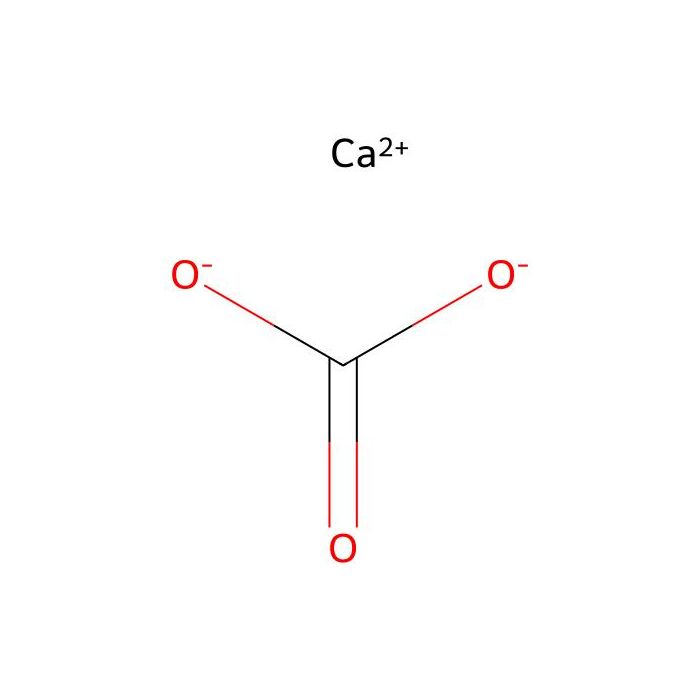
Calcium carbonate - for optical glass , CAS No.471-34-1

CAS: 471-34-1 Cat. No.: C759096 Formule: CaCO3 Poids moléculaire: 100.09 Beilstein Registry Number: 8008338 Numéro CE: 207-439-9
DISPONIBLE À COMMANDE
QUALITÉ & PURETÉ for optical glass
Synonyms
Carbonic acid calcium salt | Limestone
Storage
Room temperature
Shipped In
Normal
★
Taille
Allemagne (EU)
USA*
Prix
Qté
1g
C759096-1g
Sur commande · 8–12 semaines
86,69€
5g
C759096-5g
Sur commande · 8–12 semaines
373,04€
Enter a quantity for the sizes you want to add.
🧪
Pourquoi cette qualité

for optical glass pour les flux de travail chromatographiques et analytiques sensibles nécessitant une interférence de ligne de base minimale.

🌡

Stockage & expédition

Room temperature Expédition Normal. Consultez le COA spécifique au lot pour les spécifications exactes.

📋

Documents qualité

SDS, COA, fiche technique et fiche de spécifications disponibles au téléchargement. COA spécifique au lot accessible via la recherche par numéro de lot.

📚

Preuve documentaire

Cité dans 788 publications à comité de lecture couvrant la chromatographie, la synthèse organique et les réactions de couplage croisé.

Spécifications

Synonymes
Carbonic acid calcium salt | Limestone
Spécifications et pureté
for optical glass
Conditions de stockage de stockage
Room temperature
Expédié en
Normal
Noms et identifiants
Sourires canoniques
C(=O)([O-])[O-].[Ca+2]
IUPAC Name
calcium;carbonate
InChIKey
VTYYLEPIZMXCLO-UHFFFAOYSA-L
INCHI
1S/CH2O3.Ca/c2-1(3)4;/h(H2,2,3,4);/q;+2/p-2
Isomères SMILES
C(=O)([O-])[O-].[Ca+2]
RTECS
FF9335000
Poids moléculaire
100.09
Beilstein
8008338
Reaxy-Rn
8008338
Reaxys-RN_link_address
https://www.reaxys.com/reaxys/secured/hopinto.do?context=S&query=IDE.XRN=8008338&ln=

Documentation

📋 Fiche de données de sécurité (FDS)

Document complet couvrant les dangers, la manipulation, le stockage et la conformité réglementaire.

<<<<<<< HEAD Télécharger la SDS → ======= Télécharger la SDS → >>>>>>> release248-p3

✅ Certificat d'analyse (COA)

Données qualité spécifiques au lot. Saisissez votre numéro de lot pour récupérer le COA exact.

Rechercher le COA →

📊 Fiche technique

Résumé de référence rapide des spécifications et applications du produit.

Voir la fiche technique →

🔬 Fiche de spécifications

Attributs de qualité complets et critères d'acceptation pour cette qualité.

Voir la fiche de spécifications →

Données avancées

Taxonomic Classification

Taxonomy Tree

KingdomOrganic compounds
SuperclassOrganic acids and derivatives
ClasseOrganic carbonic acids and derivatives
SubclassOrganic carbonic acids
Intermediate Tree Nodes Not available
Direct ParentOrganic carbonic acids
Alternative Parents Carbonate salts  Organic calcium salts  Organic oxides  Hydrocarbon derivatives  Carbonyl compounds  
Molecular FrameworkAliphatic acyclic compounds
Substituents Carbonate salt - Carbonic acid - Organic calcium salt - Organic oxygen compound - Organic oxide - Hydrocarbon derivative - Organic salt - Organooxygen compound - Carbonyl group - Aliphatic acyclic compound
DescriptionThis compound belongs to the class of organic compounds known as organic carbonic acids. These are compounds comprising the carbonic acid functional group.
External Descriptors calcium salt - one-carbon compound - carbonate salt
Structure 3D
Modèle de structure chimique interactif


Certificats (CoA, COO, BSE/TSE et tableau d'analyse)
C of A & Other Certificates(BSE/TSE, COO):
Analytical Chart:
Propriétés chimiques et physiques
SensibilitéMoisture sensitive.Hygroscopi
Point de fusion (°C)800°C
Poids moléculaire100.090 g/mol
XLogP3
Hydrogen Bond Donor Count0
Hydrogen Bond Acceptor Count3
Rotatable Bond Count0
Exact Mass99.9473 Da
Monoisotopic Mass99.9473 Da
Topological Polar Surface Area63.200 Ų
Heavy Atom Count5
Formal Charge0
Complexity18.800
Isotope Atom Count0
Defined Atom Stereocenter Count0
Undefined Atom Stereocenter Count0
Defined Bond Stereocenter Count0
Undefined Bond Stereocenter Count0
The total count of all stereochemical bonds0
Covalently-Bonded Unit Count2
FAQ et articles
Selection of Common Research Salts: A Task Map for Alkali Metal Salts & Alkaline Earth Metal Salts (with Product Tables 1–6)
Alginate : An Overview of Extraction and Purification Processes, Quality Identification, and Multidomain Applications
Titanate Coupling Agents: Structural Features, Classification, Typical Applications, and Differences from Silane Coupling Agents
Experimental Selection and Outcome Assessment of Heterogeneous Metal Catalysts in Organic Synthesis
Perovskite Oxides for Energy and Environmental Catalysis: How Oxygen Vacancies, B-Site Metals, and the Metal–Oxygen Bond Network Regulate Reaction Performance
From Barium Titanate Dielectrics to Multilayer Ceramic Capacitors: Dielectric Properties and Experimental Evaluation of Barium Titanate-Based Ceramics
How Matting Agents in Coatings Build Low-Gloss Coating Surfaces: Mechanisms, Formulation Trade-Offs, and Product Selection
Application and Selection Guide for Alkyd Resin Coatings: Advantages, Limitations, Formulation Control, and Modification Directions
Guide to Epoxy Resin Performance Design: System Composition, Key Properties, Process Control, and Application Selection
Silicone Resin Coating Formulation Design: From Application Conditions to Matching Resins, Pigments and Fillers, Curing, and Substrates
Applications and Selection of Acrylic Resins in Coatings: Analysis of Architectural, Industrial, and Supporting Materials
Capable of Swelling, Adsorption, and Cation Exchange: What Makes Montmorillonite Clay Different?
Vinyl Acetate-Acrylic Emulsion (Vinyl Acrylic Emulsion): A Cost-Performance Balance Solution for Architectural Coatings
Vinyl Ester Resin Systems: Structural Features, Curing Mechanism, and Key Application Considerations
PVAc, VAE, and Vinyl Acetate-Based Emulsions: Film-Forming Logic and Performance Boundaries in Architectural Coatings
Application Positioning, Scenario Selection, and Key Use Considerations for Chlorinated Rubber Resin in Coatings
Formulation Design of Chlorinated Rubber Coatings: Component Synergy and Performance Control
Applications and Selection of Polyester Resins in Industrial Coatings: Powder, Coil, Baking, Packaging, and Metal Coating Scenarios
How to Select Vinyl-Related Resins: Building Formulation Judgment Based on Substrate, Performance Targets, and Failure Risks
Waterborne Resin Application Guide: Formulation Synergy, Troubleshooting, and Technology Development Trends
Mechanisms and Control of Coating Yellowing: From Chromophoric Structure Formation to Source Diagnosis and Formulation Optimization
Resin Polarity in Coating Formulations: From Molecular Structure to Dissolution, Compatibility, Interfacial Interactions, and Formulation Design
Why Do Daily Chemical Products Become Opaque? Formation Mechanisms of Milky Turbidity, Pearlescence, and Coverage, and How to Select the Right Ingredients
Color-Development Mechanisms, Formulation Forms, and Selection/Application Logic of Colorants in Personal Care Products
Analysis of the Production Process of Hydroxypropyl Methylcellulose (HPMC) for Putty: Understanding Differences in Substitution Structure and Gelation Temperature from High-Ratio and Low-Ratio Formulations
Types, Mechanisms of Action, Key Quality Indicators, and Selection and Application of Common Cellulose Ethers in Wall Putty
Influencing Factors and Control Strategies for Blistering in Neutral Wall Putty: An Experimental Analysis Based on HPMC Dosage, Viscosity, and Ground Calcium Carbonate Fineness
How to Select Binding/Gel Materials for Neutral Wall Putty? A Comparison of Pregelatinized Starch, PVA, and Redispersible Polymer Powder Based on Four Application Trials
Causes and Mechanism Analysis of Delamination During Sanding of Water-Resistant Putty
What Are the Differences Between Polyvinyl Alcohol 1788, 2488, and 2699? Understanding Workability, Bonding Strength, and Relative Water Resistance from the Perspective of Degree of Polymerization and Degree of Hydrolysis
Why Do Rust Spots Appear on Neutral Wall Putty? Iron Sources, Moisture Migration, Oxidative Color Development, and Prevention Measures
Common Problems and Formulation Adjustment Strategies for Neutral Putty Under High Summer Temperatures
Differences and Application Selection of Cassava- and Corn-Based Pregelatinized Starch in Neutral Putty Formulations
The Role, Selection, Cracking Risk Analysis, and Dosage Control of Bentonite in Neutral Putty
Analysis of Hydrolyzed Pearl as a Cosmetic Raw Material: Preparation Process, Active Components, and Skincare Formulation Applications
What Is Direct Compression? Process Characteristics, Suitability Criteria, and Excipient Selection
Citations of This Product
Calculateurs de solution
Avis

Avis des clients

Foire aux questions

How is this product shipped?
This product ships under standard ambient conditions. No temperature-controlled packaging is required.
How should this product be stored?
Store at room temperature.
What are the CAS number, molecular formula and molecular weight?
The CAS Number is 471-34-1, the molecular formula is CaCO3, and the molecular weight is 100.09 g/mol. InChIKey VTYYLEPIZMXCLO-UHFFFAOYSA-L.
What documentation is provided?
Available product documentation, including Certificates of Analysis (COA), Safety Data Sheets (SDS), and specification sheets, is shown in the product document area. Document availability and access follow the current site policy.

Souhaitez-vous que nous vous envoyions un message lorsque des réductions seront disponibles?

Me rappeler plus tard

Merci ! Veuillez vérifier votre boîte de réception e-mail pour confirmer.

Oups ! Les notifications sont désactivées.