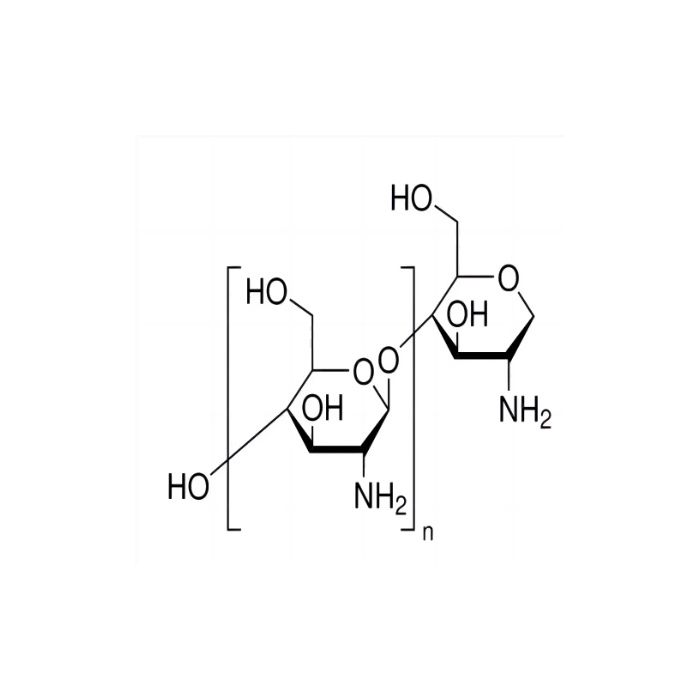
Chitosan - High density, ≥ 0.6g/ml, deacetylation degree ≥ 80% , CAS No.9012-76-4

CAS: 9012-76-4 Cat. No.: C1516211 Formule: (C6H11NO4)n Numéro CE: 618-480-0
DISPONIBLE À COMMANDE
QUALITÉ & PURETÉ High density, ≥ 0.6g/ml, deacetylation degree ≥ 80%
Storage
Protected from light,Room temperature
Shipped In
Normal
★
Taille
Allemagne (EU)
USA*
Prix
Qté
100g
C1516211-100g
Sur commande · 8–12 semaines
51,98€
500g
C1516211-500g
Sur commande · 8–12 semaines
156,11€
Enter a quantity for the sizes you want to add.

Spécifications

Spécifications et pureté
High density, ≥ 0.6g/ml, deacetylation degree ≥ 80%
Conditions de stockage de stockage
Protected from light,Room temperature
Expédié en
Normal
Noms et identifiants
IUPAC Name
methyl N-[(2S,3R,4R,5S,6R)-5-[(2S,3R,4R,5S,6R)-3-amino-5-[(2S,3R,4R,5S,6R)-3-amino-5-[(2S,3R,4R,5S,6R)-3-amino-5-[(2S,3R,4R,5S,6R)-3-amino-5-[(2S,3R,4R,5S,6R)-3-amino-5-[(2S,3R,4R,5S,6R)-3-amino-4,5-dihydroxy-6-(hydroxymethyl)oxan-2-yl]oxy-4-hydroxy-6-(hydroxymethyl)oxan-2-yl]oxy-4-hydroxy-6-(hydroxymethyl)oxan-2-yl]oxy-4-hydroxy-6-(hydroxymethyl)oxan-2-yl]oxy-4-hydroxy-6-(hydroxymethyl)oxan-2-yl]oxy-4-hydroxy-6-(hydroxymethyl)oxan-2-yl]oxy-2-[(2R,3S,4R,5R,6S)-5-amino-6-[(2R,3S,4R,5R,6R)-5-amino-4,6-dihydroxy-2-(hydroxymethyl)oxan-3-yl]oxy-4-hydroxy-2-(hydroxymethyl)oxan-3-yl]oxy-4-hydroxy-6-(hydroxymethyl)oxan-3-yl]carbamate
InChIKey
FLASNYPZGWUPSU-SICDJOISSA-N
INCHI
1S/C56H103N9O39/c1-87-56(86)65-28-38(84)46(19(10-74)96-55(28)104-45-18(9-73)95-49(27(64)37(45)83)97-39-12(3-67)88-47(85)20(57)31(39)77)103-54-26(63)36(82)44(17(8-72)94-54)102-53-25(62)35(81)43(16(7-71)93-53)101-52-24(61)34(80)42(15(6-70)92-52)100-51-23(60)33(79)41(14(5-69)91-51)99-50-22(59)32(78)40(13(4-68)90-50)98-48-21(58)30(76)29(75)11(2-66)89-48/h11-55,66-85H,2-10,57-64H2,1H3,(H,65,86)/t11-,12-,13-,14-,15-,16-,17-,18-,19-,20-,21-,22-,23-,24-,25-,26-,27-,28-,29-,30-,31-,32-,33-,34-,35-,36-,37-,38-,39-,40-,41-,42-,43-,44-,45-,46-,47-,48+,49+,50+,51+,52+,53+,54+,55+/m1/s1
Isomères SMILES
COC(=O)N[C@@H]1[C@H]([C@@H]([C@H](O[C@H]1O[C@@H]2[C@H](O[C@H]([C@@H]([C@H]2O)N)O[C@@H]3[C@H](O[C@H]([C@@H]([C@H]3O)N)O)CO)CO)CO)O[C@H]4[C@@H]([C@H]([C@@H]([C@H](O4)CO)O[C@H]5[C@@H]([C@H]([C@@H]([C@H](O5)CO)O[C@H]6[C@@H]([C@H]([C@@H]([C@H](O6)CO)O[C@H]7[C@@H]([C@H]([C@@H]([C@H](O7)CO)O[C@H]8[C@@H]([C@H]([C@@H]([C@H](O8)CO)O[C@H]9[C@@H]([C@H]([C@@H]([C@H](O9)CO)O)O)N)O)N)O)N)O)N)O)N)O)N)O

Données avancées

Taxonomic Classification

Taxonomy Tree

KingdomOrganic compounds
SuperclassOrganic oxygen compounds
ClasseOrganooxygen compounds
SubclassCarbohydrates and carbohydrate conjugates
Intermediate Tree Nodes Not available
Direct ParentOligosaccharides
Alternative Parents Aminoglycosides  O-glycosyl compounds  Oxanes  Methylcarbamates  1,2-aminoalcohols  Secondary alcohols  Hemiacetals  Organic carbonic acids and derivatives  Acetals  Oxacyclic compounds  Monoalkylamines  Primary alcohols  Hydrocarbon derivatives  Carbonyl compounds  Organic oxides  Organopnictogen compounds  
Molecular FrameworkAliphatic heteromonocyclic compounds
Substituents Oligosaccharide - Aminoglycoside core - Glycosyl compound - O-glycosyl compound - Amino saccharide - Oxane - Methylcarbamate - Carbamic acid ester - 1,2-aminoalcohol - Secondary alcohol - Hemiacetal - Carbonic acid derivative - Acetal - Oxacycle - Organoheterocyclic compound - Organic nitrogen compound - Organonitrogen compound - Primary alcohol - Primary aliphatic amine - Primary amine - Hydrocarbon derivative - Carbonyl group - Organic oxide - Amine - Alcohol - Organopnictogen compound - Aliphatic heteromonocyclic compound
DescriptionThis compound belongs to the class of organic compounds known as oligosaccharides. These are carbohydrates made up of 3 to 10 monosaccharide units linked to each other through glycosidic bonds.
External Descriptors Not available
Certificats (CoA, COO, BSE/TSE et tableau d'analyse)
C of A & Other Certificates(BSE/TSE, COO):
Analytical Chart:

Find and download the COA for your product by matching the lot number on the packaging.

5 results found

Lot NumberCertificate TypeDateArticle
D2602231D2602231Certificate of AnalysisMar 26, 2026 C1516211
D2602232D2602232Certificate of AnalysisMar 26, 2026 C1516211
D2602233D2602233Certificate of AnalysisMar 26, 2026 C1516211
G2630074G2630074Certificate of AnalysisMar 26, 2026 C1516211
J2628086J2628086Certificate of AnalysisMar 26, 2026 C1516211
Propriétés chimiques et physiques
Point de fusion (°C)102.5°C
Poids moléculaire1526.500 g/mol
XLogP3-21.400
Hydrogen Bond Donor Count29
Hydrogen Bond Acceptor Count47
Rotatable Bond Count27
Exact Mass1525.64 Da
Monoisotopic Mass1525.64 Da
Topological Polar Surface Area808.000 Ų
Heavy Atom Count104
Formal Charge0
Complexity2630.000
Isotope Atom Count0
Defined Atom Stereocenter Count45
Undefined Atom Stereocenter Count0
Defined Bond Stereocenter Count0
Undefined Bond Stereocenter Count0
The total count of all stereochemical bonds0
Covalently-Bonded Unit Count1
FAQ et articles
Key Judgments in Medical Hydrogel R&D: From Polymer Source and Crosslinking Strategy to Sterilization Planning, Scale-Up Feasibility, and Quality Control
Applications of Enzymatic Protein Crosslinking Systems in Gel Construction and Functional Evaluation
From Natural Cellulose to Nanocrystals: Structural Characteristics, Application Directions, and Industrialization Challenges of CNC
Natural Resins in Coating Formulations: Functional Positioning, Structure–Property Relationships, and Selection Validation
Signal Transduction Mechanism of Graphene Biosensors: From Molecular Recognition to Electrical/Optical Signal Readout and Materials Selection
Structure, Properties, and Mechanisms of Powdered Fragrances and Fragrance Delivery Materials: Stability, Release Mechanisms, and Selection Logic
How to Extend Fragrance Longevity in Personal and Home Care Products: Fragrance Structure, Surface Deposition, and Release Modulation
UVA Absorption Mechanism of Avobenzone: Keto–Enol Tautomerism, Photochemical Instability, and Formulation Photostabilization Strategies
Potential Mechanisms of p-Cymene in Problem-Prone Skin: Membrane Perturbation, Inflammatory Signaling Modulation, and Localized Delivery
How Arbutin Regulates Melanin Production: α/β Anomeric Configuration and Tyrosinase Action
Niacinamide Brightening Mechanisms and Formulation Design: Melanosome Transfer, pH Regulation, and Combination Strategies
Citations of This Product
Calculateurs de solution
Avis

Avis des clients

Application Protocols

The following are example research protocols (general literature) to prepare and process chitosan. Adjust for your material’s DD/Mw and equipment. These are not item-specific specs.

  • 1% w/v chitosan solution in acetic acid

    1. Prepare 1% v/v glacial acetic acid in DI water. Degas if needed.
    2. Under strong stirring, slowly add chitosan to reach 1% w/v. Mix 2–12 h until homogeneous.
    3. Adjust pH to 4.5–5.5 with NaOH if required. Let bubbles dissipate; optionally filter (0.45 µm) at low flux.
  • Film casting and neutralization

    1. Cast solution onto leveled substrate (e.g., PTFE dish).
    2. Air-dry partially, then immerse in 0.1–0.5 M NaOH or NH4OH bath to neutralize/proton-deplete.
    3. Rinse to remove salts; dry at ambient.
  • TPP-crosslinked beads (ionic gelation)

    1. Load chitosan solution (0.5–1.5% w/v) into a syringe with 22–27G needle.
    2. Drop into 1–5 mg/mL sodium tripolyphosphate (pH 8–9) with stirring.
    3. Cure 15–30 min; collect, rinse with water.
  • Reductive amination (surface functionalization)

    1. Suspend/dissolve chitosan in 1% AcOH (0.5–1% w/v).
    2. Add aldehyde (0.1–1 equiv per –NH2) and NaBH3CN (or picoline borane) under pH 5–6.
    3. React 4–16 h at RT; wash/neutralize thoroughly.

Note: Verify sterility/pyrogen levels if using in cell culture research. For exact dissolution time, viscosity, and DD-dependent behavior, refer to the CoA/Spec Sheet.

Biological Roles
  • Origin and metabolism (literature)

    • Chitosan is produced by deacetylation of chitin, a structural polysaccharide abundant in arthropod exoskeletons and fungal cell walls. In biological systems, chitin/chitosan can be degraded by chitinases and lysozyme into oligomers and glucosamine.
  • Physicochemical interactions (literature)

    • At acidic to near-neutral pH below its pKa (~6.3–6.7), chitosan bears protonated amines, enabling strong electrostatic interactions with polyanions (e.g., DNA/RNA, glycosaminoglycans) and negatively charged membranes and proteins.
    • Hydrogen bonding via hydroxyls and amide/amine groups contributes to film formation, mucoadhesion, and binding to biomacromolecules.
  • Functional attributes relevant to research (literature)

    • Biodegradable and generally biocompatible; used to create scaffolds, hydrogels, and coatings for cell culture materials (research use only).
    • Exhibits inherent antimicrobial and hemostatic behaviors in certain formats and conditions, attributed to cationic surface interactions; magnitude is formulation- and DD/Mw-dependent.
    • Oligochitosans (COS) display size- and acetylation-dependent bioactivity in plants and microbes; chitosan can act as an elicitor in plant biology studies.

Note: The above describes biological context and is not a statement of clinical safety or efficacy. Performance is highly dependent on DD, Mw, ionic environment, and processing history.

Buffer Applications

While chitosan is not a buffer component per se, its dissolution and performance strongly depend on the buffer system and pH.

  • Dissolution media (literature)

    • Acetate buffer (pH 4.0–5.5): Typical vehicle for preparing 0.1–2% w/v chitosan. Example: 0.1–0.2 M acetic acid adjusted with NaOH to target pH.
    • Citrate or lactate buffers (pH 3.5–5.5): Alternatives when acetate is incompatible.
    • MES buffer (pH 5.5–6.5): For near-neutral conditions; solubility declines as pH approaches the amine pKa.
  • Practical tips

    • Pre-wet polymer and sprinkle slowly into vigorously stirred acidic buffer to avoid clumping; allow several hours to hydrate fully.
    • Adjust ionic strength with NaCl (e.g., 0.1–0.3 M) to reduce chain–chain interactions and improve filterability.
    • Filter sterilization: Use large-area, low-protein-binding filters (0.45–0.22 µm) and low flux; high-Mw solutions may require prefiltration.
    • pH shift processing: Cast films or form beads by extruding acidic chitosan solution into alkaline (e.g., 0.1–1 M NaOH) or polyanion baths (e.g., 1–5 mg/mL sodium tripolyphosphate, TPP) for ionic crosslinking.
  • Not typically applicable

    • Standard biological buffer recipes (e.g., phosphate, Tris at neutral pH) are not suitable for dissolving chitosan but can be used after gel/film formation when the polymer is in solid/crosslinked state.
Green Alternatives

Chitosan itself is a renewable, biodegradable, and biobased polymer derived from chitin (crustacean fungal biomass). When selecting cationic polymers or flocculants, chitosan can replace petroleum-derived materials.

  • Comparison to common alternatives (literature, general)

| Attribute | Chitosan | Polyethyleneimine (PEI) | PDADMAC | Quaternized cellulose | |---|---|---|---|---| | Feedstock | Biobased (chitin) | Petrochemical | Petrochemical | Partially biobased | | Biodegradability | High (enzymatic) | Moderate/low | Moderate | High | | Toxicity/biocompatibility | Generally favorable | Can be cytotoxic | Moderate | Favorable | | Solvent for processing | Dilute organic acids (aq) | Water | Water | Water | | Charge type | Primary amines (pH-dependent) | Primary/secondary/tertiary (broad) | Permanent quaternary | Quaternary (permanent) |

  • Trade-offs

    • pH-dependence: Chitosan’s cationic charge requires pH below its pKa; permanent cationics (PDADMAC) work at all pH but with higher environmental persistence.
    • Variability: Natural-source variability (DD, Mw) requires QC; synthetic polymers can offer narrower distributions.
    • Solubility limits: Viscosity and solubility can constrain processing at higher concentrations versus fully water-soluble synthetics.
  • Greener processing tips (literature)

    • Use food-grade acids (acetic/lactic) for dissolution, avoid halogenated solvents.
    • Prefer genipin or enzymatic crosslinking over dialdehydes where performance allows.
    • Recover and reuse acid solutions; neutralize and precipitate for recycling polymer where feasible.
Pharmaceutical Uses

For research formulation and process development only. No clinical use is implied.

  • Roles in dosage-form development (literature/general)

    • Matrix former and film-coating polymer for taste masking and moisture/oxygen barriers in solid dosage prototypes.
    • Mucoadhesive polymer for enhancing residence time of research nasal/oral/transmucosal formulations; performance depends on DD, Mw, and counterion.
    • Controlled-release matrices and beads via ionic crosslinking (e.g., with TPP) or covalent crosslinking (e.g., genipin, glutaraldehyde) for model actives.
    • Permeation-modifying excipient in in vitro studies due to transient tight-junction effects (research context only).
  • Regulatory/compendial context (general)

    • Various pharmacopeial discussions and monographs exist for chitosan grades in some jurisdictions; specifications often include DD, viscosity, ash, loss on drying, heavy metals, and microbial limits. Consult the relevant pharmacopeia and your QA unit.
  • Processing considerations

    • Dissolve in dilute organic acids (commonly acetic or lactic) under controlled shear; degas before casting or spraying.
    • Drying temperatures kept moderate to limit depolymerization and browning; neutralization steps affect residual counterions and permeability.

Item-specific grade and compliance for SKU C1516211: Not specified for this item; refer to CoA/Spec Sheet.

Physical Properties
  • Item-specific specifications

    • Appearance: Not specified for this item; refer to CoA/Spec Sheet.
    • Molecular Weight: Not specified for this item; refer to CoA/Spec Sheet.
  • General/literature properties (typical for chitosan; not item specifications)

    • Physical form: Off-white to light beige powder or flakes; odorless; amorphous to semi-crystalline (literature).
    • Solubility: Insoluble in neutral water and most organic solvents; soluble in dilute aqueous acids (e.g., 0.5–2% v/v acetic, lactic, formic, citric, or HCl), forming viscous polyelectrolyte solutions via –NH3+ protonation (literature).
    • pKa: Apparent pKa of C2 primary amines ~6.3–6.7 (literature), composition- and ionic-strength-dependent.
    • Density: ~1.3–1.5 g/cm³ (bulk polymer; literature, method-dependent).
    • Thermal behavior: No true melting; softening and thermal degradation typically >200 °C under inert atmosphere; decomposition in air at lower temperatures (literature). Not intended as a processing spec.
    • Viscosity: Strongly dependent on Mw, DD, concentration, ionic strength, and shear; often reported as viscosity-average Mw or solution viscosity at a defined c/acetic acid system (literature).
    • Film formation: Forms clear to translucent films upon casting from acidic solution and neutralization/solvent evaporation (literature).

Notes: Exact numeric values vary with source, DD, Mw, moisture, and counterions. For the specific item’s analytical parameters (DD %, ash, moisture, metal content, viscosity), consult the CoA/Spec Sheet.

Quality and Grades
  • Item-specific quality information

    • Grade/Purity: Not specified for this item; refer to CoA/Spec Sheet.
  • How chitosan quality is typically defined (general guidance)

    • Degree of deacetylation (DD, %): Fraction of deacetylated units; governs charge density, solubility (protonation), and reactivity. Common commercial ranges: ~60–95% (literature). Higher DD increases cationic charge at a given pH.
    • Molecular weight (Mw distribution): Reported as viscosity-average or by GPC (Mn/Mw/Đ). Influences solution viscosity, film strength, and processability.
    • Viscosity spec: Often measured for a defined concentration in acetic acid/NaCl (e.g., 1% in 1% AcOH); correlates with Mw.
    • Ash/insoluble content: Indicates mineral residues and process impurities; low ash favored for high-purity uses.
    • Moisture content: Affects mass dosing and shelf-life.
    • Bioburden/endotoxin: Relevant for biological workflows; may be controlled in specialized grades.
    • Metal content: Important for catalysis or sensitive applications; sometimes reported by ICP.
    • Color/appearance and clarity of solutions: Qualitative indicators of quality and oxidation.
  • Implications for selection

    • Choose higher DD for stronger polyelectrolyte behavior at near-neutral pH; choose lower Mw for easier dissolution and lower viscosity; choose higher Mw for film formation and mechanical strength.

For this specific SKU (C1516211), consult the Aladdin CoA/Spec Sheet for DD %, viscosity/Mw, ash, moisture, and any bioburden or metal specifications.

Reaction and Applications
  • Materials and processing applications (literature)

    • Film/coating formation: Cast from acidic solution; neutralization with base (e.g., NaOH) or solvent evaporation yields films with oxygen-barrier, antimicrobial, and polyelectrolyte complexation properties.
    • Beads/fibers: Wet-spun into alkaline or polyanion coagulation baths to produce beads or fibers for sorption and catalysis.
    • Flocculation/metal chelation: Amines coordinate metal ions; used to capture transition metals and dyes from aqueous media.
    • Polyelectrolyte complexes: Layer-by-layer assemblies with anionic polymers (alginate, hyaluronate, PAA, DNA) for coatings and microcapsules.
  • Chemical derivatization on polymer (synthetic “reagent” roles; literature)

    • Schiff-base formation on C2 –NH2 with aldehydes/ketones; reducible to secondary amines (NaBH3CN or BH3·THF).
    • Acylation/alkylation of –NH2 (e.g., with acid chlorides/anhydrides, epoxides, alkyl halides) to tune hydrophobicity/quaternization.
    • Carbodiimide-mediated coupling (EDC/NHS) to graft carboxylates onto –NH2, or inversely after carboxylation (TEMPO/periodate routes) to couple amines onto –COOH.
    • Crosslinking: Genipin (biobased), glutaraldehyde, epichlorohydrin, tripolyphosphate (ionic) to control mechanical properties and swelling.
    • Click chemistry after introduction of azide/alkyne handles for modular ligation of dyes, peptides, or catalysts.
  • As a support or catalyst (literature)

    • Heterogeneous support for metal nanoparticles or organocatalysts; amines/hydroxyls aid immobilization.
    • Chiral selector in chromatography after proper derivatization (e.g., 3,5-dinitrobenzoyl chitosan).

Notes: Optimize degree of deacetylation (DD), molecular weight, and counterion for target performance. For any specific application claims, validate with in-house testing under your conditions.

Reaction Conditions

General literature guidance for common chitosan transformations (not item-specific specifications):

  • Dissolution baseline

    • Medium: 0.5–2% v/v acetic acid in water (or 0.05–0.2 M HCl/lactic acid).
    • Concentration: 0.1–2% w/v typical; higher with low-Mw grades.
    • Temperature: Ambient; mild heating (30–50 °C) can aid dissolution but avoid prolonged high temperatures to limit depolymerization.
  • Reductive amination (Schiff base → secondary amine)

    • Solvent: Acidic aqueous ethanol or purely aqueous acetic acid media, pH ~4.5–5.5.
    • Reagents: Aldehyde or ketone (0.1–1 equiv per –NH2), NaBH3CN or picoline borane (safe in water) for reduction.
    • Conditions: RT–40 °C, 2–24 h; monitor substitution via elemental analysis or NMR of soluble oligomers.
  • Carbodiimide coupling (EDC/NHS) to –NH2

    • Solvent: MES or acetate buffer, pH 4.7–6.0.
    • Reagents: Carboxylic acid substrate, EDC·HCl (1–5 equiv per –NH2), NHS or sulfo-NHS.
    • Conditions: RT, 1–12 h; quench and wash extensively.
  • Ionic crosslinking with TPP (for beads/microparticles)

    • Prepare 0.5–2% w/v chitosan in 1% v/v AcOH.
    • Add dropwise into 1–5 mg/mL TPP (pH 8–9) under stirring.
    • Gelation: Seconds to minutes; cure 10–60 min; wash to remove acetate/TPP.
  • Genipin crosslinking

    • Solvent: Slightly acidic aqueous ethanol or buffer (pH 5–7).
    • Load: 0.5–5 wt% genipin vs polymer.
    • Conditions: RT–37 °C, 2–24 h; blue coloration indicates progress.

Yields and degrees of substitution vary widely with DD, Mw, stoichiometry, and medium; confirm by titration, FTIR, NMR (on soluble derivatives), or XPS.

Safety and Handling
  • Item-specific safety

    • GHS Classification: Not specified for this item; refer to SDS.
    • Signal Word / H-Statements / Pictograms: Not specified for this item; refer to SDS.
    • Storage conditions (from Product Data): Store protected from light at room temperature. Shipped at ambient conditions.
  • General safety considerations (literature/good practice)

    • Hazard profile: Chitosan is generally regarded as low toxicity, but fine powders can cause mechanical eye/respiratory irritation. Treat as a nuisance dust; avoid inhalation.
    • Combustible dust: As with many organic powders, may form combustible dust-air mixtures; minimize dust generation and ignition sources.
    • Incompatibilities: Strong oxidizers; strong acids/bases may degrade polymer or alter solubility/viscosity. Avoid prolonged exposure to oxidants and nitrosating agents.
    • PPE: Lab coat, safety glasses, disposable nitrile gloves. Use a dust mask or respirator if aerosols/dust cannot be controlled.
    • Engineering controls: Handle powders in a fume hood or ventilated enclosure. Use local exhaust during dissolution (acetic acid vapors) and crosslinking steps (e.g., glutaraldehyde).
    • First aid (general guidance; defer to SDS):
      • Inhalation: Move to fresh air; seek medical advice if irritation persists.
      • Eye contact: Rinse cautiously with water for several minutes; remove contact lenses if present and easy to do.
      • Skin contact: Wash with soap and water.
      • Ingestion: Rinse mouth; seek medical advice if large quantities are ingested or if discomfort occurs.

Always consult the product-specific SDS for authoritative hazard, exposure limits, and emergency procedures.

Solvent Selection

Chitosan is a cationic polysaccharide that dissolves upon protonation of C2 amines. Solvent choice focuses on mildly acidic aqueous media.

  • Polarity/miscibility (general)

    • Insoluble in: Neutral water, alcohols, acetone, ethers, most aprotic organics.
    • Soluble in: Dilute aqueous acids (typ. 0.5–2% v/v), including acetic, formic, lactic, citric, glycolic, and dilute HCl. Solubility improves with higher DD and lower Mw (literature).
    • Special media: Ionic liquids (e.g., [Bmim]Cl) and deep eutectic solvents can dissolve chitosan and enable homogeneous derivatization (literature), but may be costly.
  • Practical selections (literature guidance)

    • 1% (v/v) acetic acid in water: Most common vehicle; yields clear to slightly opalescent solutions at 0.1–2% w/v chitosan, depending on Mw.
    • 0.1 M HCl or 1% lactic acid: Useful when acetate is incompatible (e.g., certain coupling chemistries or biological assays sensitive to acetate).
    • Buffered acidic media (acetate, citrate, MES at pH 4.5–6): Control ionic strength and pH for reproducible viscosity and charge.
  • When to choose alternatives

    • For water-insensitive derivatizations or high degrees of substitution, consider ionic liquids or heterogeneous reactions in alcohol/water with activating agents.

Small comparison (literature)

  • Acetic acid: Benign, volatile, biocompatible counterion; slow neutralization forms robust films.
  • Formic acid: Stronger acid; faster dissolution but more aggressive to equipment.
  • Lactic/citric acids: Food-grade options; increased ionic strength and buffering capacity.

Note: Always add acid to water, then slowly add chitosan with efficient stirring to avoid gel lumps.

Storage and Reconstitution
  • Item-specific storage (from Product Data)

    • Store protected from light at room temperature. Shipped at ambient temperature.
  • General best practices for chitosan (literature/good practice)

    • Keep container tightly closed and desiccated to minimize moisture uptake and variability in weighing/dissolution.
    • Avoid prolonged exposure to strong light, heat, and oxidizing environments to limit depolymerization and discoloration.
    • For long-term stability, store in a cool, dry place; inert-gas blanketing is optional but beneficial for high-purity grades.
  • Reconstitution/dissolution guidance (general)

    • Prepare acidic vehicle first (e.g., 0.5–2% v/v acetic acid in DI water).
    • Add chitosan gradually under vigorous stirring; allow several hours for full hydration. Mild warming (≤40–50 °C) can help.
    • Adjust pH and ionic strength as needed for application; degas to remove bubbles before casting or coating.
    • Filtration: Use prefilters and low-binding 0.45–0.22 µm membranes; high-Mw solutions may require gravity clarification rather than pressure filtration.
  • Freeze–thaw guidance

    • Dry powder tolerates RT storage; do not freeze solutions unless validated—freeze–thaw can alter viscosity and gel structure. If freezing is required, document conditions and test performance after thaw.

For any item-specific parameters (moisture limit, DD %, viscosity), consult the Aladdin CoA/Spec Sheet for SKU C1516211. Research use only.

Structure and Identity

Chitosan is a partially deacetylated chitin derivative: a linear β-(1→4)-linked copolymer of D-glucosamine and N-acetyl-D-glucosamine units. Each repeat bears C2 primary amines (on deacetylated units) and C3/C6 hydroxyls.

  • Item-specific identifiers (from Product Data)

    • CAS: 9012-76-4
    • CID (PubChem): 71853
    • InChIKey: 85497 (as provided; note that polymers may not have a single definitive InChIKey)
    • SMILES: Not specified for this item; refer to CoA/Spec Sheet. (Canonical SMILES are not uniquely defined for heterogeneous polymers.)
    • Molecular Formula: Not specified for this item; refer to CoA/Spec Sheet. (Varies with degree of deacetylation and counterions.)
    • Molecular Weight: Not specified for this item; refer to CoA/Spec Sheet. (Typically reported as a distribution: Mn/Mw/viscosity-average.)
  • Structural features (general/literature)

    • Backbone: β-(1→4)-D-glucosaminyl linkages analogous to cellulose, but with C2 amines on deacetylated residues.
    • Copolymer composition: Fraction of deacetylated units is the degree of deacetylation (DD, commonly ~60–95% in materials; literature).
    • Functional groups: Primary amines (–NH2/–NH3+ in acid), secondary alcohol (C3), primary alcohol (C6), acetamido on residual N-acetylated units.
    • Stereochemistry: All-carbon stereocenters correspond to D-glucose configuration; repeating pyranose rings in 4C1 chair.
  • 2D description in words

    • Repeating pyranose rings connected by β-1,4-glycosidic oxygen bridges; each ring carries equatorial hydroxyls and either an acetamide (–NHCOCH3) or a protonatable amine at C2.
Synthetic Utility

Chitosan serves as a versatile macromolecular scaffold bearing nucleophilic primary amines and hydroxyl groups.

  • N-functionalization (literature)

    • Schiff bases with aldehydes/ketones; subsequent reductive amination installs secondary amines for ligand/catalyst anchoring.
    • Acylation (acid chlorides/anhydrides), carbamate/urea formation (isocyanates), and sulfonylation (sulfonyl chlorides) on –NH2.
    • Quaternization with alkyl halides or glycidyl trialkylammonium salts to make permanently cationic derivatives (water-soluble at neutral pH).
  • O-functionalization (literature)

    • Selective O-acylation/etherification at C6–OH under heterogeneous or IL-mediated conditions.
    • TEMPO-mediated oxidation to C6–COOH enables EDC/NHS coupling to amines and metal-chelating motifs.
  • Crosslinking and network formation

    • Ionic: Tripolyphosphate (TPP), citrate; reversible and pH/ionic strength dependent.
    • Covalent: Genipin (mild, blue chromophore), glutaraldehyde, epichlorohydrin; tune gelation time and modulus.
  • Supports and separations

    • Immobilization of enzymes and catalysts via covalent or ionic binding; metal uptake for adsorptive separations.
    • Chiral stationary phases after aromatic acylation (e.g., 3,5-dinitrobenzoyl chitosan) for HPLC.

Selection of DD and Mw is central: higher DD increases available –NH2 sites; lower Mw improves processability; heterogeneous vs homogeneous routes balance selectivity and accessibility. Always report DD, Mw, solvent, and counterion when documenting synthetic transformations.

Target Specificity

Not applicable to this product category. Chitosan is a polysaccharide material, not an antibody or affinity reagent. No antigen/epitope specificity, clone, isotype, or species reactivity applies.

Foire aux questions

How should this product be stored?
Store at room temperature, protected from light. The material is light-sensitive — keep it in its original opaque or amber container.
How is this product shipped?
This product ships under standard ambient conditions. No temperature-controlled packaging is required.
What are the CAS number, molecular formula and molecular weight?
The CAS Number is 9012-76-4, the molecular formula is (C6H11NO4)n. InChIKey FLASNYPZGWUPSU-SICDJOISSA-N.
What documentation is provided?
Available product documentation, including Certificates of Analysis (COA), Safety Data Sheets (SDS), and specification sheets, is shown in the product document area. Document availability and access follow the current site policy.

Souhaitez-vous que nous vous envoyions un message lorsque des réductions seront disponibles?

Me rappeler plus tard

Merci ! Veuillez vérifier votre boîte de réception e-mail pour confirmer.

Oups ! Les notifications sont désactivées.