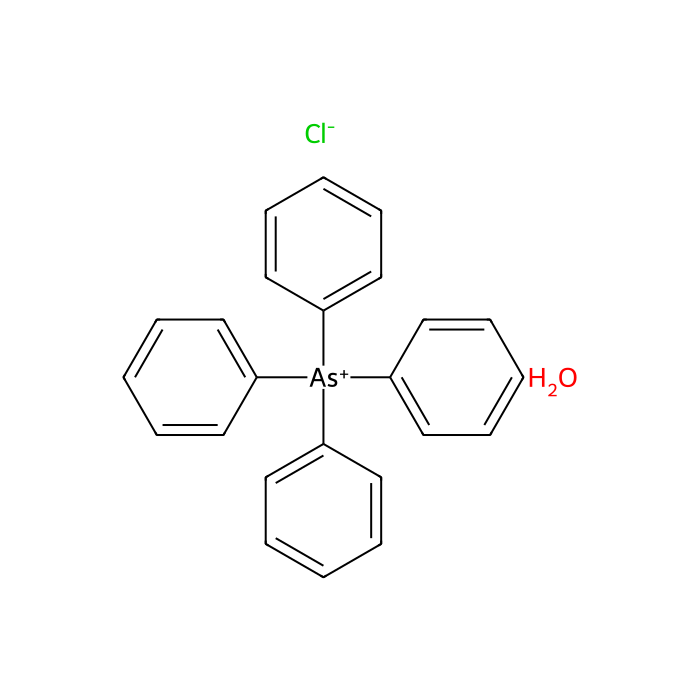
Determine the necessary mass, volume, or concentration for preparing a solution.
≥99% for sensitive chromatographic and analytical workflows requiring minimal baseline interference.
Room temperature Ships Check lot-specific COA for exact specifications.
SDS, COA, datasheet, and spec sheet available for download. Lot-specific COA accessible via lot number lookup.
Cited in 1 peer-reviewed publications across chromatography, organic synthesis, and cross-coupling reactions.
Comprehensive hazard, handling, storage, and regulatory compliance document.
Download SDS →Lot-specific quality data. Enter your lot number to retrieve the exact COA.
Look up COA →Full quality attributes and acceptance criteria for this grade.
View spec sheet →Taxonomy Tree
| Kingdom | Organic compounds |
|---|---|
| Superclass | Benzenoids |
| Classe | Benzene and substituted derivatives |
| Subclass | Not available |
| Intermediate Tree Nodes | Not available |
| Direct Parent | Benzene and substituted derivatives |
| Alternative Parents | Tetraorganoarsonium salts Oxygen-containing organoarsenic compounds Organic metalloid salts Organopnictogen compounds Organic oxides Organic chloride salts Hydrocarbon derivatives |
| Molecular Framework | Aromatic homomonocyclic compounds |
| Substituents | Tetraorganoarsonium salt - Monocyclic benzene moiety - Oxygen-containing organoarsenic compound - Organic metalloid salt - Organic oxygen compound - Organopnictogen compound - Organic oxide - Hydrocarbon derivative - Organic chloride salt - Organic salt - Organoarsenic compound - Aromatic homomonocyclic compound |
| Description | This compound belongs to the class of organic compounds known as benzene and substituted derivatives. These are aromatic compounds containing one monocyclic ring system consisting of benzene. |
| External Descriptors | Not available |
| Point de fusion (°C) | 257°C |
|---|---|
| Poids moléculaire | 436.800 g/mol |
| XLogP3 | |
| Hydrogen Bond Donor Count | 1 |
| Hydrogen Bond Acceptor Count | 2 |
| Rotatable Bond Count | 4 |
| Exact Mass | 436.058 Da |
| Monoisotopic Mass | 436.058 Da |
| Topological Polar Surface Area | 1.000 Ų |
| Heavy Atom Count | 27 |
| Formal Charge | 0 |
| Complexity | 301.000 |
| Isotope Atom Count | 0 |
| Defined Atom Stereocenter Count | 0 |
| Undefined Atom Stereocenter Count | 0 |
| Defined Bond Stereocenter Count | 0 |
| Undefined Bond Stereocenter Count | 0 |
| The total count of all stereochemical bonds | 0 |
| Covalently-Bonded Unit Count | 3 |
No assay-specific or bioanalytical application protocols are provided for this item in the Product Data. For general synthetic use as a counterion/ion-pairing reagent, consider the following generic workflow (literature/general):
These are starting points; optimize solvent, temperature, and concentration for your specific anion and desired solid-state form. Always consult primary literature if your system is known to form polymorphs or solvates.
This product is not intended for biological or clinical use. No biological roles are specified for this item.
General information (literature/general):
If any biochemistry-related study is contemplated (e.g., ion-pairing extraction from biological matrices), ensure containment, assess toxicity, and strictly adhere to institutional safety protocols. For detailed toxicological data and exposure limits, consult the SDS and primary literature.
Research use note: For research use only (product data). No medical, diagnostic, or therapeutic use is intended.
Not typically applicable. Tetraphenylarsonium chloride monohydrate is not a buffering agent and is not used to prepare pH buffer systems. If used in aqueous systems, it is typically as an ion-pairing or counterion reagent at low concentrations rather than for pH control.
For pH control in the laboratory, choose dedicated buffering systems (e.g., phosphate, HEPES, Tris) appropriate to your pH and ionic strength needs.
Given the presence of arsenic, tetraphenylarsonium salts pose environmental and health concerns. When feasible, consider alternative countercations with lower inherent hazard while retaining similar physicochemical behavior.
Comparison of counterions (literature/general):
Trade-offs:
Recommendation: Where the unique crystallization behavior of [AsPh4]+ is not essential, substitute with tetraphenylphosphonium or tetra-n-butylammonium analogs to reduce hazard while maintaining functionality.
No pharmaceutical or excipient use is specified for this item. Due to the presence of arsenic, tetraphenylarsonium salts are generally unsuitable for pharmaceutical formulation.
General context (literature/general):
This product is supplied strictly for research use only (product data) and is not intended for use in humans or animals.
Item-specific specifications are not provided in the Product Data. The following are literature/general characteristics for tetraphenylarsonium chloride and closely related hydrates; do not treat as product specifications.
Practical notes (general):
Although not a reagent in the classical sense, tetraphenylarsonium chloride monohydrate is widely used as a counterion source and ion-pairing agent.
Key applications (literature/general):
Practical tips:
Note: For this specific catalog item, no special application testing is provided; consult primary literature for your anion system.
The following general conditions apply to the use of tetraphenylarsonium chloride monohydrate in salt metathesis and crystallization workflows (literature/general guidance; optimize for your specific system):
Expected outcomes: Yields are often high (literature reports frequently >70% for straightforward metatheses), but crystallinity and polymorphism depend on solvent, temperature, and hydrate state.
Hazard classification for this specific item is not provided in the Product Data. Always consult the SDS for authoritative guidance.
Note: This product is for research use only (product data).
Tetraphenylarsonium chloride monohydrate is an ionic solid with a bulky, lipophilic cation. Solvent choice is driven by desired ion-pairing, solubility, and crystallization outcomes.
Note: For research use only (product data). Always defer to the lot-specific CoA and SDS for definitive storage and handling instructions.
Tetraphenylarsonium chloride monohydrate is a lipophilic quaternary arsonium salt, useful as a non-coordinating countercation for isolating and crystallizing anionic complexes.
Notes: Item-specific identifiers (exact stereochemistry not applicable; quaternary arsonium has no stereogenic center here). For authoritative identifiers and release specifications, consult the CoA for this lot.
Tetraphenylarsonium chloride monohydrate is primarily valuable as a source of the [AsPh4]+ counterion rather than as a reagent undergoing transformation.
Utility in synthesis (literature/general):
Alternatives and orthogonality:
Not applicable. This product is a small-molecule salt (inorganic/organometallic reagent), not a biological targeting reagent, antibody, or probe. No antigen, clone, isotype, or species reactivity applies.