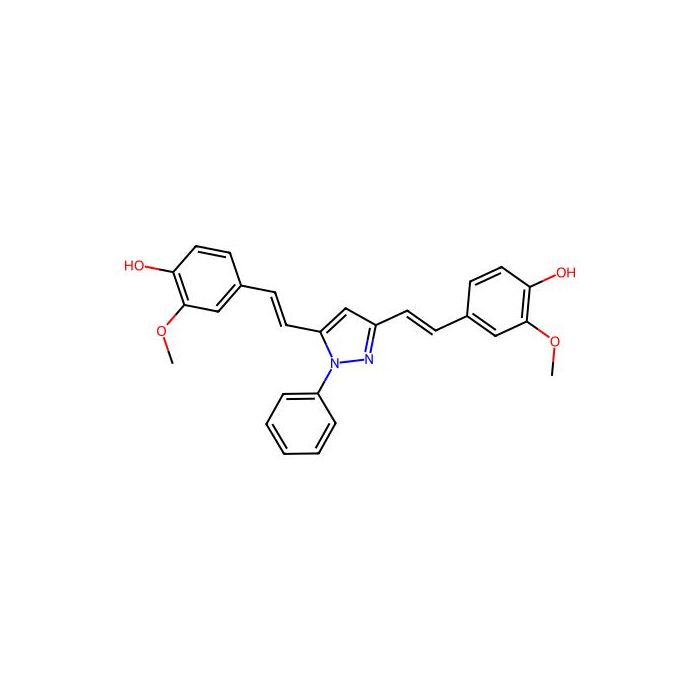
Cnb-001 , CAS No.828911-76-8

CAS: 828911-76-8 Cat. No.: C1065853 Formule: C27H24N2O4 Poids moléculaire: 440.5 Numéro CE: 880-009-1 PubChem CID: 135440402
DISPONIBLE À COMMANDE
Storage
Store at 2-8°C,Argon charged,Desiccated
Shipped In
Wet ice
★
Size
Allemagne (EU)
USA*
Price
Qty
100mg
C1065853-100mg
Sur commande · 8–12 semaines
35,49€
Enter a quantity for the sizes you want to add.
🧪

Why this grade

for sensitive chromatographic and analytical workflows requiring minimal baseline interference.

🌡

Storage & shipping

Store at 2-8°C,Argon charged,Desiccated Ships Wet ice Check lot-specific COA for exact specifications.

📋

Quality documents

SDS, COA, datasheet, and spec sheet available for download. Lot-specific COA accessible via lot number lookup.

📚

Literature proof

Cited in 0 peer-reviewed publications across chromatography, organic synthesis, and cross-coupling reactions.

Specifications

Conditions de stockage de stockage
Store at 2-8°C,Argon charged,Desiccated
Expédié en
Wet ice
Ce produit nécessite l'expédition en chaîne froide. Les services terrestres et autres services économiques ne sont pas disponibles.
Type d'action
INHIBITOR
Noms et identifiants
Sourires canoniquesCOC1=C(C=CC(=C1)C=CC2=CC(=NN2C3=CC=CC=C3)C=CC4=CC(=C(C=C4)O)OC)O
IUPAC Name4-[(E)-2-[5-[(E)-2-(4-hydroxy-3-methoxyphenyl)ethenyl]-2-phenylpyrazol-3-yl]ethenyl]-2-methoxyphenol
InChIKeyQUOCIDQIFWYHLB-QHKWOANTSA-N
INCHI1S/C27H24N2O4/c1-32-26-16-19(10-14-24(26)30)8-12-21-18-23(29(28-21)22-6-4-3-5-7-22)13-9-20-11-15-25(31)27(17-20)33-2/h3-18,30-31H,1-2H3/b12-8+,13-9+
Isomères SMILES COC1=C(C=CC(=C1)/C=C/C2=CC(=NN2C3=CC=CC=C3)/C=C/C4=CC(=C(C=C4)O)OC)O
PubChem CID 135440402
Poids moléculaire 440.5

Documentation

📋 Safety Data Sheet (SDS)

Comprehensive hazard, handling, storage, and regulatory compliance document.

Download SDS →

✅ Certificate of Analysis (COA)

Lot-specific quality data. Enter your lot number to retrieve the exact COA.

Look up COA →

📊 Datasheet

Quick-reference summary of product specifications and applications.

View datasheet →

🔬 Specification Sheet

Full quality attributes and acceptance criteria for this grade.

View spec sheet →

Advanced Data

Taxonomic Classification

Taxonomy Tree

KingdomOrganic compounds
SuperclassPhenylpropanoids and polyketides
ClasseDiarylheptanoids
SubclassLinear diarylheptanoids
Intermediate Tree Nodes Not available
Direct ParentLinear diarylheptanoids
Alternative Parents Phenylpyrazoles  Methoxyphenols  Styrenes  Phenoxy compounds  Methoxybenzenes  Anisoles  Alkyl aryl ethers  1-hydroxy-2-unsubstituted benzenoids  Heteroaromatic compounds  Azacyclic compounds  Organonitrogen compounds  Hydrocarbon derivatives  
Molecular FrameworkAromatic heteromonocyclic compounds
Substituents Linear 1,7-diphenylheptane skeleton - Phenylpyrazole - Methoxyphenol - Phenoxy compound - Anisole - Methoxybenzene - Styrene - Phenol ether - 1-hydroxy-2-unsubstituted benzenoid - Alkyl aryl ether - Phenol - Monocyclic benzene moiety - Benzenoid - Heteroaromatic compound - Azole - Pyrazole - Azacycle - Organoheterocyclic compound - Ether - Hydrocarbon derivative - Organic oxygen compound - Organic nitrogen compound - Organooxygen compound - Organonitrogen compound - Aromatic heteromonocyclic compound
DescriptionThis compound belongs to the class of organic compounds known as linear diarylheptanoids. These are diarylheptanoids with an open heptane chain. The two aromatic rings are linked only by the heptane chain.
External Descriptors Not available
Structure 3D
Modèle de structure chimique interactif


Certificats (CoA, COO, BSE/TSE et tableau d'analyse)
C of A & Other Certificates(BSE/TSE, COO):
Analytical Chart:
Propriétés chimiques et physiques
Poids moléculaire440.500 g/mol
XLogP35.700
Hydrogen Bond Donor Count2
Hydrogen Bond Acceptor Count5
Rotatable Bond Count7
Exact Mass440.174 Da
Monoisotopic Mass440.174 Da
Topological Polar Surface Area76.700 Ų
Heavy Atom Count33
Formal Charge0
Complexity650.000
Isotope Atom Count0
Defined Atom Stereocenter Count0
Undefined Atom Stereocenter Count0
Defined Bond Stereocenter Count2
Undefined Bond Stereocenter Count0
The total count of all stereochemical bonds2
Covalently-Bonded Unit Count1
Calculateurs de solution
Avis

Avis des clients

Application Protocols

No tested application protocols are provided for this item in the Product Data. The compound is not an antibody or biologic; therefore, no immunoassay-specific parameters (e.g., WB/IHC/IF dilutions) apply.

General protocol framework for small-molecule use in vitro (adapt as needed):

  • Stock preparation: Dissolve the weighed solid in anhydrous DMSO to a convenient concentration (e.g., 10–50 mM). Vortex and, if necessary, sonicate briefly. Filter through 0.22 µm PTFE for particle removal if compatible.
  • Working solution: Dilute stock into assay buffer immediately before use to the desired final concentration, maintaining DMSO at ≤0.1–0.5% v/v or per assay tolerance.
  • Controls: Include vehicle control, positive control (orthogonal chemotype if available), and negative controls. Run serial dilutions (e.g., 1:3 or 1:2) to generate full concentration–response curves.
  • Stability check: Re-inject working solutions by UPLC at T0 and end-of-assay to verify integrity and concentration.
  • Data quality: Monitor for aggregation (detergent control), redox artifacts, or fluorescence interference where applicable.

For analytical method development:

  • Start with RP-UPLC C18, 5–95% acetonitrile in water (0.1% formic acid), 0.3 mL/min, 30–40 °C; detect at multiple wavelengths. Optimize as needed.

Note: These are general templates and not item-validated protocols. Consult the SDS and CoA for any restrictions.

Biological Roles

Item-specific biological function and targets are not provided in the current listing. The compound is supplied strictly for research use only, with no medical or clinical claims.

General considerations for small-molecule research probes:

  • Characterization: Prior to any bioassay, confirm identity and purity by LC–MS and NMR. Establish a clean chromatographic peak and absence of reactive impurities that could confound results (e.g., Michael acceptors, oxidants) if relevant to the hypothesized activity.
  • Solubility and aggregation: Determine critical aggregation concentration under assay conditions; small molecules can form colloids that lead to artifactual inhibition. Include detergents where appropriate and run counterscreens (e.g., with BSA, detergent, or time-dependent controls).
  • Redox/light sensitivity: If the structure contains conjugation or phenolic motifs, photodegradation or redox cycling can occur. Conduct control experiments in the dark and include antioxidants only if compatible with the assay.
  • Adsorption/abiotic loss: Hydrophobic compounds may adsorb to plastic labware. Use low-binding plastics or glass vials and include recovery controls.

Documentation:

  • Record exact lot number and storage history (temperature excursions, number of freeze–thaw or warm–cool cycles) for reproducibility in biological experiments.

Note: Any literature-reported roles for compounds sharing the trade name “CNB-001” must be verified against the exact structure and lot-specific analytical data from this product’s CoA before extrapolating biological expectations.

Buffer Applications

This product is a small-molecule research compound and is not a buffering agent. No item-specific pKa or buffer-capable functional groups are provided.

Practical guidance if used in buffered systems:

  • Prepare concentrated stocks in a suitable anhydrous organic solvent (commonly DMSO) and dilute into the working buffer immediately before use to minimize precipitation and degradation.
  • Verify compatibility with common biological buffers (e.g., PBS, HEPES, Tris) by monitoring clarity and recovery via UPLC after dilution. Adjust co-solvent percentage to maintain solubility while staying within assay tolerance.
  • Avoid repeated pH cycling. If the compound is acid-/base-labile (unknown here), maintain a consistent pH during handling and analysis.

If your application requires a buffering function, select dedicated buffers with defined pKa ranges (e.g., HEPES pKa ~7.5, MOPS pKa ~7.2, Tris pKa ~8.1 at 25 °C) and validated recipes. This item is not intended for buffer formulation.

Green Alternatives

Because the exact structure and use-case of this item are not specified, “greener” choices should be considered in the context of your intended application (analytical, assay, or synthesis). The following guidance focuses on solvent and process choices rather than replacing the molecule itself.

Greener solvent considerations (general):

  • Prefer water or water-rich systems where feasible, using co-solvents sparingly and below assay tolerance limits.
  • Replace high-toxicity, high-PBT solvents (e.g., DMF, NMP, dichloromethane) with lower-hazard options when performance allows.

Illustrative comparison (general guidance):

  • DMSO vs 2-MeTHF/EtOAc: DMSO often required for solubility of polar/conjugated organics in stocks; for workups or extractions, consider ethyl acetate or 2-methyltetrahydrofuran over chlorinated solvents, balancing solubility and safety.
  • Acetonitrile vs ethanol/isopropanol: For HPLC/UPLC mobile phases, MeCN provides superior backpressure and UV transparency; however, ethanol or isopropanol can be viable greener alternatives for many separations with method optimization (temperature, column selection).

Process-intensity reductions:

  • Minimize solvent volumes via microplate assays, micro-scale reactions, and high-throughput screening techniques.
  • Use amber, reusable glassware and maintain inert headspace to extend solution shelf life and reduce waste from repeated preparation.

Trade-offs:

  • Greener solvents may alter solubility, chromatographic selectivity, or assay performance. Validate by small pilots before wholesale substitution.

Note: This section provides general sustainability guidance; it does not alter any item-specific storage requirement (2–8 °C, argon, desiccated).

Pharmaceutical Uses

No pharmacopeial status, excipient role, or formulation designation is provided for this item. It is supplied strictly for research use only and not for human or veterinary use.

General R&D formulation considerations (non-clinical):

  • Solubility enhancement: For hydrophobic small molecules, consider cosolvent systems (e.g., DMSO/PEG 400/saline), cyclodextrin inclusion complexes, or lipid-based vehicles for exploratory in vivo-like simulations in preclinical labs. Confirm stability and absence of precipitation over the intended dosing window in non-clinical models only.
  • Solid-state characterization: If formulation screening is planned, evaluate polymorphism/amorphous content by PXRD and DSC; confirm water uptake by DVS given the desiccated storage requirement.
  • Impurity control: Track degradation products under heat/light/oxidative stress via stability-indicating LC–MS methods.

Compliance and limitations:

  • This product is not manufactured under GMP and carries no USP/EP/JP monograph applicability based on the current listing. Do not use for API manufacturing, clinical studies, or diagnostic procedures.
  • If you require a GMP or documented excipient grade, contact Aladdin Scientific for availability or custom sourcing.

Documentation:

  • Retain CoA/SDS and stability data with experimental records. Report exact lot numbers and storage conditions in any publications or reports.
Physical Properties

Item-specific physical data are not provided in the current listing. Do not treat literature values as product specifications.

Item-specific (from Product Data):

  • Appearance: Not specified for this item; refer to CoA/Spec Sheet.
  • Molecular weight: Not specified for this item; refer to CoA/Spec Sheet.

General/literature guidance (non-spec, for planning only):

  • For small, hydrophobic research probes, solubility is often achieved in high-permittivity organic solvents (e.g., anhydrous DMSO, DMF) with subsequent dilution into aqueous buffers containing co-solvent or surfactant. Actual solubility of this item must be verified experimentally.
  • Melting point, boiling point, density, refractive index, logP/logD, and pKa are not available here. If these parameters are critical (e.g., for chromatographic method development or formulation), obtain them from the CoA or measure under your laboratory conditions.

Practical recommendations:

  • Perform a small-scale solubility screen using anhydrous DMSO, DMF, ethanol, acetonitrile, and buffered aqueous media with incremental co-solvent fractions. Document concentration at which clear solutions persist after 24 h at room temperature and 4 °C.
  • For analytical QC, begin with reverse-phase HPLC/UPLC using a C18 column, water/acetonitrile (0.1% formic acid) gradient, and diode-array detection to locate primary UV maxima. Adjust to orthogonal conditions (phenyl-hexyl, HILIC) as needed.
  • Hygroscopicity/sensitivity: The storage note (argon, desiccated) implies sensitivity to moisture/oxygen; minimize exposure when weighing or dissolving (see Safety & Handling).
Quality and Grades

Item-specific quality grade and purity are not listed in the current Product Data.

  • Grade/purity: Not specified for this item; refer to CoA/Spec Sheet.

How to interpret grades (general guidance):

  • Research/biochemical grade typically ensures suitability for laboratory experiments but does not imply pharmacopoeial compliance.
  • HPLC grade (for solvents) or LC–MS grade (for analytes) indicates low UV-absorbing/background impurities and is relevant if the compound is to be used as an analytical standard. In absence of an item grade, confirm baseline quality via CoA and in-house QC.
  • Screening/library grade compounds are often supplied with identity confirmation (NMR/LC–MS) and defined purity by HPLC/UPLC (e.g., ≥95%). Verify the actual certificate for this lot.

Analytical confirmation (recommended best practices):

  • Identity: 1H NMR, LC–MS (ESI±), and, when appropriate, 13C NMR and HRMS.
  • Purity: Reported by HPLC/UPLC area % at a specified wavelength and method; verify method conditions (column, gradient, detection) from CoA.
  • Residual solvents/inorganics: If critical to your application, request GC–MS for volatiles and ICP–MS for elemental impurities.
  • Water/peroxide/metal content: Not specified for this item; refer to CoA/Spec Sheet.

Stabilizers/additives:

  • None are specified. If stabilizers or counter-ions are present, they will appear on the CoA; account for them when preparing concentration-standardized solutions.
Reaction and Applications

This product is positioned as a research-use small molecule rather than a general-purpose synthetic reagent. No manufacturer application notes are provided in the listing.

Potential laboratory uses (general, non-item-specific):

  • As a chemical probe candidate in in vitro assays (e.g., cell-free enzymatic or binding assays) to evaluate structure–activity relationships when used alongside analogs. Any such use requires independent confirmation of identity, purity, and stability.
  • Analytical reference: May serve as an internal or external standard in exploratory LC–MS method development once purity and extinction coefficients are established.
  • Materials/solid-state studies: If the molecule is conjugated/aromatic, researchers sometimes investigate photophysical properties (e.g., absorbance/fluorescence) for sensor development—these characteristics must be determined experimentally for this lot.

Practical tips:

  • Handle under dry, inert conditions during weighing and dissolution to preserve integrity, as suggested by the argon/desiccated storage instruction.
  • If performing stability studies, monitor by UPLC-DAD and LC–MS across pH (2–9), light exposure (dark vs ambient), and temperature (4–37 °C). Determine t90 for your intended matrix.
  • For plate-based assays, pre-dilute DMSO stocks into intermediate aqueous-organic mixtures to minimize precipitation upon final dilution.

Important: No specific reaction classes (e.g., cross-coupling, nucleophilic substitutions) are endorsed for this item without a confirmed structure. Consult the CoA/SDS and primary literature for structure-dependent reactivity before planning synthetic transformations.

Reaction Conditions

Item-specific reactivity and optimal reaction conditions are not available because the verified structure and functional groups have not been provided. Accordingly, no named-reaction conditions are recommended for this product.

If you plan to employ this compound in chemical reactions (general guidance only):

  • Solvent: Start with dry, oxygen-free solvents consistent with the storage note (argon, desiccated). DMSO and DMF can be good dissolution media but may not be inert under strong electrophilic or dehydrating conditions; acetonitrile, toluene, or 2-MeTHF may be preferable depending on the transformation.
  • Temperature: Begin with ambient screening, then explore 0–60 °C while monitoring by TLC/UPLC. Avoid prolonged heating until thermal stability is established by DSC/TGA.
  • Atmosphere: Use inert gas (argon or nitrogen). For air-/moisture-sensitive substrates, conduct operations in a glovebox or with Schlenk techniques.
  • Catalysts/bases/acids: Introduce only after verifying compatibility on a micro-scale; unknown functionalities may be incompatible with strong bases (e.g., tBuOK) or acids (e.g., TFA, H2SO4).
  • Monitoring: Use LC–MS to detect mass shifts and potential adducts/oxidation products. Record time courses to establish kinetics and potential side reactions.

Expected yields: Not applicable—insufficient structural information. Establish feasibility via micro-scale experiments and stability-indicating analytics before considering any scale-up.

Safety and Handling

Safety summary (item-specific):

  • GHS classification: Not specified for this item; refer to SDS.
  • Signal word / H-statements / pictograms: Not specified for this item; refer to SDS.
  • Research use: For research use only.
  • Storage: Store at 2–8 °C, argon charged, desiccated (item-specific). Shipped on wet ice.

General laboratory precautions (always defer to SDS for authoritative guidance):

  • PPE: Lab coat, safety glasses, appropriate chemically resistant gloves (e.g., nitrile). Handle in a fume hood to avoid inhalation of dusts or solvent vapors from stock solutions.
  • Incompatibilities suggested by storage note: Avoid moisture and air/oxidants; keep containers tightly closed under inert gas. Use anhydrous solvents for solution prep; backfill headspace with argon or nitrogen after use.
  • First aid overview: Inhalation—move to fresh air; seek medical advice. Skin/eye contact—rinse with water for at least 15 minutes; remove contaminated clothing; seek medical advice. Ingestion—rinse mouth; do not induce vomiting; seek medical attention. Bring SDS to the clinician.
  • Spill/cleanup: For solids, avoid dust generation; cover with inert absorbent, collect mechanically, and dispose per local regulations. For solutions, absorb with inert material, ventilate area, and decontaminate surfaces.
  • Fire safety: Many organic solids/solutions are combustible. Use CO2, dry chemical, or foam. Cool containers with water spray from a safe distance.
  • Waste: Dispose as organic chemical waste; segregate halogenated vs non-halogenated solvent streams. Follow institutional and regulatory requirements.

Special risks to consider:

  • Potential air/moisture sensitivity inferred from argon/desiccated storage. Limit ambient exposure time; consider glovebox/glovebag handling if repeated openings are expected.
Solvent Selection

Item-specific solubility data are not provided. The storage guidance (argon, desiccated) suggests using dry, oxygen-free solvents for solution preparation and storage.

General solvent strategy for small-molecule research probes:

  • Primary solvents for stock solutions: Anhydrous DMSO or DMF are typical first choices due to high solvating power for aromatic/conjugated organics. Verify clarity and stability of solutions over time.
  • Secondary/volatile solvents: Acetonitrile, ethanol, isopropanol, or ethyl acetate may be used for analytical sample prep or crystallizations; confirm solubility and chemical stability.
  • Aqueous work: For biological assays, prepare concentrated DMSO stocks (e.g., 10–50 mM) and dilute into assay buffer to ≤0.1–0.5% DMSO final, if compatible with your system. Use surfactants (e.g., 0.01–0.05% Tween-20) only if precipitation occurs and your assay tolerates them.

Polarity/miscibility considerations (general):

  • DMSO and DMF are fully miscible with water; they facilitate staged dilution into buffers. For water-immiscible solvents (e.g., ethyl acetate), avoid direct addition to aqueous systems unless forming biphasic setups for extraction.

Method development suggestions:

  • Perform a mini-solubility panel (DMSO, DMF, MeCN, MeOH/EtOH, IPA, 1,4-dioxane) at room temperature and 37 °C.
  • Assess UV–Vis absorbance in chosen solvent to identify λmax and avoid interference in analytical detection.
  • For long-term storage of solutions, use anhydrous solvent, amber vials with PTFE-lined caps, inert headspace (argon), and minimal headspace volume.

Note: Do not treat any of the above as product specifications; verify experimentally under your conditions.

Storage and Reconstitution

Item-specific storage conditions:

  • Store at 2–8 °C, argon charged, desiccated (as provided in Product Data).
  • Shipped on wet ice.

General handling to maintain quality:

  • Minimize exposure to air and moisture. When opening, allow the container to equilibrate to room temperature in a desiccator to prevent condensation. Quickly weigh required amounts, then promptly re-seal, backfilling the headspace with argon.
  • Use amber vials and protect from light if the compound exhibits visible color or is suspected to be photosensitive. Keep desiccant present in secondary containment.

Reconstitution guidance (non-spec, verify experimentally):

  • Prepare concentrated stocks in anhydrous, oxygen-free solvent (commonly DMSO or DMF). Aim for a clear solution; gentle warming (25–37 °C) and brief sonication can assist dissolution. Avoid prolonged heating.
  • Filter sterilization (0.22 µm PTFE) may be employed if sterile solutions are required and the compound is filter-stable.
  • Working solutions should be prepared fresh on the day of use whenever possible. For short-term storage of solutions (hours to a few days), keep at 2–8 °C under inert headspace and protected from light. Assess stability by UPLC/LC–MS.
  • For longer-term solution storage, many labs consider −20 °C aliquots under inert gas; however, confirm compatibility and stability first. The solid-state instruction for this item remains 2–8 °C.

Do not freeze–thaw repeatedly. Aliquot stock solutions to single-use vials to maintain consistency across experiments.

Specifications not provided (refer to CoA/SDS): grade/purity, stabilizers, water/metal/peroxide content, exact solubility, and analytical reference spectra.

Structure and Identity

Brief overview: CNB-001 (SKU C1065853) is a small-molecule research chemical. Limited item-specific identifiers are provided in the current listing; consult CoA/Spec Sheet for definitive structure data.

  • CAS: 828911-76-8 (item-specific)
  • PubChem CID: 135440402 (item-specific)
  • InChIKey: 306904 (as provided; note that typical InChIKeys are 27-character hashes—verify on CoA/SDS)
  • SMILES: Not specified for this item; refer to CoA/Spec Sheet.
  • Molecular formula: Not specified for this item; refer to CoA/Spec Sheet.
  • Molecular weight: Not specified for this item; refer to CoA/Spec Sheet.

Structural features (general notes):

  • This product is supplied as a defined organic small molecule; specific functional groups, ring systems, and stereochemical descriptors are not provided in the item data. Without an item-verified structure string, a reliable textual 2D description cannot be given.
  • If you require substructure, functionality, or stereochemical information (e.g., aromatic systems, heterocycles, conjugation), please request the current CoA/Spec Sheet or SDS from Aladdin Scientific for the exact structure representation and analytical identifiers (e.g., NMR, HRMS).

Data integrity guidance:

  • For any cheminformatics workflows (registration, ELN, spectral prediction), use the structure files and identifiers from the official Aladdin CoA to avoid record divergence.
  • Cross-check the CAS and CID with the provided InChIKey/SMILES once available; ensure all identifiers resolve to a single, consistent structure before use in screening libraries or computational docking.
Synthetic Utility

No structure or functional group details are provided in the item data; therefore, specific synthetic transformations cannot be responsibly recommended for this compound.

General guidance for using small molecules in synthesis when structure is known (for planning only):

  • Functional group leverage: Knowledge of electrophilic/nucleophilic sites, heteroatoms, and ring systems dictates suitability for cross-couplings, condensations, or protective group strategies. Obtain the verified structure (SMILES/InChI) from the CoA before planning.
  • Stability mapping: Test the compound’s endurance to acid/base, redox, and heat to choose between conditions like Suzuki–Miyaura (base-sensitive), Buchwald–Hartwig (ligand/base/heat), or electrophile-adding reactions (if Michael acceptors are present).
  • Purification strategy: Establish orthogonal methods (flash chromatography vs. preparative HPLC) based on polarity and UV characteristics determined experimentally.

Risk management:

  • Without a confirmed structure, do not attempt derivatization or scale-up. Misassigned structures can lead to hazardous conditions or misleading SAR outcomes.
  • Confirm identity after any transformation (1H/13C NMR, HRMS, purity by UPLC) and archive spectral data.

Conclusion: Treat this item as a finished research probe unless and until the exact functional group map is verified from the CoA/Spec Sheet.

Target Specificity

No target, pathway, or binding specificity information is provided in the Product Data for this item. As such, no claims are made regarding biochemical targets, selectivity profiles, or potency.

Guidance for researchers (general):

  • If employing this compound as a putative probe, independently establish a target engagement assay (e.g., enzymatic IC50 with counter-screens, CETSA/thermal shift where appropriate) and confirm on a second orthogonal platform (e.g., SPR, MST, ITC) to avoid false positives.
  • Assess selectivity by screening against a panel of related targets and profiling off-target liabilities (e.g., broad kinase panel if the hypothesized target is a kinase), ensuring assay interference controls are implemented.
  • Document the exact lot and storage history; subtle degradation can alter apparent activity and specificity.

Note: Any literature-referenced specificity associated with the trade name “CNB-001” must not be imputed to this item without confirming structural identity and purity from the Aladdin CoA.

Shall we send you a message when we have discounts available?

Remind me later

Thank you! Please check your email inbox to confirm.

Oops! Notifications are disabled.