GRADE & PURITYfor Elemental analysis?Elemental-analysis grade — controlled C/H/N/S and trace background for accurate elemental data. Use in CHNS and related elemental determinations.
Transition metal oxide - Inorganic oxide - Inorganic salt
Description
This compound belongs to the class of inorganic compounds known as transition metal oxides. These are inorganic compounds containing an oxygen atom of an oxidation state of -2, in which the heaviest atom bonded to the oxygen is a transition metal.
External Descriptors
Not available
1. Djoumbou Feunang Y, Eisner R, Knox C, Chepelev L, Hastings J, Owen G, Fahy E, Steinbeck C, Subramanian S, Bolton E, Greiner R, and Wishart DS. ClassyFire: Automated Chemical Classification With A Comprehensive, Computable Taxonomy. Journal of Cheminformatics, 2016, 8:61.
Determine the necessary mass, volume, or concentration for preparing a solution.
Dilution Calculator
Determine the dilution needed to prepare a stock solution.
Reconstitution Calculator
Avis
Avis des clients
Application Protocols
No bioassay or immunoassay protocols apply to this inorganic oxide. For materials and analytical workflows, consider the following general, literature-based procedures (not product specifications):
Preparation of a 1000 mg/L Co standard from CoO
Weigh 0.2500 g CoO into a PTFE beaker. Add 10–15 mL conc. HNO3 cautiously, warm to dissolve. Transfer to a 250 mL class-A volumetric flask, rinse, and dilute to mark with 2% v/v HNO3. Mix thoroughly.
Oxidation to Co3O4
Spread CoO powder in an alumina boat; calcine in air at 700 °C for 4 h (ramp 3 °C/min). Cool in air; store in a desiccator.
Reduction to Co (catalyst activation)
Load CoO on a suitable support; place in tube furnace. Purge with N2, then heat under 10% H2/N2 to 400 °C for 3 h. Cool under N2 and passivate in 0.5% O2/N2 before air exposure.
Always adjust conditions to your equipment scale and consult the SDS/CoA for safety and item-specific details.
Biological Roles
This product is an inorganic solid for research/materials use; it is not intended for biological systems.
Literature context (not product claims)
Cobalt as an element: An essential trace element in the corrin ring of cobalamin (vitamin B12). Free Co2+ ions can interact with metalloproteins and influence hypoxia-inducible pathways, but soluble cobalt salts, not the oxide, are typically studied in this context.
Cobalt oxide itself: CoO is water-insoluble and does not have a native biological role. Under acidic physiological conditions or within cells, partial dissolution could release Co2+, which may be bioactive/toxic; such studies typically use soluble cobalt salts as surrogates.
Lab guidance
Avoid introducing cobalt oxides into biological assays unless specifically designing materials interfaces (e.g., catalyst supports). If required, characterize dissolution (ion release) in relevant media and control for nanoparticulate effects.
Safety reminder
Handle as a hazardous inorganic material; no clinical or therapeutic use is implied. Consult SDS before any in vitro exposure experiments.
Buffer Applications
Cobalt(II) oxide is not a buffering agent and is essentially insoluble in water. It is not used to prepare biochemical buffers.
Practical note
For aqueous work, CoO is typically first dissolved in mineral acids to form soluble cobalt salts; any buffering would then be governed by the chosen buffer system (e.g., acetate, phosphate), not by cobalt oxide itself.
Refer instead to the Reaction & Applications and Solvent Selection sections for dissolution and processing guidance.
Green Alternatives
Cobalt compounds are inherently hazardous and critical metals; “greener” choices focus on safer processing, reduced solvent/energy usage, and closed-loop cobalt handling.
Process-level alternatives (literature; balance benefits vs tradeoffs)
Mechanochemistry (ball milling) vs solution routes: Eliminates solvent, reduces waste; may require longer milling and careful dust control.
Aqueous nitrate/acetate precursors vs oxide: Allow lower-temperature processing and easier stoichiometry in solution; introduce counterions and nitrate off-gassing; raise water/effluent treatment needs.
Co3O4 (spinel) vs CoO: Can be reduced or used directly in some applications; may decrease step count for oxidized targets; different Co2+/Co3+ ratio affects reactivity and magnetic/electronic outcomes.
Bio-based binders/vehicles (e.g., cellulose, PEG) for slurries instead of VOC-rich organics: Lower emissions; may affect drying/sintering behavior.
Example comparison (literature; not product specifications)
Route: Solid-state from CoO vs solution from Co(NO3)2
Waste: Low vs higher (nitrate residues)
Energy: Higher calcination T for solids vs lower T for solution-derived gels
Control: Good for bulk ceramics vs finer compositional control in sol–gel
Safety: Dust exposure vs handling oxidizers and NOx release
Practical tips
Implement enclosure/LEV for powder handling; recycle cobalt-bearing waste.
Use minimal acid volumes and recover cobalt from spent liquors via precipitation (e.g., as Co(OH)2 then recycle).
Pharmaceutical Uses
Cobalt(II) oxide is not employed as a pharmaceutical excipient and has no approved role in drug formulation. It is an inorganic raw material for research and materials manufacturing only.
Manufacturing context (literature)
In the broader chemical industry, cobalt oxides serve as catalysts or catalyst precursors (after reduction/conditioning). Such roles are process-side and not part of finished drug products.
Compliance note
No pharmacopoeial monograph for cobalt(II) oxide as an excipient is typically cited. For any GMP-adjacent use (e.g., catalyst preparation for fine chemicals), ensure appropriate quality documentation, impurity profiling, and containment.
Reminder
For research use only; not for human or veterinary use.
Physical Properties
Item-specific (from Product Data)
Appearance: Not specified for this item; refer to CoA/Spec Sheet.
Literature/Reference values (typical for cobalt(II) oxide; not product specifications)
Physical state/Color: Fine powder, typically olive-green to black (literature)
Crystal structure: Rocksalt (NaCl-type), space group Fm-3m (literature)
Melting point: ~1,935 °C (literature)
Boiling point: Decomposes before boiling; sublimation not typical (literature)
Density: ~6.4–6.5 g/cm³ at 25 °C (literature)
Solubility: Insoluble in water; slowly soluble in dilute mineral acids (HCl, H2SO4, HNO3) with evolution of heat, forming Co2+ salts; soluble in strong chelating media (e.g., hot EDTA solutions) (literature)
Thermal behavior: Oxidizes to Co3O4 in air upon heating (~600–800 °C depending on pO2); reduces to metallic Co under H2/CO at elevated temperature (literature)
Not specified for this item; refer to CoA/Spec Sheet
Water content, trace metals profile, particle size distribution, specific surface area, UV cutoff, RI/logP/pKa (not typically applicable to inorganic oxides).
Quality and Grades
Item-specific (from Product Data)
Grade/Purity: for Elemental analysis
What this means
“For Elemental analysis” typically indicates suitability as a matrix or standard precursor in elemental quantification workflows (e.g., ICP-OES/MS, AAS, combustion/ash elemental assays), where consistent composition and low/defined levels of interfering impurities are important. Such materials are chosen to provide reliable cobalt content recovery after dissolution/fusion and minimal background for key spectrometric lines.
Practical implications for users
Use cases: Preparation of cobalt calibration solutions (after acid dissolution), spike/recovery studies, quality control in solid-state cobalt determinations, and as a defined cobalt source for synthesis where impurity metals can bias catalytic or magnetic properties.
Documentation: For trace-level impurity profile, particle size, or loss on ignition, consult the lot-specific CoA/Spec Sheet. Do not assume semiconductor or battery-grade metal impurity limits unless explicitly stated.
Stabilizers/Additives: Not specified for this item; refer to CoA/Spec Sheet.
Related guidance
For chromatographic “HPLC grade” or “spectrophotometric grade” specifications: not applicable to this inorganic solid. For applications requiring ultra-trace metal backgrounds (ppb), verify ICP/MS impurity tables on the CoA before use.
Reaction and Applications
Materials synthesis
Ceramic and glass coloration: CoO imparts blue coloration in silicate glasses and glazes; tone depends on oxidation conditions and fluxes (literature).
Solid-state precursors: Reacts with metal oxides/iron oxides upon calcination to yield spinels (e.g., CoFe2O4), perovskite-type oxides, and layered cobaltates; CoO oxidizes to Co3O4 under air during firing (literature).
Battery/catalyst precursor: Serves as a precursor to metallic Co or Co3O4 nanoparticles by reduction/oxidation, used in Fischer–Tropsch, ammonia decomposition, oxygen evolution (after appropriate conversion and support) (literature).
Analytical/elemental chemistry
Elemental analysis grade suits gravimetric/ICP standard preparations: Dissolve a precisely weighed mass in acid to prepare stock cobalt standard solutions. Validate complete dissolution (no residue) and dilute in matrix-matched acid for ICP-OES/MS.
Mechanistic/practical tips
Dissolution: Use warm 2–4 M HCl or HNO3 with stirring; small particle size accelerates dissolution. Add acid incrementally to avoid localized overheating. After dissolution, filter to remove any insoluble gangue.
Solid-state reactions: Thoroughly homogenize stoichiometric mixtures (agate mortar/ball mill), then calcine with controlled atmosphere. Anticipate mass gain if oxidizing to Co3O4 and mass loss if reducing to Co.
Thin film/inks: For screen printing or tape casting, optimize solids loading (typically 30–60 wt%) and use dispersants compatible with binder system.
Named/related processes (literature)
Carburization/reduction to Co0 for Fischer–Tropsch catalysts; formation of cobalt ferrite via ceramic route; solvothermal/hydrothermal conversion to Co-based MOFs after acid-assisted dissolution.
Reaction Conditions
The following are literature/general conditions for common operations involving cobalt(II) oxide; they are not product specifications.
Acid dissolution to prepare cobalt standards/solutions
Typical reagents: 2–4 M HCl or HNO3; alternative: 1–2 M H2SO4. Add acid gradually to the solid with stirring.
Temperature/time: 50–80 °C, 0.5–2 h depending on particle size and loading. Ensure complete dissolution; filter if necessary.
Concentration targets: Prepare 1000 mg/L Co stock solutions, then dilute gravimetrically/volumetrically for ICP/AAS.
Oxidation to Co3O4 (spinel)
Atmosphere: Static/flowing air or O2.
Temperature/time: 600–800 °C for 2–6 h; ramp 2–5 °C/min. Monitor mass gain (theoretical ~8.6% from CoO → Co3O4).
Reduction to metallic cobalt (catalyst precursor activation)
Atmosphere: 5–10% H2 in N2/Ar (or CO), with slow ramp and hold to 350–500 °C for 2–6 h; passivate in dilute O2 before exposure to air.
Solid-state synthesis of cobalt ferrite (example)
Stoichiometry: CoO:Fe2O3 = 1:1 (molar) for CoFe2O4.
Conditions: Ball mill 2–12 h with dispersant; calcine 800–1000 °C for 2–8 h; optional second grind/fire for phase purity.
Safety/quality notes
Use controlled atmospheres; avoid dusting during transfers. For analytical preparations, use high-purity acids and pre-leached glassware to minimize contamination.
Safety and Handling
Item-specific (from Product Data)
GHS classification: Not specified for this item; refer to CoA/Spec Sheet.
Signal word: Not specified for this item; refer to CoA/Spec Sheet.
H-statements/Pictograms: Not specified for this item; refer to CoA/Spec Sheet.
Storage: Room temperature; shipped under normal conditions.
Literature-based safety guidance (general; defer to the product SDS for authoritative information)
Hazards typical for cobalt(II) compounds: May cause respiratory irritation on dust inhalation; skin/respiratory sensitizer; suspected carcinogen and reproductive toxin categories have been assigned to certain cobalt compounds by various regulatory bodies; hazardous to the aquatic environment (literature).
PPE: Use laboratory coat, safety goggles, and suitable gloves (e.g., nitrile). Employ a NIOSH-approved particulate respirator when handling powders outside a fume hood.
Engineering controls: Handle powders in a certified fume hood or glovebox to minimize inhalation exposure; use local exhaust during weighing.
Incompatibilities: Strong oxidizers (may further oxidize CoO to Co3O4 with heat release); strong reducing agents (may reduce to Co metal at temperature); avoid contact with strong bases that can form cobaltate species. Avoid generation of airborne dust.
First aid overview: If inhaled—move to fresh air, seek medical advice. Skin/eye contact—rinse with water for at least 15 minutes, remove contaminated clothing. If ingested—rinse mouth; do not induce vomiting; seek medical attention. Provide SDS to responders.
Spills/Waste: Avoid dust; gently sweep or HEPA-vacuum. Collect in sealed container for disposal as hazardous waste per local regulations.
Fire: Non-combustible; use extinguishing media suitable for surrounding materials.
Solvent Selection
Cobalt(II) oxide is a water-insoluble inorganic solid. Solvent selection concerns its dissolution or dispersion for processing or analysis, rather than its use as a solvent.
Item-specific
No solvent specification is provided for this item; refer to CoA/Spec Sheet for any recommended dissolution notes.
Literature guidance (general)
Water: Essentially insoluble; forms no stable aqueous solution without acid.
Mineral acids: Dissolves in dilute HCl, H2SO4, or HNO3 with warming to give Co2+ salts (e.g., CoCl2, CoSO4, Co(NO3)2). Avoid concentrated oxidizing acid + heat combinations that may evolve NOx/Cl2.
Organic acids/chelators: Hot solutions of acetic acid are slow; complexing agents (EDTA, citrate, ammonia) enhance dissolution by chelation.
Alkaline media: Insoluble in weak base; fusion with alkali carbonates/hydroxides at high temperature can generate mixed cobaltates.
Dispersions: For ceramic inks or slurries, disperse in appropriate binders/vehicles (e.g., glycol ethers, polyvinyl alcohol aqueous systems) using ball milling with dispersant; stability depends on particle size and surface chemistry.
When to choose vs alternatives
Choose CoO when you require a +2 cobalt source that is convertible to salts in situ by acid dissolution, or when you need an oxide precursor for solid-state reactions (e.g., to form spinels, ferrites) with controlled oxygen stoichiometry.
Consider Co3O4 when an oxidized spinel phase is desired directly; consider soluble salts (e.g., Co(NO3)2·6H2O) when rapid, low-temperature solution processing is needed.
Storage and Reconstitution
Item-specific (from Product Data)
Storage conditions: Room temperature
Shipped in: Normal
General storage guidance (literature/practice)
Keep container tightly closed in a dry place to minimize moisture uptake and dust release. Although CoO is stable, prolonged exposure to moist air and elevated temperature can promote surface oxidation to Co3O4.
Store away from incompatible materials (strong oxidizers/reducers). Use secondary containment to control spills.
Reconstitution/Preparation notes
As a solid powder, no reconstitution is required. For solution preparation (e.g., standards), dissolve in mineral acid as outlined under Reaction Conditions. Filter to remove insolubles before volumetric dilution.
For slurry/ink preparation, disperse in selected vehicle with surfactant/dispersant and deagglomerate via milling or ultrasonication.
Stability
Chemical stability: High at ambient conditions; thermally oxidizes at elevated temperature in air. No freezing/thawing concerns.
Documentation
For any lot-specific handling notes (particle size, moisture content, impurity profile), consult the CoA/Spec Sheet.
Research Use Note
For research use only; not for human or veterinary use.
Structure and Identity
Brief overview: Cobalt(II) oxide is an inorganic binary oxide of cobalt in the +2 oxidation state, widely used as a cobalt source in materials synthesis, ceramics, catalysis, and analytical chemistry.
Item-specific (from Product Data)
SKU: C141461
Product name: Cobalt oxide
CAS: 1307-96-6
Grade/Purity: for Elemental analysis
Storage conditions: Room temperature
Shipped in: Normal
InChIKey (as provided): 151616
SMILES: Not specified for this item; refer to CoA/Spec Sheet.
Molecular formula: Not specified for this item; refer to CoA/Spec Sheet.
Molecular weight: Not specified for this item; refer to CoA/Spec Sheet.
Literature/Computed (for identity/reference; not item specifications)
Preferred IUPAC name: Cobalt(II) oxide
Common abbreviations: CoO
Molecular formula (literature): CoO
Formula weight (literature): ~74.93 g/mol
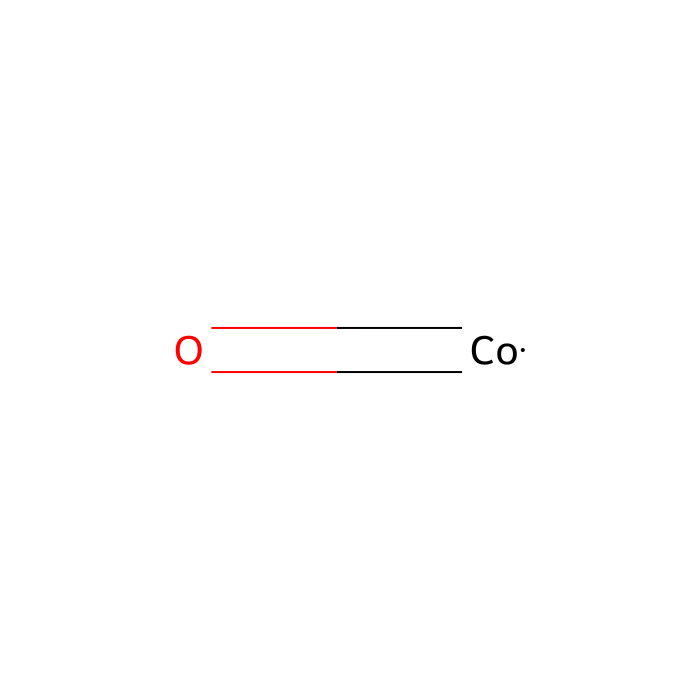
Structure description (2D): A lattice of Co2+ cations and O2− anions in a rocksalt (NaCl-type) arrangement; each Co is octahedrally coordinated by O.
Functional/structural features: Inorganic oxide; no organic functional groups; paramagnetic Co2+ centers; can be oxidized to spinel Co3O4.
Notes
This product is intended for research use only. Consult the Certificate of Analysis (CoA) for definitive item-specific identifiers and any lot-specific details.
Synthetic Utility
Role as cobalt source
CoO provides cobalt in the +2 oxidation state and serves as a robust, weighable precursor for making cobalt salts (via acid dissolution) and mixed-metal oxides (via calcination). It offers low volatility and good shelf stability vs soluble salts.
Transformations and conversions (literature)
Oxidation: CoO → Co3O4 under air/O2 upon heating (~600–800 °C depending on pO2 and particle size).
Reduction: CoO → Co0 under H2/CO/NH3–H2 at 300–500 °C, furnishing active metallic cobalt for catalysis (e.g., Fischer–Tropsch, hydrogenation) after passivation.
Solution chemistry: Acid dissolution to Co2+ enables preparation of cobalt acetate, nitrate, chloride, sulfate, and organometallic/coordination complexes (e.g., with bpy, phen, porphyrins) after ligand substitution.
Retrosynthetic value
When targeting cobalt-containing oxides or coordination compounds, CoO offers a chloride/sulfate-free starting point, minimizing anion contamination in high-temperature syntheses and ceramic microstructures.
Practical tips
Ensure thorough mixing and staged calcination (grind–fire cycles) for phase-pure solids. For analytical standards, confirm quantitative dissolution and use high-purity acids and Class A volumetrics.
Target Specificity
Not applicable. This product is an inorganic material (cobalt(II) oxide), not a biological targeting reagent (e.g., antibody, ligand, probe). No antigen, epitope, species reactivity, clone, or isotype information applies.
We use cookies to ensure the website functions properly and, where permitted, to improve your experience. You can manage your preferences at any time in Settings. Learn more in our Cookie Policy.
Shall we send you a message when we have discounts available?
Remind me later
Thank you! Please check your email inbox to confirm.
Products are supplied to verified businesses, institutions, and qualified professionals for research and development use only. Not for use in humans, animals, diagnosis, or therapy.

 H2624210