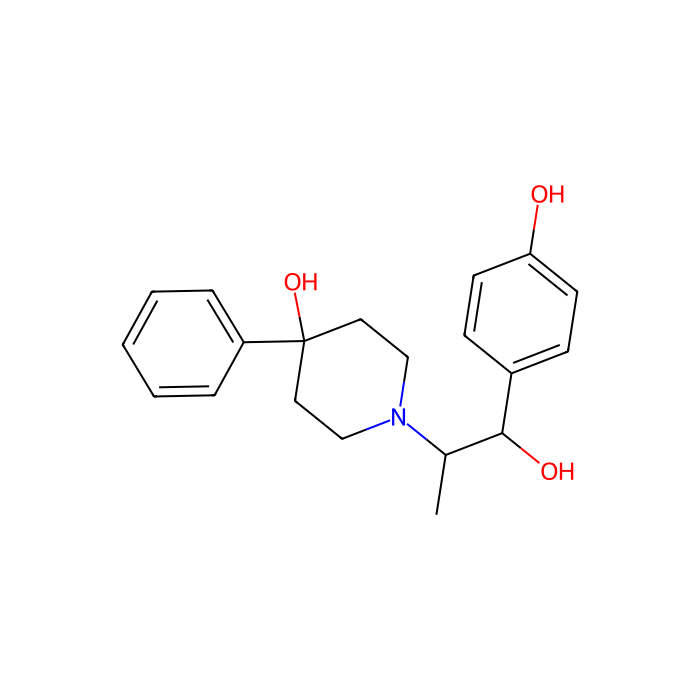
CP-101,606 - Moligand™, ≥98%(HPLC) , Glutamate NMDA receptor; GRIN1/GRIN2B antagonist, CAS No.134234-12-1, Glutamate NMDA receptor; GRIN1/GRIN2B antagonist

CAS: 134234-12-1 Cat. No.: C167028 Formule: C20H25NO3 Poids moléculaire: 327.42 Numéro CE: 694-572-4
DISPONIBLE À COMMANDE
GRADE & PURITY Moligand™ ? Moligand™ — Aladdin's line of ligands and bioactive small molecules. Use for receptor, pathway, and binding studies needing defined small-molecule tools. ≥98%(HPLC)
Synonyms
CP 101606 | MLS006010672 | 1-[(S)-2-(S)-Hydroxy-2-(4-hydroxy-phenyl)-1-methyl-ethyl]-4-phenyl-piperidin-4-ol | BCP13195 | CP101606 | AKOS015959795 | Traxoprodil [INN] | DTXSID90158605 | TRAXOPRODIL [WHO-DD] | 134234-12-1 (free base) | Benzophenone,4'-bis(
Storage
Store at -20°C
Shipped In
Ice chest + Ice pads
★
Size
Allemagne (EU)
USA*
Price
Qty
5mg
C167028-5mg
—
3 En stock

92,76€

139,62€
Enregistrer 46,86 € (33.56%)
10mg
C167028-10mg
—
3 En stock

132,68€

199,49€
Enregistrer 66,82 € (33.49%)
25mg
C167028-25mg
—
2 En stock

290,61€

436,39€
Enregistrer 145,78 € (33.41%)
50mg
C167028-50mg
—
3 En stock

523,16€

785,22€
Enregistrer 262,06 € (33.37%)
100mg
C167028-100mg
Sur commande · 8–12 semaines

940,54€

1 410,86€
Enregistrer 470,31 € (33.34%)
Enter a quantity for the sizes you want to add.
🧪

Why this grade

Moligand™, ≥98%(HPLC) Moligand™ for sensitive chromatographic and analytical workflows requiring minimal baseline interference.

🌡

Storage & shipping

Store at -20°C Ships Ice chest + Ice pads Check lot-specific COA for exact specifications.

📋

Quality documents

SDS, COA, datasheet, and spec sheet available for download. Lot-specific COA accessible via lot number lookup.

📚

Literature proof

Cited in 0 peer-reviewed publications across chromatography, organic synthesis, and cross-coupling reactions.

Vue d’ensemble

CP-101,606 has been used as a N-methyl-D-aspartate (NMDA) receptor antagonist to study its role in recovery of spinal cord injuries.

Specifications

Synonymes
CP 101606 | MLS006010672 | 1-[(S)-2-(S)-Hydroxy-2-(4-hydroxy-phenyl)-1-methyl-ethyl]-4-phenyl-piperidin-4-ol | BCP13195 | CP101606 | AKOS015959795 | Traxoprodil [INN] | DTXSID90158605 | TRAXOPRODIL [WHO-DD] | 134234-12-1 (free base) | Benzophenone,4'-bis(
Spécifications et pureté
Moligand™, ≥98%(HPLC)
Mécanismes biochimiques et physiologiques
曲索普地尔(CP-101606)是一种有效的N-甲基-D-天冬氨酸(NMDA)受体非竞争性拮抗剂,对NR2B亚单位具有选择性。在脑损伤和中风的动物模型中,它被证明具有神经保护作用。 CP-101606(曲索普地尔)在抑制谷氨酸诱导的大鼠死亡中起作用。它可能对人类缺血和神经退行性疾病有治疗作用。曲索普地尔由细胞色素P450(CYP)2D6代谢。
Conditions de stockage de stockage
Store at -20°C
Expédié en
Ice chest + Ice pads
Ce produit nécessite l'expédition en chaîne froide. Les services terrestres et autres services économiques ne sont pas disponibles.
Grade
Moligand™
Type d'action
ANTAGONIST
Mécanisme d'action
Glutamate NMDA receptor; GRIN1/GRIN2B antagonist
Pureté
≥98%(HPLC)
Propriétés du produit
ALogP2.3
Noms et identifiants
Pubchem Sid504757876
Pubchem Sid Urlhttps://pubchem.ncbi.nlm.nih.gov/substance/504757876
Sourires canoniquesCC(C(C1=CC=C(C=C1)O)O)N2CCC(CC2)(C3=CC=CC=C3)O
IUPAC Name1-[(1S,2S)-1-hydroxy-1-(4-hydroxyphenyl)propan-2-yl]-4-phenylpiperidin-4-ol
InChIKeyQEMSVZNTSXPFJA-HNAYVOBHSA-N
INCHI1S/C20H25NO3/c1-15(19(23)16-7-9-18(22)10-8-16)21-13-11-20(24,12-14-21)17-5-3-2-4-6-17/h2-10,15,19,22-24H,11-14H2,1H3/t15-,19+/m0/s1
Isomères SMILES C[C@@H]([C@H](C1=CC=C(C=C1)O)O)N2CCC(CC2)(C3=CC=CC=C3)O
WGK Allemagne 3
Poids moléculaire 327.42
Reaxy-Rn 13582904
Reaxys-RN_link_address https://www.reaxys.com/reaxys/secured/hopinto.do?context=S&query=IDE.XRN=13582904&ln=

Documentation

📋 Safety Data Sheet (SDS)

Comprehensive hazard, handling, storage, and regulatory compliance document.

Download SDS →

✅ Certificate of Analysis (COA)

Lot-specific quality data. Enter your lot number to retrieve the exact COA.

Look up COA →

📊 Datasheet

Quick-reference summary of product specifications and applications.

View datasheet →

🔬 Specification Sheet

Full quality attributes and acceptance criteria for this grade.

View spec sheet →

Advanced Data

Taxonomic Classification

Taxonomy Tree

KingdomOrganic compounds
SuperclassOrganoheterocyclic compounds
ClassePiperidines
SubclassPhenylpiperidines
Intermediate Tree Nodes Not available
Direct ParentPhenylpiperidines
Alternative Parents Phenylpropanes  Aralkylamines  1-hydroxy-2-unsubstituted benzenoids  Tertiary alcohols  Trialkylamines  Secondary alcohols  1,2-aminoalcohols  Azacyclic compounds  Organopnictogen compounds  Hydrocarbon derivatives  Aromatic alcohols  
Molecular FrameworkAromatic heteromonocyclic compounds
Substituents Phenylpiperidine - Phenylpropane - 1-hydroxy-2-unsubstituted benzenoid - Phenol - Aralkylamine - Monocyclic benzene moiety - Benzenoid - Tertiary alcohol - Tertiary aliphatic amine - Tertiary amine - 1,2-aminoalcohol - Secondary alcohol - Azacycle - Aromatic alcohol - Hydrocarbon derivative - Organopnictogen compound - Organic oxygen compound - Organooxygen compound - Organonitrogen compound - Organic nitrogen compound - Amine - Alcohol - Aromatic heteromonocyclic compound
DescriptionThis compound belongs to the class of organic compounds known as phenylpiperidines. These are compounds containing a phenylpiperidine skeleton, which consists of a piperidine bound to a phenyl group.
External Descriptors Not available
Structure 3D
Modèle de structure chimique interactif


Cibles associées (humaines)
KCNH2 Tclin Potassium voltage-gated channel subfamily H member 2 (1 Activities)
Activity TypeActivity Value -log(M)Mechanism of ActionActivity ReferencePublications (PubMed IDs)
GRIN2B Tclin Glutamate receptor ionotropic, NMDA 2B (1 Activities)
Activity TypeActivity Value -log(M)Mechanism of ActionActivity ReferencePublications (PubMed IDs)
KCNH2 Tclin HERG (29587 Activities)
Activity TypeRelationActivity valueUnitsAction TypeJournalPubMed IddoiAssay Aladdin ID
GRIN2A Tclin Glutamate [NMDA] receptor subunit epsilon 1 (112 Activities)
Activity TypeRelationActivity valueUnitsAction TypeJournalPubMed IddoiAssay Aladdin ID
GRIN2B Tclin Glutamate [NMDA] receptor subunit epsilon 2 (467 Activities)
Activity TypeRelationActivity valueUnitsAction TypeJournalPubMed IddoiAssay Aladdin ID
CYP2D6 Tclin Cytochrome P450 2D6 (33882 Activities)
Activity TypeRelationActivity valueUnitsAction TypeJournalPubMed IddoiAssay Aladdin ID
CYP3A4 Tclin Cytochrome P450 3A4 (53859 Activities)
Activity TypeRelationActivity valueUnitsAction TypeJournalPubMed IddoiAssay Aladdin ID
Homo sapiens (32628 Activities)
Activity TypeRelationActivity valueUnitsAction TypeJournalPubMed IddoiAssay Aladdin ID
Liver microsomes (16955 Activities)
Activity TypeRelationActivity valueUnitsAction TypeJournalPubMed IddoiAssay Aladdin ID
GRIN1 Tclin Glutamate NMDA receptor; GRIN1/GRIN2B (726 Activities)
Activity TypeRelationActivity valueUnitsAction TypeJournalPubMed IddoiAssay Aladdin ID
GRIN1 Tclin Glutamate [NMDA] receptor (933 Activities)
Activity TypeRelationActivity valueUnitsAction TypeJournalPubMed IddoiAssay Aladdin ID
Cibles associées (non humaines)
Hdac6 Histone deacetylase 6 (222 Activities)
Activity TypeRelationActivity valueUnitsAction TypeJournalPubMed IddoiAssay Aladdin ID
Mus musculus (284745 Activities)
Activity TypeRelationActivity valueUnitsAction TypeJournalPubMed IddoiAssay Aladdin ID
Rattus norvegicus (775804 Activities)
Activity TypeRelationActivity valueUnitsAction TypeJournalPubMed IddoiAssay Aladdin ID
rep Replicase polyprotein 1ab (378 Activities)
Activity TypeRelationActivity valueUnitsAction TypeJournalPubMed IddoiAssay Aladdin ID
Grin1 Glutamate NMDA receptor (6467 Activities)
Activity TypeRelationActivity valueUnitsAction TypeJournalPubMed IddoiAssay Aladdin ID
Adra1b Adrenergic receptor alpha-1 (5652 Activities)
Activity TypeRelationActivity valueUnitsAction TypeJournalPubMed IddoiAssay Aladdin ID
Grin1 Glutamate NMDA receptor; Grin1/Grin2a (798 Activities)
Activity TypeRelationActivity valueUnitsAction TypeJournalPubMed IddoiAssay Aladdin ID
Grin1 Glutamate NMDA receptor; Grin1/Grin2c (1127 Activities)
Activity TypeRelationActivity valueUnitsAction TypeJournalPubMed IddoiAssay Aladdin ID
Mécanismes d'action
Certificats (CoA, COO, BSE/TSE et tableau d'analyse)
C of A & Other Certificates(BSE/TSE, COO):
Analytical Chart:

Find and download the COA for your product by matching the lot number on the packaging.

5 results found

Lot NumberCertificate TypeDateArticle
A2213142Certificate of AnalysisOct 23, 2024 C167028
A2213143Certificate of AnalysisOct 23, 2024 C167028
A2213144Certificate of AnalysisOct 23, 2024 C167028
A2213145Certificate of AnalysisOct 23, 2024 C167028
A2213146Certificate of AnalysisOct 23, 2024 C167028
Propriétés chimiques et physiques
SolubilitéDMSO: ≥35 mg/mL
Poids moléculaire327.400 g/mol
XLogP32.300
Hydrogen Bond Donor Count3
Hydrogen Bond Acceptor Count4
Rotatable Bond Count4
Exact Mass327.183 Da
Monoisotopic Mass327.183 Da
Topological Polar Surface Area63.900 Ų
Heavy Atom Count24
Formal Charge0
Complexity380.000
Isotope Atom Count0
Defined Atom Stereocenter Count2
Undefined Atom Stereocenter Count0
Defined Bond Stereocenter Count0
Undefined Bond Stereocenter Count0
The total count of all stereochemical bonds0
Covalently-Bonded Unit Count1
FAQ et articles
Calculateurs de solution
Avis

Avis des clients

Application Protocols

Validated application details are not provided in the Product Data for this item.

  • Tested applications (WB, IHC, IF, FC, etc.): Not applicable to small molecules; no immunoassay validations are provided.
  • Recommended concentrations/dilutions: Not specified for this item; refer to CoA/Spec Sheet and optimize empirically for your assay.

General research-use guidance (non-spec):

  • Prepare fresh working solutions from a DMSO stock immediately prior to experiments.
  • Include vehicle controls matching the final solvent content.
  • For cell assays, perform a concentration–response curve (e.g., 10-point, half-log spacing) to establish potency and efficacy under your conditions.
  • For electrophysiology, determine association/dissociation kinetics via wash-in/wash-out to set appropriate equilibration times.

All protocols should be validated locally; no standardized, product-specific protocols are claimed.

Biological Roles

Note: The following describes literature/general knowledge about CP-101,606 as a research ligand. It is provided strictly for laboratory research context; no medical or clinical claims are made.

  • Literature function: CP-101,606 (often called traxoprodil) is widely cited as a selective modulator/antagonist of specific NMDA receptor assemblies in the glutamatergic neurotransmission pathway. Selectivity profiles emphasize particular receptor subunit compositions (literature), enabling dissection of channel pharmacology.
  • Experimental utility: By inhibiting defined channel states or subunit interfaces, CP-101,606 is employed to separate contributions of receptor subpopulations to synaptic plasticity, excitotoxic cascades, and neuronal signaling in ex vivo and in vitro models.
  • Mechanistic considerations: Small-molecule channel modulators frequently interact within the channel vestibule or allosteric cavities, with potency/efficacy influenced by membrane potential, Mg2+ block, and ligand occupancy. Kinetics (on/off rates) can shape apparent selectivity in time-resolved assays—validate under your recording conditions.
  • System-level effects (research context): Modulation of NMDA receptor function impacts Ca2+ influx, downstream kinase activation, and transcriptional responses. When profiling, include counterscreens on related ion channels and neurotransmitter receptors to gauge off-target liability.
  • Practical notes: Protein binding, intracellular accumulation (for basic amines), and pH partitioning may affect effective concentration at the site of action. Employ measured free concentrations where possible (e.g., equilibrium dialysis) for quantitative pharmacology.
Buffer Applications

This product is a small-molecule ligand and is not a buffering agent. Consequently, standard buffer system design (pH capacity, pKa matching, ionic strength) is not applicable.

Practical handling notes (general):

  • Prepare stocks in DMSO or another suitable solvent and dilute into your existing buffer system (e.g., PBS, HBSS, HEPES-buffered saline) immediately prior to use.
  • Verify that the final solvent percentage does not perturb buffer pH, osmolality, or biological readouts.
  • If the compound is supplied as a salt, confirm that added counterions do not meaningfully change ionic strength at working concentrations.
Green Alternatives

Context: CP-101,606 is a bioactive ligand, not a process solvent or commodity reagent; “green alternatives” therefore relate to greener handling of its solutions and ancillary materials rather than substitution of the molecule itself.

Greener handling strategies (general):

  • Solvent minimization: prepare concentrated DMSO stock solutions to reduce total organic solvent usage, then perform high-dilution steps just-in-time.
  • Solvent selection for analytics: favor water–acetonitrile gradients over water–methanol when appropriate to reduce energy in solvent recovery; assess toxicity, price, and detector baseline.
  • Waste reduction: pool compatible waste streams and employ microplate-scale assays to cut volume per data point.
  • Energy efficiency: store only necessary aliquots at −20°C and avoid repeated door openings; use well-insulated secondary containers for transport.

Comparison of common vehicles (general):

  • DMSO: high solubilizing power; readily biodegradable but can facilitate dermal absorption—requires PPE and exposure controls.
  • Ethanol: renewable feedstocks available; often acceptable in bioassays at low %; lower solvency for highly lipophilic amines.
  • PEG400 or cyclodextrins: can improve apparent solubility in aqueous media; consider downstream biodegradability and assay compatibility.

Tradeoffs:

  • Replacing DMSO may reduce solvency and require higher volumes or surfactants, potentially increasing total chemical footprint. Conduct life-cycle–aware choices, balancing assay quality and environmental impact.
Pharmaceutical Uses

Scope: Provided for formulation/manufacturing context only—no therapeutic or clinical claims.

  • Research formulation roles (general): As a lipophilic basic small molecule, CP-101,606 can be formulated for preclinical studies using standard vehicles such as aqueous buffer with cosolvent (e.g., DMSO, ethanol, PEG400) and/or surfactants (e.g., polysorbates), or in cyclodextrin inclusion complexes to enhance apparent solubility. Exact composition and stability should be determined empirically for the specific form (free base vs. salt).
  • Reference standards: In analytical development, such ligands may serve as system suitability or control materials in LC/UV or LC/MS assays, provided identity and purity are verified against a CoA.
  • Compendial status: No pharmacopeial monograph information is provided for this item. For regulatory submissions, obtain full characterization, impurity profiles, and stability data per ICH guidance as applicable.
  • Manufacturing considerations: Protect from moisture and prolonged heat; optimize crystallization/formulation to control polymorphism and dissolution rate where relevant. Employ validated cleaning procedures to prevent cross-contamination in shared equipment.

Item-specific numeric specifications (assay, impurities, water, residual solvents) are not provided here—consult the CoA/Spec Sheet for lot-resolved details before any regulated or scale-up work.

Physical Properties

Item-specific measured properties for this catalog entry are not provided.

  • Appearance: Not specified for this item; refer to CoA/Spec Sheet.
  • Melting point: Not specified for this item; refer to CoA/Spec Sheet.
  • Boiling point: Not applicable/rarely reported for this class; refer to CoA/Spec Sheet.
  • Density: Not specified for this item; refer to CoA/Spec Sheet.
  • Solubility: Not specified for this item; refer to CoA/Spec Sheet.
  • LogP/logD: Not specified for this item; refer to CoA/Spec Sheet.
  • pKa: Not specified for this item; refer to CoA/Spec Sheet.
  • Refractive index/UV cutoff: Not specified for this item; refer to CoA/Spec Sheet.

Literature/general guidance (non-spec):

  • CP-101,606 (traxoprodil) is reported as a basic, lipophilic small molecule. Free base forms of arylpiperidines are typically sparingly soluble in water but dissolve well in polar aprotic organics (e.g., DMSO) and mixed aqueous systems with acidification; salt forms often exhibit improved aqueous solubility. Actual solubility and pKa depend on exact form (free base vs. salt) and should be verified experimentally for your batch.

Practical tips (general):

  • For assay stocks, many labs prepare 10–50 mM solutions in anhydrous DMSO, then dilute into buffered media immediately before use to avoid precipitation. Perform a small-scale solubility screen (water, PBS, culture media, DMSO, MeOH) and filter-sterilize if needed. Record solvent lot, temperature, and concentration for reproducibility.
Quality and Grades
  • Grade/Purity: Moligand™

What Moligand™ signifies (program-level description):

  • Moligand™ designates small-molecule ligands curated for research probing of biomacromolecular targets (e.g., receptors, enzymes, ion channels). Emphasis is on identity confirmation and suitability as a tool compound for in vitro/in vivo laboratory experiments. Typical features include documented provenance, analytical verification, and stability-informed packaging; specific purity numbers, impurity profiles, and stabilizers are batch-dependent and provided on the CoA/Spec Sheet.

Item-specific notes:

  • Numerical purity, counterion (if any), water/volatile content, residual solvents, and metal content: Not specified for this item; refer to CoA/Spec Sheet.
  • UV behavior for detection (HPLC/UPLC), extinction coefficients, and chromatographic suitability: Not specified for this item; refer to CoA/Spec Sheet.

Best practices to maintain grade integrity:

  • Minimize freeze–thaw by preparing single-use aliquots.
  • Use anhydrous solvents for stock solutions to limit hydrolysis or base-catalyzed degradation of amine-containing ligands.
  • Document storage duration and temperature; monitor by LC/MS or HPLC for long studies.

Documentation and compliance:

  • CoA and, when applicable, spectral data (1H/13C NMR, LC/MS, HPLC trace) provide lot-specific confirmation. Request the latest CoA before regulated or critical studies.
Reaction and Applications

Chemical reaction use: CP-101,606 is not typically employed as a reagent, catalyst, or solvent in synthetic transformations. It is a finished small-molecule ligand; thus, conventional reaction families (e.g., cross-coupling, reductions) are not relevant to its use.

Research applications (literature/general, non-clinical):

  • Utilized as a pharmacological tool compound to probe ionotropic glutamate receptor function in electrophysiology, neurochemistry, and receptor pharmacology. Experimental contexts include patch-clamp assays, Ca2+ flux measurements, and receptor binding/occupancy studies in membranes or intact cells.
  • Structure–activity relationship (SAR) benchmarking: serves as a reference ligand in panels evaluating selectivity among receptor subtypes or species orthologs.
  • Chemical biology: can be incorporated into assays for target engagement (e.g., CETSA, NanoBRET) after validating solubility and nonspecific binding.

Practical considerations:

  • Confirm the exact molecular form (free base vs. salt) and concentration by quantitative NMR or calibrated LC/UV to avoid potency misestimation.
  • Control for adsorptive losses to plastics; pre-rinse pipette tips and vials with working solution or include carrier proteins/detergents if assay-compatible.
  • Evaluate potential fluorescence interference if optical readouts overlap with compound absorbance/auto-fluorescence.

Not a substitute for validated reagents: When used in mechanism studies, include orthogonal ligands or genetic controls to differentiate on-target from off-target effects.

Reaction Conditions

Not typically applicable: CP-101,606 is not used as a reagent or catalyst; therefore, standard synthetic “reaction conditions” are not relevant.

Assay/handling conditions (literature/general guidance):

  • Stock preparation: Dissolve in anhydrous DMSO to prepare concentrated stocks (e.g., 10–50 mM). Vortex and sonicate briefly if needed. Filter (0.2 µm PTFE) for particulate removal.
  • Working solutions: Dilute into physiological buffers or culture media immediately before use. Maintain low final DMSO (commonly ≤0.1–0.5% v/v) for sensitive cell-based assays. Mix thoroughly to avoid local precipitation.
  • Electrophysiology: For bath application, pre-warm solutions and confirm pH/osmolality. Verify compound does not interact with plastic tubing; glass reservoirs may be preferred.
  • Stability checks: Use LC/MS to monitor concentration over the experimental time course, particularly in protein-rich media where adsorption or metabolism (in cell-based systems) may reduce free ligand levels.

These are non-spec, literature-informed practices. Validate conditions in your system and consult the item’s CoA for any lot-specific recommendations.

Safety and Handling

Hazard classification is not supplied in the Product Data.

  • GHS classification: Not specified for this item; refer to SDS.
  • Signal word / H-statements / Pictograms: Not specified for this item; refer to SDS.

General laboratory safety (not product-specific; consult SDS):

  • PPE: Use lab coat, protective gloves (e.g., nitrile), and safety glasses. Handle powders and DMSO solutions in a chemical fume hood to minimize inhalation/dermal exposure.
  • Avoid contact with skin, eyes, and clothing. Prevent aerosol/dust formation. Wash thoroughly after handling.
  • Incompatibilities (general for amine-containing organics): Strong oxidizers, acylating agents, and strong acids/bases can react vigorously. Segregate from oxidants and peroxides; store tightly closed.
  • First aid (general): If inhaled—move to fresh air. Skin/eye contact—rinse with water for several minutes; remove contaminated clothing. If ingested—rinse mouth, seek medical attention. Always follow your institution’s emergency procedures.
  • Spill response: Cover small spills with inert absorbent (e.g., vermiculite), collect in compatible waste. Decontaminate area with appropriate solvent/detergent. Avoid release to drains.
  • Waste: Dispose according to local regulations for organic laboratory chemicals.

Note: Always defer to the official SDS for authoritative hazard, toxicological, and transport information specific to your lot and form (free base vs. salt).

Solvent Selection

Applicability: CP-101,606 is a small-molecule ligand more often handled as analytical solutions than as a reaction medium. Solvent selection focuses on dissolution, stability, and assay compatibility rather than bulk process use.

General dissolution strategy (literature/general):

  • Primary stock: anhydrous DMSO is commonly used due to broad solubilizing power for lipophilic, basic ligands. DMF or ethanol can be alternatives. Verify chemical stability in the chosen solvent.
  • Working dilutions: dilute DMSO stocks into aqueous buffers (e.g., HBSS, PBS, or cell culture media) immediately prior to use, maintaining final DMSO typically ≤0.1–0.5% v/v in sensitive biological assays (lab practice; adjust per protocol).
  • If using the salt form, aqueous solubility may improve; confirm counterion and pH dependence via a small pH–solubility profile.

Polarity/miscibility context (general):

  • DMSO and DMF: polar aprotic, fully miscible with water; excellent for concentrated stocks.
  • Ethanol/IPA: protic, water-miscible; may affect membrane integrity in cells at higher %; test tolerance.
  • Acetonitrile and methanol: suitable for analytical preparations (HPLC/UPLC), with attention to detector response and baseline.

Stability considerations:

  • Protect from moisture and prolonged light/heat. Assess solution stability by time-course LC/MS. Prepare fresh working solutions when practical.

Non-applicable aspects:

  • As a ligand, CP-101,606 is not used as a general-purpose solvent; see Reaction & Applications/Synthetic Utility for its role (or lack thereof) in synthesis.
Storage and Reconstitution

Item-specific storage/shipping:

  • Storage Conditions: Store at -20°C (as provided in Product Data). Protect from light and moisture. Keep container tightly closed.
  • Shipped In: Ice chest + Ice pads.

Reconstitution (general guidance; not item-specific):

  • Allow vial to equilibrate to room temperature in a desiccated environment before opening to prevent moisture condensation.
  • Prepare a concentrated stock solution in an appropriate solvent (commonly anhydrous DMSO for lipophilic amines). Mix until fully dissolved; brief sonication may help. Record exact concentration.
  • If sterile solutions are required, pass through a 0.2 µm PTFE syringe filter into sterile, low-bind vials.
  • Aliquot stocks into small volumes to avoid repeated freeze–thaw cycles. Store aliquots at −20°C (or per CoA guidance). Avoid frost-free freezers that cycle temperatures.

Stability notes:

  • Solution stability varies with solvent, concentration, temperature, light, and oxygen exposure. Verify by periodic LC/UV or LC/MS. Discard on evidence of precipitation, discoloration, or unexpected analytical changes.

Item-specific specifications (water content, residual solvents, exact purity, counterion if any): Not specified for this item; refer to CoA/Spec Sheet.

Research Use Note: For research use only.

Structure and Identity

Brief overview: CP-101,606 is a small-molecule research ligand widely referenced in the literature as “traxoprodil,” commonly studied as a selective modulator of ionotropic glutamate receptors (literature). Item-specific identifiers are limited below.

  • SKU: C167028
  • Product Name: CP-101,606
  • CAS: 134234-12-1 (literature association with CP-101,606)
  • PubChem CID: 219101 (literature)
  • InChIKey (as provided): 294861
  • SMILES: Not specified for this item; refer to CoA/Spec Sheet.
  • Molecular Formula: Not specified for this item; refer to CoA/Spec Sheet.
  • Molecular Weight: Not specified for this item; refer to CoA/Spec Sheet.

Structural features (literature, general):

  • CP-101,606 (traxoprodil) is described in publications as an arylpiperidine-type scaffold bearing lipophilic aromatic substitution and a basic amine center. Exact atom connectivity and stereochemistry should be confirmed against the CoA/Spec Sheet for this specific lot.

2D structure in words (literature, general):

  • A tertiary amine-containing piperidine core connected to substituted aryl groups, yielding a cationic, amphiphilic ligand at physiological pH. The structure enables high-affinity recognition of a defined receptor pocket via hydrophobic contacts and cation–π/ionic interactions. Verify precise substitution pattern with the official structural file before use in structure–activity or docking studies.
Synthetic Utility

CP-101,606 is supplied as a finished bioactive ligand and is not typically used as a synthetic building block or reagent.

General synthetic context (literature/background):

  • Molecules of this class (aryl-substituted piperidines) are commonly assembled via convergent routes that include aromatic substitution/cross-coupling to install aryl moieties, reductive aminations to forge C–N bonds to the piperidine core, and salt formation for isolation. However, these routes pertain to preparation of the compound rather than its utility in downstream synthesis.

When derivatization is desired (research only):

  • Probes or analogs may be generated by modifying peripheral aryl substituents or the amine functionality to tune physicochemical properties or enable tagging (e.g., biotin, fluorophores). Such efforts require full revalidation of activity and selectivity.

Recommendation:

  • If you intend to use CP-101,606 as a starting point for medicinal chemistry, request a detailed structure file and consider sourcing key intermediates instead. For reaction development, select simpler amine building blocks that better represent the reactive motifs of interest.
Target Specificity

Only product-data–verified target details can be listed here.

  • Target/Antigen/Binding site: Not specified for this item; refer to CoA/Spec Sheet.
  • Species selectivity/cross-reactivity: Not specified for this item; refer to CoA/Spec Sheet.
  • Clone/Isotype (if antibody): Not applicable.

Note: Literature frequently discusses CP-101,606 in the context of ionotropic glutamate receptor modulation, but those details are not item-specific and therefore are not asserted here. Consult primary literature for background and use the CoA to confirm identity before drawing conclusions about specificity.

Need help choosing the grade?

Our grade selection guide covers purity, stabilizer status, and application suitability for all variants in our catalog.

View Moligand™ grade guide →

Shall we send you a message when we have discounts available?

Remind me later

Thank you! Please check your email inbox to confirm.

Oops! Notifications are disabled.