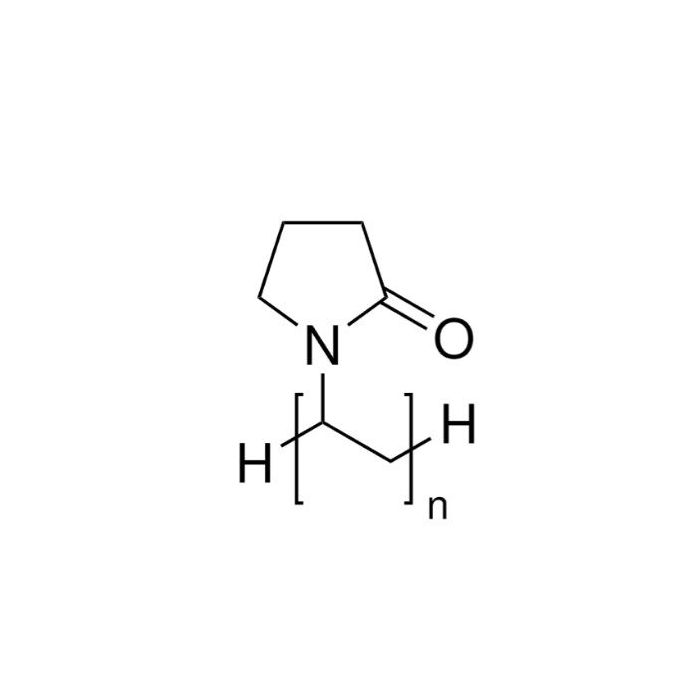
Crospovidone - USP, JP, Ph.Eur., E 1202, NF , CAS No.25249-54-1

CAS: 25249-54-1 Cat. No.: C494178 Formule: (C6H9NO)n Numéro CE: 607-660-4
DISPONIBLE À COMMANDE
Plus que %1 en stock
QUALITÉ & PURETÉ USP ? United States Pharmacopeia grade — meets USP monograph specs for pharmaceutical use. Use for drug manufacturing, QC, and applications requiring US compendial compliance. JP ? Japanese Pharmacopoeia grade — conforms to JP monograph standards. Use for pharmaceutical products subject to Japanese regulatory requirements. Ph.Eur. ? European Pharmacopoeia grade — conforms to Ph.Eur. monographs across EU member states. Use for pharmaceutical work needing European compendial compliance. E 1202 ? EU food-additive code E 1202 — this product corresponds to insoluble polyvinylpyrrolidone (crospovidone). The E-number signals it meets the identity/spec expected for that additive in food-contact use. NF ? National Formulary grade — meets NF monograph standards, often for excipients. Use for pharmaceutical excipients and products requiring NF compliance.
Synonyms
Polyvinylpyrrolidone
Storage
Room temperature
Shipped In
Normal
Prix
À partir de 34,62 €
AVAILABLE TO ORDER

Vue d’ensemble

C494178, Crospovidone, is unsurpassed in its performance and versatility as a superdisintegrant in formulations. 

It combines different mechanisms to achieve rapid tablet disintegration at low concentrations (1-5%). Due to its viscoelasticity, C494178 is highly compactable, resulting in robust tablets with increased tensile strength and reduced friability. Scanning electron microscope images of C494178 show a granular and porous structure with a large surface area. It enhances the dissolution of poorly soluble drug actives and due to its non-ionic property, it does not bear any risk of interaction with cationic APIs. 

C494178 is available in two particle sizes to serve different application requirements. 


Benefits:

1.Rapid disintegration at low concentrations (1-5%)

2.Functions via a combination of disintegration mechanisms (wicking, shape recovery, and swelling), thus imparting its unsurpassed versatility as a 3.superdisintegrant in formulations 

4.Suitability for use in direct compression, wet granulation, and dry granulation 

5.Increased tablet tensile strength and reduced friability due to high compressibility 

6.No gel formation even at higher concentrations (10%) – ideal for ODTs


Product specifications and parameters:

SKU Average Particle Size by Laser Diffraction [μm] Compendial Type Pack Size
C494178-XL-25g 100 A 25g
C494178-XL10-25g 30 B 25g
C494178-XL-100g 100 A 100g
C494178-XL10-100g 30 B 100g
C494178-XL-500g 100 A 500g


Spécifications

Synonymes
Polyvinylpyrrolidone
Spécifications et pureté
USP, JP, Ph.Eur., E 1202, NF
Conditions de stockage de stockage
Room temperature
Expédié en
Normal
Grade
E 1202, JP, NF, Ph.Eur., USP
Noms et identifiants
SMILES
C=CN1CCCC1=O
IUPAC Name
1-ethenylpyrrolidin-2-one
InChIKey
WHNWPMSKXPGLAX-UHFFFAOYSA-N
InChI
1S/C6H9NO/c1-2-7-5-3-4-6(7)8/h2H,1,3-5H2
Isomères SMILES
C=CN1CCCC1=O
WGK Allemagne
1
Reaxys
110513
Reaxys-RN_link_address
https://www.reaxys.com/reaxys/secured/hopinto.do?context=S&query=IDE.XRN=110513&ln=

Données avancées

Taxonomic Classification

Taxonomy Tree

KingdomOrganic compounds
SuperclassOrganoheterocyclic compounds
ClassePyrrolidines
SubclassPyrrolidones
Intermediate Tree Nodes Not available
Direct ParentPyrrolidine-2-ones
Alternative Parents Tertiary carboxylic acid amides  Lactams  Azacyclic compounds  Organopnictogen compounds  Organonitrogen compounds  Organic oxides  Hydrocarbon derivatives  Carbonyl compounds  
Molecular FrameworkAliphatic heteromonocyclic compounds
Substituents 2-pyrrolidone - Tertiary carboxylic acid amide - Lactam - Carboxamide group - Azacycle - Carboxylic acid derivative - Organic nitrogen compound - Organic oxygen compound - Organopnictogen compound - Organic oxide - Hydrocarbon derivative - Organooxygen compound - Organonitrogen compound - Carbonyl group - Aliphatic heteromonocyclic compound
DescriptionThis compound belongs to the class of organic compounds known as pyrrolidine-2-ones. These are pyrrolidines which bear a C=O group at position 2 of the pyrrolidine ring.
External Descriptors pyrrolidin-2-ones
Structure 3D
Modèle de structure chimique interactif


Mécanismes d'action
Certificats (CoA, COO, BSE/TSE et tableau d'analyse)
C of A & Other Certificates(BSE/TSE, COO):
Analytical Chart:

Find and download the COA for your product by matching the lot number on the packaging.

6 results found

Lot NumberCertificate TypeDateArticle
F2415198F2415198Certificate of AnalysisMay 17, 2024 C494178
F2415223F2415223Certificate of AnalysisMay 17, 2024 C494178
F2415254F2415254Certificate of AnalysisMay 17, 2024 C494178
A2431082A2431082Certificate of AnalysisJan 24, 2024 C494178
A2431083A2431083Certificate of AnalysisJan 24, 2024 C494178
A2431084A2431084Certificate of AnalysisJan 24, 2024 C494178
Propriétés chimiques et physiques
SensibilitéMoisture sensitive;Heat sensitive
Point de fusion (°C)>300℃
Poids moléculaire111.14
XLogP30.400
Hydrogen Bond Donor Count0
Hydrogen Bond Acceptor Count1
Rotatable Bond Count1
Exact Mass111.068 Da
Monoisotopic Mass111.068 Da
Topological Polar Surface Area20.300 Ų
Heavy Atom Count8
Formal Charge0
Complexity120.000
Isotope Atom Count0
Defined Atom Stereocenter Count0
Undefined Atom Stereocenter Count0
Defined Bond Stereocenter Count0
Undefined Bond Stereocenter Count0
The total count of all stereochemical bonds0
Covalently-Bonded Unit Count1
Sécurité et dangers (GHS)
Pictogramme(s)
GHS05,   GHS07,   GHS08
Signal
Danger
Mentions de danger

H302:Harmful if swallowed

H312:Harmful in contact with skin

H318:Causes serious eye damage

H332:Harmful if inhaled

H335:May cause respiratory irritation

H351:Suspected of causing cancer

H373:May causes damage to organs through prolonged or repeated exposure

Conseils de prudence

P260:Do not breathe dust/fume/gas/mist/vapors/spray.

P261:Avoid breathing dust/fume/gas/mist/vapors/spray.

P264:Wash hands [and …] thoroughly after handling.

P270:Do not eat, drink or smoke when using this product.

P271:Use only outdoors or in a well-ventilated area.

P280:Wear protective gloves/protective clothing/eye protection/face protection.

P321:Specific treatment (see ... on this label).

P330:Rinse mouth.

P302+P352:IF ON SKIN: wash with plenty of water.

P304+P340:IF INHALED: Remove person to fresh air and keep comfortable for breathing.

P362+P364:Take off contaminated clothing and wash it before reuse.

P405:Store locked up.

P403+P233:Store in a well-ventilated place. Keep container tightly closed.

P501:Dispose of contents/container to an approved waste disposal plant.

P203:Obtain, read and follow all safety instructions before use.

P264+P265:Wash hands [and …] thoroughly after handling. Do not touch eyes.

P301+P317:IF SWALLOWED: Get medical help.

P305+P354+P338:IF IN EYES: Immediately rinse with water for several minutes. Remove contact lenses if present and easy to do. Continue rinsing.

P318:if exposed or concerned, get medical advice.

P317:Get emergency medical help.

P319:Get medical help if you feel unwell.

WGK Allemagne
1
Reaxys
110513
Reaxys-RN_link_address
https://www.reaxys.com/reaxys/secured/hopinto.do?context=S&query=IDE.XRN=110513&ln=
FAQ et articles
From Spec to Bench: Understanding and Using USP Grade Reagents
JP Grade Reagents Explained
E 1202
NF Grade Explained: Standards, Tests, and Uses
Microcrystalline Cellulose (MCC): A Comprehensive Primer and Selection Guide—Structural Features, Key Performance Metrics, and Application Scenarios
Pyrrolidine and Its Derivative Systems: How a Five-Membered N-Heterocycle Tunes Properties and Use Cases via “Charge State–Conformation–Functional-Group Switching” (with Tables 1–4 for Selection Navigation)
Ferulic Acid: Structural Features, Preparation Routes, and Key Points for Research Applications
Comparative Principles and Selection of CTAB, SDS, TRIzol, and Column-Based Purification Systems in Nucleic Acid Extraction from Plant Samples
The Role of Tannins in Astringency, Precipitation, and Antioxidant Activity of Plant Extracts
What Is Direct Compression? Process Characteristics, Suitability Criteria, and Excipient Selection
Citations of This Product
Calculateurs de solution
Avis

Avis des clients

Souhaitez-vous que nous vous envoyions un message lorsque des réductions seront disponibles?

Me rappeler plus tard

Merci ! Veuillez vérifier votre boîte de réception e-mail pour confirmer.

Oups ! Les notifications sont désactivées.