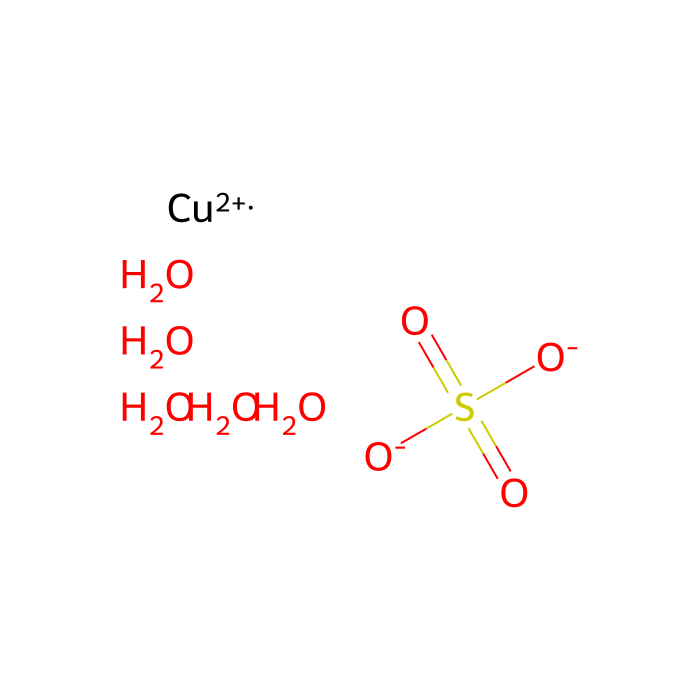
Cupric Sulfate - 12.5% (w/v) , CAS No.7758-99-8

CAS: 7758-99-8 Cat. No.: C397523 Formule: CuSO4 · 5H2O Poids moléculaire: 249.69 Numéro CE: 616-477-9
DISPONIBLE À COMMANDE
QUALITÉ & PURETÉ 12.5% (w/v)
Synonyms
Calcanthite|Copper(II) sulfate pentahydrate|Copper(II)sulfatepentahydrate|COPPERFINE-ZINC|Copper(2+) sulfate (1:1) pentahydrate|Cupric sulfate (pentahydrate)|copper(II)sulfate pentahydrate|copper;sulfate;pentahydrate|COPPER SULFATE PENTAHYDRATE [WHO-DD]|Kupfersulfat-pentahydrat|copper(11) sulfate pentahydrate|COPPER(2+) SULPHATE (1:1) PENTAHYDRATE|Cupric sulfate (USP)|Copper sulfate pentahydrate|COPPER (AS CUPRIC SULFATE) [VANDF]|copper (II) sulphate pentahydrate|Kupfervitriol [German]|Copper sulfate, pentahydrate|Cupric sulfate (TN)|copper(2+) sulfate, pentahydrate|Cupric sulfate pentahydrate|Blue copper AS|COPPER SULFATE [VANDF]|copper(2+) sulfate--water (1/5)|Cupric Sulfate [USP]|copper sulfate-penta hydrate|CUPRUM SULPHURICUM [HPUS]|Vencedor|SULFURIC ACID, COPPER (2+) SALT, PENTAHYDRATE|copper (2+) sulfate pentahydrate|Copper sulfate (CuSO4) pentahydrate|Sulfuric acid, copper(2+) salt (1:1), pentahydrate|Copper (II) Sulfate pentahydrate|Salzburg vitriol|Sulfuric acid, copper(2+) salt, pentahydrate|Cupric sulphate pentahydrate|copper sulphate pentahydrate|Blue vitriol|Triangle|CUPRIC SULFATE [VANDF]|Kupfersulfat-pentahydrat [German]|copper sulphate(5.H2O)|copper(II)sulphate-pentahydrate|Kupfervitriol|copper(II) sulphate pentahydrate|Copper(2+) sulfate pentahydrate|COPPER(2+) SULPHATE PENTAHYDRATE|CUPRIC SULFATE PENTAHYDRATE [MI]|COPPER SULFATE PENTAHYDRATE [EP MONOGRAPH]|copper(II)sulphate pentahydrate
Storage
Room temperature
Shipped In
Normal
★
Taille
Allemagne (EU)
USA*
Prix
Qté
500ml
C397523-500ml
Sur commande · 8–12 semaines

15,53€

19,00€
Enregistrer 3,47 € (18.26%)
Enter a quantity for the sizes you want to add.

Spécifications

Synonymes
Calcanthite | Copper(II) sulfate pentahydrate | Copper(II)sulfatepentahydrate | COPPERFINE-ZINC | Copper(2+) sulfate (1:1) pentahydrate | Cupric sulfate (pentahydrate) | copper(II)sulfate pentahydrate | copper;sulfate;pentahydrate | COPPER SULFATE PENTAHYDRATE [WHO-DD] | Kupfersulfat-pentahydrat | copper(11) sulfate pentahydrate | COPPER( Afficher plus
Spécifications et pureté
12.5% (w/v)
Conditions de stockage de stockage
Room temperature
Expédié en
Normal
Noms et identifiants
SMILES
O.O.O.O.O.[O-]S(=O)(=O)[O-].[Cu+2]
IUPAC Name
copper;sulfate;pentahydrate
InChIKey
JZCCFEFSEZPSOG-UHFFFAOYSA-L
InChI
1S/Cu.H2O4S.5H2O/c;1-5(2,3)4;;;;;/h;(H2,1,2,3,4);5*1H2/q+2;;;;;;/p-2
Isomères SMILES
O.O.O.O.O.[O-]S(=O)(=O)[O-].[Cu+2]
WGK Allemagne
3
RTECS
GL8900000
CAS alternatif
10257-54-2
Numéro ONU
UN 3077
Groupe d'emballage
III
Poids moléculaire
249.69
Reaxys
13154734
Reaxys-RN_link_address
https://www.reaxys.com/reaxys/secured/hopinto.do?context=S&query=IDE.XRN=13154734&ln=

Données avancées

Taxonomic Classification

Taxonomy Tree

KingdomInorganic compounds
SuperclassMixed metal/non-metal compounds
ClasseTransition metal oxoanionic compounds
SubclassTransition metal sulfates
Intermediate Tree Nodes Not available
Direct ParentTransition metal sulfates
Alternative Parents Inorganic oxides  Inorganic copper salts  
Molecular FrameworkNot available
Substituents Transition metal sulfate - Inorganic copper salt - Inorganic oxide - Inorganic salt
DescriptionThis compound belongs to the class of inorganic compounds known as transition metal sulfates. These are inorganic compounds in which the largest oxoanion is sulfate, and in which the heaviest atom not in an oxoanion is a transition metal.
External Descriptors hydrate - metal sulfate
Structure 3D
Modèle de structure chimique interactif


Certificats (CoA, COO, BSE/TSE et tableau d'analyse)
C of A & Other Certificates(BSE/TSE, COO):
Analytical Chart:

Find and download the COA for your product by matching the lot number on the packaging.

6 results found

Lot NumberCertificate TypeDateArticle
E2611594E2611594Certificate of AnalysisMay 19, 2026 C397523
H2529254H2529254Certificate of AnalysisSep 03, 2025 C397523
H2529255H2529255Certificate of AnalysisSep 03, 2025 C397523
F2313132F2313132Certificate of AnalysisMay 21, 2025 C397523
L2223052L2223052Certificate of AnalysisOct 23, 2024 C397523
K2112542K2112542Certificate of AnalysisSep 11, 2023 C397523
Propriétés chimiques et physiques
Point de fusion (°C)147 °C
Poids moléculaire249.69
XLogP3
Hydrogen Bond Donor Count5
Hydrogen Bond Acceptor Count9
Rotatable Bond Count0
Exact Mass248.934 Da
Monoisotopic Mass248.934 Da
Topological Polar Surface Area93.600 Ų
Heavy Atom Count11
Formal Charge0
Complexity62.200
Isotope Atom Count0
Defined Atom Stereocenter Count0
Undefined Atom Stereocenter Count0
Defined Bond Stereocenter Count0
Undefined Bond Stereocenter Count0
The total count of all stereochemical bonds0
Covalently-Bonded Unit Count7
Sécurité et dangers (GHS)
Pictogramme(s)
GHS05,   GHS07,   GHS09
Signal
Danger
Mentions de danger

H302:Harmful if swallowed

H318:Causes serious eye damage

H400:Very toxic to aquatic life

H410:Very toxic to aquatic life with long lasting effects

Conseils de prudence

P264:Wash hands [and …] thoroughly after handling.

P270:Do not eat, drink or smoke when using this product.

P273:Avoid release to the environment.

P280:Wear protective gloves/protective clothing/eye protection/face protection.

P330:Rinse mouth.

P391:Collect spillage.

P501:Dispose of contents/container to an approved waste disposal plant.

P264+P265:Wash hands [and …] thoroughly after handling. Do not touch eyes.

P301+P317:IF SWALLOWED: Get medical help.

P305+P354+P338:IF IN EYES: Immediately rinse with water for several minutes. Remove contact lenses if present and easy to do. Continue rinsing.

P317:Get emergency medical help.

WGK Allemagne
3
RTECS
GL8900000
Reaxys
13154734
Reaxys-RN_link_address
https://www.reaxys.com/reaxys/secured/hopinto.do?context=S&query=IDE.XRN=13154734&ln=
Classe
9
FAQ et articles
Structural and Catalytic Roles of Metal Ions in Protein Enzyme Activity
11 Common Methods for Protein Concentration Determination
Fundamentals and Applications of Etching Solutions: Using Metallic Copper / PCB Etching as an Example
A Practical Guide to Small-Molecule Chemical Probes: Concept Clarification, Causal Validation, and Experimental Selection (with Product Navigation and Tables A–D)
OSF/ASF Dual-Channel Toolbox: Divergent Reactions of Four-Membered Ring Sulfonyl Fluorides, Condition “Knobs,” and Selection Navigation
Practical Guide to Sodium Carboxymethyl Cellulose (CMC-Na): Thickening/Stabilizing Mechanisms, Key Controls for Solution Preparation, and Selection Navigation (including Table 1 and Tables A–C)
Transition-Metal Salts/Precursor Selection Guide: How “Different Salts of the Same Metal” Start from Different Chemical Realities—and How to Reproduce Results (including a Selection Navigator and Product Tables 1–5)
Flavones: Structural Features, Physicochemical Properties, and Key Points for Research and Applications
Invertebrate Oxygen Carrier Proteins in Immunology and Vaccine Research
Analytical Basis, Methodological Systems, and Quality Control for Vitamin C Content Determination
Experimental Decision-Making for Introducing Aminoalkyl Side Chains Using N-Haloalkyl Phthalimides: Chain Length, Leaving Group, and Deprotection Choice
How to Determine Whether a Protein Is Suitable for Targeted Degradation: From Degradation Pathway and Molecular Design to Mechanism Validation
Designing Hydrogel Scaffolds as Programmable Cell Microenvironments: From Click-Chemistry Functionalization to 3D Cell Culture Experimental Design
Capable of Swelling, Adsorption, and Cation Exchange: What Makes Montmorillonite Clay Different?
How Should Montmorillonite Be Rationally Modified? Organic Modification, Inorganic Modification, and Application-Oriented Selection and Validation
Structural Features, Property Modulation, and Typical Applications of Triazole Compounds
Synthetic Application Logic of Triazoles and Related Compounds: Structural Introduction, Reactive Sites, and Target Molecule Construction
Common Chromogenic Reagents and Method Selection for Copper Ion Content Determination
Comparison of Reducing Sugar Detection Methods: Selection of Fehling’s Reagent, Benedict’s Method, DNS Method, and HPLC
Skin Anti-Aging Mechanisms of Carnosine and Decarboxy Carnosine: Active Carbonyl Scavenging, Oxidative-Stress Buffering, and Inhibition of Collagen Glycation Cross-Linking
Acetyl Tetrapeptide-2 and Elastic Fiber Formation: Research on Fibulin-5, LOXL1, and Skin Firmness
How Palmitoyl Pentapeptide-4 Acts on the Skin: From the KTTKS Sequence and Skin Delivery to Collagen Matrix Responses
Reactions and Applications of 3,3-Difluoroallyl Sulfonium Salts (DFASs): Small-Molecule gem-Difluoroallylation, Selective Peptide Modification, and Subsequent Functionalization
The Combination Logic of Palmitoyl Tripeptide-1 and Palmitoyl Pentapeptide-4: Skin Delivery, Matrix Signaling, and Regulation of Collagen Homeostasis
How Arbutin Regulates Melanin Production: α/β Anomeric Configuration and Tyrosinase Action
Structural Characteristics of Ergothioneine, OCTN1-Mediated Uptake by Skin Cells, and Antioxidant Mechanisms
Copper Tripeptide GHK-Cu and Skin Repair: From Copper Coordination Chemistry to Extracellular Matrix Remodeling
Why Do Skincare Oligopeptides Have Different Effects? — Molecular Structure, Skin Delivery, and Mechanisms of Action
Citations of This Product
Calculateurs de solution
Avis

Avis des clients

Application Protocols

No item-specific, validated application protocols are provided for this catalog entry.

General protocol sketches (literature; for reference only)

  • Preparation of 0.1 M CuSO4 stock: Dissolve 24.97 g CuSO4·5H2O (literature MW) in water and bring to 1.0 L. Filter if needed. Store in plastic/glass at RT. Label with hydration assumption.
  • CuAAC small-scale procedure: To azide (1.0 equiv) and alkyne (1.1–1.5 equiv) in H2O/t-BuOH (1:1) add CuSO4·5H2O (0.05 equiv) and sodium ascorbate (0.1 equiv). Stir at RT until complete (TLC/LC-MS). Quench with EDTA solution, extract if needed, or purify by chromatography.
  • Protein assay reagent component: For Biuret/Lowry-type reagents, CuSO4 is combined with alkaline tartrate/biuret reagents; follow established assay protocols.

Note: These are general literature-style outlines, not validated methods for this specific item. Consult primary literature/SOPs and adapt conditions to your system.

Biological Roles

General biochemical context (literature)

  • Copper is an essential trace element serving as a redox-active cofactor in enzymes such as cytochrome c oxidase, superoxide dismutase (Cu/Zn SOD), lysyl oxidase, dopamine β-hydroxylase, and tyrosinase.
  • In aqueous solution, Cu2+ from copper(II) sulfate forms aquo complexes and can bind strongly to proteins and peptides (histidine, cysteine, methionine residues), influencing structure and activity.
  • In microbiology and biotechnology, micromolar concentrations of CuSO4 are routinely included in defined media and minimal salts mixes as a copper source for cellular metabolism (e.g., trace element solutions) while avoiding toxicity.

Coordination chemistry

  • Cu2+ undergoes ligand exchange with amino acids, peptides, and chelators (EDTA, NTA), forming complexes with distinct spectroscopic signatures; this underpins colorimetric protein assays (Biuret/Lowry) where peptide bonds complex Cu2+.

Cautions

  • Free Cu2+ is cytotoxic at elevated levels via Fenton-like redox chemistry and oxidative stress; dose carefully in biological experiments and use appropriate buffers/chelators.

Note

  • This product is designated for research use only (per Product Data). No medical or clinical claims are implied.
Buffer Applications

Not typically used as a buffering agent.

Practical guidance

  • Copper(II) sulfate solutions are commonly prepared in water or pre-existing buffer systems purely to deliver Cu2+; the buffer controls pH to prevent precipitation (e.g., avoid pH > ~7–8 to prevent Cu(OH)2 formation).
  • When adding to buffers, consider complexation: phosphate, carbonate, and strong chelators (EDTA, EGTA) will bind Cu2+ and reduce free copper. Use buffers with minimal coordinating capacity if free Cu2+ is required (e.g., acetate at mildly acidic pH).
  • For bioconjugation (CuAAC) in biological contexts, Good’s buffers (e.g., HEPES) are sometimes used with stabilizing triazole-based ligands (e.g., THPTA) to maintain Cu(I)/Cu(II) speciation while protecting biomolecules (literature).
Green Alternatives

Context

  • When choosing a copper source, consider solubility, toxicity, waste profile, and the ability to run reactions in water or benign solvents.

Comparisons (literature; general guidance)

  • CuSO4 vs CuCl2/CuBr2: sulfate is less corrosive and chloride-free, reducing risk of chlorinated waste and corrosion; halides are more soluble in certain organic media but introduce halide waste.
  • CuSO4 (with sodium ascorbate) for CuAAC vs CuI: aqueous, room-temperature protocols often use CuSO4, enabling water or water/alcohol media and minimizing organic solvent use; CuI requires organic solvents and bases more often.
  • Catalytic copper vs stoichiometric copper: favor catalytic loadings with an oxidant like air/O2 and appropriate ligands (e.g., for alcohol oxidation), reducing metal salt consumption.

Small comparison snapshot

  • Criterion | CuSO4 | CuCl2 | Cu(OAc)2
  • Solubility in water | Excellent | Excellent | Moderate
  • Halide content | None | Chloride waste | None
  • Use in mixed aqueous media | Very good | Very good | Good
  • Typical corrosivity | Lower vs chlorides | Higher | Low

Trade-offs

  • Copper salts are inherently aquatic toxic; minimize concentration and ensure proper waste capture/chelation before disposal.
  • In processes requiring organic media, more lipophilic copper sources (e.g., Cu(OTf)2) may reduce solvent switching at the cost of higher environmental impact.

Greener practice tips

  • Use water or water/alcohol mixtures; run at ambient temperature; recycle aqueous copper streams via precipitation and recovery where possible.
Pharmaceutical Uses

Formulation/excipient context

  • Copper(II) sulfate is not a common pharmaceutical excipient due to toxicity and strong reactivity. It is, however, used in analytical reagents and as a trace copper source in certain laboratory and manufacturing quality-control workflows.

Bioprocessing and media (research/manufacturing context)

  • In cell culture and fermentation, defined media often include trace copper as CuSO4 at micromolar levels to support metalloenzyme function (literature). Concentrations are carefully controlled to avoid cytotoxicity.

Regulatory notes

  • Pharmacopeial monographs exist for copper(II) sulfate pentahydrate in some compendia for analytical standards and non-therapeutic uses; users should consult the relevant pharmacopeia and CoA if compendial compliance is required for a particular application.

Cautions

  • Avoid direct use in human or veterinary formulations unless specifically supported by regulatory guidance; this product is provided for research use only as noted in the Product Data.

Practical tips

  • When used in QA/QC assays or media preparation, normalize amounts to the hydration state (e.g., pentahydrate vs anhydrous) to achieve the intended Cu2+ molarity.
Physical Properties

Item-specific properties

  • Appearance: Not specified for this item; refer to CoA/Spec Sheet.
  • Density, BP/MP, solubility, refractive index, logP, pKa: Not specified for this item; refer to CoA/Spec Sheet.

Literature/typical properties for guidance (not product specifications)

  • Hydration state linked to CAS 7758-99-8 is commonly the pentahydrate, a blue crystalline solid.
  • Molecular weight (CuSO4·5H2O): ~249.68 g/mol (literature).
  • Melting/dehydration: loses water stepwise; significant dehydration near ~110 °C, with conversion to anhydrous CuSO4 by ~250 °C; decomposes at higher temperature (literature).
  • Density (pentahydrate): ~2.28 g/cm³ at 20 °C (literature).
  • Solubility: readily soluble in water; approx. 200–320 g/L at 20 °C depending on reporting basis; sparingly soluble in ethanol; insoluble in nonpolar solvents (literature).
  • Aqueous solution pH: typically acidic (pH ~3.5–4.5 at moderate concentrations) due to hydrolysis of the aquo complex (literature).
  • Hygroscopic behavior: anhydrous CuSO4 is strongly hygroscopic and turns blue upon hydration; the pentahydrate is stable under ambient humidity but can effloresce upon heating (literature).

Practical notes

  • Prepare solutions using deionized water; dissolution is endothermic-to-mildly exothermic depending on conditions. Filter if particulates remain.
  • For precise physicochemical parameters for your lot (e.g., assay, trace metals, water content), consult the item’s CoA/Spec Sheet.
Quality and Grades

Item-specific quality details

  • Grade/purity: Not specified for this item; refer to CoA/Spec Sheet.

Guidance on grades and what they imply (general)

  • Analytical Reagent (AR) or ACS grade: specifies minimum assay and limits on common metallic impurities (e.g., Fe, Pb, Zn) and insoluble matter; suitable for analytical or trace-metal-sensitive applications.
  • Laboratory/Reagent grade: adequate for general synthesis and education; impurity limits are broader.
  • Trace metal basis or semiconductor grade: imposes very low ppb–ppm levels of metal contaminants; used in catalysis studies or microelectronics.
  • Bio/Cell culture grade: controlled bioburden and endotoxin; sometimes provided sterile or filter-sterilizable, and with precise hydration state for media preparation.

Stabilizers and hydration state

  • Copper(II) sulfate typically contains no organic stabilizers; performance is defined by hydration state (anhydrous vs pentahydrate), assay, and soluble/insoluble matter. Hydration state affects the effective Cu2+ content by mass.

What to check on the CoA/Spec Sheet

  • Assay basis (e.g., % CuSO4·5H2O vs % Cu2+), water content by TGA/Karl Fischer, insoluble matter, pH of specified solution, heavy metal limits, and appearance. Confirm CAS-linked hydrate for accurate molar calculations.
Reaction and Applications

General roles (literature)

  • Source of Cu2+ for homogeneous and heterogeneous catalysis.
  • Precursor to Cu+ in situ when combined with a reductant (e.g., sodium ascorbate), enabling copper-catalyzed azide–alkyne cycloaddition (CuAAC, “click” chemistry).
  • Oxidant or Lewis acid in selective transformations; component of analytical reagents (Fehling’s, Benedict’s) where Cu2+ is reduced to Cu2O.

Representative applications and tips

  • CuAAC (Huisgen cycloaddition, Cu(I)-catalyzed): CuSO4 (0.5–5 mol%) + sodium ascorbate in H2O/t-BuOH or H2O/DMSO at RT to 50 °C affords 1,4-disubstituted 1,2,3-triazoles in high yield (literature). Degas to limit oxidative side reactions; add TBTA or THPTA ligands for bioconjugation to stabilize Cu(I).
  • Oxidative coupling: promotes aerobic oxidative coupling of thiols to disulfides in water or aqueous alcohols, often catalytic with catalytic base (literature). Monitor to minimize overoxidation.
  • TEMPO-mediated alcohol oxidations: variants use catalytic Cu salts; CuSO4 can serve as Cu source in biphasic aqueous/organic systems with ligand and O2, furnishing aldehydes/acids (literature). Ligand choice (e.g., bpy) affects rates and selectivity.
  • Halide displacement/activation: Cu2+ salts activate certain nucleophilic substitutions and C–N/C–O couplings under aqueous or biphasic conditions (literature). For Ullmann-type couplings, other copper sources are more typical, but CuSO4 is a convenient precursor.
  • Inorganic/analytical: component in Biuret and Lowry protein assays (forms violet/blue complexes with peptide bonds; color development reagents contain CuSO4, literature).

Practical considerations

  • pH control prevents precipitation of Cu(OH)2 at basic pH; use buffers where appropriate.
  • Chelators (EDTA, citrate) will sequester Cu2+, decreasing catalytic activity unless intended.
Reaction Conditions

General guidance from literature (not product specifications)

  • CuAAC (azide–alkyne cycloaddition)

    • Typical loading: 0.5–5 mol% CuSO4·5H2O relative to limiting substrate.
    • Reductant: 1–10 mol% sodium ascorbate to generate Cu(I) in situ; add triazole ligands (e.g., TBTA/THPTA) for bioconjugation.
    • Solvent: H2O/t-BuOH (1:1), H2O/DMSO, or pure water for polar substrates.
    • Temperature: 20–50 °C; often efficient at RT.
    • Time: 0.5–24 h depending on substrate.
    • Atmosphere: air is acceptable; degassing can improve selectivity for sensitive substrates.
  • Oxidation of primary alcohols (Cu/TEMPO/O2)

    • Catalyst: CuSO4 (1–10 mol%) with bpy or related ligands; TEMPO (5–10 mol%); base (e.g., Na2CO3) in biphasic H2O/organic or aqueous acetonitrile.
    • Oxidant: O2 or air (balloon or open system with efficient mass transfer).
    • Temperature: RT to 40 °C; control pH ~8–10 to balance activity and solubility (avoid precipitation).
  • Thiol to disulfide coupling

    • Catalyst: catalytic CuSO4 (1–5 mol%) in aqueous ethanol or water with base (e.g., NaHCO3).
    • Oxidant: air/O2; RT to 50 °C; monitor by TLC/LC-MS.

Workup tips

  • Quench residual copper with chelators (EDTA) during aqueous workup; charcoal filtration can reduce colored impurities.
  • If halide byproducts are present, reduction in situ may form Cu(I) halides; filter off solids if formed.

Always validate and optimize on your substrate set.

Safety and Handling

Item-specific hazard fields

  • Signal word, H-statements, GHS classification, and pictograms: Not specified for this item; refer to SDS.

Typical GHS information for copper(II) sulfate salts (literature; consult SDS for this product)

  • Classifications commonly include Acute Toxicity (Oral) Category 4, Eye Damage Category 1, Skin Irritation Category 2, Aquatic Acute 1, Aquatic Chronic 1.
  • Hazards: harmful if swallowed; causes serious eye damage; very toxic to aquatic life with long-lasting effects. Avoid environmental release.

Handling and PPE

  • Use in a chemical fume hood or well-ventilated area.
  • Recommended PPE: lab coat, safety goggles/face shield, nitrile gloves. Avoid skin/eye contact and inhalation of dust or aerosols.

Storage and incompatibilities

  • Storage (Product Data): Room temperature; shipped under normal conditions.
  • Keep container tightly closed and dry. Avoid contact with strong reducing agents (may produce Cu(I) salts or copper metal), finely divided metals, reactive powdered metals, and strong bases (which can precipitate copper hydroxide). Avoid contact with strong acids that may increase corrosivity and mobility.

First aid (overview; consult SDS)

  • Inhalation: move to fresh air; seek medical attention if symptoms persist.
  • Skin contact: wash with soap and water; remove contaminated clothing.
  • Eye contact: rinse cautiously with water for several minutes; seek immediate medical attention.
  • Ingestion: rinse mouth; do not induce vomiting; seek medical attention.

Special risks

  • Environmental: prevent release to waterways.
  • Thermal decomposition may produce irritating sulfur oxides (SOx).
Solvent Selection

Applicability

  • Cupric sulfate is an inorganic salt and not used as a solvent. This section discusses solvent choice for dissolving/using the salt in reactions or preparations.

Solubility and polarity (literature)

  • Highly soluble in water due to ionic character; aqueous solutions are the default medium.
  • Sparingly soluble in ethanol and methanol; essentially insoluble in nonpolar solvents (e.g., hexanes, toluene, ethers).

Typical solvent systems

  • Water: primary choice for preparing stock solutions and for aqueous-phase reactions (e.g., CuAAC with in situ Cu(I) generation in H2O/t-BuOH). Dielectric constant ~80 (room temp), excellent for ionic species.
  • Water/alcohol mixtures: improve wetting and substrate solubility for organic substrates while retaining Cu2+ solubility.
  • Buffered aqueous media: when pH control is required to prevent precipitation of Cu(OH)2 at elevated pH; avoid strong chelators unless intended (e.g., EDTA will bind Cu2+ strongly).

Selection tips

  • For click reactions, mixed solvents such as t-BuOH/H2O (1:1) or DMSO/H2O can balance organic solubility and copper salt dissolution.
  • Avoid carbonate-rich basic solvents that can precipitate basic copper salts.
  • If anhydrous conditions are needed, use anhydrous CuSO4 as a drying agent or choose a different copper source soluble in organic media (e.g., Cu(OTf)2, Cu(OAc)2, CuBr2).
Storage and Reconstitution

Item-specific storage and shipping

  • Storage conditions: Room temperature (per Product Data).
  • Shipped: Normal conditions (per Product Data).

General guidance

  • Keep tightly closed in a dry place. Avoid generating dust and avoid contact with incompatible materials (strong reductants, strong bases). For long-term consistency, minimize repeated exposure to humidity and heat.
  • Hydration considerations: If handling anhydrous CuSO4, note rapid hydration on exposure to moisture. The pentahydrate is stable at ambient conditions but will lose water on heating.

Reconstitution and solution preparation

  • Water is the preferred solvent. Prepare stock solutions using high-purity deionized water. If precise concentration is critical, confirm the hydration state by CoA and calculate accordingly (e.g., pentahydrate MW ~249.68 g/mol, literature).
  • Filter sterile if needed for biological work; avoid chelators (EDTA, citrate) unless complexation is desired.
  • Label solutions with concentration, hydration assumption, and preparation date. Many aqueous solutions are stable at room temperature for routine lab use; prepare fresh for sensitive applications.

Freeze–thaw guidance

  • Not applicable to the solid. Aqueous solutions do not typically require freezing; if stored cold, use compatible containers to avoid crystallization or precipitation.

Always consult the product’s CoA and SDS for authoritative storage and handling information.

Structure and Identity

Brief: Inorganic copper(II) sulfate salt; CAS indicates the pentahydrate form is typical for "Cupric Sulfate" in commerce.

  • Item-specific facts (from Product Data)

    • Product name: Cupric Sulfate (SKU C397523)
    • CAS: 7758-99-8
    • InChIKey: 173985
    • SMILES: Not specified for this item; refer to CoA/Spec Sheet.
    • Molecular formula: Not specified for this item; refer to CoA/Spec Sheet.
    • Molecular weight: Not specified for this item; refer to CoA/Spec Sheet.
  • Literature identity (for reference only; not product specifications)

    • Common form for CAS 7758-99-8: copper(II) sulfate pentahydrate (CuSO4·5H2O); anhydrous CuSO4 is typically CAS 7758-98-7.
    • Molecular formula (pentahydrate, literature): CuSO4·5H2O
    • Molecular weight (pentahydrate, literature): ~249.68 g/mol
    • SMILES (pentahydrate, literature): O.O.O.O.O.OS(=O)[O-].[Cu+2]
    • InChIKey (pentahydrate, literature): varies by representation; commonly reported for CuSO4·5H2O in databases.
  • Structural features (general)

    • Contains Cu2+ coordinated to sulfate anions and water ligands; in the pentahydrate, four waters are coordinated to Cu2+ in the equatorial plane and one water is crystallization water hydrogen-bonded to the sulfate lattice (literature).
    • Functional groups: inorganic sulfate anion (tetrahedral SO4 2−), coordinated aquo ligands around Cu2+.
    • 2D depiction: Cu2+ center bound to four H2O ligands (square planar), axially interacting with O atoms; discrete sulfate tetrahedra counterbalancing charge, with an additional lattice water (literature description).
Synthetic Utility

Value as an inorganic reagent (literature)

  • Versatile Cu2+ source enabling redox and Lewis acid catalysis.
  • Convenient precursor for in situ Cu(I) generation with mild reductants (ascorbate), powering CuAAC under aqueous or mixed-solvent conditions.

Transformations facilitated by CuSO4

  • Click chemistry: Catalytic formation of 1,2,3-triazoles from azides and terminal alkynes using CuSO4/ascorbate systems.
  • Oxidations: Catalytic aerobic oxidation of alcohols to aldehydes/acids in the presence of nitroxyl radicals (e.g., TEMPO) and ligands; oxidation of thiols to disulfides.
  • C–heteroatom couplings: Promotes selected Ullmann-type couplings in water when combined with suitable ligands/bases; often serves as a precursor to the active Cu species.
  • Analytical/synthetic workups: As an additive to scavenge residual iodide/bromide (via formation of insoluble CuI/CuBr under reducing conditions) and as a qualitative test for reducing agents (blue-to-red Cu2O formation).

Practical considerations

  • Hydration state: adjust charge balance and molar calculations for CuSO4·5H2O vs anhydrous.
  • pH window: maintain mildly acidic to neutral conditions to keep Cu2+ soluble; avoid strong bases unless precipitation is desired.
  • Ligand effects: bidentate nitrogen ligands (bpy, phen) and triazole ligands modulate catalyst activity and stability.
  • Counterion benignity: Sulfate is non-coordinating relative to acetate/halides, often simplifying downstream purifications.
Target Specificity

Not applicable. This product is an inorganic salt reagent, not a biological targeting agent or antibody. No clone/isotype/species specificity applies. For biochemical applications involving copper–ligand interactions, refer to Biological Roles and Reaction & Applications sections.

Foire aux questions

How should this product be stored?
Store at room temperature.
How is this product shipped?
This product ships under standard ambient conditions. No temperature-controlled packaging is required.
What are the CAS number, molecular formula and molecular weight?
The CAS Number is 7758-99-8, the molecular formula is CuSO4 · 5H2O, and the molecular weight is 249.69 g/mol. InChIKey JZCCFEFSEZPSOG-UHFFFAOYSA-L.
What documentation is provided?
Available product documentation, including Certificates of Analysis (COA), Safety Data Sheets (SDS), and specification sheets, is shown in the product document area. Document availability and access follow the current site policy.

Souhaitez-vous que nous vous envoyions un message lorsque des réductions seront disponibles?

Me rappeler plus tard

Merci ! Veuillez vérifier votre boîte de réception e-mail pour confirmer.

Oups ! Les notifications sont désactivées.