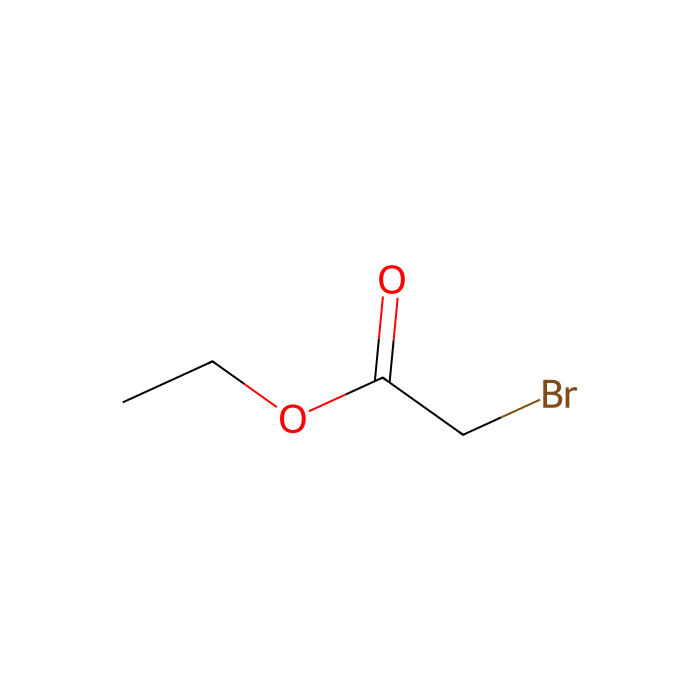
This compound belongs to the class of organic compounds known as alpha-halocarboxylic acid derivatives. These are carboxylic acid derivatives containing a halogen atom bonded to the alpha carbon atom.
External Descriptors
Not available
1. Djoumbou Feunang Y, Eisner R, Knox C, Chepelev L, Hastings J, Owen G, Fahy E, Steinbeck C, Subramanian S, Bolton E, Greiner R, and Wishart DS. ClassyFire: Automated Chemical Classification With A Comprehensive, Computable Taxonomy. Journal of Cheminformatics, 2016, 8:61.
Certificats (CoA, COO, BSE/TSE et tableau d'analyse)
C of A & Other Certificates(BSE/TSE, COO):
Analytical Chart:
Propriétés chimiques et physiques
Indice de réfraction
n20/D 1.451 (lit.)
Point d'éclair (°F)
118.4 °F - closed cup
Point d'éclair (°C)
48 °C - closed cup
Point d'ébullition (°C)
159℃ (lit.)
Poids moléculaire
167.990 g/mol
XLogP3
1.300
Hydrogen Bond Donor Count
0
Hydrogen Bond Acceptor Count
2
Rotatable Bond Count
3
Exact Mass
166.966 Da
Monoisotopic Mass
166.966 Da
Topological Polar Surface Area
26.300 Ų
Heavy Atom Count
7
Formal Charge
0
Complexity
62.700
Isotope Atom Count
1
Defined Atom Stereocenter Count
0
Undefined Atom Stereocenter Count
0
Defined Bond Stereocenter Count
0
Undefined Bond Stereocenter Count
0
The total count of all stereochemical bonds
0
Covalently-Bonded Unit Count
1
Calculateurs de solution
Molarity Calculator
Determine the necessary mass, volume, or concentration for preparing a solution.
Dilution Calculator
Determine the dilution needed to prepare a stock solution.
Reconstitution Calculator
Avis
Avis des clients
Application Protocols
No assay application protocols (e.g., WB, IHC, IF) are associated with this chemical reagent. For practical synthetic use, refer to Reaction Conditions and Reaction & Applications. Always tailor stoichiometry, solvent, and temperature to your specific substrates and consult the CoA/SDS for handling guidance.
Biological Roles
Applicability: This reagent is intended for research use only (per Product Data). It is not a natural metabolite.
General context (literature)
Ethyl bromoacetate is a reactive electrophile that alkylates nucleophilic biomolecules (thiols, amines); it is widely recognized as a potent lachrymator and chemical probe in mechanistic toxicology labs.
The 1-¹³C label at the carbonyl enables tracing of the acyl carbon through transformations such as ester hydrolysis, transesterification, or amidation, facilitating studies in metabolism-mimicking model systems, stable-isotope dilution quantitation, and fate mapping in synthetic cascades.
No biological functionality or physiological role is attributed to this compound; any use should be confined to controlled in vitro or analytical research environments. Avoid in vivo or clinical applications.
Buffer Applications
Not typically applicable. Ethyl bromoacetate-1-¹³C is a reactive organic electrophile, not a buffering agent. It slowly hydrolyzes in water and should not be added to aqueous buffers except for specific test reactions. For practical guidance, see Reaction & Applications and Solvent Selection.
Green Alternatives
Context: Ethyl bromoacetate is an effective but lachrymatory, corrosive alkylating agent. Greener choices may reduce hazard or solvent impact while maintaining performance.
Alternative electrophiles (tradeoffs)
Ethyl chloroacetate: less hazardous and less lachrymatory; slower SN2 rates—requires higher temperatures/longer times.
Ethyl iodoacetate: faster SN2, but iodine waste and higher toxicity/cost worsen green metrics.
Dimethyl/diethyl carbonate (DEC/DMC) as ethylating agents: benign byproducts (MeOH/EtOH, CO2); require catalysts (DBU, TBD, enzymes) and are not direct α-halo ester equivalents.
Solvent choices (greener media)
Replace DMF/DMSO/NMP with 2-MeTHF, CPME, propylene carbonate, or MeCN (EHS profile varies). 2-MeTHF balances performance and renewability.
Employ solvent recycling and closed handling to limit emissions.
Use phase-transfer catalysis to run at lower temperatures and in greener solvents.
Design telescoped processes to minimize isolations and solvent use.
Pharmaceutical Uses
Item-specific status: Not specified for this item; refer to CoA/Spec Sheet.
General, non-clinical context
Isotopically labeled acylating agents such as ethyl bromoacetate-1-¹³C are used as synthetic building blocks or analytical internal standards in pharmaceutical process research, impurity fate studies, and structure–metabolism elucidation.
Potential roles include: introducing a ¹³C tracer into intermediates for ¹³C NMR characterization, LC–MS mass-balance studies, and stability-indicating method development. No therapeutic or clinical claims are made.
Physical Properties
Item-specific specifications: Not specified for this item; refer to CoA/Spec Sheet.
Literature/typical data for ethyl bromoacetate (unlabeled; ¹³C enrichment changes mass by +1 only)
Appearance: colorless to pale-yellow liquid, strong lachrymatory odor (literature)
Boiling point: ~160–164 °C at 1 atm (literature)
Melting point: ~−51 °C (literature)
Density: ~1.53 g/mL at 20 °C (literature)
Refractive index (n20 D): ~1.435–1.438 (literature)
Solubility: miscible with many organic solvents (Et2O, DCM, toluene, MeCN); slowly hydrolyzes in water; limited water solubility (literature)
Values above are provided as general literature guidance only and are not item specifications for this SKU. Consult the CoA for certified values.
Quality and Grades
Item-specific grade/purity: Not specified for this item; refer to CoA/Spec Sheet.
Practical guidance
For isotopically enriched reagents, key quality attributes typically include ¹³C enrichment percentage at the designated position, residual unlabeled isotope content, and overall chemical purity (GC/HPLC).
Trace impurities of bromoacetic acid, ethanol, ethyl chloroacetate/iodoacetate, or hydrolysis products can affect nucleophilic substitution reactions and NMR baselines for tracer studies.
If UV-based analytics or LC–MS are planned, low-UV/background and volatile residue levels are preferred; verify by CoA.
Stabilizers
Ethyl bromoacetate generally does not require added stabilizers; dryness and exclusion of moisture are more critical to limit hydrolysis to bromoacetic acid/HBr. If any stabilizer is present for this item, it will be listed on the CoA/Spec Sheet (not specified here).
Documentation
Request isotopic enrichment certification and batch-specific analytical data (e.g., ¹³C NMR confirmation, GC purity, water content) with the CoA to ensure suitability for your application.
Reaction and Applications
Isotopic labeling utility
1-¹³C enrichment at the acyl carbon provides a strong, well-resolved ¹³C NMR signal for tracking carbonyl transformations (ester hydrolysis, aminolysis, transesterification) and for MS-based metabolic fate of the acyl unit after downstream conversions.
Common reaction families employing ethyl bromoacetate (general literature)
SN2 alkylation of stabilized carbanions: malonates, β-keto esters, nitroalkanes, cyanoacetates, and thiolates give α-ethoxycarbonyl products with high selectivity.
Gabriel-type amination and direct aminolysis: reaction with amines affords amino esters (e.g., ethyl glycinate derivatives) via displacement of bromide; use base/acid scavengers to manage HBr.
Darzens (glycidic ester) condensation: condensation with aldehydes under strong base to form α,β-epoxy esters; the ¹³C label traces the carbonyl position into the epoxide/ester products.
Michael-type additions after conversion to acrylate analogs; halogen–metal exchange is less common due to the ester.
Practical tips (general)
Keep reagent dry; hydrolysis reduces yield and generates corrosive byproducts.
For SN2, use polar aprotic solvent and modest temperatures (0–40 °C). Add the electrophile last to a pre-formed nucleophile to limit side reactions.
Employ phase-transfer catalysis for heterogeneous bases (K2CO3, Cs2CO3) in biphasic systems.
Quench carefully to avoid saponification; wash with bicarbonate to remove acidic residues.
Analytical considerations for the ¹³C reagent
¹³C NMR: carbonyl typically appears near 165–175 ppm (ester C=O, literature); labeling improves sensitivity by >50× vs natural abundance.
MS: +1 Da mass shift vs unlabeled; track isotopologue distribution to verify enrichment.
Reaction Conditions
General guidance (literature; optimize per substrate)
SN2 alkylation of malonates/β-keto esters: 1.0–1.2 equiv ethyl bromoacetate-1-¹³C; base NaH, K2CO3, or Cs2CO3; solvent MeCN, DMF, or THF; 0–25 °C; 1–6 h; typical isolated yields 70–95%.
Aminolysis/amination: 1.0–1.5 equiv reagent with 1.0–2.0 equiv amine; solvent MeCN, EtOH, or iPrOH; add base (DIPEA, Na2CO3) or use HCl scavengers (epoxides) to manage HBr; 0–40 °C; 1–8 h; 60–90% yields, substrate-dependent.
O-/S-alkylation: sodium alkoxides/thiolates in the corresponding alcohol or in THF/MeCN; 0–25 °C; 1–4 h; high conversions; avoid excess base to limit transesterification.
Darzens condensation: strong base (NaOEt, NaH, LDA, NaHMDS) in EtOH, THF, or toluene; −78 to 25 °C; 1–12 h; diastereomeric mixtures separable; 50–85% yields typical.
Practical notes
Add the electrophile last to a pre-formed anion to minimize self-reaction and hydrolysis.
Rigorous exclusion of moisture improves mass balance; dry glassware and molecular sieves beneficial.
Workup: quench with buffered aqueous media (e.g., sat. NaHCO3) to neutralize HBr; avoid strong base during quench to prevent saponification.
Analytics
Monitor by GC or LC; ¹³C NMR provides direct readout of labeled carbonyl incorporation and can assist in rapid reaction optimization.
Safety and Handling
Item-specific hazard classifications: Not specified for this item; refer to SDS.
General GHS guidance for ethyl bromoacetate (literature/analogous substances)
Typical hazards: flammable liquid/combustible vapor at elevated temperature; harmful if swallowed; causes skin and eye irritation; causes serious eye irritation; may cause respiratory irritation; powerful lachrymator.
Primary risks: strong alkylating agent; reacts with nucleophiles (amines, thiols). Hydrolysis generates HBr and bromoacetic acid—corrosive.
PPE and engineering controls
Use in a certified chemical fume hood; avoid inhalation of vapors.
Wear chemical-resistant gloves (e.g., butyl rubber, Viton), splash goggles/face shield, lab coat; consider double-gloving for extended handling.
Incompatibilities and reactivity
Avoid strong bases in confined systems (exothermic reactions); strong nucleophiles; oxidizers; moisture and aqueous media (hydrolysis).
Metals/powders may catalyze decomposition of halogenated esters—use appropriate containers.
First aid (overview; defer to SDS)
Inhalation: move to fresh air; seek medical attention if symptoms persist.
Skin/eyes: immediate decontamination with copious water for ≥15 min; remove contaminated clothing; seek medical evaluation.
Ingestion: rinse mouth; do not induce vomiting; obtain medical attention.
Spill/fire response
Absorb small spills with inert absorbent; neutralize residues cautiously. For fire, use CO2, dry chemical, or foam; cool containers with water spray from safe distance.
Always consult the product SDS for authoritative hazard, first-aid, and regulatory information for this SKU.
Solvent Selection
Applicability: Ethyl bromoacetate-1-¹³C is an electrophilic liquid reagent used predominantly in SN2 alkylations and condensation reactions; solvent choice dictates rate, selectivity, and suppression of side reactions (elimination, hydrolysis).
Polarity/miscibility (general)
Prefers polar aprotic media for SN2: acetonitrile, DMF, DMSO, NMP—enhance nucleophile reactivity and favor substitution over elimination.
Moderately soluble in less polar solvents (THF, toluene, diethyl ether); immiscible with water and slowly hydrolyzes—avoid aqueous systems unless purposeful.
Practical selection by use case
Alkylation of anions (malonates, β-keto esters, thiolates): MeCN or DMF at 0–25 °C for clean SN2; THF with phase-transfer catalyst for heterogeneous bases.
Aminolysis to amino esters: alcohol solvents (EtOH, iPrOH) or MeCN with amine base scavengers; control temperature to manage exotherm and minimize di-alkylation.
Darzens (glycidic ester) condensations: base-matched solvents (EtOH/EtONa; THF/NaHMDS) at 0 to ambient.
Notes for isotopic integrity
Choose dry, low-proton-activity solvents to avoid exchange/hydrolysis that could scramble the labeled carbonyl position (¹³C is not exchangeable, but hydrolysis/esterification will redistribute label among species).
Comparison (general)
MeCN: fast SN2, easy workup, higher bp than ether; DMF/DMSO: higher rates but harder removal; THF/2-MeTHF: greener profile, milder rates; toluene: slower but useful for phase-transfer setups.
Storage and Reconstitution
Item-specific storage: Room temperature (per Product Data).
General handling guidance
Store tightly sealed under dry, inert atmosphere (e.g., nitrogen or argon) to limit hydrolysis to bromoacetic acid/HBr.
Keep away from moisture, bases, and strong nucleophiles. Use amber or opaque containers if long-term storage under lighted conditions is expected, although photolysis is not a primary concern.
If dispensing repeatedly, consider aliquoting to minimize headspace and moisture ingress.
Stability notes (general)
Hydrolyzes slowly in the presence of water; elevated temperatures accelerate decomposition. Maintain clean, dry syringes/cannulas for transfers.
Reconstitution
Supplied as a neat liquid (appearance for this item not specified). No reconstitution required. If preparing stock solutions, use dry, anhydrous solvents (MeCN, THF, toluene) and store at 2–8 °C in sealed vials for short periods; equilibrate to room temperature before opening to prevent condensation.
Always refer to the batch CoA and SDS for definitive storage limits and handling precautions for this SKU.
Structure and Identity
Item-specific (from Product Data)
SKU: E473935
Product name: Ethyl bromoacetate-1-¹³C
CAS: 61203-71-2
PubChem CID: 11469294
InChIKey: 284336
Molecular formula: Not specified for this item; refer to CoA/Spec Sheet.
Molecular weight: Not specified for this item; refer to CoA/Spec Sheet.
Literature/computed identifiers (for reference; isotopic labeling at the acyl carbon)
Core structure: ethyl bromoacetate with the carbonyl carbon enriched in ¹³C (1-¹³C)
Functional groups: α-bromo carbonyl (activated bromomethyl adjacent to an ester carbonyl), ethyl ester.
Electrophilic centers: the bromomethyl carbon undergoes SN2 substitution with hard nucleophiles; the carbonyl carbon is typical of esters (acyl substitution under strongly nucleophilic/basic conditions).
2D description: a bromomethyl (–CH2Br) attached to a carbonyl carbon (¹³C=O), which is esterified with an ethoxy group (–O–CH2–CH3). No rings; no stereocenters.
Synthetic Utility
Electrophilic handle
The α-bromo group adjacent to the ester carbonyl activates the methylene carbon toward SN2 displacement by O-, N-, S-, and C-nucleophiles, enabling rapid formation of α-substituted ethyl esters.
Transformations (literature)
C-alkylation: malonates/β-keto ester enolates → α-ethoxycarbonyl adducts; useful in homologation and masked-acid strategies.
Darzens condensation: with aldehydes/ketones under strong base → glycidic esters; stereoselectivity controlled by base/solvent.
Subsequent manipulations: ester hydrolysis to acids; reduction to alcohols; halide substitution cascades; conversion to nitriles via cyanide displacement.
Isotopic value
The 1-¹³C label persists through many downstream steps that retain the carbonyl carbon (esters, acids, amides, epoxides from Darzens), enabling isotopologue tracking and quantitative analyses.
Target Specificity
Not applicable. This product is a small-molecule reagent, not a biological targeting agent (no antigen/epitope, clone, or isotype). For relevant information, see Synthetic Utility and Reaction & Applications.
We use cookies to ensure the website functions properly and, where permitted, to improve your experience. You can manage your preferences at any time in Settings. Learn more in our Cookie Policy.
Shall we send you a message when we have discounts available?
Remind me later
Thank you! Please check your email inbox to confirm.
Products are supplied to verified businesses, institutions, and qualified professionals for research and development use only. Not for use in humans, animals, diagnosis, or therapy.