10mM in DMSO pour les flux de travail chromatographiques et analytiques sensibles nécessitant une interférence de ligne de base minimale.
🌡
Stockage & expédition
Store at -80°C Expédition Dry ice packs + Cold packs. Consultez le COA spécifique au lot pour les spécifications exactes.
📋
Documents qualité
SDS, COA, fiche technique et fiche de spécifications disponibles au téléchargement. COA spécifique au lot accessible via la recherche par numéro de lot.
📚
Preuve documentaire
Cité dans 0 publications à comité de lecture couvrant la chromatographie, la synthèse organique et les réactions de couplage croisé.
Vue d’ensemble
Inhibitors of mycobacterial serine/threonine protein kinases; inhibitors of protein kinases, e.g. Mycobacterium tuberculosis protein kinase G.;
Spécifications
Spécifications et pureté
10mM in DMSO
Conditions de stockage de stockage
Store at -80°C
Expédié en
Dry ice packs + Cold packs
Ce produit nécessite l'expédition en chaîne froide. Les services terrestres et autres services économiques ne sont pas disponibles.
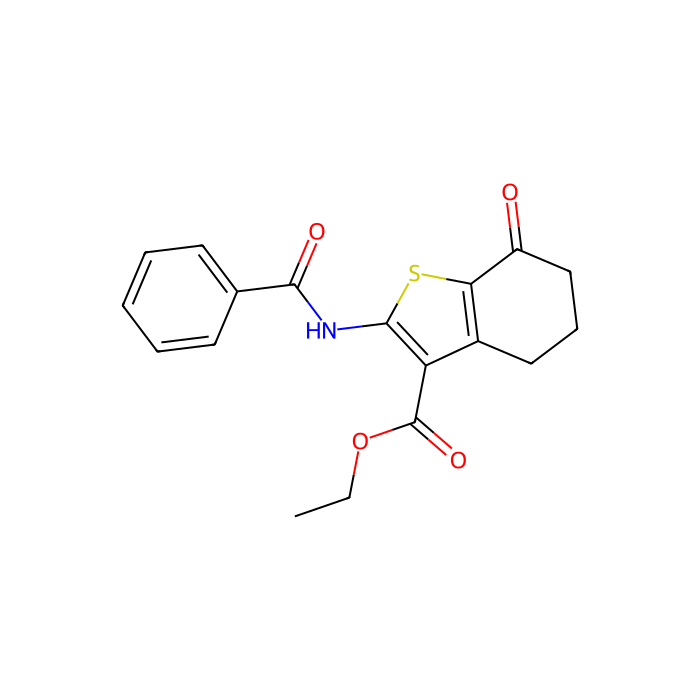
This compound belongs to the class of organic compounds known as benzamides. These are organic compounds containing a carboxamido substituent attached to a benzene ring.
External Descriptors
Not available
1. Djoumbou Feunang Y, Eisner R, Knox C, Chepelev L, Hastings J, Owen G, Fahy E, Steinbeck C, Subramanian S, Bolton E, Greiner R, and Wishart DS. ClassyFire: Automated Chemical Classification With A Comprehensive, Computable Taxonomy. Journal of Cheminformatics, 2016, 8:61.
Certificats (CoA, COO, BSE/TSE et tableau d'analyse)
C of A & Other Certificates(BSE/TSE, COO):
Analytical Chart:
Propriétés chimiques et physiques
DMSO (mM) Solubilité maximale
10
Poids moléculaire
343.400 g/mol
XLogP3
4.000
Hydrogen Bond Donor Count
1
Hydrogen Bond Acceptor Count
5
Rotatable Bond Count
5
Exact Mass
343.088 Da
Monoisotopic Mass
343.088 Da
Topological Polar Surface Area
101.000 Ų
Heavy Atom Count
24
Formal Charge
0
Complexity
503.000
Isotope Atom Count
0
Defined Atom Stereocenter Count
0
Undefined Atom Stereocenter Count
0
Defined Bond Stereocenter Count
0
Undefined Bond Stereocenter Count
0
The total count of all stereochemical bonds
0
Covalently-Bonded Unit Count
1
Calculateurs de solution
Molarity Calculator
Determine the necessary mass, volume, or concentration for preparing a solution.
Dilution Calculator
Determine the dilution needed to prepare a stock solution.
Reconstitution Calculator
Avis
Avis des clients
Application Protocols
This listing does not include validated application protocols.
Tested applications and recommended parameters: Not specified for this item; refer to CoA/Spec Sheet.
General best practices (non–item-specific):
Prepare concentrated DMSO stock (commonly 10–50 mM), verify concentration by UV or quantitative NMR if warranted, and store as aliquots at −80 °C.
For biochemical assays: Titrate compound across a broad range (e.g., 10-point, half-log dilutions). Maintain constant final DMSO in all wells and include positive/negative controls.
For cell-based assays: Begin with low micromolar dosing and evaluate cytotoxicity in parallel. Monitor for precipitation and color/fluorescence interference.
For analytical QC: Establish an LC–MS method (e.g., reverse-phase C18, water/acetonitrile with 0.1% formic acid) and document retention and purity of the working solution pre- and post-experiments.
Biological Roles
Item-specific biological targets, pathways, or roles are not provided for GI-569525 in this listing.
Item-specific biological information: Not specified for this item; refer to CoA/Spec Sheet and primary literature associated with the CAS/CID where accessible.
General considerations for screening compounds (non–item-specific):
Compounds in discovery libraries may exhibit activity across diverse targets. Prior to mechanistic interpretation, confirm identity/purity, evaluate aggregation risk (e.g., detergent sensitivity), and control for assay interference (intrinsic fluorescence, redox activity, metal chelation).
Determine apparent potency and efficacy across orthogonal assay formats to discriminate true target engagement from assay artifacts.
Assess basic ADME-relevant properties experimentally where needed (permeability, metabolic stability, plasma protein binding) to contextualize cellular readouts.
No medical or clinical claims are implied. This product is supplied strictly for research use only.
Buffer Applications
Buffer-specific guidance is not applicable without knowledge of the compound’s acid/base properties and solubility.
Item-specific buffer recommendations: Not specified for this item; refer to CoA/Spec Sheet.
General notes (non–item-specific):
When dosing into aqueous buffers, prepare a concentrated DMSO stock and dilute into the target buffer (e.g., PBS, HEPES, Tris) while keeping final DMSO ≤0.1–1% v/v. Include vehicle controls.
If precipitation occurs, consider adding a small amount of non-ionic surfactant (e.g., 0.01–0.05% Tween-20) or BSA, or adjust ionic strength/pH only after confirming compound stability.
Avoid strong base/acid adjustments without structural information due to potential degradation.
Green Alternatives
Because the structure and solubility profile of this compound are not disclosed, solvent choices should prioritize both performance and sustainability where feasible.
General greener handling strategies (non–item-specific):
Prefer DMSO over DMF/NMP when solubility allows; DMSO has a more favorable toxicity and environmental profile.
Consider bio-based or lower-impact solvents for workups and analytics when compatible with the compound:
2-Methyltetrahydrofuran (2-MeTHF) vs. dichloromethane for nonpolar processing (if the compound is hydrophobic).
Ethyl acetate and isopropanol as versatile, lower-toxicity alternatives to chlorinated solvents for extractions and recrystallizations.
Acetonitrile (with solvent recovery) as a practical compromise for LC analytics.
Minimize DMSO usage in biology by preparing concentrated stock solutions and reducing final assay cosolvent to ≤0.1–0.5% v/v where possible.
Trade-offs (general):
Greener solvents may alter compound solubility and assay baselines; always re-validate solubility, stability, and bioassay interference when substituting.
For unknown structures, avoid strongly reactive “green” bases or alcohols until compatibility is verified.
Waste and lifecycle:
Implement solvent recycling where possible and segregate halogenated from non-halogenated waste streams.
Use microscale screening to reduce solvent consumption and waste generation.
Pharmaceutical Uses
No pharmacopeial status, excipient role, or formulation utility is provided for this item.
Item-specific regulatory/compendial status: Not specified for this item; refer to CoA/Spec Sheet.
General statement:
This product is supplied for research use only and is not intended for human or veterinary use, clinical applications, or as an active pharmaceutical ingredient (API) or excipient.
If formulation-like studies are undertaken in a research context (e.g., solubility/permeation modeling), ensure that solvents, carriers, and concentrations are appropriate to the experimental system and that all safety and regulatory requirements for research chemicals are observed.
Physical Properties
Item-specific values were not provided for this catalog entry. Do not assume typical values; verify against the current CoA/Spec Sheet.
Appearance: Not specified for this item; refer to CoA/Spec Sheet.
Purity/Grade: Not specified for this item; refer to CoA/Spec Sheet.
Melting point (MP): Not specified for this item; refer to CoA/Spec Sheet.
Boiling point (BP): Not specified for this item; refer to CoA/Spec Sheet.
Density: Not specified for this item; refer to CoA/Spec Sheet.
Refractive index: Not specified for this item; refer to CoA/Spec Sheet.
Solubility: Not specified for this item; refer to CoA/Spec Sheet.
LogP/logD: Not specified for this item; refer to CoA/Spec Sheet.
pKa: Not specified for this item; refer to CoA/Spec Sheet.
General/literature guidance (non–item-specific):
Many screening-library small molecules are formulated and shipped as solids or as DMSO solutions; DMSO is often the preferred solvent for stock solutions (e.g., 10–50 mM), followed by dilution into assay buffers containing carrier proteins or surfactants as needed.
Where the structure is unknown, empirically determine solubility across a mini-panel (e.g., DMSO, DMF, MeOH, EtOH, acetonitrile, PBS with ≤1% DMSO) and confirm by visual inspection and analytical QC (HPLC-UV/MS).
Always defer to the SDS and batch CoA for authoritative physicochemical data.
Quality and Grades
Item-specific quality attributes were not provided in the Product Data.
Grade/Purity (item-specific): Not specified for this item; refer to CoA/Spec Sheet.
Stabilizers/Inhibitors: Not specified for this item; refer to CoA/Spec Sheet.
General guidance (non–item-specific):
Research-use screening compounds are commonly qualified by identity (1H NMR and/or LC–MS) and purity by HPLC-UV. UV cutoff, residual solvent, water content, and metal analysis may be provided on request for critical applications.
If used for quantitative biology/chemistry, request a lot-specific CoA including analytical method, chromatograms, and purity basis (area% vs. weight%).
For high-sensitivity assays (e.g., phenotypic screens, biophysics), consider tightening specifications on: residual water (Karl Fischer), residual solvents, non-volatile residue, and counterion identity where applicable.
If supplied as a solution (e.g., in DMSO), verify exact concentration, acceptable storage duration, and presence/absence of stabilizers; adjust experimental calculations accordingly.
Note: In the absence of declared grade, treat as general research grade. Do not infer GMP, pharmacopeial, or clinical suitability.
Reaction and Applications
This product is listed as a small-molecule from a compound library; no item-specific synthetic or application notes were provided.
Item-specific applications (from catalog): Not specified for this item; refer to CoA/Spec Sheet.
General research uses for screening compounds (non–item-specific):
Assay development and high-throughput/medium-throughput screening as a test article of unknown or proprietary structure.
Orthogonal confirmation studies across biochemical, biophysical (e.g., SPR, DSF), and cell-based assays once solubility and stability are established.
Analytical method development (HPLC/UPLC, LC–MS) to establish retention, ionization behavior, and stability in relevant matrices.
If synthetic use is intended:
Without a disclosed structure or functional groups, no credible guidance can be given on reactivity or transformations. Obtain structural information before incorporating into synthetic sequences.
Practical notes:
Validate identity and purity of the received lot (e.g., LC–MS, HPLC-UV, 1H NMR when feasible), especially before SAR or potency claims.
Establish compound stability in assay media and in DMSO stocks (light/temperature) to control for time-dependent activity loss.
Reaction Conditions
No item-specific reaction condition guidance is possible without structural information.
Item-specific conditions (solvents, catalysts, temperature): Not specified for this item; refer to CoA/Spec Sheet.
General recommendations (non–item-specific) if any chemical transformations are attempted for research purposes:
Start with small-scale trials (≤10 mg) and broad solvent screening (e.g., DCM/EtOAc/MeOH/MeCN/THF/DMSO) while monitoring by LC–MS.
Maintain inert atmosphere for air/moisture-sensitive motifs; exclude strong acids/bases until stability is confirmed.
Record thorough analytical data (LC–MS, HPLC purity, TLC Rf, NMR) at each step to ensure traceability.
For most users, this compound is best treated as a test article for screening and not as a synthetic intermediate.
Safety and Handling
Safety data specific to this item were not provided. Treat as a research chemical of unknown hazards.
GHS classification (item-specific): Not specified for this item; refer to SDS.
Signal word / Pictograms / H-statements: Not specified for this item; refer to SDS.
General laboratory precautions (non–item-specific):
PPE: Wear lab coat, safety glasses, and appropriate chemically resistant gloves (e.g., nitrile). Handle powders in a fume hood to avoid inhalation.
Avoid ingestion, inhalation, and skin/eye contact. Prevent aerosolization and dust formation.
Storage incompatibilities: Until structure is confirmed, segregate from strong oxidizers, strong acids/bases, and reducing agents. Use desiccation and protect from light if photosensitivity is suspected.
First aid (overview; consult SDS): In case of skin/eye contact, rinse with water for ≥15 minutes. If inhaled, move to fresh air. If ingested, rinse mouth and seek medical attention.
Spill/accidental release: For solids, gently cover with damp disposable towels; collect into appropriate waste. For solutions, absorb with inert material. Dispose as hazardous chemical waste.
Thermal/chemical stability: Unknown for this item; minimize thermal excursions and repeated freeze–thaw cycles. Store as directed below.
Authoritative source: Always consult the product’s SDS and batch CoA for definitive hazard and handling instructions.
Solvent Selection
Item-specific solubility data were not provided. The following strategy reflects best practices for small-molecule screening compounds.
Primary solvent for stocks (general):
DMSO (anhydrous) is typically preferred for 10–50 mM stocks due to broad solvency and assay compatibility at ≤0.5–1.0% v/v.
Secondary solvents (solubility screen):
DMF, acetonitrile, methanol, ethanol, isopropanol. For aqueous delivery, pre-dissolve in DMSO, then dilute into buffer with surfactant (e.g., 0.01–0.05% Tween-20) or carrier protein if needed.
Aqueous systems:
If direct aqueous solubility is uncertain, titrate DMSO cosolvent (0.1–2% increments) and monitor for precipitation. Maintain identical cosolvent in controls.
Practical tips (general):
Warm gently (≤40 °C) and sonicate to aid dissolution; avoid prolonged heating. Filter through 0.22 µm PTFE/nylon if particulate persists.
Avoid reactive solvents if the structure is unknown (e.g., strong nucleophiles/bases) until compatibility is confirmed.
Comparison (general considerations):
DMSO vs DMF: DMSO offers lower toxicity and broader assay compatibility; DMF can enhance solubility for certain polar/heteroaromatic scaffolds but may interfere with some bioassays.
MeOH/EtOH: Useful for UV/fluorescence transparency; volatility facilitates drying but can precipitate hydrophobic analytes upon aqueous dilution.
Always confirm solvent selection empirically and document final solvent composition in biological or analytical protocols.
General reconstitution guidance (non–item-specific):
Solid material: Allow container to equilibrate to room temperature inside a desiccator before opening to avoid moisture condensation. If structure and stability are unknown, protect from light and humidity.
Stock solutions: Prepare aliquots in an appropriate solvent (commonly anhydrous DMSO) at high concentration (e.g., 10–50 mM) to minimize freeze–thaw. Filter-sterilize (0.22 µm PTFE) if solutions are used in biological assays and compatible with the solvent.
Aliquoting: Dispense single-use volumes (e.g., 10–50 µL) into inert vials or plates; flush headspace with inert gas if oxidation-sensitive behavior is suspected. Label with lot, concentration, solvent, and date.
Storage of solutions: Store at −80 °C. Avoid repeated freeze–thaw cycles; thaw on ice or at room temperature, mix gently, and promptly return unused aliquots to −80 °C. Typical working solution stability should be established experimentally (e.g., periodic LC–MS checks).
Stability: Not specified for this item; refer to CoA/Spec Sheet.
Disposal: Dispose of unused material and solutions as hazardous chemical waste in accordance with institutional and governmental regulations.
Structure and Identity
Brief overview: This listing refers to a small-molecule research compound supplied as part of a screening/compound library entry. Structural identity details are not disclosed in the Product Data below.
Item-specific (from Product Data):
SKU: G427165
Product Name: GI-569525
CAS: 96334-43-9
PubChem CID: 569769
InChIKey: 234162 (as provided; truncated/nonstandard length — verify on CoA/SDS)
SMILES: Not specified for this item; refer to CoA/Spec Sheet.
Molecular Formula: Not specified for this item; refer to CoA/Spec Sheet.
Molecular Weight: Not specified for this item; refer to CoA/Spec Sheet.
Structural features (descriptive):
Not available from the provided Product Data. If structure is required for method development or regulatory documentation, request the current CoA/Spec Sheet or consult the referenced CAS/CID where permissible.
Notes on identifiers (general guidance):
Multiple registry identifiers (CAS, CID) are provided for cross-referencing in public databases. Discrepancies (e.g., incomplete InChIKey) should be resolved against the product’s batch-specific CoA prior to analytical or regulatory use.
Synthetic Utility
Synthetic guidance cannot be provided without knowledge of the compound’s functional groups and reactivity profile.
Item-specific reactivity/transformations: Not specified for this item; refer to CoA/Spec Sheet.
General considerations (non–item-specific):
Prior to any derivatization or conjugation, obtain the structure and functional group map (e.g., by NMR, MS, and, if necessary, HRMS and elemental analysis). Confirm presence/absence of reactive handles (amines, acids, alcohols, halides, aldehydes, activated heteroarenes).
If the compound is to be used as a reference standard or internal standard, establish purity, stability, and response factors under the analytical conditions of interest.
In the absence of structural data, avoid synthetic manipulations that could compromise integrity or introduce unidentified byproducts.
Target Specificity
No target or selectivity information is provided in the Product Data for GI-569525.
Item-specific target data (e.g., enzyme/receptor, species selectivity): Not specified for this item; refer to CoA/Spec Sheet and any associated literature for CAS 96334-43-9 or CID 569769.
General guidance (non–item-specific):
Establish target engagement using orthogonal methods (e.g., biochemical IC50/Ki, thermal shift, CETSA, SPR) and confirm selectivity against close homologs or counterscreens to rule out off-target effects.
Control for assay interference and compound aggregation before assigning specificity.
Foire aux questions
How should this product be stored?
Store at ?80 °C. Ultra-low temperature storage is required to maintain the specified shelf life.
How is this product shipped?
This product ships frozen with dry ice and cold packs. Unpack on arrival and transfer it to the storage condition stated above; handle dry ice with insulated gloves in a ventilated area.
What are the CAS number, molecular formula and molecular weight?
The CAS Number is 96334-43-9, the molecular formula is C18H17NO4S, and the molecular weight is 343.39688 g/mol. InChIKey NBNLUHIYAIKQIO-UHFFFAOYSA-N.
What documentation is provided?
Available product documentation, including Certificates of Analysis (COA), Safety Data Sheets (SDS), and specification sheets, is shown in the product document area. Document availability and access follow the current site policy.
Nous utilisons des cookies pour garantir le bon fonctionnement du site et, lorsque cela est autorisé, pour améliorer votre expérience. Vous pouvez gérer vos préférences à tout moment dans les Paramètres. Pour en savoir plus, consultez notre Politique relative aux cookies.
Souhaitez-vous que nous vous envoyions un message lorsque des réductions seront disponibles?
Me rappeler plus tard
Merci ! Veuillez vérifier votre boîte de réception e-mail pour confirmer.
Products are supplied to verified businesses, institutions, and qualified professionals for research and development use only. Not for use in humans, animals, diagnosis, or therapy.