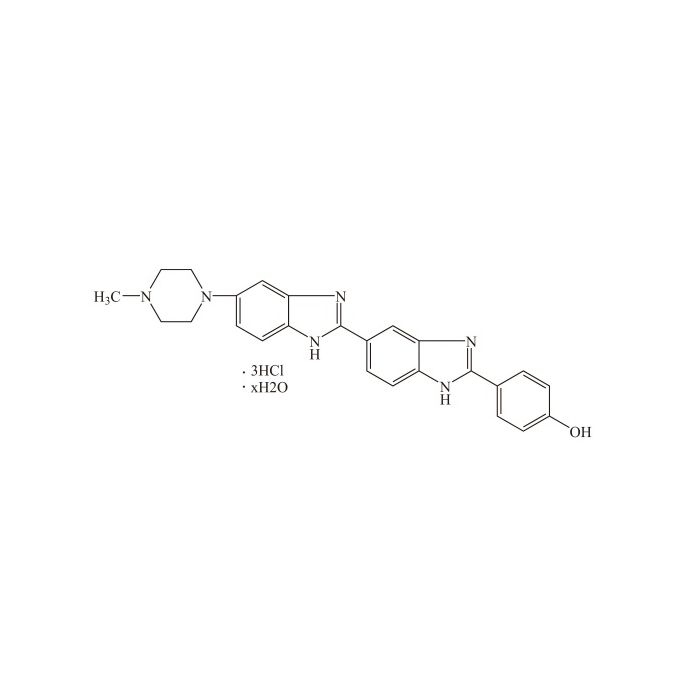
Hoechst 33258 staining solution (ready to use) - 5ug/ml in H2O , CAS No.23491-45-4

CAS: 23491-45-4 Cat. No.: H598341 Formule: C25H24N6O·3HCl Poids moléculaire: 533.90 Beilstein Registry Number: 4088183 Numéro CE: 245-690-6 PubChem CID: 31953
DISPONIBLE À COMMANDE
QUALITÉ & PURETÉ 5ug/ml in H2O
Storage
Protected from light,Store at -20°C
Shipped In
Ice chest + Ice pads
★
Taille
Allemagne (EU)
USA*
Prix
Qté
10ml
H598341-10ml
Sur commande · 8–12 semaines

53,71€

64,13€
Enregistrer 10,41 € (16.24%)
Enter a quantity for the sizes you want to add.
🧪
Pourquoi cette qualité

5ug/ml in H2O pour les flux de travail chromatographiques et analytiques sensibles nécessitant une interférence de ligne de base minimale.

🌡

Stockage & expédition

Protected from light,Store at -20°C Expédition Ice chest + Ice pads. Consultez le COA spécifique au lot pour les spécifications exactes.

📋

Documents qualité

SDS, COA, fiche technique et fiche de spécifications disponibles au téléchargement. COA spécifique au lot accessible via la recherche par numéro de lot.

📚

Preuve documentaire

Cité dans 33 publications à comité de lecture couvrant la chromatographie, la synthèse organique et les réactions de couplage croisé.

Vue d’ensemble

​Hoechst 33258, also known as bis benzimide h 33258 or hoe 33258, is a non embedding bright blfluorescent dye. Dyes have weak fluorescence in solution, and their fluorescence becomes bright after binding with DNA at the minor groove in the DNA poly at sequence rich region in living cells. Therefore, such dyes are also known as DNA probes. Because of the low background, the stained cells do not need washing steps, and the staining is very stable, non-toxic to live cells, and can last for several days or longer after combined with DNA staining. Hoechst 33258 has higher solubility in water than Hoechst 33342, but both dyes have high cell membrane permeability and are widely used for apoptosis detection. After staining, it can be observed by fluorescence microscope or detected by flow cytometry. Take adherent cells (96 well plate) as an example, 100 per well μ L staining solution, 10 ml can be used for the staining of 100 wells.

Product parameters:

Ex/em (bound DNA) = 352/461 nm; Ex/Em (unbound DNA) = 346/460 nm

Matters needing attention:

1. please centrifuge the product to the bottom of the tube immediately before use, and then conduct subsequent experiments. 

2. if you need to adjust the concentration, please select H598341 and configure the appropriate working fluid concentration by yourself. 

3. fluorescent dyes have quenching problems. It is recommended to observe immediately after staining live cells or tissues. 

4. for your safety and health, please wear experimental clothes and disposable gloves.

Scope of application:

Nuclear staining

Experimental steps:
1. For fixed cells or tissues
(1) For cell or tissue samples, wash and remove the fixative appropriately after fixation. If immunofluorescence staining is required, first perform immunofluorescence staining, and then follow the subsequent steps to perform Hoechst 33258 staining.
(2) For adherent cells or tissue sections, add a small amount of Hoechst 33258 working solution and cover the sample. For suspended cells, add at least three times the volume of the sample to be tested and mix well. Leave at room temperature for 3-5 minutes.
(3) Remove Hoechst 33258 staining solution and wash 2-3 times with TBST, PBS, or physiological saline for 3-5 minutes each time.
Note: The cleaning steps are optional but not necessary and do not affect dyeing after cleaning.
(4) Observe directly under a fluorescence microscope or observe under a fluorescence microscope after sealing. When a cell undergoes apoptosis, the nucleus of the apoptotic cell can be seen to be densely stained or fragmented and densely stained.
2. For live cells or tissues
(1) Add an appropriate amount of Hoechst 33258 working solution and fully cover the sample to be stained. Typically, 1 mL of staining solution is required per well for a six well plate, and 100 mL is required per well for a 96 well plate μ L's staining solution.
(2) Incubate at room temperature in dark for 10-30 minutes.
(3) Discard the staining solution, wash 2-3 times with PBS, then add 50 μ Perform micrographs using PBS.
Note: The cleaning steps are optional but not necessary and do not affect dyeing after cleaning.

Spécifications

Spécifications et pureté
5ug/ml in H2O
Conditions de stockage de stockage
Protected from light,Store at -20°C
Expédié en
Ice chest + Ice pads
Ce produit nécessite l'expédition en chaîne froide. Les services terrestres et autres services économiques ne sont pas disponibles.
Noms et identifiants
Sourires canoniques
CN1CCN(CC1)C2=CC3=C(C=C2)N=C(N3)C4=CC5=C(C=C4)N=C(N5)C6=CC=C(C=C6)O.Cl.Cl.Cl
IUPAC Name
4-[6-[6-(4-methylpiperazin-1-yl)-1H-benzimidazol-2-yl]-1H-benzimidazol-2-yl]phenol;trihydrochloride
InChIKey
SMNPLAKEGAEPJD-UHFFFAOYSA-N
INCHI
1S/C25H24N6O.3ClH/c1-30-10-12-31(13-11-30)18-5-9-21-23(15-18)29-25(27-21)17-4-8-20-22(14-17)28-24(26-20)16-2-6-19(32)7-3-16;;;/h2-9,14-15,32H,10-13H2,1H3,(H,26,28)(H,27,29);3*1H
Isomères SMILES
CN1CCN(CC1)C2=CC3=C(C=C2)N=C(N3)C4=CC5=C(C=C4)N=C(N5)C6=CC=C(C=C6)O.Cl.Cl.Cl
WGK Allemagne
3
RTECS
SM1140500
PubChem CID
31953
Poids moléculaire
533.90
Beilstein
4088183

Documentation

📋 Fiche de données de sécurité (FDS)

Document complet couvrant les dangers, la manipulation, le stockage et la conformité réglementaire.

<<<<<<< HEAD Télécharger la SDS → ======= Télécharger la SDS → >>>>>>> release248-p3

✅ Certificat d'analyse (COA)

Données qualité spécifiques au lot. Saisissez votre numéro de lot pour récupérer le COA exact.

Rechercher le COA →

📊 Fiche technique

Résumé de référence rapide des spécifications et applications du produit.

Voir la fiche technique →

🔬 Fiche de spécifications

Attributs de qualité complets et critères d'acceptation pour cette qualité.

Voir la fiche de spécifications →

Données avancées

Taxonomic Classification

Taxonomy Tree

KingdomOrganic compounds
SuperclassOrganoheterocyclic compounds
ClasseBenzimidazoles
SubclassPhenylbenzimidazoles
Intermediate Tree Nodes Not available
Direct ParentPhenylbenzimidazoles
Alternative Parents N-arylpiperazines  Phenylimidazoles  Dialkylarylamines  N-methylpiperazines  1-hydroxy-2-unsubstituted benzenoids  Benzene and substituted derivatives  Heteroaromatic compounds  Trialkylamines  Azacyclic compounds  Organooxygen compounds  Hydrochlorides  Hydrocarbon derivatives  
Molecular FrameworkAromatic heteropolycyclic compounds
Substituents Phenylbenzimidazole - N-arylpiperazine - 2-phenylimidazole - Dialkylarylamine - Tertiary aliphatic/aromatic amine - 1-hydroxy-2-unsubstituted benzenoid - Phenol - N-alkylpiperazine - N-methylpiperazine - Monocyclic benzene moiety - 1,4-diazinane - Benzenoid - Piperazine - Azole - Heteroaromatic compound - Imidazole - Tertiary aliphatic amine - Tertiary amine - Azacycle - Hydrochloride - Organooxygen compound - Organonitrogen compound - Hydrocarbon derivative - Organic oxygen compound - Organic nitrogen compound - Amine - Aromatic heteropolycyclic compound
DescriptionThis compound belongs to the class of organic compounds known as phenylbenzimidazoles. These are compounds containing a phenylbenzimidazole skeleton, which consists of a benzimidazole moiety where its imidazole ring is attached to a phenyl group.
External Descriptors Not available
Structure 3D
Modèle de structure chimique interactif


Cibles associées (humaines)
TOP1 Tclin DNA topoisomerase I (7553 Activities)
Activity TypeRelationActivity valueUnitsAction TypeJournalPubMed IddoiAssay Aladdin ID
TOP2A Tclin DNA topoisomerase II alpha (6317 Activities)
Activity TypeRelationActivity valueUnitsAction TypeJournalPubMed IddoiAssay Aladdin ID
DU-145 (51482 Activities)
Activity TypeRelationActivity valueUnitsAction TypeJournalPubMed IddoiAssay Aladdin ID
MCF7 (126967 Activities)
Activity TypeRelationActivity valueUnitsAction TypeJournalPubMed IddoiAssay Aladdin ID
A549 (127892 Activities)
Activity TypeRelationActivity valueUnitsAction TypeJournalPubMed IddoiAssay Aladdin ID
KG-1 (867 Activities)
Activity TypeRelationActivity valueUnitsAction TypeJournalPubMed IddoiAssay Aladdin ID
HeLa (62764 Activities)
Activity TypeRelationActivity valueUnitsAction TypeJournalPubMed IddoiAssay Aladdin ID
Cibles associées (non humaines)
Pseudomonas aeruginosa (123386 Activities)
Activity TypeRelationActivity valueUnitsAction TypeJournalPubMed IddoiAssay Aladdin ID
Enterobacter cloacae (7976 Activities)
Activity TypeRelationActivity valueUnitsAction TypeJournalPubMed IddoiAssay Aladdin ID
Klebsiella pneumoniae (43867 Activities)
Activity TypeRelationActivity valueUnitsAction TypeJournalPubMed IddoiAssay Aladdin ID
Shigella flexneri (1836 Activities)
Activity TypeRelationActivity valueUnitsAction TypeJournalPubMed IddoiAssay Aladdin ID
Staphylococcus aureus (210822 Activities)
Activity TypeRelationActivity valueUnitsAction TypeJournalPubMed IddoiAssay Aladdin ID
Staphylococcus epidermidis (22802 Activities)
Activity TypeRelationActivity valueUnitsAction TypeJournalPubMed IddoiAssay Aladdin ID
Acinetobacter baumannii (41033 Activities)
Activity TypeRelationActivity valueUnitsAction TypeJournalPubMed IddoiAssay Aladdin ID
Citrobacter freundii (1864 Activities)
Activity TypeRelationActivity valueUnitsAction TypeJournalPubMed IddoiAssay Aladdin ID
Escherichia coli (133304 Activities)
Activity TypeRelationActivity valueUnitsAction TypeJournalPubMed IddoiAssay Aladdin ID
Enterococcus faecium (13803 Activities)
Activity TypeRelationActivity valueUnitsAction TypeJournalPubMed IddoiAssay Aladdin ID
Enterococcus faecalis (29875 Activities)
Activity TypeRelationActivity valueUnitsAction TypeJournalPubMed IddoiAssay Aladdin ID
Calf thymus DNA (4845 Activities)
Activity TypeRelationActivity valueUnitsAction TypeJournalPubMed IddoiAssay Aladdin ID
Mécanismes d'action
Certificats (CoA, COO, BSE/TSE et tableau d'analyse)
C of A & Other Certificates(BSE/TSE, COO):
Analytical Chart:

Find and download the COA for your product by matching the lot number on the packaging.

1 results found

Lot NumberCertificate TypeDateArticle
A2420226A2420226Certificate of AnalysisJan 16, 2024 H598341
Propriétés chimiques et physiques
Point de fusion (°C)314°C
Poids moléculaire533.900 g/mol
XLogP3
Hydrogen Bond Donor Count6
Hydrogen Bond Acceptor Count5
Rotatable Bond Count3
Exact Mass532.131 Da
Monoisotopic Mass532.131 Da
Topological Polar Surface Area84.100 Ų
Heavy Atom Count35
Formal Charge0
Complexity634.000
Isotope Atom Count0
Defined Atom Stereocenter Count0
Undefined Atom Stereocenter Count0
Defined Bond Stereocenter Count0
Undefined Bond Stereocenter Count0
The total count of all stereochemical bonds0
Covalently-Bonded Unit Count4
FAQ et articles
Hoechst Staining for Apoptosis Detection: Experimental Workflow
Cell Live/Dead Staining and Apoptosis Detection Techniques
Fluorescent Probes: A Complete Beginner’s Guide — Definitions & Emission Mechanisms, Signal Readouts, Classification Framework, Selection Roadmap, and Product Tables (Tables 1–4)
dsDNase-Mediated Hydrolysis of Double-Stranded DNA: Enzymatic Characteristics, Methodological Strategies, and Bioanalytical Applications
Physicochemical Properties of Diphenylamine, Analytical Applications, and a Review of Its DNA Colorimetric Reaction
Comparative Analysis and Selection Strategies for Mounting Media in Immunological Experiments
Cell Apoptosis Detection by TUNEL Labeling: Signal Interpretation and Result Evaluation
Types, Binding Mechanisms, and Experimental Selection of Nuclear Dyes
Practical Guide to TSA Tyramide Signal Amplification: How to Select Reagents, Optimize the Workflow, and Reduce Background When Detection Signals Are Weak for Low-Abundance Targets
Summary of Cell Staining Methods
Citations of This Product
Calculateurs de solution
Avis

Avis des clients

Application Protocols

Item-specific directions for this ready-to-use solution (e.g., application volume, incubation time) are Not specified for this item; refer to CoA/Spec Sheet. The following are general, literature-based protocols for Hoechst 33258 staining. Adjust to your specimen and imaging platform.

Fixed cells/tissue (microscopy):

  1. Prepare fixed/permeabilized specimen (e.g., 4% paraformaldehyde fixation; optional 0.1–0.5% Triton X-100 permeabilization). Rinse with PBS.
  2. Apply Hoechst 33258 staining solution to cover the sample. Incubate protected from light for several minutes.
  3. Rinse 2–3× with PBS to remove unbound dye.
  4. Mount with a compatible medium (antifade recommended). Image with UV/405 nm excitation and DAPI/Hoechst emission filters.

Live-cell staining (if permitted by formulation):

  1. Replace culture medium with dye-containing buffer or medium. Incubate briefly at room temperature or 37 °C, protected from light.
  2. Rinse once in warm buffer/medium if needed to reduce background. Minimize UV exposure to limit phototoxicity.

Flow cytometry (DNA content):

  1. Fix and permeabilize cells (e.g., ethanol). Treat with RNase A.
  2. Stain with dye solution and incubate in the dark.
  3. Analyze with UV/405 nm laser and appropriate detectors; gate on singlets for cell-cycle analysis.

Always validate exposure times and detector gains to avoid saturation.

Biological Roles

Hoechst 33258 is not a biological metabolite; it is a synthetic small-molecule fluorophore. The following describes its interaction with biomolecules (literature):

  • Target: Double-stranded DNA minor groove, with preference for A–T rich sequences. Binding is driven by hydrogen bonding and shape complementarity; the dye aligns along the floor of the groove.
  • Functional consequence: Fluorescence intensity and quantum yield markedly increase upon DNA binding, enabling sensitive detection of nuclei and DNA-dense structures.
  • Selectivity: Minimal binding to RNA under standard staining conditions, especially when RNase is included; this underpins DNA-specific quantification in cell-cycle analysis.
  • Cellular entry: Cationic, amphipathic properties support uptake; Hoechst 33342 is generally more membrane-permeant than 33258.
  • Photobiology: Under UV excitation, potential for phototoxicity and DNA damage if illumination is excessive; mitigate by minimizing exposure and using antifade media.
  • Histological context: Stains heterochromatin intensely due to higher A–T content in many mammalian nuclei; euchromatin appears dimmer, assisting in nuclear morphology assessment.

Note: The above properties are general characteristics of the dye and may vary with buffer composition, fixation method, and sample type.

Buffer Applications

This product is a nuclear staining solution rather than a buffering reagent. It is not typically used to establish or control pH in biochemical assays.

Practical note:

  • Use with standard physiological or immunostaining buffers (e.g., PBS, HBSS, or Tris-based buffers) according to your staining workflow.
  • Exact buffer composition of this ready-to-use product is Not specified for this item; refer to CoA/Spec Sheet.
Green Alternatives

While Hoechst 33258 is widely used, it is a DNA-binding dye and should be treated as potentially mutagenic. Consider greener or lower-hazard strategies depending on the application.

Options and trade-offs (literature/practice):

  • DAPI

    • Pros: Similar excitation/emission; effective nuclear counterstain for fixed cells; broad availability.
    • Cons: UV excitation; intercalating/minor-groove binding dye with similar hazard profile; generally not superior in safety.
  • SYTOX/SYTO family (various colors)

    • Pros: Some variants are impermeant (dead-cell selective), enabling greener gating strategies without permeabilization.
    • Cons: Many require green or red excitation; spectral reconfiguration needed; hazard still present as nucleic-acid stains.
  • NucBlue Live (Hoechst 33342 formulation)

    • Pros: Optimized, ready-to-use for live cells; robust nuclear labeling at low working doses; convenient.
    • Cons: Dye class and hazard profile comparable; not intrinsically greener.

Process improvements (reduce impact):

  • Minimize dye quantity and exposure time consistent with S/N requirements.
  • Use LED illumination and optimized filter sets to reduce UV dose and energy consumption.
  • Consolidate staining/ wash steps to reduce aqueous hazardous waste volume; collect waste as chemical-hazardous.

Summary: There is no universally “green” direct substitute retaining identical blue-channel performance and UV excitation. Risk reduction is best achieved via scale minimization, engineering controls, and proper waste management.

Pharmaceutical Uses

Not a pharmaceutical excipient or active ingredient. Hoechst 33258 staining solution is intended for research and analytical use in laboratory imaging and cytometry.

Formulation/manufacturing context (general):

  • Occasionally used in bioprocess analytics (in vitro) to assess cell density, viability, or DNA content in research and process development labs.
  • No pharmacopeial monograph is applicable to this ready-to-use staining solution. Any cGMP use would require user qualification and validation; item-specific quality attributes are Not specified for this item; refer to CoA/Spec Sheet.

Research Use Note: For research use only (from Product Data).

Physical Properties

This listing is a ready-to-use aqueous staining solution. Item-specific physicochemical specifications (concentration, pH, buffer composition, refractive index, density) are Not specified for this item; refer to CoA/Spec Sheet.

Photophysical properties of Hoechst 33258 (literature values for the free dye bound to DNA; actual spectra depend on solvent, pH, and binding state):

  • Excitation maximum: ~350–360 nm (commonly ~352 nm) when DNA-bound.
  • Emission maximum: ~460–465 nm (commonly ~461 nm) when DNA-bound; bright blue fluorescence.
  • Stokes shift: large (~100+ nm), aiding spectral separation from common green/red fluorophores.
  • Quantum yield: increases substantially upon binding to dsDNA (context- and buffer-dependent).
  • Photostability: moderate; subject to photobleaching with intense/extended UV illumination; protect from light.

General solubility and compatibility (literature, dye):

  • Water-soluble due to protonatable amines; compatible with common PBS/Tris buffers.
  • Fluorescence is sensitive to pH (reduced intensity at very low pH) and quenched by some intercalators/heavy-atom species.

Thermal/handling (solution):

  • Appearance: Not specified for this item; refer to CoA/Spec Sheet.
  • Freezing/melting: aqueous solutions typically freeze at or below 0 °C; avoid repeated freeze–thaw to preserve performance.
Quality and Grades
  • Grade/Purity: Not specified for this item; refer to CoA/Spec Sheet.
  • Format: Ready-to-use staining solution. This implies the dye is pre-diluted in a compatible aqueous buffer at a working concentration suitable for direct application to cells or tissue sections (exact composition Not specified for this item; refer to CoA/Spec Sheet).

What “ready-to-use” typically entails (general guidance):

  • Performance-qualified for fluorescent nuclear staining under standard microscopy or cytometry workflows.
  • Buffer selection and pH adjusted to support robust DNA binding and fluorescence while limiting background.
  • Filtration/clarity control to avoid particulates that increase background.

Considerations for professional users:

  • Lot-to-lot consistency is commonly verified via test stains on reference cell lines or fixed tissue to confirm signal-to-noise and nuclear specificity. Specific QC metrics for this item are Not specified for this item; refer to CoA/Spec Sheet.
  • Stabilizers, antimicrobial agents, and preservative content (e.g., sodium azide) can influence compatibility with live-cell applications or enzyme-based assays; such details are Not specified for this item; refer to CoA/Spec Sheet.
  • If using in quantitative applications (cell cycle analysis), validate linearity and dynamic range with internal controls upon receipt.
Reaction and Applications

As a fluorescent DNA stain, Hoechst 33258 is used for analytical imaging and cytometry rather than chemical synthesis. Typical laboratory applications (literature/practice):

  • Fluorescence microscopy: Nuclear counterstain for fixed cells and paraffin/frozen tissue sections. Provides blue nuclei that contrast with green/red channel probes.
  • Flow cytometry: DNA content analysis for cell cycle profiling (requires RNase treatment and permeabilization in many protocols). Validate linearity for quantitative applications.
  • Live-cell imaging: Hoechst 33258 can enter live cells, though Hoechst 33342 is generally more permeant; optimize exposure to minimize phototoxicity under UV illumination.
  • High-content screening: Automated nuclear segmentation due to bright, punctate nuclear fluorescence.
  • Apoptosis/viability assays: Nuclear morphology assessment (condensation/fragmentation) when combined with appropriate viability dyes (e.g., PI, 7-AAD) and annexin V (method-dependent).
  • Comet assay (alkaline single-cell gel electrophoresis): Visualization of DNA comets in genotoxicity testing (ensure instrument UV/blue filter sets match dye spectra).

Practical tips:

  • Protect samples and reagent from light to prevent photobleaching.
  • Avoid over-staining which elevates cytoplasmic/background signal; empirical timing optimization improves contrast.
  • Remove RNA with RNase A when quantifying DNA content to reduce background.
  • Mounting media: Confirm compatibility; some antifade reagents enhance blue-channel stability, while others may shift emission slightly.
Reaction Conditions

Not applicable for chemical reactions. However, for staining workflows (literature/practice, general guidance):

  • Temperature: Room temperature staining is common; colder temperatures slow kinetics; warmer conditions can increase background.
  • Incubation time: Minutes-scale incubations are typical; optimize empirically for your specimen and imaging system.
  • Light: Perform incubations and washes protected from light (foil-wrap tubes/dishes) to preserve fluorescence and reagent integrity.
  • Wash steps: Post-stain rinses in buffer reduce background and unbound dye.
  • Compatibility: Works with many fixation methods (paraformaldehyde, methanol); fixation can alter permeability and staining intensity—optimize accordingly.

Note: Because this is a ready-to-use product, specific working concentrations and timings are determined by the supplied formulation and use-case; item-specific parameters are Not specified for this item; refer to CoA/Spec Sheet.

Safety and Handling
  • GHS classification, signal word, pictograms, and H-statements: Not specified for this item; refer to the SDS.
  • Storage conditions (from Product Data): Store at −20 °C and protect from light.
  • Shipping (from Product Data): Shipped in an ice chest with ice pads to maintain low temperature.

General safety guidance for DNA-binding fluorescent dyes (literature/practice):

  • Potential mutagenic hazard: As a DNA minor-groove binder, Hoechst 33258 should be handled as a potential mutagen. Avoid inhalation, ingestion, skin/eye contact.
  • PPE: Laboratory coat, nitrile gloves, and safety glasses. Change gloves frequently; avoid contamination of common touch surfaces.
  • Engineering controls: Use in a well-ventilated area; for bulk handling or aerosol-generating steps, work in a fume hood or biosafety cabinet as appropriate.
  • Light sensitivity: Minimize ambient light exposure; wrap tubes in foil when not in use.
  • Incompatibilities: Strong oxidizers and strong acids/bases may degrade the dye; avoid contact with hypochlorite bleach in concentrated form before deactivation.
  • Spill/cleanup: Absorb with inert material wearing appropriate PPE; decontaminate surfaces with 70% ethanol or detergent; collect waste as hazardous chemical waste.
  • First aid (overview; defer to SDS): In case of skin contact, wash with soap/water. Eye contact: rinse cautiously with water for several minutes and seek medical attention. If inhaled: move to fresh air. If ingested: rinse mouth; seek medical attention.

Always consult the current SDS for authoritative safety information.

Solvent Selection

This product is supplied as a ready-to-use aqueous solution for direct staining; independent solvent selection is typically unnecessary.

General solvent compatibility (literature/practice):

  • Matrix: Water-based buffers (e.g., PBS, HBSS, Tris) are standard. Organic cosolvents are not required and can alter fluorescence or cell permeability.
  • Miscibility: Fully miscible with aqueous buffers; avoid high percentages of alcohols or DMSO unless validated, as these can change membrane permeability and staining patterns.

When to consider alternatives:

  • For live-cell staining requiring higher permeability, Hoechst 33342 (structural analog) is often preferred due to increased cell membrane permeability (literature). For fixed cells/tissues, Hoechst 33258 provides crisp nuclear counterstaining in blue channel.

Spectral positioning (practical note):

  • Excitation in the near-UV (e.g., 350–405 nm lasers/lamps); emission collected in the DAPI/Hoechst channel (~450–480 nm). This facilitates multiplexing with FITC/Alexa 488 (green), TRITC/Alexa 546 (orange), and Texas Red/Cy5 (red) fluorophores with minimal bleed-through.
Storage and Reconstitution
  • Storage conditions (from Product Data): Store at −20 °C. Protect from light.
  • Shipping (from Product Data): Ice chest with ice pads to maintain cold chain.
  • Format: Ready-to-use solution; no reconstitution required.

Best practices (general):

  • Aliquot upon first use to minimize freeze–thaw cycles; avoid repeated freeze–thaw which can reduce fluorescence performance.
  • Thaw on ice or at 2–8 °C protected from light; mix gently to ensure homogeneity. Do not vortex excessively to avoid foaming.
  • Short-term storage: Many users keep working aliquots at 2–8 °C protected from light for limited periods; specific hold times/stability are Not specified for this item; refer to CoA/Spec Sheet.
  • Do not contaminate the stock; use clean, dye-resistant plasticware or glass.
  • Disposal: Collect unused dye and rinses as hazardous chemical waste in accordance with institutional and regulatory guidance.
Structure and Identity

Ready-to-use nuclear counterstain solution containing Hoechst 33258 (bisbenzimide DNA minor-groove binder). This listing is for a working solution; structural data below describe the chromophore (Hoechst 33258) in general.

  • SKU: H598341
  • Product Name: Hoechst 33258 staining solution (ready to use)
  • CAS (Hoechst 33258): 23491-45-4
  • PubChem CID (Hoechst 33258): 31953 (literature/registry)
  • InChIKey: 339776 (as provided in Product Data)
  • SMILES: Not specified for this item; refer to CoA/Spec Sheet.
  • Molecular Formula: Not specified for this item; refer to CoA/Spec Sheet.
  • Molecular Weight: Not specified for this item; refer to CoA/Spec Sheet.

Structural features (literature, chromophore):

  • Bis-benzimidazole scaffold with one 4-hydroxyphenyl substituent and one N-methylpiperazine-containing substituent.
  • Cationic at physiological pH due to protonated piperazine nitrogens; overall blue-fluorescent DNA probe.
  • Binds the minor groove of double-stranded DNA with preference for A–T rich sequences via hydrogen bonding and van der Waals contacts.
  • 2D description: two benzimidazole rings linked through a methine-like bridge; one benzimidazole para-substituted by a phenol; the other para-substituted via a linker to an N-methylpiperazine; multiple aromatic rings confer planarity conducive to groove fitting.

Note: This product is a ready-to-use solution; exact composition, buffer, and dye concentration are Not specified for this item; refer to CoA/Spec Sheet.

Synthetic Utility

Not applicable. Hoechst 33258 staining solution is an analytical fluorescent probe for DNA visualization and quantification, not a synthetic building block or reagent.

For chemical synthesis contexts requiring blue-emissive tags, consider dedicated synthetic fluorophores with reactive handles (e.g., NHS esters, maleimides, azides/alkynes for click chemistry). Hoechst 33258 lacks standardized conjugation handles and is instead used directly as a small-molecule stain.

Target Specificity

This section is interpreted for a small-molecule probe rather than an antibody.

Biochemical target (literature):

  • Primary target: Double-stranded DNA minor groove with preference for A–T rich sequences.
  • Binding mode: Minor-groove binding via hydrogen bonding and van der Waals interactions; non-intercalative. Fluorescence intensifies upon binding.
  • Nucleic acid selectivity: Reduced affinity for RNA under standard conditions; inclusion of RNase further improves DNA specificity in cytometry protocols.

Note: No antibody clone/isotype or species reactivity is applicable. This product does not have antigen/epitope specificity in the immunological sense.

Foire aux questions

How is this product shipped?
This product ships in an insulated container with ice pads. Unpack on arrival and transfer it to the storage condition stated above.
What are the CAS number, molecular formula and molecular weight?
The CAS Number is 23491-45-4, the molecular formula is C25H27Cl3N6O, and the molecular weight is 533.90 g/mol. InChIKey SMNPLAKEGAEPJD-UHFFFAOYSA-N.
How should this product be stored?
Store at ?20 °C, protected from light. The material is light-sensitive — keep it in its original opaque or amber container.
What documentation is provided?
Available product documentation, including Certificates of Analysis (COA), Safety Data Sheets (SDS), and specification sheets, is shown in the product document area. Document availability and access follow the current site policy.

Souhaitez-vous que nous vous envoyions un message lorsque des réductions seront disponibles?

Me rappeler plus tard

Merci ! Veuillez vérifier votre boîte de réception e-mail pour confirmer.

Oups ! Les notifications sont désactivées.