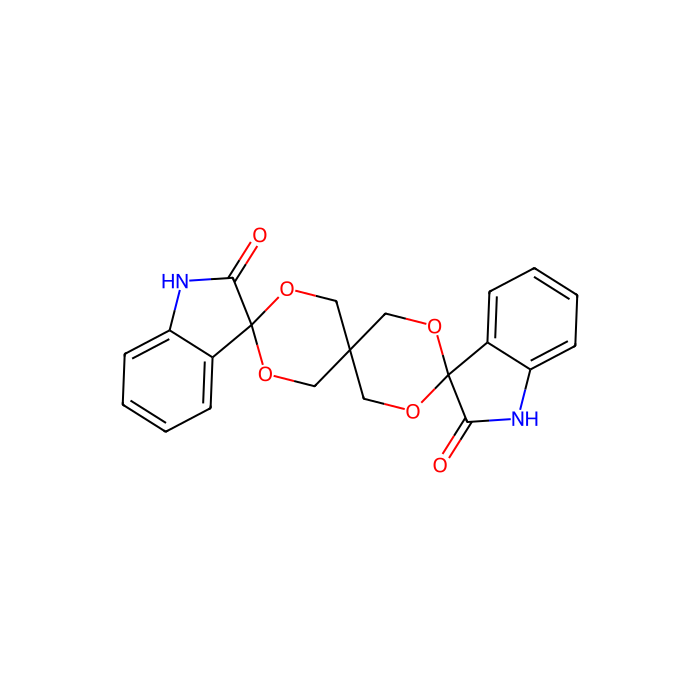
Inhibitor of canonical Wnt pathway signaling (IC50= 1.17μM); targets theβ-catenin destruction complex (GSK-3β/AXIN/APC) to induceβ-catenin degradation. Selective for the canonical Wnt pathway over the Sonic hedgehog (Shh) and NF-κB pathways. Blocks G1/S c
Conditions de stockage de stockage
Store at -20°C
Expédié en
Ice chest + Ice pads
Ce produit nécessite l'expédition en chaîne froide. Les services terrestres et autres services économiques ne sont pas disponibles.
This compound belongs to the class of organic compounds known as indolines. These are compounds containing an indole moiety, which consists of pyrrolidine ring fused to benzene to form 2,3-dihydroindole.
External Descriptors
Not available
1. Djoumbou Feunang Y, Eisner R, Knox C, Chepelev L, Hastings J, Owen G, Fahy E, Steinbeck C, Subramanian S, Bolton E, Greiner R, and Wishart DS. ClassyFire: Automated Chemical Classification With A Comprehensive, Computable Taxonomy. Journal of Cheminformatics, 2016, 8:61.
Solvent:DMSO, Max Conc. mg/mL: 39.44, Max Conc. mM: 100
Poids moléculaire
394.400 g/mol
XLogP3
0.500
Hydrogen Bond Donor Count
2
Hydrogen Bond Acceptor Count
6
Rotatable Bond Count
0
Exact Mass
394.116 Da
Monoisotopic Mass
394.116 Da
Topological Polar Surface Area
95.100 Ų
Heavy Atom Count
29
Formal Charge
0
Complexity
646.000
Isotope Atom Count
0
Defined Atom Stereocenter Count
0
Undefined Atom Stereocenter Count
0
Defined Bond Stereocenter Count
0
Undefined Bond Stereocenter Count
0
The total count of all stereochemical bonds
0
Covalently-Bonded Unit Count
1
Calculateurs de solution
Molarity Calculator
Determine the necessary mass, volume, or concentration for preparing a solution.
Dilution Calculator
Determine the dilution needed to prepare a stock solution.
Reconstitution Calculator
Avis
Avis des clients
Application Protocols
No item-specific, validated protocols are provided for this SKU. The following represents general, literature-style practices for small-molecule tool compounds in cell and biochemical assays. Adjust to your system and consult primary references.
Example workflow (general; not item-specific):
Stock preparation: Dissolve compound in anhydrous DMSO at 10–50 mM. Vortex/sonicate; warm gently (≤40 °C) if needed. Filter (0.22 µm PTFE) if particulates persist.
Storage of stocks: Aliquot into low-bind tubes; store at −20 °C or below; minimize freeze–thaw cycles by using single-use aliquots.
Dose–response in cells: Prepare serial dilutions in media ensuring constant DMSO (e.g., 0.1% v/v). Typical screening ranges span 0.01–30 µM depending on cell type and assay sensitivity. Include vehicle control and positive/negative pathway controls.
Biochemical assay setup: Dilute from DMSO stocks into assay buffer; maintain final DMSO ≤1% v/v unless validated otherwise. Pre-incubate with enzyme/protein as required by the assay design.
Counter-screens: Assess cytotoxicity (e.g., CellTiter-Glo), fluorescence interference, aggregation (detergent sensitivity), and redox activity as appropriate.
Data quality: Run in technical triplicates with at least three biological replicates; confirm hits with independent powder resupply or orthogonal analytical confirmation.
These are general recommendations; they are not manufacturer-validated protocols for this item.
Biological Roles
Research-use context (general; literature-based):
The designation “JW 67” appears in the chemical biology literature as a small-molecule tool compound reported to interact with tankyrase enzymes (PARP5a/5b), thereby modulating the Wnt/β‑catenin signaling axis via effects on AXIN stability. Such information is provided as general background and should be confirmed against the CoA/Spec Sheet and primary literature for the specific structure associated with this SKU.
Important caveats:
No biological activity, potency, selectivity, or off-target profiles are specified for this catalog item. Activity can be highly structure-dependent; analog mix-ups among similarly named “JW” series compounds are possible without definitive structural confirmation.
Do not infer therapeutic utility. This product is for research use only and not for human or animal administration.
Typical research applications (literature-general, not specifications for this item):
Cell-based pathway modulation studies (e.g., reporter assays for β‑catenin/TCF activity).
Biochemical target engagement with recombinant PARP family members to delineate selectivity windows.
Proteomic readouts (stability of AXIN, β‑catenin levels) to confirm pathway consequences.
Good practices for biological use:
Verify identity and purity prior to critical experiments (LC–MS, HPLC).
Use concentration ranges informed by pilot titrations; include cytotoxicity counterscreens.
This product is not a buffering agent and is not intended to constitute a buffer system. However, practical buffer-related considerations apply when dosing into biological assays.
Practical guidance (general):
Stock preparation: Prepare a concentrated DMSO stock solution (e.g., 10–50 mM) and store in small aliquots.
Dosing into buffers: Dilute stocks into assay buffers (e.g., HEPES, PBS, or culture media) maintaining a constant and minimized final DMSO fraction (commonly 0.05–0.5% v/v). Match vehicle controls exactly.
Precipitation control: If turbidity forms upon dilution, increase the DMSO content slightly (within assay tolerance), warm gently, or add a small amount of a non-ionic surfactant (e.g., 0.01% Tween-20) if assay-compatible.
Adsorption minimization: For hydrophobic compounds, pre-wet plasticware with buffer containing the vehicle to reduce nonspecific binding.
Not specified for this item; refer to CoA/Spec Sheet:
Any recommended solvent/buffer pairings unique to this compound
pH stability profile or hydrolytic sensitivity
Documentation:
Record exact buffer composition, pH, and vehicle percentage used for each experiment to ensure reproducibility.
Green Alternatives
As a small-molecule probe rather than a process solvent or reagent, “green alternatives” primarily relate to solvent practices during handling and assay preparation rather than replacing the compound itself.
Greener handling strategies (general guidance):
Prefer DMSO over DMF or NMP when feasible due to lower toxicity profiles and broader biocompatibility in screening assays.
Use minimal organic solvent volumes. Prepare concentrated stocks (e.g., 10–50 mM) to reduce the amount of DMSO added to aqueous systems.
For analytical prep, consider acetonitrile/water with formic acid (LC–MS) instead of chlorinated solvents when compatible with the compound’s polarity.
Employ microscale assays and high-throughput dispensing to cut solvent waste.
Evaluate solvent recycling or on-instrument solvent-saving modes where applicable.
Illustrative comparison (general; not item-specific):
DMSO vs DMF: DMSO often provides sufficient solubility with better EHS profile; DMF reserved for difficult-to-dissolve compounds.
Acetonitrile vs dichloromethane: For sample workups/extractions, MeCN/water biphasic systems can sometimes substitute for halogenated solvents, reducing environmental burden.
Documentation and compliance:
Record and justify solvent selections in method SOPs with reference to green chemistry metrics (e.g., PMI, solvent selection guides).
This product is intended for research use only; life-cycle impacts are dominated by lab-scale solvent use, which can be mitigated by the practices above.
Pharmaceutical Uses
This product is supplied strictly for research use only. No pharmacopeial status, excipient role, or clinical/formulation use is specified.
Item-specific information:
Pharmaceutical/Excipient grade: Not specified for this item; refer to CoA/Spec Sheet.
Regulatory listing (USP/EP/JP): Not applicable/not specified.
Context and boundaries:
While small-molecule tool compounds may inform target validation and preclinical mechanism studies, this catalog entry is not intended for human or veterinary use, API manufacture, or as a GMP starting material.
No claims are made regarding stability in clinical formulations, bioavailability, or toxicology.
If formulation-like studies are conducted for research purposes:
Vehicle selection: DMSO-based concentrates can be formulated into aqueous systems for in vitro assays. For in vivo model research (if permitted by your institution), follow institutional IACUC/EHS policies and develop vehicle systems that balance solubility and tolerability; this is outside the scope of the catalog’s intended use.
Characterization: For any advanced studies, confirm salt form, polymorph, and purity by orthogonal methods (XRPD, DSC/TGA, Karl Fischer, LC–MS). None of these are specified for this item and must be determined by the end user if required.
Physical Properties
Only limited item-specific physicochemical data are provided for this product.
Item-specific values (from Product Data):
Appearance: Not specified for this item; refer to CoA/Spec Sheet.
Molecular Weight: Not specified for this item; refer to CoA/Spec Sheet.
Typical/literature-style properties (for orientation only; not specifications for this item):
Many small molecules in screening libraries are solid at ambient temperature and are soluble in high‑boiling polar aprotic solvents (e.g., DMSO, DMF) and variably soluble in alcohols or aqueous buffers with cosolvent. This is general guidance and not specific to this SKU.
Unspecified for this item (consult CoA/Spec Sheet):
Melting point (MP)
Boiling point (BP)
Density
Solubility in common solvents (DMSO, ethanol, water)
LogP/logD
pKa
UV–Vis absorbance profile / cutoff
Refractive index
Practical notes for handling library compounds (general):
If the compound is provided as a film or powder, dissolve first in anhydrous DMSO to prepare a concentrated stock (e.g., 10–50 mM), then dilute into assay media with attention to final DMSO content.
If solubility is unknown, perform a small solvent screen (DMSO, DMF, MeOH/EtOH, acetonitrile) and check clarity after dilution into aqueous buffer (potential precipitation at low cosolvent percentages).
For spectral quantitation, determine an extinction coefficient experimentally; no UV data are supplied for this item.
Quality and Grades
Item-specific quality details are not listed in the Product Data for this SKU.
Grade/Purity: Not specified for this item; refer to CoA/Spec Sheet.
Appearance: Not specified for this item; refer to CoA/Spec Sheet.
What to expect and how to interpret grade (general guidance for small-molecule libraries):
Library/research grade compounds are typically provided with analytical confirmation (e.g., HPLC purity percentage, MS, and, where feasible, 1H NMR). If UV trace and purity threshold (e.g., ≥95% HPLC) are critical for your workflow (HTS, quantitative biology), request the current CoA to verify.
Stabilizers: Not specified for this item. If stabilizers or counter-ions are present, they will be disclosed on the CoA. Presence of stabilizer may influence UV background or bioassay readouts and should be accounted for during controls.
Salt form/hydrate state: Not specified for this item; verify on CoA. The exact form can change molecular weight used for dosing calculations.
Batch-to-batch consistency: For screening campaigns, retain aliquots from the same lot to maintain consistency; if orthogonal confirmation is needed (e.g., NMR, LC–MS), we recommend checking identity after long-term storage or repeated freeze–thaw.
Documentation to request for this item:
Certificate of Analysis (CoA) with identity confirmation, purity, and residual solvent data if available.
Specification Sheet detailing any known solubility guidance, salt form, or counter-ion content.
Reaction and Applications
This product is positioned as a small-molecule library member for biological screening rather than as a synthetic reagent. Consequently, it is not typically used as a solvent, catalyst, protecting group reagent, or stoichiometric building block in preparative organic chemistry.
Synthetic reactions: No item-specific reactivity or transformation data are provided. If you intend to derivatize or conjugate the molecule, obtain the structure (SMILES/SDF) from the CoA/Spec Sheet and assess functional handles (e.g., phenols, amines) prior to planning chemistry.
Analytical applications (general): Compounds of this class are commonly used in biochemical or cell-based assays as reference ligands or tool molecules. Typical workflows include dose–response studies, target engagement assays (e.g., CETSA, NanoBRET), and pathway readouts (e.g., reporter gene assays). These are application-level uses rather than chemical reactions.
Handling considerations for assay use:
Prepare concentrated DMSO stocks and minimize freeze–thaw cycles.
Include vehicle controls and, where possible, orthogonal assay formats to confirm on-target readouts.
Evaluate potential assay interferences (autofluorescence, aggregation); use counter-screens (e.g., detergent sensitivity, redox activity tests) when needed.
If your intended use is synthetic modification (e.g., bioconjugation), please contact us to confirm the exact structure, presence of reactive groups, and any protecting/stabilizing features that may affect chemoselectivity.
Reaction Conditions
Not typically applicable. This product is offered as a small-molecule library member for biological screening and is not intended as a reagent in synthetic transformations.
If you plan chemical modification (general, not item-specific):
Solvents: Choose based on solubility (DMSO, DMF, acetonitrile, dichloromethane, THF, methanol/ethanol) after verifying structure and functional groups.
Temperatures: Many small-molecule derivatizations proceed at 0–80 °C; avoid elevated temperatures until thermal stability is known.
Catalysts/bases/acids: Selection must follow functional-group compatibility (unknown for this item). Begin with mild conditions and monitor by LC–MS.
Workup: Use minimal aqueous exposure if hydrolytic liability is suspected. Evaluate stability across pH 2–10 experimentally before scale-up.
For biological assay preparation (more relevant use-case):
Stock solutions: 10–50 mM in DMSO, prepared under dry conditions; filter if particulates persist.
Dilution: Into assay buffer/media with constant vehicle percentage; equilibrate at 20–37 °C as assay requires.
Light/air sensitivity: Unknown; protect from light and air as a precaution until confirmed.
All specific reaction conditions are “Not specified for this item; refer to CoA/Spec Sheet.”
Safety and Handling
Safety data provided for this catalog entry are minimal; therefore, apply prudent laboratory precautions appropriate for an organic small molecule of unknown hazard profile.
Item-specific safety fields (from Product Data):
GHS Classification: Not specified for this item; refer to SDS.
Signal Word: Not specified for this item; refer to SDS.
H-Statements: Not specified for this item; refer to SDS.
Pictograms: Not specified for this item; refer to SDS.
General laboratory precautions (follow your institutional EHS guidance):
PPE: Wear safety glasses, lab coat, and appropriate chemically resistant gloves (e.g., nitrile). Use in a fume hood to avoid inhalation of dust or aerosols.
Avoid exposure routes: inhalation, ingestion, skin/eye contact. Prevent formation of dust. Wash thoroughly after handling.
Incompatibilities: Until specific reactivity data are available, avoid strong oxidizers, strong acids/bases, and reducing agents. Do not heat to decomposition.
First aid (overview; defer to SDS for authoritative instructions):
Skin/eye contact: Rinse with copious water for at least 15 minutes; remove contaminated clothing; seek medical attention.
Inhalation: Move to fresh air; monitor breathing; seek medical attention.
Ingestion: Rinse mouth; do not induce vomiting; seek medical attention.
Spill/accident response: Avoid breathing dust; collect with inert absorbent; place in suitable container for disposal in accordance with local regulations.
Waste: Dispose of as hazardous organic waste; segregate halogenated vs non-halogenated streams per policy.
Always consult the product-specific SDS prior to first use for definitive hazard, handling, and transport information.
Solvent Selection
Because no solubility specifications are provided for this item, choose solvents using a conservative, stepwise approach commonly used for small molecules in screening collections.
General solvent strategy (not item-specific):
Primary stock solvent: Anhydrous DMSO is typically the first choice due to broad solvating power and compatibility with biochemical assays up to 0.1–1% v/v.
Secondary options: DMF > acetonitrile > methanol/ethanol. For aqueous work, pre-dissolve in DMSO or DMF, then dilute into buffer with surfactant (e.g., 0.01% Tween-20) if precipitation is observed.
Aqueous solubility: Unknown for this item. Attempt serial dilution from a clear DMSO stock; monitor turbidity and use a vehicle-matched control.
Practical workflow:
Prepare a small 10–50 mM DMSO stock. Warm gently (≤40 °C) and vortex/sonicate if needed.
Test a dilution into assay buffer at incremental DMSO percentages (0.05%, 0.1%, 0.5%, 1%).
If precipitation occurs, increase cosolvent slightly or include co-solubilizers (e.g., PEG-400 up to 5%) as assay-compatible.
Comparison notes (general):
DMSO vs DMF: DMSO is generally more biocompatible in cellular assays; DMF may improve dissolution but is more cytotoxic—use sparingly.
MeOH/EtOH: Useful for analytical sample prep (LC–MS), but may not fully dissolve hydrophobic chemotypes without DMSO cosolvent.
Record-keeping:
Document the final solvent system and percent DMSO used in assays; replicate performance is sensitive to vehicle composition.
Storage and Reconstitution
Item-specific conditions (from Product Data):
Storage Conditions: Store at −20 °C.
Shipped In: Ice chest + Ice pads.
General guidance for small-molecule library compounds (not item-specific specifications):
Container: Store in tightly sealed, inert containers (amber vials recommended) to minimize moisture and light exposure.
Atmosphere: If hygroscopic or air-sensitive (status not specified for this item), handle under dry air or nitrogen; consider storing desiccated.
Reconstitution:
Solvent: Use anhydrous DMSO to prepare a concentrated stock (e.g., 10–50 mM). Actual solubility for this item is not specified; verify visually for clarity.
Technique: Warm gently (≤40 °C), vortex, and sonicate if needed. Avoid prolonged heating.
Filtration: If particulates persist, pass through a 0.22 µm PTFE filter.
Aliquoting: Divide stock into single-use aliquots to avoid repeated freeze–thaw. Label aliquots with concentration, solvent, lot, and date.
Stability: Long-term stability, light sensitivity, and solution shelf-life are not specified for this item; consult the CoA/Spec Sheet and perform pilot stability checks (e.g., LC–MS after 1–2 weeks at working conditions).
Thawing: Thaw on ice or at room temperature; mix thoroughly to redissolve any precipitate. Avoid multiple freeze–thaw cycles.
For research use only. Always consult the product-specific CoA and SDS for definitive instructions.
Structure and Identity
Brief overview: JW 67 is listed in our small‑molecule library. Limited structure-specific details are provided in the Product Data for this catalog entry.
SKU: J288459
Product Name: JW 67
CAS: 442644-28-2 (item-specific)
PubChem CID: 644733 (item-specific)
InChIKey: 34232 (item-specific; note: atypical format; refer to CoA/Spec Sheet for confirmation)
SMILES: Not specified for this item; refer to CoA/Spec Sheet.
Molecular Formula: Not specified for this item; refer to CoA/Spec Sheet.
Molecular Weight: Not specified for this item; refer to CoA/Spec Sheet.
Structural features (general note):
Item-specific 2D structure is not provided in the Product Data. If a structure file (SDF/MOL) or SMILES is required for cheminformatics, please request the CoA/Spec Sheet or structure package for this SKU.
Literature context (general): The name “JW 67” has been reported in the chemical biology literature as a small-molecule probe; however, specific substituent pattern and stereochemistry should be verified against the certificate for this exact catalog item to avoid mix-ups among similarly named analogs.
Data-source annotation:
Item-specific fields above reflect the provided Product Data.
Any structural/cheminformatics values not listed are intentionally left as “Not specified” to avoid over-interpretation. Consult the CoA/Spec Sheet for definitive identity data, including spectral characterization (1H/13C NMR, HRMS, HPLC purity) when available.
Synthetic Utility
This SKU represents a finished small molecule intended for screening and mechanistic biology rather than a synthetic building block. Consequently, it is not typically leveraged as a reagent or intermediate in multistep synthesis.
Functional group reactivity: Not specified for this item; without the disclosed structure (SMILES/SDF) it is inappropriate to infer nucleophilicity/electrophilicity or compatibility with common transformations.
Derivatization potential: If analog synthesis, tagging, or linker attachment is planned, obtain the exact structure and assess positions amenable to modification (e.g., ring substitution, amide/urea handles). Protecting-group strategies and chemoselectivity will depend entirely on the confirmed functional groups.
Purification/analytics: For any derivatization experiments, plan for LC–MS guided purification and verify identity by NMR/HRMS. Photophysical properties (UV absorbance, fluorescence) are not provided and should be measured if they will be used for detection.
Recommendation:
Request the CoA/Spec Sheet to confirm identity and any reactive handles. If needed, we can provide a reference spectrum pack (where available) or discuss custom analog sourcing under separate inquiry.
Target Specificity
Item-specific target information is not provided in the Product Data.
General literature note (for context only; not a specification for this SKU):
Compounds designated in the “JW” series have been reported as chemical probes for tankyrase enzymes (PARP5a/5b), impacting Wnt/β‑catenin signaling via AXIN stabilization. Target engagement and selectivity, however, are highly structure-dependent.
For this catalog entry:
Declared target(s): Not specified for this item; refer to CoA/Spec Sheet.
Species selectivity: Not specified for this item; refer to CoA/Spec Sheet.
Potency/affinity/kinetics: Not specified for this item; refer to CoA/Spec Sheet.
Recommendations:
Verify target engagement experimentally in your system (biochemical assays, CETSA, NanoBRET, reporter assays) and include orthogonal controls.
Use authentic reference standards and confirm identity/purity of the material prior to drawing conclusions about target specificity.
Nous utilisons des cookies pour garantir le bon fonctionnement du site et, lorsque cela est autorisé, pour améliorer votre expérience. Vous pouvez gérer vos préférences à tout moment dans les Paramètres. Pour en savoir plus, consultez notre Politique relative aux cookies.
Souhaitez-vous que nous vous envoyions un message lorsque des réductions seront disponibles?
Me rappeler plus tard
Merci ! Veuillez vérifier votre boîte de réception e-mail pour confirmer.
Products are supplied to verified businesses, institutions, and qualified professionals for research and development use only. Not for use in humans, animals, diagnosis, or therapy.

 G2215598