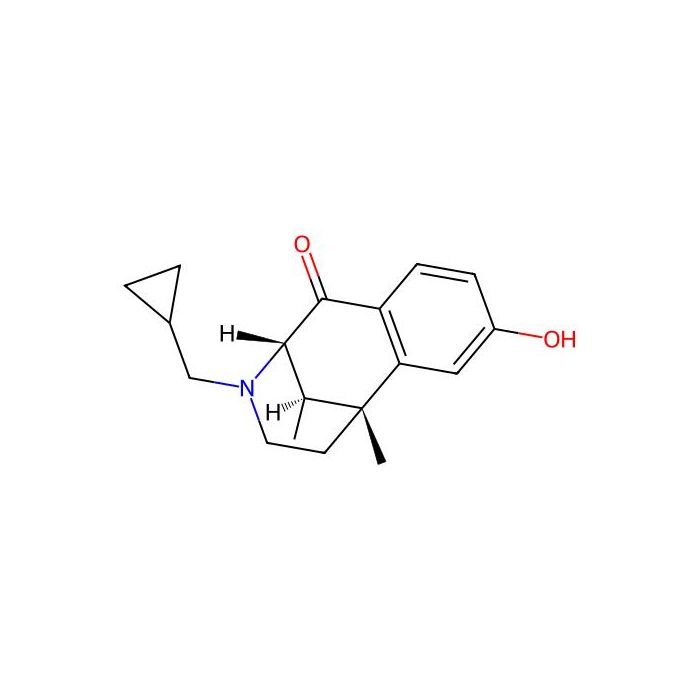
This compound belongs to the class of organic compounds known as 2,6-dimethyl-3-benzazocines. These are aromatic compounds containing a 6,7-benzomorphan skeleton, which is substituted by methyl group at the 2- and 6-positions.
External Descriptors
Not available
1. Djoumbou Feunang Y, Eisner R, Knox C, Chepelev L, Hastings J, Owen G, Fahy E, Steinbeck C, Subramanian S, Bolton E, Greiner R, and Wishart DS. ClassyFire: Automated Chemical Classification With A Comprehensive, Computable Taxonomy. Journal of Cheminformatics, 2016, 8:61.
Certificats (CoA, COO, BSE/TSE et tableau d'analyse)
C of A & Other Certificates(BSE/TSE, COO):
Analytical Chart:
Propriétés chimiques et physiques
Poids moléculaire
285.400 g/mol
XLogP3
3.500
Hydrogen Bond Donor Count
1
Hydrogen Bond Acceptor Count
3
Rotatable Bond Count
2
Exact Mass
285.173 Da
Monoisotopic Mass
285.173 Da
Topological Polar Surface Area
40.500 Ų
Heavy Atom Count
21
Formal Charge
0
Complexity
446.000
Isotope Atom Count
0
Defined Atom Stereocenter Count
3
Undefined Atom Stereocenter Count
0
Defined Bond Stereocenter Count
0
Undefined Bond Stereocenter Count
0
The total count of all stereochemical bonds
0
Covalently-Bonded Unit Count
1
Calculateurs de solution
Molarity Calculator
Determine the necessary mass, volume, or concentration for preparing a solution.
Dilution Calculator
Determine the dilution needed to prepare a stock solution.
Reconstitution Calculator
Avis
Avis des clients
Application Protocols
Item-specific (from Product Data)
Tested applications, recommended dilutions, and positive controls: Not specified for this item.
General guidance for typical research uses (literature/practice; not item specifications)
Binding assays: Prepare serial dilutions in assay buffer with ≤1% DMSO. Use a known radioligand for displacement studies and include reference standards for curve validation.
Functional assays: For GPCR readouts (e.g., cAMP inhibition, GTPγS binding, β-arrestin), pre-equilibrate cells with the compound in HBSS/HEPES or appropriate buffer; include vehicle controls and, if needed, antagonist challenge to confirm receptor-mediated effects.
LC–MS quantification: Employ a stable isotopically labeled internal standard when available; develop a gradient using aqueous formic acid and acetonitrile/methanol, monitoring protonated molecular ion. Validate linearity, precision, accuracy, and carryover.
Note
These are generic protocol considerations. Optimize conditions empirically for your system and consult the literature for assay-specific parameters.
Biological Roles
Item-specific (from Product Data)
No biological testing data are provided for this SKU.
Literature/general context (not item specifications; for research-use background only)
Pharmacological class: Ketazocine is described in the literature as a benzomorphan opioid receptor ligand with predominant kappa-opioid receptor (KOR) agonist activity.
Mechanistic notes: KOR agonism typically couples to Gi/o proteins, reducing adenylyl cyclase activity, modulating ion channels, and affecting neurotransmitter release. Ligand-dependent signaling bias (e.g., G-protein vs. β-arrestin pathways) can differ among benzomorphan analogs.
Research utility: Utilized as a reference agonist to characterize KOR pharmacology, dissect receptor subtype selectivity versus μ/δ receptors, and benchmark novel ligands in binding and functional assays.
ADME considerations for in vitro work: Protonation state affects membrane permeability and apparent potency; assay buffer pH and protein binding can shift observed EC50/IC50 values.
Compliance note
For research use only. No medical, diagnostic, or therapeutic claims are made or implied for this catalog item.
Buffer Applications
Not typically applicable
Ketazocine is not a buffering reagent and is not used to maintain pH. It may be dissolved into biological buffers for assays, but it does not itself provide buffering capacity.
Practical notes (general)
When preparing working solutions in PBS, HBSS, or assay-specific buffers, introduce the compound from a concentrated DMSO or aqueous-acid stock to keep final organic content ≤0.1–1% v/v, as tolerated by the assay system.
Verify solubility upon dilution; gentle warming or sonication may help. Avoid extreme pH unless the experimental design requires the protonated form for solubility.
Green Alternatives
Applicability note
This product is a discrete bioactive small molecule standard rather than a solvent or commodity reagent. “Green alternative” comparisons are generally not applicable in the same way as for solvents or workhorse reagents.
General green chemistry considerations for use (literature/practice)
Solvent minimization: Prepare the highest practical concentration stock in DMSO or ethanol to reduce solvent volume in assays; consider greener co-solvents (ethanol, water with minimal acid) where compatible with assay biology.
Analytical workflows: Use UHPLC to reduce mobile-phase consumption and waste; opt for aqueous-rich mobile phases when chromatographically feasible.
Waste management: Because biologically active amines may be hazardous, segregate waste and minimize emissions. Employ microplate formats and miniaturized assays to lower per-experiment footprint.
Comparison of common stock solvents (general)
Ethanol: Renewable feedstock, lower toxicity; may impact some biological assays.
DMSO: Excellent solvency and stability; not green but often operationally necessary at small volumes.
Water (with acid modifier): Greenest option when the compound is in a protonated salt form and remains soluble.
Pharmaceutical Uses
Scope and limitations
No pharmacopeial status, excipient role, or manufacturing grade is provided for this SKU. This product is supplied strictly for research use only.
General, non-clinical context
In pharmaceutical R&D laboratories, ketazocine-class ligands may be employed as reference standards in analytical methods, receptor-binding assays, and as controls in screening cascades focused on opioid receptor pharmacology.
Formulation studies (bench scale): For in vitro dosing or ex vivo studies, small quantities may be formulated in DMSO or aqueous acidic vehicles to establish concentration–response relationships and stability profiles. These activities are research-oriented and not related to clinical use.
Documentation
Do not infer suitability for human or veterinary applications. For any regulated use, separate qualification and sourcing would be required. Refer to the CoA and SDS for laboratory handling only.
Physical Properties
Item-specific (from Product Data)
Appearance: Not specified for this item; refer to CoA/Spec Sheet.
Grade/Purity: Not specified for this item; refer to CoA/Spec Sheet.
Molecular weight: Not specified for this item; refer to CoA/Spec Sheet.
Literature/general physical properties (context only; not item specifications)
State: Benzomorphan ligands are generally obtained as crystalline solids (free base or salt forms). Exact polymorph, hydrate state, and crystallinity vary by lot and salt form.
Ionization: The tertiary amine is basic and readily forms salts (e.g., hydrochloride), increasing aqueous solubility relative to the free base.
Solubility tendencies: Free bases typically show good solubility in polar aprotic organics (DMSO, DMF) and alcohols; salts show improved water and buffer solubility. Actual solubility for this catalog item is not specified.
Not provided for this item; consult CoA/SDS or primary literature for quantitative values
Melting point, boiling point, density, refractive index, logP/logD, pKa, vapor pressure, UV–Vis absorbance characteristics, water content, residual solvents, and related analytical specifications.
Quality and Grades
Item-specific (from Product Data)
Grade/Purity: Not specified for this item; refer to CoA/Spec Sheet.
Supplied form (free base vs. salt), residual solvents, and assays: Not specified for this item; refer to CoA/Spec Sheet.
General guidance for interpreting quality on small-molecule ligands (literature/practice)
Purity reporting: For receptor ligands used in screening or pharmacology, vendors commonly report HPLC area % purity and mass balance; orthogonal methods (NMR, HRMS) confirm identity. Impurity profiles can influence assay readouts and off-target effects.
Counter-ions and salt form: The salt form (e.g., HCl) impacts solubility, hygroscopicity, and stability. Verify the exact form on the CoA before preparing solutions and reporting concentrations (express as free base equivalents if required).
Stabilizers: Not specified for this item. If present in similar products, stabilizers (e.g., antioxidants) should be disclosed on the CoA as they can affect bioassays and detection.
Batch-to-batch consistency: Check the CoA for lot-specific assays (water by KF, residual solvents by GC, identity by NMR/HRMS) when designing quantitative experiments.
Documentation
For authoritative specifications and grade definitions for this SKU, consult the Aladdin CoA/Spec Sheet and SDS. Do not infer unstated limits (metals, peroxides, UV cutoff, etc.).
Reaction and Applications
Item-specific (from Product Data)
Manufacturer applications: Not specified.
Relevance of this compound type
Ketazocine is primarily used as a bioactive small molecule (opioid receptor ligand) in chemical biology and pharmacology research rather than as a general-purpose synthetic reagent.
Typical research applications (literature/practice; not item specifications)
Receptor pharmacology: Tool compound for probing kappa-opioid receptor (KOR) signaling, bias, and receptor reserve in cellular assays (e.g., GTPγS binding, β-arrestin recruitment) and binding assays (radioligand displacement).
Analytical standards: Reference material for LC–MS/MS method development and validation when quantifying benzomorphan ligands in matrices or formulations.
Structure–activity relationship (SAR): Benchmark agonist within benzomorphan series to compare potency/efficacy versus novel analogs.
Not typically applicable
As a building block or reagent in named organic reactions, ketazocine sees limited use; select transformations (e.g., salt exchanges, derivatization for probe synthesis) are specialized and beyond routine synthetic scope.
Reaction Conditions
Not typically applicable
This catalog item is not positioned as a reagent for general organic synthesis; therefore, standardized reaction conditions are not relevant.
General laboratory handling for solution preparation (literature/practice; not item specifications)
Stock solutions: Common practice is to prepare 10–50 mM stocks in anhydrous DMSO; filter-sterilize if required for cell-based assays using a solvent-compatible membrane.
Aqueous compatibility: If provided as a salt, direct dissolution in water or buffer may be feasible; otherwise, co-solvent strategies (≤1% DMSO or ethanol in final assay) are typical.
Stability checks: Verify stability by LC–MS over intended assay timeframes; light protection and avoidance of strong oxidants are prudent for amine-containing aromatics.
Always consult the item’s CoA/SDS for any available stability or compatibility notes specific to the supplied lot.
Safety and Handling
Item-specific (from Product Data)
GHS classification: Not specified for this item; refer to SDS.
Signal word: Not specified for this item; refer to SDS.
Hazard statements (H-codes): Not specified for this item; refer to SDS.
Pictograms: Not specified for this item; refer to SDS.
Storage conditions: Room temperature (per Product Data). Protect from moisture and incompatible materials.
General laboratory safety guidance (literature/practice; defer to SDS for authority)
Potency/biological activity: Ketazocine is a bioactive small molecule used as an opioid receptor ligand. Handle with care to avoid dermal or inhalation exposure. Work in a fume hood.
PPE: Lab coat, safety glasses, and appropriate chemically resistant gloves (e.g., nitrile). Use double-gloving and dedicated tools for weighing potent ligands.
Incompatibilities: Strong oxidizers and strong acids/bases may degrade amine-containing aromatics; avoid prolonged exposure to light and air for sensitive free bases.
First aid (overview): In case of skin contact, wash with soap and water. If inhaled, move to fresh air. If eye exposure occurs, rinse cautiously with water for several minutes. If ingested or after significant exposure, seek medical attention. Always follow the SDS.
Spill/accidental release: Avoid dust generation. Absorb small spills with inert material; clean with wet wiping to minimize aerosolization. Dispose according to institutional and regulatory guidelines.
Waste: Collect as hazardous organic waste; do not discharge to drains.
Solvent Selection
Item-specific (from Product Data)
No specific solubility or solvent recommendations are provided for this SKU; refer to CoA/Spec Sheet.
General solvent guidance for benzomorphan-type amines (literature/practice; not item specifications)
Typical dissolution strategy:
Organic stock: DMSO (anhydrous) is commonly used to prepare concentrated stocks (e.g., 10–50 mM) for screening libraries due to broad solvency and compatibility with assay buffers after dilution.
Alcohols: Methanol or ethanol can dissolve many tertiary amine bases; useful for analytical sample prep (HPLC/LC–MS) with appropriate mobile phases.
Aqueous media: If supplied as a salt (e.g., HCl), dissolution in water or buffer is facilitated. Free bases may require minimal acidification (e.g., 0.1% HCl) to protonate the amine.
Miscibility and polarity considerations:
DMSO and DMF: High dielectric, fully miscible with water, minimize precipitation on dilution by adding stock slowly with mixing.
Acetonitrile: Good for LC workflows; may need co-solvent or acid modifier to maintain solubility.
Practical tips:
Verify the supplied form (base vs. salt) before choosing solvent.
Filter through 0.2 µm PTFE/nylon if particulates persist; avoid cellulose ester filters if strong organic solvents are used.
For long-term assay plates, minimize freeze–thaw of DMSO stocks to prevent precipitation and concentration drift.
Storage and Reconstitution
Item-specific (from Product Data)
Storage conditions: Room temperature.
Shipped in: Not specified for this item; refer to CoA/Spec Sheet.
Supplied form and concentration: Not specified for this item; refer to CoA/Spec Sheet.
General reconstitution guidance (literature/practice; not item specifications)
Free base: Prepare a concentrated stock in anhydrous DMSO (e.g., 10–50 mM). Vortex and, if needed, gently warm (<40 °C) or sonicate to aid dissolution. Store aliquots in amber vials to minimize light exposure and avoid repeated freeze–thaw.
Salt form: If supplied as an HCl or other salt, dissolution in water or buffered aqueous media may be feasible. Adjust pH only if necessary to maintain solubility and stability.
Storage of solutions: For DMSO stocks, common practice is −20 °C to −80 °C in sealed, moisture-protected containers; aqueous working solutions are typically kept at 2–8 °C and used within a workday. Verify stability by LC–MS for critical experiments.
Important
Where specific limits and procedures are not provided for this SKU, treat all reconstitution and storage parameters above as general guidance only. Refer to the Aladdin CoA and SDS for authoritative, lot-specific instructions.
Structure and Identity
Item-specific (from Product Data)
SKU: K668799
Product name: Ketazocine
CAS: 36292-69-0
InChIKey: 128109 (as provided; note this is not a standard-length InChIKey)
SMILES: Not specified for this item; refer to CoA/Spec Sheet.
Molecular formula: Not specified for this item; refer to CoA/Spec Sheet.
Molecular weight: Not specified for this item; refer to CoA/Spec Sheet.
Literature/general structural information (for context; not item specifications)
Compound class: Benzomorphan-family opioid ligand; structurally related to cyclazocine. Core features typically include a tricyclic benzomorphan scaffold with a bridged tertiary amine.
Functional groups: Contains a basic tertiary amine; “keta-” nomenclature historically indicates the presence of a carbonyl (ketone) functionality in the scaffold (literature context).
Stereochemistry: Benzomorphan ligands often possess defined stereocenters critical for opioid receptor subtype selectivity and efficacy; absolute configuration for specific commercial forms should be confirmed from the CoA.
A fused aromatic ring system (phenyl) condensed to a bicyclic alicyclic framework bearing a bridgehead nitrogen (tertiary amine), with substituents modulating receptor affinity and intrinsic activity. The nitrogen is typically cationic under physiological pH, enabling salt formation and receptor binding via ionic interactions.
Synthetic Utility
Applicability note
Ketazocine is primarily a finished bioactive small molecule and is not commonly used as a synthetic building block.
General considerations (literature/practice)
Functional handles: The tertiary amine enables salt formation and, with appropriate protection, quaternization or derivatization to create labeled probes (e.g., N-alkylation for affinity tags). Any carbonyl functionality (inferred from name, literature) may allow selective reductions or oxime formation for probe conjugation, though such transformations are specialized.
Analytical derivatization: In method development, formation of stable salts or ion-pairing can improve chromatographic performance; isotopologue synthesis may be pursued for internal standards.
Caveats
Due to the complexity and stereochemical sensitivity of benzomorphan scaffolds, de novo transformations should be approached cautiously to avoid racemization or activity loss. Where possible, use starting materials or intermediates specifically designed for synthetic elaboration rather than modifying the final ligand.
Target Specificity
Item-specific (from Product Data)
Target, binding constants, receptor subtype specificity, and assay-validated activity: Not specified for this item; refer to CoA/Spec Sheet.
Literature/general context (for orientation; not item specifications)
Ketazocine has been reported as a kappa-opioid receptor agonist within the benzomorphan class. Quantitative Ki/EC50 values, selectivity versus μ and δ receptors, and signaling bias are assay- and source-dependent and should not be inferred for this SKU. Users should determine potency and selectivity under their specific experimental conditions.
Nous utilisons des cookies pour garantir le bon fonctionnement du site et, lorsque cela est autorisé, pour améliorer votre expérience. Vous pouvez gérer vos préférences à tout moment dans les Paramètres. Pour en savoir plus, consultez notre Politique relative aux cookies.
Souhaitez-vous que nous vous envoyions un message lorsque des réductions seront disponibles?
Me rappeler plus tard
Merci ! Veuillez vérifier votre boîte de réception e-mail pour confirmer.
Products are supplied to verified businesses, institutions, and qualified professionals for research and development use only. Not for use in humans, animals, diagnosis, or therapy.