QUALITÉ & PURETÉMoligand™?Moligand™ — Aladdin's line of ligands and bioactive small molecules. Use for receptor, pathway, and binding studies needing defined small-molecule tools.≥98%(HPLC)
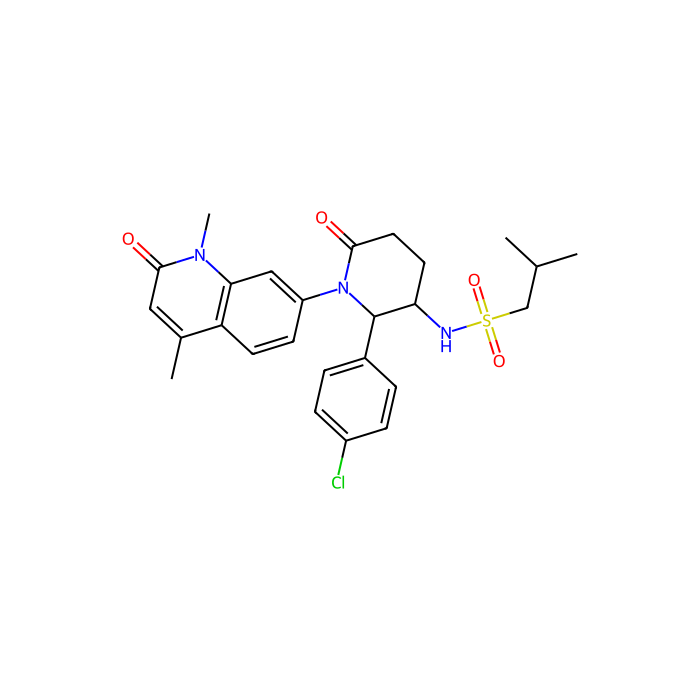
Selective BRD7 and BRD9 inhibitor (Kdvalues are 99 and 909 nM, respectively). Exhibits selectivity for BRD7/9 over a panel of 48 bromodomains (at 10 μM). Inhibits interactions with histones H3.3 and H4 at low micromolar concentrations. Decreases the level of IL-6 secreted from LPS-stimulated THP-1 cells. Negative controlent-LP 99 also available.
Conditions de stockage de stockage
Conserver à -20°C
Expédié en
Glacière + blocs de glace
Grade
Moligand™
Type d'action
INHIBITOR
Mécanisme d'action
Inhibitor of bromodomain containing 7;Inhibitor of bromodomain containing 9
This compound belongs to the class of organic compounds known as phenylpiperidines. These are compounds containing a phenylpiperidine skeleton, which consists of a piperidine bound to a phenyl group.
External Descriptors
Not available
1. Djoumbou Feunang Y, Eisner R, Knox C, Chepelev L, Hastings J, Owen G, Fahy E, Steinbeck C, Subramanian S, Bolton E, Greiner R, and Wishart DS. ClassyFire: Automated Chemical Classification With A Comprehensive, Computable Taxonomy. Journal of Cheminformatics, 2016, 8:61.
Solvent:DMSO, Max Conc. mg/mL: 51.6, Max Conc. mM: 100; Solvent:ethanol, Max Conc. mg/mL: 51.6, Max Conc. mM: 100
Poids moléculaire
516.100 g/mol
XLogP3
3.500
Hydrogen Bond Donor Count
1
Hydrogen Bond Acceptor Count
5
Rotatable Bond Count
6
Exact Mass
515.165 Da
Monoisotopic Mass
515.165 Da
Topological Polar Surface Area
95.200 Ų
Heavy Atom Count
35
Formal Charge
0
Complexity
939.000
Isotope Atom Count
0
Defined Atom Stereocenter Count
2
Undefined Atom Stereocenter Count
0
Defined Bond Stereocenter Count
0
Undefined Bond Stereocenter Count
0
The total count of all stereochemical bonds
0
Covalently-Bonded Unit Count
1
Calculateurs de solution
Molarity Calculator
Determine the necessary mass, volume, or concentration for preparing a solution.
Dilution Calculator
Determine the dilution needed to prepare a stock solution.
Reconstitution Calculator
Avis
Avis des clients
Application Protocols
No validated, item-specific application protocols are provided for this product.
The following statements clarify scope and limitations:
Tested applications (WB, IHC, IF, FC, enzymatic assays, cell-based assays): Not specified for this item; refer to CoA/Spec Sheet.
Recommended working concentrations, dilutions, or controls: Not specified for this item; refer to CoA/Spec Sheet.
Please develop protocols appropriate to your system and verify compound solubility, stability, and carrier compatibility under those conditions. Maintain meticulous records of solvent percentages, incubation times, and plate maps for reproducibility. For any protocol support, contact us with the SKU (L288566) so we can share any available lot-specific information.
Biological Roles
The Product Data do not specify any biological targets, mechanisms, or pathways for LP 99. Accordingly, no item-specific biological roles can be provided for this entry.
General context for small-molecule research compounds (non-item-specific):
Such compounds are commonly used as tools in chemical biology to interrogate protein function, validate assay systems, or benchmark screening cascades. Any hypothesized roles (e.g., enzyme inhibition, receptor modulation) must be verified experimentally for the specific batch and conditions.
If literature information for a similarly named compound exists, do not assume equivalence; always cross-check by CAS number, structure, and analytical identity. Probe provenance and stereochemistry can critically affect activity profiles.
When exploring biological activity, establish baseline controls: vehicle-only, inactive analogs (if available), and orthogonal assay formats to rule out artifacts (e.g., redox cycling, fluorescence interference, aggregation).
Data discipline (general):
Record solvent composition, plate map, and incubation parameters; replicate across at least two independent experiments.
Confirm on-target engagement with biophysical methods (e.g., DSF, ITC, SPR) where feasible, and assess counter-screens to evaluate selectivity profiles.
Note: For research use only. No clinical, diagnostic, or in vivo claims are made or implied. Consult CoA/SDS and your institution’s review processes before deploying in biological systems.
Buffer Applications
LP 99 is a discrete small-molecule research compound, not a buffering reagent. No item-specific buffer roles are provided.
Applicability: Not typically used as a pH buffer, titrant, or buffer component.
Practical note (general): When the compound is used in biochemical assays, it is usually introduced as a concentrated stock (e.g., in DMSO) into a pre-selected biological buffer (PBS, HEPES, Tris, etc.). The buffer selection should be driven by the biology of the assay, protein stability, and interference testing, not by the compound itself.
Compatibility checks (general): Verify that the chosen buffer and any excipients (detergents, BSA, reductants) do not cause precipitation or assay interference upon addition of the compound/vehicle.
For buffer recipes, pH ranges, and ionic strengths, consult standard biochemistry references; these are independent of this compound and should be validated for your assay.
Green Alternatives
Because item-specific solvent and process needs are not defined for this research compound, greener choices focus on solvent selection for stock preparation, reaction work, or analytical sample prep. The following are general considerations.
Greener solvent considerations (general):
Prefer ethanol or isopropanol over higher-toxicity polar aprotics when adequate solubility allows.
For extractions and workups, consider ethyl acetate or methyl tert-butyl ether (MTBE) over dichloromethane (DCM) or chloroform when feasible.
In synthesis or processing steps (if applicable), 2-methyltetrahydrofuran (2-MeTHF) or cyclopentyl methyl ether (CPME) may substitute for THF/MTBE; water or biobased solvents when compatible.
Illustrative comparison (general):
DMSO vs DMF/NMP
DMSO: higher boiling point, lower toxicity profile, broad solvency; commonly accepted in biological assays at ≤1–2% v/v.
DMF/NMP: strong solvents but with greater regulatory scrutiny; use only when necessary.
Ethanol vs acetonitrile (MeCN) for sample handling
Ethanol: renewable source, safer profile; but can reduce solubility for very lipophilic molecules.
MeCN: excellent chromatographic performance; higher environmental burden and flammability concerns.
Operational tips (general):
Minimize DMSO carryover into assays by preparing high-concentration stocks and using the lowest feasible final %.
Use microscale operations and closed-vial sonication to reduce VOC emissions.
Document solvent selection rationale to align with internal green-chemistry metrics.
Note: These are generalized recommendations; confirm compound-specific compatibility empirically.
Pharmaceutical Uses
No pharmaceutical or excipient use is specified for this product. This item is sold strictly for research use only.
General context (non-item-specific):
Small-molecule research compounds may be used in pre-formulation studies or as reference materials in analytical method development. However, without pharmacopeial monographs or GMP documentation, they are not suitable for human or veterinary administration.
If formulation-like experiments are conducted (e.g., solubility enhancement, stability screens), clearly label material as non-GMP research grade and segregate from clinical development materials.
Common research solvents/excipients (e.g., DMSO, PEG400, Captisol) might be explored for in vitro delivery; ensure final compositions are compatible with the biological system and institutional safety guidelines.
Regulatory reminder:
Not for drug, diagnostic, or household use. No claims of therapeutic efficacy, safety, or pharmacokinetics are made or implied for this product.
Physical Properties
Item-specific physical property data are not provided in this entry. Please refer to the CoA/Spec Sheet for definitive specifications.
Appearance: Not specified for this item; refer to CoA/Spec Sheet.
Melting point (MP): Not specified for this item; refer to CoA/Spec Sheet.
Boiling point (BP): Not applicable/rarely reported for discrete screening compounds (typically decompose before boiling); item-specific value not provided.
Density: Not specified for this item; refer to CoA/Spec Sheet.
Solubility: Not specified for this item. For small-molecule screening compounds, a common practice is to prepare concentrated stocks in anhydrous DMSO (general guidance), then dilute into assay media; confirm solubility empirically.
LogP/logD, pKa, refractive index: Not specified for this item; refer to CoA/Spec Sheet.
General guidance for small-molecule research compounds (not item-specific):
Stock solutions are frequently made at 10–50 mM in dry DMSO, protected from moisture and light, then aliquoted to minimize freeze–thaw.
If aqueous work is required, evaluate co-solvent approaches (DMSO, ethanol, or PEG400), pH adjustment if ionizable groups are present, or use of cyclodextrins/surfactants where compatible with downstream assays.
Perform a small-scale solubility screen (e.g., nephelometry or visual check) in relevant media and temperatures before scaling.
Note: Do not treat literature/computed estimates as specifications. Only the CoA/Spec Sheet and SDS should be used for regulatory or QA decisions.
Quality and Grades
Grade/Purity: Moligand™ (from Product Data)
What Moligand™ implies (general explanation — not item-specific specifications):
Moligand™ is positioned for research use in small-molecule discovery workflows. Such offerings typically emphasize high chemical purity with QA/QC characterization appropriate for screening, hit confirmation, or probe exploration. The exact analytical acceptance criteria (e.g., HPLC area%, residual solvents, salt content, water) are not specified here and may vary by lot.
Item-specific facts from Product Data:
Purity level beyond the Moligand™ designation: Not specified for this item; refer to CoA/Spec Sheet.
Stabilizers, form (free base/salt), counterions: Not specified for this item; refer to CoA/Spec Sheet.
Best practices for qualifying material (general guidance):
Request or consult the CoA for: identity (1H/13C NMR, HRMS), purity (HPLC/UPLC with detection wavelength(s) disclosed), and residual solvent/water content if relevant to your use-case.
For biophysical assays, consider confirming purity by orthogonal methods (e.g., qNMR) and verifying absence of aggregation (e.g., detergent test, DLS) that could confound results.
If UV-based analytics are used, inquire about typical UV profile and cutoffs; for LC-MS, ensure method transferability in your lab matrix.
Documentation:
Where applicable, a spectral pack (NMR, MS, chromatogram) can support internal QA. Contact us with the SKU (L288566) for the latest lot documentation.
Reaction and Applications
From Product Data, LP 99 (SKU L288566) is offered within a small-molecule/compound library context for research use. No specific end-use application or target is provided in this listing. The following notes are general for small-molecule research compounds.
Discovery workflows (general):
Suitable for use in biochemical or biophysical assays (e.g., enzyme or protein–ligand binding formats) after preparing appropriate stock solutions; ensure compatibility of solvent carriers.
Supports hit validation, orthogonal assay confirmation, and preliminary structure–activity relationship (SAR) exploration when used alongside analogs.
Analytical applications (general):
LC–MS/MS method development can be performed for quantitation in complex matrices if required for exposure or stability testing; confirm ionization mode (ESI+/–) empirically.
Chemical manipulations (general):
If derivatization is desired (e.g., for immobilization or tracer development), confirm functional handles from the CoA/structure. Typical transformations include amide coupling, alkylation/arylation of heteroatoms, or click-type conjugations—only if the structure contains suitable groups.
Tips for assay use (general):
Include detergent controls (e.g., 0.01% Triton X-100 or 0.01% Tween-20) where aggregation artifacts are a concern.
Run serial dilutions spanning at least 8–10 points with constant final solvent percentage, and include vehicle controls.
Stability (general):
Protect from moisture and light as appropriate; confirm bench stability by short-term LC analysis.
Note: No specific reactivity or named reactions are associated with this catalog entry; consult the SDS/CoA for structure-dependent guidance.
Reaction Conditions
No item-specific reaction conditions are applicable, as this catalog entry is a finished research compound rather than a reagent intended for general synthetic transformations.
General guidance (non-item-specific) if derivatization is contemplated after confirming structure and functional groups:
Solvents: DMF, DMSO, dioxane, or toluene; consider greener options where possible (2-MeTHF, CPME).
Bases/Catalysts: DIPEA/TEA for simple couplings; Pd catalysts and modern ligands for cross-couplings.
Temperatures: ambient to 120°C depending on reaction class and substrate stability.
Click reactions (CuAAC):
Solvents: tBuOH/H2O or DMSO/H2O mixtures; CuSO4/sodium ascorbate or pre-formed Cu(I) catalysts.
Temperatures: ambient; protect from air/ligand degradation as needed.
Purification:
Reverse-phase or normal-phase chromatography; avoid conditions that induce decomposition.
Stability checks:
Rapid LC assay before and after heating or basic/acidic workups to ensure no degradation.
Caution:
These are generic conditions. Do not apply without verifying the actual LP 99 structure and compatibility. Always consult the SDS and CoA before attempting any transformation.
Safety and Handling
Safety profile for this item is not specified in the Product Data. Always consult the Safety Data Sheet (SDS) shipped with the product for authoritative guidance.
GHS classification: Not specified for this item; refer to SDS.
Signal word / Hazard statements / Pictograms: Not specified for this item; refer to SDS.
General laboratory precautions (non-item-specific):
Handle in a chemical fume hood, wearing appropriate PPE: lab coat, safety glasses, and suitable chemically resistant gloves.
Avoid inhalation of dusts/aerosols and contact with skin/eyes. Prevent ingestion and environmental release.
Use dedicated, labeled secondary containment for -20°C storage to minimize accidental exposure.
Incompatibilities (general): Keep away from strong oxidizers and strong acids/bases unless compatibility is confirmed by the SDS.
First-aid overview (general):
Skin/eye contact: Rinse with copious water for at least 15 minutes; remove contaminated clothing. Seek medical advice.
Inhalation: Move to fresh air; monitor for respiratory irritation. Seek medical attention if symptoms persist.
Ingestion: Rinse mouth; do not induce vomiting; seek medical attention.
Spill & disposal (general):
Small spills: Absorb with inert material; place in chemical waste. Decontaminate surfaces following institutional procedures.
Disposal: Collect all waste and contaminated materials for disposal per local regulations and SDS guidance.
Note: For research use only. Not for diagnostic, clinical, or therapeutic applications.
Solvent Selection
Item-specific solubility data are not provided. The following guidance is general for small-molecule research compounds and should be verified empirically.
Primary stock solvent (common practice):
DMSO (anhydrous) for 10–50 mM stocks. Advantages: broad solvency, assay compatibility at low final %; Risks: hygroscopic, potential for freeze–thaw precipitation if water uptake occurs.
Secondary solvents/co-solvents:
DMF, NMP (high-boiling, polar aprotic; check assay compatibility and toxicity).
Ethanol, isopropanol (protic, more benign but lower solvency for very lipophilic compounds).
Aqueous buffers with co-solvent (0.5–2% DMSO or EtOH) after preparing a concentrated organic stock.
Polarity context (general):
Many discovery compounds are moderately to highly lipophilic; test stepwise dilution from DMSO into buffer to avoid kinetic precipitation. For ionizable compounds, pH adjustment may enhance solubility.
Small comparison (general):
DMSO vs ethanol: DMSO dissolves a broader chemical space and is preferred for high-concentration stocks; ethanol offers lower toxicity and easier removal but may not reach needed concentrations.
Practical tips (general):
Warm (30–40°C) and vortex/sonicate to aid dissolution; avoid prolonged heating.
Filter 0.22 µm if particulate persists and the compound is not adsorptive; verify no loss to filter media.
Record final solvent composition in assays to ensure consistent potency readouts.
Appearance, exact container closure system, form (solid vs. solution), stabilizers: Not specified for this item; refer to CoA/Spec Sheet.
General guidance for small-molecule research compounds (non-item-specific; verify against your CoA/SDS):
Storage practice:
Keep tightly sealed in original container. Protect from moisture, light, and temperature cycling. Use desiccant if hygroscopicity is suspected.
For frequent use, prepare single-use aliquots to avoid repeated freeze–thaw and headspace moisture ingress.
Reconstitution:
If supplied as a solid: allow vial to equilibrate to room temperature in a desiccator before opening; weigh quickly; dissolve in anhydrous DMSO or another suitable solvent. Filter if needed (0.22 µm) and verify concentration by UV or qNMR where applicable.
If supplied as a solution: mix gently after thaw, inspect for precipitate; if present, warm to 25–37°C and vortex to redissolve. Do not microwave or overheat.
Stability:
Track bench stability by quick LC at defined intervals. Record any color change or precipitation upon thawing/dilution.
Always defer to the SDS and the lot-specific CoA/Spec Sheet for authoritative storage and handling instructions.
Structure and Identity
Brief overview: LP 99 is listed as a small-molecule research compound within our small-molecule/compound library category. Item-specific structural identifiers are not supplied in this listing.
Chemical name: Not specified for this item; refer to CoA/Spec Sheet.
CAS: 1808951-93-0 (from Product Data)
InChIKey: Not specified for this item; refer to CoA/Spec Sheet. (Product Data lists “210019,” which is not a standard InChIKey format.)
SMILES: Not specified for this item; refer to CoA/Spec Sheet.
Molecular formula: Not specified for this item; refer to CoA/Spec Sheet.
Molecular weight: Not specified for this item; refer to CoA/Spec Sheet.
Structural features (general):
No item-specific structure is provided. In the absence of structural identifiers, users should consult the Certificate of Analysis (CoA) or Spectral Data Sheet for definitive structure confirmation, including any stereochemical information.
2D structure description (general guidance):
When structure is available, document key functional groups (heteroaromatics, amides, sulfonamides, halogens, etc.), ring systems (mono/polycyclic), and any chiral centers. Include naming of substituent positions and conjugation patterns to inform solubility and stock-solution planning.
Identity confirmation (recommended best practices — general):
Verify identity by orthogonal methods such as HRMS, 1H/13C NMR, and, when relevant, chiral HPLC. Match spectra to the CoA/Spec Sheet. If a solid form/polymorph or salt form is possible, confirm via DSC/TGA, PXRD, or titration as appropriate.
Synthetic Utility
Item-specific functional groups and handles for LP 99 are not provided. Consequently, targeted synthetic transformations cannot be recommended for this entry.
General considerations for modifying small-molecule research compounds (non-item-specific):
If the structure includes amines, carboxylic acids, phenols, or halogens, common derivatizations may include: amide/ester formation, aryl/heteroaryl coupling (Suzuki, Buchwald–Hartwig), nucleophilic substitutions, or late-stage oxidations/reductions.
For probe development, typical modifications include installation of:
Reporter tags (fluorophores, biotin) via linkers on solvent-exposed positions.
Bioorthogonal handles (alkynes/azides) for click chemistry attachments.
Photoaffinity groups (diazirines/benzophenones) for target ID workflows.
Protecting-group strategy should be minimized; favor chemoselective methodologies to preserve sensitive motifs.
Analytical support (general):
Confirm integrity after each transformation using LC–MS, 1H/13C NMR, and, if chiral, chiral HPLC or SFC. Monitor potential atropisomerism or conformational isomerism if polycyclic/biaryl motifs are present.
Note: Do not assume the feasibility of these routes for LP 99 without the actual structure. Consult the CoA/Spec Sheet for functional-group mapping before planning any synthesis or derivatization.
Target Specificity
No target, pathway, or binding specificity information is provided in the Product Data for LP 99 (SKU L288566). Accordingly, no claims are made regarding biological targets, selectivity, or mode of action for this item.
Antigen/epitope/clone/isotype: Not applicable — this product is a small molecule, not an antibody or biologic.
Species reactivity: Not specified for this item; refer to CoA/Spec Sheet if available.
If you are evaluating target engagement or selectivity, please generate primary data under your assay conditions and confirm with orthogonal methods (e.g., counterscreens, biophysical binding). Do not extrapolate from similarly named compounds without structure and lot confirmation.
Foire aux questions
What is the purity of this product, and how is it determined?
This product is supplied at ≥98% purity, determined by HPLC. Lot-specific values are stated on the Certificate of Analysis.
What is Moligand??
Moligand? is one of Aladdin Scientific's premium product lines, formulated for high-purity applications across multiple workflows. Compared to standard grades in the same workflow, Moligand? products typically offer tighter specifications, more rigorous QC, and stronger lot-to-lot consistency.
How should this product be stored?
Store at ?20 °C. Freezer storage is required to maintain the specified shelf life.
How is this product shipped?
This product ships in an insulated container with ice pads. Unpack on arrival and transfer it to the storage condition stated above.
What are the CAS number, molecular formula and molecular weight?
The CAS Number is 1808951-93-0, the molecular formula is C26H30ClN3O4S, and the molecular weight is 516.05 g/mol. InChIKey LVDRREOUMKACNJ-BKMJKUGQSA-N.
What documentation is provided?
Available product documentation, including Certificates of Analysis (COA), Safety Data Sheets (SDS), and specification sheets, is shown in the product document area. Document availability and access follow the current site policy.
Besoin d'aide pour choisir la qualité ?
Notre guide de sélection des qualités couvre la pureté, le statut du stabilisant et l'adéquation à l'application pour toutes les variantes de notre catalogue.
Nous utilisons des cookies pour garantir le bon fonctionnement du site et, lorsque cela est autorisé, pour améliorer votre expérience. Vous pouvez gérer vos préférences à tout moment dans les Paramètres. Pour en savoir plus, consultez notre Politique relative aux cookies.
Souhaitez-vous que nous vous envoyions un message lorsque des réductions seront disponibles?
Me rappeler plus tard
Merci ! Veuillez vérifier votre boîte de réception e-mail pour confirmer.
Products are supplied to verified businesses, institutions, and qualified professionals for research and development use only. Not for use in humans, animals, diagnosis, or therapy.

 E2619168