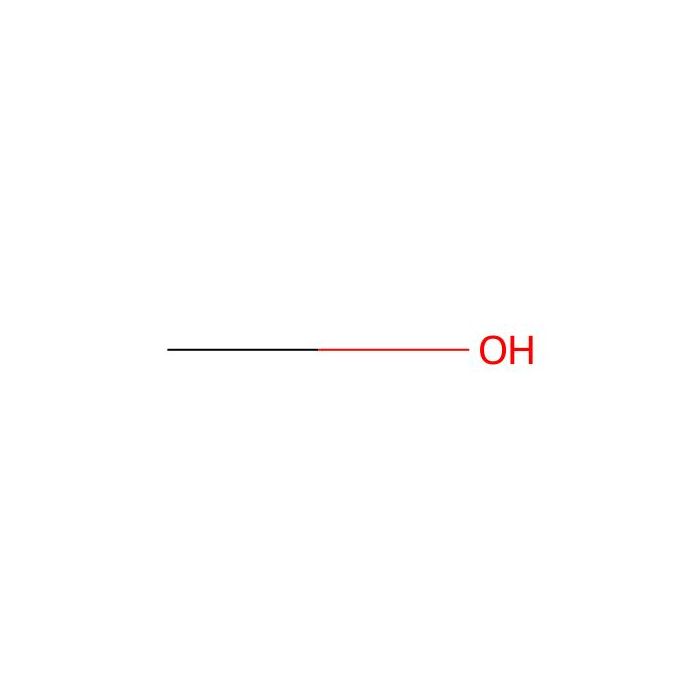
Methanol - Column Chromatography Elution Grade , CAS No.67-56-1

CAS: 67-56-1 Cat. No.: M1519920 Formule: CH3OH Poids moléculaire: 32.04 Beilstein Registry Number: 3662861 Numéro CE: 200-659-6
DISPONIBLE À COMMANDE
GRADE & PURITY Column Chromatography Elution Grade ? Column-chromatography elution grade — solvents suited to flash/column purification. Use as eluents for routine column chromatography.
Storage
Room temperature
Shipped In
FedEx DG Service
★
Size
Allemagne (EU)
USA*
Price
Qty
500ml
M1519920-500ml
—
2 En stock
43,30€
Enter a quantity for the sizes you want to add.
🧪
Why this grade

Column Chromatography Elution Grade Column Chromatography Elution Grade for sensitive chromatographic and analytical workflows requiring minimal baseline interference.

🌡

Storage & shipping

Room temperature Ships FedEx DG Service Check lot-specific COA for exact specifications.

📋

Quality documents

SDS, COA, datasheet, and spec sheet available for download. Lot-specific COA accessible via lot number lookup.

📚

Literature proof

Cited in 7007 peer-reviewed publications across chromatography, organic synthesis, and cross-coupling reactions.

Specifications

Spécifications et pureté
Column Chromatography Elution Grade
Conditions de stockage de stockage
Room temperature
Expédié en
FedEx DG Service
Grade
Column Chromatography Elution Grade
Noms et identifiants
Sourires canoniques
CO
IUPAC Name
methanol
InChIKey
OKKJLVBELUTLKV-UHFFFAOYSA-N
INCHI
1S/CH4O/c1-2/h2H,1H3
Isomères SMILES
CO
WGK Allemagne
1
RTECS
1
Numéro ONU
1230
Groupe d'emballage
II
Poids moléculaire
32.04
Beilstein
3662861

Documentation

📋 Safety Data Sheet (SDS)

Comprehensive hazard, handling, storage, and regulatory compliance document.

Download SDS →

✅ Certificate of Analysis (COA)

Lot-specific quality data. Enter your lot number to retrieve the exact COA.

Look up COA →

📊 Datasheet

Quick-reference summary of product specifications and applications.

View datasheet →

🔬 Specification Sheet

Full quality attributes and acceptance criteria for this grade.

View spec sheet →

Advanced Data

Taxonomic Classification

Taxonomy Tree

KingdomOrganic compounds
SuperclassOrganic oxygen compounds
ClasseOrganooxygen compounds
SubclassAlcohols and polyols
Intermediate Tree Nodes Not available
Direct ParentPrimary alcohols
Alternative Parents Hydrocarbon derivatives  
Molecular FrameworkAliphatic acyclic compounds
Substituents Hydrocarbon derivative - Primary alcohol - Aliphatic acyclic compound
DescriptionThis compound belongs to the class of organic compounds known as primary alcohols. These are compounds comprising the primary alcohol functional group, with the general structure RCOH (R=alkyl, aryl).
External Descriptors a short-chain alcohol
Structure 3D
Modèle de structure chimique interactif


Certificats (CoA, COO, BSE/TSE et tableau d'analyse)
C of A & Other Certificates(BSE/TSE, COO):
Analytical Chart:

Find and download the COA for your product by matching the lot number on the packaging.

3 results found

Lot NumberCertificate TypeDateArticle
G2628009Certificate of AnalysisJul 31, 2026 M1519920
G2628010Certificate of AnalysisJul 31, 2026 M1519920
F2602140Certificate of AnalysisJun 10, 2026 M1519920
Propriétés chimiques et physiques
Indice de réfraction1.329
Point d'éclair (°F)49.5 °F
Point d'éclair (°C)9.7 °C
Point d'ébullition (°C)64.7°C
Point de fusion (°C)-97.8°C
Poids moléculaire32.042 g/mol
XLogP3-0.500
Hydrogen Bond Donor Count1
Hydrogen Bond Acceptor Count1
Rotatable Bond Count0
Exact Mass32.0262 Da
Monoisotopic Mass32.0262 Da
Topological Polar Surface Area20.200 Ų
Heavy Atom Count2
Formal Charge0
Complexity2.000
Isotope Atom Count0
Defined Atom Stereocenter Count0
Undefined Atom Stereocenter Count0
Defined Bond Stereocenter Count0
Undefined Bond Stereocenter Count0
The total count of all stereochemical bonds0
Covalently-Bonded Unit Count1
FAQ et articles
Preparation Methods and Precautions for Silane Coupling Agent Primer Solutions
Applications and Differences of Neisser Staining, Albert Staining, and Gram Staining in the Differentiation of Corynebacteria
Application Differences Among Glutaraldehyde, Paraformaldehyde, and Formalin in Tissue and Cell Sample Fixation
Microbial Morphological Identification: Observation Systems, Staining Methods, and Result Interpretation
How to Troubleshoot Abnormal Impurities in Peptide Synthesis? Locating Process Issues Through Amino-Related Side Reactions
Peptide Intermediates Difficult to Dissolve and Separate? Route Design and Workup Strategies for Tag-Assisted Liquid-Phase Peptide Synthesis (TAG-LPPS)
Why Do Phenolic Resins Have Good Heat and Chemical Resistance? Analyzing the Source of Their Performance from Molecular Structure to Cured Networks
Porous Graphitic Carbon (PGC) Chromatography Columns: Creating New Selectivity for Challenging Separations through Molecular Shape and the π-Electron Cloud on the Graphitic Surface
Applications of Rosin and Modified Rosin Resins in Coatings and Inks: Structure–Property Relationships, Modification Pathways, and Usage Guidelines
Application of Shellac, a Natural Film-Forming Resin, in Coatings: Alcohol-Soluble Fast-Drying Film Formation, Sealing and Repair, and Performance Boundaries
What Is an Etchant? Etching Mechanisms for Revealing Metallographic Microstructures, Selection Methods, and Applications of Related Wet-Etching Reagents
Formation and Control of Carboxyl- and Hydroxyl-Related Impurities in Peptide Synthesis — Using Asp/Glu and Ser/Thr Residue Side Reactions as Examples
β-Hydroxybutyrate Detection Methods and Metabolic Significance: Comparative Applications of Enzymatic Assays, Blood Ketone Meters, and LC-MS
In Vitro Exposure Simulation and Bioaccessibility Assessment of Particulate Chemicals from Consumer Products Using Simulated Lung Fluid
Discovery and Structural Optimization of the Noncovalent 3CL Protease Inhibitor S-217622
How Coenzyme Q10 Acts on the Skin: Mitochondrial Electron Transfer, Antioxidant Protection of Membrane Lipids, and Lipid-Carrier Delivery
Why Primary and Secondary Amines Have Difficulty Participating Directly in the Classical Mitsunobu Reaction: Mechanism, Inversion of Configuration, and Reaction Scope of BEHT-Mediated Alcohol Amination
Solid Supports in Packed Gas Chromatography Columns: Definition, Mechanisms of Action, Classification, and Selection
Form Selection of 2,5-Dihydropyrrol-3-yl Boron Building Blocks: Functional Roles of Bpin and BF₃K in Coupling, Isolation, and Storage
Kinetic Matching in Photoredox/Nickel C(sp²)–C(sp³) Coupling: Radical Generation, Nickel-Species Stability, and Photon Flux
Construction of the Key α-Bromoketone Intermediate for LY3509754: A β-Keto Ester Strategy and Concomitant Decarboxylation Following Enzymatic Ester Hydrolysis
Bond-Formation Sequence and Process Improvement for 3-Bromo-6-alkyl-1,6-naphthyridin-5(6H)-ones: From Late-Stage N-Alkylation to Enamine Cyclization with Primary Amines
Citations of This Product
Calculateurs de solution
Avis

Avis des clients

Need help choosing the grade?

Our grade selection guide covers purity, stabilizer status, and application suitability for all variants in our catalog.

View Column Chromatography Elution Grade grade guide →

Shall we send you a message when we have discounts available?

Remind me later

Thank you! Please check your email inbox to confirm.

Oops! Notifications are disabled.