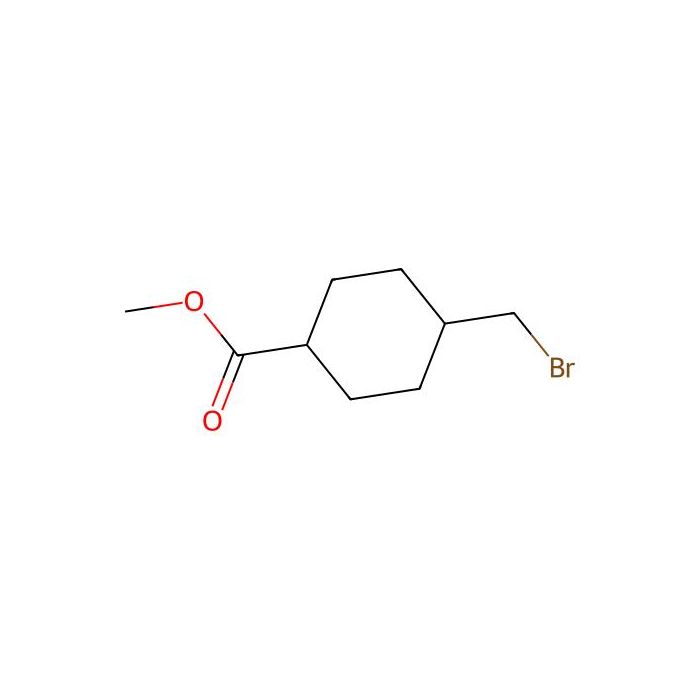
This compound belongs to the class of organic compounds known as methyl esters. These are organic compounds containing a carboxyl group that is esterified with a methyl group. They have the general structure RC(=O)OR', where R=H or organyl group and R'=methyl group.
External Descriptors
Not available
1. Djoumbou Feunang Y, Eisner R, Knox C, Chepelev L, Hastings J, Owen G, Fahy E, Steinbeck C, Subramanian S, Bolton E, Greiner R, and Wishart DS. ClassyFire: Automated Chemical Classification With A Comprehensive, Computable Taxonomy. Journal of Cheminformatics, 2016, 8:61.
Certificats (CoA, COO, BSE/TSE et tableau d'analyse)
C of A & Other Certificates(BSE/TSE, COO):
Analytical Chart:
Propriétés chimiques et physiques
Poids moléculaire
235.120 g/mol
XLogP3
2.300
Hydrogen Bond Donor Count
0
Hydrogen Bond Acceptor Count
2
Rotatable Bond Count
3
Exact Mass
234.026 Da
Monoisotopic Mass
234.026 Da
Topological Polar Surface Area
26.300 Ų
Heavy Atom Count
12
Formal Charge
0
Complexity
151.000
Isotope Atom Count
0
Defined Atom Stereocenter Count
0
Undefined Atom Stereocenter Count
0
Defined Bond Stereocenter Count
0
Undefined Bond Stereocenter Count
0
The total count of all stereochemical bonds
0
Covalently-Bonded Unit Count
1
Calculateurs de solution
Molarity Calculator
Determine the necessary mass, volume, or concentration for preparing a solution.
Dilution Calculator
Determine the dilution needed to prepare a stock solution.
Reconstitution Calculator
Avis
Avis des clients
Application Protocols
No vendor-tested biological application protocols (e.g., WB, IHC, IF, FC) apply to this small-molecule building block.
General synthetic handling protocol (illustrative; literature-based)
Example: SN2 azidation
To a dry flask, add substrate (1.0 equiv) and NaN3 (1.5 equiv) in dry DMF (0.2–0.3 M) under N2.
Stir at 40–50 °C for 6–12 h (TLC/GC monitoring). Upon completion, dilute with water and extract with EtOAc, wash, dry, and concentrate.
Purify by flash chromatography (hexanes/EtOAc). Convert azide to amine as needed.
Note: The above is general guidance for analogous primary bromides. Optimize conditions for your system. Always consult the SDS and CoA/Spec Sheet for this item before experimental use.
Biological Roles
This compound is a synthetic organic building block and is not known to have endogenous biological roles.
General note (literature): Alkyl bromide esters such as methyl trans-4-(bromomethyl)cyclohexanecarboxylate are typically used as intermediates in organic synthesis and materials research. They are not metabolites, cofactors, or signaling molecules in biological systems.
Reactivity in biological milieu: The primary bromide can alkylate nucleophiles (thiols, amines) under sufficiently reactive conditions; however, such reactions are non-selective and are not used for controlled biological labeling without further derivatization.
Use context: Suitable for preparing bioactive analogs or probes after conversion (e.g., to amines, azides, or click handles), but the parent compound itself has no specific biological function.
Research use only: As stated in Product Data, this product is intended for research use only and is not for diagnostic or therapeutic applications.
Buffer Applications
Not typically applicable. This product is a hydrophobic organic building block and is not used as a buffering agent.
Practical note
When conducting reactions that involve aqueous phases (e.g., phase-transfer substitutions), common buffers are not required; instead, controlled aqueous base (e.g., KOH/NaOH) or carbonate solutions are used. Maintain pH control only insofar as it affects nucleophile generation and phase behavior.
Green Alternatives
Greener choices focus on solvent selection and leaving-group strategy while maintaining synthetic performance.
Greener process options (literature/general)
Solvents
Replace chlorinated solvents (DCM, CHCl3) with 2-MeTHF or CPME for substitutions and workups; both are bio-based/low peroxide-forming (CPME) and offer favorable safety profiles.
Use MeCN or EtOAc for SN2 where feasible; both are widely recyclable with established waste streams.
For Finkelstein reactions, consider MEK or acetone/EtOAc mixtures to reduce halogenated solvent use.
Bases and catalysts
Phase-transfer catalysis (e.g., TBAB, Aliquat 336) in toluene/aqueous base can reduce polar aprotic solvent load (DMF/DMSO), though waste quats must be managed.
Solid-supported bases (resins) may simplify workup and minimize aqueous waste.
Leaving group strategy
If preparing the substrate in-house, mesylate/tosylate analogs from trans-4-(hydroxymethyl)cyclohexanecarboxylate can avoid elemental bromine reagents; however, reactivity differs (often lower than bromide), and some PTS reagents pose their own EHS concerns.
Small comparison (general)
DCM vs 2-MeTHF: similar solvency; 2-MeTHF is bio-derived and has a better environmental profile; may require slightly longer reaction times in some SN2 cases.
DMF vs MeCN: DMF offers higher dielectric constant but is a reproductive toxin and problematic in waste; MeCN is more benign but may give slower rates with weak nucleophiles.
Sustainability notes
Implement solvent recovery (distillation), minimize halogenated waste, and document PMI/E-factor improvements when switching to greener media.
Pharmaceutical Uses
No direct excipient or formulation uses are expected for this compound.
General industry context (literature)
Role: Employed as a synthetic intermediate in discovery and process chemistry en route to active pharmaceutical ingredients (APIs) or advanced intermediates, leveraging the primary bromide for C–N/C–S/C–C bond formation and the ester for downstream derivatization (acid, amide, alcohol).
Regulatory status: Not a pharmacopeial excipient. Any use in GMP settings would require full qualification (identity, purity profile, residual solvents, elemental impurities, and stability) and appropriate controls.
Impurity considerations: Potential formation of inorganic bromide salts and residual polar aprotic solvents (DMF/DMSO) from SN2 steps; these must be controlled during scale-up.
Important: No therapeutic or clinical claims are made; product is for research use only, as specified in the Product Data.
Physical Properties
Item-specific specifications
Appearance: Not specified for this item; refer to CoA/Spec Sheet.
Grade/Purity: Not specified for this item; refer to CoA/Spec Sheet.
Literature/general properties for the trans isomer (informational; not item specifications)
Physical state: Typically a colorless to pale liquid or low-melting solid for comparable bromomethyl esters; actual state depends on isomeric purity and temperature.
Estimated molecular weight: ~235.12 g/mol (for C9H15BrO2; literature/computed based on structure)
Solubility profile (typical):
Water: very low solubility expected for alkyl bromide esters.
Organic: good solubility in ethers (THF, MTBE), chlorinated solvents (DCM, CHCl3), esters (EtOAc), and hydrocarbons (toluene, hexanes) depending on temperature.
Partitioning: High hydrophobicity is expected (alkyl bromide + ester); logP likely >2 (literature expectation for analogous structures).
Volatility: Moderate; handle in a well-ventilated hood.
Refractive index, density, mp/bp, UV cutoff: Not available for this item; consult CoA/SDS or primary literature.
Practical notes (general)
Primary alkyl bromides can slowly hydrolyze or eliminate under strong basic conditions; avoid prolonged exposure to strong bases at elevated temperature.
The ester function is stable under neutral to mildly basic or acidic conditions but is susceptible to hydrolysis in strong acids/bases or under aqueous heat.
Always verify critical properties (bp, density, RI) from the lot-specific CoA/Spec Sheet before scaling up or calibrating analytical methods.
Quality and Grades
Item-specific grade/purity
Grade/Purity: Not specified for this item; refer to CoA/Spec Sheet for assay, residual solvents, isomeric purity (trans/cis), and analytical methods (GC/HPLC, NMR).
Guidance on grades (general; for interpretation)
Research/reagent grade: Suitable for most synthetic applications. Verify halide content and moisture prior to moisture-sensitive reactions.
Isomeric purity: Because this material is designated “trans,” the diastereomeric ratio (trans vs cis) may be relevant. When stereochemical integrity matters (e.g., conformational bias, downstream chiral induction), request the d.r. and supporting NMR data.
Stabilizers: None are typically added for such bromides; however, if a stabilizer is present, it will be listed on the CoA. Stabilizers can influence reactivity in metalation or radical chemistry.
Analytical expectations:
1H/13C NMR consistent with a trans-1,4 disubstituted cyclohexane ester and a primary bromomethyl group.
GC or HPLC purity often reported as area %; water content by KF when relevant.
Halide identity/purity occasionally confirmed by MS or ion-specific analysis.
Recommendations
For nucleophilic substitutions, high purity and low water content improve yields. If needed, dry over molecular sieves (3Å/4Å) or by brief azeotrope in a suitable solvent. Confirm that any drying method is compatible with this substrate.
Always consult the lot-specific CoA/Spec Sheet for definitive specifications and acceptance criteria.
Reaction and Applications
This bifunctional substrate combines a primary bromide (efficient SN2 electrophile) with a methyl ester (transformable handle), enabling diverse downstream chemistry.
Alkoxylation (RO−) to form ethers; carefully control base to avoid ester saponification.
Finkelstein halide exchange (NaI in acetone, reflux) → iodide for even faster SN2.
Carbon–carbon bond formation:
Coupling with soft carbon nucleophiles (malonates, nitroalkanes) under phase-transfer or crown ether catalysis.
Copper-catalyzed substitutions with organocuprates (R2CuLi) at the primary center.
Radical chemistry:
ATRA/Giese additions via radical generation from –CH2Br (AIBN/Bu3SnH or photoredox with Ir/Ru catalysts) to build C–C bonds.
Orthogonal manipulations of the ester:
Hydrolysis to acid (acidic or basic), then amidation, ester exchange, or acyl chloride formation.
Reduction (DIBAL-H to aldehyde at low T; LiAlH4/boranes to alcohol) with protection of bromide as needed (or exploit chemoselectivity).
Practical tips
Primary bromide minimizes elimination; use polar aprotic solvents for rate enhancement.
Manage chemoselectivity: bases strong enough to form RO− can also saponify the ester; consider PTC, milder bases, or pre-protect ester if required.
For stereocontrol: the trans-1,4 relationship is preserved under typical SN2 conditions; no stereocenter is directly involved at the reactive carbon.
Reaction Conditions
General literature guidance (non-item-specific; adjust to your system and verify experimentally)
Common SN2 substitutions at –CH2Br
Azidation: NaN3 (1.2–2.0 equiv) in DMF or MeCN (0.1–0.5 M), 25–60 °C, 2–16 h; typical isolated yields for analogous substrates: 75–95%. Hydrogenate (H2, Pd/C) or perform Staudinger reduction to access the amine.
Cyanation: KCN/NaCN (1.5–3.0 equiv) in DMSO/DMF (0.1–0.5 M), 40–80 °C, 4–18 h; 70–90% typical for primary bromides. Exercise strict safety controls with cyanide.
Thiolation: RSH (1.2–1.5 equiv) with base (K2CO3 or NaOH) and PTC (TBAB) in toluene or DCM/H2O biphasic, 20–50 °C, 3–12 h; 70–90% typical.
Halide exchange (Finkelstein): NaI (3–5 equiv) in dry acetone (0.2–0.5 M), reflux 2–8 h; near-quantitative conversion by precipitation of NaBr; isolate iodide for subsequent SN2.
Radical processes
ATRA/Giese-type: Initiate with AIBN (5–10 mol%) and Bu3SnH (1.2 equiv) in toluene, 80–110 °C, or photoredox (Ir/Ru catalysts, blue LEDs) with silanes/thiols; times 1–6 h. Optimize to avoid ester reduction.
Ester transformations (orthogonal)
Hydrolysis:
Basic: MeOH/H2O, NaOH or K2CO3, 25–50 °C; monitor to prevent substitution at bromide if nucleophiles present.
Acidic: Aqueous HCl or H2SO4, reflux, 2–6 h; cautious to prevent bromide solvolysis.
Reductions:
DIBAL-H (1.2–1.5 equiv) in toluene at −78 to −40 °C → aldehyde; quench carefully to avoid bromide displacement.
LiAlH4/Red-Al: THF/Et2O, 0–25 °C → alcohol; bromide may undergo side reactions—protect or adjust conditions.
Notes
Use dry, oxygen-free conditions for moisture-sensitive nucleophiles.
Primary bromide minimizes elimination; still, maintain moderate temperatures to suppress side reactions.
Verify with small-scale trials; reported yields are typical literature ranges for analogous primary bromides, not guarantees for this item.
Safety and Handling
Item-specific hazard data
Signal word, H-statements, GHS classification, pictograms: Not specified for this item; refer to the product SDS for authoritative information.
Storage conditions (from Product Data): Store at 2–8 °C. Shipped on wet ice.
General safety information for alkyl bromide esters (literature/typical; not item-specific)
Likely hazards: Irritation to skin/eyes; harmful if swallowed or inhaled; alkyl bromides can be lachrymatory and may act as alkylating agents. Avoid breathing vapors/mist.
PPE: Safety glasses or splash goggles, lab coat, appropriate chemically resistant gloves (e.g., nitrile). Use in a fume hood.
Incompatibilities: Strong bases and nucleophiles (may cause substitution/elimination), strong oxidizers, strong reducing agents, active metals. Avoid prolonged contact with aqueous alkaline media.
Reactivity concerns: Primary bromide is SN2-active; avoid contact with reactive nucleophiles unless intended. Ester hydrolyzes under strong acidic/basic conditions.
First aid (overview; consult SDS):
Inhalation: Move to fresh air; seek medical attention if symptoms persist.
Skin: Wash with soap and water; remove contaminated clothing.
Eyes: Rinse cautiously with water for several minutes; remove contact lenses if present and easy; seek medical attention if irritation persists.
Ingestion: Rinse mouth; do not induce vomiting; seek medical advice.
Spill/Fire: Absorb small spills with inert material; for fire, use CO2, dry powder, or foam. Avoid water streams that may spread material.
Always defer to the product SDS and institutional EHS guidelines for risk assessment, engineering controls, and emergency response.
Solvent Selection
This product is a synthetic building block, not a laboratory solvent. Solvent selection here refers to media for reactions, workups, and purifications involving this substrate.
General solvent compatibility (literature/typical)
Polarity/miscibility: Expected to be nonpolar to moderately polar and hydrophobic. Poorly soluble in water; soluble in common organic solvents (DCM, CHCl3, EtOAc, THF, toluene, MeCN, CPME, 2-MeTHF).
For SN2 substitutions (e.g., azidation, cyanation, thiolation):
Polar aprotic solvents (DMF, DMSO, MeCN, NMP) enhance rates and favor substitution over elimination (though elimination is minimal for a primary bromide).
For Finkelstein (Br→I): Acetone is preferred to precipitate NaBr and drive equilibrium.
For phase-transfer catalysis (PTC): Biphasic toluene/CH2Cl2 or chlorobenzene with 50% KOH or NaOH(aq) and a quaternary ammonium salt can be used for thiolations/alkoxylations.
For radical chemistry: Non-protic solvents such as toluene, benzene, or chlorinated solvents are commonly used; ensure compatibility with initiator (AIBN, peroxides) or photoredox catalysts.
Purification: Flash chromatography on silica with hexanes/EtOAc gradients is typical. Avoid excessively acidic or basic stationary phases that may hydrolyze the ester.
2-MeTHF/CPME: greener alternatives with good SN2 performance; water-tolerant and easy phase separation.
MeCN: excellent for many SN2 processes; high polarity, easy removal.
Always verify solvent effects on diastereomeric stability (trans/cis interconversion is not expected under neutral conditions) and ester integrity.
Storage and Reconstitution
Item-specific conditions (from Product Data)
Storage: Store at 2–8 °C.
Shipping: Shipped on wet ice.
General handling and stability (literature/typical)
Light and heat: Store in tightly closed, preferably amber containers to minimize light exposure. Keep cool to limit decomposition or hydrolysis.
Moisture: While not highly moisture sensitive, prolonged exposure to aqueous basic conditions can hydrolyze the ester and promote substitution at the bromide; keep containers dry and capped.
Inert atmosphere: Optional but beneficial for long-term storage, especially after opening.
Reconstitution/Preparation
Form: Neat material; no reconstitution required. If a solution is desired, prepare stocks in dry, compatible solvents (e.g., DCM, MeCN, THF, 2-MeTHF, toluene) at convenient concentrations, store refrigerated, and protect from light.
Freeze–thaw: Not typically necessary. If preparing solutions, aliquot to avoid repeated warming cycles.
Shelf life and specifications
Stability limits, water content, and assay: Not specified for this item; refer to CoA/Spec Sheet.
Research Use Note
For research use only, as indicated in the Product Data. Not for human or veterinary use.
Structure and Identity
Brief description: methyl trans-4-(bromomethyl)cyclohexanecarboxylate is a cyclohexane-derived bifunctional building block bearing a primary bromomethyl electrophile and a methyl ester.
InChIKey: Not specified for this item; refer to CoA/Spec Sheet. (Product Data entry “36811” is not a standard InChIKey)
SMILES: Not specified for this item; refer to CoA/Spec Sheet.
Structural features (general/literature description)
Core: cyclohexane ring bearing two substituents in a trans-1,4 relationship.
Functional groups: primary alkyl bromide (–CH2Br) at the 4-position; methyl ester of a carboxylic acid at the 1-position (–C(=O)OCH3).
Stereochemistry: “trans” denotes axial/equatorial orientation on opposite faces of the ring (diastereomeric relative to cis isomer). No stereocenters at the substituent carbons themselves; configuration refers to ring substitution pattern.
2D description in words: a cyclohexane ring with a methoxycarbonyl (methoxy–carbonyl) substituent at carbon-1 and a bromomethyl substituent at carbon-4, arranged trans across the ring.
Composition (literature/computed)
Molecular formula (literature, based on structure): C9H15BrO2
Molecular weight (literature): ~235.12 g/mol
Note: Exact structural strings (SMILES/InChI) and any stereodescriptors used for catalog control should be taken from the item’s CoA/Spec Sheet.
Synthetic Utility
Functional group strategy
Electrophile site: The benzylic-like (but aliphatic) primary –CH2Br allows efficient SN2 with a wide range of nucleophiles, enabling installation of heteroatoms (N, O, S, Se) and carbon units.
Auxiliary handle: The methyl ester can be orthogonally manipulated—hydrolysis to acid, conversion to acid chloride, amidation, reduction (DIBAL-H → aldehyde; borohydrides/AlH3 → alcohol)—offering flexible downstream diversification.
Retrosynthetic value (literature/general)
Divergent synthesis: From this single intermediate, libraries of trans-4-substituted cyclohexylcarboxylates/carboxamides can be accessed by varying the nucleophile at the bromomethyl position.
Protecting-group logic: If the planned transformation is base-sensitive at the ester, consider temporary protection (e.g., convert ester to a more robust amide) or use milder PTC conditions for substitution.
Stereochemical integrity: The trans-1,4 relationship is maintained throughout typical SN2 and ester transformations; conformational preferences (axial/equatorial) may influence reaction rates but not regiochemistry.
Named/typical reactions enabled
Finkelstein exchange (Br→I) to access a more reactive iodide.
Gabriel synthesis (via azide/Phthalimide routes) to primary amines.
Williamson ether synthesis (RO− SN2 on the bromide) under carefully controlled basicity.
Nucleophile couplings with malonates/nitroalkanes under phase-transfer catalysis.
Radical-mediated Giese additions or atom-transfer processes from the bromide.
Practical considerations
Avoid strong, prolonged basic conditions that can saponify the ester.
For sensitive downstream steps, verify and, if necessary, remove trace inorganic halides and polar aprotic solvents that may carry over from substitution reactions.
Target Specificity
Not applicable. This product is a small-molecule synthetic intermediate and is not an antibody, enzyme, or biological ligand with defined biomolecular targets.
Foire aux questions
What is the purity of this product?
This product is supplied at ≥97% purity (chemical assay). Lot-specific values are stated on the Certificate of Analysis.
How should this product be stored?
Store at 2–8 °C. Refrigerated storage is required to maintain the specified shelf life.
How is this product shipped?
This product ships chilled on wet ice. Unpack on arrival and transfer it to the storage condition stated above.
What are the CAS number, molecular formula and molecular weight?
The CAS Number is 167833-10-5, the molecular formula is C9H15BrO2, and the molecular weight is 235.12 g/mol. InChIKey BXJXDCCSZTVLTR-UHFFFAOYSA-N.
What documentation is provided?
Available product documentation, including Certificates of Analysis (COA), Safety Data Sheets (SDS), and specification sheets, is shown in the product document area. Document availability and access follow the current site policy.
We use cookies to ensure the website functions properly and, where permitted, to improve your experience. You can manage your preferences at any time in Settings. Learn more in our Cookie Policy.
Shall we send you a message when we have discounts available?
Remind me later
Thank you! Please check your email inbox to confirm.
Products are supplied to verified businesses, institutions, and qualified professionals for research and development use only. Not for use in humans, animals, diagnosis, or therapy.