QUALITÉ & PURETÉMoligand™?Moligand™ — Aladdin's line of ligands and bioactive small molecules. Use for receptor, pathway, and binding studies needing defined small-molecule tools.10mM in DMSO
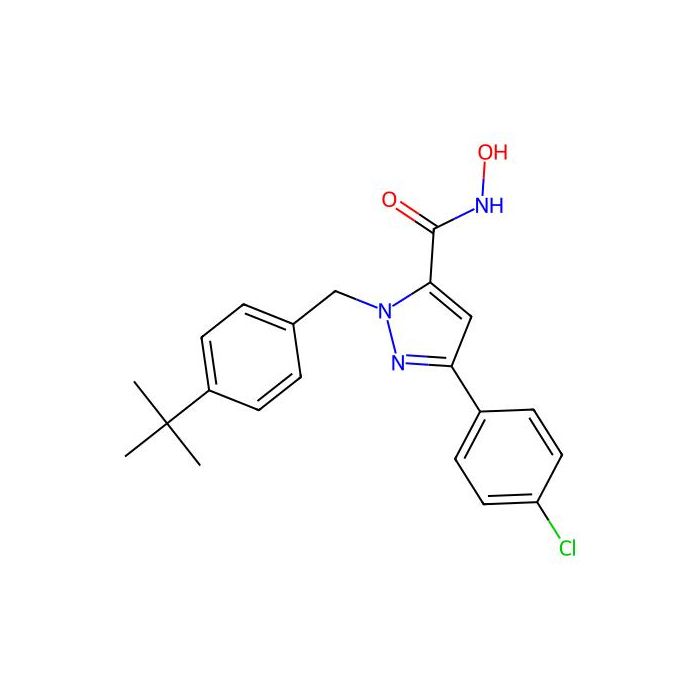
Nrf2-IN-1 is an inhibitor of nuclear factor-erythroid 2-related factor 2 (Nrf2) . Nrf2-IN-1 is developed for the research of acute myeloid leukemia (AML)
In Vitro
Nrf2-IN-1 (Compound 4f) (10 μM) inhibits Nrf2 activation. ?\nNrf2-IN-1(1-20 μM; 48 hours) inhibits growth of the three AML cell. ?\nNrf2-IN-1 (5-10 μM; 48 hours) induces apoptosis of three AML cells in vitro. ?\nNrf2-IN-1 induces apoptotic signaling involving Bcl-2 and Bax. MCE has not independently confirmed the accuracy of these methods. They are for reference only. Cell Viability AssayCell Line: THP-1 cells, HL-60 cells, U937 cells Concentration: 1 μM, 5 μM, 10 μM, 20 μM Incubation Time: 48 hours Result: Inhibited growth of the three AML cell types at 5 μM, 10 μM or 20 μM for 48 hours. Apoptosis AnalysisCell Line: THP-1 cells, HL-60 cells, U937 cells Concentration: 5 μM, 10 μM Incubation Time: 48 hours Result: Induced apoptosis in AML cells in vitro. Western Blot AnalysisCell Line: THP-1 cells, HL-60 cells, U937 cells Concentration: 5 μM, 10 μM Incubation Time: 48 hours Result: Triggered caspase-dependent apoptotic signaling in AML cells.
In Vivo
Nrf2-IN-1 inhibits tumor growth via apoptosis in chicken eggs . MCE has not independently confirmed the accuracy of these methods. They are for reference only.
IC50& Target:Nrf2
Spécifications
Spécifications et pureté
Moligand™,10mM in DMSO
Mécanismes biochimiques et physiologiques
Nrf2-IN-1 is an inhibitor of nuclear factor-erythroid 2-related factor 2 (Nrf2) . Nrf2-IN-1 is developed for the research of acute myeloid leukemia (AML).
Conditions de stockage de stockage
Store at -80°C
Expédié en
Dry ice packs + Cold packs
Ce produit nécessite l'expédition en chaîne froide. Les services terrestres et autres services économiques ne sont pas disponibles.
Certificats (CoA, COO, BSE/TSE et tableau d'analyse)
C of A & Other Certificates(BSE/TSE, COO):
Analytical Chart:
Calculateurs de solution
Molarity Calculator
Determine the necessary mass, volume, or concentration for preparing a solution.
Dilution Calculator
Determine the dilution needed to prepare a stock solution.
Reconstitution Calculator
Avis
Avis des clients
Application Protocols
Tested applications, validated dilutions, and in-house protocols for this specific SKU are not specified for this item; refer to CoA/Spec Sheet.
Note: Because application parameters can vary widely by cell line, assay format, and readout, users should develop and validate protocols locally using appropriate controls and pilot titrations.
Biological Roles
Nrf2 (NFE2L2) is a cap’n’collar bZIP transcription factor central to the cellular oxidative and electrophilic stress response.
General pathway context (literature):
Under basal conditions, Keap1 binds Nrf2 and promotes its ubiquitination and proteasomal degradation. Oxidative electrophiles modify Keap1 cysteines, allowing Nrf2 stabilization, nuclear translocation, and binding to antioxidant response elements (AREs).
Nrf2 upregulates cytoprotective genes including NQO1, GCLM/GCLC, HMOX1 (HO-1), SLC7A11, and multiple phase II detoxification enzymes and transporters.
Use of inhibitors in research (general):
Small-molecule “Nrf2 inhibitors” are employed to suppress basal or hyperactivated Nrf2 signaling to dissect pathway contribution in models of redox biology and xenobiotic metabolism.
They serve as chemical probes to differentiate Keap1–Nrf2 PPI modulation from downstream transcriptional control and to benchmark genetic perturbations (siRNA/CRISPR) with pharmacological approaches.
Important note:
The exact molecular target and mechanism-of-action for Nrf2-IN-1 (e.g., Keap1 covalent engagement vs transcriptional interference) are not specified for this item; refer to primary literature and the CoA/SDS for any available mechanistic annotations.
Avoid extrapolating to therapeutic contexts; this product is supplied strictly for research use only.
Buffer Applications
This item is not a buffering agent. However, small-molecule inhibitors are commonly prepared and used within biological buffers and media.
General, non-item-specific guidance:
Stock preparation: Dissolve in anhydrous DMSO to 10–50 mM. Vortex and, if needed, brief sonication. Filter through 0.22 µm PTFE if particulate persists and the compound is stable.
Working solutions: Dilute into assay buffer (e.g., PBS, HBSS, or phenol-red–free complete media) with rapid mixing; maintain final DMSO typically ≤0.1–0.5% v/v to limit solvent effects.
Controls: Always include matched vehicle controls and, if available, a known pathway modulator as a positive/negative control to calibrate assay dynamic range.
Adsorption: For hydrophobic molecules, pre-rinse plasticware with dilute DMSO or include low % carrier protein (e.g., 0.1% BSA) when compatible to reduce nonspecific binding.
Item-specific buffer compatibility, pH stability, and precipitation limits are not specified for this item; refer to CoA/Spec Sheet and confirm empirically in your system.
Green Alternatives
Green chemistry comparisons are typically applicable to solvents and bulk reagents rather than discrete bioactive probes.
For a specific small-molecule inhibitor like Nrf2-IN-1, there is no direct “green alternative” with identical function; substitution would change biological activity.
Sustainability considerations can focus on the workflow, not the molecule:
Use DMSO efficiently (aliquot to minimize waste; consider lower-concentration stocks if feasible for your assays).
Minimize single-use plastics by employing glass vials for stock solutions when compatible.
Optimize assay volumes and high-density plate formats (384/1536-well) to reduce material use.
Consolidate shipments or coordinate with other cold-chain orders to reduce transport footprint.
If your process uses auxiliary chemicals (e.g., extraction solvents, quench solutions), select greener options where possible (e.g., ethanol or IPA over chlorinated solvents), provided they are compatible with the bioassay.
Note: Any change to the probe molecule itself will alter target engagement and cannot be considered a true “green alternative.”
Pharmaceutical Uses
No pharmacopeial or clinical use is provided or implied for this product.
Status: For research use only (per product data). Not for human or veterinary use, not for diagnostic procedures.
Potential roles in R&D (general): May serve as a reference compound for Nrf2 pathway assays during discovery screening, target validation, and DMPK method development.
Regulatory: No compendial monograph or excipient status is indicated. Any GLP/GMP suitability, if required, must be established independently.
Item-specific formulation attributes (salt form, polymorph, excipients) and QC specifications are not specified for this item; refer to CoA/Spec Sheet.
Physical Properties
Item-specific physicochemical properties are not provided in the current listing.
Appearance: Not specified for this item; refer to CoA/Spec Sheet.
Molecular Weight (exact): Not specified for this item; refer to CoA/Spec Sheet.
Melting point / Boiling point: Not specified for this item; refer to CoA/Spec Sheet.
Density / Refractive index: Not specified for this item; refer to CoA/Spec Sheet.
Solubility: Not specified for this item; refer to CoA/Spec Sheet. (General note: many small-molecule inhibitors are formulated as DMSO stocks; confirm experimentally.)
logP/logD, pKa(s): Not specified for this item; refer to CoA/Spec Sheet.
General guidance (literature-style, non-item-specific):
For small hydrophobic probes, initial dissolution is typically in anhydrous DMSO (10–50 mM), followed by dilution into aqueous assay media (final DMSO ≤0.1–0.5% v/v, as tolerated by cells/enzymes).
If crystalline, assess polymorph/solvate form as it can alter apparent solubility and dissolution kinetics.
Always verify all property values against the item’s CoA/SDS before method development.
Quality and Grades
Grade/Purity: Moligand™ (per product data)
About the designation (general information):
Moligand™ denotes small molecules supplied for research screening and mechanistic studies. These are intended for discovery workflows (biochemical/cell-based assays, target validation) rather than as bulk reagents or clinical materials.
What this means in practice:
Identity, purity, and form may be controlled to support screening use; however, item-specific numerical specifications (e.g., % purity by HPLC, residual solvent limits) are not specified for this item; refer to CoA/Spec Sheet.
Batch-to-batch documentation: Each lot should be qualified with a Certificate of Analysis (CoA). Verify assay-critical attributes (purity modality, counter-ion/salt form, water content) directly from the CoA before high-sensitivity studies.
Stabilizers/added components:
Any stabilizers or formulation excipients are not specified for this item; refer to CoA/Spec Sheet. If present, consider their impact on bioassays (e.g., background signal, solubility).
Recommendation:
For SAR or high-content screening, record the exact lot and storage history; micro-aliquot upon receipt to limit freeze–thaw.
Reaction and Applications
This compound is positioned as a pathway inhibitor (Nrf2). It is not typically used as a stoichiometric reagent or solvent in synthetic chemistry.
Research applications (general, non-item-specific):
Reporter assays: Evaluate Nrf2/ARE transcriptional activity using luciferase reporters; compounds termed “Nrf2 inhibitors” are commonly tested for suppression of basal or induced ARE signals.
Target engagement: Probe Nrf2 pathway modulation upstream (Keap1–Nrf2 interaction) or downstream (transcription/translation of Nrf2 targets) via Western blotting or qPCR (e.g., NQO1, GCLC, HO-1) in relevant cell models.
Chemical biology workflows: Time-course and dose–response studies to profile potency, reversibility, and pathway selectivity vs related stress-response axes (e.g., NF-κB, AP-1) using multiplex readouts.
Assay tips:
Use fresh DMSO stocks and include matched vehicle controls.
Pre-validate cytotoxicity window (e.g., via ATP or resazurin assays) to decouple on-target effects from general viability loss.
Where feasible, include orthogonal readouts (reporter + endogenous target protein) to confirm pathway-level effects.
Item-specific activity and potencies (IC50/EC50, cellular selectivity) are not specified for this item; consult the primary literature and the product CoA/SDS.
Reaction Conditions
Not applicable as a general chemical reagent. This compound is intended for use as a research probe in biological assays rather than in synthetic transformations.
General bioassay handling guidance (non-item-specific):
Stock solutions: Prepare in DMSO (10–50 mM). Store aliquots at −80 °C to avoid repeated freeze–thaw.
Incubation: Cellular assays frequently use 0.1–10 µM working concentrations; optimize empirically and validate cytotoxicity windows. Typical exposure times range from 2–24 h depending on endpoint (reporter vs protein expression).
Temperature/light: Handle protected from light at ambient temperature during setup; return promptly to cold storage.
Any item-specific stability (e.g., half-life in media, photostability), assay temperatures, or kinetic parameters are not specified for this item; refer to CoA/Spec Sheet and literature for definitive conditions.
Safety and Handling
Hazard classification details are not provided in the product data and may vary by jurisdiction.
GHS Classification / Pictograms / Signal Word / H-Statements: Not specified for this item; refer to SDS.
Primary storage condition: Store at −80 °C (per product data). Protect from moisture and light. Minimize freeze–thaw.
General laboratory precautions (good practice; defer to SDS for authoritative guidance):
PPE: Lab coat, safety glasses, and appropriate chemical-resistant gloves (e.g., nitrile). Handle powders/solids in a fume hood to avoid inhalation.
Avoid: Aerosol generation, skin/eye contact, and ingestion. Many bioactive small molecules can be harmful upon exposure.
Incompatibilities: Avoid strong oxidizers and acids/bases until specific stability data are verified.
First aid (overview): If on skin/eyes, rinse with water for ≥15 min; remove contaminated clothing. If inhaled, move to fresh air. If ingested, rinse mouth; do not induce vomiting. Seek medical attention in all exposure cases.
Spill response: Absorb small spills with inert material, place in chemical waste. Decontaminate surfaces per institutional SOPs.
Always consult the official SDS for this specific SKU prior to use.
Solvent Selection
This product is a bioactive small molecule; optimal solvent depends on its polarity and functional groups, which are not provided here.
Primary stock solvent (typical for inhibitors): Anhydrous DMSO is generally preferred due to broad solvency and compatibility with biochemical and cell-based assays.
Aqueous dilution: Dilute DMSO stocks into assay buffer or culture medium with vigorous mixing to prevent local supersaturation. Maintain final DMSO typically ≤0.1–0.5% v/v (verify tolerance for your system).
Alternative solvents (as needed): DMF, ethanol, or minimal volumes of PEG400 can be used in specialized contexts; confirm assay compatibility first.
Co-solvent strategies: For difficult solubilization, combine DMSO with a small fraction of ethanol or use surfactant-containing media (e.g., 0.01–0.05% Tween-80) if compatible with the readout.
Selection considerations:
Verify pH stability—avoid high pH or strong acids without stability data.
Filter sterilize final working solutions (0.22 µm) if used in cell culture and compatible with the molecule’s adsorption profile.
Note: Solubility and partitioning of this specific item are not specified; refer to CoA/Spec Sheet and perform a small-scale solubility screen before large assays.
Storage and Reconstitution
Storage Conditions (as supplied): Store at −80 °C (per product data). Keep container tightly closed, desiccated, and protected from light. Minimize freeze–thaw by aliquoting on first use.
Reconstitution (general guidance; verify with CoA/SDS):
Bring vial to room temperature in a desiccator before opening to avoid moisture condensation.
Dissolve the material in anhydrous DMSO to prepare a concentrated stock (e.g., 10–50 mM), mixing thoroughly. If insoluble, brief sonication may help.
Pass through a 0.22 µm PTFE filter if particulate persists and chemical stability allows.
Store working aliquots at −80 °C. Avoid light exposure; use amber vials when possible.
Record the number of freeze–thaw cycles; discard aliquots that show precipitation, discoloration, or assay drift.
Item-specific solubility limits, stability in DMSO/aqueous media, and recommended stock concentrations are not specified for this item; refer to CoA/Spec Sheet.
Structure and Identity
Research-grade small molecule listed as an Nrf2 pathway inhibitor.
Product Name: Nrf2-IN-1
SKU: N656894
CAS: 1610022-76-8
PubChem CID: 76900951
Molecular Formula: Not specified for this item; refer to CoA/Spec Sheet.
Molecular Weight: Not specified for this item; refer to CoA/Spec Sheet.
SMILES: Not specified for this item; refer to CoA/Spec Sheet.
InChIKey: Not specified for this item; refer to CoA/Spec Sheet.
Structural features (general):
Item-specific structural descriptors (ring systems, heteroatoms, stereochemistry) are not provided in the current product data. Consult the CoA/SDS or PubChem record (CID 76900951) for the definitive 2D/3D structure and identifiers before building assay models or performing cheminformatics.
Notes for cheminformatics and registration:
Use the CAS and CID above as authoritative cross-references.
Confirm tautomer/ionization state at your working pH when generating in silico models or docking files.
Synthetic Utility
This product is a bioactive small-molecule probe and is not typically used as a synthetic building block or reagent.
No named reactions, coupling handles, or protecting-group strategies are provided for this item.
If derivatization is desired for probe development (e.g., biotinylation, photoaffinity tags), consult structural information from the primary literature or CoA to identify modifiable positions that do not abrogate activity.
Item-specific functional groups and reactivity are not specified for this item; refer to CoA/Spec Sheet before planning any chemical modifications.
Target Specificity
Antibody-style target specificity data (antigen, clone, isotype, species reactivity) are not applicable to this small-molecule product.
While the name indicates an association with the Nrf2 pathway, item-specific target binding mode, selectivity profile, and potency (e.g., IC50, off-target panel) are not specified for this item; refer to CoA/Spec Sheet and primary literature.
Foire aux questions
What is Moligand??
Moligand? is one of Aladdin Scientific's premium product lines, formulated for high-purity applications across multiple workflows. Compared to standard grades in the same workflow, Moligand? products typically offer tighter specifications, more rigorous QC, and stronger lot-to-lot consistency.
How should this product be stored?
Store at ?80 °C. Ultra-low temperature storage is required to maintain the specified shelf life.
How is this product shipped?
This product ships frozen with dry ice and cold packs. Unpack on arrival and transfer it to the storage condition stated above; handle dry ice with insulated gloves in a ventilated area.
What are the CAS number, molecular formula and molecular weight?
The CAS Number is 1610022-76-8, the molecular formula is C21H22ClN3O2, and the molecular weight is 383.87 g/mol.
What documentation is provided?
Available product documentation, including Certificates of Analysis (COA), Safety Data Sheets (SDS), and specification sheets, is shown in the product document area. Document availability and access follow the current site policy.
Besoin d'aide pour choisir la qualité ?
Notre guide de sélection des qualités couvre la pureté, le statut du stabilisant et l'adéquation à l'application pour toutes les variantes de notre catalogue.
Nous utilisons des cookies pour garantir le bon fonctionnement du site et, lorsque cela est autorisé, pour améliorer votre expérience. Vous pouvez gérer vos préférences à tout moment dans les Paramètres. Pour en savoir plus, consultez notre Politique relative aux cookies.
Souhaitez-vous que nous vous envoyions un message lorsque des réductions seront disponibles?
Me rappeler plus tard
Merci ! Veuillez vérifier votre boîte de réception e-mail pour confirmer.
Products are supplied to verified businesses, institutions, and qualified professionals for research and development use only. Not for use in humans, animals, diagnosis, or therapy.