≥95% pour les flux de travail chromatographiques et analytiques sensibles nécessitant une interférence de ligne de base minimale.
🌡
Stockage & expédition
Store at -20°C Expédition Ice chest + Ice pads. Consultez le COA spécifique au lot pour les spécifications exactes.
📋
Documents qualité
SDS, COA, fiche technique et fiche de spécifications disponibles au téléchargement. COA spécifique au lot accessible via la recherche par numéro de lot.
📚
Preuve documentaire
Cité dans 0 publications à comité de lecture couvrant la chromatographie, la synthèse organique et les réactions de couplage croisé.
Vue d’ensemble
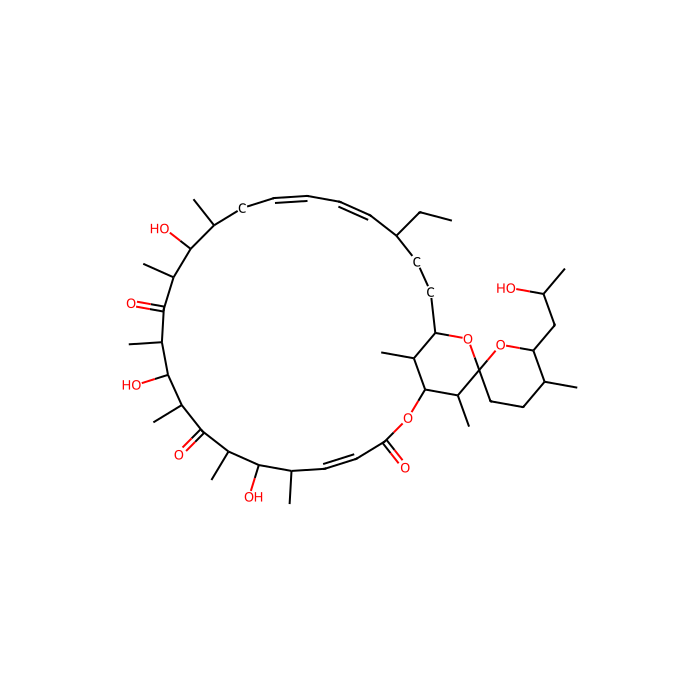
Oligomycin C is part of a class of macrolide antibiotics and is a potent inhibitor of cell regulatory volume decrease (RVD). Oligomycin has been shown to inhibit ATP synthase by blocking the ATP5 (mitochondrial F|1|F|0|-ATPase). Doxorubicin-resistant HepG2 cell studies report that oligomycin can inhibit the activity of P-glycoprotein and induce apoptosis.
Certificats (CoA, COO, BSE/TSE et tableau d'analyse)
C of A & Other Certificates(BSE/TSE, COO):
Analytical Chart:
Propriétés chimiques et physiques
Solubilité
Soluble in 100% ethanol, methanol, DMF, and DMSO. Insoluble in water.
Indice de réfraction
n20D1.54 (Predicted)
Point d'ébullition (°C)
876.18° C at 760 mmHg (Predicted)
Point de fusion (°C)
195-200° C
Calculateurs de solution
Molarity Calculator
Determine the necessary mass, volume, or concentration for preparing a solution.
Dilution Calculator
Determine the dilution needed to prepare a stock solution.
Reconstitution Calculator
Avis
Avis des clients
Application Protocols
Only product-data-derived protocols may be listed here.
Tested applications, recommended dilutions, and positive controls: Not specified for this item. No validated application protocols are provided in the Product Data for SKU O329491.
General note
For assay development, consult peer-reviewed literature and platform vendor guidelines (e.g., mitochondrial stress tests) to design concentration ranges and dosing sequences appropriate to your biological model.
Primary biochemical target: The Fo subunit of mitochondrial (and some bacterial) FoF1-ATP synthase. Binding inhibits proton translocation through the membrane-embedded channel, thereby preventing ATP synthase from producing ATP from ADP and Pi.
Functional consequence: Inhibition of ATP synthase collapses ATP-linked respiration, increases proton motive force across the inner mitochondrial membrane, and can elevate proton leak or stimulate compensatory glycolysis depending on system.
Research utility:
Dissecting energy metabolism: Differentiates ATP-coupled oxygen consumption from non-ATP-linked respiration in intact cells and isolated mitochondria.
Investigating mitochondrial pathophysiology: Serves as a positive control for inhibiting ATP synthesis and for testing mitochondrial coupling efficiency, with readouts including oxygen consumption rate (OCR), extracellular acidification rate (ECAR), membrane potential, and ATP/ADP ratios.
Bacterial bioenergetics: Used to interrogate rotary ATPase function and resistance mutations mapping to c-subunit and related Fo components in susceptible organisms.
Selectivity considerations: Congener-specific differences (A/B/C/E) can influence potency and binding interactions; confirm the congener identity (C) for reproducibility.
Caveats
Because ATP synthase is essential for cellular energy, oligomycin exposure can cause rapid and profound metabolic changes; titrate carefully to avoid confounding cytotoxicity during mechanistic assays.
Effects may be cell-type and species dependent; always include appropriate controls and replication.
Buffer Applications
Not typically applicable.
Oligomycin C is not a buffering reagent and is not used to prepare pH buffer systems. For experimental work, it is usually dissolved in an organic stock solvent (e.g., DMSO) and then diluted into pre-made biological buffers suitable for the assay (HBSS, PBS, respiration media, etc.).
Ensure that the final organic solvent content is compatible with your buffer system and biological model; include matched vehicle controls.
Green Alternatives
Context
As a specialized bioactive natural product, Oligomycin C itself has no direct “green” substitute for its unique mode-of-action in research. However, greener choices can be made for solvents and handling.
Greener solvent choices (general guidance)
Prefer DMSO or ethanol for stock solutions over chlorinated solvents (e.g., chloroform, dichloromethane) when compatible with your assay and analytical method.
For LC sample prep, acetonitrile can often be replaced in part with ethanol or isopropanol in gradient methods; method re-validation is required.
Comparison (general)
DMSO: high solubilizing power; relatively low volatility and favorable EHS profile for a polar aprotic solvent; compatible at low percentages in biological assays.
Ethanol: renewable sourcing possible; quickly biodegradable; may offer adequate solubility for moderate working concentrations; higher volatility and potential assay interference at >0.5–1% v/v.
Waste minimization
Prepare small aliquots to reduce discard from repeated freeze–thaw degradation.
Use microscale assay formats and automated liquid handling to reduce over-preparation.
Collect all oligomycin-containing waste as hazardous organic waste; avoid drain disposal.
Note
Any change of solvent in bioassays can influence potency and delivery; verify performance and stability when adopting greener options.
Pharmaceutical Uses
Not applicable for this catalog item.
Oligomycin C is offered for research use only. It is not an excipient, not formulated for human or veterinary administration, and no pharmacopeial monograph is applicable for this congener in the context of this listing.
In pharmaceutical research, compounds like Oligomycin C may be used as mechanistic tools to interrogate mitochondrial function in cells, organelles, or model systems; such use is strictly non-clinical and confined to laboratory research settings.
Physical Properties
Item-specific specs
Appearance: Not specified for this item; refer to CoA/Spec Sheet.
Molecular weight: Not specified for this item; refer to CoA/Spec Sheet.
Literature/general values and behavior (for context only; not item-specific specifications)
Physical state: typically an amorphous solid or powder for oligomycin congeners.
Solubility profile (literature): generally soluble in DMSO and organic solvents (e.g., methanol, ethanol, acetonitrile, chloroform); very low solubility in water.
UV/Vis: macrolide polyketides often exhibit modest UV absorption due to enone/alkene chromophores; specific maxima vary by congener and are not provided here.
LogP: oligomycin congeners are strongly lipophilic (high logP; exact value depends on congener and is not provided here).
Melting point, density, refractive index, pKa, and vapor pressure: Not specified for this item; refer to CoA/Spec Sheet.
Practical notes (general)
Stock solutions are commonly prepared at 1–10 mM in DMSO (literature practice) and aliquoted to avoid repeated freeze–thaw cycles.
Due to hydrophobicity, achieving homogeneity in aqueous buffers typically requires co-solvent (e.g., DMSO) or surfactant; gentle warming to ambient temperature and thorough mixing can assist dissolution. Verify concentration by mass and volume; spectrophotometric quantitation requires validated extinction coefficients, which are not provided here.
Quality and Grades
Item-specific details
Grade/purity: Not specified for this item; refer to CoA/Spec Sheet.
How to interpret quality for this material (general guidance)
Identity confirmation: For complex macrolides, identity is typically supported by high-resolution MS, 1H/13C NMR, and sometimes optical rotation and HPLC/UPLC purity profiles. When comparing lots, review the CoA chromatogram (to assess congener purity) and spectral data for consistency with Oligomycin C.
Purity metrics: Reported as area% by HPLC/UPLC under defined conditions; residual solvents and water content may be reported by GC/ Karl Fischer. For potency-critical bioassays, mass fraction purity and counter-ion/solvate content are particularly relevant.
Stabilizers: None are specified here. If stabilizers or carriers (e.g., mannitol) are used in any lot, they should be disclosed on the CoA; absence/presence impacts solution preparation and molar concentration calculations.
Suitability: If you plan quantitative bioenergetics or mitochondrial assays, request or consult spectral and chromatographic data to ensure the congener composition matches Oligomycin C with minimal A/B/E congeners, as cross-congener contamination can shift apparent potency.
Documentation
For regulatory or publication purposes, retain the lot-specific CoA/Spec Sheet and, if needed, request additional analytical data (chromatograms, NMR, HRMS) to substantiate identity/purity.
Reaction and Applications
Applicability note
Oligomycin C is a bioactive small molecule used as a research tool rather than a synthetic reagent. The following focuses on research applications in biochemistry and cell biology (literature/general knowledge), not on chemical transformations.
Research applications (literature/general)
Mitochondrial bioenergetics: A benchmark inhibitor of the Fo component of the FoF1-ATP synthase. Used to block ATP synthase-mediated proton flux, enabling dissection of oxidative phosphorylation and proton-motive force contributions.
Metabolic flux analyses: Incorporated in mitochondrial stress test protocols (e.g., sequential additions with agents such as oligomycin, FCCP, rotenone/antimycin A) to quantify ATP-linked respiration, proton leak, and spare respiratory capacity in intact cells or isolated mitochondria. Concentration ranges and sequences should be optimized per cell type and platform; consult platform-specific guides.
Mechanistic studies: Probes coupling efficiency, ATP production dependency, and reverse-mode ATPase activity in bacterial or eukaryotic membranes.
Comparative pharmacology: Used alongside other ATP synthase modulators (e.g., venturicidin, bedaquiline—organism dependent) to map binding-site selectivity and resistance mechanisms.
Practical considerations
Prepare concentrated DMSO stocks and minimize freeze–thaw. Validate working concentrations empirically; sensitivity varies with cell line, mitochondrial content, and assay configuration. Include vehicle controls to account for solvent effects.
Ensure appropriate timing and mixing when injecting into respirometry chambers to achieve rapid, uniform exposure.
Reaction Conditions
Not a synthetic reagent; traditional reaction conditions are not applicable.
Assay preparation and handling conditions (literature/general guidance; not item-specific specifications)
Stock preparation: Dissolve in anhydrous DMSO to 1–10 mM; vortex/sonicate briefly if needed. Filter sterilize through 0.22 μm PTFE/PVDF if sterility is required.
Working solutions: Dilute into pre-warmed assay medium immediately before use. Keep final DMSO low (commonly ≤0.1–0.5% v/v depending on system tolerance).
Temperature/light: Handle at ambient temperature during solution prep; minimize prolonged light exposure to reduce potential photodegradation.
Stability: Avoid repeated freeze–thaw cycles; aliquot stocks and store at the recommended temperature. Discard aliquots showing precipitation, discoloration, or unexpected assay behavior.
Expected outcomes (conceptual)
Rapid inhibition of ATP-linked respiration following addition in mitochondrial assays; magnitude and kinetics depend on model system and concentration. Optimize empirically for your platform.
Always validate conditions locally and consult platform-specific protocols for mitochondrial respiration or bioenergetics assays.
Safety and Handling
Authoritative item-specific safety
GHS classification, signal word, hazard statements, pictograms: Not specified for this item; refer to the product SDS.
General safety guidance (literature/typical for oligomycin-class macrolides; not product-specific)
Hazard nature: Oligomycins are potent inhibitors of mitochondrial ATP synthase and can be toxic by inhalation, ingestion, or skin exposure. Handle as a toxic research chemical.
PPE: Use lab coat, nitrile gloves, and safety glasses; consider double-gloving for weighing/solution prep. Work in a certified chemical fume hood to minimize aerosol/inhalation exposure.
Handling: Avoid dust generation. Prepare solutions carefully to prevent splashing or aerosolization. Decontaminate benches and tools after use.
Incompatibilities: Strong oxidizers and strong acids/bases may degrade macrolide structures. Avoid prolonged exposure to elevated temperatures and light.
First-aid overview (consult SDS for details):
Inhalation: Move to fresh air; seek medical attention.
Skin contact: Wash with soap and water; remove contaminated clothing.
Eye contact: Rinse cautiously with water for several minutes; obtain medical advice.
Ingestion: Rinse mouth; do not induce vomiting; seek immediate medical attention.
Environmental: Avoid release to the environment. Collect waste as hazardous organic waste per institutional/EHS guidelines.
Always consult the current SDS for definitive and legally relevant safety and first-aid instructions for this specific item.
Solvent Selection
Solubility and polarity considerations (literature/general)
Polarity: Oligomycin C is strongly lipophilic and essentially insoluble in water; dissolution typically requires polar aprotic organic solvents.
Preferred stock solvents: DMSO is most commonly used owing to strong solvating power and biocompatibility in small volumes. Ethanol or methanol can also dissolve oligomycin congeners; chloroform and acetonitrile are effective for analytical/sample prep contexts.
Aqueous working solutions: Prepare concentrated DMSO stocks (e.g., 1–10 mM; literature practice) and dilute into assay buffers ensuring final DMSO ≤0.1–0.5% v/v as permitted by the biological system. Vortex thoroughly and, if necessary, include carrier proteins (e.g., BSA) to minimize adsorption losses—validate for your assay.
Comparison (general guidance)
DMSO vs ethanol: DMSO provides higher solubility and stability for many macrolides and is less volatile; ethanol offers lower toxicity and easier evaporation but may have lower solubility limits and can perturb some biological assays at comparable percentages.
ACN vs methanol: ACN often gives sharper chromatographic peaks and lower viscosity for LC; methanol is greener and widely available but can reduce solubility for highly lipophilic analytes.
Practical tips
Warm to ambient temperature before opening to avoid moisture condensation. Sonication can assist dissolution, but avoid prolonged heating.
Filter sterilization: If sterility is required, dissolve fully and pass through a PTFE or PVDF 0.22 μm filter; avoid cellulose esters that can adsorb hydrophobic macrolides.
Storage and Reconstitution
Item-specific instructions (from Product Data)
Storage conditions: Store at -20°C.
Shipping: Shipped in ice chest with ice pads.
Not specified for this item; refer to CoA/Spec Sheet
Appearance, stabilizers/carriers, recommended stock solvent, reconstitution concentration, and solution stability are not specified in the Product Data.
General handling guidance (literature/general; not item-specific specifications)
Allow the container to equilibrate to room temperature in a desiccated environment before opening to prevent moisture condensation.
If preparing stocks in DMSO or alcohols, use dry, oxygen-free solvents when possible; aliquot into amber vials to minimize light exposure and freeze at -20°C or below.
Avoid repeated freeze–thaw cycles by preparing single-use aliquots. Record preparation date, concentration, and solvent on each aliquot.
Always defer to the lot-specific CoA and SDS for definitive storage limits, compatibility, and any reconstitution instructions unique to this item.
Structure and Identity
Brief description: Oligomycin C is a member of the oligomycin family of macrolide natural products isolated from Streptomyces spp. It is widely used as a research tool to interrogate mitochondrial bioenergetics.
Item-specific identifiers (from Product Data)
SKU: O329491
Product name: Oligomycin C
CAS: 11052-72-5
PubChem CID: 414772
InChIKey: 48056 (partial in provided data)
SMILES: Not specified for this item; refer to CoA/Spec Sheet.
Molecular formula: Not specified for this item; refer to CoA/Spec Sheet.
Molecular weight: Not specified for this item; refer to CoA/Spec Sheet.
Structural features (literature/general knowledge)
Chemical class: macrolide polyketide (oligomycin series).
Core scaffold: large macrocyclic lactone (macrolactone) ring.
Functional groups: secondary and tertiary alcohols, conjugated enone/alkene segments, multiple methyl substituents, lactone carbonyl; typically contains several stereocenters.
Topology: highly substituted, conformationally restricted macrocycle with amphipathic character (predominantly lipophilic with a polar lactone/oxygen-rich region).
2D structure in words (literature/general knowledge)
A single large ring (≈26-membered macrolactone) bearing a series of methyl-branched sp3 carbons, one or more double bonds, and multiple hydroxyl groups positioned along the ring; no heteroaromatic or halogen substituents are typically present in oligomycins.
Notes
Exact stereochemistry, atom connectivity, and identifiers such as full InChI/SMILES should be taken from the certificate of analysis (CoA) or authoritative structure databases for this specific C-congener.
Synthetic Utility
Limited applicability.
Oligomycin C is a complex macrolide natural product and is not commonly employed as a synthetic reagent or building block in routine organic synthesis.
In total synthesis and methodology research (literature), oligomycin congeners serve as challenging targets for polyketide assembly, driving advances in macrolactonization, stereoselective aldol chemistry, and protecting-group strategies. These insights are of academic interest but do not represent typical end-user synthetic utility for this product.
For users seeking a tool compound: treat Oligomycin C as a bioactive probe rather than a synthon; select solvents and handling methods that preserve integrity during storage and biological testing.
Target Specificity
Only product-data-derived information may be listed here.
Target, epitope, species reactivity, clone/isotype: Not specified for this item; no target-specific data are provided in the Product Data. Refer to primary literature for the general biochemical targets of oligomycin-class molecules if needed for experimental design.
Nous utilisons des cookies pour garantir le bon fonctionnement du site et, lorsque cela est autorisé, pour améliorer votre expérience. Vous pouvez gérer vos préférences à tout moment dans les Paramètres. Pour en savoir plus, consultez notre Politique relative aux cookies.
Souhaitez-vous que nous vous envoyions un message lorsque des réductions seront disponibles?
Me rappeler plus tard
Merci ! Veuillez vérifier votre boîte de réception e-mail pour confirmer.
Products are supplied to verified businesses, institutions, and qualified professionals for research and development use only. Not for use in humans, animals, diagnosis, or therapy.