QUALITÉ & PURETÉMoligand™?Moligand™ — Aladdin's line of ligands and bioactive small molecules. Use for receptor, pathway, and binding studies needing defined small-molecule tools.10 mM in DMSO
Moligand™, 10 mM in DMSO Moligand™ pour les flux de travail chromatographiques et analytiques sensibles nécessitant une interférence de ligne de base minimale.
🌡
Stockage & expédition
Store at -80°C Expédition Dry ice packs + Cold packs. Consultez le COA spécifique au lot pour les spécifications exactes.
📋
Documents qualité
SDS, COA, fiche technique et fiche de spécifications disponibles au téléchargement. COA spécifique au lot accessible via la recherche par numéro de lot.
📚
Preuve documentaire
Cité dans 0 publications à comité de lecture couvrant la chromatographie, la synthèse organique et les réactions de couplage croisé.
Vue d’ensemble
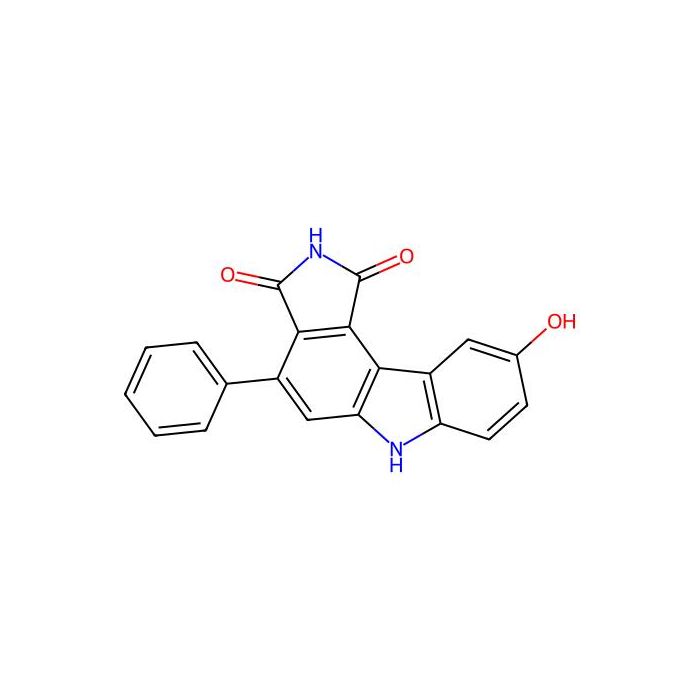
PD 407824 is a checkpoint kinase Chk1 and WEE1 inhibitor with IC 50 s of 47 and 97 nM, respectively. PD 407824 is a chemical BMP sensitizer and increases the sensitivity of cells to sub-threshold amounts of BMP4 .
Spécifications
Spécifications et pureté
Moligand™, 10 mM in DMSO
Conditions de stockage de stockage
Store at -80°C
Expédié en
Dry ice packs + Cold packs
Ce produit nécessite l'expédition en chaîne froide. Les services terrestres et autres services économiques ne sont pas disponibles.
Certificats (CoA, COO, BSE/TSE et tableau d'analyse)
C of A & Other Certificates(BSE/TSE, COO):
Analytical Chart:
Calculateurs de solution
Molarity Calculator
Determine the necessary mass, volume, or concentration for preparing a solution.
Dilution Calculator
Determine the dilution needed to prepare a stock solution.
Reconstitution Calculator
Avis
Avis des clients
Application Protocols
No tested application protocols are provided for this item in the listing.
General considerations for small-molecule assays (not item-specific):
Biochemical assays: Generate dose–response curves over ≥8 concentrations with duplicates/triplicates; include vehicle controls and, if available, a mechanistically distinct reference compound.
Cell-based assays: Start with a broad concentration range (e.g., 0.01–30 μM), verify cytotoxicity separately, and monitor precipitation by microscopy. Maintain final DMSO at ≤0.1–0.5% where possible.
Data integrity: Use fresh dilutions, confirm identity/purity for each lot, and document storage/handling history to correlate with biological readouts.
Biological Roles
Item-specific biological target information is not provided for PD 407824 in this listing. No claims are made regarding mechanism of action, potency, or selectivity.
General guidance for small-molecule research ligands (not item-specific):
Such compounds are used as chemical probes to perturb biochemical pathways, modulate enzyme/receptor activity, or serve as reference controls in discovery assays.
When integrating into cellular systems, document the full exposure profile: concentration range, exposure time, vehicle percentage, and medium composition. Capture cytotoxicity/viability counterscreens (e.g., resazurin, CellTiter) to contextualize phenotypic outcomes.
Off-target risk management: Employ orthogonal chemotypes, CRISPR/siRNA genetic validation, and dose–response profiling to triangulate on-target effects.
ADME considerations for in vitro work: Evaluate chemical stability in media, plasma protein binding surrogates (HSA binding, PAMPA), and permeability proxies (Caco-2/MDCK) if relevant to your study. These are study-dependent and not provided for this item.
For any in vivo or preclinical exposure considerations, consult institutional ethics and regulatory frameworks; this product is supplied strictly for research use only.
Buffer Applications
This product is not a buffering reagent. No intrinsic buffering capacity or defined pKa profile is provided for this item.
For assay use, prepare in appropriate biological buffers (e.g., PBS, HEPES, Tris) that are compatible with your target biology and detection modality.
Maintain consistent vehicle percentages (e.g., DMSO) across control and treatment groups to avoid apparent buffer effects.
Green Alternatives
This product is a discrete small-molecule research ligand, not a process solvent or bulk reagent. A conventional “green alternative” analysis is not typically applicable.
If your use involves screening solvents or formulation vehicles, consider greener solvent choices where compatible with solubility and biology (e.g., replacing DMF with ethanol/aqueous co-solvent systems when feasible). Validate for assay performance and compound stability.
For scale-up synthesis of the compound (if undertaken in-house), apply green chemistry principles to the synthetic route (solvent selection guides, catalytic methods, waste minimization). Route-specific recommendations require the actual structure and synthesis plan.
Pharmaceutical Uses
No pharmacopeial status or excipient role is specified for this item. PD 407824 is supplied for research use only and is not intended for human or veterinary use, diagnostic procedures, or as a drug substance/excipient.
Formulation context (general research practice): For in vitro studies, small-molecule ligands are commonly formulated as DMSO stock solutions and diluted into aqueous media immediately prior to use. For any in vivo exploratory work within approved institutional protocols, vehicle systems might include aqueous co-solvents (e.g., PEG 400, Cremophor EL, hydroxypropyl-β-cyclodextrin); compatibility must be empirically verified and is not provided here.
Stability and compatibility with pharmaceutical excipients are not specified for this item; consult the CoA and perform your own preformulation assessment if needed.
Physical Properties
Item-specific physical data
Appearance: Not specified for this item; refer to CoA/Spec Sheet.
Melting point (MP): Not specified for this item; refer to CoA/Spec Sheet.
Boiling point (BP): Not applicable/rarely used for discrete bioactive solids; Not specified for this item; refer to CoA/Spec Sheet.
Density: Not specified for this item; refer to CoA/Spec Sheet.
LogP, pKa, refractive index: Not specified for this item; refer to CoA/Spec Sheet.
Solubility: Not specified for this item; refer to CoA/Spec Sheet.
General guidance (not item-specific; literature/practice)
Many library-grade bioactives are stored and dispensed as DMSO stocks (1–20 mM) due to broad solubilizing power. Aqueous solubility can vary widely depending on heteroatom content and ionizable groups.
If the compound contains ionizable functionality (unknown here), solubility may be enhanced by pH adjustment within stability limits; confirm by small-scale tests and analytical QC (HPLC/UPLC).
Hygroscopicity and polymorphism can influence observed MP; rely on CoA values rather than secondary sources.
Always confirm UV–vis absorbance profile before use in optical assays to avoid inner-filter effects at working concentrations.
Quality and Grades
Grade/Purity for this item
Grade: Moligand™ (Aladdin bioactive small-molecule/ligand collection). Specific assay purity and identity data: Not specified for this item; refer to CoA/Spec Sheet.
What Moligand™ typically implies (general description)
Focus on bioactive screening-quality compounds suitable for biochemical, cellular, and target-validation studies.
Identity confirmation commonly by LC–MS and/or NMR; chromatographic purity typically assessed by HPLC/UPLC. Exact thresholds and methods vary; consult the item’s CoA for specifics.
Batch-level documentation may include structural identifiers (SMILES/InChI), purity trace, and storage guidance.
Practical implications
Low nonvolatile residue and consistent purity are important for reproducible SAR and phenotypic screening. Verify lot-specific purity prior to HTS/assay integration.
If your workflow imposes additional constraints (e.g., ultra-low endotoxin for certain cellular systems, water content limits, residual solvent profile), request expanded QC documentation before use.
Stabilizers/additives: Not specified for this item. If present, they will be listed on the CoA/SDS; consider impact on sensitive assays.
Reaction and Applications
Primary role
PD 407824 is offered as a research small molecule within a screening/ligand library. It is intended for biochemical and cell-based assay applications rather than as a synthetic reagent.
Research application contexts (general; not target-specific)
Tool compound exploration: Evaluate phenotypic effects, pathway modulation, or probe development in target-agnostic screens.
Orthogonal validation: Use alongside structural analogs or inactive controls to strengthen SAR conclusions.
Assay development: Determine dynamic range, signal window, and robustness (Z′ factor) in pilot screens.
Assay integration tips (general practice)
Prepare fresh DMSO stocks and filter through 0.2 μm PTFE if particulate persists. Confirm concentration by UV or quantitative NMR if gravimetric error is non-negligible.
Conduct vehicle controls across the same DMSO percentage. Assess compound interference with assay readouts (e.g., fluorescence quenching, absorbance overlap, redox activity) using control assays.
Stability: Perform a 24–72 h stability check at assay temperature (ambient or 37°C) in the chosen medium; analyze by LC–MS.
Note: No manufacturer-expanded application notes are provided for this item; tailor usage to your system and consult the SDS/CoA for any constraints.
Reaction Conditions
Not typically applicable: this product is supplied as a research ligand, not a reagent for named organic reactions. No recommended synthetic reaction conditions are provided for this item.
General practice for assay preparation (not a synthetic reaction):
Stock solution: Dissolve in anhydrous DMSO at a convenient concentration (e.g., 10 mM), vortex and sonicate briefly if needed. Verify complete dissolution by visual inspection and, if critical, by HPLC.
Working solutions: Dilute into assay buffer or media with rapid mixing to minimize precipitation. Maintain constant vehicle levels across controls.
Temperature: Prepare and store aliquots on ice during setup to limit degradation for temperature-sensitive molecules; avoid extended bench exposure if the compound is light/air sensitive (not specified here—consult SDS/CoA).
Safety and Handling
GHS/SDS information (item-specific)
Signal word: Not specified for this item; refer to SDS.
Hazard statements (H-phrases): Not specified for this item; refer to SDS.
Pictograms and classification: Not specified for this item; refer to SDS.
General laboratory precautions (good practice; defer to SDS)
Handle in a chemical fume hood with appropriate PPE: lab coat, safety glasses, and chemically resistant gloves (e.g., nitrile). Avoid inhalation of dust/ aerosols and skin contact.
Prevent exposure to moisture and repeated freeze–thaw to maintain integrity, especially for -80°C storage items.
Incompatibilities: Until structure-specific data are confirmed, avoid strong oxidizers and reducing agents, strong acids/bases, and reactive metals. Use dry, oxygen-free techniques if compound is air/moisture sensitive (verify via CoA/SDS).
First aid (summary; consult SDS): In case of skin/eye contact, rinse with water for ≥15 min. If inhaled, move to fresh air. If ingested, rinse mouth; seek medical advice. Provide SDS to medical personnel.
Spill response: Avoid dust generation; absorb with inert material and dispose per institutional hazardous waste protocols.
Fire safety: Use CO2, dry chemical, or foam as appropriate for organic solids; combustion may produce irritating/toxic fumes.
Solvent Selection
Item-specific solubility/miscibility
Solubility data are not provided for this item; refer to CoA/Spec Sheet. Begin with DMSO solubilization trials (e.g., 10 mM) unless contraindicated by SDS.
General guidance for small-molecule bioactives (not item-specific)
Primary stock solvents: DMSO is the default due to broad solvating power; DMF can be a backup. For aqueous use, prepare DMSO stocks and dilute into buffer with vigorous mixing; keep final DMSO ≤0.1–1% v/v in cells.
Aqueous co-solvent strategies: Add nonionic surfactants (e.g., 0.01–0.05% Tween 80) or cyclodextrins when compatible with the assay. Validate against known controls to rule out vehicle effects.
pH-driven solubilization: If the compound is weakly basic/acidic (unknown here), transient pH adjustment may help. Immediately back-titrate to assay pH to avoid interference.
Quick comparison (general)
DMSO: highest success rate; potential cell toxicity at >0.5–1%.
DMF: similar strength; use with caution in cells.
Ethanol/MeOH: moderate; more volatile, potential assay interference.
Buffered saline: only if the compound is inherently water-soluble.
Always verify solubility and stability by analytical HPLC/UPLC and a short-term bench stability study under your assay conditions.
Storage and Reconstitution
Item-specific storage/shipping
Storage conditions: Store at -80°C.
Shipped in: Dry ice packs + Cold packs.
Additional good-practice guidance (general; not item-specific specs)
Keep container tightly closed under inert atmosphere or desiccation if the compound is moisture/air sensitive (not specified; consult CoA/SDS).
After receipt, allow the sealed container to equilibrate to room temperature before opening to prevent moisture condensation. Immediately re-seal or aliquot under dry conditions.
Reconstitution: If solubility permits, prepare a concentrated DMSO stock (e.g., 10 mM), filter if necessary (0.2 μm PTFE), and store as single-use aliquots at -80°C to minimize freeze–thaw cycles.
Stability monitoring: Track appearance and assay a reference HPLC trace periodically for long-term studies. Discard aliquots showing precipitation, discoloration, or significant purity loss.
Avoid repeated freeze–thaw; thaw on ice, use promptly, and do not refreeze partially used aliquots.
Structure and Identity
Overview
Product: PD 407824 (SKU: P1498820)
Category: Small-molecule, screening/compound library member (Moligand series)
CAS: 622864-54-4
PubChem CID: 4369491
Identifiers (item-specific facts)
Molecular formula: Not specified for this item; refer to CoA/Spec Sheet.
Molecular weight: Not specified for this item; refer to CoA/Spec Sheet.
SMILES: Not specified for this item; refer to CoA/Spec Sheet.
InChIKey: Not specified for this item; refer to CoA/Spec Sheet.
Structural notes (general/literature context, not item specification)
PD-series designations commonly denote small-molecule ligands optimized for enzyme/receptor engagement. Without an item-level structure disclosure here, functional group and scaffold details are not provided.
2D description: Not specified for this item; refer to CoA/Spec Sheet or structure file, if supplied with shipment.
What to expect in documentation
Typical Moligand items are supplied with structural confirmation (e.g., LC–MS, NMR) in the Certificate of Analysis. Verify stereochemistry, if applicable, before use in SAR studies.
Synthetic Utility
PD 407824 is offered as a finished small molecule for biological research. It is not generally deployed as a synthetic reagent or building block in routine organic synthesis.
Without a disclosed structure in this listing, we do not describe functional groups, handles, or anticipated reactivity.
If you plan to derivatize or immobilize the molecule (e.g., to prepare affinity resins or fluorescent conjugates), obtain the structural information and assess reactive sites, leaving groups, and stability toward common transformations (amide coupling, click chemistry, halogen–metal exchange, etc.).
For SAR expansion, consider purchasing structurally related analogs in the same Moligand series where available, enabling scaffold exploration under consistent QC frameworks.
As a general note, when repurposing bioactive small molecules synthetically, ensure that protecting groups, oxidation states, and heteroatom basicities are compatible with your conditions, and verify identity/purity post-transformation by orthogonal analytical methods.
Target Specificity
Target, epitope, or binding specificity data are not provided in the product information for PD 407824. No claims regarding biochemical targets, selectivity, or affinity are made for this item.
For projects requiring defined target engagement, we recommend acquiring primary literature or vendor-neutral databases for this CAS/CID and confirming with your own biochemical assays (e.g., enzymology, thermal shift, SPR, CETSA). These are not provided as item specifications.
Foire aux questions
What is Moligand??
Moligand? is one of Aladdin Scientific's premium product lines, formulated for high-purity applications across multiple workflows. Compared to standard grades in the same workflow, Moligand? products typically offer tighter specifications, more rigorous QC, and stronger lot-to-lot consistency.
How should this product be stored?
Store at ?80 °C. Ultra-low temperature storage is required to maintain the specified shelf life.
How is this product shipped?
This product ships frozen with dry ice and cold packs. Unpack on arrival and transfer it to the storage condition stated above; handle dry ice with insulated gloves in a ventilated area.
What are the CAS number, molecular formula and molecular weight?
The CAS Number is 622864-54-4, the molecular formula is C20H12N2O3, and the molecular weight is 328.32 g/mol.
What documentation is provided?
Available product documentation, including Certificates of Analysis (COA), Safety Data Sheets (SDS), and specification sheets, is shown in the product document area. Document availability and access follow the current site policy.
Besoin d'aide pour choisir la qualité ?
Notre guide de sélection des qualités couvre la pureté, le statut du stabilisant et l'adéquation à l'application pour toutes les variantes de notre catalogue.
Nous utilisons des cookies pour garantir le bon fonctionnement du site et, lorsque cela est autorisé, pour améliorer votre expérience. Vous pouvez gérer vos préférences à tout moment dans les Paramètres. Pour en savoir plus, consultez notre Politique relative aux cookies.
Souhaitez-vous que nous vous envoyions un message lorsque des réductions seront disponibles?
Me rappeler plus tard
Merci ! Veuillez vérifier votre boîte de réception e-mail pour confirmer.
Products are supplied to verified businesses, institutions, and qualified professionals for research and development use only. Not for use in humans, animals, diagnosis, or therapy.