Mixture of Perfluoroadamantane adn Perfluoro(1-methyladamantane) for sensitive chromatographic and analytical workflows requiring minimal baseline interference.
🌡
Storage & shipping
Store at -20°C Ships Ice chest + Ice pads Check lot-specific COA for exact specifications.
📋
Quality documents
SDS, COA, datasheet, and spec sheet available for download. Lot-specific COA accessible via lot number lookup.
📚
Literature proof
Cited in 0 peer-reviewed publications across chromatography, organic synthesis, and cross-coupling reactions.
Vue d’ensemble
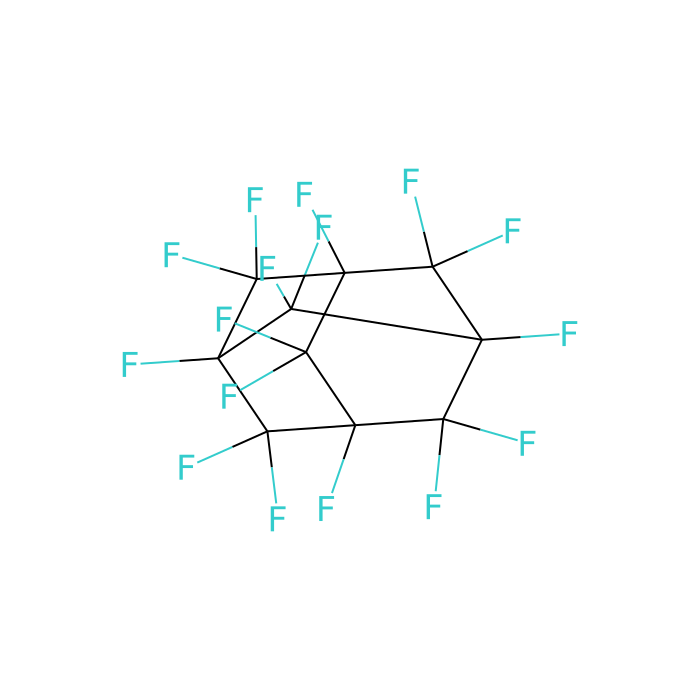
Perfluoroadamantane/Perfluoro(1-methyladamantane) is a mixture of Perfluoroadamantane (CAS 69064-33-1) and Perfluoro(1-methyladamantane) (CAS 60096-00-6).
This compound belongs to the class of organic compounds known as organofluorides. These are compounds containing a chemical bond between a carbon atom and a fluorine atom.
External Descriptors
fluorocarbon
1. Djoumbou Feunang Y, Eisner R, Knox C, Chepelev L, Hastings J, Owen G, Fahy E, Steinbeck C, Subramanian S, Bolton E, Greiner R, and Wishart DS. ClassyFire: Automated Chemical Classification With A Comprehensive, Computable Taxonomy. Journal of Cheminformatics, 2016, 8:61.
Determine the necessary mass, volume, or concentration for preparing a solution.
Dilution Calculator
Determine the dilution needed to prepare a stock solution.
Reconstitution Calculator
Avis
Avis des clients
Application Protocols
Not specified for this item; refer to CoA/Spec Sheet.
General suggestions (non-binding, research-only)
Solution preparation: If solubility is required, trial dissolution in perfluorohexane, perfluorodecalin, or HFEs with gentle warming and sonication. Filter through PTFE membranes if particulate is present.
Film/coating studies: Prepare solutions in a volatile perfluorinated solvent; apply via spin-coating or drop-casting onto clean substrates compatible with fluorous media; dry under inert gas flow.
Partition studies: Equilibrate known masses between immiscible fluorous and organic phases; quantify by 19F NMR or GC-MS where applicable.
Always validate conditions on small scale before scaling up. Follow institutional safety procedures and the SDS.
Biological Roles
Applicability
This product is a synthetic, fully fluorinated cage hydrocarbon. It is not a natural metabolite and has no known intrinsic biological role.
General context (literature)
Bioinertness: Perfluorocarbons are typically considered chemically and biologically inert. They are hydrophobic and lipophobic, leading to minimal interaction with aqueous or lipid environments.
Partitioning: Extremely poor solubility in aqueous and lipid phases results in limited biological uptake under normal conditions; however, persistence in the environment raises long-term exposure considerations.
19F NMR probes: While this molecule itself lacks functional handles, perfluorinated species can serve as 19F NMR references or as components in fluorinated emulsions for biophysical method development (research use only).
Cautions
Avoid making assumptions about biocompatibility; always perform application-specific safety and compatibility tests. No clinical or therapeutic use is implied or supported.
For any biological exposure experiments, ensure rigorous review by institutional safety committees and adhere to the SDS.
Buffer Applications
Not typically applicable.
This compound is a nonpolar, perfluorinated hydrocarbon with negligible aqueous solubility and no acid/base functionality. It does not form buffering systems and is not used to prepare biological or analytical buffers.
For relevant guidance on handling and phase behavior, see Solvent Selection and Reaction & Applications sections.
Green Alternatives
Environmental profile (general)
Perfluorocarbons are persistent, bioaccumulative, and have high global warming potentials (GWPs). Waste minimization and rigorous containment are essential.
Alternatives/strategies (context-dependent)
Replace perfluorinated cages with hydrocarbons or partially fluorinated analogs when only rigidity is needed (e.g., adamantane or 1-methyladamantane) and extreme fluorophobicity is not required.
Consider silicone- or siloxane-based materials for low surface energy applications where fluorine content is not essential.
Use hydrofluoroethers (HFEs) or HFOs as processing solvents instead of perfluorocarbons when possible; they often have lower atmospheric lifetimes. Evaluate solvency vs. performance tradeoffs.
Comparison snapshot (general)
Perfluorocage vs hydrocarbon cage: Fluorinated offers higher chemical inertness and lower surface energy but at the cost of persistence and environmental burden; hydrocarbons are more benign but less fluorophobic.
Perfluorinated solvents vs HFEs/HFOs: Perfluorinated solvents provide superior fluorophilicity and chemical stability; HFEs/HFOs improve environmental metrics but may compromise solubility or thermal stability.
Practical guidance
Implement closed-loop handling, cold traps, and solvent recovery when evaporating fluorous media.
Perform a solvent selection guide (e.g., CHEM21/ACS GCI) screening to justify the need for perfluorinated media for your application.
Document and segregate fluorous waste streams; consult local regulations for disposal.
Pharmaceutical Uses
Research-use context only
Per the Product Data: For research use only. No clinical or therapeutic claims are made.
Formulation and process research (general)
Fluorous phase studies: Perfluorocarbons are used in research on emulsion technologies, density-based separations, and oxygen transport modeling. This compound’s cage structure offers a high-fluorine, rigid core for exploring phase behavior in fluorocarbon-in-water emulsions when paired with suitable surfactants.
Excipient screening: In pre-formulation research, rigid perfluorinated cages can be evaluated as inert dispersants or microenvironment modifiers within fluorous domains of composite materials, though they are not conventional pharmaceutical excipients.
Regulatory note
No pharmacopeial monograph is implied. If pursuing GMP-adjacent studies, obtain a detailed CoA and impurity profile and conduct an independent risk assessment. Ensure that any work remains strictly within non-clinical research boundaries.
Physical Properties
Item-specific specifications
Appearance: Not specified for this item; refer to CoA/Spec Sheet.
BP/MP/density/RI/solubility/logP/pKa: Not specified for this item; refer to CoA/Spec Sheet.
General/literature expectations for perfluorinated adamantanes (for context; verify for this SKU)
Phase/volatility (literature): Perfluorinated diamondoid cages are typically nonvolatile to moderately volatile relative to linear perfluoroalkanes of similar formula; many are crystalline solids at ambient temperature with sharp melting points due to high symmetry.
Density (literature): Perfluorocarbons often exhibit high densities (commonly 1.7–2.0 g/cm3 range), reflecting the heavy fluorine content; exact value depends on substitution pattern.
Solubility profile (literature): Immiscible with water and most hydrocarbon solvents; preferentially soluble in perfluorinated solvents (e.g., perfluorohexane, perfluorodecalin) and some hydrofluoroethers (HFEs). Poor solubility in common organic solvents such as ethanol, acetone, ethers, or aromatics.
Polarity: Essentially nonpolar with extremely low polarizability; dielectric constants of analogous perfluorocarbons are typically low.
Thermal behavior: High thermal stability under inert atmospheres; decomposition can generate acidic species (e.g., HF) at very elevated temperatures.
Practical notes
Given the ambiguity between perfluoroadamantane vs perfluoro(1-methyladamantane), do not assume phase or melting point. Confirm the exact physical constants from the item’s CoA prior to process design, crystallization, or formulation.
Quality and Grades
Item-specific information
Grade/Purity: Not specified for this item; refer to CoA/Spec Sheet.
Guidance on grades and characterization (general)
Purity reporting: For highly fluorinated cage hydrocarbons, purity is commonly assessed by GC/GC-MS (for volatility-appropriate species), 19F NMR, 13C NMR, elemental analysis, and sometimes HRMS. Fluorine-rich materials often show simple, diagnostic 19F NMR patterns.
Residual solvents: Perfluorinated solvents (e.g., perfluorohexane) may be used in processing; CoA should state residual solvent limits if applicable.
Trace acids/ions: Manufacturing steps can introduce traces of inorganic fluoride or acid; conductivity or ion content may be reported for high-spec applications. If your application is acid-sensitive (e.g., microelectronics), request ionics data.
Stabilizers: Perfluorocarbons generally do not require antioxidants or stabilizers. If any stabilizer is present, it must be disclosed on the CoA; none is specified for this item.
What the grade means: If subsequently supplied as “98%+”, that indicates area purity by GC/19F NMR unless otherwise stated. HPLC grade terminology is uncommon for non-UV-active, nonpolar perfluorocarbons.
Recommendation
For materials science and electronics uses, request full spectral data (19F NMR, 13C NMR, MS) and a volatility profile (TGA/DSC) to ensure batch-to-batch consistency.
Reaction and Applications
Context
As an unfunctionalized perfluorinated cage hydrocarbon, this compound is largely chemically inert. Its primary value lies in unique physical properties (rigidity, high fluorine content, low surface energy, density) rather than as a reactive substrate under standard conditions.
Representative research applications (literature/general)
Materials and coatings research: Used as a model perfluorinated diamondoid for studying low-surface-energy coatings, wettability, and anti-adhesion behavior when blended or deposited from fluorous media.
Fluorous phase systems: Serves as a fluorophilic component or standard in fluorous biphasic separations and partitioning studies; aids calibration of fluorous/organic partition coefficients.
NMR referencing: 19F NMR chemical shift standards sometimes employ rigid perfluorinated cages because of sharp, characteristic resonances (verify suitability case-by-case).
Microelectronics/optics: Investigations into dielectric and refractive properties of highly fluorinated cage molecules for low-k materials or index engineering.
Reactivity considerations
C–F activation: Requires extreme conditions (e.g., metal-mediated or photoredox activation) and is generally not a routine synthetic transformation for this scaffold.
Thermal stability: High under inert atmosphere; avoid strong bases/nucleophiles at elevated temperature, which may promote defluorination.
Practical tips
If incorporating into composites, disperse using fluorous solvents and fluorinated surfactants; ultrasonic agitation can help.
For surface studies, vapor deposition (if volatility allows) or spin-coating from fluorous solvents are common approaches.
Reaction Conditions
Item-specific conditions
No manufacturer reaction guidance provided for this item.
General guidance for working with perfluorinated cage hydrocarbons (literature)
Solvents: Use perfluorinated solvents (perfluorohexane, perfluorodecalin) or selected hydrofluoroethers for dissolution and processing. Confirm solubility empirically.
Temperatures: Handle at ambient temperature under inert atmosphere when possible. Avoid heating above decomposition onset; consult DSC/TGA from CoA. Thermal activation aimed at C–F cleavage requires specialized setups and is not routine.
Catalysis/activation: C–F activation of saturated perfluorocarbons has been reported under aggressive conditions (e.g., UV photolysis with hydrogen donors, s-block metal reduction, or high-energy plasma). These are advanced methods and outside typical synthetic workflows.
Workup: Removal of fluorous solvents often requires cold traps and high-vacuum due to low surface energies and spreading behavior. Use PTFE-lined apparatus.
Performance expectations
For applications leveraging physical properties (coatings, dispersions), success criteria are typically surface energy, contact angle, dielectric constant, or partition coefficients rather than chemical yield.
Safety note
When experimenting with high-temperature or photochemical conditions, ensure robust ventilation and HF contingency planning. Defer to SDS and institutional SOPs.
Safety and Handling
Item-specific safety data
Signal word: Not specified for this item; refer to SDS.
H-statements: Not specified for this item; refer to SDS.
GHS classification/pictograms: Not specified for this item; refer to SDS.
General safety guidance for perfluorocarbons (literature/practice)
Inertness: Perfluorocarbons are generally chemically inert and of low acute toxicity; however, always handle in accordance with the SDS and institutional protocols.
Thermal decomposition: Avoid strong heating, flames, or hot metal surfaces. Thermal degradation of perfluorinated materials can release toxic/irritant species (e.g., HF, perfluoroisobutylene). Use adequate ventilation and avoid inhalation of fumes.
Incompatibilities: Avoid contact with strong reducing metals (e.g., alkali metals) at elevated temperatures and with highly reactive nucleophiles in extreme conditions aimed at C–F activation.
PPE: Lab coat, safety glasses, and appropriate chemical-resistant gloves. For transfers of fine powders or volatile material, work in a fume hood.
Spill/cleanup: Due to high density and low surface energy, liquids (if applicable) can spread and are difficult to remove. Use absorbent compatible with fluorinated materials; avoid generating aerosols.
First aid (overview; defer to SDS): Move exposed persons to fresh air for inhalation; rinse skin/eyes with water; seek medical attention if irritation persists. In high-temperature incidents with fumes, treat as HF exposure risk and follow institutional protocols.
Storage and transport (from Product Data)
Storage: Store at −20 °C.
Shipping: Shipped in ice chest with ice pads.
Containers: Keep tightly closed in clean, dry, chemically compatible containers; protect from heat and direct sunlight.
Solvent Selection
Applicability
This product is a perfluorinated hydrocarbon, not used as a conventional solvent for most organic reactions. Solubility behavior is important for handling, recrystallization, or formulation.
Hydrocarbon/typical organic solvents (hexane, toluene, THF, acetone, alcohols): Typically very low solubility.
Fluorous media: Preferentially soluble in perfluorocarbons (e.g., perfluorohexane, perfluorodecalin) and some hydrofluoroethers (HFEs) or perfluoropolyethers (PFPEs), depending on molecular size.
Selection guidance
For dissolution or processing: Choose a fluorous solvent with similar fluorine content and appropriate volatility (e.g., perfluorohexane for low-boiling handling; perfluorodecalin for higher boiling requirements). Verify actual solubility empirically on small scale.
For separations: Exploit fluorous biphasic systems (FBS) only if other components carry fluorous tags; untagged organics will generally prefer the organic phase.
Comparators
Perfluorodecalin: higher boiling, good for elevated-temperature handling.
Perfluorohexane: lower boiling, faster removal.
Hydrofluoroethers (e.g., HFE-7100): improved handling characteristics but may reduce solubility for very highly fluorinated solids.
Practical tips
Degas fluorous solvents prior to use if performing oxygen-sensitive manipulations.
Use PTFE-compatible syringes/tubing; avoid elastomers that swell or embrittle in fluorous media.
Storage and Reconstitution
Item-specific storage (from Product Data)
Store at −20 °C.
Shipped in ice chest with ice pads.
General handling
Keep container tightly closed in a clean, dry environment. Protect from heat and direct sunlight. Allow cold shipments to equilibrate to room temperature in a sealed container to prevent condensation.
If the material arrives as a solid, gently warm to room temperature to facilitate subdivision; if as a liquid, handle in PTFE-compatible containers to minimize sorption.
Reconstitution/solution preparation
Solubility is typically in fluorous solvents (perfluorohexane, perfluorodecalin) or selected hydrofluoroethers. Begin with small volumes and sonication; avoid aggressive heating.
For long-term stock solutions, store in airtight, fluoropolymer-lined vials at the recommended temperature; minimize headspace to reduce volatilization losses if the compound is volatile.
Stability
Perfluorocarbons are generally stable under inert, dark, and cool conditions. Avoid strong heat that could induce decomposition and release of hazardous species.
Documentation
For exact stability limits, assay intervals, and any special precautions, consult the product’s CoA and SDS.
Core scaffold: A rigid, highly symmetric adamantane cage (tricyclo[3.3.1.1^3,7]decane) framework that is fully fluorinated.
Functional groups: Saturated perfluoroalkyl C–F bonds only; no heteroatoms or unsaturation. Extremely low polarizability and very low surface energy.
Name note: The listing presents “Perfluoroadamantane/Perfluoro(1-methyladamantane)”. These are distinct perfluorinated cage hydrocarbons in the literature. Confirm which specific structure is supplied for this SKU via the CoA/SDS before use in structure-sensitive applications.
2D depiction in words: A diamondoid cage of fused cyclohexane-like chairs (adamantane) in which every carbon is sp3 and substituted with fluorine; if the 1-methyl analogue is intended, a perfluoromethyl substituent caps the bridgehead carbon.
Identifiers and registry cross-check (guidance)
If exact structure is critical (e.g., for modeling or mass balance), request the full structural file (SDF/MOL) or canonical SMILES from the CoA to disambiguate between the adamantane vs 1-methyladamantane perfluoro variants.
Synthetic Utility
Overview
As an unfunctionalized, saturated perfluorinated cage hydrocarbon, the scaffold is exceptionally inert. Its synthetic value stems mainly from its role as a fluorophilic, rigid building block or physical-property modifier rather than as a substrate for routine bond-forming chemistry.
Potential roles (literature/general)
Physical property tuning: Incorporation into fluorinated matrices can increase hydrophobicity, oleophobicity, and thermal/oxidative stability of composites and coatings.
Fluorous tagging by blending: While covalent tagging is difficult, noncovalent incorporation into fluorous phases can be leveraged for separations or templating in materials research.
Reactivity considerations
C–F activation on perfluorinated cages generally demands specialized methods (e.g., photoredox, s-block metal-mediated, or high-temperature defluorination protocols) and is not commonly pursued for preparative derivatization.
Cross-coupling/nucleophilic substitutions are not applicable in the absence of functional handles.
Practical takeaways
If a functionalized perfluoroadamantyl unit is desired, consider starting from pre-functionalized perfluorinated cage derivatives rather than attempting late-stage C–F activation on the parent hydrocarbon.
Target Specificity
Not applicable.
This product is a small-molecule perfluorocarbon, not a biological targeting reagent. No antigen/epitope specificity, clone, isotype, or species reactivity applies.
Foire aux questions
How should this product be stored?
Store at ?20 °C. Freezer storage is required to maintain the specified shelf life.
How is this product shipped?
This product ships in an insulated container with ice pads. Unpack on arrival and transfer it to the storage condition stated above.
What are the CAS number, molecular formula and molecular weight?
The CAS Number is 69064-33-1, the molecular formula is x(C11F18)+y(C10F16), and the molecular weight is x(474.09)+y(424.08) g/mol. InChIKey FRZFEPXEUZSBLA-UHFFFAOYSA-N.
What documentation is provided?
Available product documentation, including Certificates of Analysis (COA), Safety Data Sheets (SDS), and specification sheets, is shown in the product document area. Document availability and access follow the current site policy.
Nous utilisons des cookies pour garantir le bon fonctionnement du site et, lorsque cela est autorisé, pour améliorer votre expérience. Vous pouvez gérer vos préférences à tout moment dans les Paramètres. Pour en savoir plus, consultez notre Politique relative aux cookies.
Souhaitez-vous que nous vous envoyions un message lorsque des réductions seront disponibles?
Me rappeler plus tard
Merci ! Veuillez vérifier votre boîte de réception e-mail pour confirmer.
Products are supplied to verified businesses, institutions, and qualified professionals for research and development use only. Not for use in humans, animals, diagnosis, or therapy.

 C23161465