Determine the necessary mass, volume, or concentration for preparing a solution.
10mM in DMSO for sensitive chromatographic and analytical workflows requiring minimal baseline interference.
Store at -80°C Ships Dry ice packs + Cold packs Check lot-specific COA for exact specifications.
SDS, COA, datasheet, and spec sheet available for download. Lot-specific COA accessible via lot number lookup.
Cited in 33 peer-reviewed publications across chromatography, organic synthesis, and cross-coupling reactions.
Information
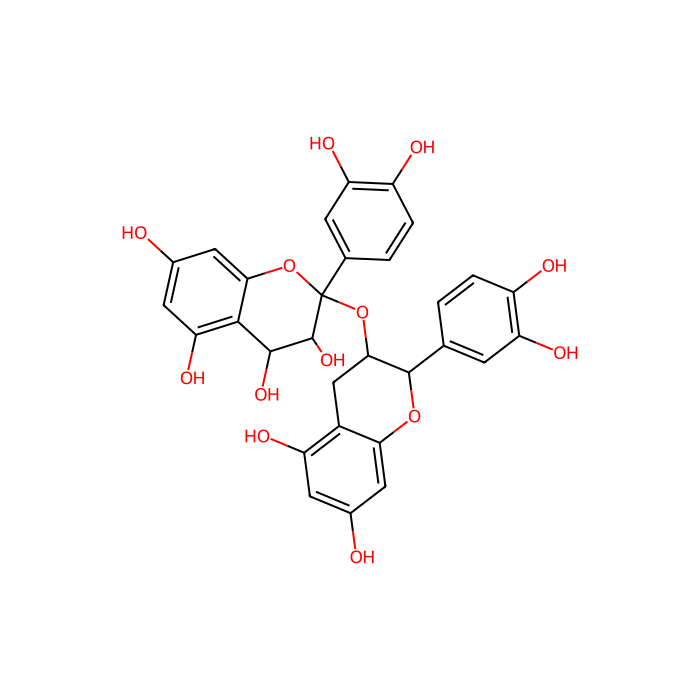
Proanthocyanidins (PAs), also known as condensed tannins, are a class of polyphenols found in a variety of plants. They are very Solidful antioxidants that remove harmful free oxygen radicals from cells.
In vitro
Proanthocyanidins have also been shown to inhibit lipid peroxidation, platelet aggregation, capillary permeability and fragility. They have been shown to modulate the activity of regulatory enzymes including cyclooxygenase, lipooxygenase, protein kinase C, angiotensin-converting enzyme, hyaluronidase enzyme and cytochrome P450 activities.
In vivo
Proanthocyanidins have been shown to play important roles in several biological processes resulting in health benefits. For instance, proanthocyanidins have been reported to have antioxidant, anti-inflammatory, antimicrobial, antiproliferative, cardioprotective, hypolipidemic and antidiabetic activities. Proanthocyanidins induce a strong hypotriglyceridemic effect in experimental animals, in part by inhibiting VLDL secretion by the liver. Animal studies demonstrate that proanthocyanidins reduce the plasma levels of atherogenic apolipoprotein B-triglyceride-rich lipoproteins and LDL-cholesterol but increase antiatherogenic HDL-cholesterol. Proanthocyanidins are thought to be poorly absorbable and highly metabolized by gut microflora before absorption. They affects lipid metabolism and has important positive consequences on cardiovascular diseases.
Comprehensive hazard, handling, storage, and regulatory compliance document.
Download SDS →Lot-specific quality data. Enter your lot number to retrieve the exact COA.
Look up COA →Full quality attributes and acceptance criteria for this grade.
View spec sheet →Taxonomy Tree
| Kingdom | Organic compounds |
|---|---|
| Superclass | Phenylpropanoids and polyketides |
| Classe | Flavonoids |
| Subclass | Flavans |
| Intermediate Tree Nodes | Flavan-3-ols |
| Direct Parent | Catechins |
| Alternative Parents | 3'-hydroxyflavonoids 3-hydroxyflavonoids 4'-hydroxyflavonoids 4-hydroxyflavonoids 5-hydroxyflavonoids 7-hydroxyflavonoids 1-benzopyrans Benzylethers Catechols Alkyl aryl ethers 1-hydroxy-4-unsubstituted benzenoids 1-hydroxy-2-unsubstituted benzenoids Ketals 1,2-diols Secondary alcohols Oxacyclic compounds Hydrocarbon derivatives |
| Molecular Framework | Aromatic heteropolycyclic compounds |
| Substituents | Catechin - Hydroxyflavonoid - 7-hydroxyflavonoid - 5-hydroxyflavonoid - 4-hydroxyflavonoid - 4'-hydroxyflavonoid - 3-hydroxyflavonoid - 3'-hydroxyflavonoid - 1-benzopyran - Benzopyran - Chromane - Benzylether - Catechol - 1-hydroxy-4-unsubstituted benzenoid - Alkyl aryl ether - Ketal - Phenol - 1-hydroxy-2-unsubstituted benzenoid - Benzenoid - Monocyclic benzene moiety - Secondary alcohol - 1,2-diol - Polyol - Acetal - Organoheterocyclic compound - Oxacycle - Ether - Organic oxygen compound - Alcohol - Hydrocarbon derivative - Organooxygen compound - Aromatic heteropolycyclic compound |
| Description | This compound belongs to the class of organic compounds known as catechins. These are compounds containing a catechin moiety, which is a 3,4-dihydro-2-chromene-3,5.7-tiol. |
| External Descriptors | Not available |
| DMSO (mg/mL) Solubilité maximale | 100 |
|---|---|
| DMSO (mM) Solubilité maximale | 168.20292 |
| Eau (mg/mL) Solubilité maximale | <1 |
| Poids moléculaire | 594.500 g/mol |
| XLogP3 | 2.000 |
| Hydrogen Bond Donor Count | 10 |
| Hydrogen Bond Acceptor Count | 13 |
| Rotatable Bond Count | 4 |
| Exact Mass | 594.137 Da |
| Monoisotopic Mass | 594.137 Da |
| Topological Polar Surface Area | 230.000 Ų |
| Heavy Atom Count | 43 |
| Formal Charge | 0 |
| Complexity | 957.000 |
| Isotope Atom Count | 0 |
| Defined Atom Stereocenter Count | 0 |
| Undefined Atom Stereocenter Count | 5 |
| Defined Bond Stereocenter Count | 0 |
| Undefined Bond Stereocenter Count | 0 |
| The total count of all stereochemical bonds | 0 |
| Covalently-Bonded Unit Count | 1 |